








Zhenghe Games: Cryptographic Protocols are Reshaping Public Goods

 Public goods also rely on shared moral conditions, as any "goodwill" must be defined according to the value system of a specific community.
The authors of this article are Toby Shorin, Laura Lotti, and Sam Hart, and it has been compiled by Bran and Gu Yu.
The nature of open source and permissionless protocols has reignited discussions about public goods. In fact, the transparency and accessibility of blockchain have reset the paradigms of free trade and collaboration. However, while crypto protocols operate as open networks, do they truly achieve publicness if they are solely composed of private capital?
Issues of scope, access, and ownership complicate our understanding of publicly available content on the internet. Public goods also rely on shared moral conditions, as any "goodwill" must be defined according to the value systems of specific communities. For these reasons, this article advocates for a strengthened definition of "public goods" to serve others and achieve lasting civilization.
Whether natural resources or human creations, public goods permeate the world where we encounter one another. We, as a society, manage, share, and maintain them. Although their construction or management may be imperfect, these objects bring us together for dialogue, debate, and shared concerns. Natural landscapes and built environments are not just things; they are cultural touchpoints. They make us care about the public good.
In economics, "public goods" refer to anything that is non-excludable and non-rivalrous, meaning that people cannot be prevented from accessing it, and one person's use does not diminish another's ability to use it.
Clean air is an example of a naturally occurring public good, while the power grid is a man-made public good. What are the public goods of today's industrial knowledge society? Open-source code, which supports millions of companies and independent developers, is often considered a public good. Cypherpunks view privacy itself as a public good. Online media archives and open digital infrastructure should also qualify, which seems quite natural.
Recently, Vitalik Buterin and others in the cryptocurrency community have begun to view blockchain mechanisms as public goods. It is certain that crypto protocols are one of the most striking new institutional forms, with their unique capabilities stemming from their "public" qualities: unrestricted membership and participation, open APIs, and transparent resource and power distribution.
Yet, at the same time, many of their characteristics contradict claims of public accessibility. If ownership is concentrated in the hands of a few whales, can crypto protocols be considered public goods? Colloquially, these market primitives are sometimes described as "public infrastructure," but if blockchains serve the "public" today, it primarily refers to a decentralized financial system. Fundamentally, these token holders have only one common concern: price.
Thus, while crypto protocols may fit the economic definition of public goods, what is beneficial to the public in these discussions? Some established goals of the crypto community are to address large-scale coordination problems, establish post-national forms of sovereignty, and create a fair competitive environment globally. However, to create a grand and equitable society, a broader vision of public goods is needed, one that goes beyond what economics can imagine.


Ancient ruins used as public baths, Hubert Robert (1798)
The public baths of the Romans, accessible to all regardless of wealth, were the cornerstone of urban public health and a rich cultural life. At its peak, the Library of Alexandria housed hundreds of thousands of texts, making it one of the largest public knowledge repositories of the ancient world. Despite being exclusive in many ways, these wonders were precursors to what we know today as public goods. They point to ideals of openness and universality.
As builders of a new digital society, we must have a more inclusive and visionary concept of what "public" and "good" mean. As protocol treasuries transition to community-managed public works, it is time to imagine how crypto protocols uniquely construct public goods.
I. The Scope of the Public
Our new understanding of public goods begins with exploring the concept of the public. What makes something public? What constitutes the public?
Typically, "public" is understood as something belonging to the people that can be used freely, such as parks, roads, and public lands.
The strongest demand for publicness in crypto protocols is based on the principles of open and permissionless access. Blockchains overcome a key limitation of Web 1 and Web 2: they do not meet the standard of non-deprivable access. The so-called "public space" of the internet is entirely different from our urban parks. They are merely someone else's private servers, which can revoke access at will. In contrast, crypto protocols deliberately enforce unobstructed access.
But public goods are not just a means of entering public spaces. Another key definition relates to the public as a crowd, which is associated with certain political associations. In 17th-century England, some uncensored media often criticized the state, first coining the phrase "the private gathered together as the public" (Habermas, 1989). Less than a century later, French revolutionaries carefully crafted the self-awareness of a new nation by organizing festivals, erecting monuments, and designating new public spaces (Ozouf, 1975).
In both cases, political institutions elevated their status by establishing new storytelling venues. In these venues, people could begin to identify themselves as part of a collective whole, namely the public.
This notion of viewing the public as a conscious entity is also deeply rooted in the internet, where the adoption of the internet has been driven by the publication and distribution of media. Publishing web documents or software applications is not merely about making something public: it is an act of publicity (Warner, 2002). Sovereign currencies created by blockchains can certainly be compared to sovereign states, as their immutability means that APIs cannot be modified or revoked without broad consensus.
These ideas support the concept of crypto protocols as public goods, but they collectively present a complex picture. Despite their "open" characteristics, crypto protocols have yet to provide a satisfactory answer regarding the scope of the public they target.
In today's crypto ecosystem, token-based membership determines key considerations such as resource allocation, on-chain incentives, and off-chain decision-making. While the censorship resistance of blockchains seems to be a solution for a gatekeeper world, in reality, pay-to-play models restrict access in other ways. Protocols may be owned by thousands or even millions of stakeholders, but they do not serve everyone's interests—only those who have the time, expertise, or resources to participate can benefit.
So, what does it mean to define the public as a group of users? Web 2 platforms provide us with an important lesson. The social media platforms that dominate the web today claim to be tools made for "communities" of users who choose to participate—but these platforms also generate widespread negative externalities: impacts on third parties who do not agree to bear the costs. The externalities of platforms include violations of personal privacy, the spread of misinformation, the devaluation of creative labor, and even instability in democratic processes.
These impacts are often seen as the primary motivation for those now working in Web 3, as they establish sovereign spaces based on public responsibility.
While social platforms provide a misunderstood example of the public, the nascent Web 3 "public space" encounters similar issues in definition, scope, and representation. The equivalence of token shares and voice in the crypto industry recalls early American democracy, where political representation was conditional on property ownership.
Under this system, only 6% of the total U.S. population was eligible to vote—an absurd notion of exclusionary political bodies by today's standards (Ratcliffe, 2013). Recall that the universal suffrage, human rights, and public services we enjoy today are the products of those excluded from the designated public fighting for their voices to be heard. In fact, "anti-public" theories specifically target groups not included in the larger public sphere, whose members may not be seen as individuals (Warner, 2002).
It is clear that defining the scope of the public is key to understanding what public goods mean. By equating public membership with ownership of currency, we overlook important stakeholders and opportunities for coalition-building.
Today, the most important members of the cryptocurrency public are those who hold the most tokens, which means that even small holders are effectively excluded from discussions on topics that benefit them. Moreover, within this designated public, there are individuals who may hold entirely different views on the public good. By engaging with marginalized groups that are underrepresented in the broader crypto community, we can gain deeper insights into the public we are building for and how best to serve them.
When we think of the public, we should engage in broad contemplation. This does not mean we must consider everyone in the world as part of our public. We also respect small, self-selecting communities and trust-based groups, but by considering the impacts we may have on marginalized groups (both positive and negative)—whether they are non-participants, non-technical members, or future participants in this public sphere—we increase the potential for greater public good and reduce the risks of negative externalities.
In short: who belongs to the great post-national society that the crypto community aims to build? To borrow Michael Warner's words, the public always transcends known protocols. The relationships between strangers are historically contingent and culturally complex. The public is composed of friends you have never met, with whom you unknowingly share cultural coordinates. How does what we build benefit the majority?
To address this question, let us turn to the "goodwill" in public goods.
II. The Moral Foundation of Public "Goodwill"
How do we determine what constitutes public goods? So far, we have begun to question who the public really is. But even if we agree that the public = token holders, what does this tell us about this public? Who are these token holders? What beliefs do they share?
Consider a classic public good: a park. We might say that park visitors are typically the "users" of this public space, but this categorization is clearly unsatisfactory. "Users" does not capture the meaningful details of a collective that values free access to protected forests or coastlines. Why is a park more desirable than a public parking lot? This brings us to an important realization: any definition of public goods presupposes a shared understanding of what aligns with the public interest and why.
A social institution is united not only by what it uses but also by many shared characteristics, including geography, ethnicity, religion, taste, culture, history, and values. Thus, even by economists' definitions, public goods will always reflect the shared backgrounds, common beliefs, and moral sensitivities of certain groups. In other words, their value systems.
Public libraries, public education, national monuments, and clean drinking water are four public goods that embody the moral foundation of public goods. Public libraries are built by communities that value autonomous learning and shared knowledge spaces. Public schools are valued when a culture believes that a common foundation in mathematics, science, language, and history can enrich civic life.
Nations designate and protect historical monuments because their people believe their heritage has intrinsic value. Finally, we provide clean water for all because we believe all life has equal worth. This humanitarian value is why stories like the Flint water crisis—failures of infrastructure—are widely understood as humanitarian crises: certain lives are seen as worthless, deemed not to belong.
Each of these examples is based on different ideas of what makes life meaningful—based on ideas of what "goodwill" is (Taylor, 1977). Public goods are non-excludable and non-rivalrous, but more importantly, they are objects that satisfy shared values.
The four public goods mentioned above are supported by social groups that share a common belief in their value to the broader public. But how many people would see the "public goods" funded by the cryptocurrency realm and recognize their value? What are the shared values of UNI holders or Ethereum enthusiasts?
The crypto community superficially embodies a liberal spirit, where "decentralization" often represents community autonomy. With wealth creation in the space, there is no reason why cryptocurrencies cannot create goods for the different values of their various communities. But in practice, there is little space for discussion or formulation of different values. This is why, in the absence of methods to realize our shared values, we default to the lowest common denominator: profit.
Without specific construction goals, the financial interests of large token holders are overrepresented in protocol governance. We believe this constitutes a centralization risk. When protocol politicians are neither authorized nor formally responsible for representing anyone's interests but their own, the result is that homogeneous and self-interested whale groups can decide what is deemed beneficial for the network. The crypto industry still lacks the concept of "public servants."
So, what is the alternative determined by oligopolistic protocols? The concept of "libertarianism" proposed by Buterin, Hitzig, and Weyl forms the basis of Gitcoin's quadratic funding mechanism, suggesting a model where public goods equate to market signals (Buterin et al., 2018). One might think that value is "priced" into this model. If people "vote on value with their dollars," then the market acts as a tool for funding these values, regardless of whether the values are explicit. In fact, quadratic voting seems to amplify the relative voice of a passionate minority.
However, while voting is symbolic, this model overlooks an important fact: we do not discover shared values through individual expressed preferences. If public goods are to satisfy shared values, it is crucial to publicly discuss what is valuable. Many protocols have learned in governance that discussion and consensus-building are prerequisites for voting. Similarly, discussions of values are as important as voting itself, if not more so. Cultivating value systems through storytelling and negotiation in public discourse forums is essential.
If we do not want those with the most tokens in their wallets to concentrate power over what is deemed valuable, we need to empower different communities and explicitly incorporate diverse value concepts. To align economic interests with our own values, we need to establish a stronger coupling between our public interest ideals and how we make decisions representing the public. If we wish to build a lasting culture, members must identify with one another across dimensions that transcend "token holders." We are part of many publics, and we must create public goods from a holistic self-perspective.
III. A New Definition of Public Goods: Positive Externalities
So far, we have understood the complex ways of defining the public, suggesting that expanding our concept of the public to multiple parties may yield better public outcomes. We have also seen that "goodwill" is based on shared values in certain places. With these concepts in hand, can we establish a better definition for public goods?
The type of public goods we need are those that can be formulated by digital communities while avoiding the destructive externalities of Web 2 platforms. As Facebook expands its reach, it achieves increasing negative externalities in the form of propaganda attacks on democratic institutions. Public goods formulated by Web 3 communities should strive to produce the exact opposite effect. Greater scale should mean greater benefits, as increasingly valued by more people: creating positive externalities.
This is a powerful new way to define public goods. In fact, the crypto industry has already produced a compelling example: the widespread adoption of asymmetric cryptography. For years, computer scientists and cryptographers have known that the large-scale adoption of public-key encryption can enhance privacy, a value held by many. However, despite researchers' efforts to advocate for the adoption of this technology, cryptocurrencies have propelled its large-scale adoption within a few years. Encrypted messaging has transformed from a tool used by the dark web and intelligence agencies into a high-demand feature for consumer applications and services.
Other examples of positive externalities in cryptocurrency are even more novel. Today, core contributors to open-source projects remain underfunded, even though the entire industry is built on their software. With the infrastructure provided by companies like Gitcoin and Radicle, protocol libraries are poised to significantly expand funding for open-source code both within and outside the cryptocurrency space. We have already seen signals of this shift as more private and public funding is directed toward supporting open-source development within and beyond the crypto industry.
Similarly, normatively open organizational APIs and civic engagement are public interest objects for any contemporary liberal and democratic advocate. Open, immutable, and publicly managed APIs greatly curb the power of centralized organizations and empower users, who can now decide their own interfaces and services.
If blockchains pressure centralized companies and governments to open and make their APIs irrevocable, it would mark a significant paradigm shift toward accessible and accountable institutions. Ultimately, crypto protocols reintroduce participatory governance of public systems into everyday life. We can only hope that one of the externalities of crypto is to raise expectations for transparent and user-friendly participation in local governance.
Each of these public goods, whether actual or potential, exceeds the reductionist economic meaning of goods. They satisfy values of privacy, the virtue of freely sharing work, liberalism, accountability, and democratic participation, and they integrate a shared consciousness of interests beyond today's Web 3 users.
This points to a useful feature of our new definition. Understanding public goods as positive externalities allows us to view those who are typically not classified as public members as our beneficiaries. This definition contrasts with economic discourse, where non-contributing users of certain public goods are seen as "free riders," indicating market failure.
When promoting the creation and consumption of public goods—whether vaccines, public libraries, or open-source code—how can we view these users as "free riders" when it is clearly in the social interest? The idea of positive externalities makes the benefits to others self-evident. In fact, this quality aligns with the principle of credible neutrality. Applied to public goods, credible neutrality suggests that there should be no privileged class of "citizens," and everyone should benefit equally.
Thus, positive externalities are an important variant of a familiar theme in the crypto space: positive-sum games. So far, most crypto natives recognize that relationships and value creation primarily belong to this type, namely constructive games, where contributions have synergistic cumulative effects. As protocols and infrastructures evolve and cultural roots deepen, the degree of their positive externalities should also increase proportionately.
An interesting case study is Fair Launch Capital. While this project does not explicitly set a mission for the public good, it implies a possible social model worth further exploration.
In short, Fair Launch Capital is a small group of facilitators that provide funding for promising projects. The founders of these projects must be willing to forgo the allocation of founder tokens and instead "fairly" distribute their tokens in exchange for startup funding. If the founders gain some benefits during the deployment of the protocol, they should continue to "pay it forward," funding subsequent teams to launch their protocols and distribute tokens in the same way.
The Fair Launch Capital model is interesting for several reasons. First, the facilitators do not directly gain financial value; their existence is to ensure the organization’s longevity. Second, Fair Launch Capital is not hard infrastructure but a social agreement, an institution that relies on dedication and value consistency maintenance. Third, the beneficiaries and service providers are different. This leads us to a surprising characteristic of this new type of public good: one way to exhibit positive externalities is to view the success of others as one's own success.
With this idea of positive externalities, what public goods can we build and how can we build them? If public goods always serve a set of values local to certain user groups, we might find our best inspiration by observing the public of which we have already become a part. Beyond our on-chain identities, we come from Berlin and New York. As citizens of these places, we benefit from parks and fresh air, sanitation facilities, and public transportation; we are concerned about overregulation, deforestation, and slow vaccine deployment.
Our membership in these local spaces connects us with those who share our needs, desires, and concerns. We all stand to benefit from more green spaces, quality low-cost housing, and easier access to health products. Can public goods funders and builders in the crypto space intervene in these areas? Crypto projects have successfully established infrastructures that exist beyond nation-states, but we still live in localities, communities, and nations.
The vision of a truly global DAO representing billions is a fantasy. However, if we apply our "positive externality" principles to the future citizens of our residences, then protocol-based public goods begin to look more like community-driven industrial policy.
One of the most disruptive potentials of Web 3 is the ability of entities with strong revenue mechanisms to leverage them to address issues more important than themselves. DAOs can follow the tradition of past great social movements, working outside state governments to establish public goods.
The success of the Black Panther Party's national program in 1966 to provide free breakfasts for Black and white students in public schools forced state governments across the U.S. to create their own versions. This serves as an example of how a non-state group concerned with local community issues can serve a broader public and drive positive externalities.
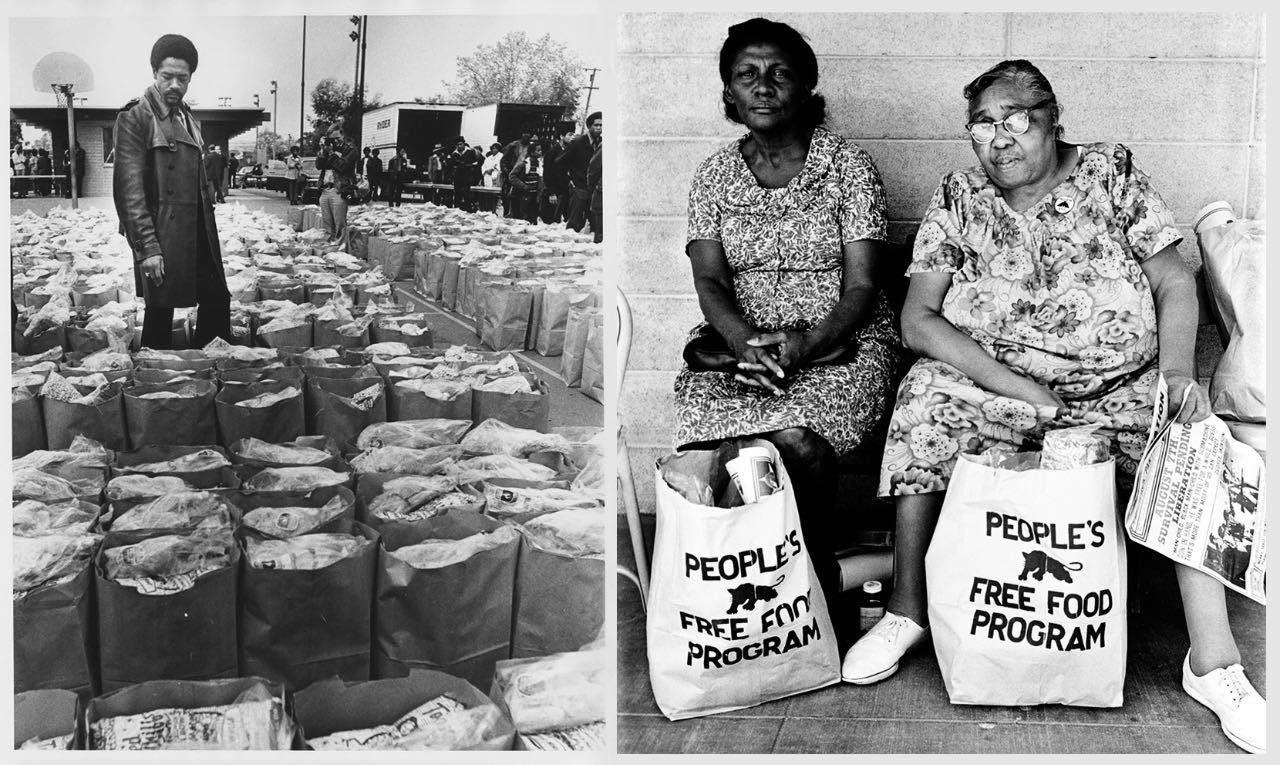
This is a model of regional work but can be scaled to a global public. Just as the expansion of suffrage set a powerful precedent for neighboring communities and cultures. By addressing concerns rooted in our regions and establishing social models for others, we can promote truly global public goods.
IV. From Ecosystem Building to World Building
The Ethereum project envisioned a "world computer," a coordinating system for global prosperity. In 2016 and 2017, we joined the cryptocurrency space alongside thousands of others, with the ambition of making society better. Now most of us are stuck checking our portfolio balances. Have we forgotten this core belief?
Each of us is a beneficiary of past social public goods. These grand projects humble us—cathedrals, canals, sanitation facilities, and increased literacy rates—they tell us that the "goodness" of public goods is also measured by their longevity. To match these great works, we must expand our time horizons. We want to ensure positive outcomes not just for token holders or protocol participants but for the world that expands alongside these infrastructures. How can we leverage the immutability provided by crypto protocols to create things that outlast us, thereby forming the foundation for lasting civilization?
To answer this question, we need only consider the public goods that currently meet this definition: permanent land preserves, global seed banks, and the internet as a global foundational communication technology—these are not only public goods but also cultural practices that ensure these products are passed down through generations. Public goods are formulated by social institutions that replicate behavioral patterns based on the public interest.
Crypto protocols provide the groundwork for social institutions to prepare for the challenges of today's networked culture. Many are already looking for ambitious and impactful ways to spend their billions. These crypto-economic systems flow with not just financial value: people's time, attention, and energy are all resources that can be directed.
However, much of what exists in cryptocurrency today is a self-referential and self-serving money game. "ETH = money," "diversifying funds"—these are concepts fundamentally tied to profit. But what is money for? The dollar has no obligation to profit its holders. Cryptocurrency is a monetary tool, not a business.
As token holders, we have the right and the responsibility to ask what these assets should be used for—and the stakes are high. The social forms of the 20th century were determined by companies driven explicitly by a pure profit value system. Do we want the next generation of protocol-based institutions to produce the same results? The type of social institutions we need are not on-chain companies but containers for accommodating different ideas about capital and companies.
We see this in today's protocol-granting institutions, which allocate treasury funds to smaller groups with targeted public goals. Imagine the power of an entire protocol operating on this principle. Our ambitions extend far beyond serious token voting; we want the whole community to redefine the issues of public concern. The opportunities before us are greater than any one protocol. In today's world, capital is not scarce; it is the ambitious vision for the public good that is.
As always, we are deeply grateful to everyone who has guided our thoughts through peer review on the internet. We especially thank Bryan Lehrer, Kei Kreutler, Callil Capuozzo, Jay Springett, and Arthur Roing Baer for pushing our thinking. We also thank Dena Yago and Carson Salter for clarifying and strengthening our arguments, and Klara Kofen for enriching our historical record.
Thanks to Maria Gomez, Jerry Brito, and Chris Burniske for inspiring conversations on this topic last year. Finally, thanks to Scott Moore and Kevin Owocki, as well as the entire Gitcoin team, whose commitment to the public good continues to inspire us.
 Risk warning
 Risk warning


Popular articles





