








Paradigm co-founder Shen Wen in 2017: Blockchain is the foundational layer of the metaverse

 Friend, don't be stingy with your insights and thoughts. Express yourself boldly; your future partner is searching for you. Send signals to let them see you.
Author: Fred Ehrsam
The original title is "VR is the Killer App for Blockchain"
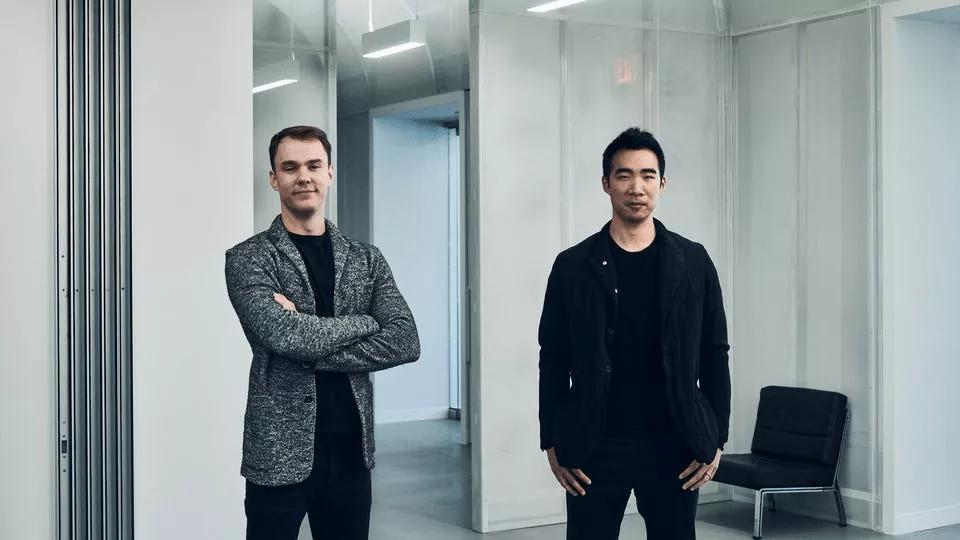
This is an article that left me feeling eerie and my hair standing on end after reading.
The author, Fred Ehrsam, co-founder of Paradigm, wrote this in February 2017, yet it discusses trends that have become popular four years later: metaverse, blockchain, crypto, VR…
The cognitive gap is far beyond my imagination. In February 2017, most people still lacked a concept of blockchain; even within the industry, many were still immersed in the ICO craze… A four-year cognitive gap suddenly brings a sense of sadness that makes me want to cry.
Additionally, there is a story of a heroic encounter behind this article.
Before co-founding Paradigm with Matt Huang, Fred Ehrsam was a co-founder of Coinbase. At that time, Matt Huang was still at Sequoia Capital, and Fred Ehrsam had been rejected twice by Sequoia Capital when representing Coinbase to seek funding.
In 2017, after leaving Coinbase, Fred Ehrsam wrote this article, which Matt Huang later read.
Matt Huang was attracted by Fred Ehrsam's thoughts and sent him an email. Initially, they discussed whether it was possible to establish a decentralized computing platform to power the virtual reality metaverse. This idea ultimately did not lead to any investment, but the two exchanged 60 emails, brainstorming potential business ideas related to crypto, and then decided to co-found the venture capital firm Paradigm in 2018 when cryptocurrency prices fell.
On November 15, Paradigm announced the establishment of a $2.5 billion crypto venture fund, the largest cryptocurrency venture fund in history, surpassing the $2.2 billion fund raised by Andreessen Horowitz (a16z) in June of that year.
This is a story of high cognition and mutual appreciation, where an article that transcends time united the two.
So, friends, do not hesitate to share your insights and ideas; express yourself boldly. Your future partner is searching for you, sending signals to let them see you.
They will understand you, they will come to find you, you are never alone.
"Metaverse," a name for an immersive virtual reality world, comes from Neal Stephenson's 1992 virtual reality novel "Snow Crash." I spent a weekend discussing how to efficiently create it with executives from ten major companies involved in VR. The idea is very simple: if people start living in virtual reality, its rules and systems will be as important as those of the "real" world.
To illustrate the reason, let's imagine everyone living in a virtual world like "World of Warcraft" or the one Facebook is building. People's social lives, assets, and work will be tied to this world. This means that the central company controlling this world can take everything away at will, as long as they deem it appropriate.
This is the source of a significant plot hole demonstrated in the recently popular novel "Ready Player One."
The novel describes a virtual world called OASIS, where people spend most of their time. A large company called "Innovative Online Industries" (IOI) owns and operates OASIS. In a competition to find the world's treasure, ordinary people ultimately compete against IOI employees to see who finds it first.
Although the book is entertaining, because IOI owns and controls the servers and databases of OASIS, they can do whatever they want, such as deleting others, accessing any information, changing world rules, and printing unlimited currency for themselves.
So it is clear that we cannot allow a single company to control the metaverse—otherwise, it will take everything you own, change your identity, and even delete you.
Blockchain can solve many of these problems. If your assets are on the blockchain, no single operator can take them from you. If your identity is on the blockchain, you cannot be deleted.
Perhaps most interestingly, like Bitcoin, it allows computers around the world to operate in the world's most powerful computing network—over 500 Google servers or 10,000 of the fastest supercomputers in the world working together to run the world. What if the servers running the world were also decentralized, or if all computing power were used to run the world?
If all of this sounds too distant or futuristic, the reality is that "World of Warcraft" had 12 million players in 2010, who spent an average of 22 hours a week in their world. Once in the game, players become immersed: 90% of players spend more than 10 hours a week playing.
Whether good or bad, this speaks for itself. Moreover, these economies have become very real. There were once over 100,000 people making a living in "World of Warcraft" by earning and selling gold (the in-game currency).
When people think of the "metaverse," they often envision an immersive visual and sensory experience. At the start of the weekend meeting, the Metaverse was defined as "a traversable, visually immersive, synchronous multi-user heterogeneous virtual world network."
However, the visual immersion is the most redundant part; the most important aspect is the shared data layer between them. Without a shared data layer, seamless travel as a virtual "you" is impossible. Since humans are more involved in crazy visual experiences rather than the data layer, it makes sense to define it as visual immersion.
However, I believe the shared data layer is what makes the metaverse the metaverse, and this data layer will be based on blockchain.
When you dig deeper, blockchain is actually a shared version of reality that everyone agrees upon. Therefore, whether it is a fully immersive, augmented reality virtual experience, or Bitcoin or Ethereum in the physical world, as the shared ledger of our "real world," we will increasingly believe that blockchain is the foundation of our reality.
The boundary between the virtual world and the "real world" will soon blur. If someone creates a P2P lending application based on blockchain that allows people to borrow from the U.S. to Brazil, then this application will immediately appear in every virtual world because it operates on the same blockchain.
It will be interesting to see how the virtual world develops. I wouldn't be surprised if those starting with closed worlds, especially large companies with vast private databases and deeply rooted network effects (like Facebook), emerge.
Just like the walled gardens of America Online and CompuServe (the first global online service provider) at the dawn of the internet, such worlds may last for years, but will ultimately be overwhelmed by open worlds, just as America Online and CompuServe were overwhelmed by the open internet. If that is the case, there is a great opportunity to start building the world with an open mindset.
I believe that the blockchain-based token model is the successful business model for creating these worlds. Historically, the second-largest crowdfunding was for the virtual world Star Citizen, which raised over $140 million. Last year (2016), blockchain crowdfunding exceeded $250 million. Developers can fund the creation of their worlds this way, using tokens to encourage people to enter and govern the worlds they create.
By the end of the weekend, I realized that virtual worlds would become one of the first killer applications for blockchain, perhaps its deepest users.
I suspect that before doing the same in the "real world," blockchain will become the comprehensive pillar for virtual worlds (currency, assets, identity, and even governance systems).
I think this is our ultimate outcome in the real world; the only question is which one will appear first and how long it will take for both scenarios to occur.
 Risk warning
 Risk warning



Popular articles





