








a16z founder explains NFTs and the Thousand Followers Theory

 Cryptocurrencies and NFTs provide us with a new way to seize profits, let's make it happen.
Source: W3.Hitchhiker
This article is translated from: https://cdixon.org/2021/02/27/NFTs-and-a-thousand-true-fans.
Kevin Kelly predicted in his classic 2008 article "1,000 True Fans" that the internet would change the economics of creative endeavors:
To be a successful creator, you don’t need to reach "a million." You don’t need millions of dollars or millions of consumers, millions of customers, or millions of fans. As a craftsman, photographer, musician, designer, writer, animator, app maker, entrepreneur, or inventor, you only need a few thousand true fans to make a living.
True fans will buy anything you produce. These die-hard fans will drive 200 miles to see you sing; they will buy your book in hardcover, paperback, and audiobook; they will buy your little sculptures even if they have never seen them; they will pay for the "best" DVD version on your free YouTube channel; even if you appear on Chef's Table, they will watch you every month.
Kelly's vision is that the internet is the ultimate matchmaker, potentially becoming the "sponsor" that drives development in the 21st century. Creators, no matter how niche, can now find their true fans, who will express their enthusiasm as fans through the most direct economic support.
But the internet has taken a detour. Centralized social platforms have become the primary means of connecting creators and fans. These platforms have seized the opportunity to become new intermediaries—profiting by inserting various ads between creators and users through recommendation algorithms, pocketing most of the profits.
The good news is that the internet is trending back towards Kelly's vision. For example, many top writers on Substack earn far more than they do in their regular jobs. The economic benefits of low interest rates combined with enthusiastic fans can create miracles. On Substack, 1,000 subscribers paying $10 a month can generate over $100,000 in annual income for a writer.
The field of crypto economics, especially NFTs (non-fungible tokens), can accelerate this trend of direct economic connections between creators and fans. Social platforms are still useful for building audiences (although these platforms may also be replaced by excellent decentralized platforms), but creators can increasingly rely on other methods to monetize, such as NFTs and the crypto economic system.
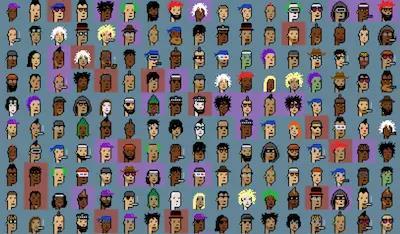
NFTs are blockchain-based certificates of record, with each certificate representing a unique piece of media. This media can be anything digital, including artwork, videos, music, gifs, games, text, memes, and code. NFTs contain highly credible documentation about their history and origin and can have specific code attached (the most commonly used function of this code is to ensure that original creators receive royalties from secondary sales). NFTs have the same technological assurances as Bitcoin, which is held by hundreds of millions of people worldwide and represents hundreds of billions of dollars in value.
Due to massive sales, NFTs have recently received a lot of attention. In the past 30 days, NFT sales exceeded $300 million.

The crypto world also experiences cycles of boom and bust, and NFTs are likely to have such fluctuations as well.
NFTs fundamentally provide creators with better economic benefits, stemming from three important factors. The first, as mentioned above, is the elimination of rent-seeking intermediaries. The logic of blockchain is that once you purchase an NFT, you own it completely, just like buying a book or a pair of sneakers in the real world. There will be NFT platforms and markets now and in the future, but consumption will be limited because blockchain-based ownership returns power to creators and users, meaning you can shop around and force the market to bear the corresponding costs. (Note that reducing intermediary fees has a multiplier effect on creators' disposable income. For example, if your income is $100,000 and your costs are $80,000, reducing fees by 50% would increase your income to $200,000, and your disposable income would increase sixfold, from $20,000 to $120,000).
The second way NFTs change the economic benefits for creators is through refined price stratification. In an ad-based model, income is generated more or less regardless of the level of fan enthusiasm. Like Substack, NFTs allow creators to "milk" their most passionate users by offering higher-priced special items. However, NFTs can go further than non-crypto products because they can easily be divided into a series of downgraded "fragmented products." The prices of top NBA player cards range from over $100,000 to a few dollars. For Bitcoin users, you can buy as much as you want based on your level of enthusiasm, down to eight decimal places. The granularity of cryptocurrency allows creators to capture a larger area under the demand curve.

The third way NFTs change the economic benefits for creators, and the most important way, is by making users owners, thereby reducing customer acquisition costs to nearly zero. Open any technical S-1 filing, and you will see substantial user/customer acquisition costs spent on online advertising and sales personnel. In contrast, the total market capitalization of cryptocurrencies has grown to over a trillion dollars, with almost no marketing expenditure. Bitcoin and Ethereum have no organizations behind them, let alone marketing budgets, yet they are loved, acquired, and used by millions.
The highest-grossing NFT project to date: NBA Top Shot generated $200 million in sales over the past month, with very little spent on marketing. Its ability to grow so effectively is because users feel they are owners, that they truly own skins in the game. This is genuine peer-to-peer marketing driven by community, passion, and ownership.

NFTs are still in their early stages and will continue to evolve. The construction of digital experiences around markets, social networks, exhibitions, games, and virtual worlds will further enhance their utility. There may also be cryptocurrency products aimed at other consumers, in contrast to NFTs. Modern video games like "Fortnite" incorporate complex economic models that mix ordinary tokens like V-Bucks with virtual goods like NFTs/skins. One day in the future, every internet community may have its own microeconomic system, allowing users to use, own, and collect NFTs and fungible tokens (FTs).
The "theory of a thousand fans" is built on the original idea of the internet: users and creators connecting globally, free from intermediaries, sharing ideas and economic prospects. Existing social media platforms lock creators into a deadlock of distribution mechanisms and pure profit, deviating from this vision. Accordingly, there are two ways to challenge them: take away users or take away profits. Cryptocurrencies and NFTs provide us with a new way to take away profits. Let's make it happen.
 Risk warning
 Risk warning


Popular articles





