








Facing the Ninth Level of Waves - Research on X2Y2 Selling Pressure and Development Trends

 No one knows exactly what new paradigms NFTs can develop in the future, but it is almost certain that NFTs will become the underlying infrastructure for all content in gaming, social interaction, art, and the metaverse in the WEB3 era.
Author: BTCdayu
In the 19th century, Russian painter Ivan Aivazovsky was awarded the highest medal of the Russian Empire for his outstanding contributions to art. Throughout his long creative career, the sea remained his greatest theme, with his most successful work being "The Ninth Wave." This piece, with its breathtaking light and shadow effects, depicts the desperate struggle between man and the sea, aiming to inspire people to strengthen their confidence and power to survive in perilous situations.
In the painting, the sun breaks through the clouds, casting golden light, signaling that the most dangerous moment is about to pass.
Introduction: What is X2Y2?
Opensea is great, but it doesn't belong to you or me; X2Y2 is new, but it 100% belongs to you and me.
Opensea originated in a bear market, benefiting from capital and hard work, eventually ushering in the great prosperity of NFTs, becoming the first protagonist of the NFT era.
With the support of capital, Opensea was able to endure tough times and now holds over 90% market share, generating millions to tens of millions of dollars in revenue daily, enjoyed by project parties and capital, which is reasonable and justifiable.
However, as a foundational component of the WEB3 era, NFTs inherently carry the gene of "I control my data." In the WEB2 era, you share, and others benefit; in the WEB3 era, you contribute, and you reap the rewards, which is only natural.
X2Y2 allocates 100% of the revenue to token holders, with the team resolutely locking away the only 10% share, which will only begin to unlock after 180 days, lasting for 720 days------If the venture fails, the team earns nothing; if the venture succeeds, everyone shares the profits!
Thus, a self-sufficient team, a new paradigm "by the people, for the people," sets sail, facing the tumultuous waves.
When X2Y2 was launched on UNISWAP, it was priced at 1ETH=10000X2Y2, calculated at 0.3 dollars based on an ETH price of 3000 dollars. Within days of going live, it surged to 4.3 dollars, with high market expectations.
However, with the triple release of X2Y2 staking, NFT staking, and airdrop claims, the token price began to bear selling pressure, even dropping to 0.24 dollars, breaking below its initial price!
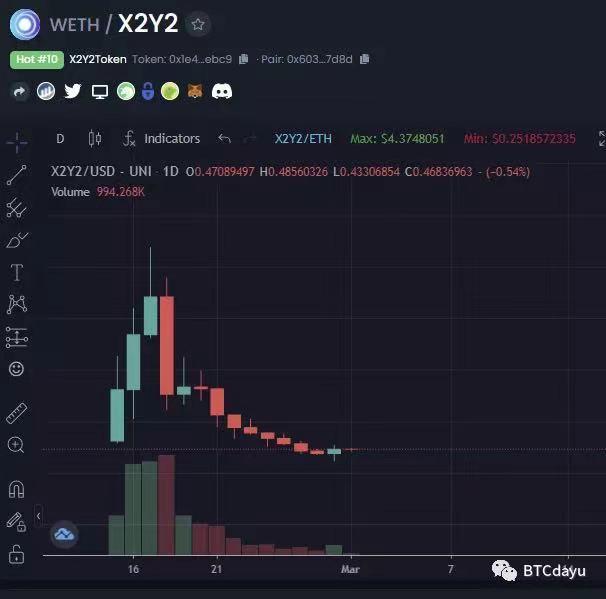
 Many people have been complaining in both the official Discord group and on Twitter. Although many have offered numerous suggestions, a few have noticed that, as a nascent project, its development has been faster than expected.
What people are most concerned about is: Why has it dropped so much? Will it continue to drop like this in the future?
What they want to know most is: What should be done next? Can a positive cycle be formed?
Today, I want to present a relatively objective answer from various aspects such as on-chain data, market performance, and team actions. The article is quite long because it incorporates a lot of data and many "little secrets."
But please note that no matter how I try to remain objective, all opinions are personal thoughts and may inevitably contain errors or omissions. Please use this only as a learning reference and not as an investment basis.
1. Where does the selling pressure come from? How significant is it?
The continuous decline over several days has left people anxious, with some saying, "Even the '土狗' (a term for low-quality projects) hasn't dropped this much?" It is necessary to clarify where the selling pressure comes from; first, let's look at the chart below:
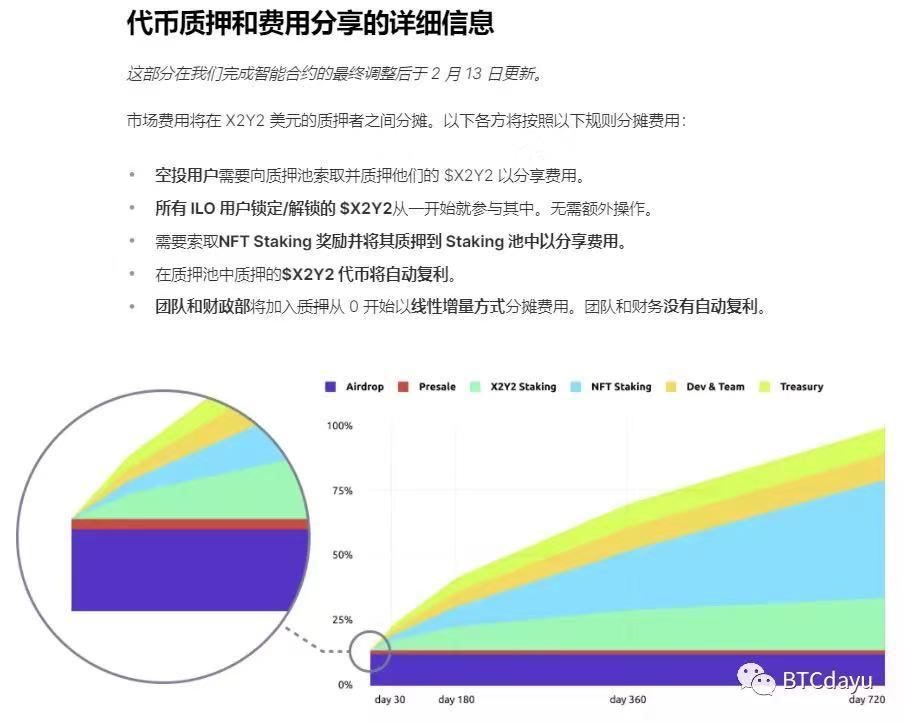
Therefore, for the following calculations, I will consider the selling pressure based on the situation in the first month, as the worst-case scenario is likely to be no worse than this.
In the distributed tokens, we will calculate the circulation based on the chart above:
1. Presale
A total of 1000 people, each receiving 15000X2Y2, with a MINT price of 1.5ETH, calculated at 4500 dollars, resulting in a cost of 0.3U.
This portion does not contribute to selling pressure because it is locked for a year and will be unlocked linearly, with the amount unlocked in the first month not even enough to cover transaction fees.
The advantages of this ILO player group are twofold: first, they receive a whitelist for a genesis NFT (if the exchange succeeds, and as far as I know, NFT empowerment will be extensive, the price will have considerable potential); second, they share 100% of the transaction fees from the start, regardless of the lock-up.
2. Airdrop Selling Pressure
According to the economic model, a total of 120 million tokens will be airdropped to users who have traded on Opensea. The airdrop amount is mainly determined by trading volume, with those trading over 30ETH receiving 1000 X2Y2 tokens, totaling 41592000 tokens, while users trading less than 30ETH will receive 78408000 tokens. There is a prerequisite for claiming tokens: users must list some NFTs to help the platform provide liquidity.
As of March 1, the claiming situation is as follows:
Whales claimed 13.78 million, accounting for 33.14% of the claimable amount; small holders claimed 9 million, accounting for 11.6%; the total claimed is 27.79 million, accounting for 23.16% of the claimable amount. These users can directly sell the tokens for profit after claiming, creating selling pressure.
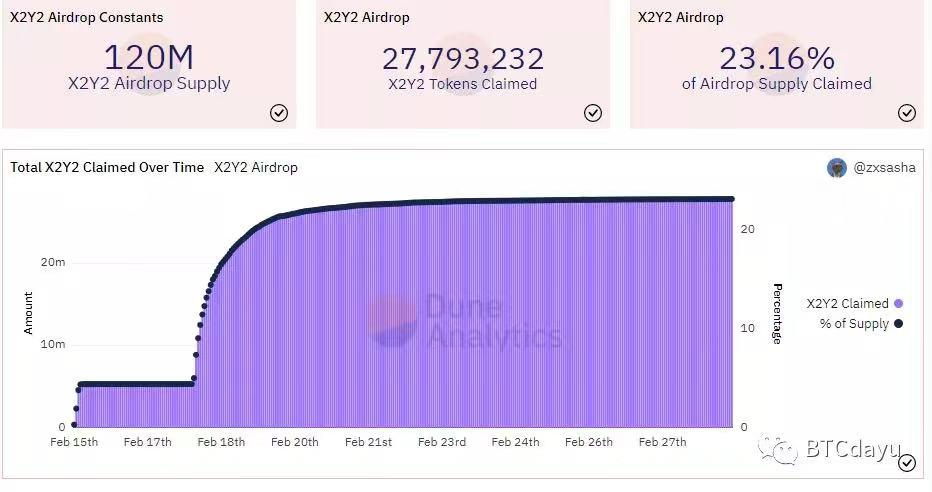
Airdrop claiming data
What is the significance of this airdrop? It mainly aims to attract OS users to come to the platform to "take a look." If you know there is money that belongs to you, you will come to check it out, experience features like "bulk purchase" and "bulk listing," and discover that things are cheaper and faster here, achieving the goal.
At the same time, while the airdrop is currently not worth much, as long as the platform is user-friendly and the number of users increases, the platform token will also become more valuable, but that is a topic for later.
This airdrop currently has some selling pressure; when the platform first launched, the token price dropped directly from 2 to 1.2 after the airdrop was opened; and when it reopened (accompanied by NFT staking, etc.), the price even continued to decline.
Looking at the on-chain transaction records, one can continuously see many sell orders for hundreds of tokens, non-stop. Although not all are from airdrops, a significant portion certainly is, with some addresses selling tokens that don't even cover the transaction fees.
This also reflects that market confidence has not yet been established. As a new platform, X2Y2 has just begun trading, and its reach is not extensive. The establishment of market confidence mainly relies on the team's continuous high-efficiency development, the launch of new features, and the increase in trading volume, all of which are currently happening. The first BAYC has been sold on the platform, and Azuki has become the top seller.
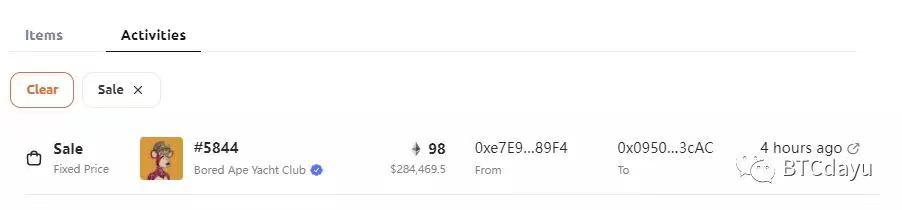
First BAYC sold
Overall, the selling pressure from the airdrop will present a strange game: if the token price drops to 0.4 or below, most small holders will not have enough to cover transaction fees, and they will not claim; no one will sell at a loss. If the project develops well and enters a positive cycle, the price and ecosystem will spiral upward, making those who received tokens more willing to hold. The only issue is the initial gap: the price is neither high nor low, and the ecosystem is neither good nor bad------ here, I believe the team's development capability and community consensus will become significant variables, which will be detailed later.
3. NFT Staking Selling Pressure
According to the rules, a total of 45% of the tokens will be distributed to users who stake their tokens, with a constant reward of 624902.8 tokens per day, distributed over two years. Since February 16, approximately 9.37 million tokens have been distributed, which is less than the airdrop.
Observing on-chain data, it can be seen that the top claiming addresses have a considerable number of orders and transactions, achieving the expected results, but there is still significant room for optimization.
Currently, the number of X2Y2 orders stands at 490,000:
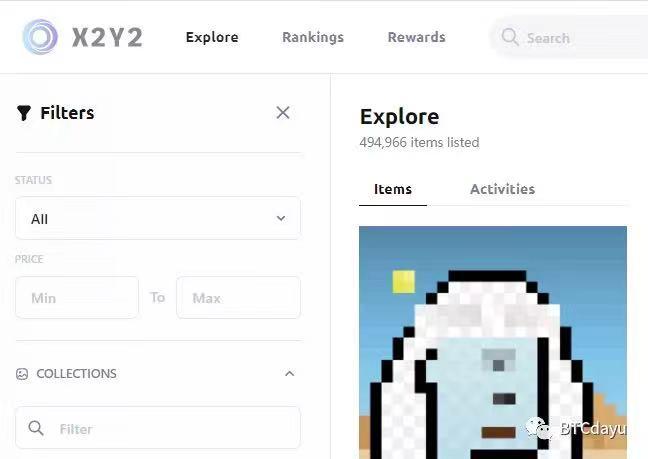
X2Y2 orders
In contrast, OPENSEA only has 1.6 million tokens listed, with a very small gap between the two.
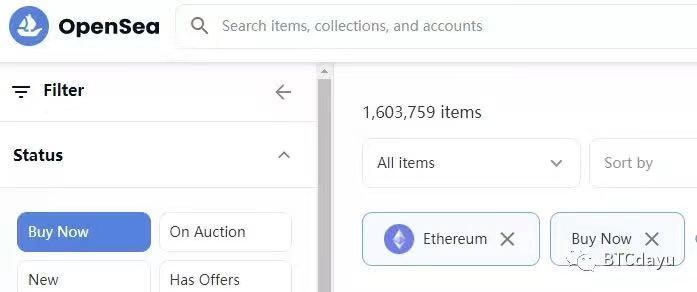
Opensea orders
In a free market, considering the algorithm for X2Y2's order rewards, which encourages transactions and low prices, as long as there are reasonable price orders, there should be corresponding transactions.
This means that if it is a normal order, the order volume and transaction volume should be proportional. However, the actual results differ significantly from expectations. According to Dapprader data, the 24-hour transaction volume for X2Y2 is 172 ETH, while Opensea reached 20,000 ETH; the transaction volume for X2Y2 is 632, while Opensea is 69,711.
The huge disparity behind this is that ineffective orders have drained X2Y2, with a daily distribution of 620,000 tokens, creating considerable selling pressure------ currently, the daily transaction volume on UNISWAP is only around 10 million, which is just 410,000 per hour. If a wave of people keeps selling, the limited sell orders will make the market appear pessimistic.
As for the proportion of "sheep" in this area, it is hard to quantify, but it can be reasonably inferred:
From the perspective of a normal seller, if they genuinely want to sell, then listing on OS and X2Y2 to increase the probability of selling is reasonable, especially with the additional rewards------ why not list?
From the perspective of a normal buyer, if they genuinely want to buy, they will naturally compare prices. If X2Y2 has the same item for a lower price and lower fees (0.5% lower), there is no reason not to buy here.
Therefore, behind the significant difference in transaction volume, there must be too many ineffective orders claiming rewards, with order volume at 1/3 and transaction volume at 1/100, allowing for a rough estimate of the number of "sheep."
A good mechanism is crucial. Yesterday, the price surged from 0.24 to 0.54, achieving a remarkable rebound, thanks to a new announcement from the official team. The announcement contains two points, with the latter being a game-changer:
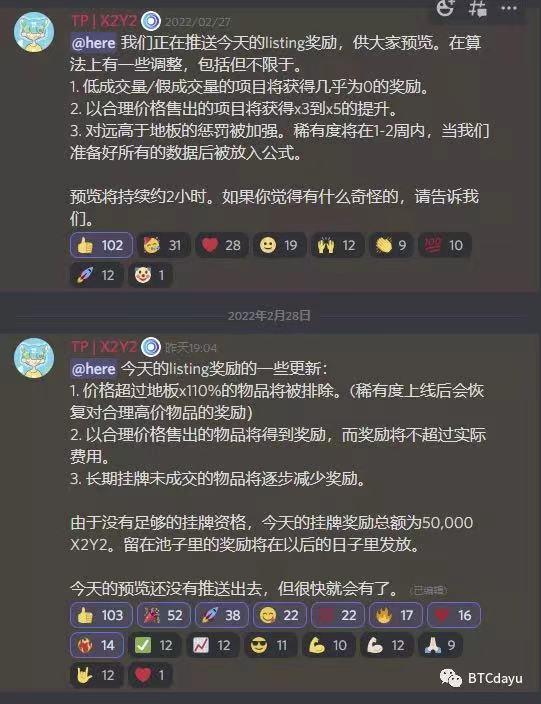
Official announcement
In this announcement, items priced above the floor price will be uniformly treated at 110%.
First, the downside is that this will temporarily prevent high-rarity NFTs from receiving rewards (but as mentioned earlier, they can still be listed to increase selling opportunities). However, this issue will be resolved within a week or two, as the team's built-in rarity tool is about to launch, and after that, the staking algorithm will also be linked to it. Good items listed at high prices will receive high rewards as a norm.
Now, the upside is that only items with genuine selling potential will receive rewards, and on that day, the total rewards distributed dropped sharply from 620,000 to 50,000------ in fact, compared to the previous 100-fold disparity in transaction amounts and order ratios, this reduction in rewards seems reasonable, leaving the remaining tokens to be distributed later------ what was originally set to be released over two years may be extended.
Among the other two points: one encourages selling, with selling rewards designed not to exceed actual costs, thus eliminating wash trading while rewarding sales------ after selling, if you want to "mine" again, just sweep a floor item, and the fees have already been subsidized. The other reduces rewards for those who have long-listed items that no one is interested in------ either the items are poor, or the prices are too high.
Therefore, in the NFT staking area, things are rapidly moving in a positive direction: rewards are decreasing, and the quality of rewards is improving, which will continue to promote positive listing interactions.
For the airdrop rewards, it is simply about continuously optimizing the algorithm to balance the rewards distributed and the effects generated by users listing quality NFTs------ and I believe the team will do increasingly better in this regard, which will be detailed later.
4. X2Y2 Staking Selling Pressure
According to the rules, users can stake X2Y2 tokens to earn more tokens. The current annualized returns are as follows:
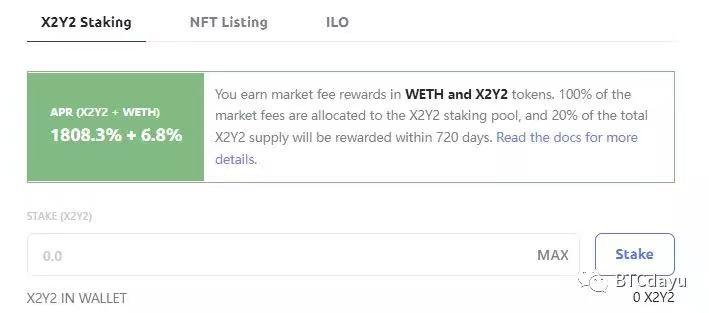
According to the economic model, the staking rewards for X2Y2 are distributed as follows:
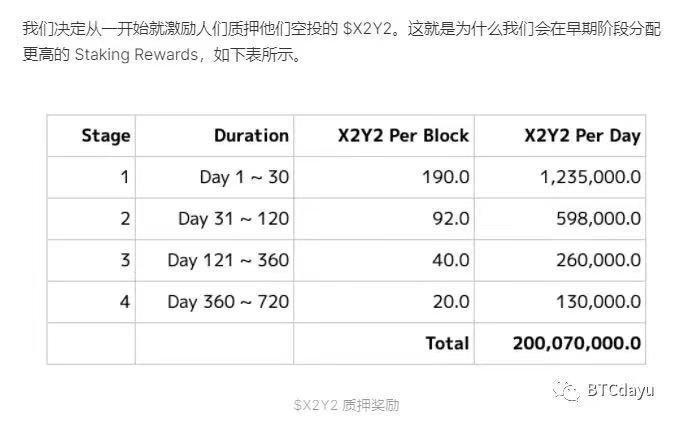
In the first 30 days, 1.23 million tokens are distributed daily. If, apart from users supporting the project who stake and automatically compound, there are some miners continuously selling and withdrawing daily, generating fixed selling pressure, wouldn't that be terrible? Is this situation likely to occur? After all, this yield is relatively high from the perspective of DeFi miners. I know that although exchanges cannot short yet, there are off-exchange hedging opportunities, preserving principal while infinitely mining and selling, which could be quite alarming.
However, after consulting professional DeFi experts and miners (the most powerful and professional developers), the answer is as follows (after the manuscript was completed, it was corrected that this developer only looked at the white paper and did not consider the latest experience model; in fact, the parameters for X2Y2 staking mining are public):
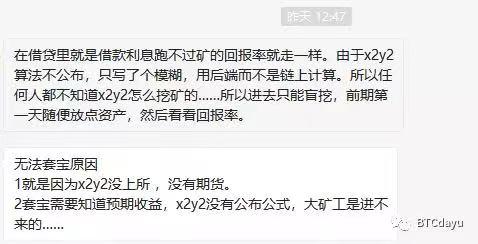
Let me add that there have been calls in the community to disclose various algorithms and formulas, so looking at what my expert friend said below, it may not be appropriate to think this way (scientists can almost mine any token):

Returning to the main topic, regarding X2Y2 staking mining, currently, there will not be large miners, scientists, or professional teams, which means there will not be massive mining and selling.
Everyone is spending money to buy tokens, and if you want to mine and sell rather than stake for the long term, it could very well become "lifting a rock to smash your own foot."
According to the economic model: there are still 14 days left, and this release will directly be halved, from 1.23 million daily to 590,000, and in two months, it will be halved again to 260,000.
Thus, the selling pressure in this area is not as significant as imagined.
Additionally, the team may soon initiate a vote to modify this selling pressure, but it will be based on community feedback, so everyone can keep an eye on Twitter.
Furthermore, the tokens held by the team and treasury are still locked, gradually unlocking after six months and a year, respectively, and currently, there is no selling pressure! It is also worth noting that while the team's share is locked and will gradually unlock after 180 days, from day one, they can share transaction fees linearly, which is not a high proportion. The following chart shows the sharing situation as of February 28: the team received 2.2 ETH, presale users received 2.9, and staking users received 9.7.

On-chain reward distribution
To summarize the selling pressure situation:
------ Airdrop selling pressure: There are still 76%, about 90 million tokens waiting to be claimed, but due to the game theory "if the price drops below 0.4, most small holders won't have enough for fees; if the price performs well, most won't sell," there is only a very short period of danger.
------ NFT staking selling pressure: The main source of early selling pressure comes from low-quality NFTs draining 90%------ and they are not real users of the platform, showing no concern for it, only needing to profit continuously. This new rule from the platform precisely targets this issue, and the effect is immediate. This selling pressure can be ignored going forward, as the interaction between staking and listing will only improve.
------ X2Y2 staking selling pressure: After consulting professional miners, there are no specialized miners for selling and withdrawing, especially considering the halving in just over ten days, and another halving in 60 days. This time will pass quickly, and eventually, only about 200,000 tokens will be distributed daily, making this area not a concern.
Therefore, although the token price is currently declining, many large stakers are not worried at all because staking is quite rewarding.
In any case, the selling pressure is not a concern.
2. How to view ecological development?
The economic model of any project is just a foundation; it must be scientifically reasonable to maximize benefits for project development. However, no matter how good the economic model is, without a good ecosystem, it will only be a castle in the air.
This section analyzes X2Y2 from three aspects: development background, work progress, and future trends.
1. Development Background
The development background of NFTs is best illustrated in this article “The Spiritual History of NFTs: Cans, Frogs, and the 15-Minute Hero Dreams of Ordinary People”.
NFTs have attracted attention since 2017, exploded in 2020, and by 2021, the future ecosystem was beginning to take shape. Messari divided the development of NFTs into seven stacks: Layer 1, Layer 2 and sidechains, vertical/application, auxiliary applications, NFT financialization, aggregators, and front-end interfaces.
In simple terms, NFTs currently include underlying public chains (ETH, FLOW, SOL, etc.); trading markets, metaverses, fan economies, and social aspects; financial applications (NFT collateral, equity lending, etc.).
No one knows exactly what new paradigms NFTs will develop in the future, but it is almost certain that NFTs will become the foundational infrastructure for all content in the WEB3 era, including gaming, socializing, art, and the metaverse. Unlike digital currencies, NFTs are more intuitive, easier to spread, and more likely to break out of their niche.
Can you see, play, showcase, and use something so interesting and strange that humanity has never encountered before?
The path that digital currencies have traveled will take much less time for NFTs to cover, reaching further distances------ I can assert that the total market value of NFTs will surpass the total market value of digital currencies in a shorter time than anyone expects, and the next bull market will be entirely driven by NFTs, the metaverse, and related games, as the essence of a bull market is capital and fresh blood, with NFTs leading the way.
Currently, the total market value of digital currencies is 1.9 trillion dollars, while the total market value of NFTs is 16.9 billion dollars, a 100-fold difference. If one believes that digital currencies have a tenfold growth potential, then NFTs have the potential for a thousandfold increase.
Just as the most profitable aspect of digital currency trading is the exchanges; in the explosion of NFTs, exchanges will also be the biggest beneficiaries. OPENSEA, as a pioneer, has made significant contributions to the development of the NFT market, but "success is also due to VC, and failure is also due to VC." Investors have put in real money to support it, leading to OS's current state------ earning millions or even tens of millions of dollars in transaction fees daily, there is no reason and absolutely no possibility to distribute 90% to users; what they could earn in a year has turned into ten years, which is impossible.
X2Y2 is the first exchange to truly allocate 100% of transaction fees to token holders. Everyone is both a user of X2Y2 and the owner of X2Y2, fully sharing in the platform's development dividends. If the platform grows 100 times, everyone's income will increase 100 times.
The explosive growth of the NFT industry is the right timing for success;
The essential need for NFT exchanges is the geographical advantage of the track;
100% distribution of transaction fees is the people of WEB3.
The pieces have fallen, and the game has begun.
2. Work Progress
In the crypto space, there is no shortage of grandiose claims; even a low-quality project can have an extravagant white paper. However, whether in digital currency or NFT projects, the ultimate success does not depend on how much money you have raised or the technical strength of the team, or how well-known the influencers are. It only depends on work efficiency and results, vision, and community consensus.
I have written many articles on X2Y2 regarding these aspects, such as “Discussing the Issue of 'What to Take and How to Take' in Investment—Taking Binance and X2Y2 as Examples” and “Back to 2017, Could I Have Invested in BNB and Held On?”. You can also learn about the team from “There Is Not Only One Way to Win—Transcript of X2Y2's Second AMA”.
As someone who joined the DC community during the ILO issuance phase and reached the top three in community speaking levels while voluntarily serving as a community MOD, I have a deep and concrete sense of the team's efforts------ this is also why I turned to buy dozens of ETH at the price of 0.24 (those who have tracked my wallet must have noticed something; unfortunately, I transferred in the afternoon, and it surged that night, so I could only enter at 0.4).
Let me share some details:
**------ Function updates are extremely fast and community-centered.** Bulk listing, bulk purchasing, rarity checking—these are almost all necessities. Bulk purchasing has made GEM possible, and rarity checking has led to countless third-party tools. Now at X2Y2, updates occur every week or two, and interestingly, most of these features come from community suggestions.
Especially the rarity checking feature, which is currently in development, may create a bombshell effect once launched. Although we do not yet know what kind of chain reaction it will trigger, I personally look forward to it.
**------ They always make decisive moves at critical moments.** When the community was extremely fearful, they analyzed the data to find the reasons, and with a few simple sentences in an announcement, they immediately stabilized people's hearts and the downward trend, which can be described as "surgical precision."
I am a builder, but I will never have the thought of "I am smarter than the project team." Professionals should do professional things, and a trustworthy team can bring a sense of happiness to investors.
In fact, although the team needs to remain anonymous due to commercial agreements, many in the industry already know who they are. The team has prior experience developing very mature NFT exchanges, and more importantly, their previous product started from scratch and defeated a mature project backed by SoftBank------ they have combat experience.
I also know two things:
First, although the team is self-sufficient, they have averaged three hours of sleep before and after the project launch, demonstrating their combat effectiveness and cohesion.
Second, two days ago, when the token price dropped and community FUD was rampant, the team held a meeting at 2 AM to collectively find solutions, and the final solution was even more brilliant and decisive than I expected.
Of course, some may not consider these significant and may continue to find points to criticize. But my journey has led to heartbreak with many projects:
Some raised a lot of money, then disappeared, leading to a soft death of the project;
Some raised a lot of money, had a great model, but ended up focusing solely on making money, leaving investors as mere fools;
Some projects, even top-tier ones, had teams, institutions, and influencers privately placing bets, while retail investors were left holding the bag, with large holders endlessly increasing their stakes, causing the price to plummet;
Some projects update their progress every few months, telling investors that the team is still working…
The world has long suffered from thieves.
Today, the project team announced their workboard on Twitter (the original English text can be seen at the end):
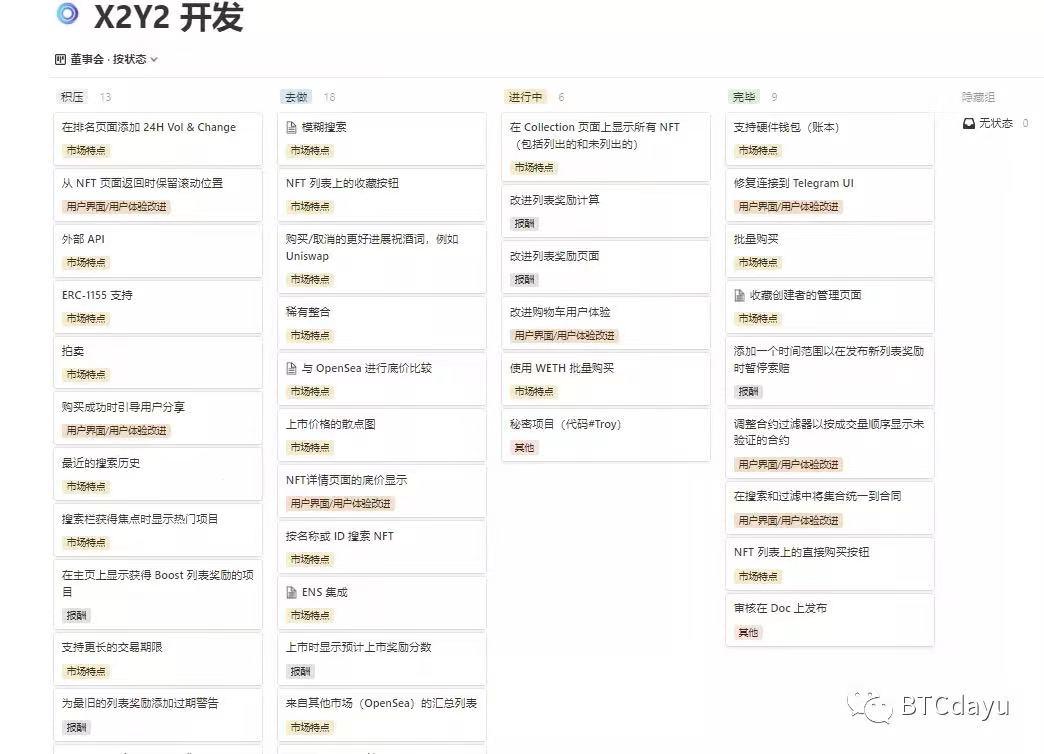
The work progress cannot be said to be slow, and all the work is very effective, but it seems that many core tasks may not be updated in a timely manner due to confidentiality needs.
3. Future Trends
Will NFTs in the future just be small images? Will NFTs only exist on ETH? Of course not; new gameplay and new ecosystems will continuously emerge. Those who can iterate quickly will win quickly.
To achieve rapid iteration, the team must be strong, and community cohesion must be strong; this is fundamental. In this round of declines, we see the token price drop significantly, yet many wise and resourceful people are still paying attention to and supporting the project, which is the reward for "doing the right thing."
When I speculate about the future, I tend to be optimistic, thinking positively, such as what would happen if X2Y2 continues to capture Opensea's market share and even becomes the new leader?
Currently, X2Y2 is just starting, and the community has already generated many brilliant ideas, which the team is implementing one by one. Each idea will almost certainly create a powerful driving force, so even when the token price drops, my enthusiasm remains undiminished. I know what the right thing is------ of course, to prevent leaks, there is no need to mention it now; everyone will see it one by one (including a tweet I posted yesterday that I deleted seconds later, based on this).
In the future NFT market, there will inevitably be a hundredfold growth, and NFT platforms will naturally rise with the tide. If the platform's transaction fees reach 100,000 ETH in a day, then users holding 100,000 tokens will receive a substantial share of platform dividends, and that will be every single day.
A good team, a good track, a good vision, a good community, and a good product— I cannot find a reason to participate in other projects with less certainty; risks exist everywhere, it is merely a matter of choosing which one.
Additionally, X2Y2 has not yet begun deflation, but I am certain that X2Y2 will inevitably deflate; it is just a matter of when and in what form, whether through repurchasing and burning transaction fees or through some form of reward destruction. Ultimately, this will be decided collectively by token holders once the voting system is activated.
Hugo said: "The sky is broader than the ocean, and the human heart is broader than the sky." In the WEB3 era, those who do not maintain aligned interests with users will ultimately lose them; those who can bring more and longer-term benefits to users will gain the most support.
The road ahead is fraught with dangers, and entrepreneurs and investors face the ninth-level storm together, only by striving forward!
 Risk warning
 Risk warning



Popular articles





