








Overview of Award-Winning Projects at the First DFINITY Supernova Hackathon

 Covering SocialFi, GameFi, NFT and other tracks.
Written by: Heimi, Baize Research Institute
Recently, the first Supernova Global Hackathon event initiated by the Internet Computer Dfinity has officially concluded. The event attracted nearly 4,000 developers and entrepreneurs, with 42 projects making it to the finals, covering fields including SocialFi, GameFi, the Metaverse, NFTs, DeFi, public goods, and open "blue sky" projects.
The Internet Computer Dfinity was launched in May 2021 and is a brand new public blockchain network that can host mass-market, large-scale Web3 applications and services, storing and processing data more efficiently and at a lower cost than other blockchains, with all data and computation occurring on-chain. This allows developers to create systems, dApps, and decentralized services that run entirely on the blockchain.
By hosting the Supernova Hackathon, Dfinity marks explosive growth in its ecosystem just one year after its launch, laying the groundwork for shaping the future of Web3.
Overall Champion
Spinner Cash
"Facilitating private transactions across different blockchains, including Bitcoin and Ethereum networks"
Spinner Cash builds a privacy-focused distributed ledger where all transactions are 100% private, concealing both the sender and receiver of the transaction as well as the amount of tokens being transferred.
Similar to the UTXO model, Spinner Cash's ledger stores private notes rather than account balances or user addresses. Only the owner of the notes can prove their ownership. To spend a note (for example, to send tokens to another account), the user must first prove they are the owner of the input note. Spinner Cash will verify this proof before approving the transaction.
However, privacy transactions for ICP Tokens are just the tip of the iceberg. When Dfinity successfully integrates the Bitcoin network and more blockchain networks, blockchain assets can be privately transacted through Spinner Cash.
Cubetopia
"When blockchain meets Minecraft and World of Warcraft"
Cubetopia is the first fully decentralized multiplayer RPG/sandbox game built on the Internet Computer, allowing players not only to embark on unknown adventures within the game but also to build freely on their own islands.
As per Cubetopia's vision: We aim to create a fun and engaging game as a unique way to bring more people into Web3. Our goal is to create a game that feels familiar and intuitive to as many players as possible. We hope to inspire players' creativity and sense of adventure.
SocialFi Track Winners
Kontribute
"When writers meet NFTs"
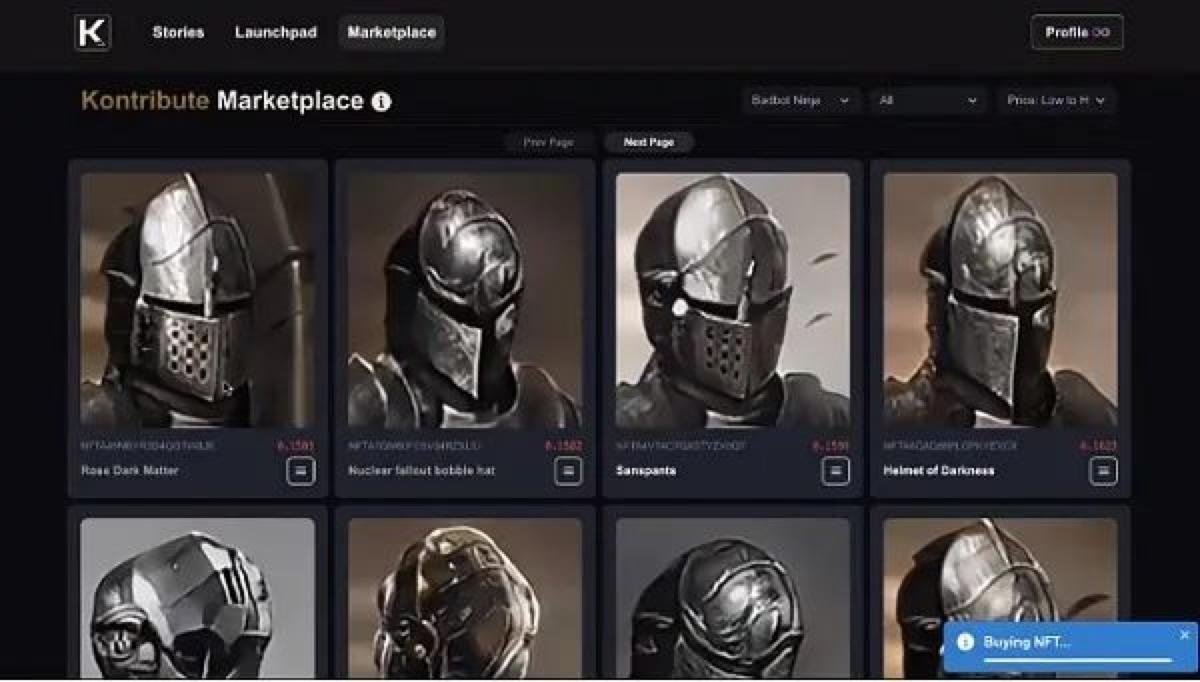
Kontribute is a decentralized blogging platform that allows readers, writers, and Web3 enthusiasts to write and read stories on the platform, or sell and trade NFTs from their stories. To achieve this, the platform integrates creative writing features, converts story segments into NFTs, and incorporates ICP wallets—users can directly hold their NFTs and ICP within Kontribute.
Kontribute provides a space for writers to share their stories with the community and offers them a way to sell NFTs from their stories. Readers can directly support writers and their creations by purchasing the writers' NFTs.
Conshax
"A new profit opportunity for podcasters"
Recently, a popular topic in the podcasting community is an open protocol called Podcasting 2.0, based on the RSS standard, allowing podcasts and audiences to receive and pay Bitcoin via the Bitcoin Lightning Network. This includes audiences being able to tip their favorite podcasts with small amounts of Bitcoin. Audiences can use wallets that support the Bitcoin Lightning Network and "unlock" shows with 100 satoshis (1 Bitcoin is divided into 100,000,000 satoshis), or even stream 1 satoshi per minute to watch a 1-minute show.
By integrating the Podcasting 2.0 protocol and enabling Dfinity's Web3 native on-chain hosting, the Conshax platform automatically allocates Bitcoin Lightning Network payments or ICP Token payments based on the token split structure of podcast episode plots. In this process, Conshax provides new profit opportunities for podcasters and supports token-based community interaction.
Signals
"Making friends by sending signals"
"After moving to a new city, I found it difficult to connect with new friends, which inspired me to create Signals. I suddenly realized that I encounter strangers every day who might share common interests and hobbies with me—we live in the same building, go to the same gym, or even visit the same cafes and restaurants. But it's hard to connect with each other."
Signals provides local users with an opportunity to connect: users can send "signal" messages within a map system, including gatherings, second-hand item sales, etc., and other users who see the "signals" can interact via a message board.
Additionally, Signals is built as a DAO, meaning it is governed collectively by users, and any user with tokens can see the current state of the system and propose suggestions for its future operations.
STKRS
"Friendship showcase wall"
In recent weeks, Ethereum co-founder Vitalik Buterin wrote a paper on the concept of Soul Bound Tokens, which inspired the creation of STKRS, centered around online trust.
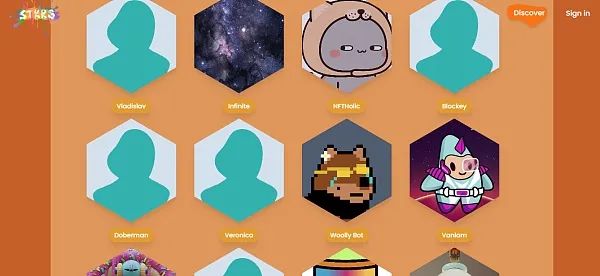
On the STKRS platform, each user is granted a 'Stkrs showcase wall' upon registration, where they can list NFTs that highlight their professional experience, the communities they participate in, or interesting activities they enjoy. Active users will be showcased on the platform's homepage for more visibility.
CrowEats
"A decentralized version of Yelp"
CrowEats is a restaurant review application built on the Internet Computer that reimagines how we search, curate, manage, evaluate, and interact more broadly with local businesses online. It utilizes tokenization and a community jury to create a review mechanism against malicious comments. Most importantly, it provides users with a fully blockchain-based "food social platform," unlocking new methods of content management and monetization that are not achievable in Web2.
GameFi Track Winners
Eimolad
"MMORPG NFT game"
Eimolad is a play-to-earn, NFT-based massively multiplayer online role-playing game deployed on the Internet Computer.
The game world of Eimolad consists of humans, orcs, dwarves, elves, and many other mythical creatures. Each race has its own skill tree and racial traits, while character traits depend on levels and equipment. By defeating monsters or engaging in PvP with other players, characters will earn money and materials needed for crafting equipment and upgrades. Players can form groups and alliances to improve efficiency; the more they play, the faster their characters' combat power and skills grow.
Characters' weapons can also be freely bought and sold in the game market using ICP Tokens and eGOLD.
Faefolk
"A survival game with infinite maps"
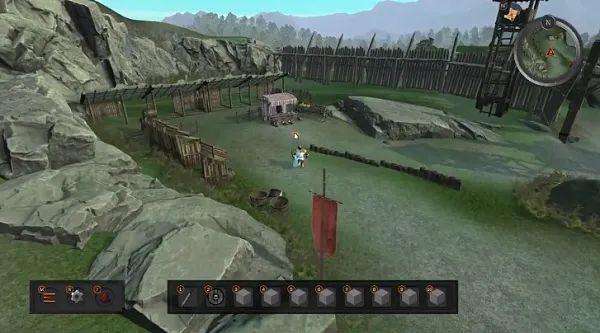
Faefolk is a pixel-style survival game that allows users to farm, craft, and build in a multiplayer online, infinitely generated game world. Currently, there are no further details, but the demo video shows users chopping trees and picking up stones, which are also in the form of NFTs.
Paws Arena
"NFT pet battle royale"
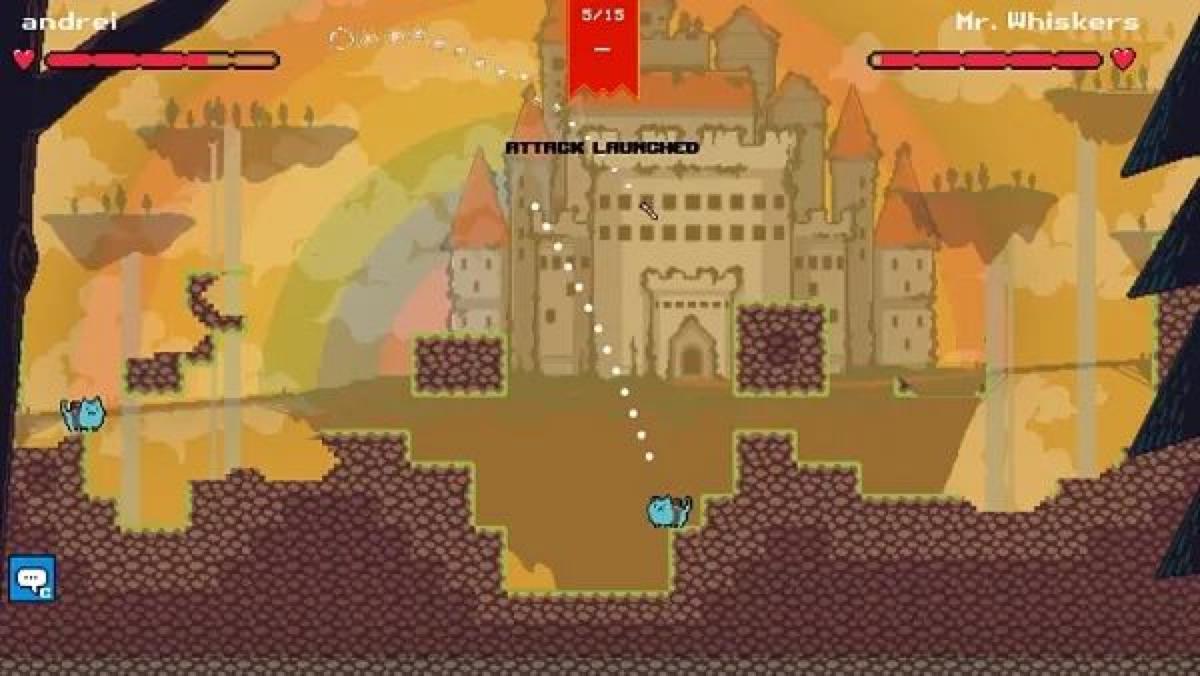
The developers released an NFT collection called ICKitties in September 2021, and now these cat-shaped NFTs will be usable in the upcoming Paws Arena game. In Paws Arena, users can use NFTs for multiplayer PvP battles and earn rewards when they win matches.
GalacticWar
"NFT version of Command & Conquer?"
GalacticWar is a strategy game similar to Command & Conquer, where players can create their own bases and dispatch soldiers to attack other bases for rewards.
All basic elements of the game are DIP20 Tokens, which can be traded on DEX.
Metaverse and NFT Track Winners
dSquad
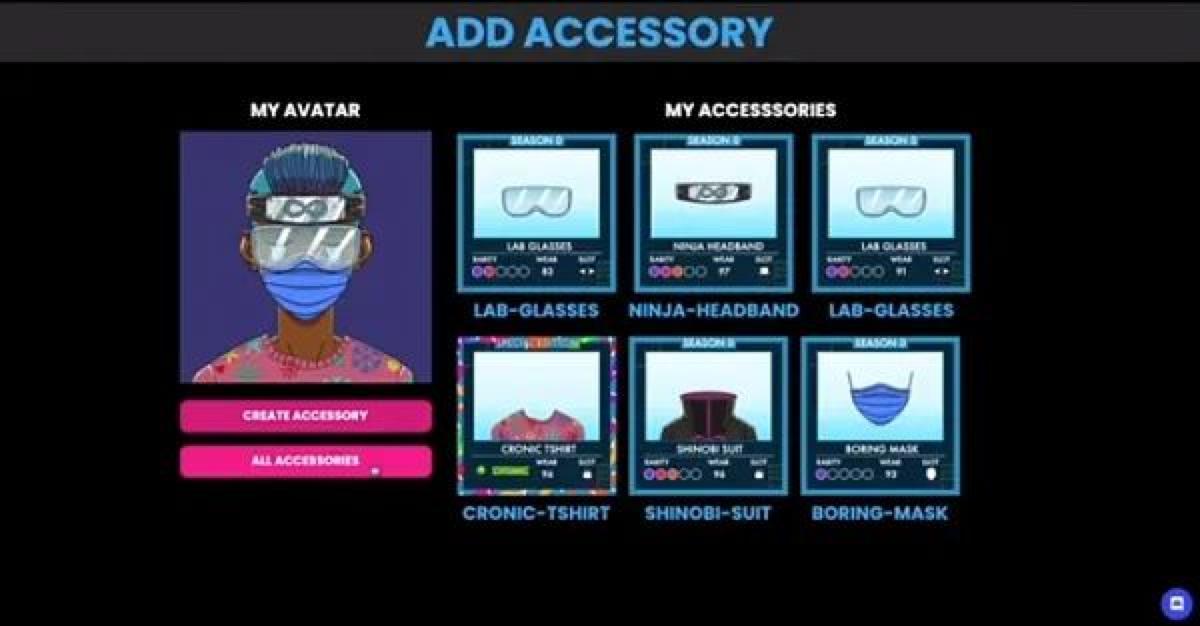
dSquad is an open NFT identity system. Anyone joining dSquad can design their own NFT avatar, customizing all physical attributes of the avatar as their identity within the community.
Additionally, completing tasks on new dApps, participating in community events, etc., will count towards the system's leaderboard, with generous airdrop rewards available monthly.
deBunker
deBunker is a VR immersive baseball game. Two players can play together, hitting baseballs to each other, or one person can be responsible for picking up balls and loading the pitching machine while the other practices hitting. Currently, there is no economic model available.
Saga
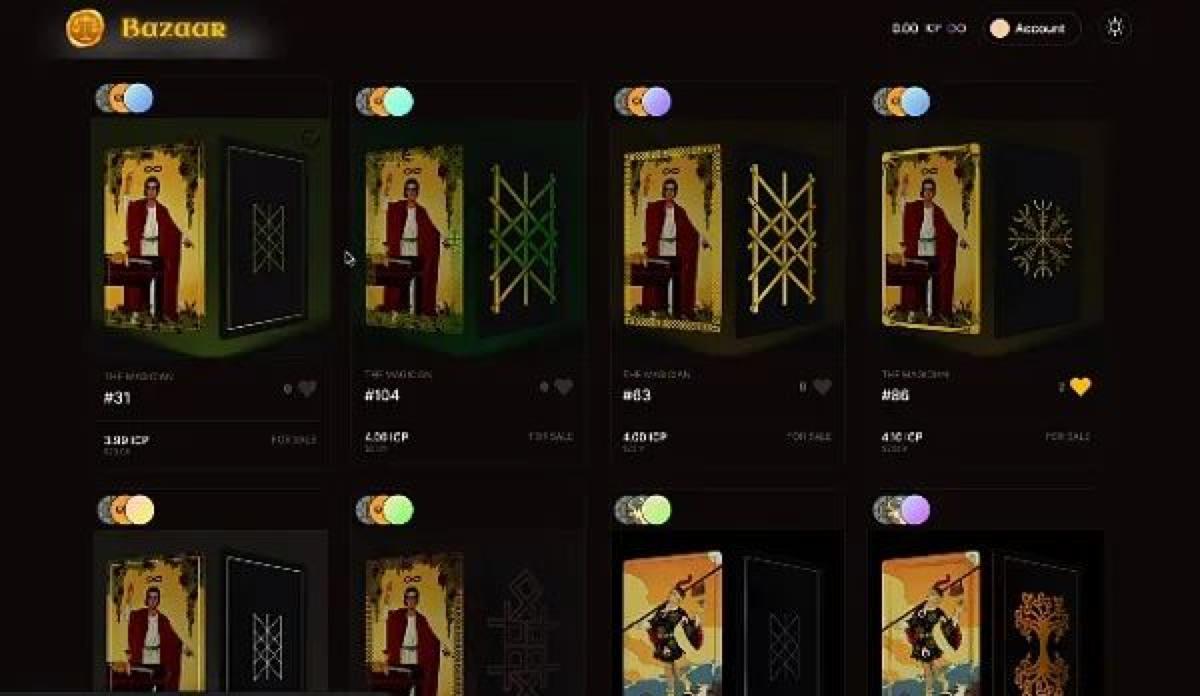
Saga's initial purpose is to bring a delightful digital tarot card (NFT) experience to existing tarot enthusiasts and to do so in a way that incentivizes user contribution and participation.
"Tarot cards themselves are decentralized, with thousands of artists creating tens of thousands of unique cards. After discovering the Internet Computer, I realized that the Web3 infrastructure it offers could elevate the project to a new level, and there are potential similarities between the tarot and the web3 community." ------ Saga developer
The system components built on the Internet Computer for Saga include:
The Bazaar - NFT issuance platform / secondary market
Tarot Directory - NFT development listing
Open Tarot SDK - API providing wallet connection, user asset queries, and minting/purchasing/selling NFTs
Tarot Table - allows users to perform tarot readings using any deck they own
IC Avatar Creator
IC Avatar Creator is a creative platform that allows users to freely build 3D virtual avatars for the metaverse. Thanks to the fully on-chain hosting of the Internet Computer, users can create their avatars as NFTs and trade them using DEX.
Apocalypse NFO Prototype
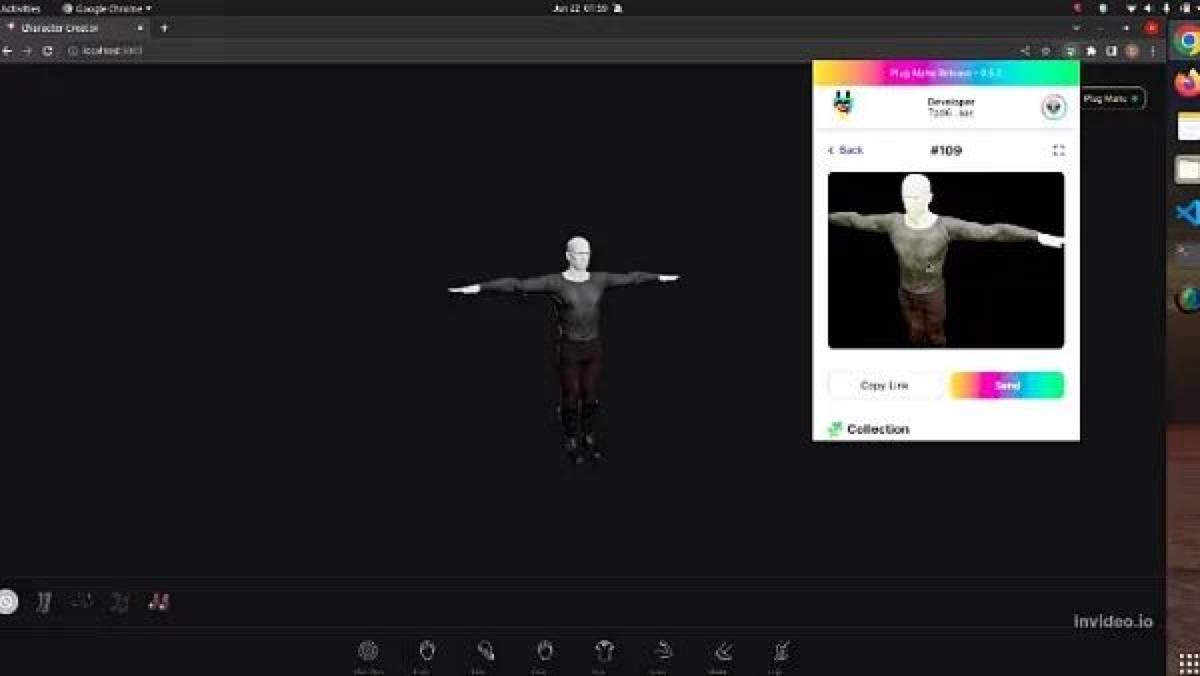
Going beyond NFTs, the developer Apocalypse Studio proposed the concept of NFOs (Non-Fungible Objects), which possess all the intrinsic value of ownership, allowing users to truly own their items securely: complex data that stores the properties of objects that can change and have actions in a structured manner.
Based on NFOs, Apocalypse Studio is developing an MMORPG game called "Deadhaus Sonata."
DeFi Track Winners
ICTC
ICTC is a distributed trading framework for DeFi applications, consisting of a Transaction Manager (TM), Task Executor (TA), and Transaction Compensator (TC).
Toniq Earn + Interesting NFT
Toniq Earn is a decentralized over-collateralized lending product supported by the decentralized interest rate protocol Interesting NFT.
How it works:
Alice needs more ICP Tokens to purchase an upcoming new NFT and wants to mortgage her BTC Flower (an NFT) to borrow 200 ICP, so she fills out a loan request indicating she will pay 10% interest.
Bob likes the BTC Flower collectible and also wants to earn some interest, so he accepts Alice's agreement contract, and his ICP is sent to Alice through the protocol.
At this point, two scenarios may occur depending on whether Alice repays the loan on time:
If Alice repays the loan (plus interest), totaling 220 ICP, she will get her BTC Flower back, and Bob will receive 220 ICP, making everyone happy.
If Alice fails to repay her contract or decides not to repay, the BTC Flower NFT will be sent to Bob.
The beauty of such over-collateralized contracts is that they eliminate default risk. Bob knows that at the end of the contract, he will either receive 220 ICP or a BTC Flower, both of which make him feel good. Similarly, Alice knows she can gain extra liquidity now; if she repays the principal and interest, she retains her NFT, or if she does not repay, she can keep the ICP she initially obtained at the cost of losing her NFT.
Enoki DEX
In short, Enoki is a decentralized exchange that allows users to swap tokens, provide liquidity, trade using limit orders, and act as market makers.
Users register on the DEX and are assigned a broker.
Users can submit limit orders to their brokers, which are executed by the exchange after a round of synchronization; users can also lock assets into liquidity pools, which brokers can use to swap at prices determined by the exchange's limit order buy/sell curves. This way, users can also immediately swap tokens with any broker without waiting for any exchange synchronization.
As an additional incentive for market makers, users who submit limit orders and publish them to the order book receive a 0.03% rebate when their orders are matched.
Portal Creator Marketplace
Portal Creator Marketplace is the video NFT trading platform for the decentralized live streaming platform Portal. Streamers can turn highlights from their live broadcasts into NFTs and host them on the marketplace, where users can purchase or rent them, with income automatically transferred to the streamer's wallet.
Public Goods Track Winners
CrowdFund NFT
CrowdFund NFT is a decentralized crowdfunding platform that uses NFTs to provide crowdfunding services for project parties.
Project parties launching on CrowdFund NFT need to commit to providing rewards in exchange for participation in crowdfunding rounds. These rewards may include: airdrops, whitelists, or use-case-specific rewards (such as "in-game earnings" for gaming projects).
In each crowdfunding round, a set of NFTs will be distributed to participants—NFTs serve as "tokens" for redeeming rewards. Successful crowdfunding participants can also trade their NFTs.
Project parties benefit as well. Each time an NFT is resold, a 2.5% fee is paid to the project party. This provides long-term funding for project parties, allowing them to continue supporting project development even after crowdfunding ends.
Proof of Personhood
Proof of Personhood is an identity verification system powered by decentralized AI human detection. It allows:
Users to verify that they are not robots through a combination of random questions and continuous simple human actions (such as simultaneous facial gestures and stating numbers);
dApps or Web2.0 applications can participate in the Proof of Personhood identity verification system by requiring users to authenticate via QR codes;
No sensitive information (user facial images or voice) leaves the user's device. AI algorithms on the device and algorithms running on smart contracts on the Internet Computer execute in a decentralized manner together.
ICMaps
With ICMaps, users can create their own map servers, integrating maps into Web3 dApps, Web2 applications, or even desktop computers.
Internet Computer Footprint
Internet Computer Footprint has developed a method to calculate the total emissions of the Internet Computer, then determine the carbon emissions of specific projects through cycles and use VERRA carbon credits to offset the carbon emissions of specific projects.
Internet Computer Footprint can be seen as the first step in using blockchain to help combat climate change.
Metamob
Metamob is a decentralized Web3 application for initiating events.
It allows any user to start mobilizing by creating four different types of events: donations, voting, signatures, and fundraising. Users of Metamob can create events to address real-world issues such as climate change, war, or even specific problems in schools or apartments.
"Blue Sky" Project Winners
Kinic
Kinic is a decentralized content search engine built on the Internet Computer, allowing users to input text, categories, or smart contract IDs to discover relevant content within the ecosystem.
CanDB
CanScale is a plan to build scalable distributed infrastructure for the Internet Computer. The first project of CanScale, CanDB, is a non-relational, high-performance, horizontally scalable multi-container database.
FoxIC
FoxIC is a cryptocurrency wallet built using the developer version of MetaMask for the Internet Computer, making it easier for users familiar with MetaMask to interact on the Internet Computer.
DeTi
DeTi is a decentralized time scheduling service that sends messages to specified smart contracts at scheduled or user-specified times. Whatever the user's scheduling needs, they can use DeTi to combine them.
Internet Computer Services
Internet Computer Service (ICS) allows for easy creation and management of smart contracts and aims to provide one-click deployment for dApps, NFT minting, token generation for any new project, and services like configuring on-chain BTC and ETH wallets with just a few clicks.
 Risk warning
 Risk warning


Popular articles





