








A Comprehensive Understanding of the NFT Market Blur and Its Two Rounds of Airdrops

 Did you receive the airdrop package from Blur?
Source: Overnight Porridge, The Way of DeFi
Airdrops are back! Today, the NFT marketplace Blur, led by Paradigm, announced a two-round airdrop plan for NFT participants. In the first round of airdrops, NFT users who traded on NFT marketplaces like Opensea, LooksRare, and X2Y2 in the past six months will have the opportunity to receive a Care Package airdrop containing $BLUR tokens.
In this article, we will briefly discuss the Blur NFT platform and its two-round airdrop plan.
First, we need to understand that Blur is a new NFT trading marketplace + NFT aggregator, which you can think of as a younger version of Opensea + GEM, aimed at disrupting the NFT trading market by providing better features and faster trading speeds.
So far, Blur has raised $14 million in funding, with investors including Paradigm, 6529, Cozomo Medici, dhof, Bharat Krymo, Zeneca, OSF, MoonOverlord, icebergy, Deeze, Andy8052, Keyboard Monkey, and others.
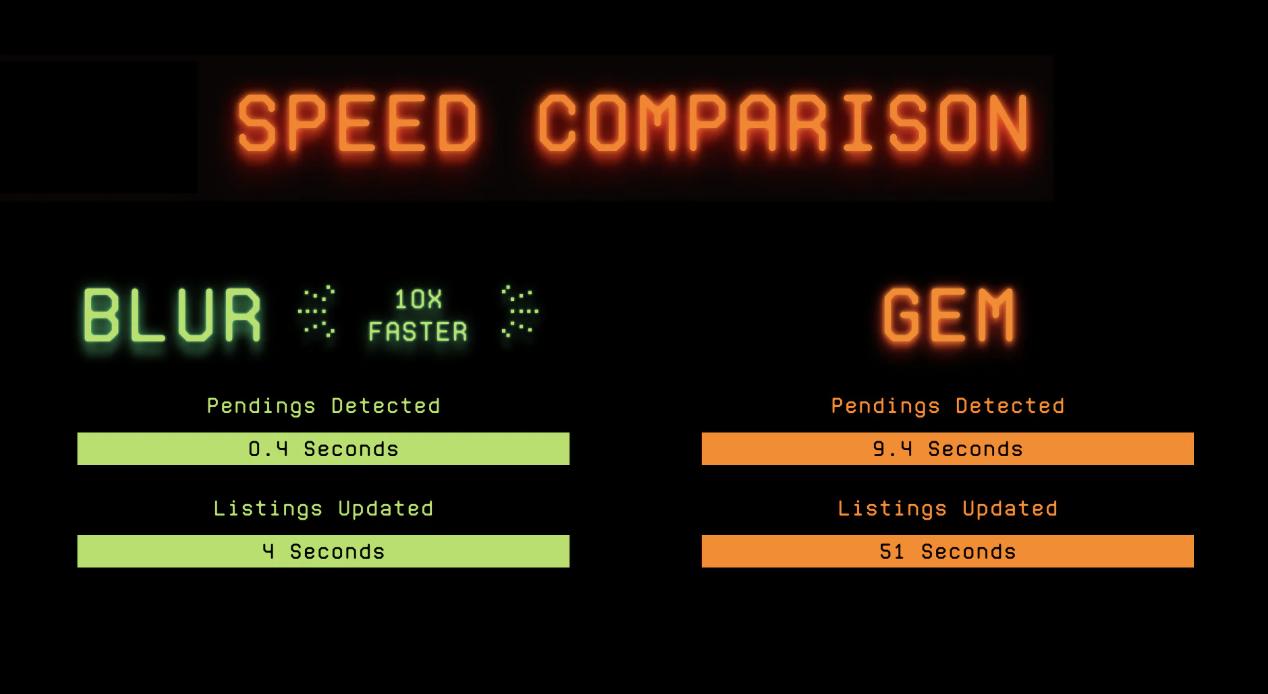
In the past few months, Blur's market has been in a closed beta phase (note: beta participants will receive additional token airdrops). Nevertheless, Blur's aggregator trading volume has already ranked second in the market, only behind GEM.
Surprisingly, the publicly launched Blur marketplace does not charge market fees like platforms such as Opensea; they have adopted a zero market fee model. In short, Blur's NFT marketplace, aggregator, and advanced trading tools are available for everyone to use at zero cost (excluding gas fees). Of course, this may just be a short-term strategy to attract users.
Encouraging Traders to Respect Royalties with Airdrops
Previously, the zero-royalty strategy adopted by Sudoswap caused significant controversy in the NFT market. In response, Blur hopes to encourage traders to respect royalties through their airdrops. They explained in their blog:
"Traders want to maximize profits, collectors want to support creators, and creators want more royalty income."
"Today, royalties are not enforceable on-chain, and traders have many zero-royalty options. For example, they can list royalty-free NFTs on Sudoswap and charge a 0.5% trading fee, while GEM also aggregates Sudoswap, directing significant traffic to their zero-royalty listings."
"Even though royalties are not enforceable on-chain, we can create an incentive structure to increase royalty income in the ecosystem. Blur defaults to the highest royalties in OpenSea, LooksRare, and X2Y2. Of course, when traders list NFTs on the Blur marketplace, they can also customize the royalty values."
"Traders can list NFTs on Blur and set royalties to Sudoswap's platform fee (0.5%). By doing so, they can earn the same NFT profits while receiving more $BLUR token airdrops."
"Note: Traders who set royalties above 0.5% will receive more airdrops."
As of now, the specific royalty incentive formula has not been announced, but this is clearly not good news for zero-royalty NFT trading platforms like Sudoswap.
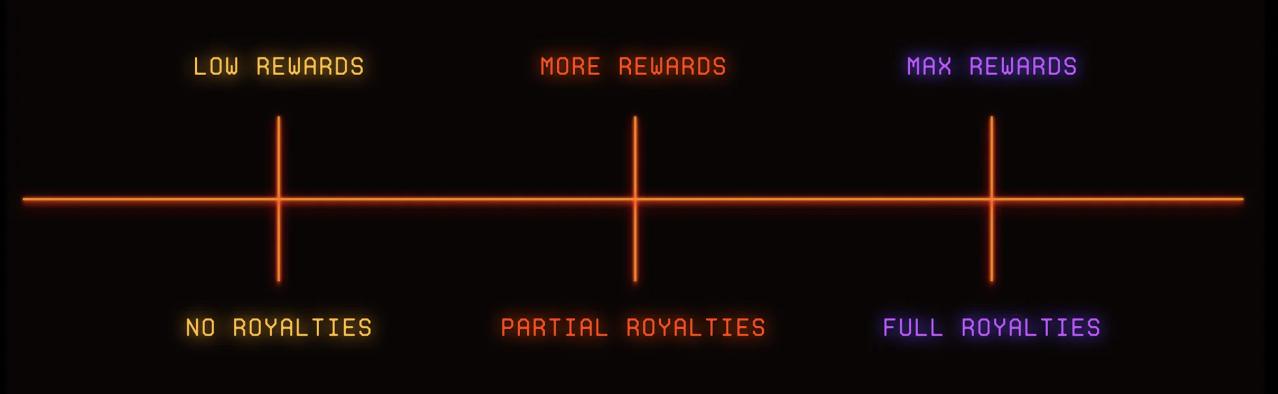
Note: This plan is not set in stone; Blur will monitor their initial solutions and work closely with traders, collectors, and creators to explore other solutions. Once the $BLUR token launches in January next year, these solutions can be decided through voting.
About the First Round of Airdrops
Now let's talk about the airdrop that everyone is concerned about.
The first step of the airdrop plan is to distribute Care Packages to participants who have continued trading NFTs in the past six months (against the backdrop of the NFT bear market).
After visiting the link https://blur.io/airdrop, you need to connect your wallet and perform a gasless signature. At this step, you don't need to worry about anything; it is safe.
After clicking "airdrop" to enter the claim page, you can see how many airdrop packages you can receive (related to NFT trading volume). To claim them, you need to list an NFT on the Blur platform within 14 days.
This step will be crucial because you will encounter a setApprovalForAll request, which is similar to platforms like Opensea. However, since Blur is a new NFT platform, we should try to list a low-value NFT in the short term.
Once you complete this task, you can open your airdrop package, which will contain three rarity types: the most common is uncommon, the middle one is rare, and the least is legendary.
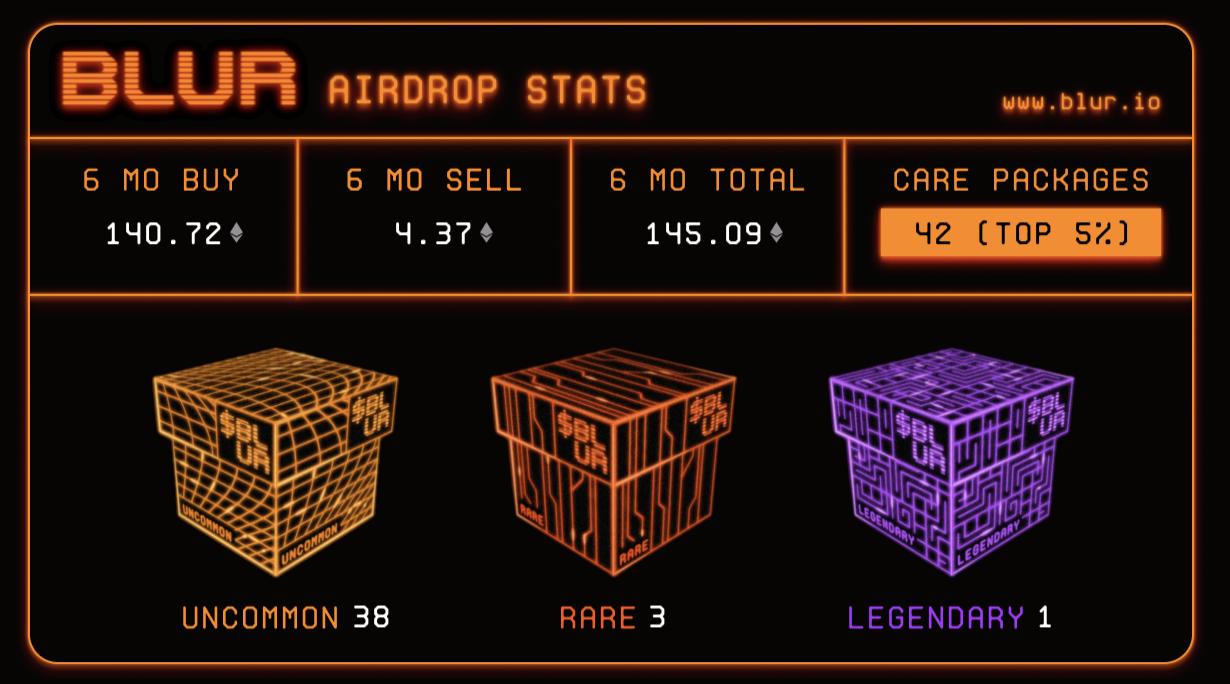
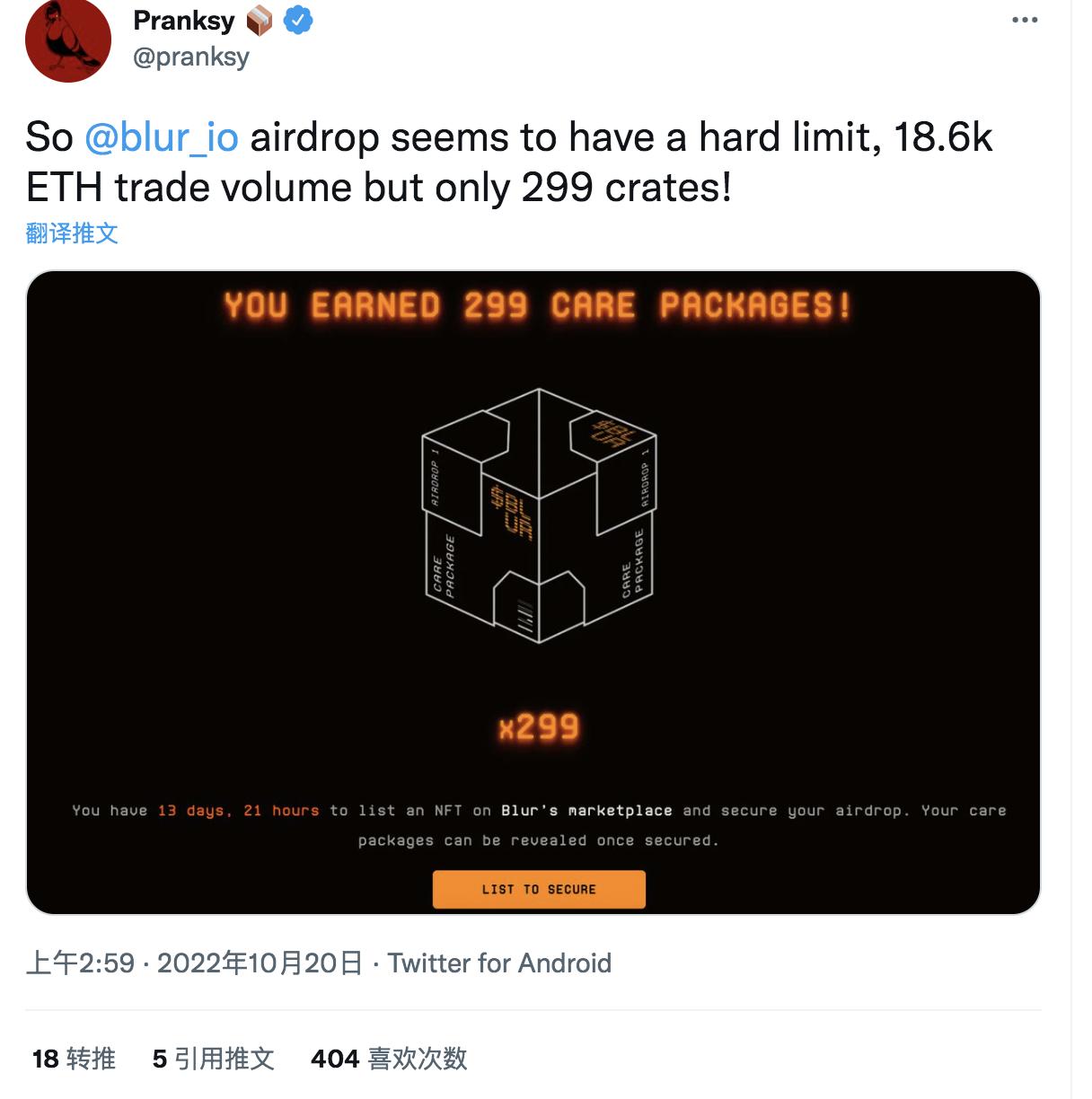
According to market observations, in the first phase, each address can receive a maximum of 299 airdrop packages, and the probability of obtaining a legendary package after opening is less than 2%.
About the Second Round of Airdrops
Next, let's discuss the key second round of airdrops. In the upcoming November, Blur will distribute airdrop packages to all participants who actively engage in listing and trading on its platform. According to the project's explanation, the number of airdrops in the second round will be much larger than in the first round, so eligible traders will receive more airdrop packages.
This airdrop mechanism ensures that traders who actively use Blur will receive the most tokens and control over the protocol.
So what are the rules for the second round of airdrops?
To prevent airdrop hunters from over-participating, Blur has not provided a specific formula, but here are some tips on how to maximize your airdrop:
- The more NFTs you list, the more you will receive;
- Listing blue-chip NFTs will help (but consider contract security);
- Listing actively traded NFTs will help;
- Using all of Blur's listing tools can increase rewards;
- There will be anti-witch measures, so continuously listing NFTs at unrealistic prices or listing NFTs with no liquidity is pointless.
(A little tip: Before the second airdrop, perform at least 3 floor-sweeping operations on Blur.)
Additionally, there will be a loyalty concept for the second airdrop, which will affect participants' luck when opening airdrop packages. Specifically:
- <50% loyalty - low luck
- 50-90% loyalty - medium luck
- 90-97% loyalty - good luck
- 97%+ loyalty - very lucky
The factor affecting loyalty is the price difference of NFTs listed on Blur compared to other platforms. If the prices on other platforms are lower than on Blur, the score will decrease.
A Brief Perspective on the Blur Platform
Based on limited testing, my personal feeling is that Blur is indeed faster than other platforms and offers some unique features. However, Blur currently has some issues, such as incorrect floor price displays for some NFT collections. Additionally, Blur only supports NFTs of the ERC-721 token standard, and many NFTs using the ERC-1155 standard cannot be displayed on Blur.
Overall, the Blur platform does have its advantages; it is more suitable for professional traders. According to the official explanation, most of the project's tokens are distributed to community participants, and the existing issues can be resolved through development in the future. In the short term, Blur may not catch up with Opensea, but if the goal is to surpass GEM, there is still hope.
 Risk warning
 Risk warning
Popular articles





