








Dialogue with Feng Delun: Let "Infernal Affairs" meet Web3, creating a new form for classic transmission

 From the establishment of the project Departed Apes, which aims to bring a cinematic feel to the Web3 world, to the official launch of the G Collection series, Feng Delun seems to have finally taken the first step in combining film with Web3.
Author: Zen, PANews
Twenty years ago, the film "Infernal Affairs" premiered in Hong Kong. This masterpiece, hailed as a "classic among classics" and a "savior of the industry," provided a grand farewell to the golden era of Hong Kong cinema. To commemorate the 20th anniversary of its release, the "Infernal Affairs" trilogy has been re-released in 4K restoration in regions such as New York and Hong Kong, fulfilling fans' wishes to revisit the classic. In addition to paying tribute through the re-release of the film, director and actor Andrew Lau has taken a different approach by launching the Departed Apes project using Web3, blockchain, and NFTs as technical means, injecting new vitality into the "timeless classic."
Previously, Lau, along with the production and distribution company Media Asia and blockchain investment bank and incubation firm Everest Ventures Group, co-founded Grid6 Studios. Departed Apes is the first project launched by this studio, using "Infernal Affairs" as its story foundation. In mid-December, the G Collection NFT minting event for Departed Apes will commence. The series consists of ten thousand Departed Apes, designed by Marvel comic artist Logan Lubera, who has previously worked on designs for "Spider-Man," "Iron Man," and other comics. To enhance the fun and mystery, the G Collection will adopt a blind box approach, where the specific Departed Ape character held cannot be determined at the time of minting, and Grid6 Studios will soon reveal the characters to holders, providing surprises.
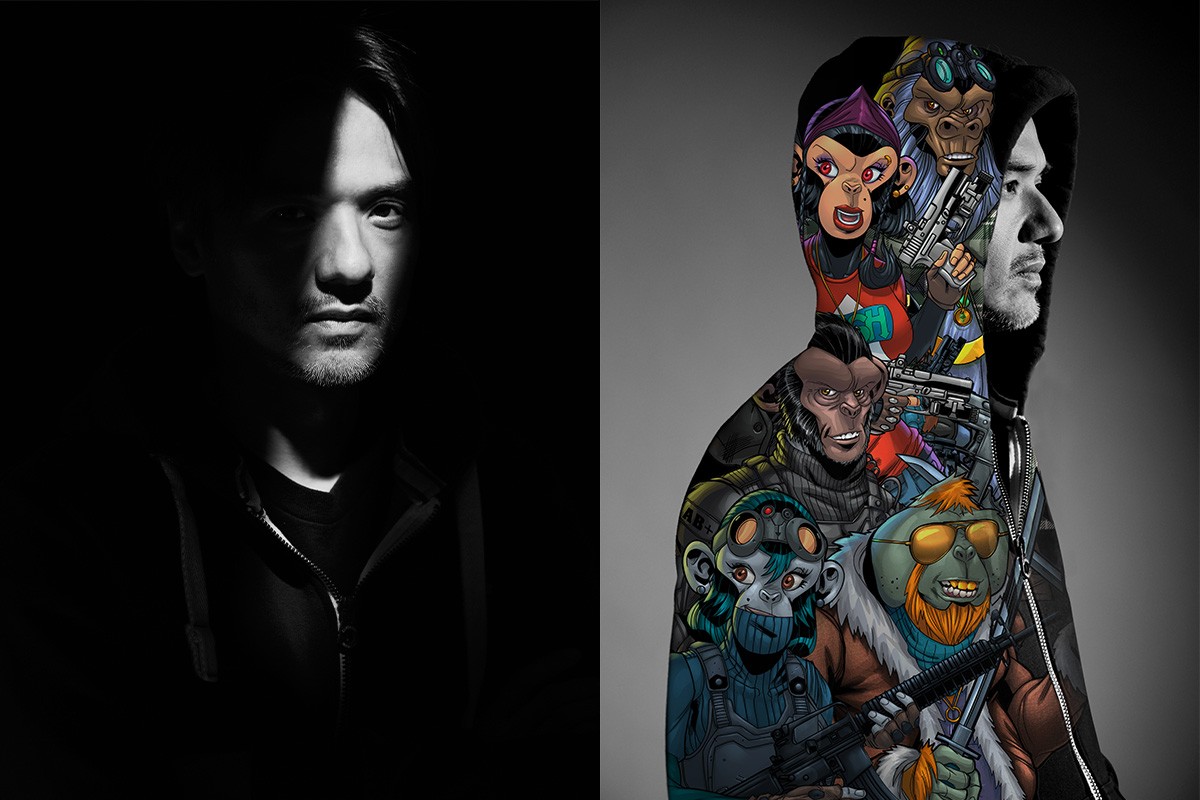
Lau has stated that he aims to explore the combination of film and Web3. From the establishment of the Departed Apes project, which aims to provide holders with an unprecedented cinematic experience in the Web3 world, to the official launch of the G Collection series, where each holder can decide the character's personality and the future development of the "Departed Apes Universe," he seems to have finally taken the first step. Recently, during Taiwan Blockchain Week, PANews conducted an exclusive interview with Lau to discuss film, art, and Web3.
PANews: When did you first get involved in the crypto space, and what was the opportunity that led you from Web2 to Web3?
Lau: I actually entered the cryptocurrency field not long ago. My first NFT was a virtual land LANDNFT that I purchased last year while negotiating a collaboration with the popular metaverse game project "The Sandbox." Through the collaboration with The Sandbox, I began to explore different NFT projects. Opening an NFT blind box reminded me of the joy of unwrapping a gift on Christmas to find a new toy. I started to think that as a director, I work in conveying emotions, and I have a background in graphic design. Perhaps I could also use NFTs to achieve this. Whether it's crypto or NFTs, they are all based on blockchain technology, and I am optimistic about the development and application of this technology.
PANews: "Departed Apes" introduces the concepts of NFTs and the metaverse. Why did you want to combine film with these technologies, and what changes do you expect to bring?
Lau: We discussed with Media Asia, and they hold many classic films, among which the most classic IP is undoubtedly "Infernal Affairs." Since I am also in the film industry and a storyteller, I wanted to seize this opportunity to try to integrate it with NFTs and fully leverage "Infernal Affairs" as the best film IP of the past 20 years. We do not want to simply take a film IP, edit it, and sell the segments as short clips featuring stars at high prices to their respective fans. We believe that editing or selling segments like that is not useful.
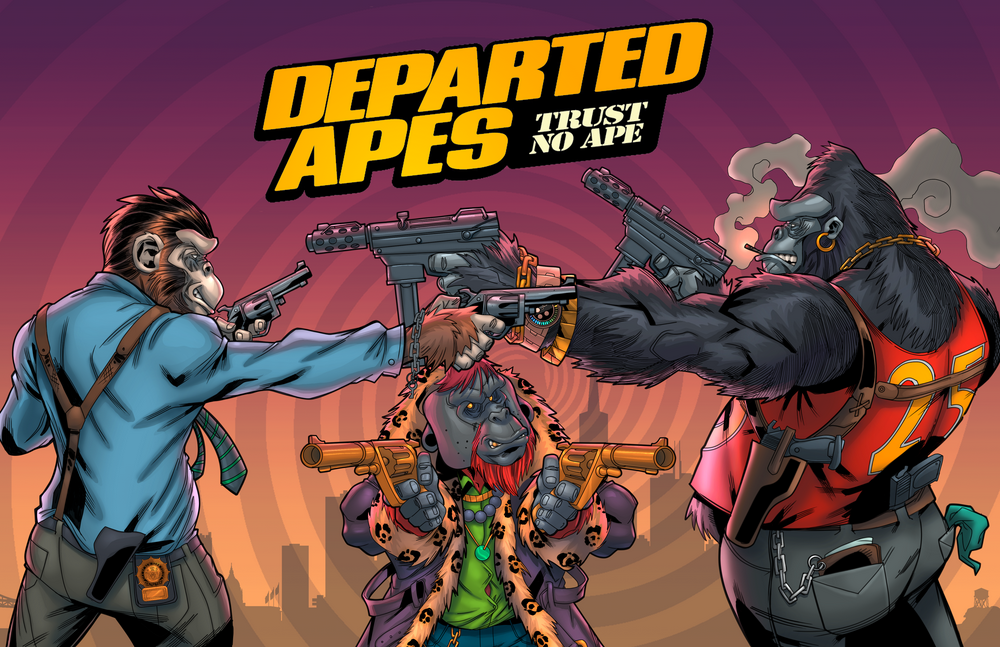
Bringing "Infernal Affairs" into the Web3 world not only continues the classic but also gives the film new life, allowing more young generations to understand this IP. Following the footsteps of Departed Apes, our future buyers can also enter the Departed Apes Universe and become part of it, but it will not affect the classic original.
PANews: Many well-known Web2 brands have already entered the NFT space. How do you view this trend, and what issues still need to be addressed for the widespread adoption of NFTs?
Lau: Most brands are currently in a trial-and-error phase. We see many big brands like Gucci launching NFTs, but it's clear that they haven't fully mobilized their resources and are just observing the industry situation. For example, CNN launched the Web3 project Vault by CNN last year, but this year suddenly announced its termination. However, some brands consider long-term development, like Disney's collaboration with Polygon, which aims not just to create an NFT series but also to lay out plans in AR, NFTs, and AI.
As for the crypto industry and the popularization of NFTs, the biggest issue right now is trust. This year, negative impacts from events like FTX have intensified people's distrust of the entire crypto industry.
PANews: There are already countless NFTs on the market. What kind of projects do you think can achieve success?
Lau: In the NFT space, there are still many things that no one has done before, many paths that no one has walked. Just like in the film industry, some films have styles or techniques that have never been seen before, and before they receive market and industry feedback, it's hard to judge whether they will succeed. Over a decade ago, a pseudo-documentary style of horror filmmaking suddenly became popular worldwide, providing audiences with a more realistic immersion, as if the scenes in the camera were actually happening in real life. But before this style emerged and gained popularity among fans, no one knew whether investing in such a film was worthwhile. So when you ask me which NFTs will succeed and which won't, I really don't have a good answer.

However, if one merely imitates popular projects like Bored Apes, blindly following trends to create PFP collectibles and manage communities, it will be difficult to have its own advantages. Therefore, the next wave of success will likely not follow the same old path, so we are also moving towards innovation. Whether it's NFTs or filmmaking, creativity is particularly important, and figuring out how to make a project creative is where the difficulty lies.
PANews: How do you view the current bear market in the crypto industry?
Lau: There's nothing new under the sun. When I first started working, I also experienced the collapse of hundreds of banks. Perhaps because the people in this circle are usually quite young, they see these industry crises as if it's the end of the world, but these have historically happened before. If one has firm confidence in technology, I believe that regardless of the time or situation, the development and application of crypto technology are worth studying. But if there is no confidence, then of course, this is not the best time.
For our project, launching in such a bear market is not what we envisioned, but even at this point, it doesn't make me feel too discouraged. When the market is hot, projects spring up like mushrooms, and the industry is noisy. If a project is launched during a bull market, it may be hard for others to notice. Because many people are making noise, the collective voice is loud, and our voice is small; however, in a bear market, such groups decrease, making it easier for our voices to be heard, and feedback among us becomes more efficient, forming a more united community.
PANews: Since last year, many entertainers have entered the NFT space. Why do you think artists are attracted to NFTs?
Lau: NFTs have really entered the mainstream consciousness in the past two years; it's still a very new field with a lot of imaginative space for artists to create. In film and television, for example, an old artist like Stephen Chow, who has many classic IPs, can fully utilize his comedic IPs to continue passing on his humor and joy to future generations.
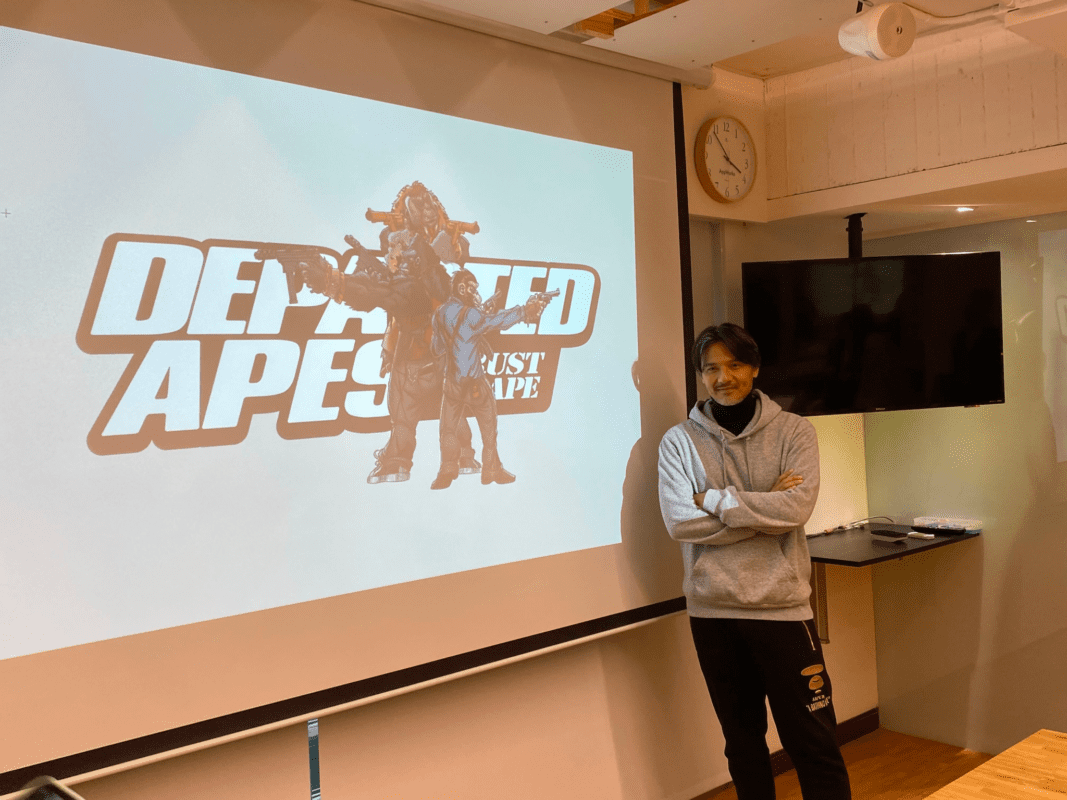
For singers, I believe that music NFTs represent a direction with great potential. I know that Jay Chou is working on these. From the perspective of singer income, the de-intermediation characteristic of NFTs eliminates expensive intermediary fees and establishes an efficient and secure circulation channel, allowing music creators to connect directly with fans, enhancing connectivity. Artists receive most of the profits, and fans enjoy a richer and more convenient experience. NFTs bring a high-efficiency operating model to the music industry. In the traditional model, music creators relied on record companies or platforms to release their works. Blockchain can rebuild the production, purchase, sale, listening, and management of music in a fair and transparent manner. When music integrates with NFTs, issues such as complex royalty payment processes, counterfeit tickets, and the inability of creators to track the circulation of their works may be resolved.
PANews: What new expectations do you have for the NFT/Web3 field in the future? Will you have more integration with NFTs in film production/IP creation?
Lau: In the short term, I don't think everyone will suddenly be walking around in the metaverse with something. With the continuous development of technology, we still haven't clarified what the true metaverse will look like in the future. My fantasy is that this day will arrive in 20 years. The IPs of the films I directed are mostly not in my hands, but Media Asia still has many film IPs worth considering. However, for now, we are certainly focusing our attention and energy on the Departed Apes project.
 Risk warning
 Risk warning
Popular articles





