








Interpretation of OpenSea's Mandatory Royalty Enforcement Tool Mechanism and Its Advantages and Disadvantages

 The OpenSea royalty tool is more like a declaration that forces project parties and users to take sides, and its excessive authority directly conflicts with the concept of decentralization.
Written by: Shisi Jun
NFT transaction royalties have already distributed $1.8 billion on Ethereum. However, the battle over royalty payments began this year, culminating in OpenSea, which occupies 80% of the NFT trading market by year-end, officially announcing the launch of a mandatory royalty enforcement tool. Is this a matter of royalty legitimacy or monopolistic selfishness?
Previously, royalties were merely a matter of on-chain queries and off-chain voluntary implementation. Now, OpenSea is enforcing royalties on-chain, which, while seemingly supporting creators, comes with a contract feature that blacklists almost all competitors. This appears more like a declaration of allegiance between project parties and users, with its excessive permissions directly clashing with the concept of decentralization, potentially becoming an excellent tool for future regulatory intervention.
This article will explore:
- The implementation mechanism of OpenSea's mandatory royalties
- A comprehensive evaluation of the pros and cons and a summary of viewpoints
1. The Implementation Mechanism of OpenSea's Mandatory Royalties
On November 8, 2022, in response to X2Y2 and Sudoswap's pursuit of zero royalties, OpenSea's counterattack began. Summarizing its mechanism:
- This code restricts the sale of NFTs to markets that enforce mandatory royalties.
- For NFT projects that wish to collect royalties on OpenSea, they must integrate this tool; otherwise, OpenSea will not collect royalties.
1.1 Knowledge of Blockchain Contract Upgrades
First, let's supplement some basic knowledge about blockchain:
- On-chain contracts are essentially fixed codes driven by transactions.
- The code of on-chain contracts cannot be changed.
- If designed from the start with a proxy upgrade model, the logic contract can be modified (changing the address pointed to in the proxy contract).
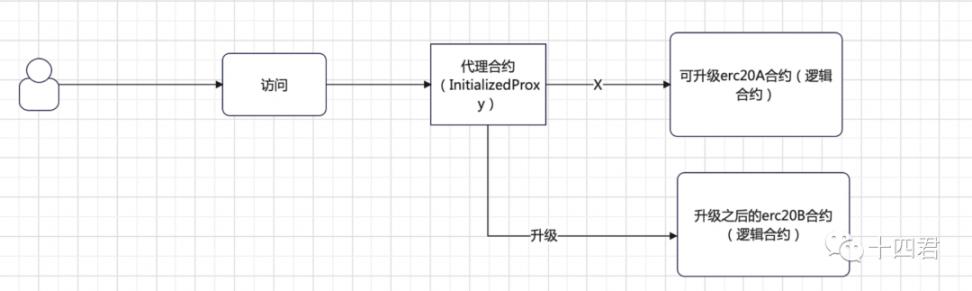
In summary, to change on-chain code through upgrades, it must be designed from the beginning. Even the most advanced "Unstructured Upgradable Storage Proxy Contracts" cannot delete previous variables; they can only expand new storage variables.
1.2 OpenSea Implements Mandatory Royalties Through a Blacklist
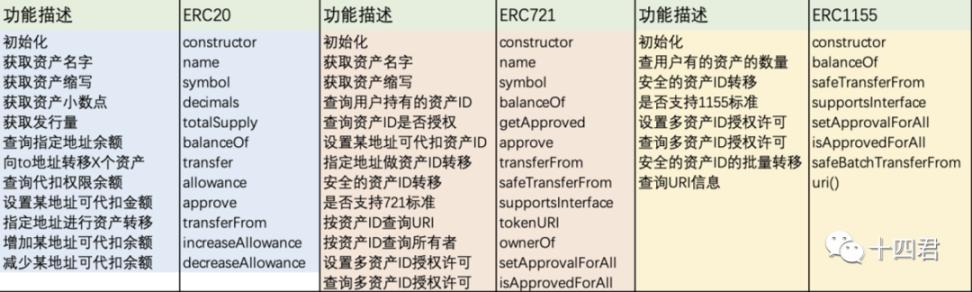
By reading the source code, this tool adds modifiers onlyAllowedOperator and onlyAllowedOperatorApproval to each transferable standard function (approve, transferFrom, etc.). Please note that the ERC721 standard for NFTs does not include the transfer function.
Further reading: NFT Leasing Proposal EIP-5006 Enters Final Review! Making Chain Reform for Large Overseas Games Possible
The effect of this modifier is to check the blacklist before executing authorization and transfer. The reason for restricting authorization is to avoid wasted operations where users authorize but ultimately cannot transfer. The basis for determining whether an address is on the blacklist is the transaction's "from" address and the corresponding code hash.
1.3 Who Manages the Blacklist?
In contrast to QQL, which voluntarily rejected orders from the X2Y2 platform, OpenSea's blacklist must be pointed to by each NFT project. OpenSea can easily designate all trading markets as forbidden zones, forcing project parties to choose between OpenSea or non-OpenSea.
This tool modifies the transferFrom function, which is a combined function compatible with both withholding and actively initiating transactions. In the ERC721 standard, the transfer function has been removed, and only transferFrom is used.
Further reading: 【Source Code Interpretation】What Exactly Is the NFT You Bought?
On December 9, OpenSea officially announced that it would transfer ownership of this tool to a multi-signature controlled by the "Creators Ownership Research Institute (CORI)," with the deadline extended to January 2, 2023.
However, I believe that although multi-signature management involves multiple institutions, it still forces projects to implement a blacklist controlled by others. Therefore, this does not contribute to enhancing decentralization.
1.4 Can Mandatory Royalties Be Circumvented?
Yes, but at a high cost. It is indeed challenging to frequently update the blacklist.
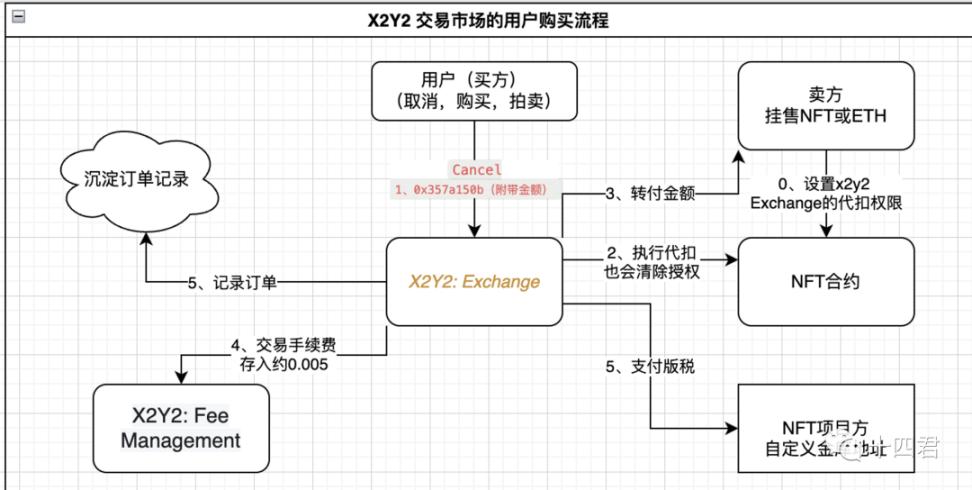
However, the real cost lies in the authorization operation. As shown in the diagram, when the seller lists an item for sale, they need to set authorization. However, the listing order often requires some time to wait for a user to complete the transaction (as shown in the diagram's operations 2, 3, 4, 5). Therefore, the authorization addresses in the NFT trading market are usually stable over the long term, reducing the cost of listing for sale. This may change in the future due to Uniswap's unified authorization protocol.
Further reading: After Seizing 100,000 NFT Orders from X2Y2, How Many Users Really Did Not Pay Royalties?
Additionally, the blacklist review mechanism also has a design based on code hashes. For single-listing transactions deploying individual wallet contracts (similar to the early OpenSea Wyvern protocol), the deployed code is often consistent, making it difficult to audit based on code hashes.
Finally, the cost of blacklisting in bulk is much lower than the cost of circumventing it. Refer to the early airdrop contracts for junk coins, where a single transaction can complete an airdrop to 4,000 addresses.
Therefore, if the mandatory royalty payment tool becomes widespread and an industry standard, even if it can be circumvented, it will lead to a continuous confrontation, reminiscent of the cost battles of black markets in web2, which will be replayed in web3.
1.5 The Challenge of Mandatory Royalty Payments Lies in Promoting Updates
After a comprehensive analysis of the implementation mechanism of this tool, the following conclusions can be drawn:
- Advantages: It is mandatory, and the cost of circumvention is high.
- Disadvantages: It requires the active cooperation of upgradable NFTs.
Regarding the disadvantages, upgradable NFT contracts can be easily managed by project parties (and can also be downgraded in the future). However, most high-value NFTs currently operate on a non-upgradable model. How can this be addressed?
From a technical perspective, there are solutions, but users are the ones who suffer.
One approach could be to create a separate burn contract where users voluntarily give up their NFTs, and the project party then issues a corresponding NFT under a new upgradable contract, similar to a cross-chain bridge that ensures uniqueness while changing the NFT contract address.
However, from a consensus perspective, users pay gas fees but receive NFTs with greater centralization risks, making true cooperation difficult.
It is too challenging, so this tool may also serve as an excuse for OpenSea not to pay royalties to certain projects.
2. What Industry Shocks Will Mandatory Royalties Bring?
2.1 Builders Will Be Deterred, Leaning Towards Built-in Integration
OpenSea uses a monopolistic tool to force NFT project contracts to relinquish blacklist management rights, which will significantly impact innovation and enthusiasm in the industry. When builders who want to create better products for the NFT market enter the scene, they will worry about whether companies like OpenSea will violate industry spirit and implement crackdowns in the future. Moreover, there can be many justifications for this (political, copyright, discrimination, regional differences, etc.).
Furthermore, one day in the future, such blacklist tools may become a means of political governance.
As a result, future NFT projects will likely adopt more integrated NFT market models, such as some being used as in-game items. Those with built-in trading systems will better facilitate low-cost transfers and reduce trading friction within the in-game economy.
2.2 Diversification of Creative Revenue Models
Buyers Become the Payment Subject
Looking back at history, from relying on primary sales to collecting royalties on each secondary sale, to deciding whether to collect, and then entering the competition for mandatory collection, we should consider the thoughts and choices of buyers.
Currently, royalties are essentially paid by sellers, although they may indirectly be borne by buyers through the seller's pricing. However, if buyers are allowed to freely choose to pay from the beginning, it will be more beneficial for sellers to set more suitable selling prices. From the perspective of both market sides, sellers are leaving the current NFT project's market, while buyers are entering the market, which gives entrants a greater initial motivation to pay and recognize the vision of the NFT project.
A Time and Scale-Reducing Royalty Collection Mechanism
The secondary sales dividends throughout the entire lifecycle are actually an inappropriate allocation of resources, as they do not provide returns during the resource-scarce early stages of creation and can easily lead to liquidity lock-in after prices rise, resulting in projects profiting without doing anything.
Therefore, to solve the timing and quantity of distribution issues, a more decentralized notarization approach should be attempted. For example, the contract could involve a time and scale-reducing royalty collection mechanism. This is similar to the historical regressive tax system, where the tax amount dynamically changes, ultimately reaching a proportion that most traders are willing to pay.
Making the Utility of NFTs More Practical and Sustainable
Finally, beyond initial sales price increases and continuous income reductions, the most far-reaching approach is to access off-chain resources (such as games, staking, social resources, etc.) based on holding NFTs. This can refer to the practices of NFT Discord servers, where role grants are based on past royalty payments. If users purchase through royalty-free platforms (like X2Y2, Sudoswap), the utility they derive will be discounted, effectively excluding buyers who do not provide revenue to project parties from the application layer.
Only through decentralized group dynamics can the greatest happiness for the community be achieved.
 Risk warning
 Risk warning




Popular articles





