








a16z led a $100 million financing round, a review of the privacy L2 Aztec ecosystem

 Like most privacy ecosystems, the Aztec ecosystem is in the early stages of development, with few native projects, currently focusing on integrating mainnet DeFi protocols.
Author: Maverick, Wu Says
After the Tornado Cash incident, the privacy sector is facing a trust crisis. Recently, the Layer 2 scaling network Aztec Network, which employs the UTXO model and privacy proofs, announced the completion of a $100 million Series B funding round led by a16z crypto, with participation from A Capital and others. Previously, Aztec Network had raised nearly $17 million in a Series A funding round led by Paradigm. Following the funding, Aztec co-founder Andrews stated that the funds would primarily be used to hire more engineers globally to build the network.
Aztec is a zero-knowledge Rollup built with a privacy-first architecture, allowing users to access Layer 1 applications they wish to use while fully protecting their privacy. Its product system is based on the underlying PLONK proof system, enabling anonymous transactions between accounts and facilitating privacy interactions with DeFi projects through gateway contract integration. Recently, Aztec also launched the programming language Noir, making it easier and more convenient for developers to build applications with zero-knowledge proofs on Ethereum.
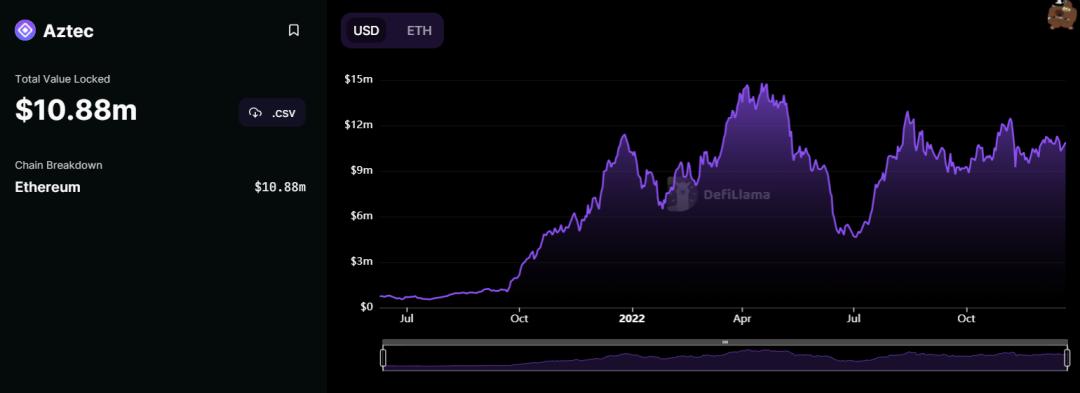
According to DeFi Llama data, Aztec's current TVL is approximately $11 million. Aztec currently has no plans to issue a token, but it is also considered a potential high-value airdrop similar to Arbitrum and ZkSync. However, third-party compliance tools from exchanges like FTX have previously frozen accounts that transferred funds from privacy protocols like Aztec, so users should be aware of related security issues during interactions.
This article will introduce key projects in the Aztec ecosystem.
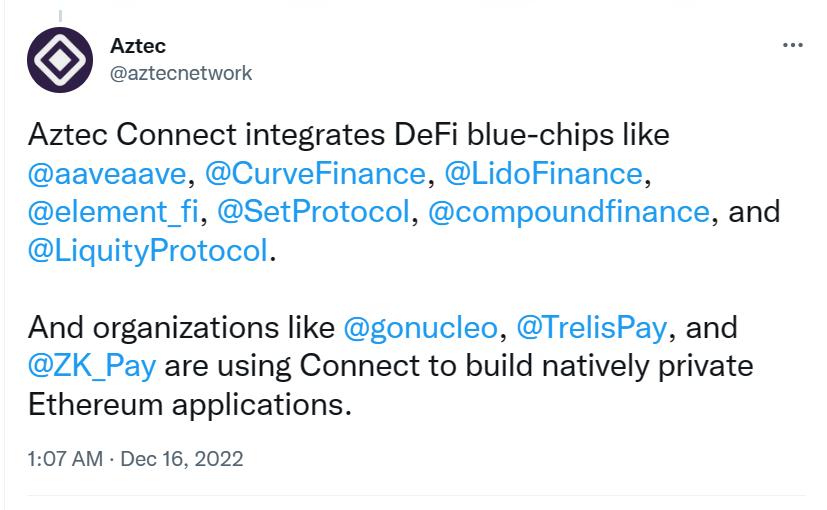
One of Aztec's highlights, Aztec Connect, officially launched on July 7. This is a set of tools connecting Ethereum DeFi protocols and Aztec's private rollup, supporting privacy DeFi with the help of three components (Layer 1 DeFi protocols, Aztec Connect SDK, and Aztec Connect Bridge contracts). Aztec Connect expands the functionality of Zk.money, adding features from blue-chip DeFi partners. It allows privacy access to protocols on the Ethereum mainnet through batch transactions with other Zk.money users, making it easier for Ethereum projects to integrate Aztec. Aztec Connect acts like a proxy service for DeFi, allowing anyone to deposit into the Aztec network, interact with Ethereum DeFi, and rely on trusted Layer 1 contracts and liquidity. Currently, the Aztec Connect ecosystem includes mainstream Ethereum DeFi protocols such as Aave, Curve, Lido, Compound, and Liquity.
Zk.money
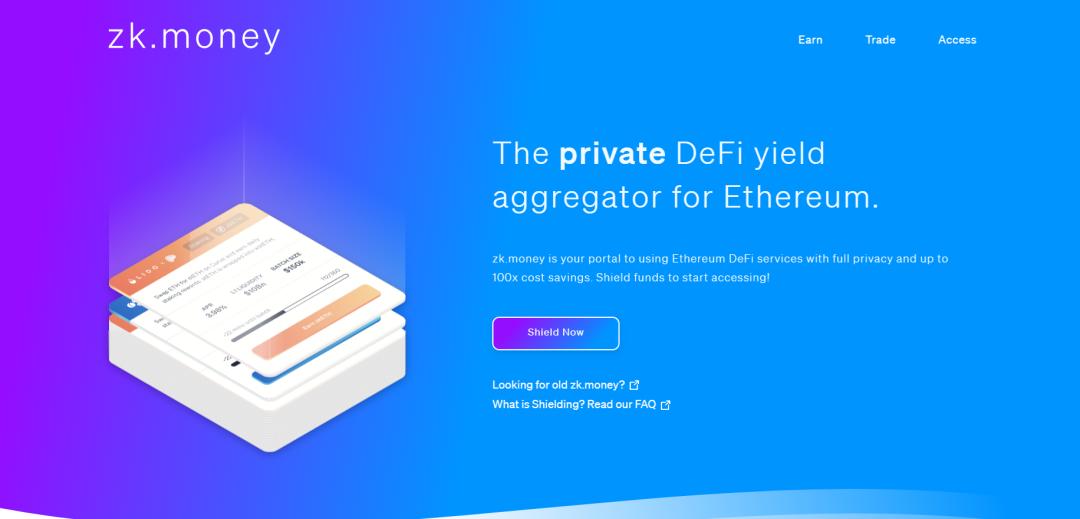
Zk.Money is the first application of Aztec Network, launched in March 2021. The old version of Zk.money could only facilitate simple transfer payments, allowing funds to be sent completely privately to another Aztec account or withdrawn to Layer 1, but only supported a limited number of assets like ETH, DAI, and renBTC, with a transaction limit of 5 ETH or 10,000 DAI. Users send zkETH or DAI to a username (@name) on Zk.money, and the recipient receives zkETH or DAI; sending zkETH or DAI to any Ethereum address outside of Zk.money results in the wallet receiving regular ETH or DAI. Zk.money officially claims to have over 75,000 registered users, more than 225,000 transactions, and a total transaction volume of $80 million, while being 96% cheaper than existing privacy transfer protocols.
The new version of Zk.Money retains the original transfer payment functionality while adding privacy DeFi features, allowing users' funds to interact with mainstream DeFi protocols under complete privacy protection, such as borrowing on AAVE using ETH or DAI, staking ETH on LIDO for rewards, and depositing DAI into Yearn vaults for passive income. However, Zk.Money currently only supports the DeFi-Earn feature, while the Trade feature is still under development.
ZKPay
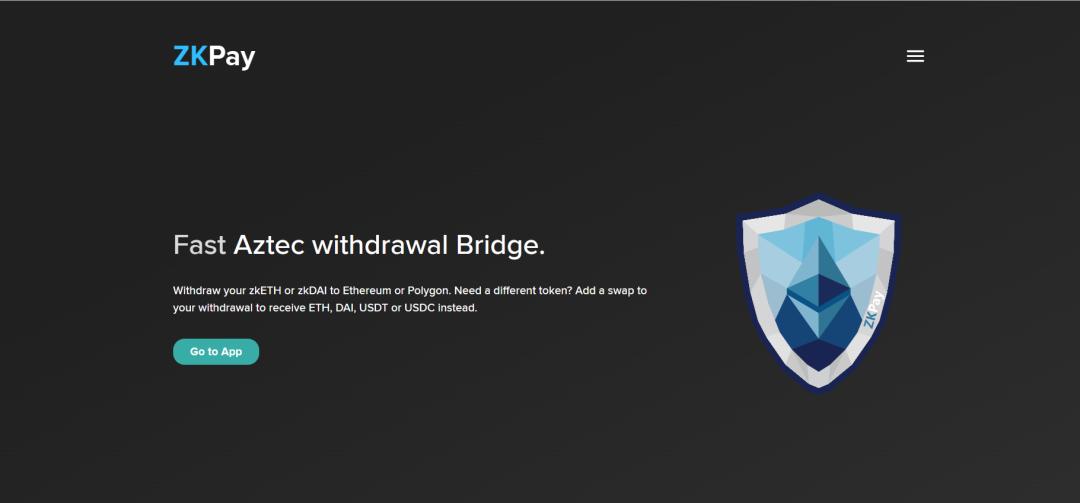
ZKPay is a fast withdrawal bridge designed for Aztec privacy payments. Accessing assets on the Aztec network may take 6 hours, but on ZKPay, it only takes a few seconds. After the v2.0.0 upgrade, ZKPay supports transfers of mainstream assets like ETH, DAI, USDT, and USDC. In addition to supporting the Ethereum mainnet, ZKPay also supports transfers on the Polygon network. Like Zk.Money, ZKPay has a transaction limit of 5 ETH or 10,000 DAI. Currently, the swap feature of ZKPay is still in testing, with testing access limited to VIP members. The ZKPay team has created ZK badges, which can be minted by depositing a total of 0.1 ETH in V1 or 0.1 ETH in V2 with at least 3 deposits. The team stated that in the future, users with ZK badges will receive fee discounts when using ZKPay.
Trelis
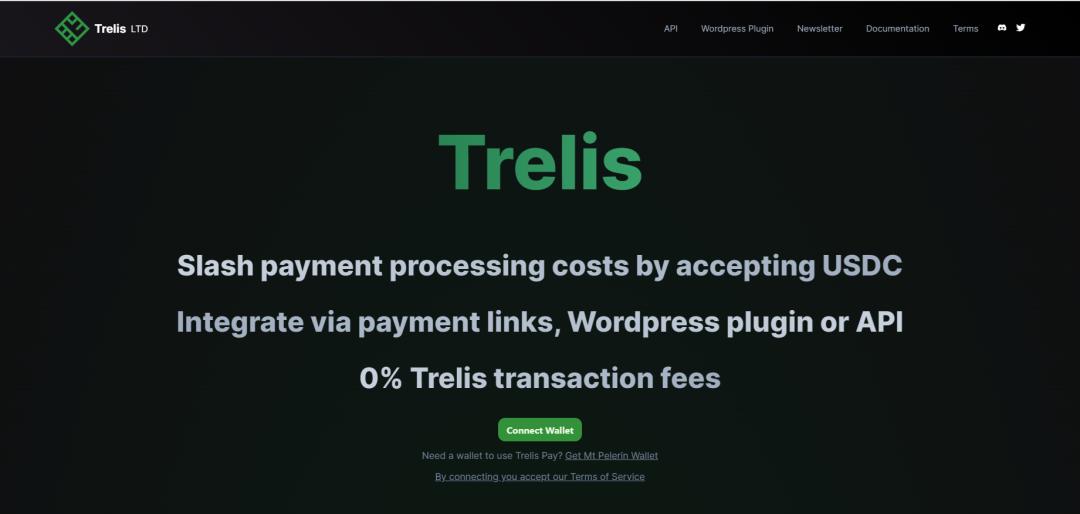
Trelis is a non-custodial Ethereum payment integration currently in testing. In test mode, users can experience Trelis through payment links, the Trelis API, and the WooCommerce Plugin, with a transaction limit of 100 USDC, supporting all mainstream Ethereum wallets. Currently, Trelis supports payment links for generating tokens in USDC and ETH. A standout feature of Trelis is Gasless Payments, which allows users (senders) to make payments without paying gas fees. Merchants (receivers) pre-purchase Trelis Gas credits, and Trelis pays the gas on behalf of the user, but this feature is limited to payments made in USDC. Additionally, it is important to note that if gas prices surge, USDC transactions will revert to standard transactions, requiring customers to pay gas fees; if the total gas due exceeds 5% of the transaction amount, Trelis will revert Gasless transactions to standard transactions. Trelis will charge a 10% gas service fee for this feature, with the cost of Gasless payments being approximately 1.9 times that of standard payments.
Nucleo
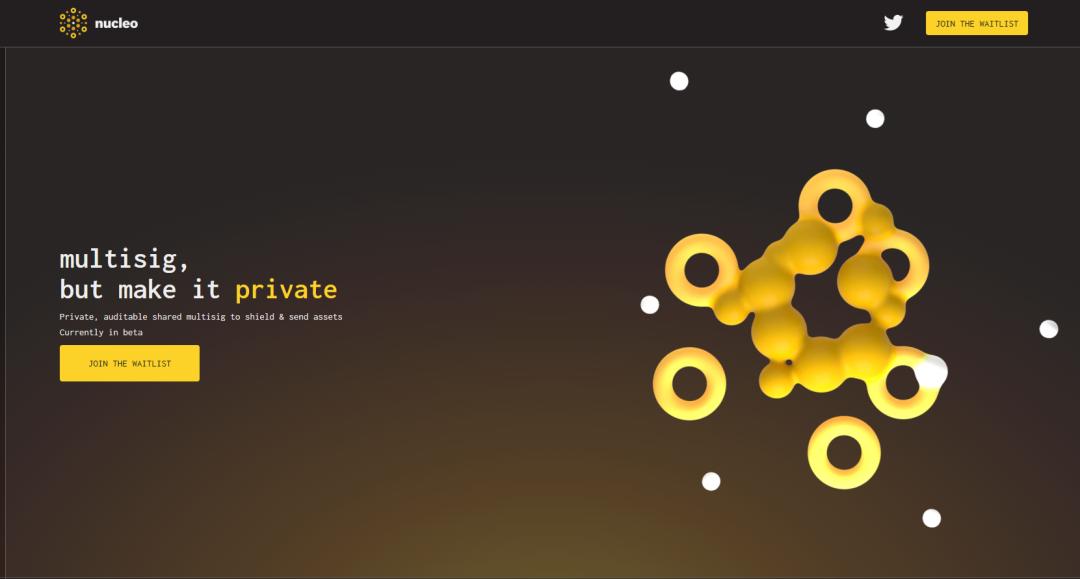
In November this year, Nucleo completed a $4 million seed round led by Bain Capital and 6th Man Ventures. Nucleo is a tool that provides organizations with the infrastructure to develop privacy multi-signatures, enabling privacy transactions, privacy DeFi, and privacy fundraising. While public transparency is beneficial, it can also expose individuals and organizations to legal, strategic, and operational vulnerabilities in many areas. Nucleo aims to address this issue. With Nucleo, individuals, communities, and organizations can enjoy privacy while remaining audit-friendly. In addition to collaborating with Aztec, Nucleo is also working with Aleo and Espresso. Currently, Nucleo has only launched multi-signature functionality, with plans to gradually introduce DeFi, Fundraise, and privacy cross-chain transaction features in the future. Nucleo is currently in the testing phase, and users wishing to join the test must join a waiting list.
Like most privacy sectors, the Aztec ecosystem is in its early stages, with few native projects, currently focusing on integrating mainstream DeFi protocols, aiming to achieve privacy interactions with all protocols and smart contracts on the mainnet.
Reference article:
https://mp.weixin.qq.com/s/EM58U0CvcXnoGEe9SgI54A
 Risk warning
 Risk warning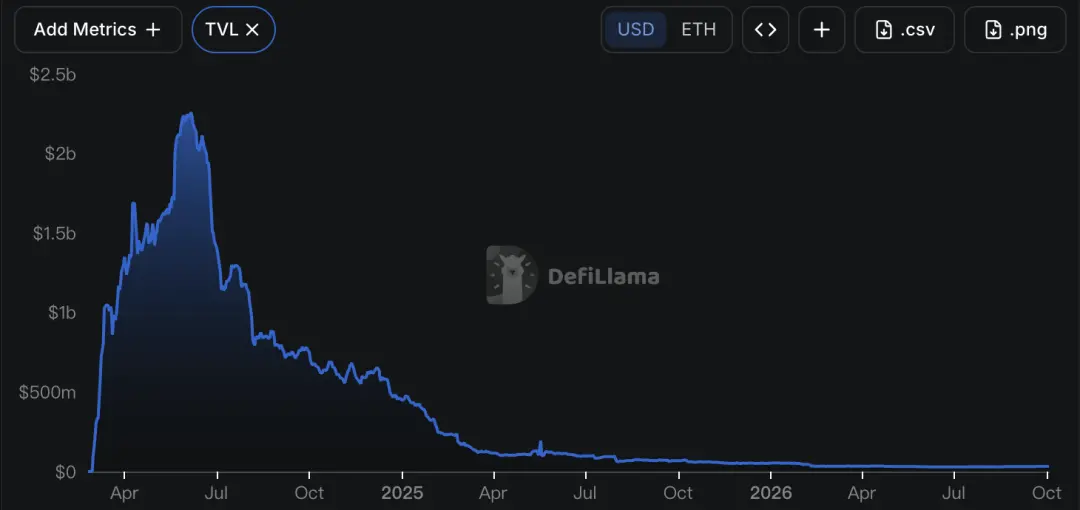




Popular articles





