








AC Capital: How to Break Social Fatigue? Exploring the Current Status and Future of Web 3.0 Social Products

 Web3.0 social products need to continuously create new interaction scenarios and establish new types of social relationships among users, thereby breaking social fatigue.
Author: Zhong Yi, AC Capital Research
With the popularity of Web3.0 social products, the number of users continues to rise. However, once the airdrop ends, the daily active user count can plummet sharply. What do projects need to maintain vitality? Whether tokenization can truly incentivize user participation remains a mystery. Coupled with the plummeting of tokens in the secondary market, does Web3.0 native applications have a foothold, and how can the contradiction between content moderation and decentralized social networking be balanced?
These questions are what entrepreneurs in the Web3.0 social space need to ponder. In this article, we will explore multiple aspects such as the essence of social interaction, the significance, classification, and characteristics of Web3.0 social products, the problems they face, and optimization directions, helping everyone better understand the current state and future of Web3.0 social products, and providing some ideas to address social fatigue.
The essence of social interaction is "relationships + interaction between people," broadly divided into interactions among acquaintances and interest-based interactions. However, the total number of crypto natives in Web3.0 is inherently small, so products focused on acquaintance interactions may be premature. Interest-based interactions require creating new relationships in new interaction scenarios; simply copying and migrating social relationships from other platforms is not feasible.
Why are Web3.0 social products gaining attention?
It is predicted that by 2027, the number of global social media users will reach nearly 6 billion. Currently, the average internet user spends 144 minutes per day on social media and instant messaging applications. Although traditional centralized social platforms have a massive user base, they also face numerous issues such as data breaches, content censorship, and algorithmic bias.
As a result, more and more people are starting to pay attention to Web3.0 social products. Web3.0 social products, based on blockchain technology, can achieve a decentralized social experience, ensuring the privacy and security of user data. At the same time, Web3.0 social products can eliminate censorship and algorithmic bias from centralized platforms, giving original content creators more autonomy. Therefore, Web3.0 social products are gaining attention and may become one of the trends in the future development of social media.
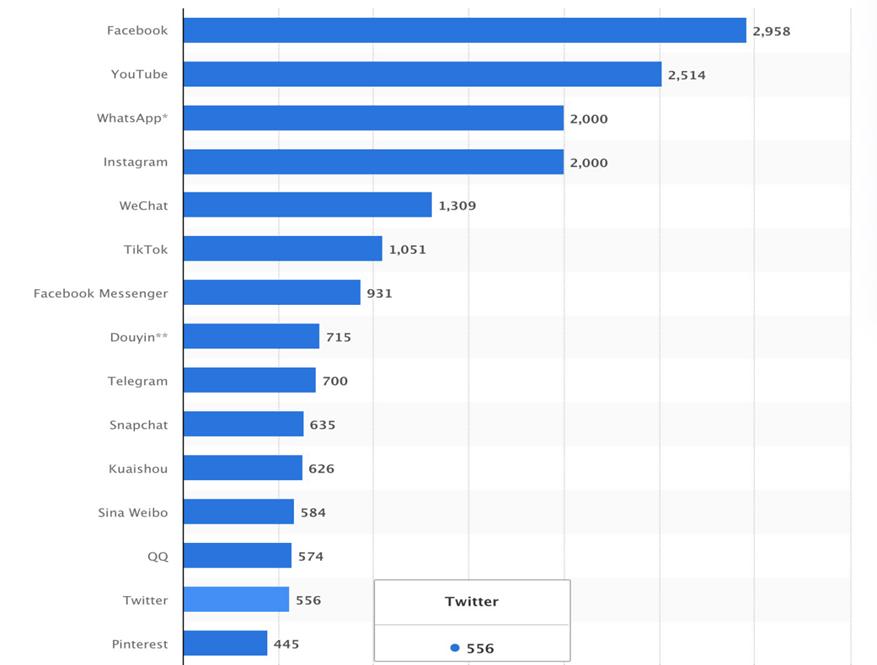
Figure1.Source:
https://www.statista.com/statistics/272014/global-social-networks-ranked-by-number-of-users/
From this chart, it can be seen that Facebook is the dominant player in the social media field, with over 2.9 billion monthly active users. Meta Platforms has four platforms with over 1 billion monthly active users each, including Facebook (the core platform), WhatsApp, Facebook Messenger, and Instagram. These large centralized participants have successfully monopolized the entire industry. However, with the emergence of SocialFi, this situation may be disrupted.
The emergence of SocialFi aims to address the shortcomings of traditional social platforms. Twitter co-founder Jack Dorsey summarized three principles that social media should follow:
- Social media must be resilient to control by businesses and governments;
- Only original authors can delete their created content;
- Moderation is best achieved through algorithmic selection.
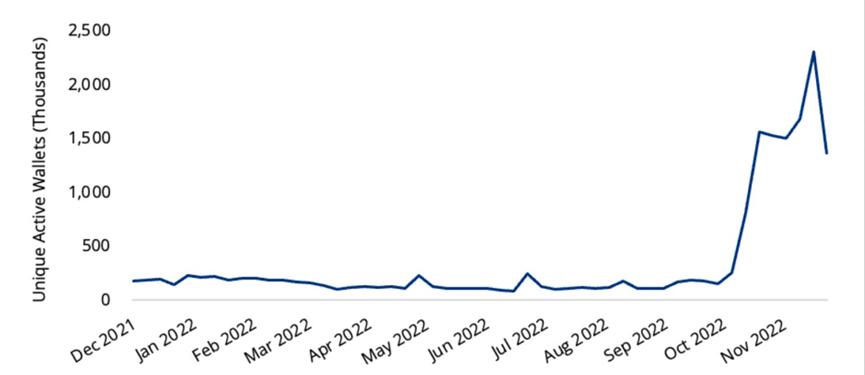
Based on principles of fairness and decentralization, decentralized social media applications have flourished since the end of 2022. This can be inferred from the sharp increase in the total number of active wallet addresses interacting with social DApps' smart contracts. Currently, the total number of smart contracts for social DApps is rapidly increasing, and the new trend of SocialFi may fundamentally change the landscape of the social media industry.
Common classifications and characteristics of Web3.0 social products
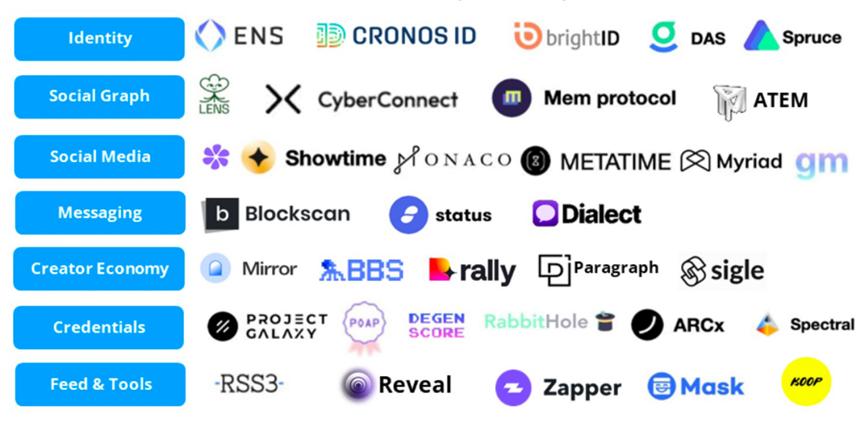
Currently, popular social and DID projects mainly include infrastructure, middleware, applications, and tools. Among them, the SocialFi track is gradually growing, with many projects based on social tokens, integrating elements of DeFi, and continuously updating and upgrading their technology to become SocialFi projects.
Based on the issuance projects of social tokens, they can be classified into the following categories:
- Personal Tokens: Token holders can access early fan groups, enjoy discounts or participate in events early, and receive goods, NFTs, etc. This type of token represents a symbol of status or connection engagement, allowing early creators or entrepreneurs to gain economic returns. Typical projects include RAC, a fan token launched on Ethereum by Grammy Award-winning DJ RAC (André Allen Anjos), and ROLL (Creator Token), one of the early social token issuance platforms where creators can create ERC-20 tokens, issuing personal social tokens for content creators. Additionally, MeTokens and MintGate are both Ethereum-based social token issuance platforms, while ALEX is a social token project built on Solana.
- Community Tokens: Community tokens are primarily issued and controlled by groups, usually governed by decentralized autonomous organizations (DAOs). They are mainly used to incentivize community members to contribute to the community, such as gaining access to the community and enjoying special information. A typical case is WHALE. The WHALE Token democratizes asset ownership of various NFTs, with governance decisions around these NFTs in the hands of token holders based on WHALE DAO. Other community token projects include well-known projects like Mirror, FWB, as well as Cent, Yup, Matataki, SWAGG, Karma DAO, Ark, Seed Club, Forefront, and Flamingo. Recently, Aavegotchi (GHST), a project combining DeFi and NFTs, has also gained attention, incentivizing users to participate in community governance and contributions by acquiring rare Aavegotchi NFT tokens in the game.
- Minting and Distribution Platform Tokens: Social platform tokens represent control over the platform, primarily to facilitate creators in issuing and managing tokenized communities. Typical projects include Chilliz, a social token under the "fan economy," focusing on the sports industry. Additionally, there are well-known projects like RALLY and BitClout, as well as Zora, CircleUBI, Loopss, Fyooz, Bluesky, Audius, Mastodon, Nafter, Coinvise, Calaxy, and Clarion.
In addition to the above three types of tokens, social tokens in project operations require the use of third-party tools for token distribution, which may sometimes overlap with tools used in other blockchain projects. There are also some notable projects worth paying attention to, such as Mask Network. Mask Network bridges the concepts of Web2.0 and future Web3.0 in a "plugin" manner, allowing users to seamlessly send encrypted messages, cryptocurrencies, or even DApps (DeFi, NFTs, DAOs) on existing social networks without migration. Mask Network employs distributed system technology, allowing users to use social networks without relying on centralized servers. This means that your data is more secure and private.
Current issues facing Web3.0 social platforms
Web3.0 social platforms are built on blockchain technology and the concept of decentralization, significantly differing from traditional centralized social platforms. However, Web3.0 social platforms also face several issues during their development, mainly including the following aspects:
1) High data storage costs: Web3.0 social platforms store user data in a decentralized manner across the blockchain network, which requires more computational resources and storage space compared to traditional centralized storage methods, leading to higher data storage costs. In Web2.0, hundreds of billions of data are uploaded, liked, and commented on social media platforms daily. This scale of data poses a significant challenge for blockchain. However, some solutions have emerged to address scalability issues. One method is to increase block size or shard to process in parallel. Another method, like Farcaster, stores identity information and read/write capabilities on-chain while storing other data on off-chain servers called Farcaster Hubs. Compared to increasing block size or sharding for parallel processing, this approach focuses more on off-chain storage and processing capabilities, thereby improving scalability. This method ensures that users fully control their identity, social relationships, and data information while ensuring data security and privacy.
2) Insufficient social network effects: Compared to traditional social platforms, Web3.0 social platforms have lower user scale and activity, resulting in weaker social network effects on the platform. Users may face difficulties in finding suitable social circles and communication partners.
Currently, the user base of Nostr and Farcaster mainly consists of Bitcoin and Ethereum users, as well as professionals in the fintech industry. Attracting a large number of traditional Web2.0 users to use SocialFi applications is not an easy task, much like guiding your relatives to use WeChat. The current user interface and operation methods of Web3.0 social platforms are relatively unfamiliar and inconvenient compared to traditional social platforms. Public education requires more time and resources. While incentives are an effective method, they are not sufficient to solve this problem alone.
Some project teams have proposed interesting ideas, such as creating middleware tools for social media like Twitter to help users familiarize themselves with SocialFi and actually own the data they generate. Leveraging the giants' shoulders can indeed better attract users. However, for some native SocialFi applications, attracting Web2.0 users is very challenging. Products that attempt to simply copy or mimic Web2.0 product designs are merely opportunistic. Only those social products that use blockchain primitives to bring transformative experiences to users can truly achieve widespread adoption.
3) Difficulty in cross-platform interaction: Social media platforms in the Web2.0 era typically lack standardized data formats and APIs, making it very difficult to transmit and share data across different platforms. There is a lack of interoperability between Web2.0 social networks, requiring users to switch between multiple social networks without being able to consolidate resources like friends and followers from different networks.
With the emergence of different ecosystems and incentive algorithms, social data crossing between different ecosystems has become easier. For example, the Nostr protocol achieves the reintegration of social data through a public-private key system, allowing user data from different social networks to synchronize within the Nostr ecosystem, and when APIs are available, data can be propagated across protocols, achieving interoperability between social networks. This also helps reduce users' dependence on and costs of using multiple social networks.
Although Lens provides APIs for synchronizing data for other DeSoc projects, differences in data formats, encryption methods, and verification rules between different DeSoc protocols require cooperation and communication between protocols to establish standardized data formats and verification rules. These differences and barriers may make it difficult to achieve large-scale social interactions for SocialFi.
Additionally, since different DeSoc protocols have different ecosystems and incentive mechanisms, users may prefer to stay on their original DeSoc protocol rather than choose to interact across different protocols. This inertia may lead to the fragmentation of social networks, making it even more challenging to achieve large-scale social interactions for SocialFi.
Therefore, cross-platform interaction to achieve large-scale social interactions for SocialFi remains a distant goal. Cooperation and integration between protocols are needed to promote data sharing and interoperability, creating greater synergy in the social network ecosystem.
4) Achieving a sustainable economic model: Currently, there are two main ways for SocialFi to capture value. One is to reward users for their social behaviors, such as reposting, liking, commenting, etc., to generate income. The other is through content creation incentives, where creators with a fan base can create subscription models in their social tokens to gain premium access. Additionally, when users want to access the latest content from high-quality creators, they can pay with tokens. If the content quality is very high and establishes reading and subscription habits among readers, this system will bring more exclusive and shareable content to the SocialFi platform.
However, in most of the projects we see currently, 80% of content providers are from the project team itself, and 20% of the content suffers from severe homogenization issues or is difficult to verify for accuracy, making it hard to control the frequency and quality of updates. Readers can only measure content attention through simple "read counts" and use their knowledge reserves to verify the authenticity of the content. In this case, the lack of high-quality content creation and incentive mechanisms, as well as an objective and comprehensive review mechanism, becomes a bottleneck for development.
5) Business expansion entering a heated stage: GameFi has successfully captured the value it offers through the "Play to Earn" model, allowing players worldwide to create and capture value by playing games. The value inherent in SocialFi is hidden in each social interaction, requiring the personal value of content creators to be highlighted to obtain value from SocialFi. For influencers with significant traffic, they have become the preferred targets for many competitors to settle in SocialFi projects. For example, in their SocialFi community, influencers can more easily monetize fan economies or enhance rapid communication within the group, thereby strengthening their connection with fans. This has led to a heated stage of business expansion for influencers. SocialFi aims to tokenize social influence, creating a self-consistent economic system to help more individuals with varying levels of social influence gain returns corresponding to their social impact.
Optimization directions for social products
In 2023, SocialFi will still be one of the hot topics of the next cycle, and the development potential in this field remains worth paying attention to. In this area, we see more and more middleware and protocols continuously innovating and evolving, making social applications more stable, secure, fast, and scalable.
At the protocol level of SocialFi, technologies in storage, communication, content distribution, and reputation/credentials are continuously innovating. Among them, decentralized social media protocols and middleware are receiving increasing attention. In addition to Nostr and Farcaster, Lens Protocol is one of the hottest DeSoc protocols, based on Polygon's Web3.0 social graph protocol, fully utilizing the potential of NFTs to build social graphs based on NFTs, allowing users to fully control their on-chain activity trajectory data. Currently, over 100,000 users are using this protocol, indicating the potential and attractiveness of social media protocols and middleware.
On the other hand, sharing personal information on public networks is often unsettling, and with the rise of Web3.0 social, privacy will become an important area of innovation. zk technology is a privacy protection technology that can be used to achieve private and secure transactions on the blockchain. Combining SocialFi with zk technology can enhance the security and privacy of lending transactions. On SocialFi platforms, zk technology can be used to protect users' transaction data from unauthorized third-party access. At the same time, zk technology can protect lenders' privacy, ensuring that their loan information is not disclosed. However, it is essential to balance the conflict between privacy protection and establishing social status while maintaining anonymity.
In summary, Web3.0 social products need to continuously create new interaction scenarios and establish new social relationships among users to break social fatigue.
In the future, Web3.0 social products need to explore more innovative interaction methods and social scenarios to attract more users to join. At the same time, issues such as user experience, scalability, and privacy protection need to be addressed. With continuous technological advancements, we believe that Web3.0 social products will become more mature and widespread.
References:
https://cointelegraphcn.com/news/SocialFi
https://thedefiant.io/three-trends-shaping-SocialFi
https://medium.com/@hello_1905/interpretation-of-damus-communication-logic-the-myth-of-DeSoc-cfb4e3200a1b
https://wearesocial.com/hk/blog/2022/04/more-than-5-billion-people-now-use-the-internet/
 Risk warning
 Risk warning


Popular articles





