








Nansen: The Past, Present, and Future of Solana

 Is SOL still a worthwhile investment?
Written by: Sandra Leow
Compiled by: Deep Tide TechFlow
This year, the price of SOL has continued to rise, and Solana seems to be emerging from the shadow of the FTX incident.
Is SOL still a worthy investment target? What opportunities and challenges does Solana face fundamentally?
Recently, Nansen released a research report titled "Solana: Past, Present, and Future," which provides a comprehensive analysis of these questions from the perspective of data analysis and information integration, showcasing the development panorama of Solana from the past to the present.
Considering the original report is quite lengthy, Deep Tide has organized and compiled it, distilling the core viewpoints as follows.
Key Points of the Report:
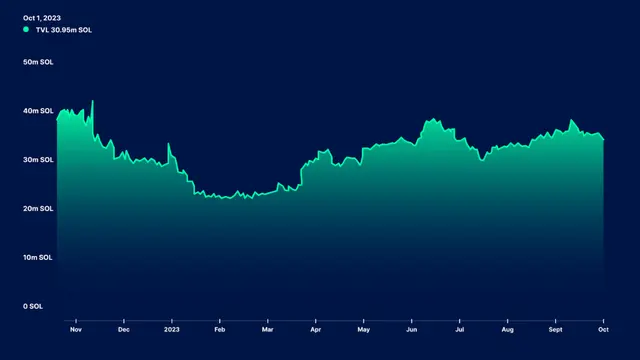
Since the beginning of the year, Solana's TVL has nearly doubled, currently standing at 30.95M SOL. Despite facing challenges in the past, such as network outages and the FTX/Alameda incident, Solana has achieved 100% uptime so far, demonstrating significant improvement and resilience.
Solana has proposed solutions such as state compression and independent fee markets to address prominent issues in its tech stack. For example, state compression has reduced the cost of minting NFTs on Solana by over 2000 times.
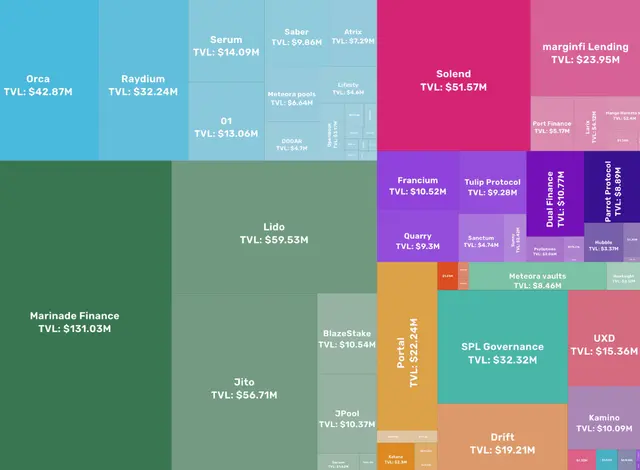
The liquid staking sector is rapidly growing, led by Marinade Finance, Lido, and Jito. Only 3-4% of staked SOL is locked in Solana's liquid staking protocols, indicating a clear opportunity for growth.
Interest in enterprise adoption and payment channels is increasing, especially with Visa integrating USDC settlements on Solana, the growth of liquid staking on Solana, and partnerships with entities like Shopify.
Positive factors for Solana include the successful implementation of the Firedancer vision and consumer-facing applications that can leverage Solana's advantages.
However, uncertainties regarding SOL holdings by FTX/Alameda may pose temporary risks to its growth trajectory.
Summary of Positives / Risks:
Positives:
Increased enterprise adoption of the Solana Virtual Machine (SVM):
- Technical advantages: High TPS, low-cost on-chain storage. TPS is around 3000, which is 30 times that of Ethereum and L2s.
- Example: Visa choosing Solana as the settlement layer for USDC cross-border payments, and the application of Solana Pay on Shopify.
Execution of the Firedancer vision:
- The Firedancer upgrade will optimize the Solana validator client, improving efficiency.
Growth of liquid staking tokens:
- Jito Labs is the latest "success story" in Solana's liquid staking space.
- Achievement: JitoSOL has grown, with over 2.4 million SOL staked in a year.
- Comparison: Ethereum has 40% of staked ETH, while Solana only has 3-4% of staked SOL, indicating greater potential in this area.
- If Solana's staked SOL even grows slightly in LSDs, it could help increase the total TVL of the Solana ecosystem. Currently, Solana's staking yield is twice that of Ethereum.
Consumer-grade applications recognizing Solana's advantages:
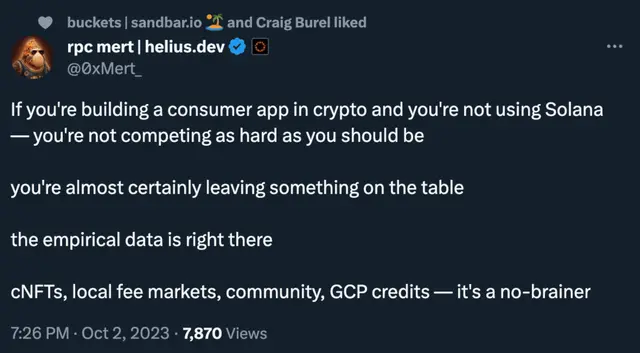
- Solana's cNFTs are suitable for large-scale NFT minting, aiming to provide the lowest possible costs, while the native fee market aims to eliminate unnecessary congestion in the network.
Native token releases for Solana-centric protocols:
- Most Solana DeFi applications have not yet released their respective native tokens.
- Reason: Protocols typically release tokens only after reaching certain thresholds in user base and activity.
- Premature token issuance can lead to sell-offs and token inflation, which is detrimental to long-term development.
Risks:
Price volatility of SOL:
- Trigger: Galaxy's complete liquidation of SOL holdings in a short period could lead to price drops.
Network outages damaging reputation:
- Current achievement: 100% uptime, but future network outages could affect confidence.
- There have been several previous outage cases, which can lead to a lack of confidence.
Lack of bridging infrastructure and native asset support:
- Issue: Insufficient on-chain liquidity, inadequate support for native assets, and lack of cross-chain bridge infrastructure.
- Past cross-chain bridge vulnerabilities have led to notable losses.
Macroeconomic Data:
Total Locked Value (TVL):
- Solana's TVL has increased from 25.12M SOL at the beginning of the year to 30.95M SOL now, showing nearly double growth, with USD value also showing a continuous upward trend.
DeFi Velocity (TVL Utilization Rate):
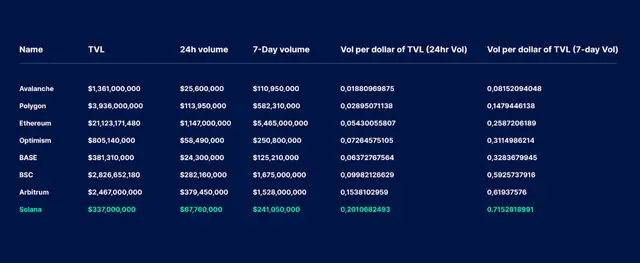
- Measuring the chain's activity and adoption through transaction volume per dollar of TVL (DeFi Velocity) is more persuasive than simply looking at TVL.
- In the past 7 days, Solana's DeFi Velocity ratio was 0.71, indicating that for every $1 of liquidity, the weekly transaction volume approached $0.71. Compared to other chains like Arbitrum, Binance, Base, Optimism, and Ethereum, Solana has shown the highest TVL utilization rate in the past 24 hours and 7 days.
Daily Transaction Volume:
- Solana's daily transaction volume has been relatively stable this year, with an increase in voting transactions.
- Transactions consist of voting and non-voting transactions, with voting transactions related to all voting accounts owned by validators.

Decentralization Level:
- Client Diversity:
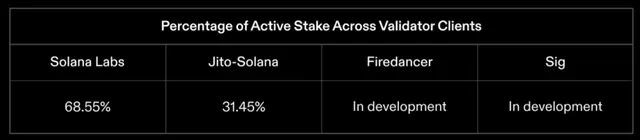
In addition to Solana Labs, there are over 4 different validator clients in development, with the usage of the Jito-Solana Client showing an upward trend, accounting for nearly one-third of the total share.
- Regional Distribution:
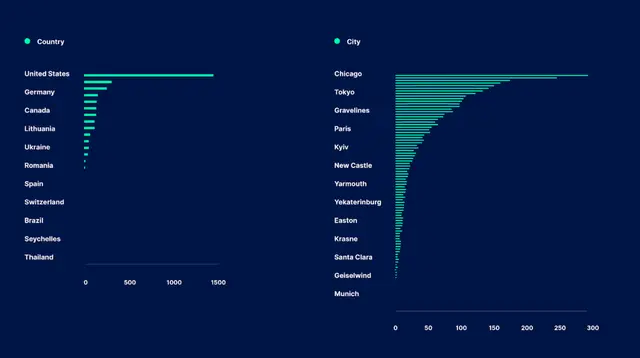
There are a total of 2,919 nodes distributed across 31 countries and 211 cities globally, with the United States leading, followed by Germany, Canada, and Lithuania. The U.S. has 1,370 nodes, nearly half of the total node count.
- Nakamoto Coefficient:
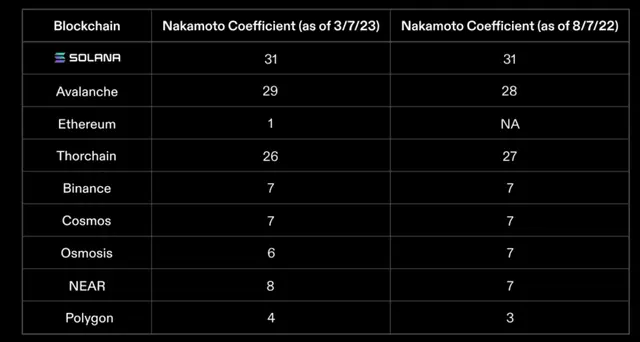
Explanation: The Nakamoto coefficient is a metric used to measure the degree of centralization in a blockchain network.
This coefficient is derived by calculating the minimum number of independent entities that can control or shut down the network. Specifically, it is an important indicator of a blockchain network's ability to withstand single points of failure. Ideally, a highly decentralized network would have a high Nakamoto coefficient, as no single entity or small group of entities could control or influence the operation of the network.
Solana's Nakamoto coefficient has remained relatively stable at 30-31% over the past year, but it is worth noting that the Solana Foundation controls about 20% of the stake and delegates it to small to medium-sized validators.
Catalysts / Drivers / Risks
Alameda / FTX SOL Sales:
FTX's largest holding is SOL, exceeding 71.8M SOL, valued at approximately $1.16 billion, accounting for about 17% of the circulating supply of SOL and about 13% of the total supply.
The total asset value of FTX and Alameda is approximately $1.3 billion, including SOL, BTC, ETH, APT, etc.
Total SOL in hot wallets: 6.98M SOL, distributed across the following three addresses:
- 9uyDy9VDBw4K7xoSkhmCAm8NAFCwu4pkF6JeHUCtVKcX
- 6wEMcwrcF5AP9jpHWQcPxHXciWA2g217Qq81CTWjbgBw
- 6b4aypBhH337qSzzkbeoHWzTLt4DjG2aG8GkrrTQJfQA
Staking wallets: There are mainly 3, with a total staked account balance of 61M SOL, locked staking of 52M SOL, and an additional 3.8M SOL unlocked.
For address details, see the link: https://twitter.com/solanobahn/status/1696270047491277143
Galaxy Digital is responsible for handling the sale of Alameda / FTX's holdings, but the specific timing is unclear, with a weekly sales cap set at $100 million to limit price fluctuations.
Ecosystem Highlights:
In September 2023, Visa introduced USDC settlements on Solana, which is significant for future interactions between public blockchains and financial entities in payment architectures and other use cases.
In September 2023, the founder of MakerDAO considered using Solana SVM as Maker's new native chain, which is part of Maker's "Endgame" upgrade plan, expected to last 2-3 years and divided into 5 phases.
In August 2023, Solana Pay integrated with Shopify.
In June 2023, Tensor NFT launched its compressed NFT marketplace, capturing a significant share of the NFT market on Solana, with Tensor and Magic Eden accounting for nearly 90% of the total NFT trading volume on Solana.
Since April 2023, the Backpack wallet on Solana has gained adoption as users found it smoother to interact with wallet infrastructure. The Backpack wallet is also equipped with various plugins, such as Jito Staking, Solend, and Drift Protocol, allowing users to interact with games directly from the wallet interface.
Development and Partnerships
- Solana's State Compression Technology:
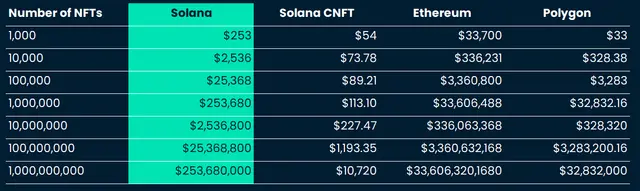
State compression is an on-chain solution that significantly reduces storage costs by storing most data (such as NFT data) off-chain while retaining their "footprint" on-chain (using Merkle Trees). This compression-friendly data structure allows developers to store smaller data on-chain and update it directly in the Solana ledger, thereby reducing data storage while still maintaining Solana's foundational layer.
In comparison to NFT minting costs, through state compression technology, the cost of minting 1M NFTs has been reduced from $253k to $113, whereas the costs on Ethereum and Polygon are $33.6M and $32.8k, respectively.
State compression technology has given Solana a significant advantage in compression technology, drastically lowering the minting and trading costs of NFTs in the ecosystem.
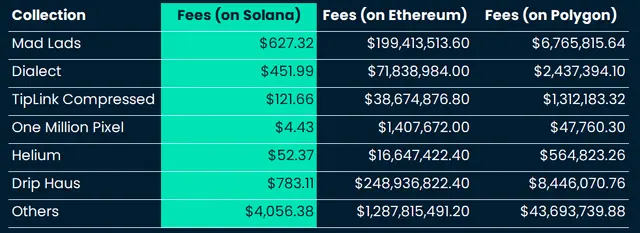
- Use Cases of State Compression Technology:
DRiP: Recently reached a milestone by minting its 1 millionth Solana NFT, becoming the largest NFT collection on all chains. DRiP provides free NFTs to its users weekly, and such large-scale NFT minting is only possible through Solana's state compression technology.
Mad Lads: The first xNFT (executable NFT) collection, the new token standard allows for the tokenization of code. xNFTs can represent a dApp, and users can access it directly from their wallets. Mad Lads NFTs were initially minted and managed on the Backpack wallet and platform supporting Mad Lads, which also provides an execution environment for xNFTs.
Crossmint: An NFT infrastructure for developers to seamlessly build NFT applications.
Dialect: A messaging platform that utilizes Solana's compression capabilities, enabling creators to mint and distribute NFTs to users on the platform. The introduction of state compression has reduced the infrastructure costs (such as equipping and storing NFTs, as well as merchandise costs) to nearly negligible levels.
- DePIN Narrative:
DePIN benefits from Solana's state compression technology network, with applications ranging from mapping, energy to logistics, providing opportunities similar to today's gig economy. Kuleen Nimkar, the dePIN lead at the Solana Foundation, noted that people can earn additional income by contributing hardware to dePIN protocols.
Helium Network:
Helium mints hotspots in the form of NFTs using Solana's state compression technology, reducing costs. Helium is the first example of a DePIN business, collaborating with Hivemapper to verify each driver's location.
Hivemapper:
By distributing hardware cameras, Hivemapper has established a decentralized mapping network, providing tokens to drivers who install "dashboard cameras" and collecting mapping data from their drives.
Render Network:
Render Network expands from the Polygon to the Solana blockchain, allowing individuals to contribute unused GPU power to help render motion graphics and visual effects.
- QUIC Protocol:
QUIC is a transport protocol that replaces UDP (User Datagram Protocol), designed for fast asynchronous communication while incorporating session and flow control features of TCP (Transmission Control Protocol).
With the introduction of the QUIC protocol, Solana has resolved past network outage issues, achieving 100% uptime annually. QUIC provides better control over data streams to prevent network spam issues, optimizes data ingestion, and enhances control over network traffic.
- Native Fee Market:
The native fee market is a new fee structure on the Solana network that allows users to send priority fees to validators for prioritizing their transactions, addressing the previous network congestion issue caused by sending a large number of transactions to ensure transaction priority.
By introducing priority fees and dynamic fee adjustments based on transaction types, Solana has improved network efficiency and the cost of economic activity. For example, in NFT issuance or DeFi activities, priority fees can be dynamically adjusted to reflect the processing demands of different transactions, thereby reducing the costs of spam transactions and optimizing the allocation of network resources.
- Liquid Staking on Solana:
Comparison between Ethereum and Solana:
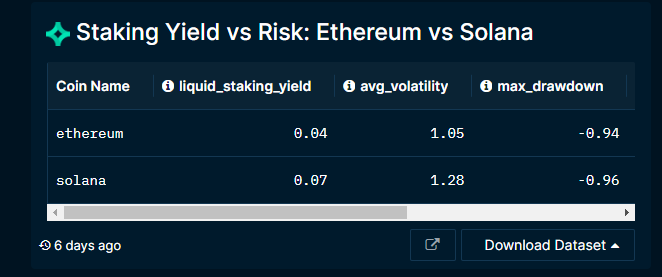
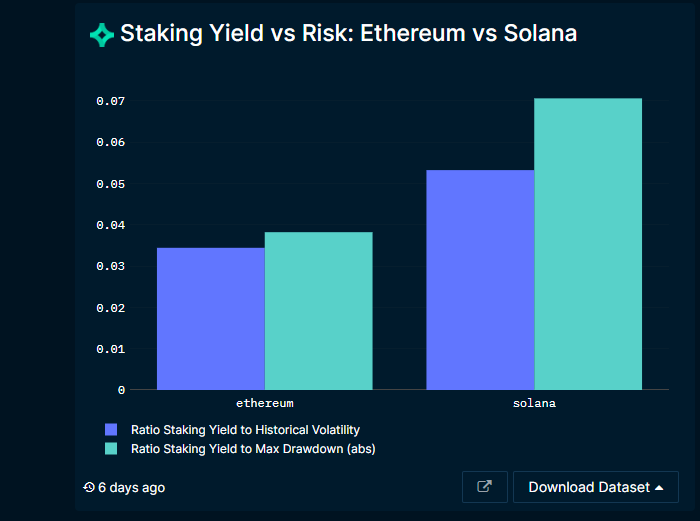
Compared to Ethereum's nearly $20.22B in liquid staking, Solana has only about 3-4% of SOL liquid staked, indicating room for growth.
Risk configurations are similar, but yields differ: under very similar risk configurations, Solana's staking yield is nearly double that of Ethereum.
Current State of Liquid Staking:
- A total of 295.7M SOL is staked on the network, but the use of liquid staking derivatives remains very limited.
- During the FTX incident, the TVL of liquid staking dropped from a peak of 12.8M SOL to a low of 5M SOL, but has since fully recovered to pre-FTX incident levels (around 12M+ SOL).
Emergence of New Liquid Staking Protocols:
Jito is a recently launched staking service provider that has accumulated over $44.86M (2.3M SOL) in TVL since its launch at the end of November last year. Meanwhile, cross-liquid staking derivatives (LSDs) and DeFi use cases have also significantly increased.
Major Liquid Staking Protocols:
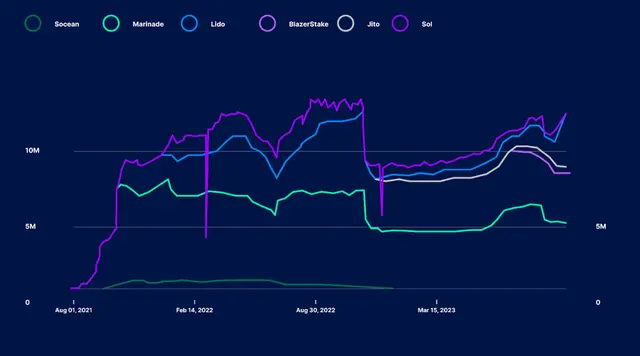
Marinade Finance still holds a significant share of the Solana liquid staking market, with over 5.47M SOL staked, followed by Lido and Jito. Notably, more liquid staking protocols are beginning to emerge, such as Marinade, Socean, Lido, BlazeStake, and Jito, all offering different reward programs to attract more users to stake SOL.
Reward Programs and New Initiatives:
Marinade has launched a new program called Marinade Native, allowing users to seamlessly delegate staking rights while retaining withdrawal rights.
Marinade also announced their reward program Marinade Earn, which will run from October 1, 2023, to January 1, 2024. Participants will earn 1 MNDE/SOL during the program period.
Additionally, there is a referral system where referrers can earn 1 MNDE/SOL through their unique referral links.
Jito's Performance with MEV Rewards:
Jito recently reached a new high in total TVL of $57.5M on October 2, 2023, with 2.4M SOL staked, showing an upward trend since its launch.
Jito is Solana's first staking product that includes MEV rewards, allowing users to stake their Solana tokens in exchange for LSD tokens JitoSOL, which provides users with additional rewards from MEV transactions on Solana, and stake alongside validators running software specifically designed to enhance network performance.
Upcoming Positives
Emerging Solana DeFi Applications:
AlphaVybe and Phoenix: Phoenix is a decentralized limit order book on Solana supporting the spot market, built by the Ellipsis Labs team, which recently completed a $3.3 million funding round led by Electric Capital.
Drift Protocol: This is a derivatives exchange on Solana, with recent total trading volume exceeding $1 billion and an open interest of $4.9 million, with TVL growing over 50% in the past month.
Squads Protocol: A newly launched comprehensive multi-signature platform that has protected $6 million in assets and has a total trading volume of $9.5 million.
Kamino Finance: An automated liquidity solution that allows users to earn yields by providing liquidity to concentrated liquidity markets. In the third quarter, Kamino Finance's trading volume exceeded $1 billion, generating $1.25 million in fees for depositors.
Point Systems for DeFi Protocols:
MarginFi: This is a lending market that leads the point system in Solana DeFi, inspiring other protocols. Users accumulate 1 point for every dollar borrowed and 4 points for every dollar lent.
Cypher: After addressing platform security vulnerabilities, Cypher has resumed operations, and its point system includes trading, borrowing, and lending.
Solend: Differentiates Solend Points by "seasons," allocating 10 million points daily to supply and borrow. Borrowing points are twice that of supplying.
Jito: Launched Jito Points on September 28, allowing users to accumulate points by providing JitoSOL liquidity.
Firedancer: When Will Million TPS Arrive?
This is a Solana validator client developed by Jump Crypto, aimed at further reducing latency and increasing client diversity. By implementing the QUIC transaction propagation protocol, Firedancer has demonstrated a throughput of 1 million transactions in performance tests. The full release date of the entire Firedancer technology is currently unclear, but it marks the first step in rebuilding every component of the Solana architecture.
Conclusion
Technological Advancements and Challenge Responses:
Solana has addressed key challenges through a series of technological innovations, including the implementation of QUIC to alleviate past network issues.
Diversification of Economic Activity:
With a continuously growing TVL, leading DeFi velocity, and stable monthly transaction volume, Solana demonstrates the potential to become a hub of diverse economic activities.
Decentralization Efforts:
Metrics such as the Nakamoto coefficient showcase Solana's commitment to creating a distributed ecosystem.
Technological Collaboration and Innovation:
State compression technology, integration with Metamask Snaps, and the anticipation of Firedancer highlight Solana's innovative spirit and potential for technological collaboration.
EVM Friendliness:
Through developments like Hyperledger Solang, Solana is striving to enhance its friendliness towards the Ethereum Virtual Machine (EVM).
Future Uncertainties and Commitment to Innovation:
Despite uncertainties in the future, such as the impending liquidation of SOL holdings by FTX/Alameda, Solana's commitment to innovation and user-centricity suggests a promising trajectory.
 Risk warning Risk warning




Popular articles





