








Fifteen years since the white paper was released, how has the Bitcoin ecosystem evolved?

 Bitcoin has evolved into a more complex asset, and a number of highly specialized financial products have emerged around it.
Written by: Mary Liu, BitpushNews
In the world of cryptocurrency, there is a document that holds a status equivalent to the "Bible" or the "Declaration of Independence"; it is the foundational blueprint of the entire industry: the Bitcoin white paper.
This revolutionary document was authored by Satoshi Nakamoto and published on October 31, 2008, marking its 15th anniversary today.
The official title of the Bitcoin white paper is "Bitcoin: A Peer-to-Peer Electronic Cash System," and it emerged in the aftermath of the 2008 global financial crisis, which shattered people's trust in traditional banking.
Satoshi Nakamoto's vision was clear— to create a currency that is free from government constraints, censorship, and borders.
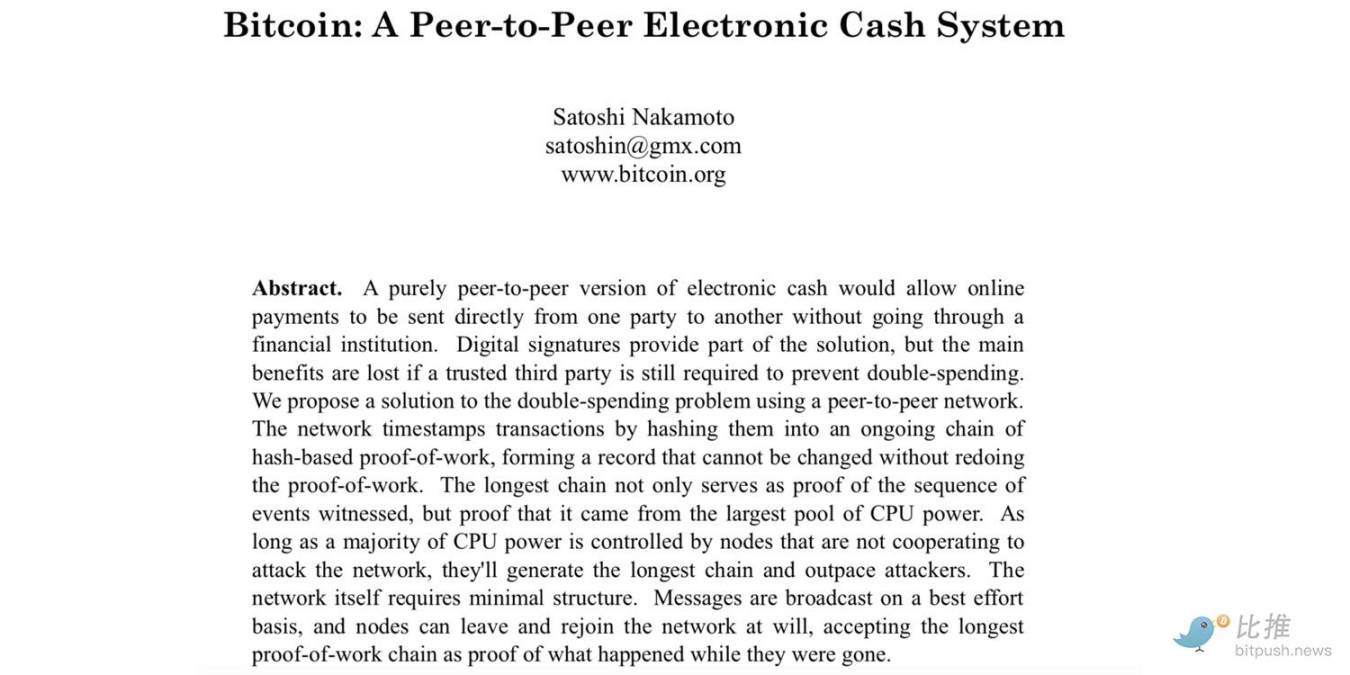
The document outlines the blueprint for a decentralized ledger known as blockchain in just nine pages and introduces the concept of Bitcoin as a currency. Its ingenious solution to the double-spending problem is the creation of a decentralized network of computers that will verify and record transactions in a public ledger, making manipulation of transactions impossible.
Since 2008, Bitcoin has not only survived but thrived, becoming a global phenomenon and the best-performing asset of the past decade. It has sparked a wave of innovation in the cryptocurrency space, attracting and inspiring individuals like Vitalik Buterin to attempt to develop more programmable protocols.
In some countries, BTC has become a means of storing value, digital gold, and a hedge against inflation, synonymous with words like hope and freedom. Its scarcity cap is set at 21 million coins, drawing interest from participants across various fields. After fifteen years of evolution, Bitcoin has developed into a more complex asset, giving rise to many highly specialized financial products.
Mining Pools and Hardware
The emergence of mining pools can be seen as one of the most obvious "forks" from the blueprint of the white paper.
Satoshi Nakamoto's original intention was to allow individuals to mine Bitcoin using their personal computers. This remains technically correct, but over time, Bitcoin mining has gradually centered around a defining principle: scale.
Satoshi's initial vision ensured that anyone could participate in the verification and security of the network without specialized equipment, making the ecosystem more inclusive and resistant to central control. The rise of mining pools and advanced mining hardware has altered this "original intention," leading to increased centralization.
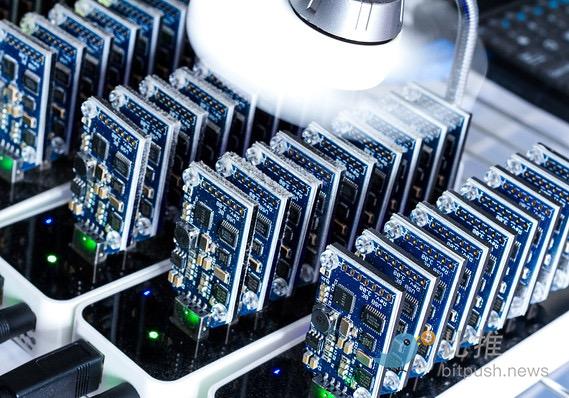
Satoshi wrote: "Proof of work also solves the problem of representation in determining majority decisions. If the majority is based on one IP address one vote, then anyone who can allocate multiple IPs could overturn it. Proof of work is essentially one CPU one vote."
The first mining pool was initially called bitcoin.cz and later renamed Slush Pool, created by Marek "Slush" Palatinus in 2010 to address the issue of people starting to use GPUs instead of CPUs to mine Bitcoin. The pool was intended to help independent miners find blocks, even if they could not use high-performance computers.
GPU mining thrived in early 2010 until Canaan Creative released the world's first dedicated integrated circuit (ASIC) for Bitcoin mining.
Over the years, the efficiency of ASICs has continually improved, driving the cost of these specialized devices up to tens of thousands of dollars. Additionally, powering them requires a significant amount of electricity. This has effectively made Bitcoin mining completely unprofitable for independent miners at home.
Now, large companies seem to dominate the mining industry—albeit in a fully digital manner.
Bitcoin Improvement Proposals
Setting aside the completely different mining dynamics, the mechanisms of the Bitcoin network have also evolved over the past decade or so.
In 2012, the Bitcoin network introduced Pay to Script Hash (P2SH) through BIP 16 to simplify multi-signature transactions. Before P2SH, multi-signature transactions were cumbersome and prone to risks, requiring the entire redeem script (which defines the spending conditions) to be disclosed in advance.
With P2SH, users send funds to a standardized Bitcoin address representing the hash of the redeem script, thereby hiding its complexity. The complete script is only revealed and its conditions met when the tokens are spent, aiming to simplify transactions, enhance user-friendliness, and improve scalability.
Segregated Witness, also known as SegWit, is another very important Bitcoin Improvement Proposal (BIP) that took effect in 2017. It addressed transaction scalability and effectively increased the block size limit from the original 1MB to 4MB.
SegWit paved the way for the 2021 proposal known as Taproot. Taproot made transactions more efficient and private while also allowing users to participate in more complex types of transactions.
Exchanges, ETFs, and Traditional Tools
Over the years, the Bitcoin trading market has also become more complex, with various companies offering different products.
The possibility of large institutions providing Bitcoin-related financial products was not mentioned in the white paper. Satoshi's goal was to make Bitcoin an alternative, decentralized means of exchange, rather than a way for traditional investors to make money.
Not to mention, the concept of purchasing a Bitcoin ETF essentially means users are entrusting their funds to large financial institutions rather than holding Bitcoin themselves.
Satoshi's distrust of banks is articulated in the first two sentences of the white paper.
Satoshi wrote: "Commerce on the internet has come to rely almost exclusively on financial institutions as trusted third parties to process electronic payments. While the system works well for most transactions, it still suffers from the inherent weaknesses of the trust-based model."
The market's frenzy for spot Bitcoin ETFs can attest to the fact that, despite being contrary to Satoshi's original intention, various parts of the crypto ecosystem are eager to establish some connection with that trust model. As investors anticipate the imminent approval of Bitcoin ETFs, the price of Bitcoin (BTC) has surged significantly.
Although the U.S. currently does not allow spot Bitcoin ETFs, Europe launched its first ETF in August 2023.
Bitcoin futures ETFs have been approved by the U.S. Securities and Exchange Commission (SEC), with the ProShares Bitcoin Strategy ETF (BITO) becoming the first to launch in October 2021.
DeFi/Ordinals Derivative Ecosystem
Bitcoin Ordinals have entered DeFi—attempting to merge the older blockchain with the demand for digital collectibles or NFTs similar to Ethereum.
However, discussing Ordinals cannot happen without mentioning its predecessor, Counterparty. This protocol was launched on Bitcoin in 2014, allowing for the exchange of rare digital collectibles long before the NFT boom of 2021. Rare Pepe is an NFT series inspired by the Pepe the Frog meme, originating from Counterparty.
Of course, NFT tokens did not exist at the dawn of Bitcoin. However, the Taproot upgrade in 2021 allowed for faster verification of multi-signature transactions, opening the door for inscribing text, images, SVG, and HTML on the smallest denomination of Bitcoin (known as "satoshis").
Ordinals have achieved tremendous success. On May 1 of this year, Ordinals created the largest single-day transaction volume for Bitcoin to date.
This record (over 682,000 transactions) was later broken in September 2023, with transaction volume exceeding 703,000 on September 15, while Ordinal inscriptions reached new peaks. It is worth noting that when Bitcoin was in its infancy in 2009 and 2010, the average daily transaction volume was less than 1,000.
From mining to the Ordinals craze to ETFs, the revival of Bitcoin's builder culture is evident, but many of the same issues that Satoshi set out to address still persist today.
The 15th anniversary is not just a milestone; practitioners need to think about how to continue realizing a fully decentralized future. If we liken crypto punks to the participants of the Boston Tea Party, then the Bitcoin white paper is the guiding light—a reminder for those brave enough to challenge the times. What do we need to do in the next 15 years? How do we continue to bring Bitcoin to a billion people?
 Risk warning
 Risk warning



Popular articles





