








The market value increased by 105% in a month, and Avalanche's technological advantages determine its future potential!

 Understanding Avalanche Public Chain in One Article: Three-Chain Architecture, Mechanism Innovation, Fastest Confirmation, and Rich Staking Rewards
Author: Vanguard 0
From October 14, 2023, to November 13, 2023, the market capitalization of AVAX tokens grew from $3,241,365,502 to $6,680,776,384, indicating an approximate increase of 105.48%.
This rapid growth in market capitalization suggests that AVAX has been performing exceptionally well in the cryptocurrency market recently. Investors have shown great interest in its prospects and potential. The increase in the market capitalization of AVAX tokens also reflects confidence in the technology and ecosystem behind it.
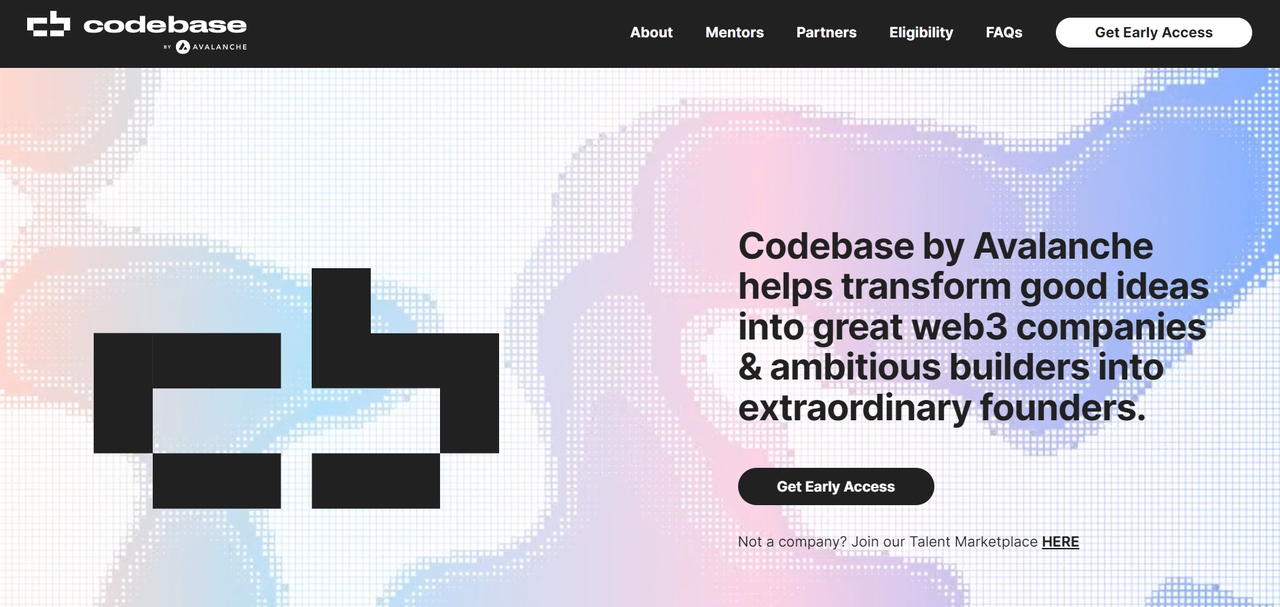
Avalanche launches an accelerator Codebase for early founders, officially opening registration on November 27
The following text will delve into the essence of AVAX tokens, as well as the uniqueness and innovation of the Avalanche platform. Additionally, it will provide readers with a comprehensive introduction to AVAX tokens and the Avalanche platform, helping them better understand this highly regarded blockchain project.
Overview of Avalanche Public Chain: A Decentralized Application Public Chain with Multiple Irreplaceable Advantages
Avalanche is an open-source platform focused on building decentralized applications (dApps) within an interoperable, decentralized, and highly scalable ecosystem, launched by the Ava Labs team in September 2020 in the United States. Its design philosophy aims to provide a highly scalable and efficient blockchain solution without sacrificing decentralization and security. Avalanche differs from traditional blockchain technologies, such as Bitcoin and Ethereum, by addressing the limitations of these early blockchains in terms of speed and scalability through innovative consensus mechanisms and unique network architecture. Here are the irreplaceable advantages of Avalanche:
Lightning-fast processing: Avalanche has the fastest consensus mechanism among all first-layer blockchains. Its unique consensus mechanism allows for transaction finality and low latency: your transactions can be effectively processed and verified in less than 2 seconds.
Build to scale: Developers building on Avalanche can create application-specific blockchains with complex rule sets or build on existing private or public subnets, using any programming language.
High energy efficiency: Avalanche is very energy-efficient and can easily run on consumer-grade hardware. The entire Avalanche network's energy consumption is equivalent to that of 46 American households, accounting for only 0.0005% of Bitcoin's energy consumption.
Advanced security: The Avalanche consensus can scale to thousands of concurrent validators without compromising performance, making it one of the most secure protocols for internet-scale systems.
Avalanche's consensus mechanism, energy efficiency, security, and scalability make it an ideal platform for building decentralized applications. It not only supports Solidity developers to build directly on Avalanche's Ethereum Virtual Machine (EVM) implementation but also allows developers to create their own custom virtual machines (VMs) for advanced use cases. Additionally, custom blockchains deployed as Avalanche subnets can include custom rule sets designed to comply with legal and jurisdictional considerations.
Perfect Synergy of Three-Chain Architecture: Avalanche's Technological Innovations Address Multiple Industry Pain Points
Avalanche's technical architecture is one of its greatest innovations, achieving efficient blockchain operations and unparalleled scalability through its unique subnet architecture and multi-chain design. The core of this architecture consists of three main blockchains: X-Chain, C-Chain, and P-Chain, each with its specialized functions and consensus mechanisms, collectively forming Avalanche's complex and efficient network system.
X-Chain (Transaction Chain): The X-Chain is the foundation of the Avalanche network, primarily responsible for the creation and transaction of AVAX tokens and other digital assets. It employs a unique Avalanche consensus protocol, which allows the network to reach global consensus within seconds, greatly enhancing transaction speed and efficiency. Additionally, the design of the X-Chain supports mutable asset rules, enabling it to adapt to various types of digital asset transactions.
C-Chain (Contract Chain): The C-Chain is the center for smart contracts within the Avalanche network, compatible with the Ethereum Virtual Machine (EVM), allowing developers to easily create and deploy Ethereum-compatible smart contracts on Avalanche. The C-Chain uses the Snowman consensus protocol, a linear consensus mechanism based on the Avalanche consensus protocol, particularly suited for handling complex smart contract operations.
P-Chain (Platform Chain): The main responsibility of the P-Chain is to coordinate validators within the Avalanche network and manage the network's subnets. Subnets are a key concept within the Avalanche network, allowing users to create their own customized blockchains, which can be entirely private or interact with the main network. The design of the P-Chain ensures the flexibility and security of the network, enabling Avalanche to support a variety of different blockchain applications.
This three-chain architecture of Avalanche not only enhances the network's processing capacity but also allows the network to achieve high scalability and flexibility while maintaining decentralization. Furthermore, the Avalanche network employs Directed Acyclic Graph (DAG) technology, which allows transactions within the network to be processed in parallel, further improving the network's throughput and efficiency.
Overall, Avalanche's technical architecture, through its innovative multi-chain design and consensus mechanisms, provides new possibilities for the development of blockchain technology. It not only addresses the issues of scalability and efficiency faced by traditional blockchains but also paves the way for future blockchain applications.
Fastest Transaction Confirmation Time: Avalanche's Consensus Mechanism Features Breakthrough Innovations
Avalanche's consensus mechanism is one of its core technologies, boasting itself as "the smart contract platform with the shortest finality time in the blockchain space," a feat made possible by its unique consensus mechanism and the support of its native token, AVAX.
Unlike traditional Proof of Work (PoW) and Proof of Stake (PoS) consensus algorithms, Avalanche employs a novel consensus mechanism known as the Avalanche consensus protocol. This mechanism is renowned for its efficiency, security, and scalability, capable of achieving global consensus within seconds.
Additionally, Avalanche incentivizes network participants using a Proof of Stake (PoS) mechanism. By staking AVAX tokens, node operators can not only participate in the maintenance and governance of the network but also share in the revenue generated by the network.

Avalanche official poster
The two main consensus protocols in the Avalanche network—the Avalanche consensus protocol and the Snowman consensus protocol—while similar, can be customized for specific blockchains. This dual consensus mechanism is key to enhancing the network's scalability and transaction processing speed.
A. Avalanche Consensus Protocol:
Unlike traditional consensus protocols (such as PoW, PoS, DPoS) that require a leader to drive consensus, the Avalanche consensus protocol adopts a decentralized approach, enhancing the network's scalability. The Avalanche network utilizes an optimized consensus protocol based on Directed Acyclic Graph (DAG), allowing all nodes to process and verify transactions simultaneously. This parallel processing mechanism, through multiple rounds of random sampling, virtually eliminates the possibility of transaction fraud.
Under this protocol, transactions do not need to wait for block confirmations in traditional blockchains but are immediately confirmed through parent transactions known as "vertices." This mechanism not only reduces the hardware requirements for running nodes but also enhances the network's performance and degree of decentralization.
B. Snowman Consensus Protocol:
The Snowman consensus protocol is based on the Avalanche consensus protocol but employs a linear block production method to verify transactions, making it particularly efficient for handling smart contracts. Compared to the Avalanche consensus protocol, the Snowman consensus protocol adds a block creation process, suitable for scenarios that require sequential processing.
Clear Technical Advantages: Avalanche's Underlying Architecture Design Can Solve Multiple Industry Challenges
Avalanche's platform shares similarities with Ethereum at the underlying functionality level, but its competitiveness has been significantly enhanced through key optimizations. In the Avalanche network, developers can create new tokens, non-fungible tokens (NFTs), smart contracts, and decentralized applications (DApps). Users can not only stake tokens and validate transactions but also utilize these DApps. These optimizations make Avalanche more attractive in the field of blockchain technology.
One unique aspect of Avalanche is its support for customizable interoperable blockchains. This feature makes Avalanche particularly suitable for large enterprises, allowing them to create and run their own customized blockchains within the Avalanche ecosystem while leveraging the security and functionality of other blockchains. Avalanche has its own dedicated virtual machine, compatible with the Ethereum Virtual Machine (EVM), meaning that developers familiar with Ethereum's Solidity language can easily work within the Avalanche environment and conveniently port existing projects.

Recent community-themed event hosted by Avalanche
In Avalanche, each blockchain can have its own native token, which users can use to pay transaction fees. Creating subnets and blockchains requires the use of AVAX tokens for payment. Additionally, subnet maintainers must also validate in the main subnet to ensure the effectiveness and security of the custom subnets. These features collectively form Avalanche's unique, highly customizable blockchain ecosystem.
It is worth mentioning that Avalanche is committed to addressing three core issues in blockchain technology: insufficient scalability, high transaction costs, and limited interoperability.
- Balancing Scalability and Decentralization:
For a long time, blockchain projects have struggled to find a balance between scalability and decentralization. As the number of users and transactions increases, the network may become slow in generating consensus for valid transactions.
For example, during network congestion, a Bitcoin (BTC) transaction may take hours or even weeks to complete. One solution is to increase the degree of centralization of the network, concentrating more power in the hands of a few to improve transaction validation efficiency.
However, decentralization is the core spirit of blockchain. Blockchain technology was born out of the public's demand for decentralization. Avalanche attempts to solve this dilemma through its unique technical solutions, which will be detailed later.
- High Transaction Costs:
High transaction costs are another issue faced by large blockchains like Ethereum. This is primarily due to the continuous growth of on-chain traffic and user numbers. Large blockchains find it challenging to quickly address this issue, while competing ecosystems are not yet mature, which may weaken user enthusiasm. For instance, although Ethereum remains very popular, strong competitors have yet to emerge, forcing users to endure congested networks and high transaction fees.
During certain periods (such as bull markets), the average transfer fee on the Ethereum network can exceed $10, and fees can be even higher for complex smart contracts.
- Interoperability Issues:
Different projects and businesses have varying needs for blockchain platforms. In the past, blockchain projects could only choose to operate on Ethereum, non-customizable standalone blockchains, or private chains. Finding a balance between customizability and multi-chain collaboration has always been a challenge in the blockchain industry.
Avalanche's proposed solution is to overcome this challenge by sharing the security, speed, and compatibility of the main network through subnets and customizable blockchains.
Examining the Future Growth Potential of AVAX Tokens from the Perspective of Token Mechanism Design
The AVAX token is the core of the Avalanche network, serving not only as its native cryptocurrency but also as the cornerstone of the entire Avalanche ecosystem. The Avalanche platform is characterized by its high performance, security, and scalability, aiming to provide comprehensive solutions for decentralized applications. It adopts a flexible consensus mechanism hybrid model, supporting a wide range of applications from financial markets to various decentralized applications.
AVAX plays multiple roles within the Avalanche network. Firstly, it serves as the means of payment for transaction fees, covering various costs from smart contract execution to data transmission. Secondly, AVAX can also be used for staking, participating in the network's consensus validation process, and thus earning rewards. Additionally, AVAX is used in decentralized applications for token trading and governance activities.
The total supply of AVAX is set at 720 million tokens, adopting a deflationary mechanism, meaning that all fees paid in AVAX within the network will be burned, thereby increasing its scarcity. The main uses of AVAX include:
Staking and Validation: Users can stake a certain amount of AVAX to become validators of the network or delegate tokens to other validators. As validators, they can enjoy an annual percentage yield (APY) of up to 11% and charge a certain percentage of management fees from delegators, which is set by the validators themselves.
Subnet Support: AVAX serves as a universal unit for subnets, enhancing interoperability between subnets and helping to build a richer and more diverse ecosystem of decentralized applications.
Transaction and Subscription Fees: AVAX is used not only to pay network transaction fees but also to pay subscription fees for subnets, further enhancing its application value within the Avalanche ecosystem.
As a New Public Chain Representative of the Last Bull Market, What Changes Will Avalanche Bring to the On-Chain World?
In summary, Avalanche is a blockchain technology with significant potential, aimed at solving the scalability and efficiency issues of traditional blockchain technologies. Through its unique three-chain architecture, Avalanche and Snowman consensus mechanisms, and support for interoperable features, Avalanche provides a highly customizable, efficient, and decentralized blockchain platform.
Avalanche's technical architecture not only enhances the network's processing capacity but also allows the network to achieve high scalability and flexibility while maintaining decentralization. Its consensus mechanism ensures rapid transaction confirmation while also providing high security. Furthermore, Avalanche's support for customizable interoperable blockchains makes it an ideal choice for large enterprises and developers.
The AVAX token, as the core of the Avalanche network, is not only used for paying transaction fees but also plays an important role in network governance and staking validation. Its deflationary mechanism increases its scarcity, providing potential appreciation opportunities for token holders.
Avalanche offers new possibilities for the development of blockchain technology, addressing the bottleneck issues of traditional blockchains and paving the way for future decentralized applications. Whether in terms of scalability, efficiency, or interoperability, Avalanche demonstrates tremendous potential and will have a positive impact in the blockchain space. It is hoped that over time, Avalanche will continue to grow and contribute to the prosperity of the blockchain ecosystem.
 Risk warning
 Risk warning



Popular articles





