








Bitcoin Core developers want to remove inscriptions: a multi-party game among miners, developers, and users

 On this old land of Bitcoin, the word "consensus" carries the most weight.
Written by: Deep Tide TechFlow
Where there are interests, there are controversies.
Recently, Bitcoin inscriptions, at the forefront of the crypto narrative, have sparked a debate on social media regarding technology and interests.
The controversy originated from a tweet by Bitcoin Core developer Luke Dashjr:

""Inscriptions" exploit a vulnerability in Bitcoin Core to conduct spam attacks on the Bitcoin blockchain. Since 2013, Bitcoin Core has allowed users to include extra data in the transactions they propagate or mine. Inscriptions bypass the limitations of Bitcoin Core by hiding the extra data as program code."
Additionally, the post mentioned:
"Bitcoin Core still has vulnerabilities in the upcoming v26 version, which we hope to fix before the v27 version next year."
In simple terms, the inscription system is exploiting a vulnerability that should be fixed.
The post seemed to be merely a technical discussion and initially did not attract much attention. However, things began to gain more traction after Luke's key reply in the comments:
"If the vulnerability is fixed, does that mean Ordinals and brc-20 related tokens will cease to exist?"
"Yes."

The fewer the words, the greater the information density. This vulnerability essentially means that inscriptions are using too much block space, which could lead to decreased network efficiency and even spam transaction attacks.
From the developers' perspective, if there is a vulnerability, it should be fixed; it’s just a technical issue.
But beyond the technology, inscriptions are not just a string of code.
As a key track in this round of the small bull market, the wealth creation effect brought by Bitcoin inscriptions is self-evident; at the same time, inscriptions are no longer a technical experiment, involving the interests of various parties in the industry.
According to Luke's post and reply, since all brc-20 system transfer transactions involve the action of "inscribing," if this bug is fixed, it would deal a fatal blow to the normal operation of the current brc-20 system.
Cutting off people's financial paths is akin to killing their parents; naturally, the parties deeply involved in the benefits of inscriptions will not easily agree.
Bitcoin Core ≠ Developer "Core" Power
What inscriptions are is something everyone has some understanding of, but newcomers may not know what Bitcoin Core is.
What is Bitcoin Core?

In fact, Bitcoin Core is an open-source client software with a certain history that implements the Bitcoin protocol and allows nodes to participate in the Bitcoin network, maintaining a complete copy of the blockchain and verifying all transactions and blocks.
Bitcoin Core regularly releases updates, which may include new features, security fixes, performance improvements, etc. Users need to actively update their clients to benefit from these improvements.
But back to the event itself, do Bitcoin Core developers have the power to fix vulnerabilities to the extent that inscriptions cannot operate?
This brings us to the relationship between the Bitcoin client and the Bitcoin network, as well as how changes to the Bitcoin protocol are decided:
First, the Bitcoin network is a decentralized network composed of globally distributed nodes. The Bitcoin Core client is just one of the many client software options that these nodes may use. Therefore, the name "Bitcoin Core" does not imply having "core" power to modify Bitcoin.
Any significant changes to the Bitcoin protocol, such as fixing vulnerabilities or introducing new features, require consensus from the majority of nodes on the network. This is typically achieved through soft forks or hard forks.
While Bitcoin Core is influential, it does not control the Bitcoin network. Changes to the network depend on the collective decision-making of community members, including developers, miners, merchants, and ordinary users.
In other words, developer Luke's post merely expresses a technical concern but does not grant him the power to pronounce a death sentence on inscriptions and brc-20.
Moreover, this is not the first time Luke Dashjr has raised related issues.
In previous email lists and forums, he has repeatedly expressed concerns about the potential problems brought by the inscription feature. His consistent statements reflect his ongoing technical stance and "concern" for the health of the Bitcoin ecosystem.

However, this concern seems somewhat rigid.
According to previous reports from Wu, although Luke is not a core developer with code access to Bitcoin Core, his views have consistently reflected those of most Bitcoin developers and fundamentalists who adhere to the "payment + value storage" philosophy and oppose the "issuing tokens" and reinventing the wheel.
Interest Games: Where Will Bitcoin Inscriptions Go?
The future of the inscription feature depends not only on the technical decisions of developers but also on the influences of miners, users, investors, and other parties. Each group has its own interests and influence, and their interactions and games will largely determine the fate of the inscription feature.
As the impact of the event continues to expand, various parties in the industry have also expressed their views.

For example, Shen Yu stated, "Bitcoin is not Ethereum; developers do not have the final say," which reflects the conflicting interests between miners and developers in certain situations. At the same time, I believe it is not that developers have no say, but rather that they have "partial say."
Inscriptions have generated a large demand for transactions, which is certainly beneficial for miners to package transactions and earn fees; at the same time, miners, while earning profits, actively maintain Bitcoin nodes, ensuring the consistency of the ledger and network security.
Therefore, while developers' attempts to fix bugs are a technical instinct, ensuring profits is a business instinct. The clash between the two will naturally lead to a game.
Additionally, well-known KOL Chen Mo also believes that in the Bitcoin world, miners, developers, and capital balance each other, with no one having monopolistic discourse power.

Indeed, in the Bitcoin ecosystem, no single individual or organization has decision-making power. This is also where Bitcoin, as the leader of the crypto market, best reflects the essence of decentralization.
If developers insist on upgrading to fix vulnerabilities, it may lead to the old plot of Bitcoin forking again—one Bitcoin protocol supports the inscription protocol, while the other does not.
But who the market chooses to abandon will depend on consensus.
The market heat of inscriptions reflects their commercial value, but it also brings disputes over resource allocation.
Miners may support inscriptions due to transaction fees, while long-term investors and developers may worry about their potential impact on network security. These differing positions and interests will collide in community discussions, collectively shaping the future of the protocol.
Although Luka's post has attracted community attention, updates and bug fixes for Bitcoin require the consent of the entire network. This includes miners, developers, investors, and ordinary users.

@CryptoNerdcn further proposed a thought-provoking viewpoint—"the 51% struggle beyond computing power."
When interests conflict, the Bitcoin protocol and inscriptions must inevitably decide on a direction; however, in this decision-making process, the main characters are not solely the core and miners, but also rely on the entire Bitcoin network of nodes.
Everyone votes together to determine the final direction.
This battle, beyond code and computing power, may be more about the choice of the people.
Each group has its own interests, and the decision-making process usually requires time to coordinate these different interests. From past experiences, the Bitcoin core team and community often act cautiously when handling disputes, emphasizing transparency and community participation.
At the same time, historical experience also shows that any Bitcoin fork ultimately does not match the popularity of Bitcoin itself.
In a whirlpool involving the interests of inscriptions, decentralization brings about a chaotic divergence of opinions, but it also reflects the original charm of decentralization:
On this old land of Bitcoin, the word "consensus" carries the most weight.
 Risk warning
 Risk warning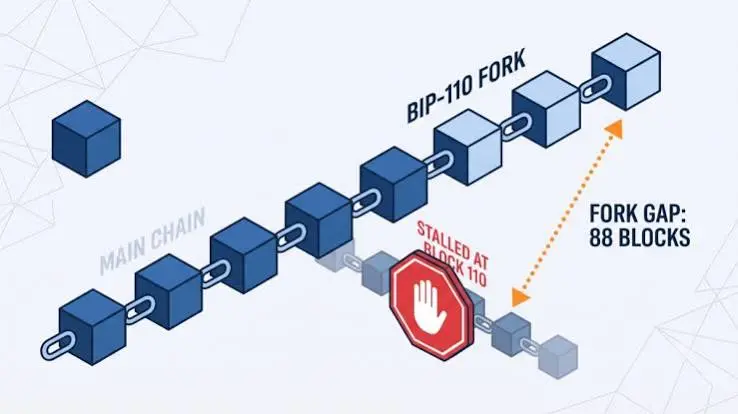

Popular articles





