








Sandbox or migrate to Ronin, the intertwined fate of two veteran projects in the metaverse and GameFi?

 Can the hot RON save the weak SAND?
Author: Loopy Lu, Odaily Planet Daily
Recently, the GameFi sector has made a comeback. As a former star project in the GameFi field, Ronin has also been quite active in recent months.
Coingecko market data shows that the RON token has reached a new high for the year, currently priced at $1.79, with a 24-hour increase of about 18%.
Yesterday, rumors began circulating in the market regarding Ronin and The Sandbox. As a well-established metaverse project, The Sandbox seems to be planning a migration to the Ronin chain. Although this news has not been "officially announced," the speculation has still drawn attention to both projects.
Ronin's SAND Sparks Imagination
Recently, an old piece of on-chain information was suddenly unearthed by the community. The on-chain data shows that a mysterious address has deployed the SAND token on the Ronin testnet and has conducted multiple transactions.
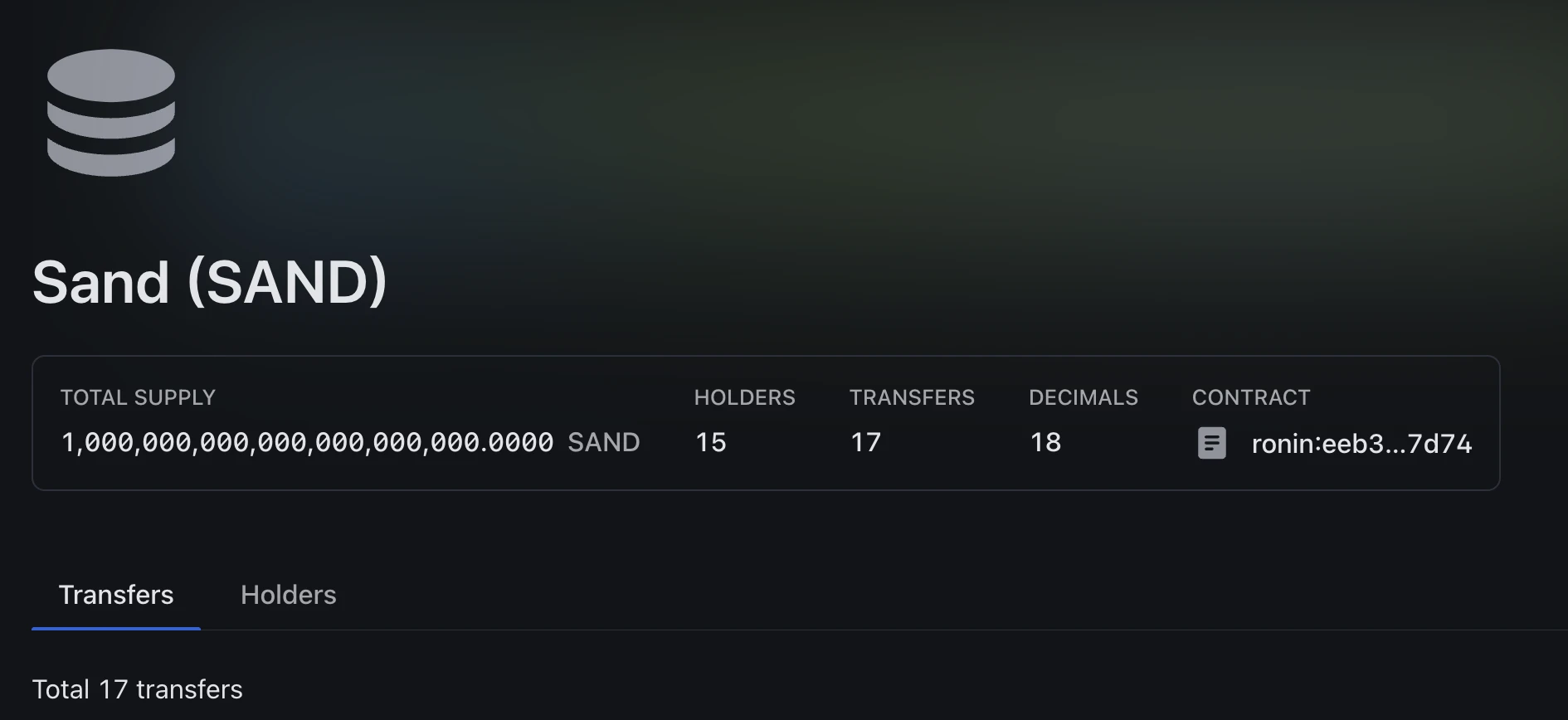
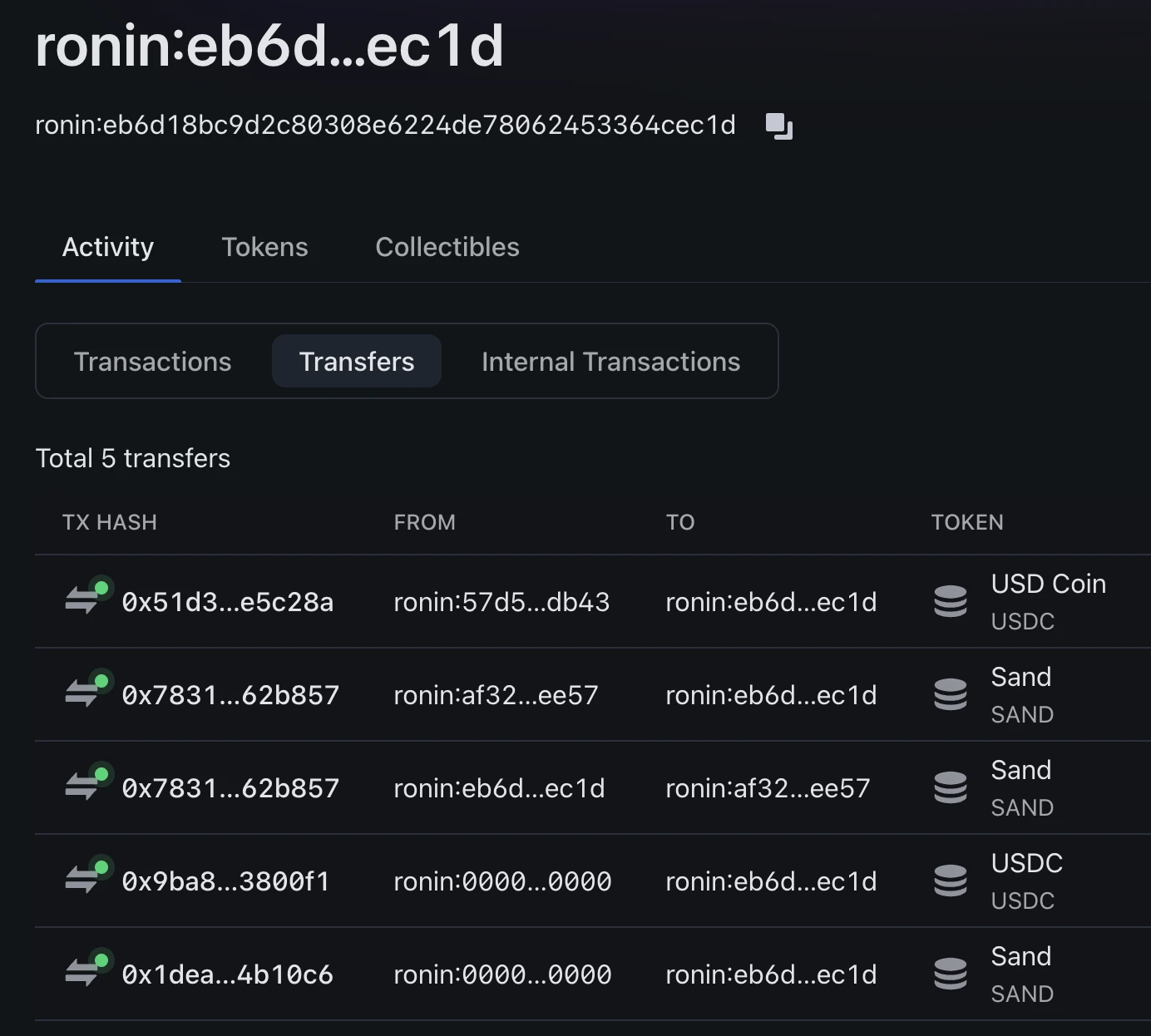
Following this browser clue, we can find that the wallet initiating the SAND transfer is ronin:eb6d18bc9d2c80308e6224de78062453364cec1d. The wallet with the ending ec1d has RON tokens that ultimately came from a domain named Seb.ron on the Ronin network.

It should be noted that there is currently no solid evidence indicating that the Seb.ron address belongs to official personnel from The Sandbox.
Although the identity of the Seb.ron address cannot be confirmed, many community members have made speculations, suggesting that it may belong to Sebastian Borget, the co-founder and CEO of The Sandbox.
This move could represent The Sandbox's imminent migration to Ronin.
Frequent Good News, Can It Save the SAND Token?
Although this news has not yet been confirmed, it has sparked the community's imagination. If The Sandbox does indeed migrate to Ronin, what kind of impact will it have on both products?
Recently, The Sandbox has been quite active. In the early hours of today, The Sandbox just updated the Game Maker version, releasing the latest version 0.9. This version provides creators with more tools and creative space.
The new version brings users a richer gameplay experience with various game types, including puzzles, resource management, and loot. Additionally, the new version introduces several features such as NFT access control.
For players, the new version also adds multiple improvements to game strategy, and new tools like collision correction and rendering range limiters can help creators optimize the gaming experience.
In addition to the version update, The Sandbox has also achieved significant collaborations recently, securing multiple partnerships in just the past month. Since November, The Sandbox's new collaborations include:
Partnering with the Korea Creative Content Agency to host a metaverse pop-up store themed around the TV series "Strange Lawyer Yu Yingyu."
Launching a new virtual community called "Cinerama," which includes well-known Hollywood brands such as "The Walking Dead," "Black Mirror," "Razorbacks," and "Cheech and Chong."
Luxury brand Gucci entering The Sandbox and launching the Gucci Cosmos Land experience.
Aave ecosystem NFT game Aavegotchi announcing a collaboration with The Sandbox to release a new game "Ripples of the Gotchiverse."
French clothing brand Lacoste announcing a strategic partnership with The Sandbox, where the teams will collaborate to create the Lacoste World Tour.
At the beginning of November, The Sandbox also officially announced the upcoming launch of an ecological fund. It is expected that in 2024, The Sandbox will launch a Game Maker fund with 100 million SAND tokens, which will reward creators and content based on a DAO selection system, as well as their engagement on the platform.
But do these frequent actions reflect positively on The Sandbox's market value?
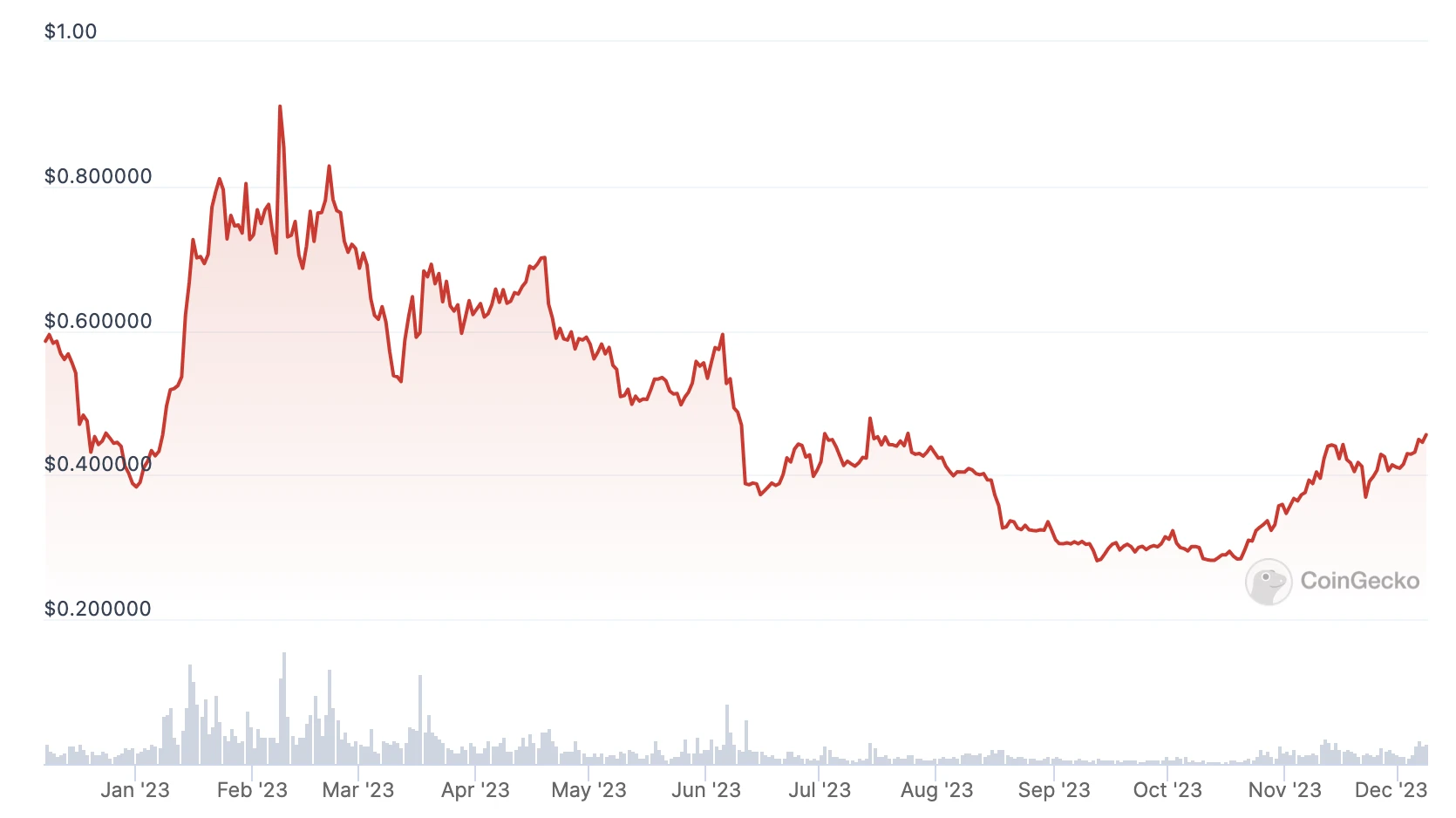
(The price trend of the SAND token over the past year Source: CoinGecko)
In the short term, the SAND token has recently surged. It seems to have ended a year-long decline. However, an undeniable premise is that the recent cryptocurrency market has improved overall, with token prices rising across the board. If we use BTC as a price reference, the downward trend of the SAND token seems to still be ongoing.
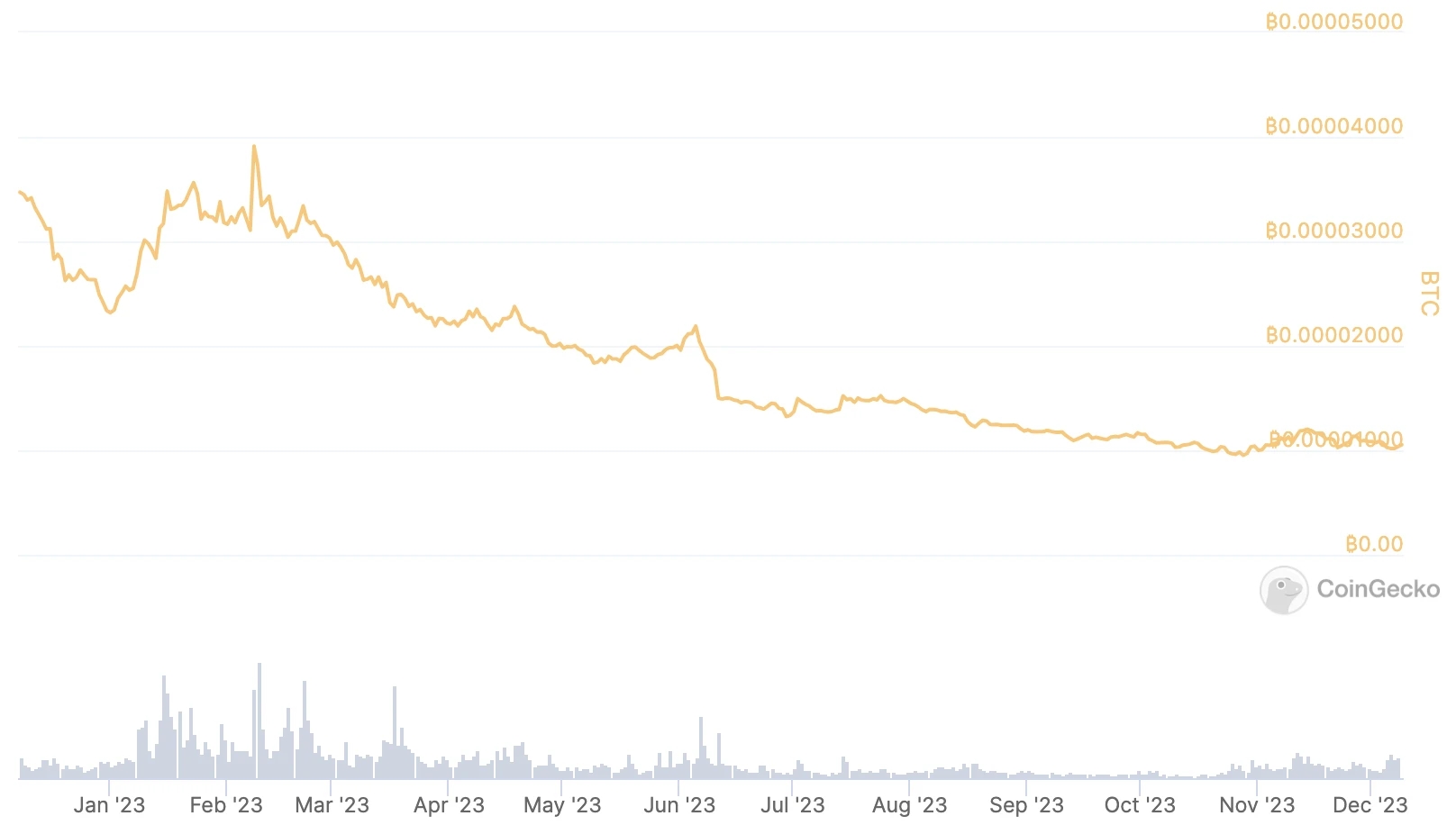
(The price trend of SAND/BTC over the past year Source: CoinGecko)
Currently, the price performance of the SAND token is not impressive; it can even be described as rather mediocre. If The Sandbox does indeed migrate to the Ronin chain as speculated by the community, it could bring new life to The Sandbox.
Ronin's Rise
Despite The Sandbox's poor performance, Ronin has emerged as a standout in the recent GameFi resurgence.
In mid-October, Ronin Network announced the launch of the Lucas (v2.6.2) upgrade and the Shillin hard fork on the Ronin mainnet, advising users running validators or RPC nodes on the mainnet to upgrade to the Lucas version.
By the end of October, the Shillin hard fork was completed. This version implemented several protocol improvements, including Optimistic Fast Finality (REP-0003) and REP-0002. Among them, REP-0003 proposed a new fast finality mechanism aimed at increasing the speed of transaction confirmations on Ronin; REP-0002 described the process of moving the Bridge to an independent application on Ronin, allowing the Bridge to be operated by its own set of operators without needing validators to run.
This hard fork introduced a voting process to accelerate block finality. The finality time for a block has been reduced from 45 seconds to 6 seconds.
After this upgrade, Ronin's ecological development and token price have shown impressive performance.
Starting with business outside of gaming, in mid-November, Ronin Domain Services (RNS) opened for public sale. At the beginning of December, the Ronin network introduced the DeFi protocol Impossible Finance, which will deploy a Launchpad on the Ronin network. Products launched on this Launchpad may require staking RON, AXS, and IDIA tokens for allocation.
Similarly, the collaboration between Ronin Wallet and Binance Pay was officially announced a few days ago, integrating the "Recharge from Binance" feature into the Ronin Wallet mobile app. This means that users can convert assets held on Binance into assets on the Ronin chain, such as converting BTC, ETH, and other tokens into AXS, SLP, and USDC on Ronin.
With all these positive developments, the RON token has indeed performed well.
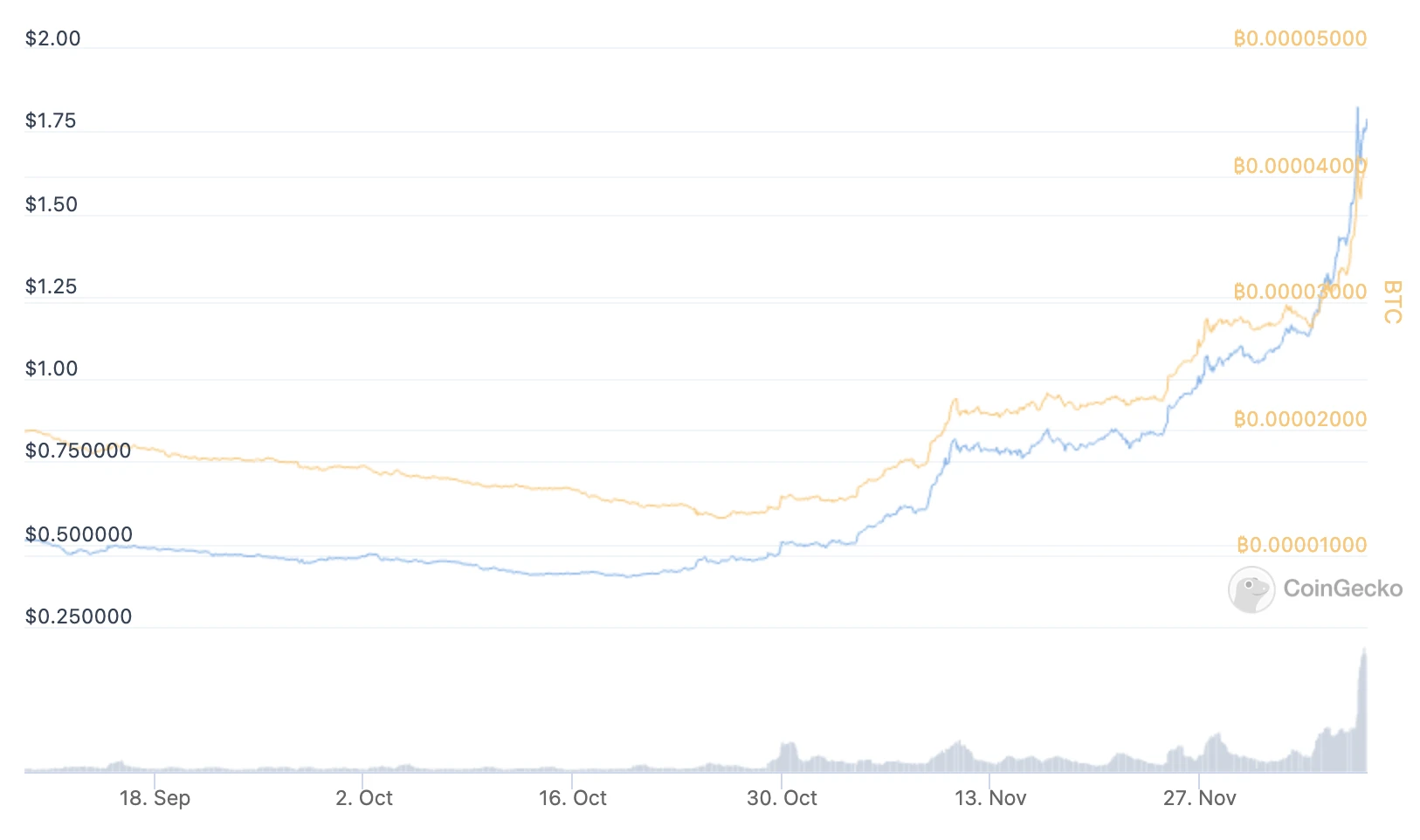
Coingecko data shows that RON has achieved significant gains, whether measured in USD or BTC.
If we extend the timeline to this year, RON has reached a new high for the year, with the current price of $1.79 exceeding the previous high of $1.42 set in April.
But what is the connection between RON's various positive developments and The Sandbox? Can it drive The Sandbox's revival?
Polygon's Great Escape? Is Migration the Cure?
The recent rise of the RON token, aside from positive stimuli and the resurgence of the GameFi sector, is also driven by on-chain data performance.
In recent months, migration to the Ronin network seems to have become a trend, with multiple games officially announcing this plan.
At the beginning of November, Ronin developer Sky Mavis partnered with South Korean game developer ACT Games to bring all of ACT's games to the Ronin Network.
The Zoids Wild Arena TCG, which is still in the testing phase, was initially deployed on Polygon but has now migrated to Ronin. The team stated that they are optimistic about Ronin's performance in the gaming field, saying, "Ronin Network is a network designed specifically for gaming."
Not only migration, but some new games have also announced future deployments on Ronin.
On the 6th of this month, Ronin announced a partnership with Singapore game developer Foonie Magus. This collaboration will bring the new game "Apeiron" to the Ronin blockchain. A demo of Apeiron is available on the Epic Game Store, and the mobile version is expected to launch globally in the first quarter of 2024.
Some games that migrated earlier have already announced their recent data performance.
At the end of October, the P2E MMO game Pixels, focused on the metaverse, migrated to the Ronin Network. Previously, Pixels had completed a $2.4 million seed round of financing, led by Animoca Brands and PKO Investments, and was deployed on the Polygon network. In mid-November, Ronin and Axie Infinity co-founder Jeff Zirlin posted on the X platform, stating that Pixels had surpassed 100,000 daily active addresses.
A noteworthy coincidence is that the games mentioned earlier that have migrated are almost all originally from the Polygon network, and The Sandbox is precisely the flagship metaverse product of the Polygon network.
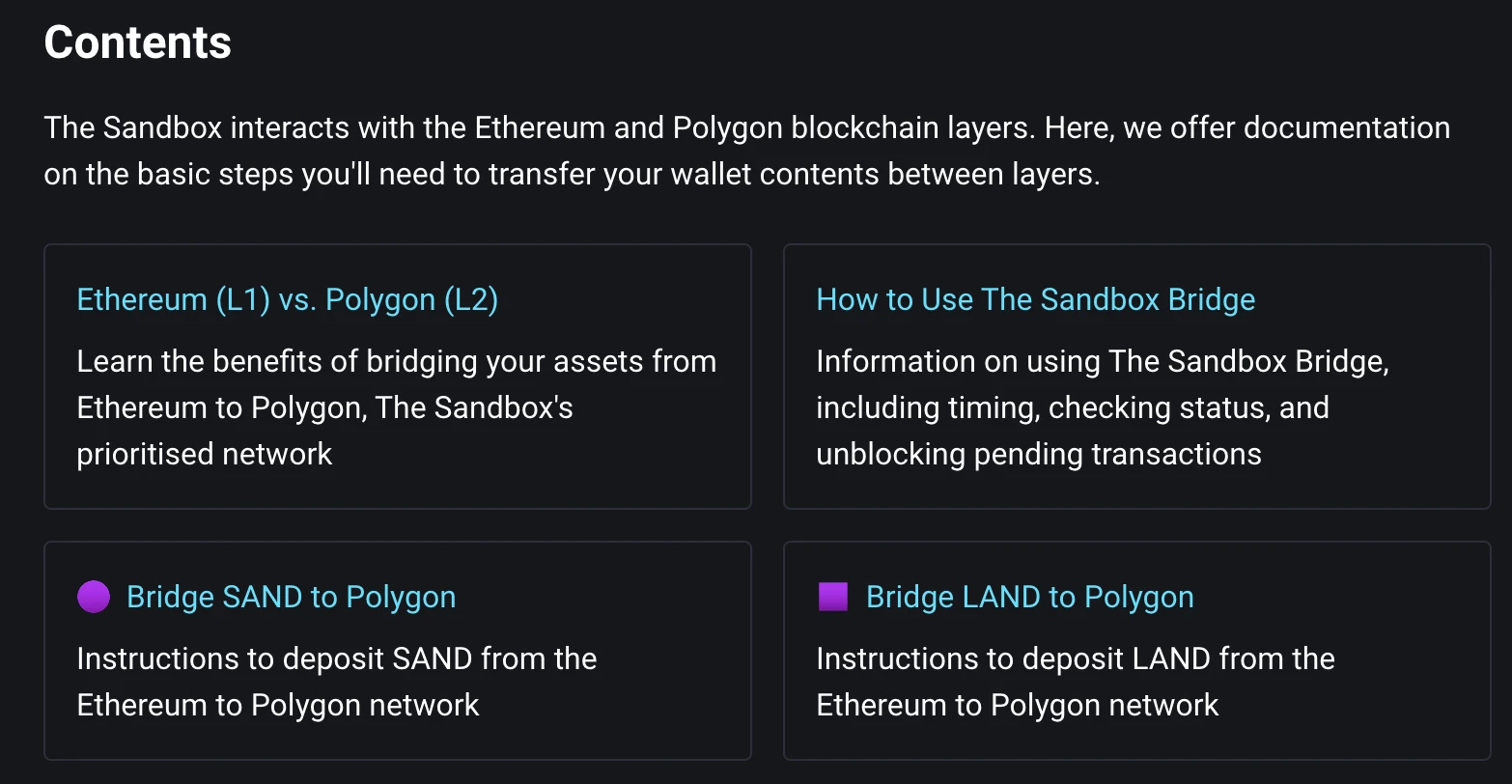
Source: The Sandbox Documentation
It is important to emphasize again that the migration of The Sandbox is currently just community speculation and community discussion. However, the exodus of games from Polygon is indeed happening repeatedly.
For The Sandbox, which was originally deployed on Ethereum, it has already undergone a migration to Polygon once. Will the story of "Meng Mu's three migrations" play out for The Sandbox?
DeFiLlama data shows that the current TVL of the Ronin chain is $124 million, reaching a new high for the year.
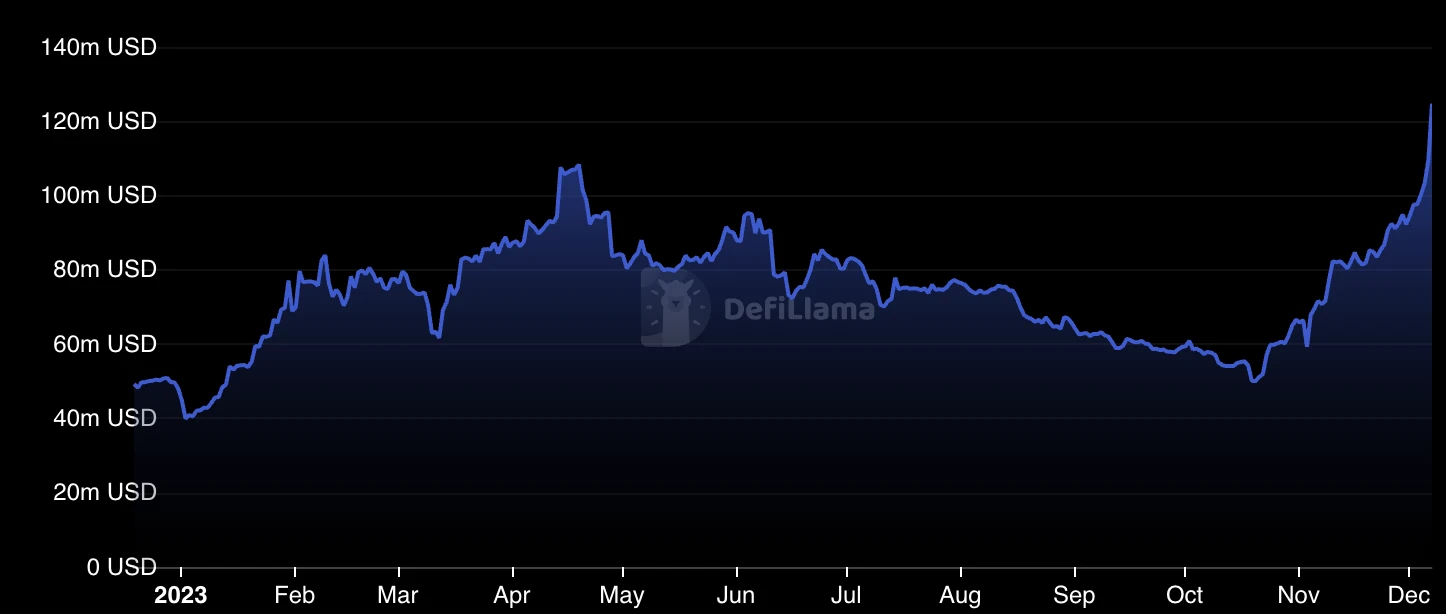
It is difficult to determine whether the migration of more games has brought more users to Ronin or if the prosperity of the Ronin ecosystem has attracted more projects. Although the causal relationship is hard to judge, the current phenomenon is evident—Ronin has "taken off" early in this GameFi resurgence.
If migration truly unfolds as speculated by the community, can Ronin's ecosystem save The Sandbox, which has performed poorly in this wave of enthusiasm?
 Risk warning
 Risk warning
Popular articles





