








As the Cancun upgrade approaches, how does Metis make Layer 2 truly "decentralized"?
 The L2 track has shown a trend of decentralization and merger integration.
Written by: Deep Tide TechFlow
Guess a riddle about a crypto project: "MEME in L2, L2 in MEME." You might see it at a glance—it's the currently popular Ethereum ecosystem Layer 2, Metis.
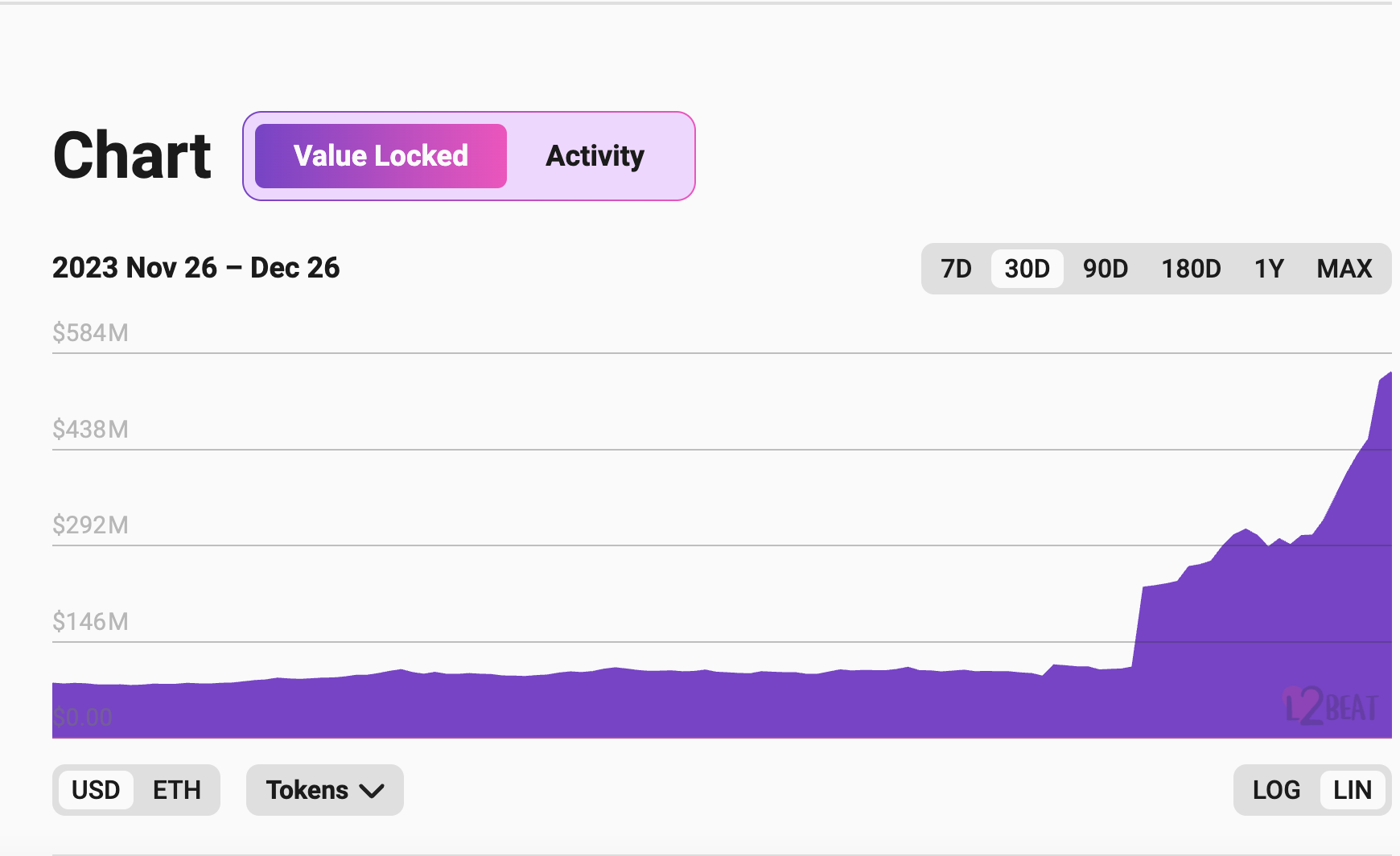
According to L2 Beat data, this L2 project, which involves Vitalik's mother Natalia Ameline and her friend Elena Sinelnikova, currently has a TVL exceeding $500 million, with an increase of 416%, ranking among the top four Ethereum Layer 2s. Along with the surge in TVL, the coin price has skyrocketed, rising over 300% in 30 days.
What Drives the Spiral Rise of Metis TVL and Coin Price?
As the first quarter of 2024 approaches with the Ethereum "Cancun Upgrade," Layer 2 projects are vying for investors' "range." Compared to large L2s like Arbitrum and Optimism with a circulating market cap of $3 billion, Metis, with a market cap of only $300 million, appears more cost-effective to investors. Additionally, Metis has its own unique strength—a decentralized sequencer.
The existing mainstream Layer 2s in the Ethereum ecosystem are designed to outsource the computational demands of smart contracts to external servers, which ultimately submit the results (fraud proofs or zero-knowledge proofs) to Ethereum for settlement.
This server is known as a sequencer, which receives unordered transactions from users, processes them off-chain into groups, and then generates a batch of compressed ordered transactions to send to Ethereum. One could say the sequencer is the soul of L2.
A harsh reality is that the current mainstream Layer 2s, including Arbitrum and Optimism, are all running on centralized sequencers. The reason is simple: running a single centralized sequencer is the most convenient, user-friendly, and cost-effective option.
However, this not only contradicts the decentralized spirit that cryptocurrencies have always championed but also raises concerns about whether sequencers might act maliciously, insert transactions, or engage in MEV (Miner Extractable Value) issues.
Metis has decided to break through in the field of decentralized sequencers and will soon conduct tests for a decentralized PoS sequencer on the Sepolia testnet, with community testing starting on January 3, 2024.
In the current situation where centralized sequencers are entrenched, can Metis's all-out attack on decentralized sequencers accelerate the process of decentralizing sequencers in the L2 track and spark a new wave of innovation?
This article aims to explore the opportunities and challenges of the L2 track by comparing the technical innovations and ecological construction ideas of Metis from two dimensions: technology and ecology.
The First Decentralized PoS Sequencer: Staking Incentive Mechanism Injects Operational Drive
It is no exaggeration to say that the centralization issue of sequencers in the L2 track has reached a critical point.
On one hand, most L2s currently operate centralized sequencers, and their attitudes toward implementing decentralized sequencers are ambiguous: for instance, both the OP Foundation and the Arbitrum Foundation operate their own centralized sequencers. Although they have proposed decentralized sequencer solutions to appease community voices, the lower threshold and costs of operating centralized sequencers, along with the substantial profits they generate, have led to an exceptionally slow development process for decentralized sequencers.
On the other hand, the realization of decentralized sequencers is urgent: centralized sequencers not only go against the original intention of blockchain decentralization but also pose significant risks. If a failure occurs or an attack happens, the entire L2 will be implicated. Moreover, the sequencer determines the order, content, and structure of packaged transactions, and a centralized sequencer could potentially act maliciously to maximize its arbitrage opportunities, capturing MEV value and even completely censoring user transactions.
Indeed, the profit-seeking nature of humanity is hard to change. Therefore, the design of decentralized sequencers must not only understand the market but also human nature: capturing the profit-seeking nature in designing solutions is the inexhaustible driving force for the long-term stable operation of decentralized sequencers.
Metis's introduction of a decentralized PoS sequencer solution with a staking mechanism is such an existence that combines underlying technology with an incentive system.
In Metis's design, there is first the role of an administrator: as the name suggests, the administrator is a rule-maker responsible for setting important parameters in the decentralized system, including incorporating eligible sequencers into the sequencer pool and setting the release rate of block rewards.
The sequencers entering the sequencer pool are responsible for determining the order, content, and structure of packaged transactions. When multiple sequencers exist, at least 2/3 of the sequencers must sign to submit the packaged batch to the Rollup contract on L1.
Additionally, to prevent sequencers from acting maliciously, there is a validator role that samples and verifies blocks, including checking whether the order of transactions has been altered or if any malicious transactions have been inserted.
The entire process can be simply likened to: the head teacher (administrator) selects a group of qualified teachers to become question setters (sequencers) based on requirements, forming a set of exam questions to submit to the school, and under the agreement of 2/3 of the teachers, a standard answer recognized by everyone is established. Additionally, supervising teachers will randomly check the question setters to ensure they do not leak questions or engage in other violations.
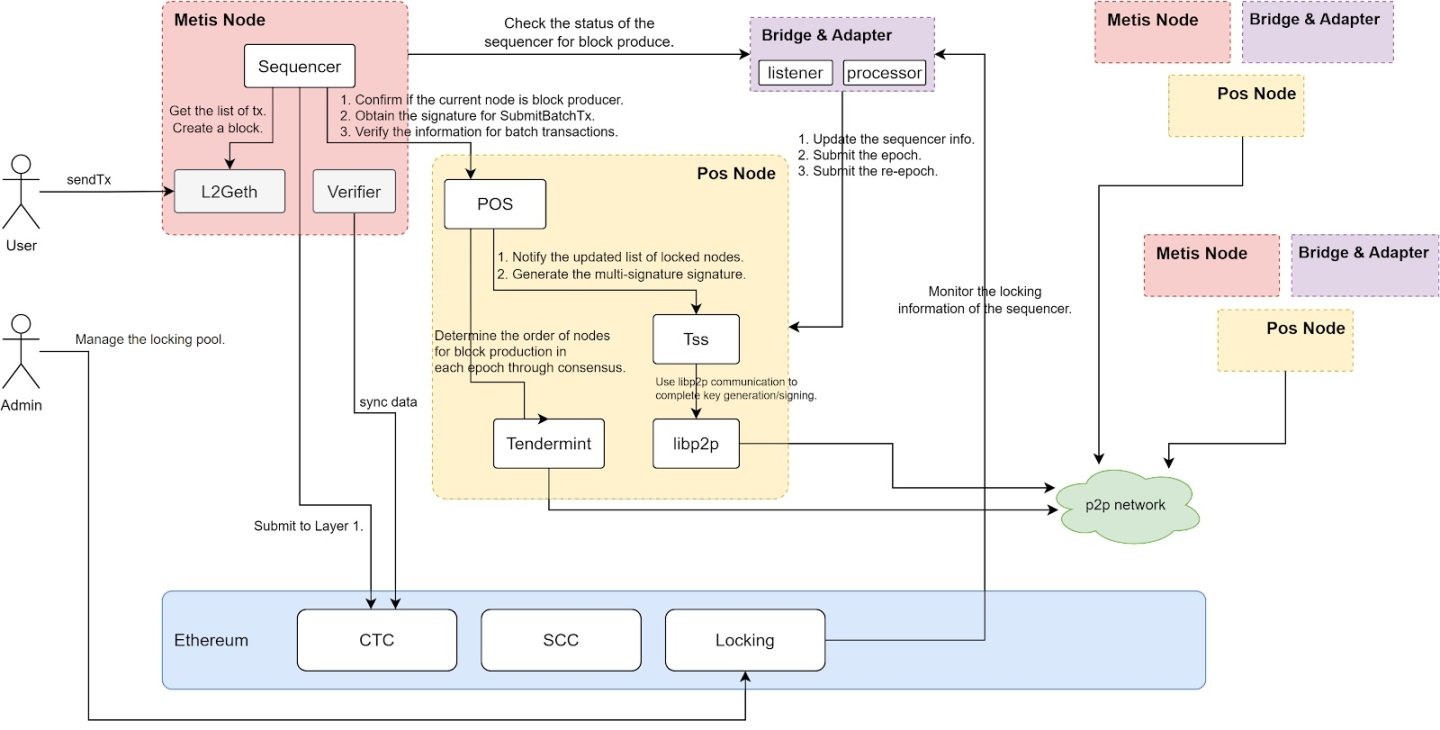
Diagram of Metis Decentralized PoS Sequencer Operation
This solution, where multiple entities operate the sequencer, achieves true decentralization and demonstrates Metis's insight into market demand and timely response. However, another question to consider is:
Decentralization comes from the consensus formed by widespread participation; what is the motivation to attract more people to participate?
Metis's answer is the staking incentive system.
First, the sequencer operators entering the sequencer pool need to stake at least 20,000 METIS. Once they enter the sequencer pool and participate as block-producing sequencers, they will receive substantial token rewards. This threshold of 20,000 METIS has multiple positive implications:
In terms of stable system operation: on one hand, it aims to verify whether the sequencer has the ability to participate normally in network operations; on the other hand, it serves as a deterrent—if the sequencer acts maliciously, their staked assets will be forfeited.
In terms of ecological development: in the current limited application scenarios for L2 tokens, the staking mechanism not only increases the utility of METIS tokens but also further reduces the already limited circulation of METIS, thus positively catalyzing a virtuous cycle of ecological development.
For validators, verifying blocks itself earns token rewards, and if they discover that a sequencer has acted maliciously, a portion of the assets forfeited from the sequencer will also be rewarded to the validators, which invisibly enhances the validators' motivation to earn more through verification.
To attract broader participation, the Metis ecosystem will also give rise to some staking dApps, serving ordinary users who do not have enough funds to enter the sequencer pool. They can stake their tokens with trusted sequencer operators to earn rewards, and sequencer operators wishing to gain more staking support will need to share a portion of their earnings to support their users.
In this way, a stable decentralized sequencer operation framework that is widely participatory, transparently regulated, and beneficial to all participants is emerging.
Beyond incentives, Metis's introduction of the staking mechanism also leads us to delve deeper into the practicality of L2 native tokens: for a long time, the application scenarios of L2 native tokens have been confined to governance, which has led many to question the necessity of L2 native tokens. How to endow L2 native tokens with more utility has become a dilemma for many project teams. By introducing staking in the decentralized PoS sequencer mechanism, Metis not only serves an incentive function but also integrates token utility into consensus and network security.
Of course, this design is still in the theoretical stage, but it will soon face the test of the community. On December 27, 2023, Metis will conduct tests for the decentralized PoS sequencer on the Sepolia testnet and will start community testing on January 3, 2024. Users can earn points through testing dApps, Learn to Earn, and other methods, with different point levels granting access to different types of NFTs, ultimately allowing them to receive community testing airdrops based on their NFTs.
Metis encourages broad community participation to better test network robustness, identify gaps, and promote further improvement of the decentralized PoS sequencer solution.
Hybrid Rollups: Achieving Both Fish and Bear's Paw in the OP vs ZK Mixed Battle
Of course, in the fierce competition of L2, Metis's innovative foundation is not limited to the decentralized PoS sequencer; Hybrid Rollups are also worthy of in-depth study.
Looking back at the development of the L2 track over the past two years, OP has flourished with the advantages of an open-source tech stack, and airdrop strategies have sparked multiple rounds of community enthusiasm; ZK's advantages lie in more rigorous mathematical proofs and higher security, with projects like zkSync and Starkware competing with Optimism and Arbitrum; moreover, many new projects are derived from OP and ZK technical solutions, which inevitably brings about the technical homogenization issue among L2 projects and highlights the respective technical shortcomings of OP and ZK in a broader project sample:
Optimistic Rollups are fully EVM compatible, with faster off-chain transaction processing speeds and lower costs, but since OP assumes transactions are valid by default, there are security risks. Additionally, due to the challenge period set for submitting fraud proofs, the time for transaction finalization is longer;
ZK Rollups, based on zero-knowledge proof verification methods, have higher security and no challenge period, allowing for faster transaction finalization, but achieving EVM compatibility is more challenging, and generating proofs requires higher off-chain computational costs.
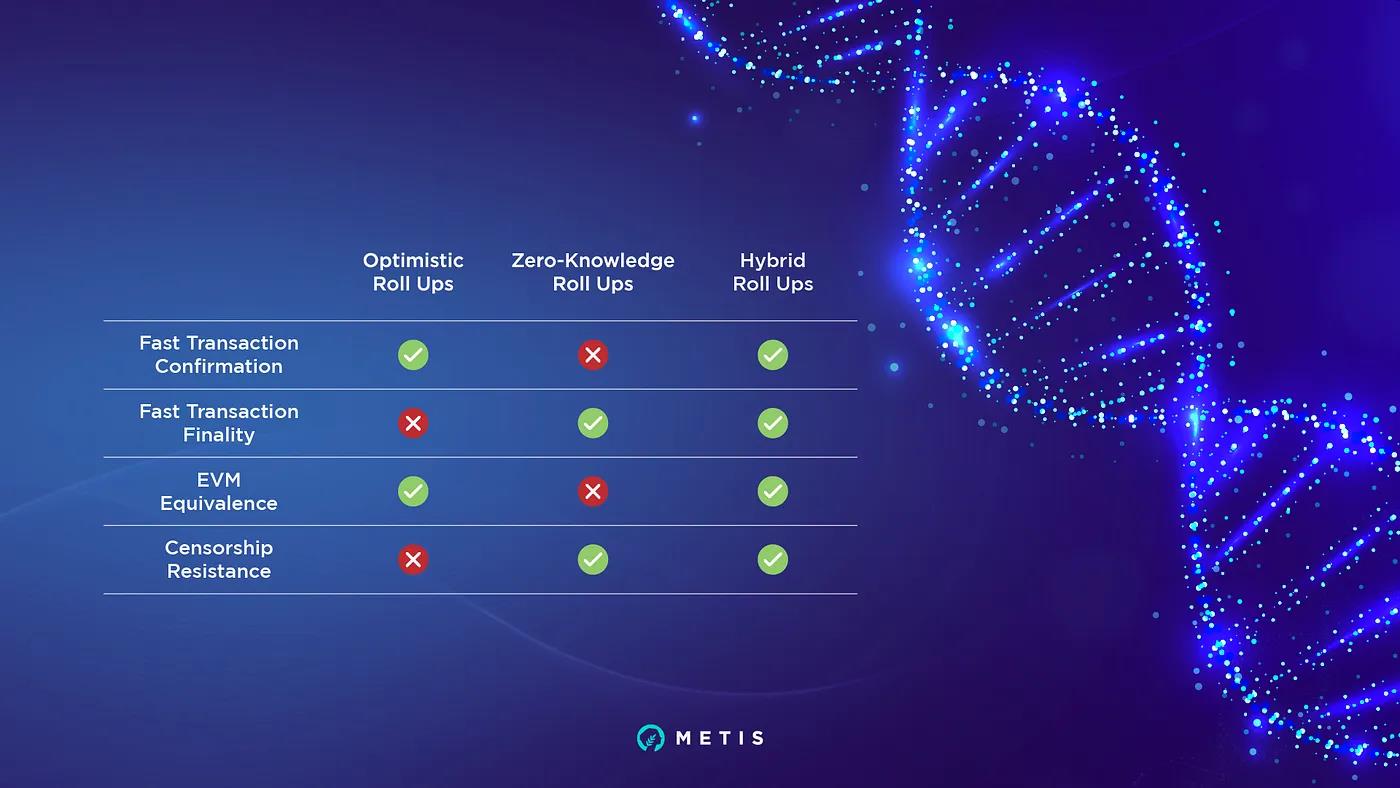
Image Source: Metis Medium
In the repeated trade-offs between security and efficiency, the originally competing factions began to seek integration and complement each other, leading to the emergence of Hybrid Rollups, which gradually became a future trend for many practitioners. Many projects have embarked on the exploration of Hybrid Rollups based on their characteristics: for example, in July this year, the hybrid algorithm stablecoin protocol Frax Finance launched the Layer 2 network Fraxchain, which is a typical representative of Hybrid Rollups; additionally, the lightweight blockchain protocol Mina has also applied its MIPS zkVM-based zero-knowledge proof technology to OP Stack fraud proofs, among others.
This trend of compatibility and inclusiveness has also touched Metis. As early as March 2023, Metis emphasized Hybrid Rollups in its publicly released roadmap.
This mechanism retains the Optimistic Rollup architecture while introducing Zero Knowledge fraud-proof (ZKFP). Compared to traditional fraud-proof mechanisms that require re-executing all transactions, ZKFP only needs to submit a single ZK proof to prove the Rollup, making it easier, cheaper, and more efficient to check a single ZK proof and process and verify transactions.
In the entire operation process: after the sequencer generates a block, the Proposer submits transactions and states, and then the Prover reads data from L1 to generate blocks and MIPS programs. After the proof is generated, the Prover submits the proof to L1: if it is not submitted or if the smart contract determines that conditions are not met, the validator will initiate the fraud-proof process, and the tokens staked by the sequencer may be forfeited.
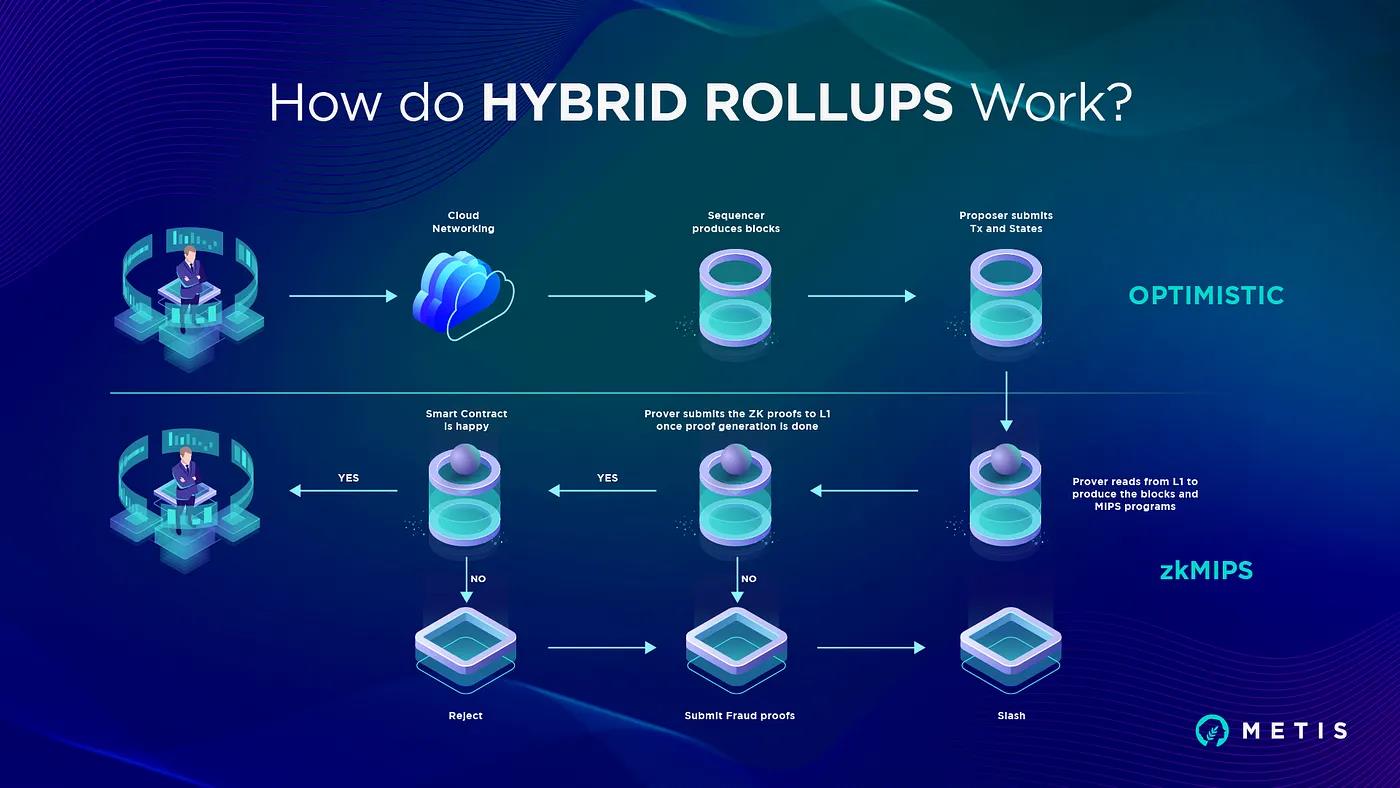
Diagram of Metis Hybrid Rollups Operation
In terms of specific implementation ideas, Metis has integrated the MIPS instruction set into the design of Hybrid Rollups.
As the EVM instruction set introduces new commands and deprecates old ones over time, this change poses significant challenges for any developer wishing to build and use a standardized instruction set. Therefore, Metis chose to optimize based on MIPS, forming zkMIPS, which is specifically tailored for ZK proofs. Compared to traditional ZK proof integration, zkMIPS can also create recursive proofs, allowing multiple proofs to be aggregated into a more manageable unit, making it more efficient and cost-effective.
In July this year, Metis also announced the incubation of the zkMIPS project ZKM: ZKM adopts the MIPS instruction set to achieve zero-knowledge proof (ZKP) security for all virtual machines (VMs) and applications at the CPU level, supporting various blockchain smart contract engines. The plug-and-play feature allows developers to apply ZKP without changing their codebase, reducing adoption costs. Leveraging Ethereum's decentralized security infrastructure, ZKM can verify all blockchain and non-blockchain transactions.
Of course, Metis also understands the importance of EVM compatibility for ecological construction: being EVM compatible not only attracts a large number of mature Ethereum ecosystem developers to seamlessly enter the Metis ecosystem but also allows developers to enjoy a wealth of practical tools, development tutorials, and infrastructure from the Ethereum ecosystem. Based on this, Metis launched the Metis Virtual Machine (MVM) Rollup solution: the design of MVM is almost identical to that of EVM but includes key improvements, such as separating computing and storage functions. This design not only opens the Metis ecosystem to the broader EVM universe but also reduces gas fees and shortens withdrawal waiting times.
In this way, Metis not only retains the advantages of the OP system, achieving EVM equivalence and providing developers with an easy-to-code environment but also enhances the finality and security advantages of the ZK system, reducing the transaction finalization time from 7 days to about 4 hours and significantly improving security. For developers, Hybrid Rollups have a lower threshold and are more flexible; for users, Hybrid Rollups are safer and more efficient.
Compared to 2021, current L2 technology has naturally matured significantly, thanks to the innovative efforts of trailblazers in the field. As one of them, Metis's understanding and design of decentralized sequencers and Hybrid Rollups reflect its commitment to being a pioneer in L2 technology innovation, while in the field of ecological construction, Metis is also a pioneer in addressing user and developer needs.
User-Centric Perspective: Multi-Dimensional Economic Incentives Promote Ecological Flourishing
Building Layer 2 is like constructing a shopping mall; the gradual resolution of technical issues is akin to erecting a solid steel framework for the mall's prosperous development. Since the main body of transactions is users, the prosperity of the mall depends on attracting tenants and customers. Similarly, the prosperity of L2 is reflected in two aspects:
How to attract more developers to enter the ecosystem, build projects, and continue innovating;
How to attract more users to enter the ecosystem, participate, and have a sustained interest in exploration;
Various L2 projects have already gained valuable experience in this battle for traffic: Optimism's multiple rounds of airdrops drew massive attention, and then it gradually built its superchain universe using the OP Stack open-source components; Arbitrum actively introduced leading DeFi projects, with the onboarding of large-scale DeFi projects like Uniswap, Aave, Curve, and 1inch bringing a large user base to Arbitrum; the Layer 2 project BASE, backed by Coinbase, launched the phenomenal application FriendTech, achieving instant success; and Blur's founder launched the Layer 2 network Blast, which broke $600 million in TVL in just 9 days with its RWA native yield model…
Having delved into the L2 track for many years, Metis understands the conventional methods of attracting users. While adhering to basic strategies, it focuses on low thresholds and high returns, continuously expanding its ecological territory from both user and developer dimensions.
For Users:
Lowering the entry threshold to the ecosystem is the first priority in attracting users: therefore, every L2 project places great importance on the development of ecological infrastructure "wallets," and Metis is no exception. Currently, several mainstream wallets, including MetaMask, Trust Wallet, imToken, TokenPocket, and OKX Web3 Wallet, support Metis, allowing users to interact with various dApps in the Metis ecosystem without additional learning costs.
Reducing the cost of participating in the ecosystem can accumulate a good user reputation: thanks to the clever design of Hybrid Rollups, the transaction experience in the Metis ecosystem is both efficient and secure. Additionally, Metis integrates a decentralized storage solution, MemoLabs, which makes its transaction fees significantly lower than those of Optimism and Arbitrum, with ETH transfers costing less than $0.01. Although transaction fees may rise when Metis transitions the DA layer to the ETH mainnet in the future, they will still remain within a low range, and transaction security will further improve.
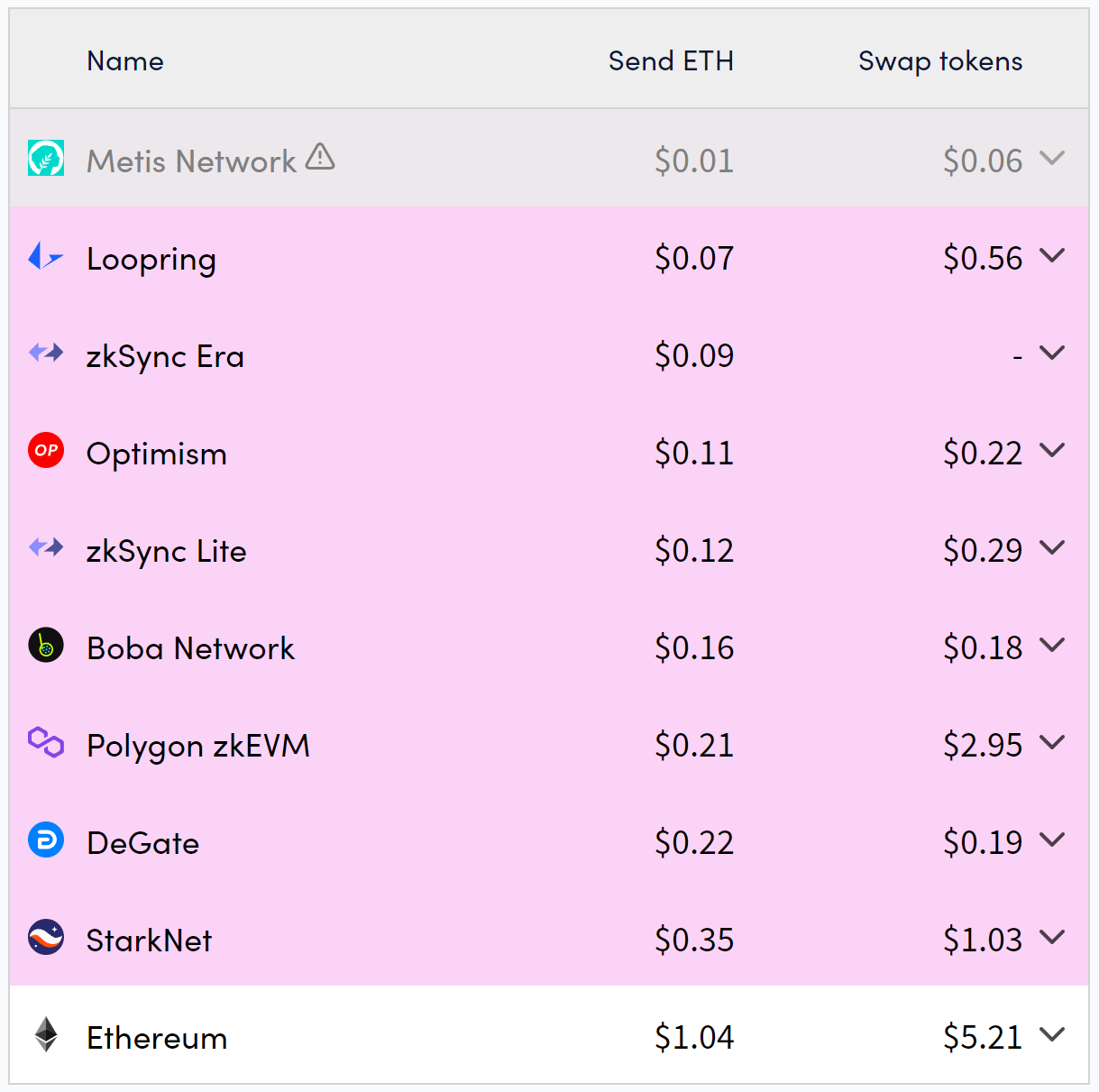
Image Source: l2fees.info
A rich variety of ecological participation options is key to attracting users to stay long-term: according to Layer2 Station data, there are over 100 applications in the Metis ecosystem, covering DeFi, wallets, NFTs, and more. This includes well-known DeFi applications like Aave, SushiSwap, and Stargate, which brought a large influx of users to Metis during their initial onboarding and provided more playability for Metis ecosystem users.
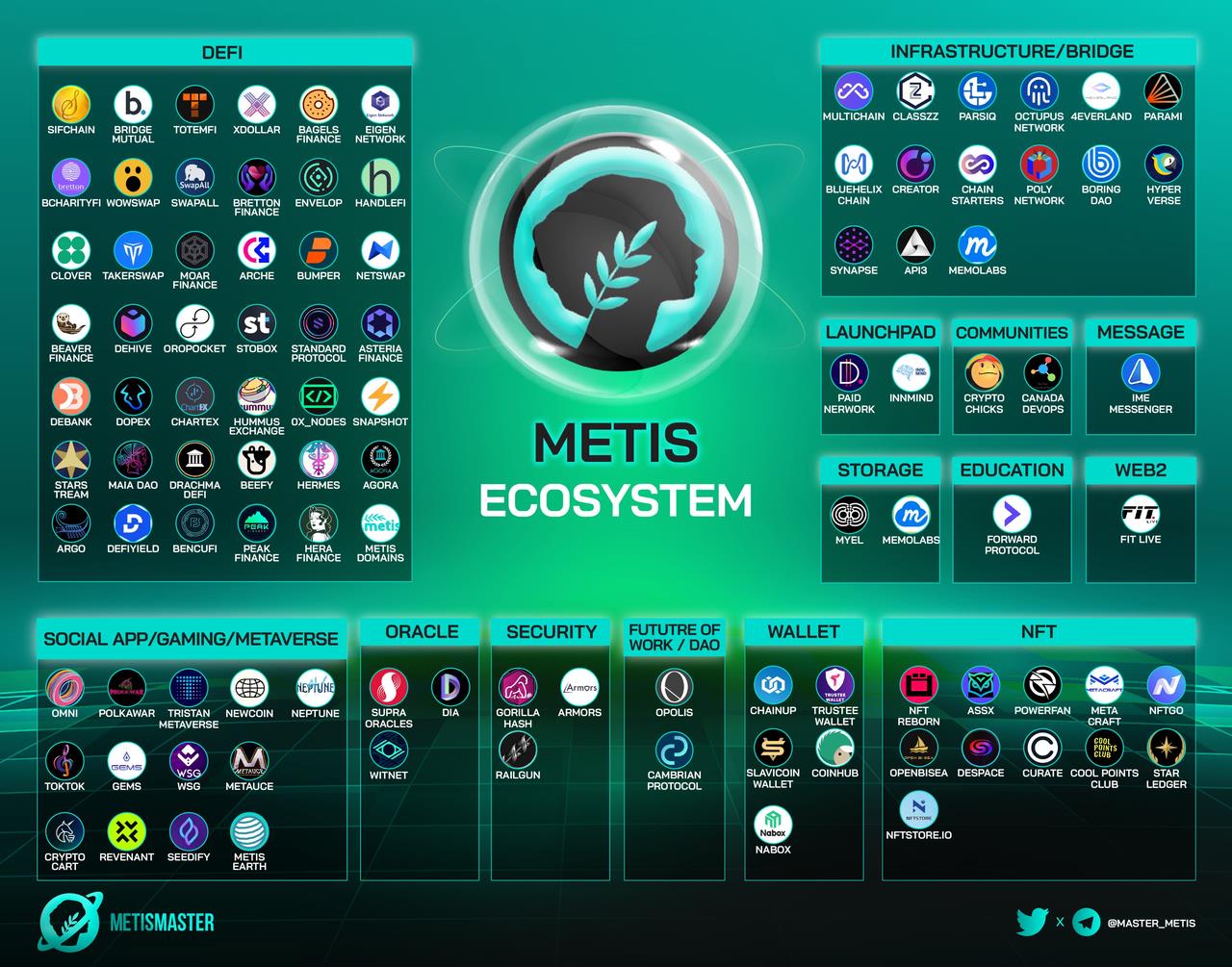
Image Source: Twitter @Layer2_Station
Interestingly, since the name "Metis" is derived from the Greek goddess of wisdom in mythology, it is common to find projects in the Metis ecosystem named after Greek goddesses: for example, the DeFi yield enhancer Maia is named after the goddess of fertility (Ancient Greek: Μαῖα); the Dex aggregator Hera Finance is named after the queen of the gods, Hera (Greek: Ἥρα)… This playful naming also serves as a memorable point for community members regarding the Metis ecosystem.
In the future, Metis will continue to focus on ecological diversity, attracting more DeFi, GameFi, SocialFi, and NFT projects to join, further improving the ecological landscape and providing users with rich experiences.
Capturing users' profit-seeking psychology is akin to capturing the traffic code: airdrop strategies have long been a hot topic in the L2 community. Back in 2021, when Metis launched, it conducted a large number of airdrops, and the upcoming community testing for the decentralized PoS sequencer (starting January 2, 2024) will also provide generous rewards for community members who actively participate in the testing.
Beyond airdrops, Metis has also linked rewards to ecological participation by launching the Metis Advocates Program. Community members who resonate with Metis's development philosophy and possess content creation abilities and social media influence can apply for this program to contribute to Metis's growth and receive corresponding rewards.
In September of this year, Metis announced a $5 million DeFi incentive program called Metis Journey to incentivize active DeFi participants, with 100,000 METIS tokens allocated to reward Aave users in Metis's liquidity pools, including ETH, METIS, USDC, USDT, and DAI. Such series of incentives aim to enhance user participation in the ecosystem and attract more users.
Additionally, as mentioned earlier, with the implementation of the decentralized PoS sequencer, ordinary users can share block mining rewards by staking their tokens with sequencer operators.
For Developers:
A low technical threshold saves developers a lot of learning costs: by retaining the Optimistic Rollup architecture, Metis can provide EVM equivalence, allowing many Ethereum developers to seamlessly join the ecosystem.
Thoughtful technical services can help developers avoid many detours: like many technically mature projects, Metis's official website displays detailed technical documentation, development tutorials, and related technical tools, and has established a developer communication community to promote technical exchange and learning. Professional technical personnel in the group respond promptly to help new developers with their queries.
Moreover, Metis is also generous in providing financial support to developers: the bug bounty program for smart contracts is long-term effective, with rewards of up to $100,000; additionally, Metis regularly holds hackathon events to discover promising projects and developers, providing funding, technical, and marketing support.
This week, Metis announced a $100 million ecological development fund, with 4.6 million METIS allocated to support sequencer mining, trace funds, deploy new projects, and other initiatives. In the future, the fund will focus on projects in the fields of DeFi, RWA, SocialFi, NFTs, cross-chain technology, smart contract development, blockchain security, decentralized identity and privacy solutions, gaming, and more, to accelerate the growth of its ecosystem.
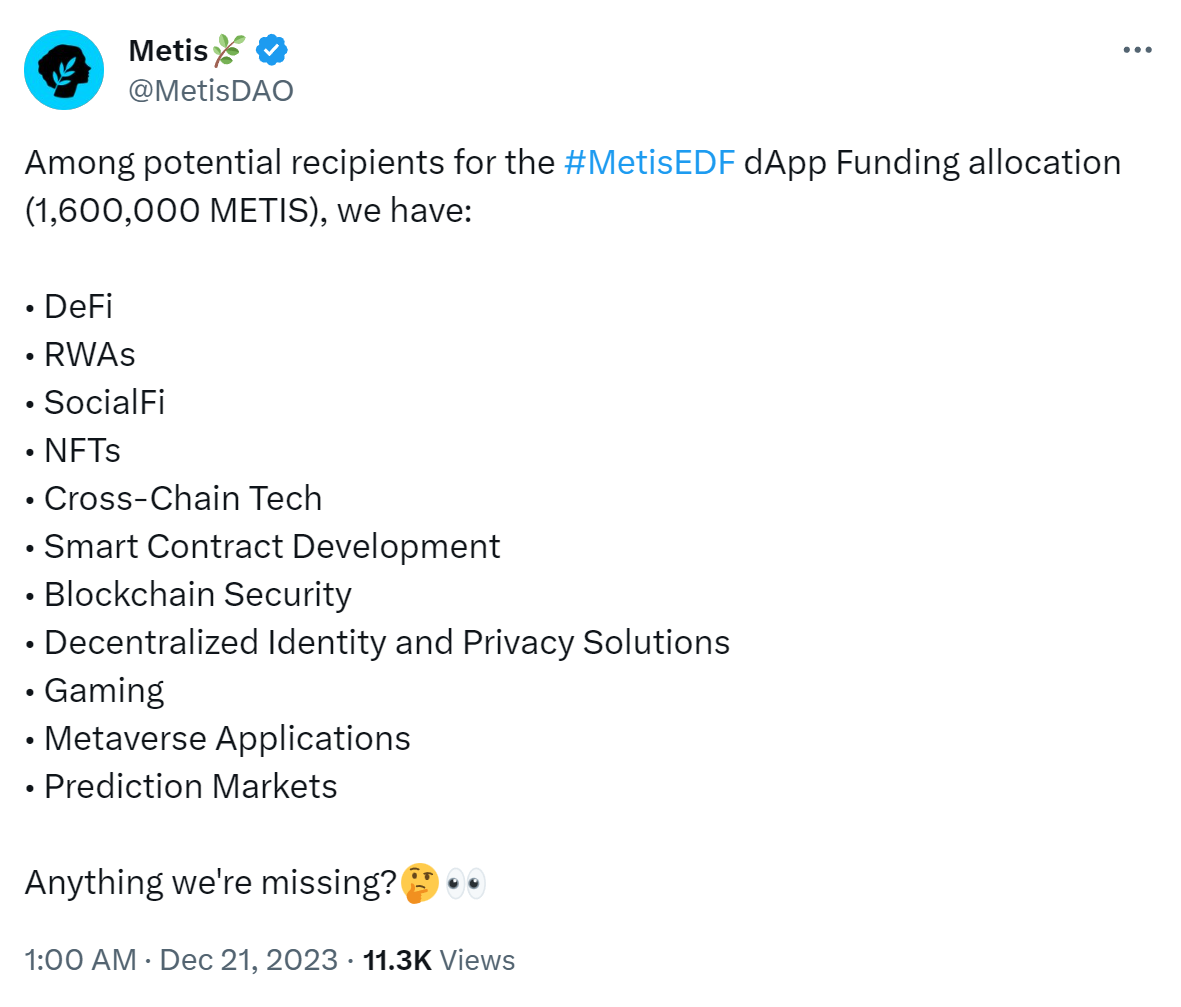
Image Source: Twitter @MetisDAO
Looking Ahead to 2024: Welcoming Multiple Milestones
In the roadmap announced at the beginning of the year, the Hybrid Rollup upgrade series is also a key focus for Metis. The official team revealed that ZKM will be unveiled in the first quarter of 2024.
Additionally, another important milestone for Metis is the upcoming community testing event for the decentralized PoS sequencer.
The first phase of the testing activity will last for two weeks (January 3 - January 17, 2024), aiming to encourage users to interact with Metis dApps deployed on the Sepolia testnet:
Hummus Exchange
Netswap
Tethys Finance
The native liquidity staking protocol for METIS tokens
More…
As the first project to implement a decentralized sequencer, community members focused on the development of decentralized sequencers have high curiosity and expectations for this community testing event. At that time, Metis's social media platforms will also announce more gameplay tutorials and reward details, and the event will set up a series of rewards linked to airdrops, so interested users can keep an eye on it.
In the upcoming 2024, Metis's work focus in the first quarter will be on the launch of the decentralized PoS sequencer; in the second quarter, Metis will accelerate the testing launch of Hybrid Rollup; by the third quarter, Metis's Common + Eco Node dual governance structure will officially go live.
Looking at the overall Metis ecosystem: just a few days ago, Metis's TVL was around $240 million, with approximately 470,000 wallet addresses and about 2,000 daily active addresses on-chain. This week, Metis's TVL surged to $355 million, which not only highlights the positive impact of the aforementioned milestones on Metis but also gives the community great expectations for Metis's potential:
On one hand, the allocation of Metis tokens to investors and the founding team has been fully unlocked, and tracking on-chain wallets shows that institutions are gradually offloading their holdings. Compared to other L2 projects that still retain a large amount of institutional and team tokens, Metis is seen as an excellent investment target in the L2 track by many KOLs.
On the other hand, with the launch of the decentralized PoS sequencer, under the guidance of the incentive system, not only will sequencers choose to stake 20,000 METIS to earn block rewards, but users will also choose to stake tokens to share profits with sequencers, enhancing the utility of the tokens. At that time, Metis may usher in a rapid development phase.
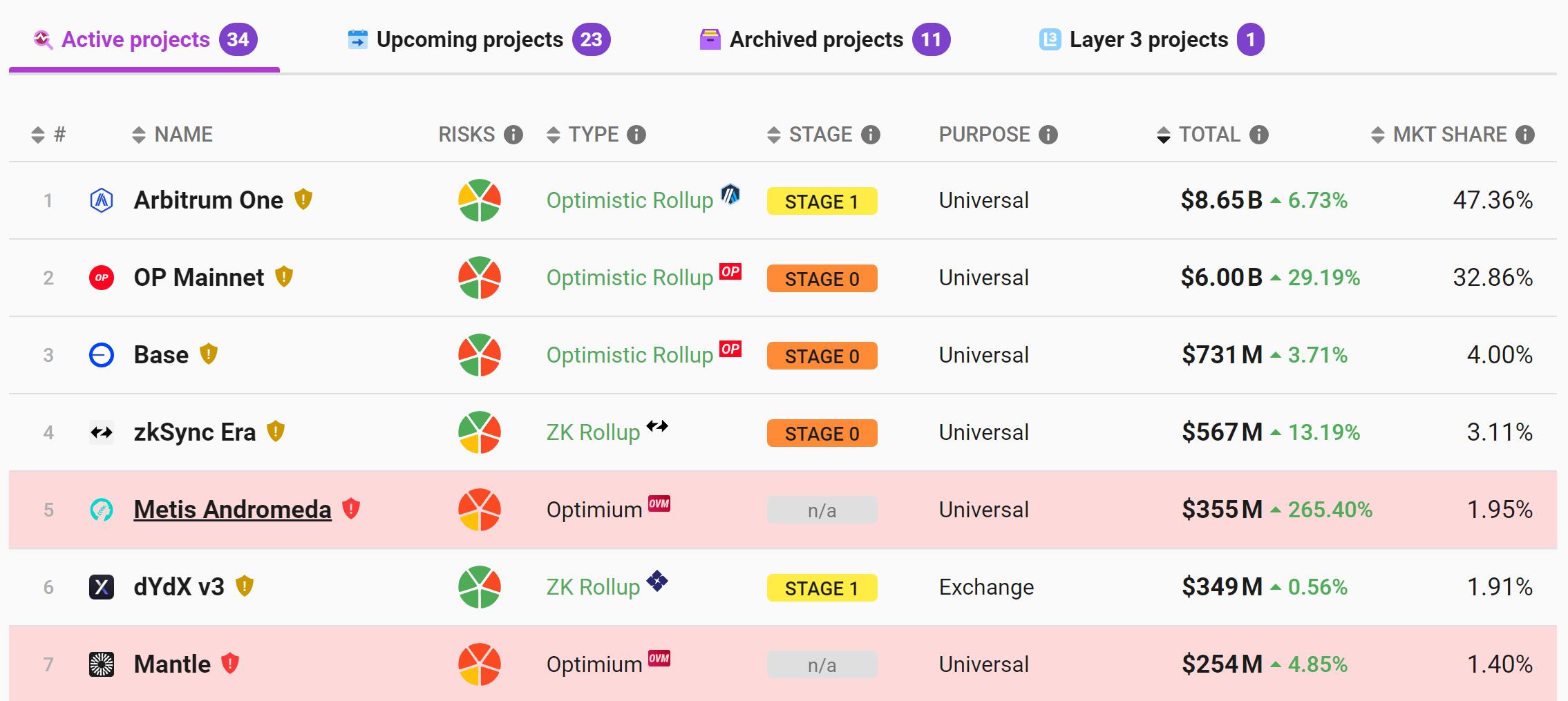
Image Source: l2beat.com
In the upcoming 2024, Metis will welcome the realization of multiple milestones, and with the acceleration of ecological construction, Metis may seize the opportunity to challenge the top four (Arb, OP, zkSync, Starkware) and enter the first tier of L2.
Conclusion
From the rising calls for decentralized sequencers and the in-depth exploration of Hybrid Rollups by numerous developers, it is evident that the L2 track is showing a trend of decentralization and integration.
Going with the flow, progress can be rapid. Perhaps in the current L2 competition, we also need to make wiser choices based on trends, continuously innovate with an inclusive mindset, and lead projects to break out while pushing the track to a breakthrough.
Extending the name "Metis," which in Ancient Greek is: Μῆτις, representing the goddess of wisdom in Greek mythology, the naming cleverly encapsulates the project's self-positioning and aspirations, while perhaps also hinting at Metis's wise layout and choices in the L2 competitive landscape:
Early on, it jumped out of the competitive infighting between OP and ZK, keenly targeting Hybrid Rollups, and steadfastly practicing the principle of decentralization, providing dual guarantees for the stable operation of decentralized PoS sequencers through technology and incentive measures.
Such wisdom extends to the ecological aspect; it is said that bear markets are the best time to build. Metis's ecological construction has gradually improved from infrastructure to various types of dApps. As the initial stage of the bull market approaches, Metis is about to welcome several breakthrough developments, preparing for the influx of users and funds.
Of course, the L2 War is just the beginning of a movie. With the arrival of a new bull market, facing market opportunities and challenges, we look forward to Metis's performance and the emergence of more innovative solutions in the L2 track.
 Risk warning Risk warning

Popular articles





