








Bankless: How to Participate in the Re-staking Track through ether.fi?

 ether.fi can effectively transform the local restaking process into a single deposit process.
Written by: William M. Peaster, Bankless
Compiled by: Luccy, BlockBeats
Editor’s note: Recently, the narratives of LST and LRT have become all the rage in Ethereum. Bankless senior writer and Metaversal creator William M. Peaster elaborates on why re-staking is becoming a mainstream trend in the cryptocurrency space, and delves into the opportunities and challenges through case studies. William M. Peaster mainly mentions a new re-staking project, ether.fi, and details its double rewards strategy, where points can potentially qualify for airdrops. BlockBeats compiles the original text as follows:
Recently, liquid staking tokens (LST) have become all the rage around Ethereum.
You’ve heard of the big players here, such as Lido (stETH), Rocket Pool (rETH), and Coinbase (cbETH) — these LSTs allow users to maintain liquidity while earning ETH staking rewards without having to run their own validator setups.
The general promise? Deposit ETH to receive LSTs that represent your deposit, then hold or use the LSTs as you wish, while they gradually accumulate ETH rewards over time.
Many platforms have risen by following this model, but currently, in the LST space, the technology of re-staking is generating significant excitement, widely advocated by EigenLayer. Re-staking utilizes LST deposits to provide validator services for projects looking to acquire external security infrastructure.
It’s a win-win model: depositors can earn ETH rewards and validation income from projects utilizing EigenLayer simultaneously, while these projects can adopt Ethereum's decentralization and security without having to build their own trust networks.
What’s the catch? At this early stage, EigenLayer has set a cap on LST deposits, and so far, every time the cap is raised, the limit is quickly reached. This is not surprising, as there are huge expectations for future airdrops from EigenLayer.
What’s the good news? There’s a solution. EigenLayer also offers native re-staking, which allows for the deployment of actual validators without a deposit cap.
What’s even better? Some projects are making this process simpler, effectively transforming the native re-staking process into a single deposit procedure. One project to note here is ether.fi.
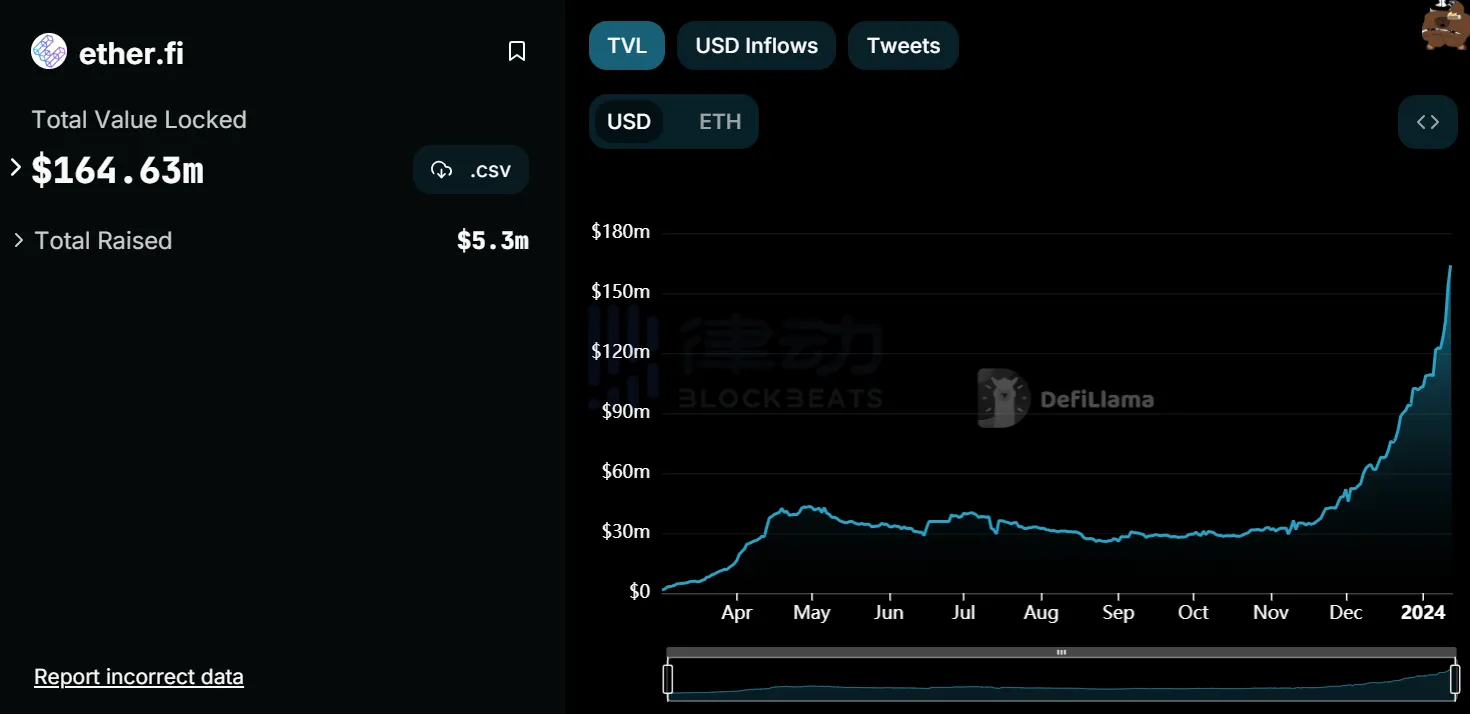
Launched in 2023, ether.fi created eETH, an LST that natively re-stakes its underlying ETH deposits through EigenLayer. In addition to staking rewards and the possibility of using eETH in DeFi, this circular liquidity allows depositors to earn both ether.fi loyalty points and EigenLayer re-staking points, both of which may involve airdrop eligibility.
Interesting, right?
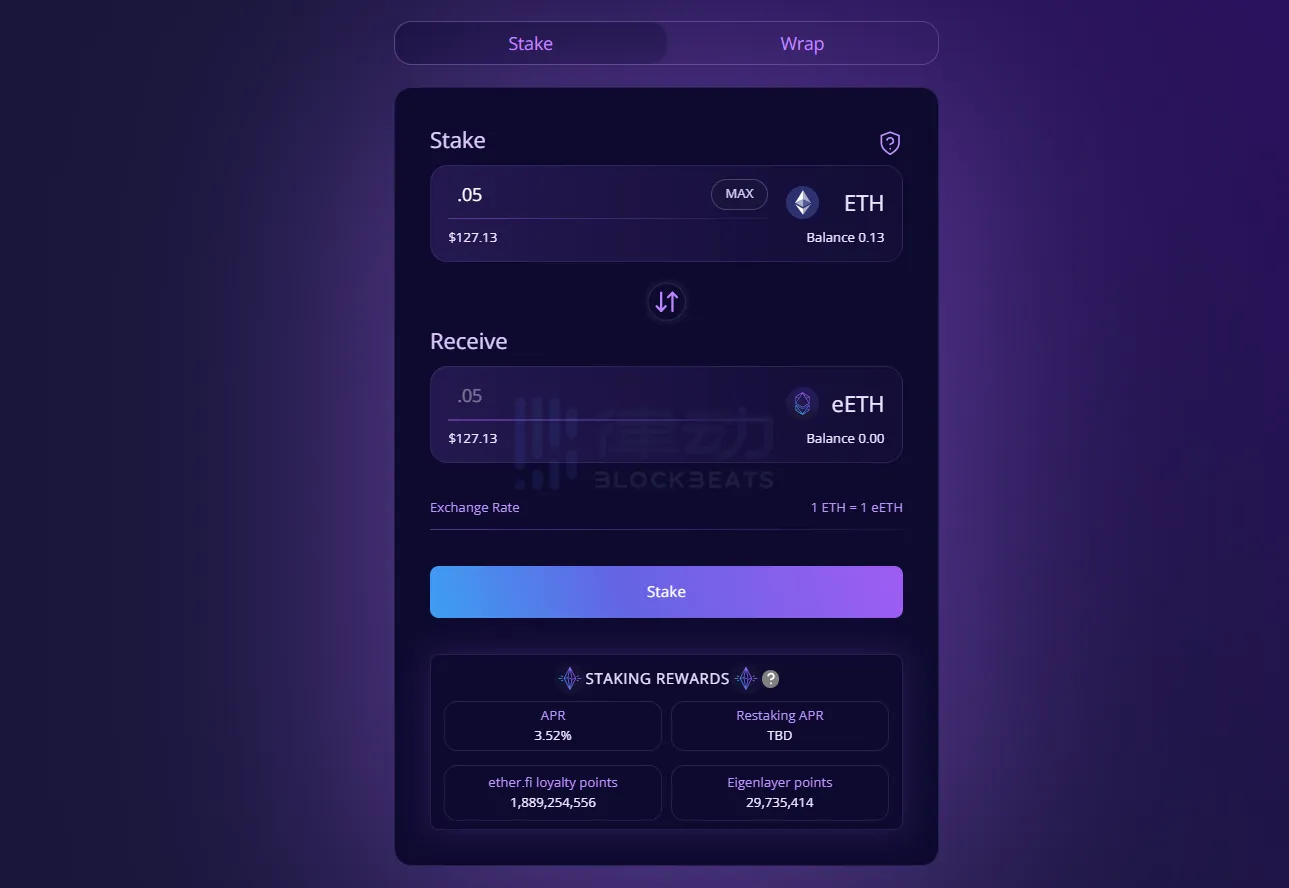
So note that taking advantage of this opportunity is very simple. You just need to deposit ETH (minimum = 0.001 ETH) to mint eETH at a 1:1 ratio, at which point your eETH balance will start accumulating points. The process is as follows:
Go to app.ether.fi
Connect your wallet
Enter the amount you wish to deposit in the UI
Click "Stake"
Sign the staking transaction with your wallet
See, that’s all the steps required to use ether.fi's double rewards strategy. Remember, you can unstake and withdraw your ETH through the same interface; just click the arrow button in the center of the interface to enter "Withdraw" mode to get started.
As for your points, you can track your ether.fi and EigenLayer scores anytime through the app.ether.fi/portfolio page. The calculation formula for ether.fi points is ETH staked x 1,000 x staking days; for example, staking 1 ETH for a week will earn you 7,000 points.
Whatever happens next in the cryptocurrency space, re-staking will continue, so don’t get too caught up in "double-dip" re-staking projects like ether.fi, where you can maximize your returns with a single deposit.
 Risk warning
 Risk warning



Popular articles





