








Behind the surge of Hong Kong stock enthusiasts' strategies: Memeland's parent company changes name through backdoor listing
 The story of the maze strategy is a reflection of the recent intertwining trends of the cryptocurrency and stock markets in the Hong Kong market.
Author: Deep Tide TechFlow
Is there a MemeStrategy in the East, while MicroStrategy dominates the West?
On June 16, the stock price of MemeStrategy, a Hong Kong-listed company, surged by 25% before beginning to decline.
This newly renamed company has a name strikingly similar to the U.S. listed company, "Bitcoin giant" MicroStrategy, and even the style of its logo is identical.
It's hard to say this is a coincidence; it feels more like a deliberate imitation and following.
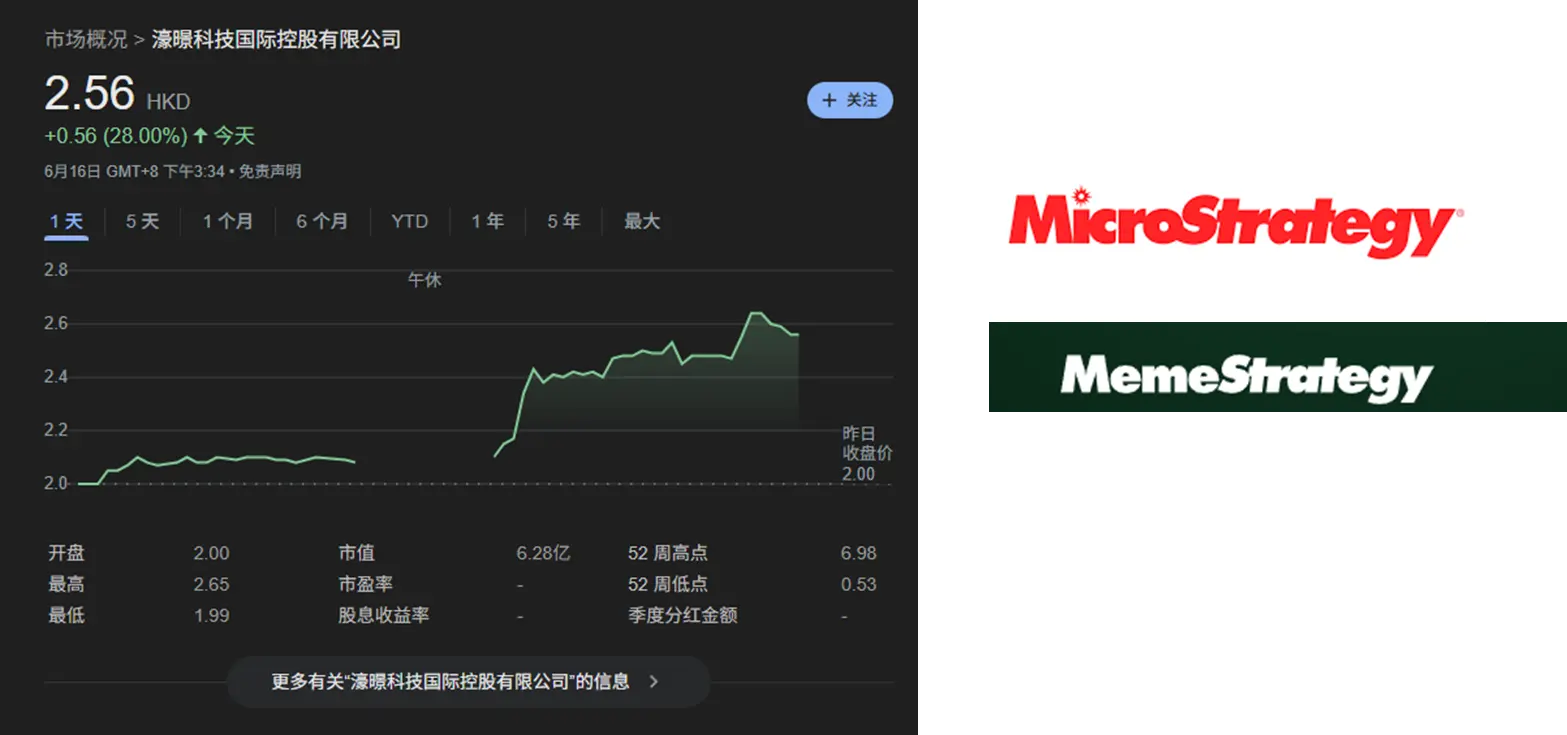
Since 2020, MicroStrategy has gradually increased its Bitcoin holdings, with its stock price hitting new highs due to the crypto investment boom. MemeStrategy announced today that it has purchased 2,440 SOL and plans to allocate Bitcoin.
However, there is a detail — MemeStrategy's previous name was Howking Technology Holdings, and this move is a combination of announcing the purchase of SOL and the company's name change. The intention is quite clear: by borrowing the name change and aligning with MicroStrategy's brand effect, it aims to ride the wave of crypto asset hype and attract speculative funds.
Currently, the market sees it as "Hong Kong's first meme stock," but this high-profile naming strategy is far from simple; the capital operations and past records of the team behind it hide a deeper story.
Board and Equity Restructuring, 9GAG Team Joins
The renaming and transformation of MemeStrategy began on April 1, 2025.
According to Hong Kong media Sing Tao Daily, at that time, 9GAG co-founder Chen Zhancheng acquired 53.83% of Howking Technology Holdings through his holding company Home Office Development Limited for approximately HKD 79.65 million (about USD 10.2 million), increasing his stake to 70.11% after the acquisition.
(Data source: PR Newswire; HKEX Announcement)
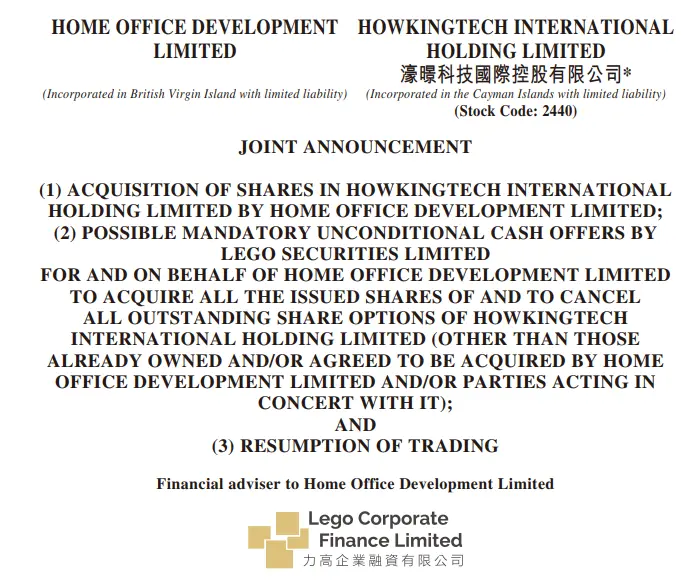
The company was then renamed MemeStrategy, claiming to create "Asia's first publicly listed virtual asset ecosystem enterprise," integrating 9GAG's social media resources, focusing on investments in virtual assets like Solana, and planning to allocate Bitcoin.
You may not be familiar with 9GAG, but you might have heard of the Memeland project and its corresponding MEME token.
9GAG is the parent company behind Memeland, founded in 2008 and headquartered in Hong Kong, attracting young users with humorous memes and jokes.
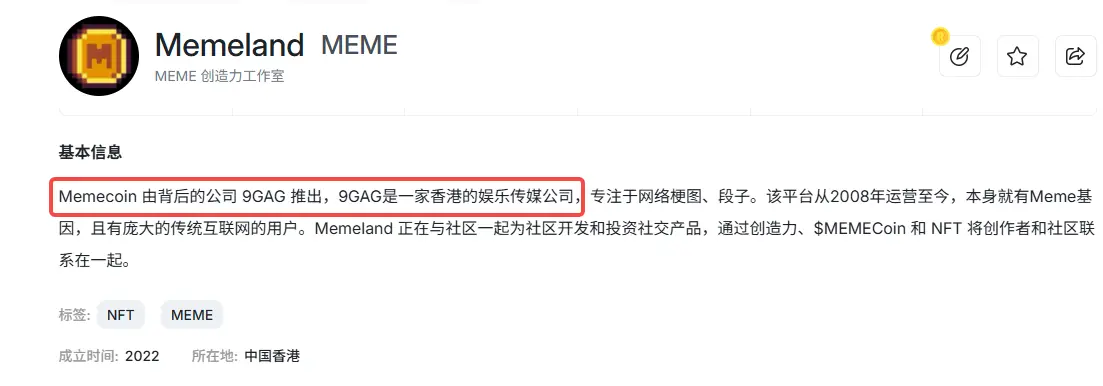
The acquisition and renaming by the 9GAG co-founder also involved changes in the original company's equity and board structure.
Before the acquisition, Howking Technology Holdings Limited held 53.83% of the shares, and the board was composed of 7 members from the original company; after the acquisition, the original team from 9GAG and individuals from Hong Kong's crypto circle became the key figures:
Former 9GAG co-founder Chen Zhancheng will serve as the chairman and CEO, leading the company's strategic development and business operations, while his brother Chen Zhanjun will become the chief brand officer of MemeStrategy, having previously served as 9GAG's chief product officer.
The former chief business officer of 9GAG will also take on the same role at MemeStrategy, while Li Minghong, former CEO of OSL and head of strategic planning and institutional relations at HashKey Group, will serve as chief investment officer. Notably, the 2,440 Solana purchased by MemeStrategy was also assisted by OSL. Additionally, Peng Cheng, co-founder of Scroll, will serve as an independent non-executive director of the company.
The concentration of equity and the reshuffling of the board mark the 9GAG team's complete control over MemeStrategy.
Howking Technology was originally an IoT technology company providing data transmission and processing services, covering IoT antennas, 5G devices, and maintenance, serving industries such as manufacturing, transportation, and energy, with a market value of around HKD 500 million, referred to by Hong Kong media as a low market value "penny stock";
The technology-related business attributes and low market value made it an ideal target for 9GAG to go public through a shell company.
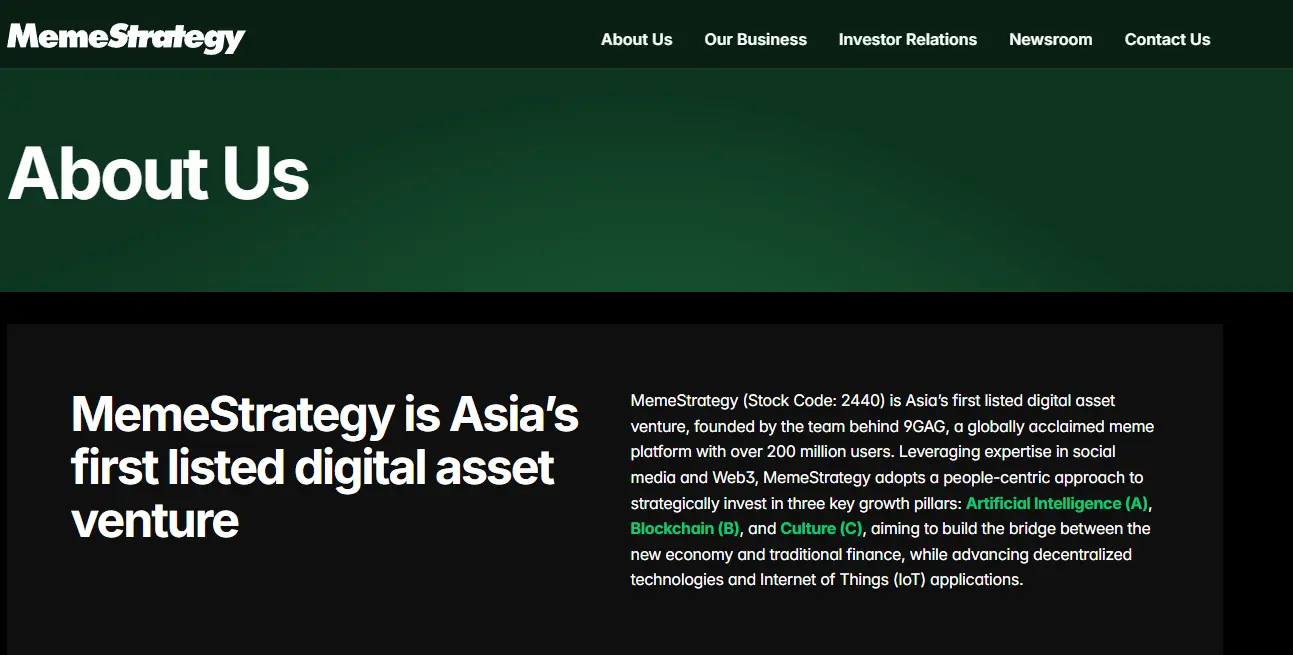
Currently, on MemeStrategy's official website, the company focuses on ABC business, namely AI, blockchain, and culture, claiming to be Asia's first publicly listed digital asset enterprise.
Recently, in the traditional capital markets, it has become common for crypto individuals to use small company shells to accumulate crypto assets. This wave has finally reached the Hong Kong stock market.
9GAG and Memeland's Crypto Past
In 2022, 9GAG launched Memeland, positioning it as a Web3 startup studio.
In the previous hot NFT and meme market, Memeland issued MEME tokens and NFT projects, such as Captainz and Potatoz.
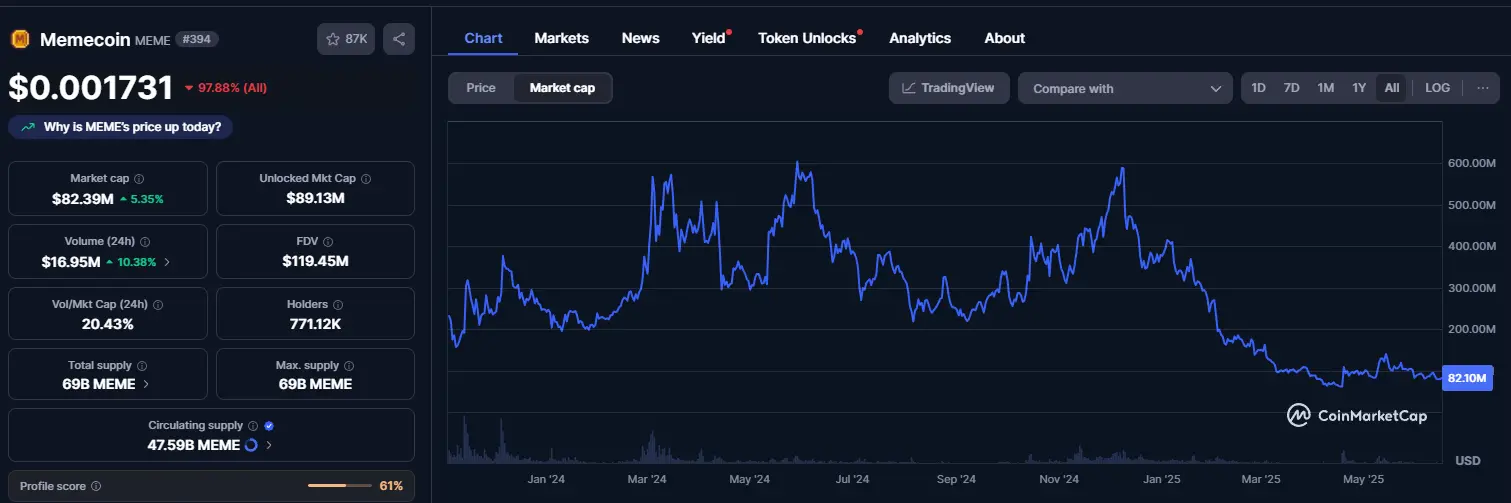
Currently, the market cap of the MEME token is only around USD 80 million, down over 80% from its peak in 2023; in comparison, the recently launched LABUBU, a pure meme coin themed around Pop Mart's Labubu, has a market cap of around USD 50 million.
Meanwhile, the NFT series Captainz and Potatoz under Memeland are facing an even harsher market environment.
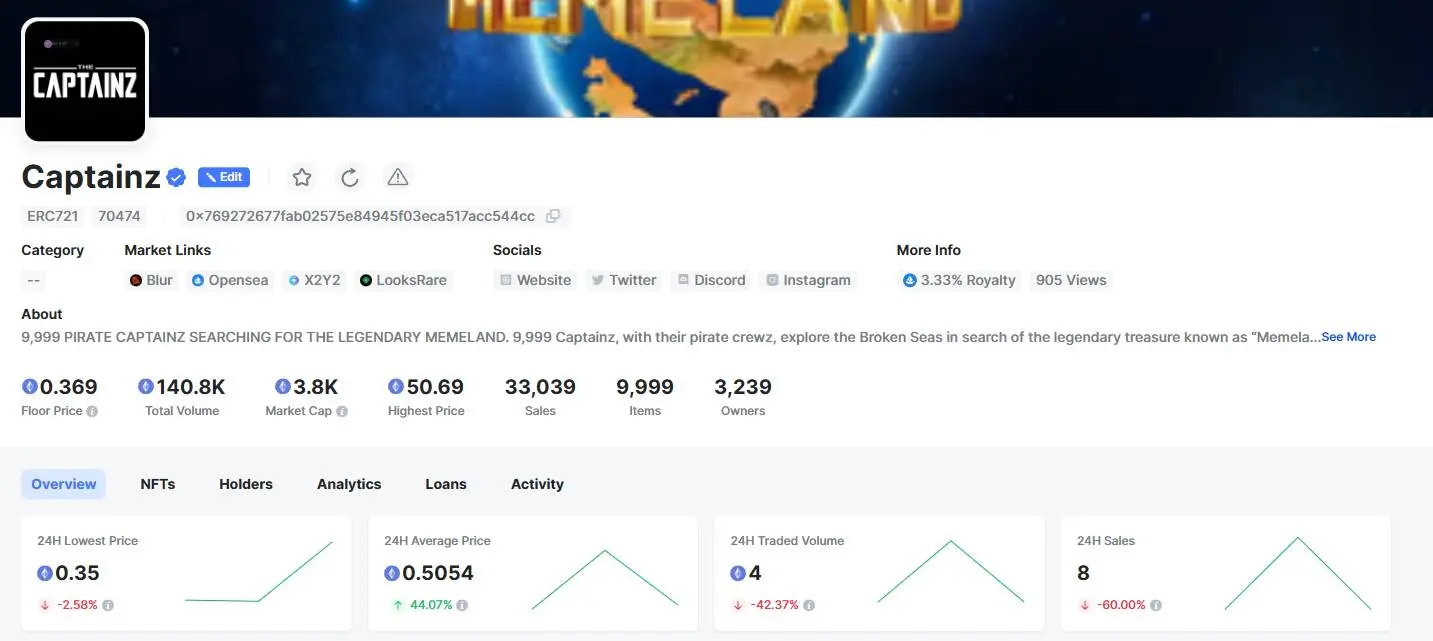
The current floor price of Captainz is only 0.3 ETH, with only single-digit transaction volumes in the past day, and the transaction prices are far from the peak price of 50 ETH.
The past glory is now met with stark silence.
In 2024, the cooling of the crypto market further dealt a heavy blow to Memeland's business model. The NFT craze has faded, competition among meme coins has intensified, and Memeland's profitability has significantly declined.
The setbacks in the crypto space may be a significant motivation for 9GAG to shift to the Hong Kong stock market, leveraging Howking Technology's low market value shell resources. The investment in SOL and the Bitcoin plan continue the crypto logic of Memeland and can also be seen as another opportunistic move following the trend.
The story of MemeStrategy is a reflection of the recent intertwining trends of the crypto and stock markets in Hong Kong. Beyond the marketing hype, whether the Hong Kong version of MicroStrategy can navigate this landscape remains to be tested by the market.
 Risk warning
 Risk warning




Popular articles





