China's creditors' $380 million have been targeted by the FTX liquidation team

 This unresolved debt collection may tear apart the last fig leaf of compliance.
Author: Tuo Luo Finance
The industry environment is improving, and the market is eagerly anticipating interest rate cuts, but the hearts of FTX's creditors are hard to calm.
After three years of twists and turns, countless disputes, the compensation process for FTX has finally started, entering its second phase. The market has not seen significant fluctuations due to selling pressure, and everything seems to be on track. However, a statement from the creditors' representative shattered the hopes of many in the country.
On July 4, FTX creditors' representative Sunil posted on platform X, stating that creditors from 49 jurisdictions, including China, may lose their claims, with these jurisdictions accounting for 5% of the total claims. On July 7, he reiterated that the total claims from restricted jurisdictions amount to $470 million, with Chinese investors being the largest group of FTX creditors, holding $380 million in claims, which represents 82% of the restricted claims.
This news caused an uproar in the market. After waiting for years and spending a lot of time and energy, Chinese creditors could only face the outcome of legal confiscation, which is clearly unacceptable to anyone.
Since FTX announced its bankruptcy liquidation in November 2022, creditors have gone through multiple false alarms about restarting, acquiring, and restructuring. During this period, FTT also became a MEME coin amid the turmoil. Finally, on January 3 of this year, the FTX debtors' restructuring plan officially took effect. Compensation for the first batch of debts began within 60 days after January 3, prioritizing users with claims of $50,000 or less, with BitGo and Kraken assisting FTX in the compensation process.
On February 9, Kraken announced that it had completed the first fund distribution for the FTX estate, compensating over 46,000 creditors. More than three months later, the second round of compensation was initiated. FTX creditors' representative Sunil stated that the repayment date for FTX would be May 30, with users holding claims over $50,000 receiving 72.5% of their compensation; the remaining compensation (up to 100%) and interest would be distributed later, with an expectation of over $5 billion being distributed to creditors.
It was thought that creditors only needed to wait for their compensation to arrive, but a piece of news on July 4 disrupted everyone's rhythm. Sunil tweeted that FTX would initiate a motion to seek legal advice, and if distribution to restricted foreign jurisdictions could proceed, it would continue; if it was determined that residents belonged to restricted foreign jurisdictions, claims would be disputed, and users might lose their rights to compensation. The trust established 49 foreign jurisdictions, including Russia, Ukraine, Pakistan, and Saudi Arabia, with China also prominently listed. The document indicated that the deadline for creditors to oppose this motion was July 15. Additionally, creditors had a 45-day period to dispute the claims distribution.

This news hit the Chinese creditors like a hammer. Chinese creditors hold a significant proportion of the bonds, accounting for as much as 82% of the total claims from restricted jurisdictions, holding $380 million in claims. Faced with the prospect of losing such a substantial compensation, creditors are understandably reluctant to accept this, with the critical question being why their claims should be confiscated for the benefit of the U.S. Whose law is this?
Theoretically, FTX's segmented compensation approach has certain issues. Firstly, FTX, as the compensation entity, is an American company and follows local laws. The U.S. Bankruptcy Code Section 1123(a)(4) clearly states "equal treatment of similarly situated creditors," and in the early stages of compensation, FTX's bankruptcy liquidation team did not mention nationality but clearly informed that submitting claims and voting in favor of the restructuring plan would allow for distribution. Secondly, consistent with traditional compensation processes, claims are compensated in U.S. dollars, meaning that cryptocurrency is not involved during this period. Chinese residents can receive compensation through wire transfers and traditional payment methods. Even if paid in stablecoins, according to current Chinese law, the law recognizes the property attributes of virtual currencies and does not prohibit residents from holding virtual currencies. Furthermore, according to current policies in Hong Kong, a one-size-fits-all approach should not be adopted. In previous bankruptcy compensation cases, Chinese creditors were not given extra attention; for example, in the Celsius case, U.S. courts successfully paid Chinese creditors in U.S. dollars via international wire transfers.
From the perspective of Chinese creditors, it is hard not to suspect that this is a premeditated "legal robbery." In fact, as early as February, there were signs of this news, with creditors' representatives tweeting that FTX bankruptcy claims do not include jurisdictions like Russia and China, but at that time, creditors had not yet felt the impact.
Looking at the operations of the FTX bankruptcy liquidation team, there seems to be a clearer pattern. In terms of composition, the liquidation team is exceptionally experienced and well-connected. John J. Ray III is the CEO of the team, who previously handled the bankruptcy liquidation of Enron, earning over $700 million in profits from it. This time, he brought along the same old team from the prestigious law firm Sullivan & Cromwell to share in the remaining value of FTX.
Ordinary creditors may need to consider prices when selling assets, but professional liquidation teams clearly only care about the speed of cashing out. As early as the end of August 2023, shareholder reports disclosed FTX's cryptocurrency assets, with the top ten cryptocurrencies accounting for 72% of FTX's total holdings, valued at approximately $3.2 billion at the time. Among them, SOL had the largest holding, reaching 55 million coins, while BTC held about 21,000 coins, and ETH held 113,000 coins. In addition to cryptocurrency assets, due to previous extensive investments, FTX also has a large equity portfolio, including high-quality assets like Cursor, Mysten Labs, and Anthropic.
Such an excellent asset portfolio ignited hope among creditors and filled the pockets of the liquidation team. Almost all these assets were sold off at bargain prices; Cursor, bought for $200,000, was sold at its original price, while its valuation had already reached $9 billion. The $890 million SUI token subscription rights were sold off for $96 million, despite its peak value reaching $4.6 billion. An 8% stake in Anthropic was sold for $1.3 billion, which seemed reasonable at the time, but a year later, Anthropic's valuation soared to $61.5 billion, delivering a harsh slap to the market. Not to mention that the SOL tokens the team plans to auction off at low prices in 2024 have now risen to $151, making the previous creditors who acquired them very profitable.
The liquidation team's disregard is predicated on the exorbitant consulting fees they have already earned. Court records show that as of January 2 of this year, FTX had paid nearly $948 million to over a dozen companies hired to handle its bankruptcy case, with court-approved fees exceeding $952 million. FTX's chief law firm, Sullivan & Cromwell LLP, has received over $248.6 million in fees, while financial advisor Alvarez & Marsal has received about $306 million. Advisors representing FTX clients and other creditors have charged approximately $110.3 million in fees. From the surface amounts alone, this is already one of the most expensive bankruptcy cases in U.S. history, not to mention the hidden profits brought about by nepotism in asset liquidation.
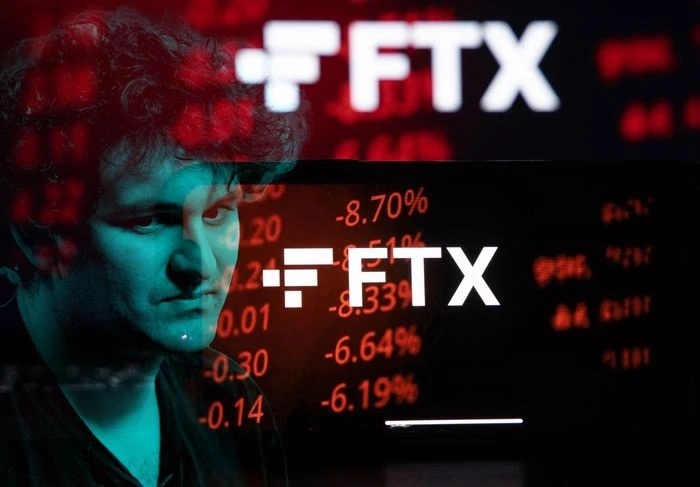
This may also explain SBF's testimony, which was hardly believed at the time, about being severely threatened by the liquidation team, forcing FTX to quickly initiate bankruptcy proceedings. Even more frightening is that the new proposal submitted by the FTX team to the bankruptcy court contains hidden clauses that exempt advisors from liability, meaning that regardless of how matters are handled later, the liquidation team bears no legal responsibility. Liquidation has completely become a tool for the team to amass wealth, while other creditors are merely the least important part of the equation.
Currently, the situation for Chinese creditors is indeed not optimistic. Firstly, cross-border recovery is complex, and the deadline for opposing the motion on July 15 is very tight. If the motion passes and enters the stage where the liquidation party appoints lawyers, it will be very unfavorable for creditors. Secondly, the motion adopts a voting system, and while Chinese creditors account for a high proportion in restricted jurisdictions, they do not even reach 5% of the total claims, with over 95% belonging to other creditors. To expedite claims distribution, the indifferent other creditors may more easily vote in favor.
However, even so, Chinese creditors will not sit idly by. They are forming groups and protesting, making self-rescue crucial. On July 9, according to Cryptoslate, over 500 Chinese creditors questioned the freeze on FTX payments in U.S. courts. A Chinese creditor, using the pseudonym Will, stated in an interview that they have hired an American lawyer, and over 500 Chinese creditors are organizing a response to FTX's decision. This creditor also urged others to seek professional legal assistance or send letters of opposition to the court in their personal capacity.

In addition to taking legal action, many debt transfer schemes have emerged in the market, where debts are packaged and sold to qualified debt purchasers to quickly recover funds. The motion has, in a paradoxical way, induced this method; according to Will, there is a clause in the motion stating, "If a third-party institution buys your claim, your original country of holding will no longer be considered when determining compensation eligibility."
As for why some people want to buy claims in bulk, the core essence lies in profit. In FTX's compensation, claims accrue interest at an annual rate of 9%, nearing three years now, and will continue to be calculated over time. Besides the guaranteed interest income, FTX is also in the process of recovering other assets, with the possibility of additional distributions later. Overall, FTX's claims undoubtedly belong to the high-quality claims category, making them popular among individual purchasers and institutional markets alike. Furthermore, well-established financial institutions can even package these as underlying assets and engage in arbitrage through derivatives.
Selling in the market is a reasonable exit strategy, but if forced to sell, it will clearly change the nature of the entire situation. Whether the efforts of Chinese creditors will yield returns and whether they can reclaim their rightful claims remains uncertain. As previously mentioned, even if compliant with legal regulations, the liquidation team has begun to exploit the topic of "jurisdiction" to attempt to withhold the assets of Chinese investors, raising stronger questions about the meaning of compliance. Is the purpose of compliance to protect investors' assets or to provide an unavoidable reason for confiscation?
This unresolved debt collection may tear away the last piece of the compliance facade.
 Risk warning
 Risk warning