








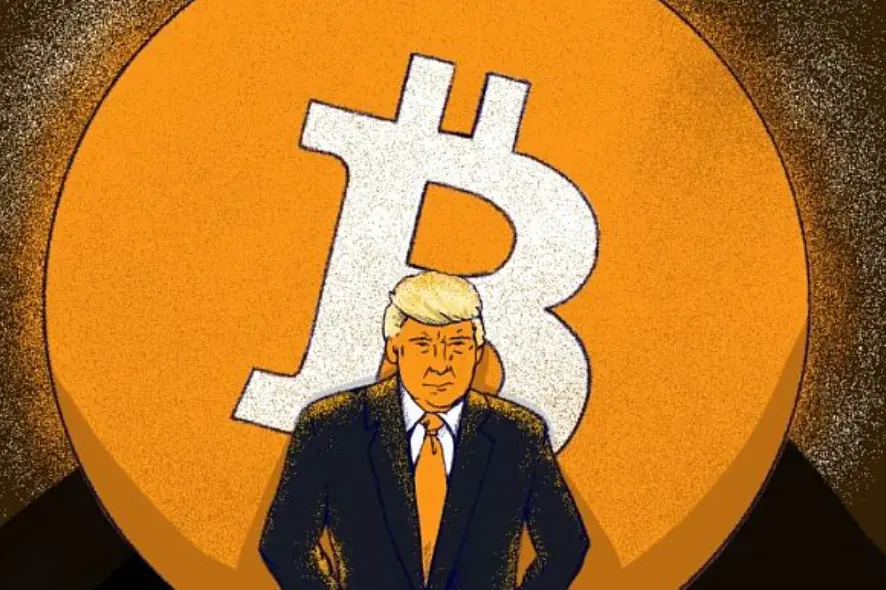
Trump makes a big move, 9 trillion in pension funds is about to enter the crypto market

 The recent move by the United States to open up pension fund investments has a significant impact on the wealth allocation concept of the general public, which holds reference value globally.
Author: BitpushNews
Overnight, the Financial Times reported a significant piece of news: U.S. President Trump is preparing to sign an executive order allowing retirement plans like 401(k) to invest in cryptocurrencies, gold, and private equity as "alternative assets."
According to three informed sources, the order will require regulators to reassess current restrictions on retirement investments, clearing the way for digital assets to enter the $8.7 trillion U.S. retirement market.

This move is not without precedent. On May 28, the U.S. Department of Labor rescinded the Biden-era guidance that took an "extremely cautious approach to crypto assets," citing "regulatory overreach." Earlier, in 2022, Republican Congressman Peter Meyer proposed the "Retirement Savings Modernization Act," attempting to incorporate digital assets into the framework of the 1974 Employee Retirement Income Security Act (ERISA). Although it did not pass, it laid the groundwork for today's policy shift.
Trump's "Digital Asset" Ambition
The core intention of this executive order is to break the long-standing focus of 401(k) plans on traditional stocks and bonds, granting them broader asset allocation flexibility.
The order will explicitly instruct Washington regulators to thoroughly study and begin removing barriers that hinder alternative assets, particularly digital assets, precious metals, and funds focused on mergers and acquisitions, private loans, and infrastructure transactions, from being included in professionally managed 401(k) funds.
In a cautious statement to the Financial Times, the White House said: "President Trump is committed to restoring prosperity for ordinary Americans and securing their economic future. However, any decision should only be considered official policy once announced by the President himself." Nonetheless, this statement does not obscure the strong signal from the Trump administration to mainstream cryptocurrencies.
In fact, this move is a continuation of Trump's series of pro-crypto policies. From promising during his campaign to liberate digital currencies from "overly harsh regulation" to his family business—Trump Media & Technology Group investing over $2 billion in Bitcoin and other digital currencies, and even launching its own stablecoin and other digital tokens, Trump himself has become a heavyweight player in the digital asset space, with disclosed crypto holdings exceeding $51 million.
His administration has also taken action, as the Department of Labor rescinded the Biden-era policy discouraging 401(k) plan managers from offering cryptocurrency investment options in May, paving the way for this executive order.

Interpretation: The Deep Significance of Opening the U.S. Pension Market
To understand the potential impact of this policy, one must examine the structure and scale of the U.S. retirement market. As one of the largest retirement systems in the world, the U.S. retirement market has a total scale of up to $9 trillion.
Specifically, according to public data, as of March 31, 2025, the total assets of all employer-sponsored defined contribution (DC) retirement plans have reached $12.2 trillion. Among these, the most notable 401(k) plans hold $8.7 trillion.

These vast funds primarily come from tens of millions of American wage earners. The 401(k) plan, as an employer-sponsored occupational pension, is the core of long-term savings for the vast majority of working families due to its appeal of payroll deductions, tax benefits, and employer matching contributions.

Traditionally, these large retirement funds have mainly flowed into publicly traded securities. As of the end of March 2025, $5.3 trillion (61%) of 401(k) plan assets were managed by mutual funds. Among these, equity funds, with a scale of $3.2 trillion, are the most common type, followed closely by mixed funds (including target-date funds), which manage $1.4 trillion. This asset allocation status, dominated by stock and bond mutual funds, provides ample space for the alternative investments promoted by Trump.
Meanwhile, IRAs (Individual Retirement Accounts) offer individuals more autonomous retirement savings options. The wealth accumulated by ordinary Americans in these accounts constitutes a massive "long money" that drives U.S. economic growth and financial market stability.
In comparison to China's pension system, both aim to build a multi-tiered safety net. China's "enterprise/professional annuity" has similarities to the employer-sponsored nature of the 401(k), while "personal pensions" are closer to the individual autonomous investment model of IRAs. Therefore, the U.S. initiative to open pension investments has global implications for the wealth allocation concepts of the general public.
Private Equity Giants and New Opportunities: The Redistribution of a Trillion-Dollar Pie
In addition to cryptocurrencies, this executive order represents a potential feast for the world's largest private equity firms, such as Blackstone, Apollo, and BlackRock. These giants have largely pinned their future growth hopes on managing funds from ordinary retirement savers. The executive order will require the Department of Labor to consider providing a "safe harbor" mechanism for retirement plan managers to reduce their legal risks when offering high-fee, less liquid, and less transparently valued private equity investments to savers.
Private equity firms predict that once they successfully enter the 401(k) retirement plan market, they could attract hundreds of billions of dollars in new industry assets.
To this end, they have been proactive in establishing partnerships with large asset management companies: Blackstone has teamed up with Vanguard, while Apollo and Partners Group are providing investment services to large 401(k) plan sponsor Empower. BlackRock has also begun collaborating with the third-party management firm Great Gray Trust for retirement savings plans.
As federal-level policies are being formulated, some state governments have already begun pilot programs. Bitpush previously reported that North Carolina legislators proposed a bill allowing certain retirement funds to allocate up to 5% of their balances to cryptocurrencies. The retirement systems in Michigan and Wisconsin have also invested in spot Bitcoin and Ethereum ETFs, providing a reference for federal-level policies.
Challenges Remain
In terms of legislation, the U.S. House of Representatives passed three important cryptocurrency-related bills on Thursday: the CLARITY Act, the GENIUS Act, and the Anti-CBDC Surveillance National Act. The CLARITY Act and the Anti-CBDC Surveillance National Act will be sent to the Senate for review. The GENIUS Act is expected to be signed into law by President Trump on Friday. This marks a substantial progress in Congress towards cryptocurrency legislation, providing a clearer legal framework for industry development.
However, even with favorable legislation, the market still faces challenges. Palisade co-founder Mantan Dave warned that if the U.S. ultimately fails to establish a clear and consistent regulatory framework, companies may shift their funds and innovations to markets with clearer rules. Additionally, investing retirement savings in less liquid private assets is not without risks; inherent issues such as high fees, higher overall leverage, and lower transparency in fund asset valuations will be factors that regulators and investors need to consider carefully.
As Trump's executive order meets the $9 trillion retirement market, this experiment may redefine the meaning of "retirement savings"—is it about allowing ordinary people to share in the technological dividends of the digital age? Or does it expose retirement funds to new risks? The answer may depend on how regulators find a balance between innovation and protection.
 Risk warning
 Risk warning




Popular articles





