The wave of stock tokenization is coming, representing the second growth curve of liquidity in the new era

 Tokenizing U.S. stocks and ETFs is not just about moving Wall Street onto the blockchain; it is also about bridging the gap between traditional capital markets and blockchain.
The tokenization of stocks is becoming one of the strongest narratives in the convergence of traditional finance (TradFi) and Web3 by 2025.
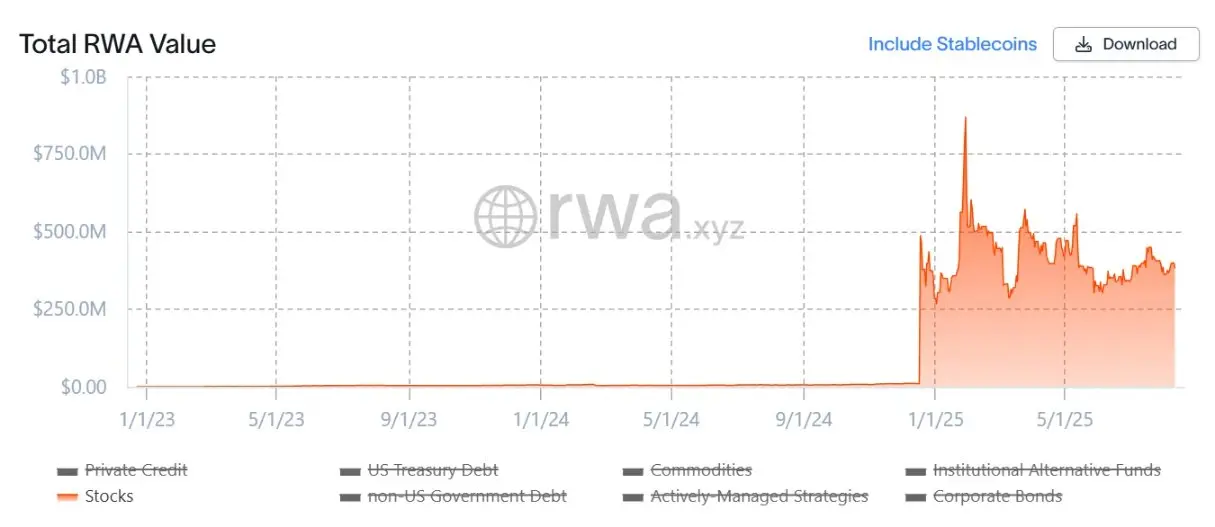
According to data from rwa.xyz, the market capitalization of tokenized stocks has grown from nearly zero to hundreds of millions this year, thanks to a shift in the model—from early synthetic models to the custody of actual stocks, and increasingly extending to higher-tier products such as derivatives.
This article will explain the evolution of this model, highlight key participants, and explore potential future developments—particularly the so-called "second growth curve" in derivatives and liquidity.
The Journey of Stock Tokenization in the U.S.
What is Stock Tokenization?
In short, it is the mapping of traditional stocks onto the blockchain in the form of digital tokens, with each token corresponding to one share of the underlying asset. These tokens can be traded on-chain 24/7, breaking through the time zone and trading venue limitations of traditional markets and opening up participation channels for global investors.
Stock tokenization is not a new concept. In the previous cycle, projects like Synthetix and Mirror built on-chain synthetic asset systems. Users could mint and trade stock tokens (e.g., TSLA, AAPL) by over-collateralizing (e.g., with SNX, UST).
This model was later expanded to other assets such as fiat currencies, indices, gold, and oil, with pricing and settlement facilitated through oracle pricing and on-chain matching. Since there are no real counterparties (only providing price exposure), theoretically, this system can offer deep liquidity and low-slippage trading experiences.
Limitations: The synthetic model does not grant real ownership of the underlying stocks—it merely provides price exposure. If the oracle fails or collateral becomes unpegged (as occurred in the UST incident), these systems may face liquidation, price divergence, and crises of confidence.
What’s Different in 2025?
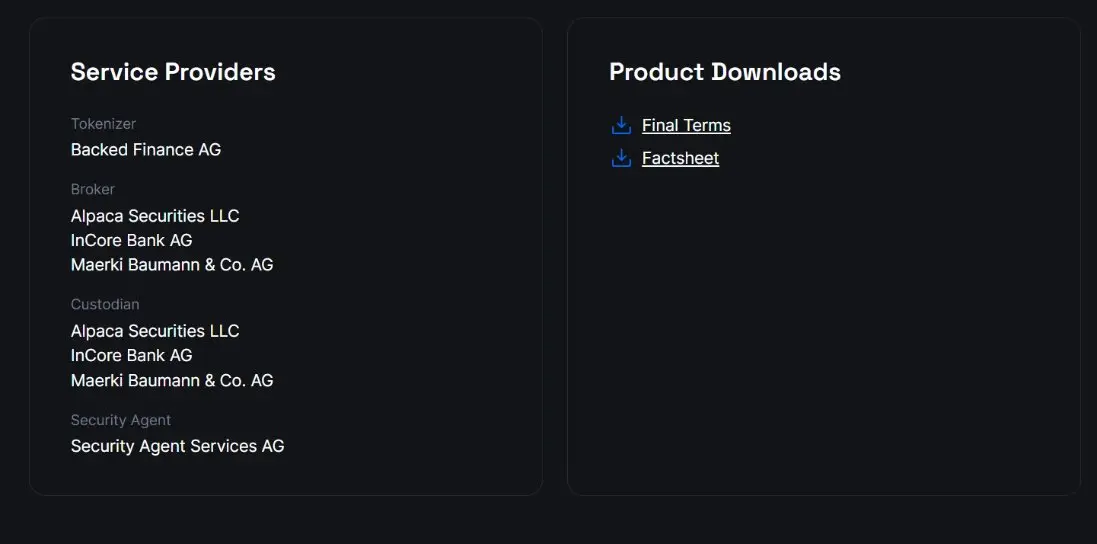
The current growth momentum comes from a model where real stocks are held off-chain, and on-chain tokens are issued at a 1:1 ratio. This gives rise to two main paths:
- Third-party compliant issuance with multi-platform access (e.g., Backed Finance / xStocks): xStocks purchases and holds stocks through partners like Alpaca Securities LLC.
- Broker-led closed-loop models (Robinhood-style): Licensed brokers purchase stocks and issue tokens, covering the entire process from purchase to on-chain issuance.
The core upgrade lies in the verifiable backing of real assets. This enhances security and compliance, making the model more acceptable to traditional institutions.
Project Landscape: From Issuance to Trading
A complete stock tokenization ecosystem typically includes:
- Infrastructure: Underlying blockchain, oracles, and settlement channels
- Issuance: Regulated or compliant issuers
- Trading: Centralized exchanges / decentralized exchanges, and DeFi (lending and other derivatives platforms)
The infrastructure is gradually maturing, while the most competitive and ultimately decisive segments for user experience and liquidity are primarily focused on issuance and trading.
Here are some representative projects.
Ondo Finance ------ Extending from RWA Bonds to Stocks
Ondo initially gained recognition for tokenizing government bonds and bond exposure (e.g., USDY, OUSG) and remains one of the largest RWA platforms to date.
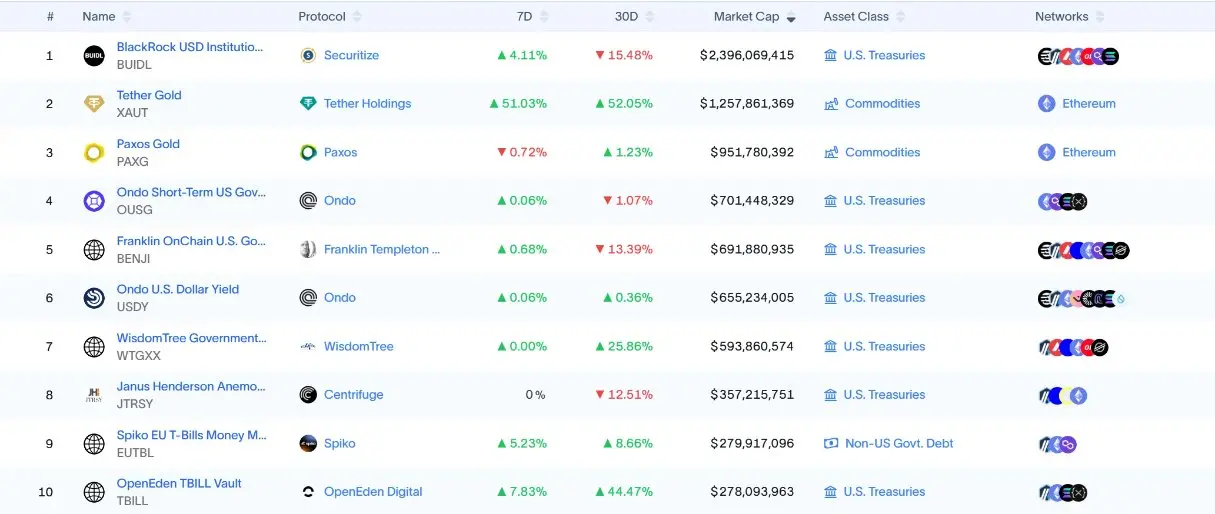
Recently, Ondo has expanded its business into the stock sector, collaborating with regulated custodians and clearing institutions like Anchorage Digital to hold real U.S. stocks and issue corresponding on-chain tokens. This model provides compliance assurance for institutions and supports the construction of cross-asset liquidity pools, allowing tokenized stocks to interact with stablecoins and RWA debt assets. Ondo and Pantera Capital have also announced plans to establish a $250 million fund to support RWA projects.
Injective ------ A Blockchain Born for Real-World Financial Assets
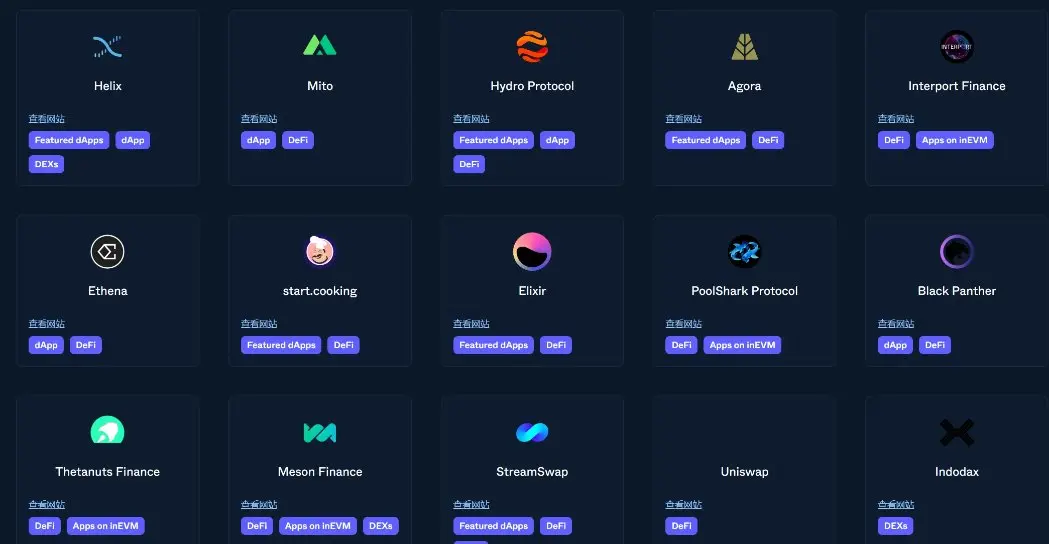
Injective positions itself as a high-performance financial blockchain, with built-in order book matching and derivatives modules. Its ecosystem encompasses over 200 projects, including decentralized exchanges (Helix, DojoSwap), lending platforms (Neptune), RWA participants (Ondo, Mountain Protocol), and NFT marketplaces (Talis, Dagora).
Two major advantages in the RWA space:
- Wide Asset Coverage: Applications like Helix have launched tokenized U.S. tech stocks, gold, foreign exchange, and other asset classes.
- Strong Connectivity to Traditional Finance: Collaborations with Coinbase, Circle, Fireblocks, WisdomTree, Galaxy, etc., deeply integrate off-chain custody and clearing with on-chain issuance and trading.
The result is a low-latency, low-cost execution environment that supports collateralization, composability, and the subsequent development of richer stock-linked products.
Backed Finance ------ Compliance First, Multi-Market Coverage
Backed Finance operates under the Swiss legal framework and aligns with Europe’s MiCA regulatory guidelines. The company issues fully collateralized tokenized securities and collaborates with institutions like Alpaca Securities LLC for stock acquisition and custody, maintaining a 1:1 mapping between off-chain assets and on-chain tokens. Backed’s coverage includes U.S. stocks, ETFs, European securities, and some international indices. This allows investors to gain multi-market, multi-currency exposure on a single on-chain platform, such as combining U.S. tech stocks, European blue chips, and global commodity ETFs without being restricted by traditional market trading venues and hours.
Block Street ------ Unlocking Liquidity for Tokenized Stocks
Block Street focuses on lending based on tokenized stocks. Holders can use assets like TSLA.M or CRCL.M as collateral to borrow stablecoins or other tokens, thereby unlocking liquidity without selling their assets. Its test version has recently launched, enabling tokenized stocks to serve as usable collateral, filling a significant gap in DeFi lending. If features like lending, perpetual contracts, and options mature on this platform, they could trigger a "second growth curve" for the entire tokenized stock sector. 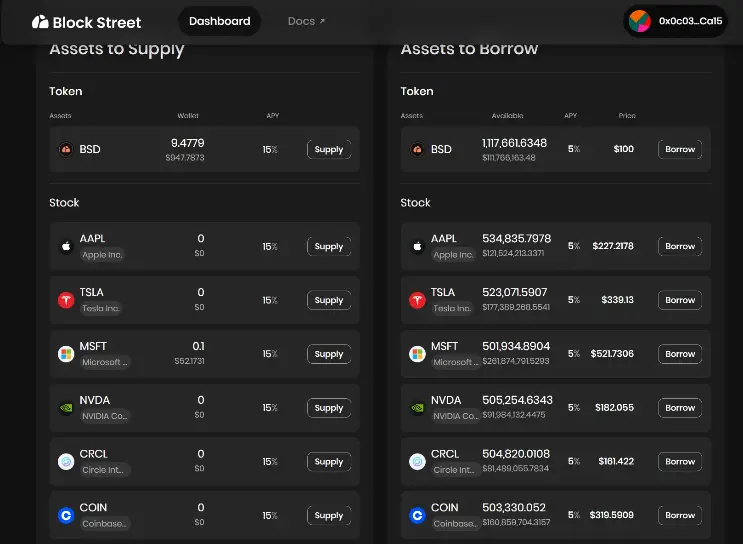
The biggest advancement in this wave is the combination of real stock custody with low-barrier participation. With just a wallet and stablecoins, anyone can gain price exposure to U.S. stocks on decentralized exchanges (DEX)—without needing a brokerage account, unrestricted by time zones, and with fewer regional barriers. However, most current products remain in the "certificate stage": they are merely issuing and trading tokens without fully transforming them into financial building blocks that can be used for trading, hedging, and capital management. If the goal is to attract professional capital flows, high-frequency liquidity, and institutional participation, this will pose a significant challenge.
Before the "DeFi Summer," DeFi also went through a similar phase. At that time, ETH was not widely used for lending or composability until lending protocols emerged. Once ETH became an acceptable collateral, liquidity grew rapidly. Tokenized stocks are likely to undergo a similar transformation: becoming collateralizable, tradable, and composable assets.
If the first growth curve represents spot trading volume, then the second growth curve will be driven by market activity spurred by capital efficiency and financial instruments.
Expected development directions include:
- Lending and credit based on tokenized stocks (e.g., Block Street)
- Shorting and hedging tools (inverse tokens, perpetual contracts, options, etc.)
- Structured strategies and baskets/investment products that are interoperable across DeFi
Platforms that can provide an integrated on-chain experience—covering spot trading, shorting, leverage, and hedging, and making tokenized stocks available in lending, options, and stablecoin protocols—will have a competitive advantage.
Conclusion
Tokenizing U.S. stocks and ETFs is not just about moving Wall Street onto the chain; it is about bridging the gap between traditional capital markets and blockchain. From issuance (Ondo), multi-market access (Backed Finance), to unlocking liquidity (Block Street), the full-stack system of tokenized stocks is steadily taking shape. With the expansion of institutional participation and the maturation of trading infrastructure, composable, tradable, and collateralizable tokenized stocks are expected to evolve into one of the most influential and sustainably appreciating asset classes in the RWA market.
Original link
Click to learn about job openings at ChainCatcher
Recommended Reading:
Dialogue with Sign co-founder Xin Yan: Crypto has become the largest global capital market
 Risk warning
 Risk warning