These 6 people are becoming the Tom Lee of Solana

 Famous reality show judge, renowned hedge fund founder, cryptocurrency mogul in the U.S., founder of the most profitable fund in the crypto space, and a staunch bull on Solana...
Author: BUBBLE
Tom Lee has become the recognized new champion of Ethereum, buying 1.5 million ETH in 50 days, transforming Ethereum from a doomsday vehicle into "the next decade will depend on him." Meanwhile, Solana, which last year boldly proclaimed to "take down Ethereum," has lost its previous momentum. In this wave of cryptocurrency and stock, the community has reacted, realizing that "Solana also needs its own Tom Lee."

The SOL/ETH exchange rate continues to decline
So who is Solana's Tom Lee?
Rhythm BlockBeats has highlighted six candidates from the community, each with unique skills, even the early SOL promoter Raoul Pal did not make the list.
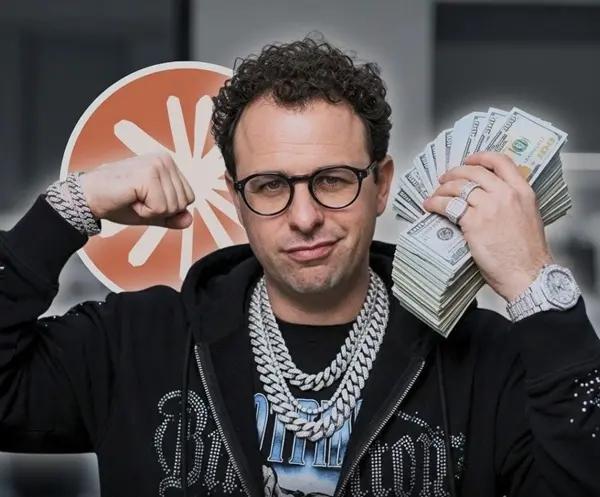
Our final best choice is Anthony Scaramucci
This Wall Street's most steadfast Solana Maxi has absolute influence in both crypto and Wall Street, and more importantly, he has an unabashed enthusiasm for Solana.
Let's take a look at why Anthony Scaramucci stands out from a list that includes Kyle Samani (founder of Multicoin) and Chamath Palihapitiya (top Silicon Valley investor).
Anthony Scaramucci
Anthony Scaramucci can be said to be one of Wall Street's most steadfast Solana Maxis. He was a Goldman Sachs investment banker before founding the hedge fund SkyBridge Capital in 2005, and he became famous for his brief tenure as White House Communications Director (1 mooch, 11 days). He gathers Wall Street leaders by hosting the annual SALT summit, accumulating a deep network in the financial circle. As a seasoned fund manager, Scaramucci is bold in embracing emerging assets, often investing against the trend during market downturns, making him one of Wall Street's visionary investment representatives. In recent years, he has actively engaged in the crypto space, reallocating part of SkyBridge's capital to Bitcoin, Ethereum, Solana, etc., and personally stepping in to advocate for the crypto industry, enhancing his visibility in the crypto community. Besides his network, he also has his own YouTube channel with 170,000 subscribers, which gives him considerable influence in terms of dissemination.

Compared to other "candidates," Scaramucci's stance on Solana appears more resolute. At the Solana Breakpoint conference in September 2024, he stated, "I hope the tokenization of financial assets happens on Solana because I hold a large amount of Solana, and I believe this will ultimately happen." He revealed on the spot that he is a Solana holder and predicted that Solana would lead the global financial market's tokenization wave. Previously, in May 2024, Scaramucci tweeted, "We will see a Solana ETF." He firmly believes that after Bitcoin and Ethereum, Solana is likely to be the next crypto asset to receive approval for a U.S. ETF, and this "prophecy" was realized on July 2 of this year.

At the DigiAssets summit in June 2025, he reiterated the slogan "SOL Will Flip ETH," emphasizing that this is not a denial of Ethereum but rather that he "understands Solana's story better." While many crypto and traditional institutions began to lay out Ethereum, he still insists that Solana is the Ethereum killer, showcasing his strong confidence in Solana's future.
Scaramucci has repeatedly emphasized his Solana holdings in public. As of early 2025, SkyBridge held up to nine-digit dollar amounts of Bitcoin and Solana on its balance sheet and set up about $300 million in crypto portfolio funds for clients. He stated that this fund also includes Avalanche, Polkadot, etc. Although the report did not specify the holdings of each token, he indicated that Solana is a very important component.

As the saying goes, "the butt determines the brain," he also wrote a book titled Solana Rising, which is planned for release in the second half of this year. The target audience is those newcomers in traditional finance learning to allocate crypto assets, covering discussions among major investors and players betting on Solana, as well as an introduction to Solana and its role in cryptocurrency investment portfolios.

Scaramucci's overall view of Solana can be summarized as "highly bullish, long-term layout." He is outgoing and talkative, adept at packaging grand narratives, and tends to express optimistic expectations in straightforward and exaggerated terms. His style is sometimes seen as Degen or market hype, but it is precisely this that successfully attracts attention and gathers focus.
Scaramucci combines a Wall Street background with a passion for crypto, able to articulate Solana's selling points in a language that mainstream investors can understand. He discusses how tokenization reduces financial costs and how Solana addresses trust overhead, transforming technical advantages into investment logic. Overall, he is one of the few who can wield influence in both the traditional finance and crypto circles. With this cross-border influence and his unabashed enthusiasm for Solana, Scaramucci is increasingly seen as one of the spokespersons for the Solana ecosystem.
Michael Edward Novogratz
Michael Edward Novogratz is a former Goldman Sachs macro trader, partner at Fortress Investment Group, and founder and CEO of Galaxy Digital, regarded as one of Wall Street's earliest and most heavyweight crypto adopters. His career spans traditional hedge funds and digital asset investments, known for daring to bet on emerging markets and high-volatility assets.
Since 2013, Novogratz has actively invested in core assets like Bitcoin and Ethereum, playing a "bridge" role between crypto and institutional funds across multiple cycles, including the recent Ethereum DAT craze among listed companies, where he played a significant role as an over-the-counter platform. As a macro investor, Novogratz's view of Solana is somewhat similar to Raoul Pal's, focusing on the macro liquidity and institutional adoption trends. He believes the next round of growth in crypto assets hinges on the on-chain and tokenization of real-world assets (RWA), and Solana's technical architecture (high TPS, low latency, stable fees) enables it to meet the stringent speed and cost requirements of institutions.

Novogratz has deep Wall Street connections and media exposure, and Galaxy Digital is one of the few crypto financial companies publicly listed in both the U.S. and Canada, giving his voice strong signaling effects. He often promotes crypto concepts in traditional media like CNBC and Bloomberg using concise and straightforward language. His style combines the steadiness of old-school Wall Street with the aggressiveness of crypto pioneers, often merging personal investment views with Galaxy's market data, making his statements both persuasive and strategically guiding. Regarding the potential for promoting Solana, Novogratz's advantage lies in his ability to pitch Solana to traditional finance using "institutional language," complementing Scaramucci's capital network and Samani's crypto-native advocacy.

Novo's Luna tattoo before the Luna crash; the other arm has BTC
However, whether Novo will seriously advocate for Solana depends on whether the stakes are worth it for him. Novo has also gained considerable profits from Solana through various means. In September 2023, the FTX Estate commissioned Galaxy Digital to handle the sale, hedging, and staking of up to $3.4 billion in crypto assets during FTX's bankruptcy, a significant portion of which was SOL (FTX acquired about 60 million SOL tokens between August 2020 and May 2021). The sale of SOL was divided into multiple auctions, with the first auction in March 2024 selling 25 to 30 million locked Solana tokens at a price of $64 each, a 60% discount to the market price. Galaxy Trading set up a special purpose fund to acquire these tokens, raising about $620 million. The second auction sold 1.8 million SOL tokens, with prices ranging from $95 to $110, with discounts of 15% to 26%. Galaxy participated in both auctions, acting as both "referee" and "player," which sparked community discussions.
Investors will need to pay Galaxy a 1% management fee, and returns will be generated through staking, bringing millions of dollars in profits from just one transaction. However, this is not all; the company financial report released on March 31, 2024, showed that Galaxy Digital invested $104.1 million in its Crypto Vol fund, which includes acquiring Solana from FTX assets, indicating that Galaxy itself may have invested at least tens of millions of dollars in this transaction. If priced at $64, this investment has more than tripled since then. According to Arkm's data, Galaxy Digital's main wallet currently holds $3.3 million in SOL, and its on-chain holdings total 151,196 SOL, worth $25 million. Coupled with tens of millions of SOL "missing" after being transferred to centralized exchanges and other holding addresses, the actual amount held may far exceed this figure.

In addition, Galaxy was one of the first institutions to participate in SOL's ETF, having collaborated with CIGlobalAsset in April to launch the CI Galaxy Solana ETF (SOLX) on the Toronto Stock Exchange. In June, they partnered with Invesco to submit an application to the SEC for a U.S. listing ETF, and on the 14th of this month, they received a response from the SEC, acknowledging that they had submitted the Invesco Galaxy spot Solana ETF application.

Although Galaxy Digital's current main source of profits still comes from over-the-counter trading of ETH and BTC, Novo is currently discussing Ethereum and BTC more in public forums. However, with Galaxy's impressive SOL holdings and recent frequent activities, if Novo is willing to convey "faith" like Tom Lee in a "crazy call," his influence on Wall Street should not be inferior to anyone on the list.
Kyle Samani
The Block's co-founder Mike Dudas cast his vote for Kyle Samani, who is the co-founder and managing partner of the new generation crypto venture capital firm Multicoin Capital. As an entrepreneur from the 80s (former engineer), Samani has quickly emerged in the crypto investment world due to his deep insights into blockchain technology trends.

In terms of closeness to Solana, Samani is undoubtedly the biggest bull among the candidates. His firm, Multicoin Capital, began investing in Solana from its seed round in 2018 and added $20 million in the A round in 2019. At its peak in 2021, Kyle Samani disclosed on X that they held SOL worth "nine digits" (at least $1 billion) across multiple funds. This may account for 8-12% of Solana's circulating supply. He was the first to bet on Solana when others were still doubting its feasibility, earning high returns for the fund. The successful investment in Solana made Samani famous, and Multicoin grew into one of the top crypto funds. Although not from a traditional Wall Street background, Samani has established influence in the emerging financial circle through his investment achievements.

Solana founder Toly discussing Solana's development with Samani, source: Lightspeed
As an early investor in Solana, Samani has almost become one of the spokespersons for Solana projects. Multicoin invests not only in Solana but also in a series of Solana ecosystem projects, including Jito, Drift, solscan, Dialect, Helium, etc. In an interview with Coinage in June 2025, he said, "In the past, everyone thought Ethereum was unshakeable, but Solana is on an inevitable path to disrupt Ethereum." He bluntly stated that the Ethereum development team "missed the opportunity, failed to solve scalability, leading to soaring fees and poor user experience," forcing users to invest in Solana, which he believes has seized this opportunity to become the biggest beneficiary.

In recent years, at multiple summits, Samani has depicted Solana's grand prospects, believing that Solana can support internet-level capital markets (ICM) and facilitate the on-chain trading of real assets like stocks and bonds. He stated, "If global assets gradually move on-chain, the crypto market cap could grow from $3 trillion to $50 trillion in the next decade," and Solana has the potential to play a key role in this leap. Therefore, he is not afraid of short-term fluctuations and has consistently over-allocated SOL, which makes Multicoin's investment style appear more "Degen."

Samani is rational yet passionate; he speaks with data and facts but is unabashedly optimistic about projects he supports, which is somewhat similar to Tom Lee. However, Samani mainly operates in the crypto investment circle and developer community, sharing his views through blogs, podcasts, and industry summits. Due to his lack of a Wall Street background, traditional media exposure, and cross-industry celebrity effect, Samani's influence in the public or traditional finance circles is limited. Nevertheless, his enthusiasm and investment in Solana make him one of the most important advocates and thought leaders in the Solana ecosystem.
Chamath Palihapitiya
DBR Crypto's co-founder Jon Charbonneau proposed a rather controversial figure, Chamath Palihapitiya, stating "once you see it you can't unsee it." He believes that if Palihapitiya were to endorse Solana, its price could easily break $1,000.

Chamath Palihapitiya is a well-known venture capitalist and entrepreneur in Silicon Valley. He accumulated wealth as a senior executive at Facebook before founding the investment firm Social Capital, becoming a prominent figure in the new generation of finance through a series of unique investments (such as early investments in Bitcoin and promoting multiple SPAC listings). He is known as the "King of SPACs" and has frequently made headlines in financial media. In both Wall Street and the tech world, Chamath is known for his independent thinking and willingness to challenge the status quo, often sharing insights on market trends in his popular podcast "All-In," influencing many listeners. His financial connections span Silicon Valley and Wall Street, and his novel and aggressive investment style has garnered a large following.
However, Palihapitiya is not actually well-received by the community. One reason for the controversy surrounding him on this topic is a conversation he had in the 50th episode of All-In in 2021, where he jokingly discussed buying Solana tokens at a discount and considering cashing out, which was edited and circulated, leading some to accuse them of profiting from the crash as venture capitalists. In response, Chamath clarified this year that he did not sell Solana at a high price, stating that accusations of him "dumping Solana on retail investors" are baseless, saying, "If that were the case, those who bought would be rich now" (referring to Solana's subsequent price surge).

Discussion of his investment philosophy in All IN Podcast Episode 50 with David Sacks
The argument that Palihapitiya "manipulates the market" is not unfounded. Since 2020, Palihapitiya has operated dozens of SPACs, including Virgin Galactic, Opendoor Technologies, Clover Health, SoFi Technologies, etc., but most investors have found it difficult to make money in the projects he has managed. Calculating the figures, if someone invested $100 in all of his SPAC projects, they would have lost over 70% by now. After receiving a resounding number of NO votes on X, he famously quipped in his comment section, "No crying in the casino!!" Some community members speculate that with the recent wave of "crypto companies," Palihapitiya's move might be to leverage his Wall Street connections to shell-list "some crypto token" through a public company, but this remains unverified.

On August 19, 2025, Chamath Palihapitiya finally revealed that he initiated the establishment of a SPAC called "AMERICAN EXCEPTIONALISM" to raise $250 million. The investment targets include not only the DeFi sector of blockchain but also energy production, AI, and defense. The prospectus mentions that DeFi will completely revolutionize various financial products, including international payments, smart contracts, and supply chain transparency, suggesting that his crypto investment preferences may primarily emerge from these types that have real-world connections.
Palihapitiya's investment philosophy has always been long-term and fundamentals-oriented. He stated in 2021 that he held a significant portion of Bitcoin in his net worth, believing in Bitcoin's macro-hedging properties. Similarly, he emphasizes network effects and practicality in his views on public chains. For Chamath to fully endorse Solana, it needs to prove its ability to break through Ethereum's moat in decentralization and security, which he may still be weighing.
Palihapitiya has over a million followers on social media and podcast listeners, and "All-In" keeps his topics highly relevant. He excels at using simple language to explain complex financial issues, with a humorous yet sharp style, attracting a large number of young investor fans. His charisma lies in the coexistence of boldness and rationality, being able to make bold predictions (such as early predictions that Bitcoin would reach $200k) while also being candid when the situation is unfavorable (such as stating "crypto is dead in the U.S.").
This style makes his words both compelling and controversial. He mainly expresses his views through podcasts and the X platform, rarely endorsing specific projects, instead commenting from an industry perspective. Therefore, while Palihapitiya's recognition in the financial circle is unquestionable, in terms of being a "spokesperson for Solana," discussions about the crypto industry on his channels or personal accounts have become increasingly scarce, with more focus on AI-related topics. Thus, it is unlikely that he will become a flagbearer for any single crypto token other than BTC; he seems more inclined to be a behind-the-scenes capital driver rather than a front-line evangelist.
Kevin O'Leary
Kevin O'Leary is a Canadian businessman and investment celebrity, widely known for being a judge on the reality show "Shark Tank." He founded an educational software company early on and successfully sold it, subsequently building extensive influence through television programs, earning the nickname "Mr. Wonderful." As a television personality, O'Leary's communication influence primarily operates through mainstream financial media (such as CNBC), personal social platforms, and participation in industry conferences. He is straightforward and pragmatic, willing to candidly discuss risks and opportunities, admitting that he has made mistakes and lost money in investments, but each failure has made him more cautious. This "candid + experience-based rationality" style gives him appeal among retail investors. In the crypto space, O'Leary plays the role of a "rational bull," supporting crypto innovation without blindly chasing highs, focusing more on long-term value and compliance. This stable image gives his words a certain credibility in the eyes of traditional finance professionals.

O'Leary was initially skeptical about cryptocurrencies but has since become an advocate for crypto investments, allocating about 11% of his personal investment portfolio to digital assets. In a July 2024 interview with CoinDesk, he mentioned that he holds various cryptocurrencies for diversification and stated, "Solana looks like it has good momentum right now." O'Leary's overall view of Solana is cautiously optimistic, emphasizing compliance. He has repeatedly stressed that the crypto market needs clear regulations to attract mainstream capital. In his view, Bitcoin and Ethereum have "settled," and most institutions have accepted them; if new chains like Solana can prove their value within a regulatory framework, they will likely share in the growth dividends of digital assets.
This is not his first bullish stance on Solana; his connection to Solana dates back to his collaboration with SBF. In 2021, he became a paid spokesperson for FTX, earning about $15 million from this relationship, which included equity, tokens in the FTX wallet, and tax compensation. Additionally, he personally invested in FTX equity, amounting to about a million dollars. It can be said that during that time, he had a wonderful "honeymoon period" with the FTX ecosystem and Solana.
Just a month before the FTX collapse in 2022, the Reddit r/CryptoCurrency board held a public meeting inviting O'Leary, where he mentioned that he believed Solana's processing speed far exceeded Ethereum's, which would provide many possibilities for "institutional adoption." After meeting the Solana team, he considered them one of the smartest groups he had encountered in his years in the software industry. He views crypto as "productivity software," similar to investing in Microsoft or Google, believing that the success of each project depends on the strength of the technical team behind it.

Looking back, after the FTX collapse, when O'Leary was accused of "misleading investors" during a hearing, he did not belittle SBF to save himself (even though he personally lost millions of dollars). He stated that more data was needed to prove it and that the "shareholding dispute" between SBF and CZ ultimately led to the collapse of his funding chain. At the end of that hearing, he continued to believe in the development of the cryptocurrency field, stating, "The collapse of FTX will not stop the pursuit of the next unicorn in the venture capital field. If there is a glimmer of hope in this chaos, it is that the crypto industry will finally receive the long-awaited regulation."

After that, although Solana's price experienced a sharp decline, the team behind Solana managed to bring it back into the spotlight, suggesting that O'Leary's investment vision was quite accurate. However, his investment logic focuses on diversifying risks by holding multiple excellent projects to avoid betting on a single token. He openly admits that his investment career relies on "winners compensating for losers," so in the crypto space, he also casts a wide net to increase his odds. His support for Solana is more about being part of his investment portfolio rather than specifically acting as a Solana evangelist.
But "the butt determines the brain." With the shift in policy direction and Solana's development, it remains to be seen whether O'Leary will reallocate significant investments to Solana in his portfolio, thereby connecting Solana to the "cognitive storm" of traditional finance.
Joe McCann
Former JPMorgan trader Vivek Raman believes this person should be Joe McCann, and in fact, many people think so.

Joe McCann is the founder, CEO, and Chief Investment Officer of the crypto hedge fund Asymmetric, which has received support from well-known institutions such as Andreessen Horowitz, Chris Dixon, Circle, and the founders of Solana and Multicoin. McCann has over 24 years of experience in Wall Street and Silicon Valley, having served as a senior director in Microsoft's cloud and AI division (focusing on mergers and acquisitions and startups), worked on crypto system trading at Passport Capital, and founded NodeSource (a Node.js company). He has served as an advisor to several blockchain companies (such as Zebec in the Solana ecosystem), is active in global blockchain summits, and often promotes emerging technologies to mainstream audiences.

McCann can be considered the most steadfast bull for Solana among the candidates. He has publicly stated that he is a "die-hard fan" of Solana, buying as much SOL as possible in the $8-$11 range during the market downturn from 2021 to 2022. Similar to Kyle Samani, he believes that Ethereum is currently in an "identity crisis," and its supercomputer positioning is being replaced by Solana, which is why he holds "0 ETH" in his fund. McCann emphasizes Solana's technical and cultural advantages, believing that Solana's architecture is high-throughput and low-cost, and its early active integration into mainstream culture, combined with the trend of compliance, keeps him highly optimistic about Solana.

Joe McCann discussing traditional IPO issues and blockchain's value discovery with Dragonfly co-founder Haseeb during the Pumpfun ICO
To deepen his layout in Solana, McCann has also promoted a series of practical projects. In mid-2025, he proposed establishing a Solana digital asset treasury company named Accelerate, planning to raise $1.5 billion through SPAC financing, and he personally served as co-founder and CEO. However, this SPAC deal was terminated in August 2025. Previously, Asymmetric publicly suffered significant losses due to heavy investments in Solana, with the fund losing nearly 80% in the first half of 2025. McCann offered LPs the option to exit or roll their capital into specific illiquid investments (i.e., the Solana treasury).

Despite this, he continues to increase his layout in the Solana ecosystem, such as early investments in BONK that yielded substantial returns, and investments in Solana infrastructure projects like Syndica, Light Protocol, Ranger, etc. Overall, McCann is one of the few figures who can exert influence in both traditional finance and crypto circles. He possesses a Wall Street background and professional analytical perspective while vigorously promoting Solana with a high-profile attitude, making him one of the important spokespersons in the Solana ecosystem.
Who is most likely to become Solana's representative promoter?
In summary, based on the actual situation, Anthony Scaramucci is the most likely candidate to be Solana's Tom Lee. He holds a considerable amount of "SOL Bag" and continues to be bullish on Solana while possessing Wall Street resources and media exposure. Although Joe McCann's enthusiasm and investment in Solana are equally strong, his recognition in Wall Street and among the general public is still less than that of Scaramucci. Other candidates are somewhat lacking in holdings, popularity, or public image. Novogratz holds a significant amount of Solana assets, and Galaxy Digital is about to launch a Solana ETF, but the factors behind this platform may be more neutral, currently focusing more on Bitcoin and Ethereum; Kyle Samani is extremely bullish but lacks a traditional financial resource background, being more of an emerging investor. Palihapitiya and O'Leary, while influential, have not taken sustained actions to lead Solana.

Looking ahead, who will ultimately raise the "Solana flag"? It is likely to be more than one person. Just as Tom Lee has a group of Ethereum believers supporting him to advance the entire Ethereum ecosystem, Solana also needs multiple dimensions of spokespersons, and the community power behind Solana, which has risen from the lows, may be stronger than imagined.
 Risk warning
 Risk warning