996 Invades Wall Street: Coinbase's Anxiety and the End of the Exchange's Golden Era

 Exchanges have never lacked "volume."
Author: Lin Wanwan EeeVee, Dongcha Beating
Editor: Jack, Dongcha Beating
Coinbase has adopted the 996 work culture from China.
CEO Armstrong boasted on Twitter: the New York team has assembled, working overtime to develop the Everything Exchange, from 9 AM to 9 PM, and even later.

What started as a regular update sparked intense division in the comments. Western users criticized it as a pathological overwork culture, while Asian users downplayed it, saying, "It's normal in China, nothing to brag about."
However, 996 is just the surface; behind it lies Coinbase's real anxiety.
In Q1 2025, Coinbase's net profit plummeted by 94% year-on-year, with trading revenue declining across the board; the Q2 financial report showed a net profit of $1.4 billion, which at first glance seems high, but this figure largely comes from paper gains from Circle's investments rather than from its own operations.
Thus, Coinbase's actual spot trading business is still shrinking, while the encirclement by ETFs, on-chain trading, and Robinhood makes this once "king of compliance" appear increasingly passive.
This is not a unique predicament for Coinbase; exchanges are all seeking more intense 996 work cultures and more profitable transformations.
Because the questions facing Coinbase are becoming sharper: How long can the golden age of crypto exchanges last?
From Washington to Wall Street
As early as five or six years ago, Coinbase understood that if it wanted to go further, the exchange could not avoid the four words: legal compliance.
One afternoon in 2019, Brian Armstrong walked into Capitol Hill for the first time. He carried slides, ready to explain crypto to lawmakers as an entrepreneur would to investors.
But the questions he faced were both amusing and frustrating, "Oh, so you are the CEO of Bitcoin?"
Some even asked, "Is this a video game?"
At that moment, he realized this was not a debate but a "cross-species communication."
In fact, this was not Armstrong's first encounter with "misunderstanding." Before Coinbase went public, he often recalled the lonely moments of being a founder: during the years when crypto was still in a gray area, almost no banks were willing to cooperate with Coinbase, and even the most basic payroll and corporate accounts became challenges.
He admitted that every negotiation back then felt like "begging" traditional financial systems for a lifeline.
In the early days of the startup, Armstrong naively thought that as long as he followed the law, he could focus solely on product development. But as Coinbase grew, he realized that the ambiguity of regulation itself was a weapon.
SEC Chairman Gensler used "lack of clarity" as an excuse to fire at the entire industry; Senator Elizabeth Warren even attempted to portray crypto as "financial poison."
This experience made him realize the importance of "compliance" earlier and more deeply than outsiders might imagine. Compared to many industry peers chasing traffic, Coinbase chose a seemingly slower path from the very beginning: actively applying for licenses, implementing KYC/AML, and repeatedly communicating with regulators.
Armstrong then understood that if he did not actively shape the rules, he could only wait for others to define his fate.
So, he began to change his approach. In addition to continuing to fly to Washington as an "educator," he formed a policy team, funded the creation of StandWithCrypto.org to provide each lawmaker with a "pro-crypto index," and even invested in the super PAC Fairshake.
In 2024, the U.S. elections brought "crypto voters" to the forefront for the first time. Anti-crypto lawmakers were voted out, and pro-crypto newcomers were successfully elected. Washington finally realized: there are actually 50 million Americans who have used crypto wallets. This was not a marginal topic but a manipulable voting machine.
On Wall Street, Armstrong played another card: compliance.
On the eve of the 2021 IPO, Armstrong mentioned in a media interview that Coinbase was able to knock on Nasdaq's door not just because of its business performance but also because it was ahead in compliance.
This was also the true meaning of the IPO in his eyes, not just a fundraising event but a "rebranding," a milestone that moved the crypto industry from the margins to the mainstream. 
In 2025, he pushed for the implementation of the "Genius Act," which requires stablecoins to be 100% backed by cash or U.S. Treasury reserves. This was not only a legislative victory but also Coinbase's "moat." As a shareholder of Circle, it shared in the interest income from USDC. In 2024, Circle's reserve interest income was approximately $1.68 billion, of which about $910 million was paid to Coinbase.
Stablecoins became a story that both Wall Street and Congress could agree on: for the government, it maintained the dollar's hegemony; for capital, it provided stable cash flow.
In this way, Coinbase completed an identity transformation. In Washington, it is a lobbying machine shaping rules; on Wall Street, it is a compliance gateway connecting capital.
Armstrong once said, "As long as you grow, even if you don't care about the government, the government will care about you."
This statement serves as a footnote: Coinbase's new battlefield has long surpassed the exchange itself.
The "CEX Crisis" in Financial Reports
Being legal and compliant is far from enough for exchanges.
Despite still being one of the largest crypto trading platforms globally, Coinbase's financial report for the first half of 2025 was filled with anxiety.
In Q1, total revenue reached $2 billion, a year-on-year increase of 24.2%, which sounds decent, but in the context of a 94% year-on-year drop in net profit, this figure almost lost its meaning. The net profit of $66 million not only fell far below market expectations but also made investors truly feel for the first time: the old model of centralized exchanges is collapsing.
The decline in spot trading revenue is particularly noticeable.
Institutional trading fell by 30% year-on-year, and retail trading also decreased by 19%. Behind this, there are certainly factors related to the cooling market. Since 2025, the volatility of Bitcoin and Ethereum has sharply decreased, with the market shifting from a "roller coaster" to "flat ground," causing both institutions and retail investors to lose the impulse to frequently enter and exit.
But the deeper pressure comes from the restructuring of the market landscape.
The introduction of ETFs has directly rewritten the paths for investors. After Bitcoin, Ethereum, Solana, and XRP all applied for ETFs, which were originally Coinbase's core trading tokens.
Compared to the trading fees of 0.5% for CEX, the annual management fees of 0.1% to 0.5% for ETFs seem much cheaper, naturally leading funds to flow to Wall Street.
At the same time, the wealth creation effect on-chain has kept more users on-chain.
The craze for memes and DeFi has led native investors to form new habits: CEX is no longer a trading venue but merely a "cross-chain bridge for deposits and withdrawals" and a "temporary wallet for stablecoins." The rise of decentralized derivatives has further accelerated the outflow of funds.
New platforms like Hyperliquid have quickly attracted traders from regions with strict regulations like the U.S. with flexible listing mechanisms, higher leverage, and more extreme experiences. In the eyes of these users, Coinbase's "rule-following" has become a constraint.
The most lethal competition comes from the heartland of traditional finance.
Robinhood announced a full-scale entry into crypto, targeting Coinbase's most valuable young retail investor demographic. For them, Robinhood offers a more familiar interface, lower fees, and a more convenient one-stop experience for U.S. stocks and crypto. For large funds, Robinhood's "brokerage halo" is even more attractive than Coinbase.
This multiple squeeze was starkly magnified in Coinbase's Q2 2025 financial report. Coinbase disclosed that total revenue for the quarter was approximately $1.5 billion, a quarter-on-quarter decline of 26%; the GAAP net profit of $1.4 billion seemed impressive at first glance, but most of it came from Circle's investments and paper gains from crypto asset holdings.
Once these one-time factors are excluded, the adjusted net profit is only $33 million. More critically, the core spot trading revenue was only $764 million, a year-on-year decline of 39%.
The surface may seem lively, but the reality is bleak. Coinbase's profits no longer rely on trading but on stablecoin revenue sharing for survival. This is a brutal report card, and it may also signal the end of a golden era.
When Trading Platforms No Longer Rely on Trading Business
In the face of adversity, Coinbase proposed a new vision.
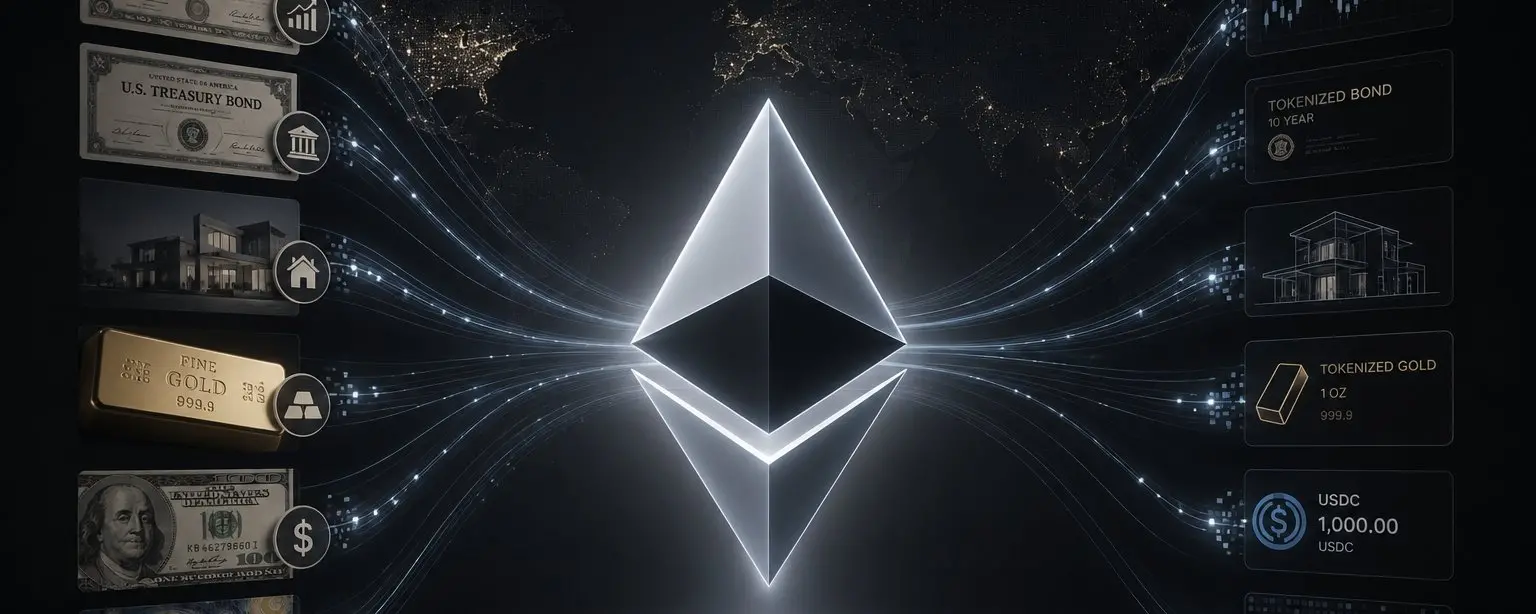
In a recent interview, Coinbase CEO Brian Armstrong outlined a plan: all assets will eventually be on-chain, so they aim to create the Everything Exchange.
To him, crypto is not an isolated industry but a technology that can upgrade the entire financial system.
Armstrong specifically mentioned the current state of U.S. stocks: today, if an Argentine wants to open a U.S. brokerage account, they face a very high wealth threshold. For ordinary investors in most countries, U.S. securities are almost a "rich person's exclusive market."
But if stocks are tokenized and moved on-chain, it can break down these barriers, allowing anyone in the world to buy and sell U.S. assets at any time.
Being on-chain also means more possibilities: 24/7 trading, support for fractional share trading, and even the design of new governance logic, such as "only shareholders who have held for over a year can vote," to encourage long-term investors. 
In his vision, Coinbase is no longer just a platform for matching trades but a "universal exchange" that accommodates all assets on-chain, an open, inclusive, and round-the-clock financial operating system.
For this reason, Coinbase has begun to take a series of actions to align with Armstrong's vision: over six months, it has acquired Spindl, Iron Fish, Liquifi, and Deribit.
The first three serve the Base chain: Spindl provides an on-chain advertising stack, allowing developers to directly acquire users; Iron Fish brings a zero-knowledge proof team to build privacy modules on Base; Liquifi offers token management and compliance services and plans to integrate with Coinbase Prime to facilitate institutional and RWA projects.
Together, these three have lowered the barriers for developers on Base, creating a complete tool stack.
The most significant acquisition is Deribit. Contract trading is more stable and profitable than spot trading, but Coinbase has long been constrained by U.S. regulations and has been absent for a long time. Spending $2.9 billion to acquire Deribit allowed it to gain a leading share in the options market and a large institutional client base.
Less than a month after the acquisition was completed, Coinbase launched perpetual contracts under CFTC regulation, effectively "seamlessly taking over" Deribit's capabilities.
If the acquisition is a violent breakthrough for Coinbase against the ceiling of trading revenue, then its ongoing business expansion is a deeper identity reshaping.
It focuses on "heavy lifting": stablecoins, wallets, public chains, and institutional services. These seemingly basic pieces are sketching out a new Coinbase: not just a trading platform but a Web 3 version of Apple + Visa + AWS.
The first step is stablecoins. Coinbase does not directly issue USDC, but through revenue sharing with Circle, it takes a significant interest margin. A contradiction arises: Circle is unhappy with Coinbase's "high earnings and low contributions." Coinbase realizes it must run USDC into more scenarios.
So it began subsidizing USDC deposits and partnered with Shopify to launch a payment API, embedding stablecoins into real-world cash registers and financial systems, making USDC a true payment tool. Behind this, a16z has been pushing for stablecoins, viewing them as "the TCP/IP of internet finance."
The second step is wallets. Coinbase Wallet has been upgraded to a smart wallet, eliminating the need for seed phrases, allowing one-click creation, and integrating NFT displays, on-chain identities, and social features. It even connects to Lens and Farcaster, turning the wallet into a "crypto social circle."
Once users' funds, identities, and social relationships are bound, the wallet becomes Coinbase's traffic entry point. Coupled with the Base chain, this system increasingly resembles iOS: Wallet is the App Store, Base is the operating system, and USDC is Apple Pay. Coinbase no longer relies on market volatility for profit but can extract "on-chain taxes" in the cycle of "identity + funds + social."
The third step is the institutional entry. Coinbase Prime already serves over 500 funds and asset management companies and is the main platform for USDC custody. If RWA, STO, and other assets are indeed massively moved on-chain in the future, Prime could very well evolve into the Goldman Sachs and BlackRock of the chain, becoming a stable source of income.
Unlike most platforms, Coinbase no longer relies on retail investors' emotions and trading heat to sustain itself. What it wants to control are more fundamental elements: the capital entry (USDC), account entry (Wallet), trading entry (Base), and institutional entry (Prime).
The future of Coinbase is not the loudest trading hall but a "universal exchange," a financial operating system that can accommodate all assets and operate around the clock.
The role of the settlement layer gives it the opportunity to transcend short-term noise and volatility, making crypto the underlying layer, turning trading into a public service, and users into network nodes. This may be the next Coinbase that Armstrong envisions.
"996" Sweeps the Exchanges
Exchanges have never lacked "competition."
In the past, competition was about who could list coins faster, who could offer more subsidies, and who had lower fees. That was lively, surface-level competition: when traffic came, profits followed.
But today's competition is entirely different. ETFs have taken away the incremental growth of major coins, on-chain DeFi and memes have kept native users on-chain, and brokerages like Robinhood have cut into the new generation of retail investors. With the market pie shrinking, relying solely on spot trading can no longer support the future of a platform.
As a result, the methods of competition have been forced to upgrade. OKX is competing with wallets, trying to lock in users at the entry point; Binance is competing with its ecosystem, converting Alpha incentives into traffic returns; Coinbase is competing with infrastructure, using mergers and acquisitions, stablecoins, wallets, and institutional services to build a framework for a "universal exchange."
This is a heavier, more profound 996. It is not a short-term promotional battle but long-term infrastructure overtime. They are no longer competing for immediate trading volume but for who can control the capital entry, identity entry, and clearing network in the next decade.
The past competition was about land grabbing and traffic snatching; today's competition is about building strongholds and engaging in protracted battles.
Exchanges understand that the feast of traffic has already ended. The winning hand for exchanges is no longer in the ups and downs of spot contracts but in who can sit in the advantageous position on the ecological chessboard.
 Risk warning
 Risk warning