USD1 Stablecoin: A New Force in the Global Cryptocurrency Market
 The USD1 circulation launched by World Liberty Financial has soared from $3.5 million to $2.7 billion, reshaping the stablecoin market while sparking political and regulatory debates.
Key Points
USD1 has grown from $3.5 million to nearly $3 billion in just a few months, highlighting its explosive application on the blockchain, making it a top competitor in the global stablecoin space.
Backed by the US dollar and US Treasury bonds, USD1 offers transparency and liquidity, but critics point out that the involvement of the Trump family raises political and ethical concerns.
The regulatory clarity under the GENIUS Act enhances the credibility of USD1, although its rapid expansion and political connections ensure ongoing scrutiny and debate in the global crypto market.
Origins and Background
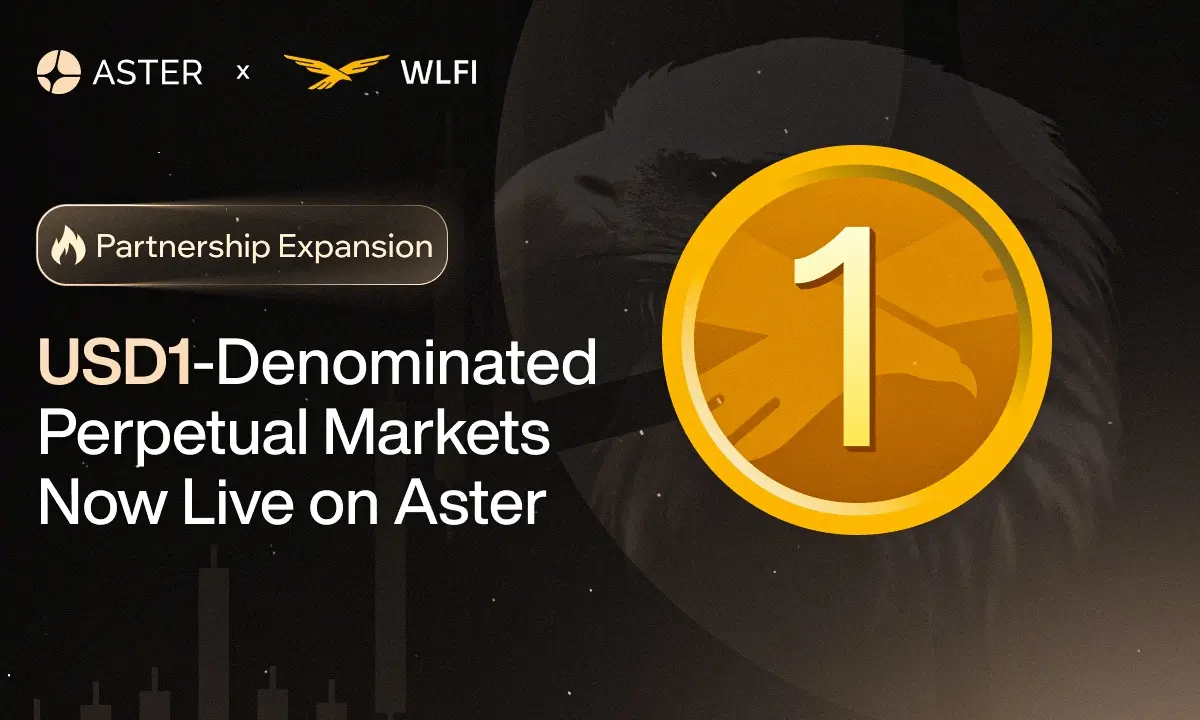
Yesterday, the World Liberty Financial (WLFI) token made its debut on the public market, once again bringing its flagship product, the USD1 stablecoin, into the spotlight. The initial trading of WLFI attracted attention due to its direct ties to the Trump family, but what is more striking is the rapid development of USD1—this stablecoin's circulation has surged from a few million dollars at launch to over $2.7 billion in less than six months. The growth trajectory, political implications, and cross-chain applications of USD1 make it one of the most watched stablecoins of 2025.
USD1 was officially launched by World Liberty Financial in March 2025, with the Trump family holding approximately 60% of the majority stake in the company. From the outset, USD1 was designed not just as an asset pegged to the dollar. USD1 is positioned as a fully collateralized stablecoin, backed by US dollars, short-term Treasury bills, and other cash equivalents, coinciding with the rising global demand for reliable, regulated, and transparent stablecoins.
Unlike algorithmic stablecoins that rely on market incentives, USD1's model is very straightforward: each token is redeemable for one dollar, and its reserves reportedly hold liquid, low-risk assets. World Liberty Financial has committed to regularly hiring third-party accountants for audits to ensure that every token in circulation is fully backed.

Explosive Growth and Circulation Data
What sets USD1 apart is its rapid adoption. At launch, its circulation was only $3.5 million—insignificant in a market dominated by giants like USDT (Tether) and USDC (Circle). However, as the token began appearing on multiple blockchains, demand surged within weeks.
According to Reuters, by April 2025, the circulation of Bitcoin will exceed $2.1 billion, primarily due to significant trading by institutional wallets.
By May 2025, the supply further expanded to over $2.2 billion, ranking it as the top stablecoin globally.
By September 2025, USD1's market capitalization reached $2.7 billion, with approximately 265 to 270 million tokens circulating on Ethereum, BNB Chain, TRON, and Solana.
The trading volume is equally impressive. On platforms like Coinbase and Binance, USD1's 24-hour trading volume typically ranges between $10 billion and $16 billion, rivaling more established competitors. In just the past 30 days, the trading volume has surpassed $40 billion, showcasing strong liquidity and growing user trust.
Cross-Chain Adoption and DeFi Integration
The rapid success of USD1 is partly due to its multi-chain expansion strategy. It was initially launched on Ethereum and quickly expanded to the BNB Chain, where it gained significant popularity. By mid-2025, the value of USD1 circulating solely on the BNB Chain is expected to exceed $1 billion, thanks to active trading pairs on decentralized exchanges like PancakeSwap.
In the following months, integration with Solana provided another growth catalyst. Within 90 days of its launch on Solana, USD1 secured over $2 billion in liquidity, deeply embedding itself in the network's evolving DeFi ecosystem. On-chain incentives, staking opportunities, and liquidity rewards further accelerated its adoption, making USD1 a key asset in multiple DeFi protocols.
This multi-chain approach ensures that USD1 is not confined to a single blockchain environment. Instead, it positions itself as a universal settlement layer with cross-ecosystem interoperability—crucial for both institutional and retail users.
Comparison with Mainstream Stablecoins
In absolute scale, USD1 still lags behind USDC and Tether, but it has been closing the gap at a record pace.
USDT (Tether) remains the global leader, with a circulation exceeding $120 billion, although transparency issues persist.
USDC (Circle) has a value of approximately $30 to $35 billion, benefiting from strong compliance and regulatory clarity in the US.
In contrast, USD1 has surged from obscurity to a circulating value of nearly $3 billion, a growth rate unmatched by any other stablecoin in recent years.
In terms of yield, the reserves backing USD1 (primarily short-term US Treasury bonds) are expected to generate returns of $80 million to $90 million annually. While stablecoin issuers typically benefit from such yields, critics argue that for USD1, these profits directly benefit World Liberty Financial, and by extension, the Trump family.
Ethical and Political Controversies
The political connections of USD1 make it one of the most controversial assets in the cryptocurrency space. Reports from Reuters and Wired have revealed that the UAE state-owned investment company MGX invested nearly $2 billion into Binance through USD1, raising questions about potential foreign influence and conflicts of interest.
Critics argue that the Trump family's direct financial involvement raises ethical concerns. With WLFI holding the reserves, the line between political power and economic interests seems to blur. Additionally, some US lawmakers worry that foreign investments made through USD1 could circumvent traditional regulatory mechanisms.
As USD1 has become a vehicle for high-yield assets, the interest generated from US Treasury bonds may flow back to the Trump family's holdings, further highlighting these issues. As USD1 continues to expand, the intersection of politics, finance, and cryptocurrency may remain a significant point of discussion.
Regulatory Environment and the GENIUS Act
With the rise of USD1, the regulatory framework for US stablecoins is also rapidly evolving. In mid-2025, the US Congress passed the GENIUS Act, a landmark piece of legislation aimed at clarifying the issuance of stablecoins. Key requirements include:
Stablecoins must be backed by liquid, low-risk assets such as cash and Treasury bonds.
Issuers must disclose and audit regularly.
In the event of bankruptcy, stablecoin holders will have priority claims on the reserves.
USD1 has publicly accepted these standards, but whether regulation can fully address the unique political entanglements of its supporters remains in question. Nonetheless, the GENIUS Act lays the groundwork for USD1 to become a compliant and reliable alternative in the global stablecoin market.
Future Outlook
The trajectory of USD1 indicates that it will continue to expand rapidly, particularly in emerging DeFi ecosystems and global payment channels. Currently, USD1's market capitalization is approaching $3 billion, and analysts predict that if liquidity incentives and institutional adoption remain strong, USD1's market cap could exceed $5 billion by mid-2026.
However, risks remain:
Political scrutiny may intensify, especially during the 2025-2026 US election cycle.
Market concentration in a few large wallets raises concerns about decentralization and resilience.
Competitive pressure from innovative projects like USDC and PayPal's PYUSD may slow USD1's growth momentum.
Nevertheless, strong reserve backing, rapid cross-chain integration, and strategic institutional partnerships ensure that USD1 is not just a flash in the pan. It has solidified its position as a formidable competitor in the stablecoin space.
Conclusion
From a modest $3.5 million at launch in March 2025 to a circulating value of nearly $3 billion today, the rise of USD1 is nothing short of meteoric. Its cross-chain capabilities, deep DeFi integration, and institutional applications highlight its potential to reshape the way stablecoins are used globally. At the same time, USD1's close ties to the Trump family and the political controversies surrounding its reserves make it a uniquely polarizing asset.
For investors, traders, and regulators, USD1 represents both a breakthrough in stablecoin applications and an experiment at the intersection of politics and digital finance. Its future will not only influence the trajectory of World Liberty Financial but may also help define broader regulatory and ethical boundaries in the global cryptocurrency industry.
 Risk warning
 Risk warning