








Understanding Canton Network: A Public Blockchain with Institutional-Grade Privacy and Compliance
 Core Viewpoint

 The tokenized assets on Canton have exceeded $6 trillion, and the network processes over $280 billion in U.S. Treasury repurchase transactions daily.
Original Title: Canton Network: Most Realistic Blockchain
Source: Tiger Research
Compiled by: Zhou, ChainCatcher
Editor's Note: Canton was born at the turning point of institutional on-chain and RWA tokenization acceleration. The complete openness and decentralization of public chains have long been misaligned with the privacy, compliance, and governance needs of financial institutions. Canton achieves selective transparency and rights-obligations workflows at the sub-transaction level with a "public permissioned + Daml" model, combined with the "network of networks" architecture of Participant/CSP/vCSP, retaining real-time settlement and atomic composability while making it easier to reduce capital requirements under Basel standards, enabling institutions to protect privacy while complying with regulations.
It is noteworthy that the developer of Canton Network, Digital Asset, announced in June the completion of a $135 million strategic financing round, led by DRW Venture Capital and Tradeweb Markets, with participation from well-known companies in traditional finance and crypto, including BNP Paribas, Circle Ventures, Citadel Securities, DTCC, Virtu Financial, and Paxos. Currently, the tokenized assets on Canton exceed $6 trillion, larger than the GDP of most countries. The network also processes over $280 billion in U.S. Treasury repurchase transactions daily. Additionally, its token, Canton Coin, has no VC/foundation allocation, is fully distributed based on contributions, and incentivizes early super validators through a balanced mechanism of fee burning and reward minting.
Here is the main text:
- Addressing the mismatch between blockchain and institutions: The complete transparency and decentralization of traditional blockchains conflict with financial institutions' demands for privacy, regulatory compliance, and control, limiting adoption to pilot phases.
- Achieving a selectively transparent architecture: The "public permissioned" model combined with Daml smart contracts allows for privacy controls at the transaction level, meeting Basel regulatory standards and supporting institutional workflows through a rights-obligations framework.
- Achieving true institutional-scale: Over 400 institutions, more than $6 trillion in tokenized assets, and 3 million transactions daily, with major participants like Bank of America executing 24/7 on-chain Treasury transactions since its launch in 2024.
1. Between Blockchain Ideals and Reality
From its inception, blockchain technology has been built on two core principles: 1) complete transparency, meaning all transactions are visible to the public; 2) decentralization, meaning the system operates without central control. While these ideals shaped the early development of blockchain, reality has significantly diverged.
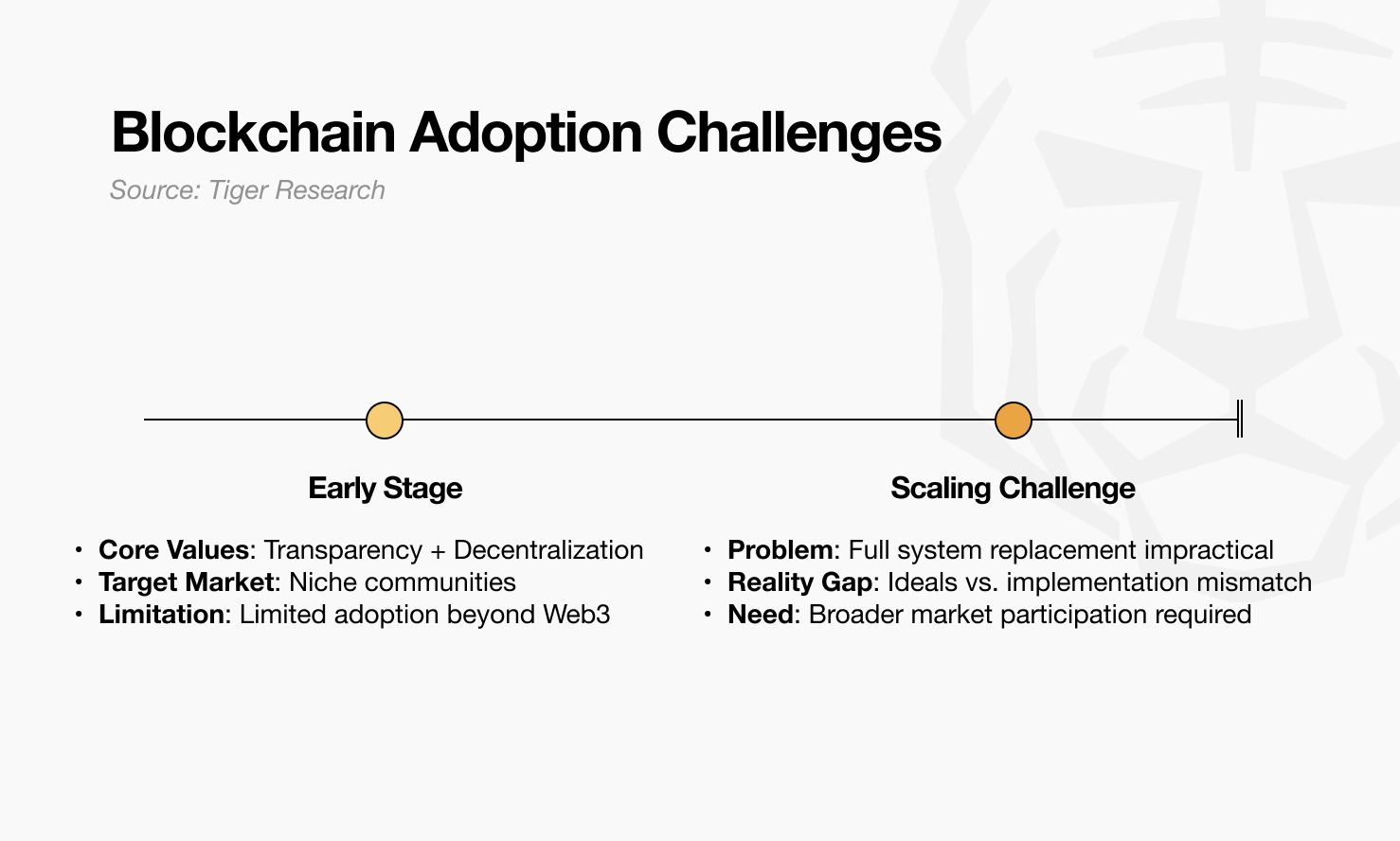
In the early stages, early adopters developed services around transparency and decentralization. However, adopters were limited to niche communities. As broader participation became necessary, it became increasingly clear that completely replacing existing systems with blockchain infrastructure was unrealistic.
For financial institutions, the challenges are more pronounced. Complete transparency means that trading strategies and corporate financial data could be exposed; decentralization conflicts with the need for control and governance.
The result is a conflict between the fundamental ideals of blockchain and the requirements of institutions for privacy, oversight, regulatory compliance, and scalability. Although institutions recognize clear advantages such as real-time settlement and capital efficiency, most remain in pilot phases.
However, sustained growth cannot rely on a small group of ideological supporters. Institutional adoption and broader market expansion require pragmatic needs to take precedence over philosophical purity.
2. Canton Network: A Pragmatic Path
Source: Canton Network
The emergence of Canton Network aims to resolve the contradiction between blockchain ideals and institutional realities. Unlike early blockchains that relied on absolute models, it introduces flexibility, allowing institutions to choose how to manage information and control.
This approach reflects the practical needs of financial institutions: some information must be completely transparent to regulators but kept confidential from competitors; internal audits must still occur while protecting customer privacy. Traditional blockchains, with their binary model of complete disclosure or complete opacity, cannot accommodate these nuanced needs.
Canton Network differentiates itself through the Canton protocol, which enables institutions to retain the advantages of blockchain's real-time settlement and capital efficiency while meeting regulatory requirements and managing risks. This positions it as an infrastructure supporting the transition from pilot to large-scale institutional adoption.
Essentially, the Canton protocol enables independent control over applications and transactions, configurable privacy through a unique "stakeholder proof" consensus model, and interoperability across independent operating systems.
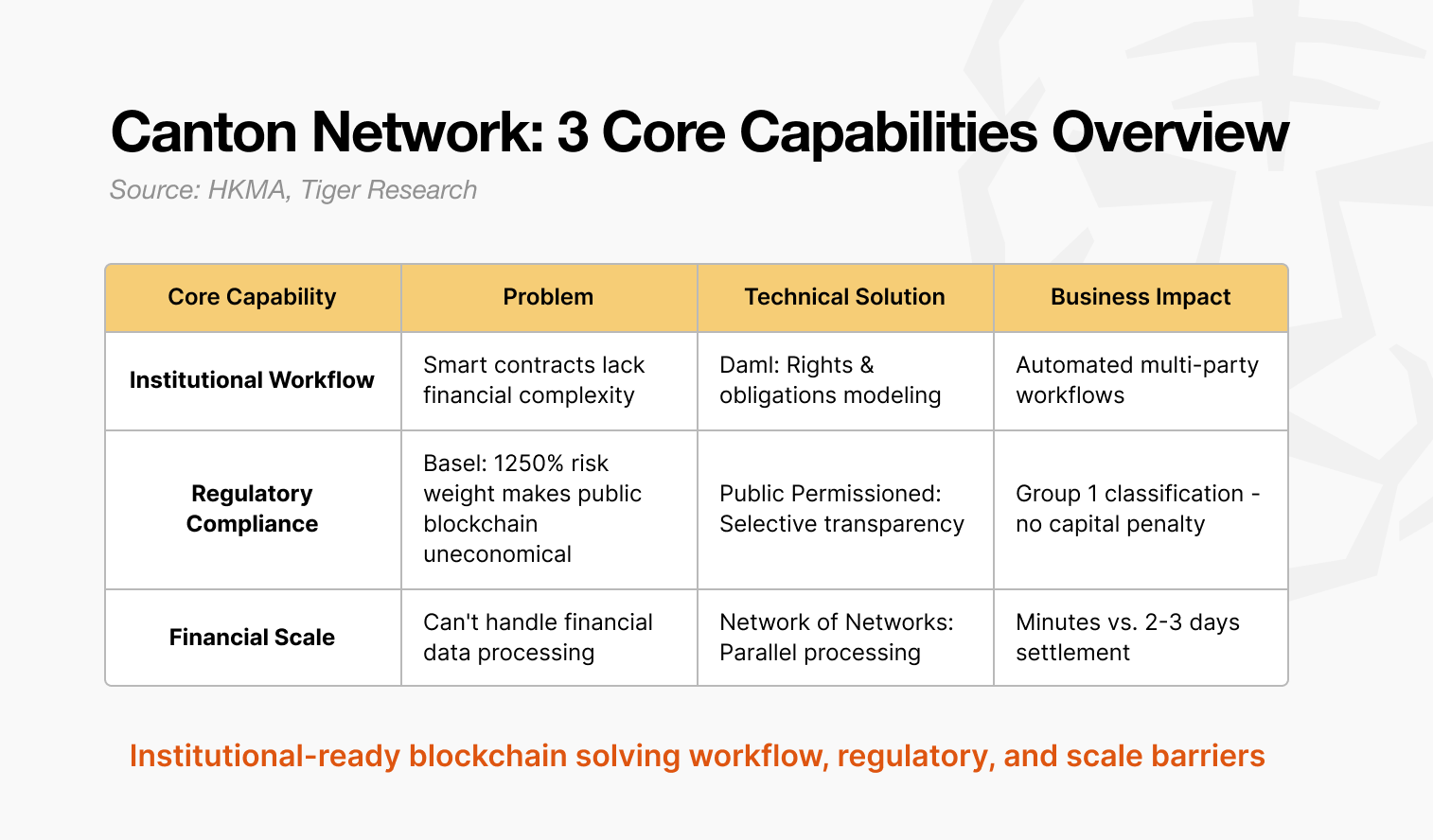
2.1. Institutional Workflow Design
This functionality is realized through Daml, a functional programming language designed to automate multi-party financial workflows securely and efficiently. By leveraging Daml, Canton Network provides an alternative to existing smart contract frameworks (such as Ethereum's Solidity) and offers an architecture tailored to institutional use cases.
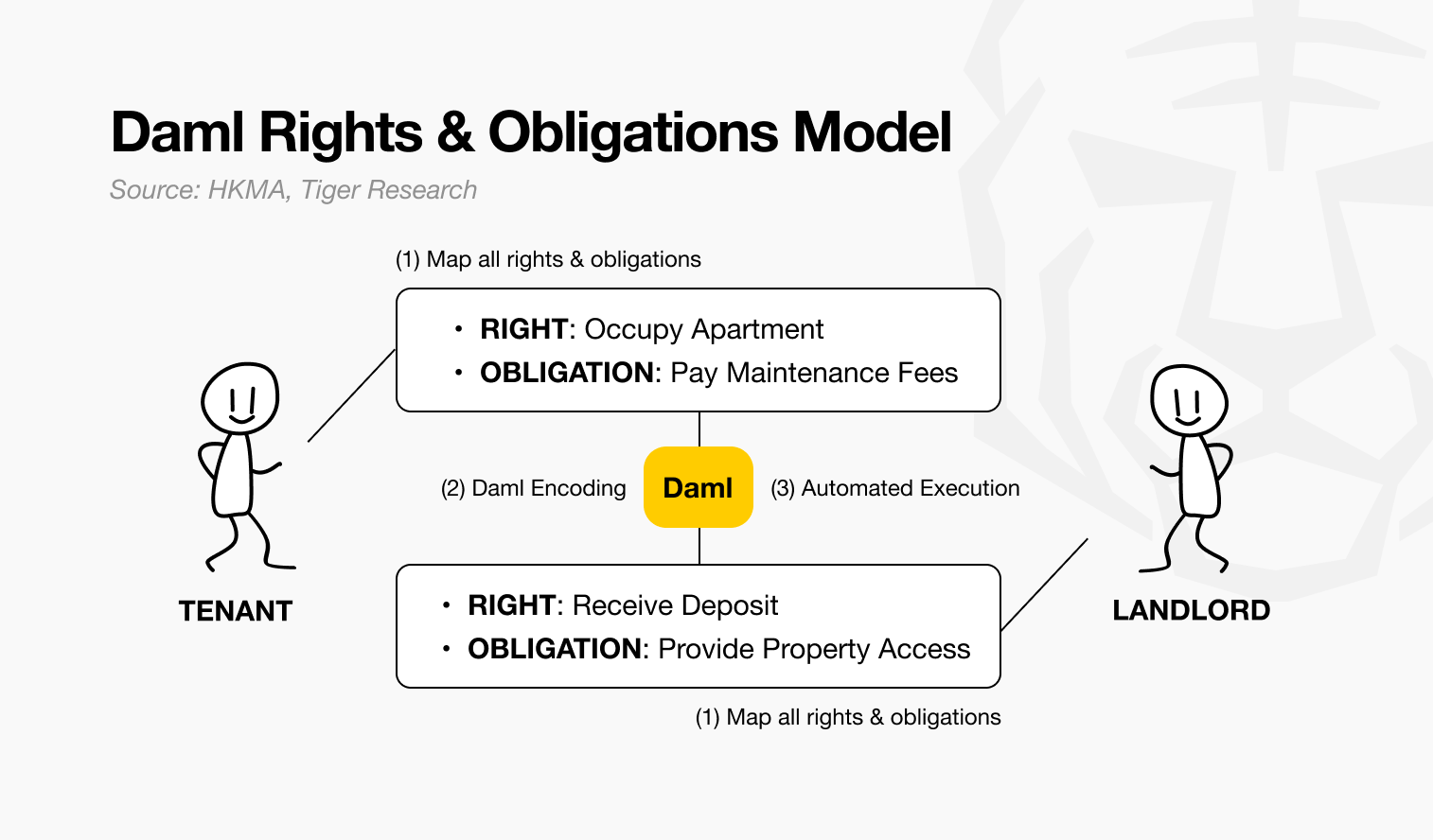
Daml builds contracts around rights and obligations, directly related to the nature of financial transactions. Each financial agreement can be broken down into the transfer of rights and a series of obligations.
For example, in a lease agreement, the tenant has the right to occupy the apartment but has the obligation to pay maintenance fees; the landlord has the right to collect a deposit but has the obligation to provide the right to use the property. Daml precisely encodes such relationships into executable forms.
Daml and Canton integrate different systems into an automated workflow through smart contract-level atomic composability. In this model, all interdependent steps can either succeed or fail simultaneously, ensuring the integrity of the transaction.
Real estate transactions serve as an example: once the buyer deposits funds, the loan review automatically initiates; upon approval, the property transfer proceeds. Each stage is bound by clearly defined rights and obligations, and the entire process is viewed as an indivisible transaction. If any step fails, the system rolls back to the initial state.
Equally important is the system's flexibility and controllability. With the agreement of all parties, contracts can be modified to adapt to unforeseen circumstances such as regulatory changes or court rulings.
Through Daml, Canton Network provides the conditions necessary for institutional operations: clear definitions of rights and obligations, practical workflows, and built-in adaptability and governance capabilities. This allows institutions to meet compliance and privacy needs without sacrificing efficiency.
2.2. Regulation and Privacy
The primary barrier to financial institutions adopting blockchain is regulation, closely tied to data privacy and operational control. One of the most significant obstacles is the Basel Accord, an international standard set by the Basel Committee on Banking Supervision under the Bank for International Settlements (BIS). Although these standards are not legally binding, they are typically implemented through national legislation, giving them practical effect.
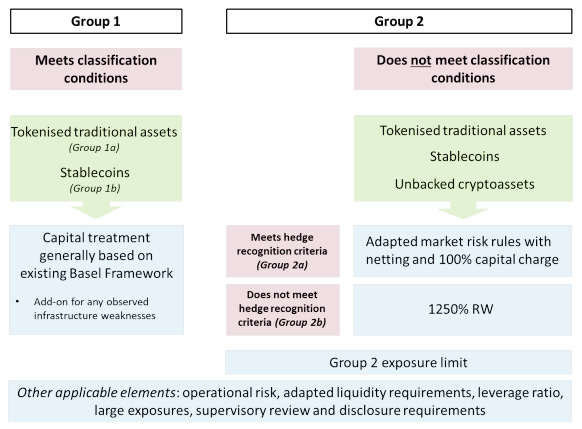 Source: Basel Rules
According to the Basel Accord, unsecured assets issued on public chains fall under "Category 2," with a risk weight of up to 1250%. In practice, this means that holding 100 million Korean won in blockchain assets requires 1.25 billion Korean won in regulatory capital, making large-scale use uneconomical.
Canton Network addresses this issue through its "public permissioned" architecture. Similar to how the internet itself is open but restricts access to sensitive platforms like bank websites, Canton combines openness with fine-grained access control.
This is achieved through the aforementioned sub-transaction-level privacy features. Only the parties directly involved in a transaction can view and record specific data relevant to them, while other participants cannot see anything beyond what they need to know. For example, in a Delivery versus Payment (DvP) transaction, the bank will only see the cash transfer, while the securities custodian will only see the securities delivery.
Daml smart contracts allow for fine-grained control over data access and actions, ensuring that tokenized traditional assets can be classified as "Category 1" risk exposures, thus avoiding punitive capital requirements. The same mechanism also supports selective disclosures for auditors, enabling oversight without compromising confidentiality.
Thus, Canton addresses a key constraint in the early development of blockchain. The complete transparency of public chains can compromise privacy, while the complete opacity of private chains can hinder interoperability. By providing selective transparency, Canton enables institutions to comply with regulations while protecting privacy.
2.3. Performance at Financial System Scale
For blockchain to survive in capital markets, it must match the scale of existing financial infrastructure. The daily trading volume of foreign exchange alone exceeds $7.5 trillion, while the total trading volume of stocks, bonds, and derivatives reaches hundreds of trillions of dollars. Therefore, institutions require blockchain systems to meet existing performance benchmarks, remain stable during peak periods, and support continuous operation around the clock.
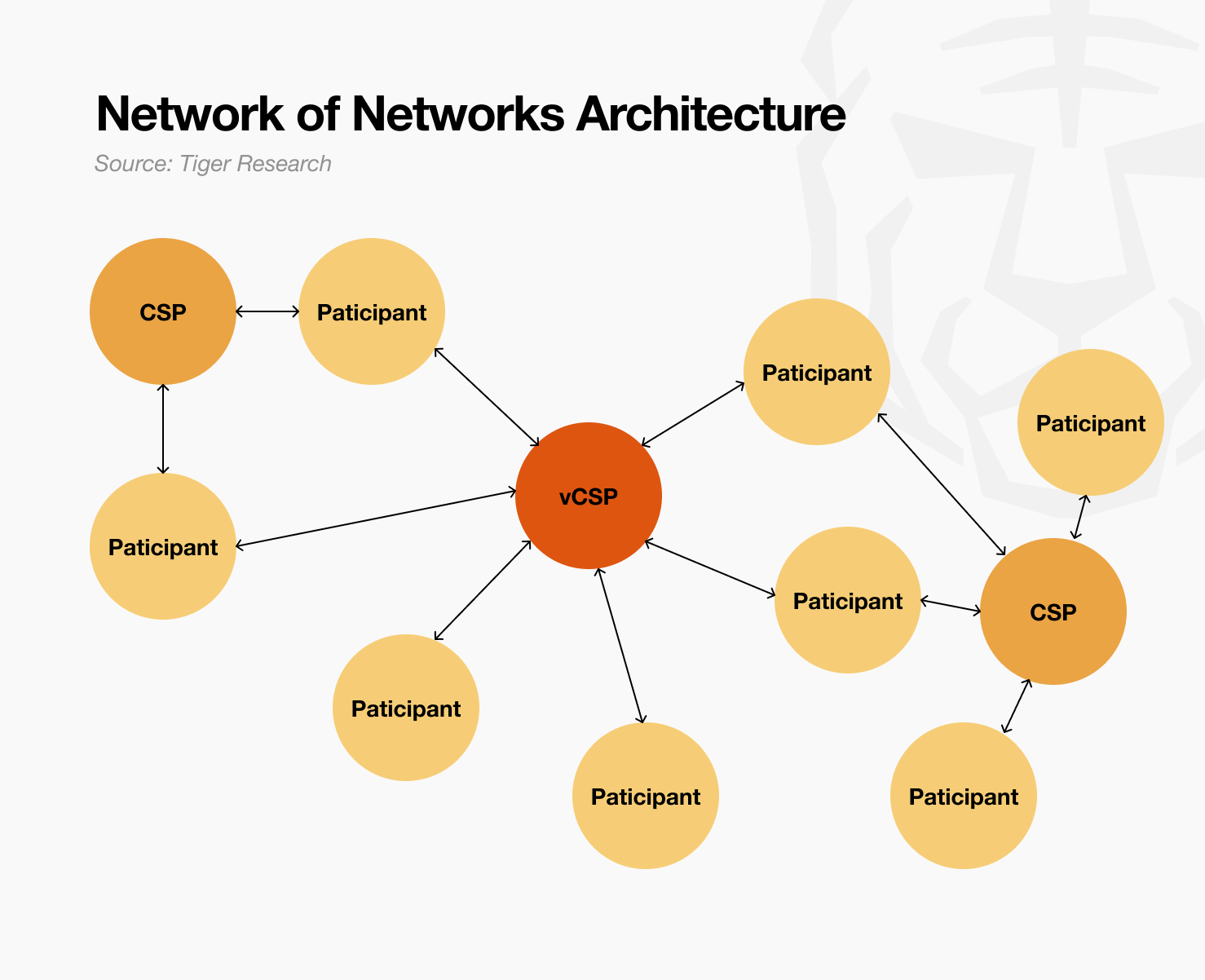
Canton Network meets this requirement through its "network of networks" architecture. Unlike traditional blockchains that operate as monolithic systems, Canton’s structure resembles a transportation network, where multiple subnetworks interconnect to share the load and ensure resilience.
Participant Nodes: Nodes representing institutions that only validate their own transactions and can securely host multiple entities.
CSP (Canton Service Provider): Regional infrastructure providers that connect participant nodes and offer services compliant with local regulatory requirements.
vCSP (Virtual Cloud Service): A globally synchronized layer providing a public backbone for cross-application and cross-regional settlements; the first production-grade example is currently operated by over 30 major institutions.
This layered design functions similarly to a city traffic system. Participant nodes are like buildings, CSPs are the regional road networks, while vCSPs are akin to highways connecting different regions. Nodes can connect to multiple CSPs; when a path is congested, transactions can be rerouted; capacity can be expanded by adding new CSPs.
For example, in a cross-border transaction between Samsung and Apple.
Samsung's node connects to a Korean CSP holding digital won, while Apple's node connects to a U.S. CSP holding digital dollars. Both are simultaneously connected to a global vCSP. When Apple places an order, a smart contract escrows $100,000; once Samsung confirms shipment, the escrowed funds are automatically released to Samsung. The entire process is completed within minutes, whereas traditional international wire transfers typically take two to three days.
In this process, the Korean CSP verifies Samsung's digital won activity, the U.S. CSP verifies Apple's digital dollar activity, and the vCSP ensures atomic settlement between the two networks. Meanwhile, other CSPs can concurrently process unrelated transactions (e.g., LG-Sony or Google-Microsoft transactions), thereby amplifying system throughput. Since CSPs operate independently, overall capacity scales with the number of providers.
This parallel approach supports concurrent execution across synchronized domains. Currently, Canton processes over four transactions per second, recording over 3.5 million Canton Coin-related events daily. Digital Asset and its institutional partners have successfully executed on-chain U.S. Treasury transactions and repurchase transactions, demonstrating continuous settlement capabilities even on weekends.
3. Building the Canton Ecosystem
Canton Network addresses the classic "chicken or egg" problem of blockchain adoption: without users, there are no services, and without services, users will not join. It achieves this through a unique incentive and distribution model.
At the core of the network is Canton Coin, the native digital currency of the network. Many blockchain projects pre-mine tokens and allocate them proportionally to founders or venture capitalists, while the distribution of Canton Coin is entirely based on contributions to the network. There is no pre-allocation for venture capital or foundations. Participants can only earn tokens by providing tangible value, whether through operating infrastructure, developing applications, or conducting transactions. In practice, this distribution resembles wages paid for labor.
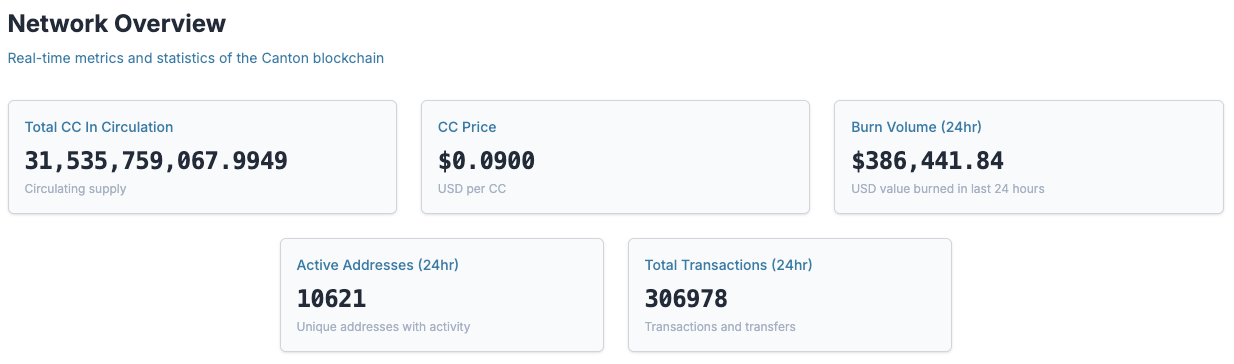 Source: Cantonscan
The second feature is the balanced mechanism of "burning and minting." Transaction fees paid by users are burned, permanently reducing supply, while new coins are minted as rewards for contributors. This establishes a balance between usage-driven scarcity and contribution-driven issuance.
Reward distribution will also evolve over time. In the early stages, super validators responsible for establishing network infrastructure will receive higher rewards. As the system stabilizes, the share of rewards will shift towards developers building applications and services. This is similar to the development of new cities, where initial investments focus primarily on roads and utilities, followed by the growth of retail and service providers.
4. The Path Forward for Canton Network
Since its official launch in July 2024, Canton Network has demonstrated its practical value to financial institutions, surpassing technical milestones and achieving robust growth.
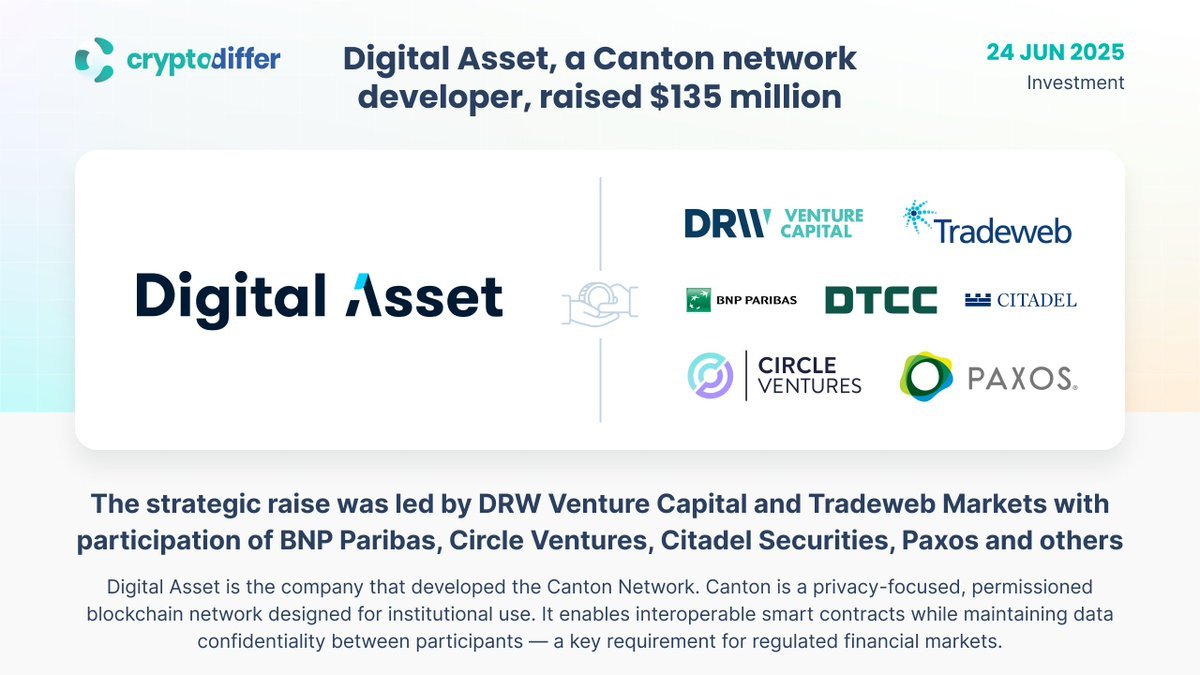
Source: Cryptodiffer
This is reflected in its financing. In June 2025, Canton completed a $135 million financing round, led by DRW Trading and Tradeweb, with widespread participation from numerous traditional financial institutions. These institutions are not only investors but also active contributors to service development and operations.
The scale of assets processed is even more remarkable. Tokenized assets on Canton exceed $6 trillion, larger than the GDP of most countries. The network also processes over $280 billion in U.S. Treasury repurchase transactions daily.
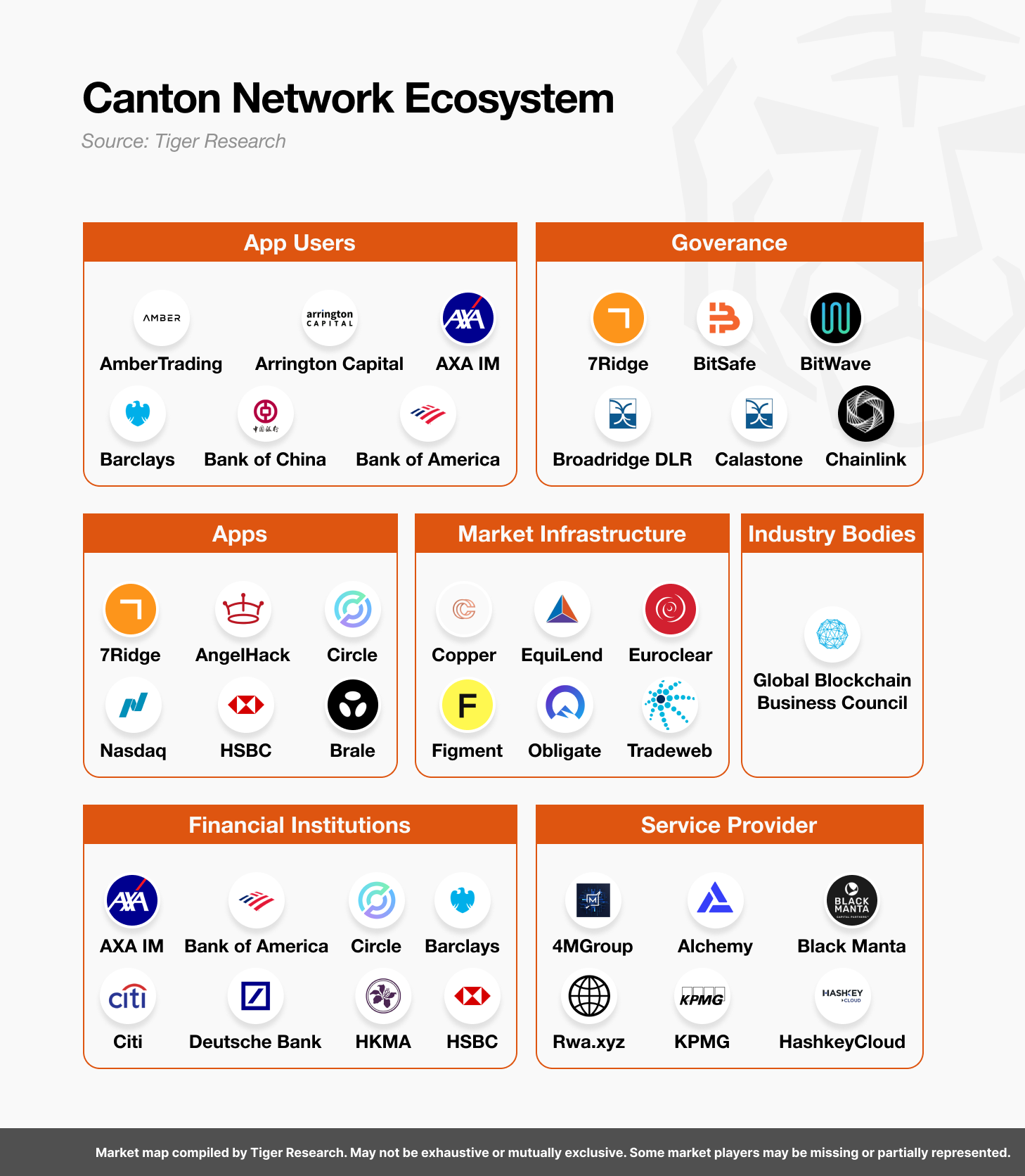
Specific use cases are emerging. On August 12, 2025, Bank of America, Circle, Citadel Securities, DTCC, Société Générale, and Tradeweb completed the first weekend on-chain financing transaction involving U.S. Treasuries and USDC, marking the emergence of a 24/7 capital market.
Stablecoin settlements are another area of significant interest. Circle integrates USDC with Canton, emphasizing the role of privacy controls, while Paxos joins as a validator. Institutions emphasize that stablecoins can meet regulatory requirements while ensuring confidentiality of transaction details in inter-company payments.
Looking ahead, broader applications are expected, especially in the field of RWA tokenization. Real estate, commodities, and artworks may follow closely, enhancing liquidity far beyond the current $6 trillion already tokenized.
In the long run, Canton aims to establish a blockchain-based global capital market that operates around the clock, unbound by time zones or borders. Developments such as Nasdaq's support for tokenized stock applications highlight this transformation.
Thus, Canton positions itself as an infrastructure optimized for the current transformation—connecting the advantages of blockchain with institutional needs. Its trajectory will depend on how effectively it balances ideals with real-world demands.
 Risk warning
 Risk warning



Popular articles





