








On-chain payment is the trend of the future, Star shares the vision of OKX Pay for the first time

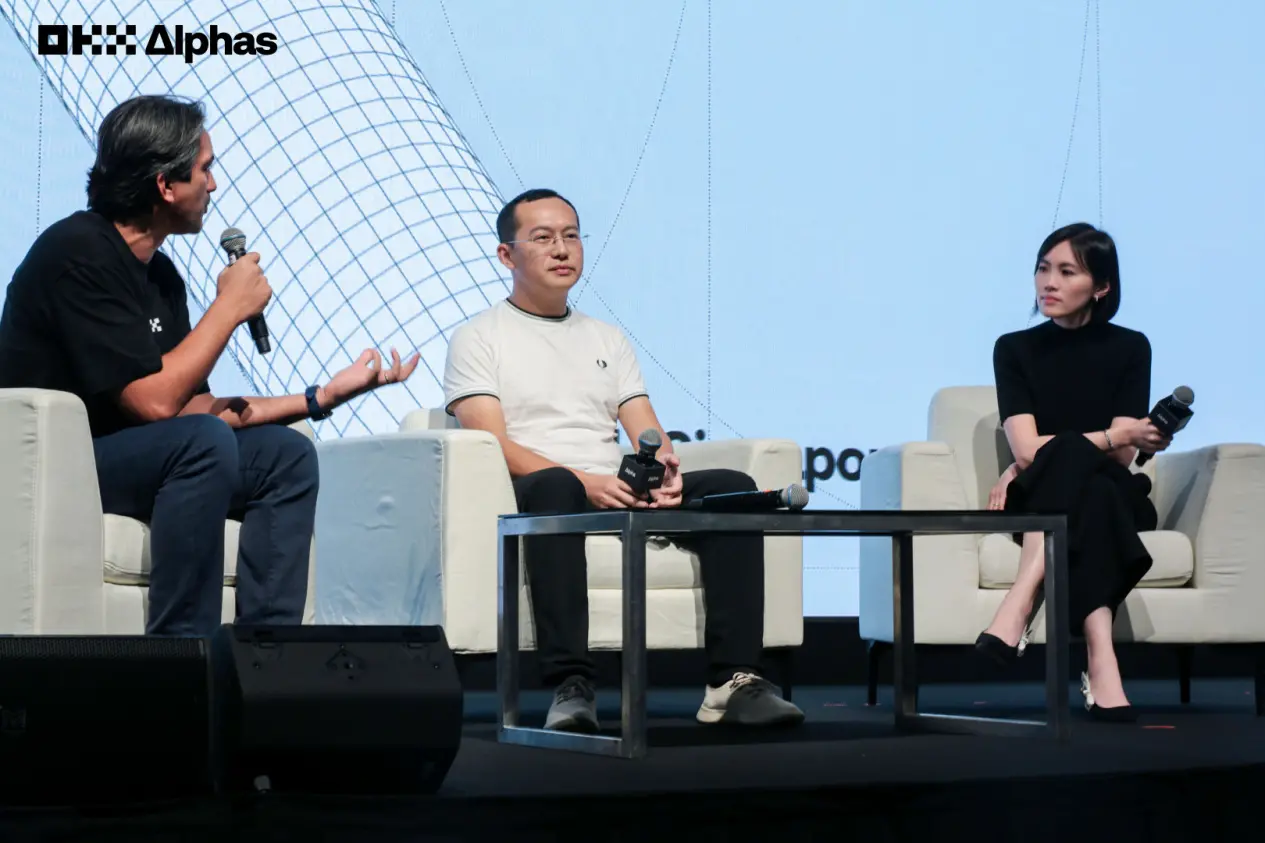
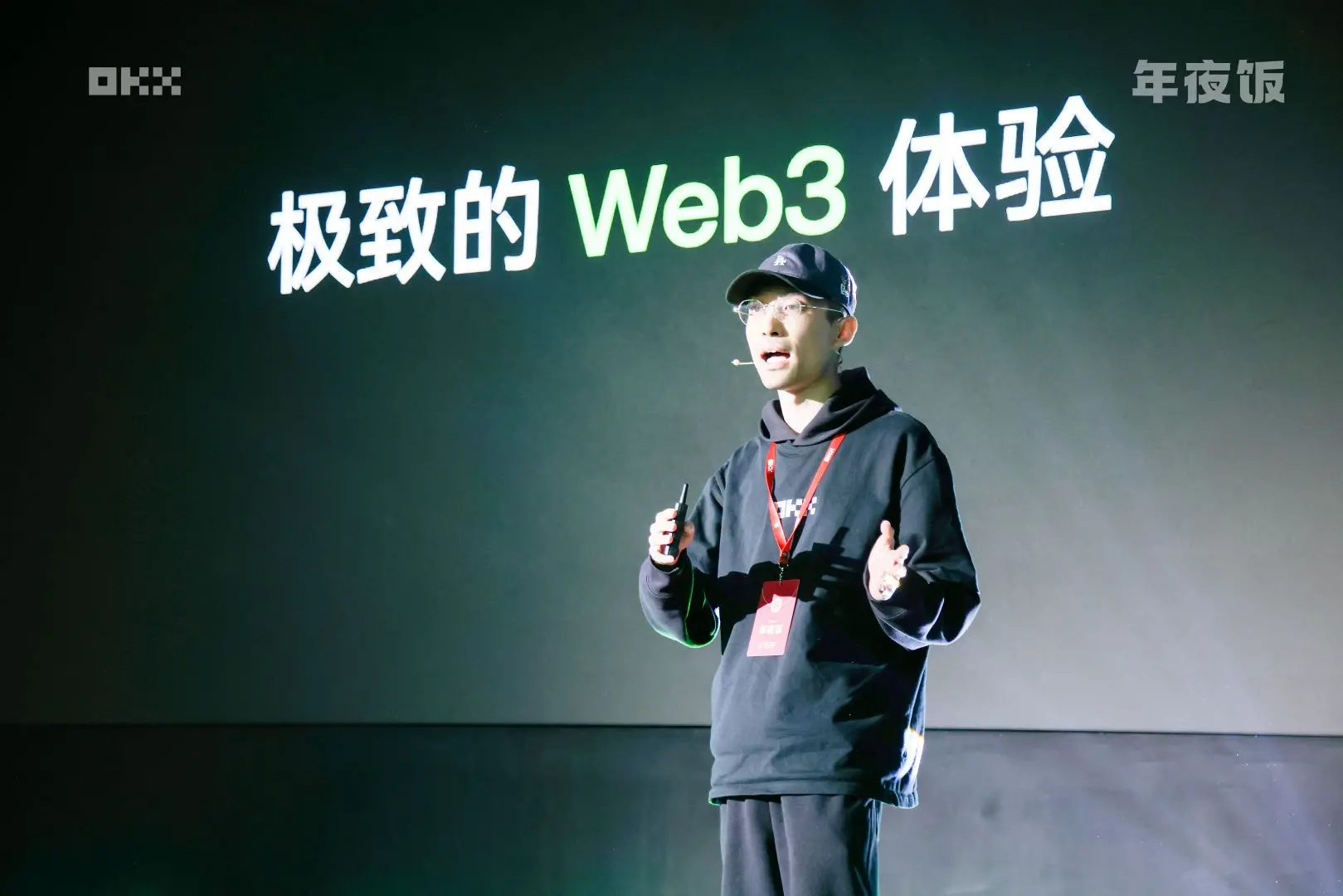
 OKX founder and CEO Star Xu, OKX CMO Haider Rafique, and OKX SG CEO Gracie Lin appeared together to discuss the future trends of on-chain payments.
On the eve of the Token2049 summit on September 30, the Alphas Summit "The New Money Era" hosted by OKX became one of the industry's hot events. OKX founder and CEO Star Xu, OKX CMO Haider Rafique, and OKX SG CEO Gracie Lin appeared together to discuss the future trends of on-chain payments. This was also his first time focusing on the payment topics that users care about most in a public setting, sharing in-depth thoughts on "OKX Pay."
Here is the content of the roundtable discussion (organized):
Vision for the Future of Crypto Payments
Haider Rafique: I want to start today's roundtable discussion with a concept that has been brewing in my mind. Let's not talk about trading, exchanges, or markets for now. Think about it: the entire industry processes trillions of dollars in transactions every day, and in just one day or even one hour, it can unlock billions of dollars in liquidity. That's a pretty astonishing scale. But interestingly—most of you still can't directly buy a hamburger with cryptocurrency. Yes, that's right, such a simple daily expense.
I have many credit cards in my pocket, and my phone is filled with various fintech apps. But even after being in the crypto industry for so many years, the reality is that I don't use crypto apps to buy pizza, get Blue Bottle coffee, call a Grab taxi, or complete daily payment transactions. Why is that? Part of the reason is that our existing fintech apps, including credit and debit cards, are already "good enough." Of course, everyone knows there are gaps in the market, and these are precisely the areas where crypto payments can fill in. But the reality is that even if most of you have crypto apps on your phones, very few actually use them for daily payments.
So, in this context, I pose a question to Star: as an industry pioneer, you have witnessed the development of crypto payments and have seen many companies attempt to compete with traditional fintech firms. Can you give us a summary of your vision for the future of crypto payments? How do you think it can truly become a part of our daily lives?
Star Xu: I believe one of the biggest achievements of the crypto industry in the past 12 or 13 years is Bitcoin. We have successfully made Bitcoin a global asset, with a market cap that even surpasses that of Bitcoin ETFs and gold ETFs. The second major achievement of the crypto industry is stablecoins. Today, we can see that the circulating stablecoins on-chain exceed 300 billion dollars. I believe that in the next 1 to 2 years, the scale of stablecoins will reach 1 to 2 trillion dollars.
Before the internet emerged, the payment methods in human society for thousands of years were peer-to-peer. For example, you held gold or silver, or currency, you kept your money at home, and then paid merchants, having complete control over your money. But in the digital age, most of our money is held by financial institutions, and if those institutions face risks, we can only recover a portion of our funds through insurance. This situation is not ideal. I believe that crypto blockchain and stablecoins provide us with new opportunities to return payment methods to their original peer-to-peer form.
At the same time, this payment method is both cheap and efficient. For example, if you use a credit card within a country, the fees are very low; but when you make cross-border payments, the fees can reach 1%, 2%, or even 3%. Stablecoins, by nature, have global characteristics, and peer-to-peer payments will not affect security or compliance. I believe it will undoubtedly become the infrastructure for future payments.
Now, technology is also rapidly advancing. For example, multi-signature can make your crypto wallet as secure as a bank account. There are also many on-chain monitoring tools that allow crypto companies to conduct anti-money laundering operations more efficiently and timely than traditional banks. Therefore, I believe stablecoin payments will quickly integrate into our lives in the coming years.
The Application of OKX Pay in Daily Life
Haider Rafique: I want to ask: I just arrived in Singapore three days ago, and after getting to the airport, I called a Grab and went to the office. However, what confuses me is—why can't I pay for this Grab ride with my crypto stablecoins?
Gracie Lin: We are still working hard to advance this. Unfortunately, at the moment, you still can't pay for Grab rides with stablecoins. But we can already do many other things, and I'm very excited because today we just announced the launch of OKX Pay in Singapore. This has been in preparation for several months, and we have been working closely with our friends at Grab, so I'm glad you mentioned Grab. We hope to bring OKX Pay to users in Singapore and visitors coming to Singapore. So next time you're in Singapore, you can use stablecoins in the OKX App to buy a hamburger, get coffee, and experience peer-to-peer payments. What I really like is that this product combines all the advantages of stablecoins, self-custody, multi-signature, and compliance, while seamlessly integrating into daily life, making payments simple and natural.
Next time, I will use my OKX Pay app to buy you a cup of Blue Bottle coffee. It is entirely driven by stablecoins, meaning it is a payment method supported by stablecoins. So we are very excited about this. The future has arrived, The New Money Era has arrived, and our The New Money application has also arrived.
Haider Rafique: Thank you, Gracie. So tell me, I have the OKX Pay app, what happens next? Let's explain to everyone present: when you go to a store that accepts OKX Pay today, what happens? How does it work?
Gracie Lin: Let's take a merchant that supports GrabPay as an example. When you walk into the store, you will see a QR code. If you see that this merchant supports GrabPay, all you need to do is take out your phone, open the OKX Pay app, switch to the "Payment" tab, and scan the QR code to make the payment. When paying, you just need to select your stablecoin, such as USDC or USDT, and you can complete the transaction. It's that simple.
We also talked about the convenience of cross-border payments. That's the beauty of it; you don't have to pay high fees. Using your stablecoins in Singapore will have costs very different from using a credit card. I hope that one day, you won't need a credit card and can complete all payments directly with OKX Pay.
Haider Rafique: I've noticed something when traveling around the world—whether you go to Europe or come to Asia, if you use traditional credit or debit cards at the payment terminal, you will face a choice: which currency to settle the transaction in. In my experience, sometimes it's in dollars, sometimes in Singapore dollars, or the merchant's local currency. So, when I use the OKX Pay app, do I still need to make those same choices? How does it work?
Gracie Lin: You don't need to make those choices. You just need to use stablecoins, like the US dollar stablecoins USDC/USDT. And this is no different whether you are using it abroad or at home. That's the beauty of it. It doesn't matter whether your merchant is ready to support crypto payments; it won't affect usage. The backend will automatically handle the payment, and the merchant can receive the currency they prefer.
This reflects the key to the true adoption of innovation: if it doesn't require users to make too many behavioral changes, it is easier to accept. This was also our starting point when designing OKX Pay—focusing on the customer's daily life to ensure that the payment process is as simple and natural as possible. In fact, OKX Pay is the first solution of its kind in Singapore—the first service to support scanning QR codes to complete crypto payments directly with stablecoins, and the first company to offer such a solution in the onshore market. This fully demonstrates the importance of Singapore as a strategic market for OKX.
Will On-Chain Payments Become a Future Trend?
Haider Rafique: We work very closely together, and I am very familiar with your vision and your enthusiasm for putting everything on-chain. Can you explain to the audience present and those watching online in the simplest terms—why do you believe on-chain payments will become a future trend?
Star Xu: In fact, starting today, we will launch on-chain payment services in the Singapore market and gradually promote them in the coming months. For Singapore users, if they store their assets in stablecoins in OKX Pay, they will earn about 4% annualized returns. Additionally, when users make offline payments, about 80% of Singapore merchants will support PayNow QR code payments, and they can also receive 3% to 4% cashback. We will also co-brand a debit card with the McLaren F1 team, which users can use for payments in Singapore and even globally. In the future, we plan to expand this service to more markets like Brazil, Europe, and the United States as soon as possible. Our vision is that in a few years, users will be able to travel freely around the world with their stablecoins and the OKX App, earning higher returns than banks and enjoying more cashback on every transaction.
Haider Rafique: This is a great start. Because from my experience with accounts in the U.S., if I deposit money in the bank, I actually earn almost nothing. If I put money in a fixed account, I might get 4% returns, but that means my funds are almost locked up, and I can't do anything else. So what you mean is, your vision is for people to convert their funds into stablecoins, store them in OKX Pay, and it will automatically generate returns with almost no action required from the user, right?
Star Xu: Yes. Especially after the new "Genius Act" in the U.S., I believe earning interest on one's own assets will become a fundamental right. No one should be able to take away our interest.
Why Did OKX Pay Adopt a Self-Custody Model?
Haider Rafique: Exactly, that's a great point. OKX Pay now supports several stablecoins, but new stablecoins are issued almost every week. How will you consider supporting these stablecoins on OKX Pay?
Star Xu: I believe that OKX itself is not an issuer of stablecoins, but we are working hard to become a liquidity hub for all stablecoins. This is also the reason we launched our stablecoin strategy. Today, users can seamlessly use different stablecoins within the OKX App, such as USDT, USDC, PYUSD, etc., achieving integration of on-chain stablecoin payments and returns.
Haider Rafique: Currently, there are many crypto payment apps in the cryptocurrency market. Most of them are custodial services. OKX Pay is purely self-custody, and you designed this product in a unique way. I want you to explain your vision for why you chose to design OKX Pay in a self-custody manner while ensuring practicality.
Star Xu: If stablecoin payments are to truly enter daily retail and people's lives, we must apply for various licenses globally and work closely with regulators everywhere. Self-custody is still a very tricky topic for regulators, but we firmly believe that self-custody is a user right—no one should be able to access their assets without user permission. So we created a solution that balances all parties: first, users need to go through OKX's due diligence and comply with regulations; second, users hold their private keys themselves, and OKX cannot access their funds without user permission. At the same time, all of this is built on our Ethereum L2—X Layer. X Layer will become the infrastructure for OKX Pay, ensuring that funds are truly self-custodied while meeting regulatory requirements. With X Layer, our payments can be global, peer-to-peer, with consistent costs and higher efficiency.
Haider Rafique: Thank you! I know that most of us are gathered here today to discuss trading. But if you think about traditional brokerage platforms in the U.S., like opening an account at Fidelity or Charles Schwab, you are likely to receive a debit card, so when you settle positions, your dollars or fiat currency can be used in daily life. So for OKX, providing a similar product to our traders is a very natural step. This way, when you trade and settle in the market, you can easily use stablecoin assets to access funds. I hope everyone finds this information useful, and I hope you enjoy Star's vision and Gracie's important announcement for Singapore. Thank you very much, and I am also looking forward to the upcoming session.
Disclaimer
This article is for reference only. It represents the author's views and does not reflect the position of OKX. This article is not intended to provide (i) investment advice or recommendations; (ii) offers or solicitations to buy, sell, or hold digital assets; (iii) financial, accounting, legal, or tax advice. We do not guarantee the accuracy, completeness, or usefulness of such information. Holding digital assets (including stablecoins and NFTs) involves high risks and may fluctuate significantly. Past performance does not guarantee future results, and past performance does not represent future outcomes. You should carefully consider whether trading or holding digital assets is suitable for you based on your financial situation. Please consult your legal/tax/investment professionals regarding your specific circumstances. You are solely responsible for understanding and complying with applicable local laws and regulations.
 Risk warning
 Risk warning
Popular articles





