








Meet Trump's "shadow prime minister," the chief architect of the plan to reshape America
 Core Viewpoint

 Miller is the only senior aide who maintained a close relationship with Trump after his first term and followed him back to the Oval Office this January.
Written by: Dong Jing, Wallstreetcn
In the power landscape of Trump's second term, one name is drawing increasing attention in Washington—Stephen Miller. As Trump's deputy chief of staff and homeland security advisor, Miller is becoming the chief architect of reshaping American policy.
On September 29, according to the Financial Times, Stephen Miller, referred to as the "shadow prime minister" by former White House chief strategist Steve Bannon, has become the most powerful unelected bureaucrat in the U.S. Miller is the only senior aide who has maintained a close relationship with Trump after his first term and returned to the Oval Office with him in January this year.
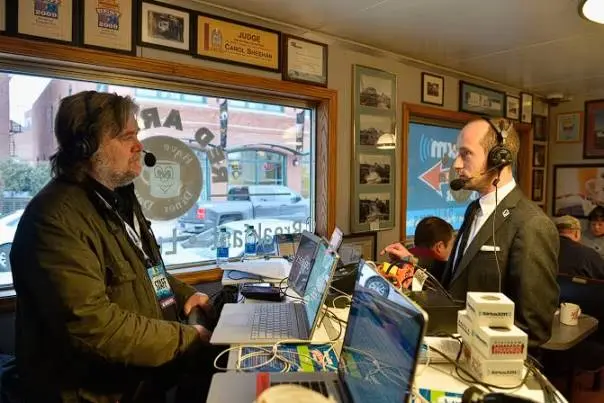
(The image shows Bannon (left) interviewing then-Trump senior advisor Miller on his podcast in February 2016.)
Bannon stated that, aside from some national security, financial, and monetary functions, Miller is involved in nearly all domestic policy-making. From the mass arrests of undocumented immigrants to attempts to abolish birthright citizenship, and deploying armed National Guard troops on the streets of Los Angeles, these controversial policies bear his imprint.
Additionally, insiders reveal that Miller not only plays a leading role in immigration and security policies but is also deeply involved in Trump's attacks on universities, law firms, cultural institutions, and the media. A person familiar with Trump's thinking said, "This is all Stephen orchestrating; he is involved in all these matters."
His influence is manifesting in unprecedented ways. According to former White House national security official Olivia Troye, "This is completely Stephen Miller's moment," as there is "no one left to check him" within the White House. This has led to the introduction of more extreme policies, raising market concerns about the disruptive nature of policies and legal stability.
Critics worry that Miller is using his influence to push a more extreme policy agenda. He has referred to the Democratic Party as a "domestic extremist organization" and discussed suspending personal protective orders—this constitutionally granted due process right. Supporters argue that he represents a government that fully exercises presidential power to implement policies supported by the majority of Americans.
From Outsider to Core Decision-Maker
In 2016, Miller officially joined Trump's first presidential campaign team as a speechwriter.
Bannon recalls, "Stephen and the president had an immediate chemistry; it was a meeting of minds. After Miller joined, the quality of Trump's speeches noticeably improved, becoming more substantial and weighty."
"Charm can only take you so far; ultimately, you need some well-thought-out policies, and Stephen is the one doing that."
In Trump's first administration, Miller quickly left his mark on immigration policy. He was one of the main drafters of the so-called "Muslim travel ban," which imposed entry restrictions on citizens from several Muslim-majority countries.
He also developed the "zero tolerance" policy, which led to family separations at the U.S.-Mexico border in 2018.
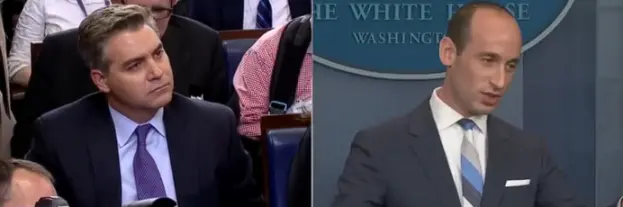
(In 2017, Miller debated with a CNN reporter on U.S. immigration issues, source: video screenshot.)
The "Shadow Prime Minister" Returns to Power
After Trump's defeat in the 2020 election, Miller remained loyal, spending four years researching policies that could be implemented upon a return to power.
Despite lacking legal training, he unearthed obscure legal provisions to defend his harsh policy proposals. In 2023, he explained on a conservative podcast how to use the 1798 Alien and Sedition Acts to carry out mass deportations without due process.
After Trump's victory, Miller was appointed deputy chief of staff at the White House, quickly demonstrating extensive power to bypass bureaucratic resistance.
White House Press Secretary Karoline Leavitt described Miller in a statement as "one of President Trump's longest-serving and most trusted advisors in the past decade," adding that Trump "has the utmost confidence in him and his proven leadership abilities."
Miller's return and consolidation of power did not surprise many former colleagues. Former national security official Olivia Troye stated:
"I always knew that if Trump returned to the White House, it would be Stephen Miller
 Risk warning
 Risk warning



Popular articles





