Opinion: The Era of Stablecoin Duopoly is Coming to an End
 Core Viewpoint

 The article analyzes the deep reasons behind the disintegration of the duopoly of Circle (USDC) and Tether (USDT), which currently dominate about 85% of the stablecoin market. It points out that various structural changes are driving the stablecoin market towards "substitutability," challenging the core advantages of the existing giants.
Author: nic carter
Compiled by: Saoirse, Foresight News
Circle's equity valuation has reached $30.5 billion. Reports indicate that the parent company of Tether (the issuer of USDT) is raising funds at a valuation of $500 billion. Currently, the total supply of these two major stablecoins has reached $245 billion, accounting for approximately 85% of the entire stablecoin market. Since the inception of the stablecoin industry, only Tether and Circle have consistently maintained a significant market share, while other competitors have struggled to keep up:
Dai peaked at a market cap of only $10 billion in early 2022;
The UST from the Terra ecosystem soared to $18 billion in May 2022, but its market share was only about 10%, and it was short-lived, ultimately ending in collapse;
The most ambitious challenger is BUSD, issued by Binance, which reached a market cap peak of $23 billion at the end of 2022 (accounting for 15% of the market), but was subsequently forced to shut down by the New York Department of Financial Services (NYDFS).

Relative supply share of stablecoins (Source: Artemis)
The lowest recorded market share of Tether and Circle that I could find was 77.71% in December 2021, when the combined market share of Binance USD, DAI, FRAX, and PAX was relatively significant. (If we trace back to before Tether's inception, there was naturally no market share for it, but mainstream stablecoins like Bitshares and Nubits prior to Tether have not survived to this day.)
In March 2024, the market dominance of these two giants peaked, accounting for 91.6% of the total supply of stablecoins, but has since continued to decline. (Note: The market share here is calculated based on supply, as this metric is easier to quantify; if calculated based on trading volume, number of trading pairs, real-world payment scale, number of active addresses, etc., their share would undoubtedly be higher.) As of now, the market share of the two giants has dropped from last year's peak to 86%, and I believe this trend will continue. The reasons behind this include: the increasing willingness of intermediaries to issue stablecoins independently, intensified "race to the bottom" competition for stablecoin yields, and new changes in the regulatory environment following the introduction of the GENIUS Act.
Intermediaries are increasingly issuing stablecoins independently
In the past few years, if one wanted to issue a "white-label stablecoin" (i.e., a stablecoin customized based on existing technological frameworks), it required bearing extremely high fixed costs and relying on Paxos (a compliant fintech company). However, the situation has completely changed: the available issuance partners now include Anchorage, Brale, M0, Agora, and Bridge under Stripe, among others. In our investment portfolio, some small startups in the seed stage have successfully launched their own stablecoins through Bridge—without needing to become industry giants, they can still enter the stablecoin issuance space.
Zach Abrams, co-founder of Bridge, explained the rationale for independently issuing stablecoins in an article about "open issuance":
For example, if you build a new type of bank using an existing stablecoin, you will face three major issues: a) you cannot fully capture yields to create high-quality savings accounts; b) the reserve asset mix cannot be customized, making it difficult to balance liquidity enhancement and yield growth; c) when withdrawing your own funds, you still have to pay a redemption fee of 10 basis points (0.1%)!
His point is very valid. If using Tether, it is almost impossible to earn yields to pass back to customers (while current customers generally expect to earn some yield when depositing funds); if using USDC, although yields may be obtained, one must negotiate a revenue share with Circle, which will take a certain percentage from it. Additionally, using third-party stablecoins comes with many restrictions: one cannot independently decide on freezing/seizure policies, cannot choose the blockchain network for stablecoin deployment, and redemption fees may rise at any time.
I once believed that network effects would dominate the stablecoin industry, and ultimately only one or two mainstream stablecoins would remain. But now my view has changed: cross-chain swap efficiency is increasingly improving, and swapping different stablecoins within the same blockchain is becoming more convenient. In the next year or two, many cryptocurrency intermediaries may display user deposits as generic "dollars" or "dollar tokens" (rather than explicitly labeling them as USDC or USDT), ensuring that users can exchange them for any stablecoin of their choice.
Currently, many fintech companies and new banks have adopted this model—prioritizing product experience over adhering to traditional cryptocurrency industry norms, they directly display user balances as "dollars," managing reserve assets in the backend.
For intermediaries (whether exchanges, fintech companies, wallet service providers, or DeFi protocols), the strong incentive to transfer user funds from mainstream stablecoins to their own stablecoins is clear. The reason is simple: if a cryptocurrency exchange holds $500 million in USDT deposits, Tether can earn about $35 million annually from the "float" (i.e., idle funds), while the exchange receives nothing. To convert this "idle capital" into a revenue source, there are three paths:
Request the stablecoin issuer to share some of the profits (for example, Circle shares profits with partners through reward programs, but to my knowledge, Tether does not distribute profits to intermediaries);
Collaborate with emerging stablecoins (such as USDG, AUSD, USDe issued by Ethena), which have designed profit-sharing mechanisms;
Independently issue stablecoins and internalize all profits.
Taking exchanges as an example, if they want to persuade users to abandon USDT in favor of their own stablecoin, the most direct strategy is to launch a "yield program"—for instance, paying users yields based on U.S. Treasury bill rates while retaining a profit of 50 basis points (0.5%). For fintech products serving non-crypto-native users, there may not even be a need to launch a yield program: they can simply display user balances as generic dollars, automatically converting funds to their own stablecoins in the backend, and then redeeming them for Tether or USDC as needed during withdrawals.
Currently, this trend is gradually becoming evident:
Fintech startups generally adopt the "generic dollar display + backend reserve management" model;
Exchanges actively reach profit-sharing agreements with stablecoin issuers (for example, Ethena successfully promoted its USDe on multiple exchanges through this strategy);
Some exchanges have jointly formed stablecoin alliances, such as the "Global Dollar Alliance," with members including Paxos, Robinhood, Kraken, Anchorage, etc.;
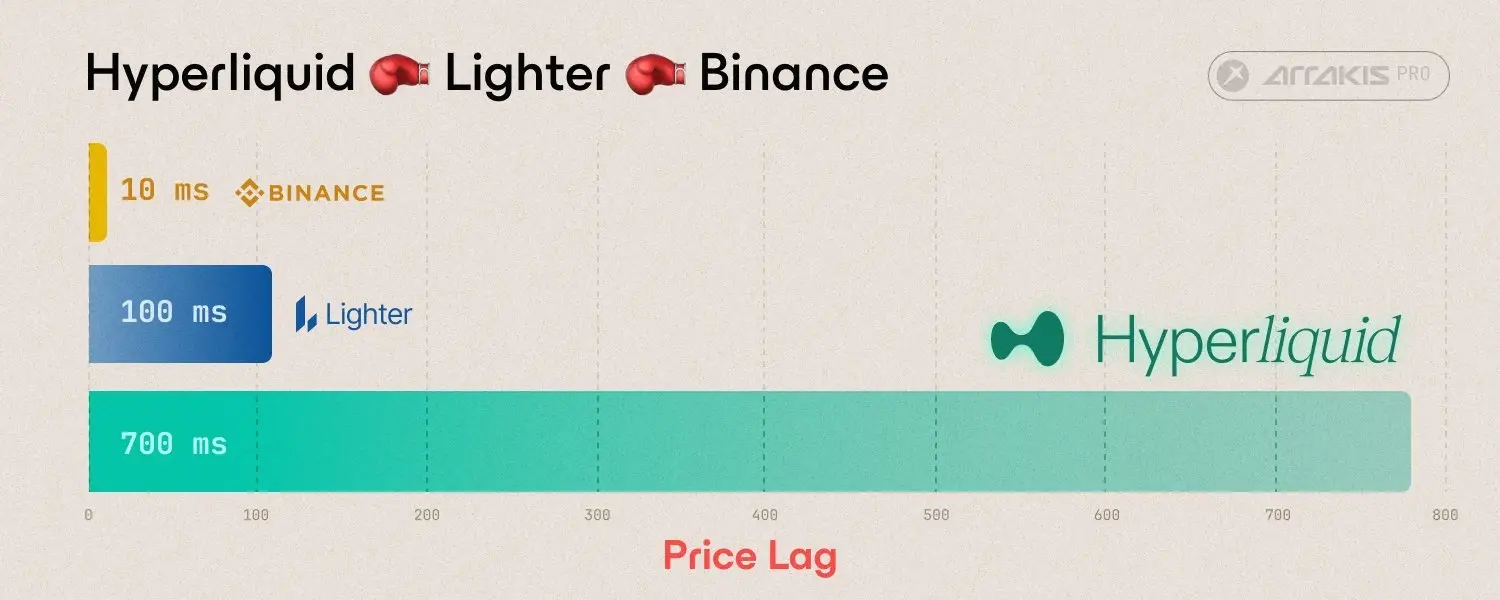
DeFi protocols are also exploring their own stablecoins, with Hyperliquid (a decentralized exchange) being a typical case: it publicly bids for stablecoin issuance partners, clearly aiming to reduce reliance on USDC and obtain reserve asset yields. Hyperliquid received bids from several institutions, including Native Markets, Paxos, and Frax, ultimately choosing Native Markets (a decision that is controversial). Currently, Hyperliquid's USDC balance is approximately $5.5 billion, accounting for 7.8% of the total USDC supply—although the USDH issued by Hyperliquid cannot replace USDC in the short term, this public bidding process has already damaged USDC's market image, and more DeFi protocols may follow suit;
Wallet service providers are also joining the ranks of independent issuers, such as Phantom (a mainstream wallet in the Solana ecosystem), which recently announced the launch of Phantom Cash—a stablecoin issued by Bridge that includes yield features and debit card payment functionality. Although Phantom cannot force users to use this stablecoin, it can guide users to migrate through various incentives.
In summary, as the fixed costs of stablecoin issuance decrease and the profit-sharing collaboration model becomes more widespread, intermediaries no longer need to cede float income to third-party stablecoin issuers. As long as they are large enough and reputable enough to earn user trust in their white-label stablecoins, independent issuance becomes the optimal choice.
Intensified "race to the bottom" competition for stablecoin yields
If we observe the stablecoin supply chart excluding Tether and USDC, we will find that the market landscape for "other stablecoins" has changed significantly in recent months. In 2022, a batch of short-lived popular stablecoins (such as Binance BUSD and Terra UST) emerged, but following the collapse of Terra and the outbreak of the credit crisis, the industry underwent a round of reshuffling, giving rise to a new batch of stablecoins from the "ruins."

Stablecoin supply excluding USDT and USDC (Source: RWA.xyz)
Currently, the total supply of non-Tether/Circle stablecoins has reached a historical high, and the issuers are more diversified. The mainstream emerging stablecoins in the market now include:
Sky (an upgraded version of Dai launched by MakerDAO);
USDe issued by Ethena;
PYUSD issued by Paypal;
USD1 issued by World Liberty.
Additionally, emerging stablecoins such as USDY from Ondo, USDG issued by Paxos (as a coalition member), and AUSD from Agora are also worth noting. In the future, stablecoins issued by banks will also enter the market. Existing data already indicates the trend: compared to the last stablecoin boom, the current market has more trustworthy stablecoins, and the total supply exceeds that of the previous bull market—even though Tether and Circle still dominate market share and liquidity.
These new stablecoins share a common characteristic: they generally focus on "yield transmission." For example, Ethena's USDe generates yields through cryptocurrency basis trading and transmits part of the yields to users, with its supply now soaring to $14.7 billion, making it the most successful emerging stablecoin this year. Furthermore, USDY from Ondo, SUSD from Maker, USDG from Paxos, and AUSD from Agora all include profit-sharing mechanisms in their initial designs.
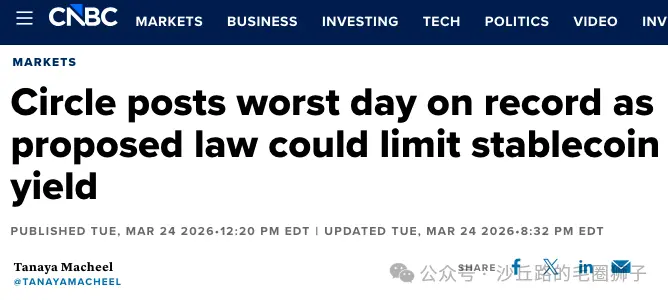
Some may raise doubts: "The GENIUS Act prohibits stablecoins from providing yields." To some extent, this statement is correct, but if one pays attention to the exaggerated statements from recent banking lobbying groups, it becomes clear that this issue is not yet settled. In fact, the GENIUS Act does not prohibit third-party platforms or intermediaries from paying rewards to stablecoin holders—these rewards are funded by the profits that issuers pay to intermediaries. Mechanically, it is even impossible to close this "loophole" through policy language, nor should it be closed.
As the GENIUS Act progresses and is implemented, I have noticed a trend: the stablecoin industry is shifting from "directly paying yields to holders" to "transmitting yields through intermediaries." For example, the partnership between Circle and Coinbase is a typical case—Circle pays yields to Coinbase, which then transmits part of the yields to users holding USDC, and there are no signs of this model stopping. Almost all new stablecoins have built-in yield strategies, and this logic is easy to understand: to persuade users to abandon the highly liquid and market-recognized Tether in favor of new stablecoins, compelling reasons (yields being the core attraction) must be provided.
I predicted this trend at the TOKEN2049 Global Cryptocurrency Summit in 2023. Although the introduction of the GENIUS Act has delayed the timeline, this trend is now clearly evident.
For the existing giants (Tether and Circle), this "yield-oriented" competitive landscape is undoubtedly unfavorable: Tether offers no yields at all, and Circle only has profit-sharing collaborations with a few institutions like Coinbase, with unclear relationships with others. In the future, emerging startups may squeeze the market space of mainstream stablecoins through higher yield sharing, forming a "race to the bottom" competition for yields (in reality, it is "competition for yield caps"). This pattern may benefit institutions with scale advantages—just as the ETF industry once experienced "fee rates dropping to zero," ultimately forming a duopoly between Vanguard and BlackRock. But the question is: if banks eventually enter the fray, can Tether and Circle still emerge as winners in this competition?
Banks can now officially participate in stablecoin business
After the implementation of the GENIUS Act, the Federal Reserve and other major financial regulatory agencies have adjusted relevant rules—banks can now issue stablecoins and conduct related businesses without applying for new licenses. However, according to the GENIUS Act, stablecoins issued by banks must comply with the following rules:
100% collateralized by high-quality liquid assets (HQLA);
Support 1:1 on-demand redemption for fiat currency;
Fulfill information disclosure and auditing obligations;
Accept supervision from relevant regulatory agencies.
At the same time, stablecoins issued by banks are not considered "deposits insured by federal deposit insurance," and banks cannot use the collateral assets of stablecoins for lending.
When banks ask me "whether they should issue stablecoins," my usual advice is "not to bother"—they should simply integrate existing stablecoins into their core banking infrastructure without directly issuing them. However, even so, some banks or banking alliances may consider issuing stablecoins, and I believe such cases will emerge in the coming years. The reasons are as follows:
Although stablecoins essentially belong to "narrow banking" (only accepting deposits and not engaging in lending), which may reduce banks' leverage, the stablecoin ecosystem can bring various revenue opportunities, such as custody fees, transaction fees, redemption fees, API integration service fees, etc.;
If banks find that deposits are flowing out due to stablecoins (especially those that can provide yields through intermediaries), they may issue their own stablecoins to prevent this trend;
For banks, the cost of issuing stablecoins is not high: they do not need to hold regulatory capital for stablecoins, and stablecoins are considered "full reserve, off-balance-sheet liabilities," with a lower capital intensity than ordinary deposits. Some banks may consider entering the "tokenized money market fund" space, especially in the context of Tether's continued profitability.
In extreme cases, if the stablecoin industry completely prohibits yield sharing and all "loopholes" are closed, issuers will gain a "quasi-money printing power"—for example, charging 4% on asset yields without paying any returns to users, which could be even more lucrative than the net interest margin of "high-yield savings accounts." But in reality, I believe that yield "loopholes" will not be closed, and the profit margins of issuers will gradually decline over time. Even so, for large banks, as long as they can convert some deposits into stablecoins, even retaining a profit of only 50-100 basis points (0.5%-1%) can generate substantial income—after all, large banks can have deposit scales reaching trillions of dollars.
In summary, I believe banks will ultimately join the stablecoin industry as issuers. Earlier this year, The Wall Street Journal reported that JPMorgan Chase, Bank of America, Citibank, and Wells Fargo have begun preliminary discussions to form a stablecoin alliance. For banks, the alliance model is undoubtedly the optimal choice—no single bank can establish a distribution network sufficient to compete with Tether, while an alliance can integrate resources and enhance market competitiveness.
Conclusion
I once firmly believed that the stablecoin industry would ultimately only have one or two mainstream products, at most no more than six, and repeatedly emphasized that "network effects and liquidity are key." But now I am beginning to reflect: can stablecoins really benefit from network effects? They are different from businesses like Meta, X (formerly Twitter), and Uber that rely on user scale—the true "network" is constituted by the blockchain, not the stablecoins themselves. If users can seamlessly enter and exit stablecoins, and cross-chain swaps are convenient and low-cost, the importance of network effects will significantly diminish. When exit costs approach zero, users will not be forced to be tied to a particular stablecoin.
It is undeniable that mainstream stablecoins (especially Tether) still have a core advantage: their trading spreads (bid-ask spreads) with major currency pairs are minimal across hundreds of exchanges globally, which is difficult to surpass. However, currently, more and more service providers are beginning to achieve the exchange of stablecoins with local fiat currencies at "wholesale foreign exchange rates" (i.e., inter-institutional trading rates) both inside and outside exchanges—as long as stablecoins have credibility, these service providers do not care which specific stablecoin is used. The GENIUS Act has played an important role in regulating the compliance of stablecoins, and the maturity of infrastructure benefits the entire industry, except for the existing giants (Tether and Circle).
Multiple factors are gradually breaking the duopoly of Tether and Circle: cross-chain swaps are becoming more convenient, intra-chain stablecoin swaps are almost free, clearinghouses support cross-stablecoin/cross-blockchain transactions, and the GENIUS Act promotes the homogenization of U.S. stablecoins—these changes reduce the risks for infrastructure providers holding non-mainstream stablecoins, pushing stablecoins towards "interchangeability," which is of no benefit to the existing giants.
Now, the emergence of numerous white-label issuers has reduced the cost of stablecoin issuance; non-zero Treasury yields are incentivizing intermediaries to internalize float income, squeezing out Tether and Circle; fintech wallets and new banks are taking the lead in this trend, followed closely by exchanges and DeFi protocols—each intermediary is eyeing user funds, pondering how to convert them into their own income.
Although the GENIUS Act restricts stablecoins from directly providing yields, it has not completely closed off the path for yield transmission, providing competitive space for emerging stablecoins. If yield "loopholes" continue to exist, "race to the bottom" competition for yields will be inevitable, and if Tether and Circle are slow to respond, their market positions may be weakened.
Additionally, it is important not to overlook those "offshore giants"—financial institutions with balance sheets in the trillions of dollars. They are closely monitoring whether stablecoins will lead to deposit outflows and how to respond. The adjustments in the GENIUS Act and regulatory rules have opened the door for banks to enter. Once banks officially participate, the current total market value of approximately $300 billion in stablecoins will seem trivial. The stablecoin industry has only been around for 10 years, and the real competition is just beginning.
Original link ```
 Risk warning Risk warning