








Cysic Research Report: The Path of ComputeFi with ZK Hardware Acceleration

 The core business logic of Cysic is ComputeFi (computational finance). The project aims to address the significant computing power bottleneck in zero-knowledge proofs (ZK) and AI inference by transforming high-performance computing capabilities from expensive fixed assets into programmable, verifiable, and tradable on-chain assets through self-developed hardware (GPU acceleration solutions and dedicated ASIC chips), decentralized networks, and innovative financial products.
Author: 0xjacobzhao
Zero-Knowledge Proofs (ZK), as a new generation of cryptographic and scaling infrastructure, have shown great potential in blockchain scalability, privacy computing, as well as emerging applications such as zkML and cross-chain verification. However, the proof generation process is computationally intensive and has high latency, which has become the biggest bottleneck for industrial implementation. ZK hardware acceleration has emerged as a core component in this context. In the path of ZK hardware acceleration, GPUs excel in versatility and iteration speed, ASICs pursue extreme energy efficiency and scalability, while FPGAs serve as an intermediate form, combining flexible programmability with high energy efficiency. Together, these three components form the hardware foundation for promoting the implementation of zero-knowledge proofs.
1. Industry Landscape of ZK Hardware Acceleration
GPUs, FPGAs, and ASICs constitute the three mainstream solutions for hardware acceleration: GPUs are widely used in AI, ZK, and other fields due to their general-purpose parallel architecture and mature ecosystem; FPGAs are suitable for rapid algorithm iteration and low-latency scenarios due to their reconfigurable characteristics; ASICs achieve extreme performance and energy efficiency through dedicated circuits, representing the ultimate form of scalability and long-term infrastructure.
GPU (Graphics Processing Unit): A general-purpose parallel processor, originally optimized for graphics rendering, now widely used in AI, ZK, and scientific computing.
FPGA (Field Programmable Gate Array): A programmable hardware circuit that can be repeatedly configured at the logic gate level "like Lego," positioned between general-purpose processors and dedicated circuits.
ASIC (Application-Specific Integrated Circuit): A dedicated chip customized for specific tasks, programmed once with fixed functions, offering the highest performance and energy efficiency but the least flexibility.
Mainstream GPU Market: GPUs have become the core computational resource for AI and ZK. In the AI field, GPUs, relying on their parallel architecture and mature ecosystem (CUDA, PyTorch, TensorFlow), are almost irreplaceable and remain the long-term mainstream for training and inference. In the ZK field, GPUs have become the best solution at this stage due to their cost and availability advantages, but they are limited by storage and bandwidth in tasks such as large integer modular operations, MSM, and FFT/NTT, lacking energy efficiency and scalability. Therefore, more specialized hardware solutions are still needed in the long term.
Flexible FPGA Solutions: Paradigm bet on FPGAs in 2022, believing they are at a "sweet spot" between flexibility, efficiency, and cost. FPGAs indeed possess advantages such as flexible programmability, short development cycles, and hardware reusability, making them suitable for ZK proof algorithm iteration, prototype validation, low-latency scenarios (high-frequency trading, 5G base stations), power-constrained edge computing, and high-security encryption tasks. However, FPGAs struggle to compete with GPUs and ASICs in terms of performance and scalability. Their strategic positioning is closer to "verification and iteration platforms when algorithms are not yet defined," as well as long-term essential needs in a few niche industries.
ASIC's Ultimate Form: ASICs have matured in cryptocurrency mining (Bitcoin SHA-256, Litecoin/Dogecoin Scryp), achieving orders of magnitude performance and energy efficiency advantages by solidifying algorithms into circuits, making ASICs the sole dominant force in mining. ASICs also show great potential in ZK proofs (such as Cysic) and AI inference (such as Google TPU, Cambrian). However, in ZK proofs, due to the lack of complete standardization of algorithms and operators, large-scale demand is still brewing. Once standards are solidified in the future, ASICs are expected to reshape the computational infrastructure of ZK with 10-100 times the performance and energy efficiency advantages, as well as low marginal costs after mass production, similar to mining ASICs. In the AI field, due to frequent algorithm iterations and high reliance on matrix parallelism for training, GPUs will continue to dominate training, but ASICs will have irreplaceable value in fixed tasks and large-scale inference.
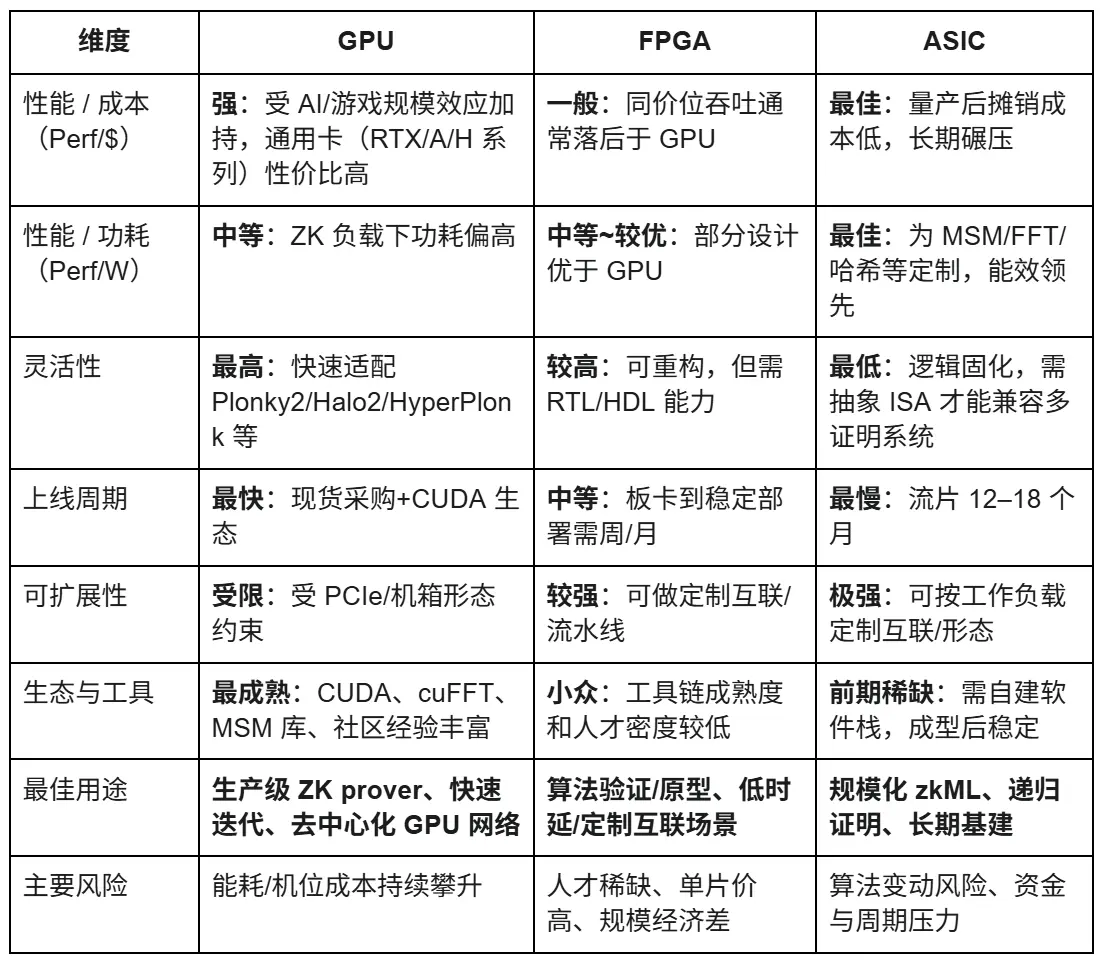
In the evolution path of ZK hardware acceleration, GPUs are currently the optimal solution, balancing cost, availability, and development efficiency, suitable for rapid deployment and iteration; FPGAs are more like "specialized tools," valuable in ultra-low latency, small-batch interconnection, and prototype validation, but difficult to compete with the economics of GPUs; in the long term, as ZK standards stabilize, ASICs will become the industry mainstay due to their extreme performance/cost and energy efficiency advantages. The overall path is: short-term reliance on GPUs to seize market share and revenue, mid-term use of FPGAs for validation and interconnection optimization, and long-term betting on ASICs to build a computational moat.
2. Hardware Perspective: Underlying Technical Barriers of ZK Acceleration
Cysic's core advantage lies in the hardware acceleration of zero-knowledge proofs (ZK). In the representative paper "ZK Hardware Acceleration: The Past, the Present and the Future," the team points out that GPUs offer flexibility and cost efficiency, while ASICs excel in energy efficiency and extreme performance, but require a trade-off between development costs and programmability. Cysic is pursuing a dual-track approach of ASIC innovation + GPU acceleration, advancing ZK from "verifiable" to "real-time usable."
1. ASIC Route: Cysic C1 Chip and Dedicated Devices
Cysic's self-developed C1 chip is based on the zkVM architecture, featuring high bandwidth and flexible programmability. Based on this, Cysic plans to launch two hardware products: ZK Air (portable) and ZK Pro (high-performance).
ZK Air: A portable accelerator, about the size of an iPad charger, plug-and-play, aimed at lightweight verification and development;
ZK Pro: A high-performance system that combines the C1 chip with a front-end acceleration module, targeting large-scale zkRollup, zkML, and other scenarios.
Cysic's research results directly support its ASIC route. The team proposed Hypercube IR as a ZK-specific intermediate representation, abstracting proof circuits into regularized parallel patterns, lowering the migration threshold across hardware, and explicitly retaining modular operations and memory access patterns in circuit logic for easier hardware recognition and optimization. In the Million Keccak/s experiment, the self-developed C1 chip achieved approximately 1.31M Keccak proofs per second (about 13× acceleration), demonstrating the potential of dedicated hardware in energy efficiency and throughput. In the Hyperplonk hardware analysis, it was noted that MSM/MLE are easier to parallelize, while Sumcheck remains a bottleneck. Overall, Cysic is forming a complete methodology in compiling abstraction, hardware verification, and protocol adaptation, laying the foundation for productization.
2. GPU Route: General SDK + ZKPoG End-to-End Stack
In the GPU direction, Cysic is simultaneously advancing a general acceleration SDK and the ZKPoG end-to-end optimization stack:
General GPU SDK: Based on a self-developed CUDA framework, compatible with backends such as Plonky2, Halo2, Gnark, and Rapidsnark, outperforming open-source solutions, supporting multiple GPU models, and emphasizing compatibility and ease of use.
ZKPoG (Zero-Knowledge Proof on GPU): An end-to-end GPU stack co-developed with Tsinghua University, achieving full-process optimization from witness generation to polynomial computation for the first time. It achieves up to 52× speedup (average 22.8×) on consumer-grade GPUs and expands circuit scale by 1.6 times, validated in applications such as SHA256, ECDSA, and MVM.
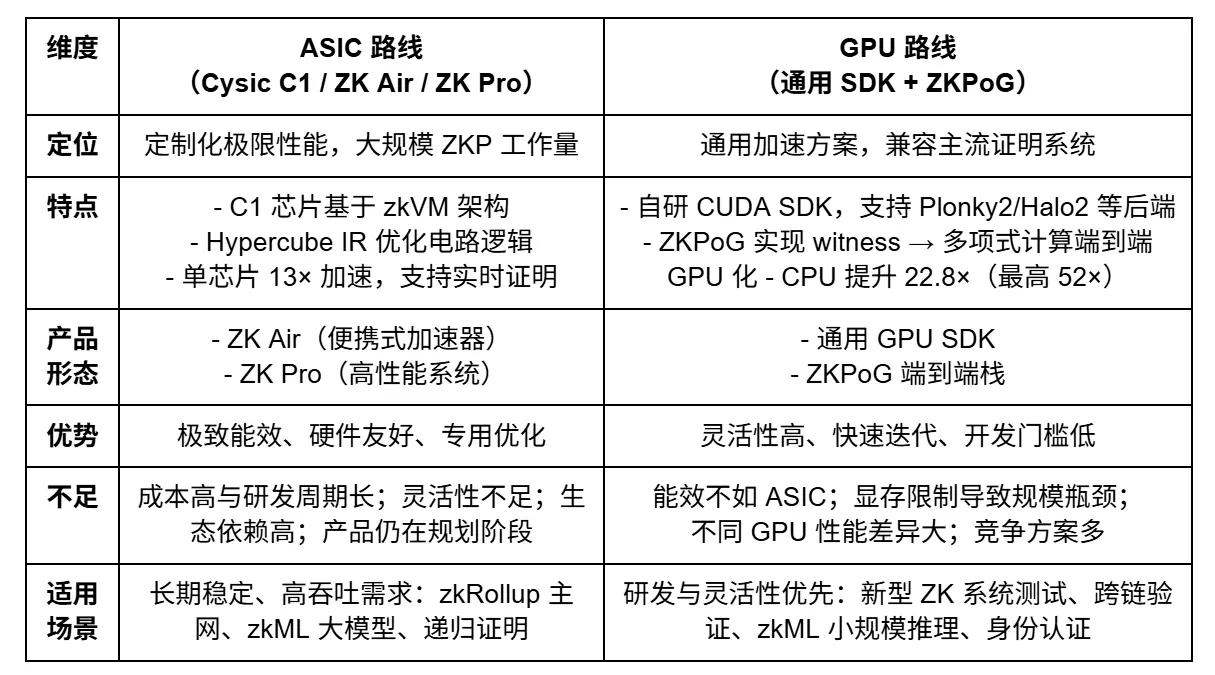
Cysic's core competitiveness lies in hardware-software co-design. The self-developed ZK ASIC, GPU clusters, and portable miners together form a full-stack system for computational supply, achieving deep synergy from the chip layer to the protocol layer. Cysic has established itself as a leading ZKP hardware supplier in high-intensity zero-knowledge proof scenarios through the complementary pattern of "ASIC's extreme energy efficiency and scalability" and "GPU's flexibility and rapid iteration," and continues to promote the industrial path of ZK hardware financialization (ComputeFi).
3. Protocol Perspective: Cysic Network: General Proof Layer under PoC Consensus
On September 24, 2025, the Cysic team released the "Cysic Network Whitepaper." The project centers on ComputeFi, transforming GPU, ASIC, and mining machines into programmable, verifiable, and tradable computational assets. It builds a decentralized "task matching + multi-verification" market based on Cosmos CDK + Proof-of-Compute (PoC) and EVM execution layer, uniformly supporting ZK proofs, AI inference, mining, and HPC. Leveraging its vertically integrated capabilities of self-developed ZK ASICs, GPU clusters, and portable miners, along with the CYS/CGT dual-token mechanism, Cysic aims to release real computational liquidity, filling the critical pillar of "computational power" in Web3 infrastructure.
Cysic Network adopts a bottom-up four-layer modular architecture, achieving flexible expansion and verifiable collaboration across domains:
Hardware Layer: Composed of CPU, GPU, FPGA, ASIC miners, and portable devices, forming the network's computational foundation.
Consensus Layer: Built on Cosmos CDK, utilizing an improved CometBFT + Proof-of-Compute (PoC) consensus mechanism, integrating token staking and computational power staking into validation weight, ensuring the unity of computational and economic security.
Execution Layer: Responsible for core logic such as task scheduling, load routing, bridging, and voting, enabling multi-domain programmable computing through EVM-compatible smart contracts.
Product Layer: Targeting end application scenarios, integrating ZK proof markets, AI inference frameworks, cryptographic mining, and HPC modules, allowing flexible access to new task types and verification methods.
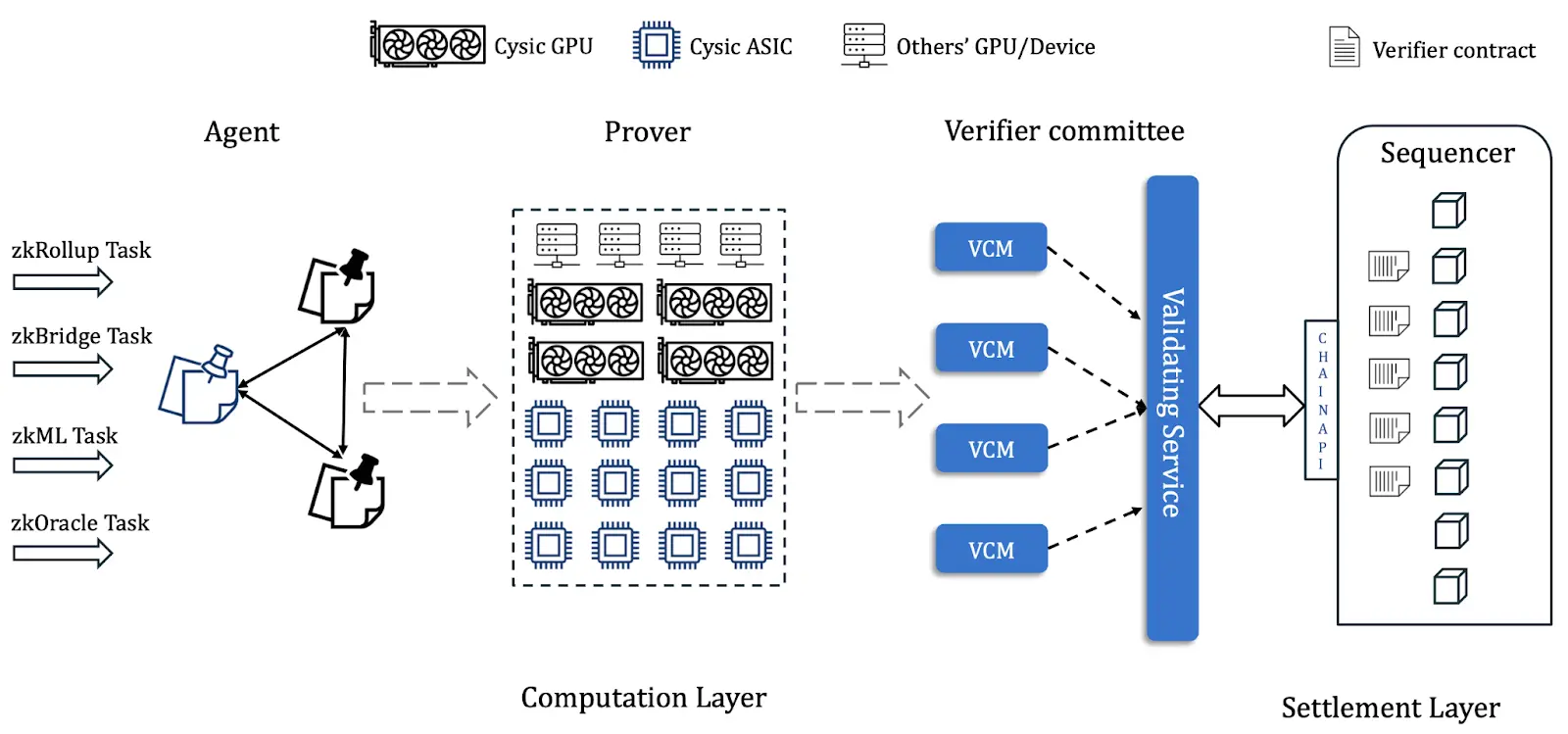
As a ZK Proof Layer for the entire industry, Cysic provides high-performance, low-cost proof generation and verification services. The network enhances efficiency through a decentralized Prover network and off-chain verification + aggregation on-chain mechanism, and combines computational contributions with staking weights through the PoC model, building a governance system that balances security and incentives.
ZK Proof Layer: Decentralization and Hardware Acceleration
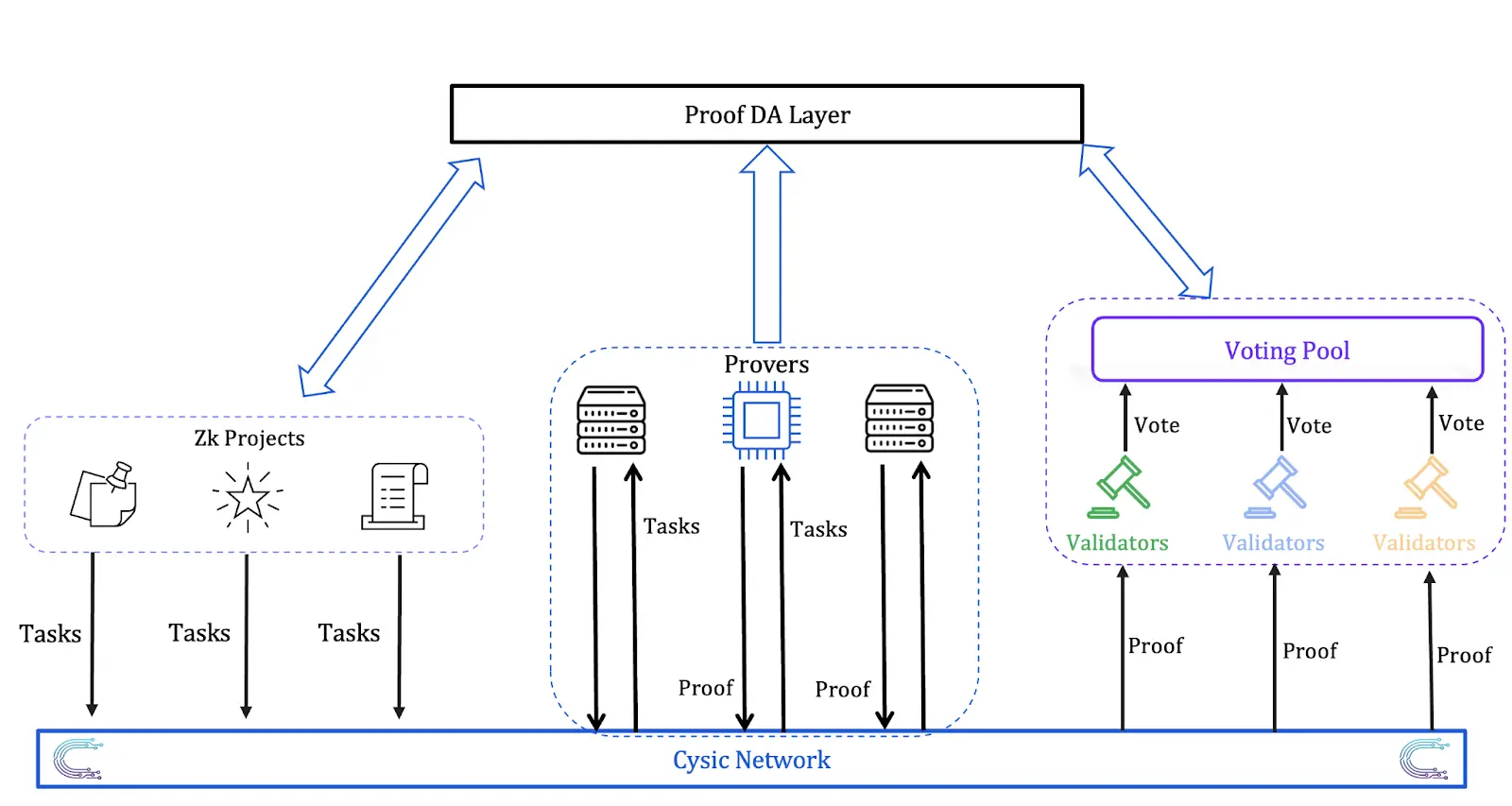
While zero-knowledge proofs can verify computations without revealing information, the generation process is time-consuming and costly. Cysic Network improves efficiency through decentralized Prover + GPU/ASIC acceleration, and reduces the latency and cost of Ethereum verification through off-chain verification + aggregation on-chain. The process is as follows: ZK projects publish tasks through contracts → Prover competes to generate proofs in a decentralized manner → Verifier conducts multi-party verification → On-chain contract settlement. Overall, Cysic combines hardware acceleration with decentralized scheduling to create a scalable Proof Layer, providing underlying support for ZK Rollup, ZKML, and cross-chain applications.
Node Role: Cysic Prover Mechanism
Cysic introduces Prover nodes in its ZK network, allowing users to directly contribute computational power or purchase Digital Harvesters to execute proof tasks, earning rewards in CYS and CGT. By increasing the Multiplier factor, users can accelerate task acquisition speed. Nodes must stake 10 CYS as collateral, which will be forfeited in case of violations.
The current core task of Prover is ETHProof Prover, focusing on block proofs for the Ethereum mainnet, aiming to promote the underlying ZK transformation and scalability construction. Overall, Prover undertakes high-intensity computational tasks, serving as the core execution layer for Cysic's network performance and security, and providing computational guarantees for subsequent trusted inference and AgentFi applications.
Node Role: Cysic Verifier Mechanism
Corresponding to Prover, Verifier nodes are responsible for lightweight verification of proof results, enhancing network security and scalability. Users can run Verifier on PCs, servers, or the official Android app, and improve task processing and reward efficiency through the Multiplier factor.
The participation threshold for Verifier is lower, requiring only 0.5 CYS as collateral, with a simple operation mode that allows users to join or exit at any time. Overall, Verifier attracts more users with a low-cost, light-participation model, expanding Cysic's coverage in mobile and mass markets, enhancing the network's decentralization and trusted verification capabilities.
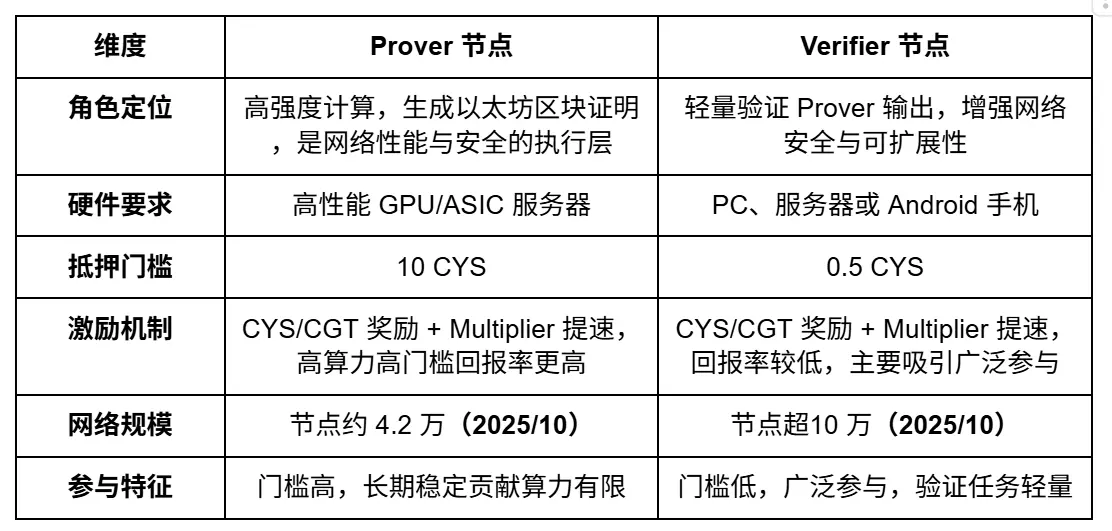
As of October 15, 2025, the Cysic network has begun to take shape: approximately 42,000 Prover nodes and over 100,000 Verifier nodes are running, having processed over 91,000 tasks and allocated approximately 700,000 $CYS/$CGT in rewards. It is worth noting that while the number of nodes is large, due to entry requirements and hardware differences, the activity and computational power contributions are unevenly distributed. The network has currently connected with three projects, and the ecosystem is still in its early stages. Its ability to further evolve into a stable computational network and ComputeFi infrastructure depends on more practical applications and collaborations.
4. AI Perspective: Cysic AI: Cloud Services, AgentFi, and Trusted Inference
Cysic AI's business layout presents three layers: "Product - Application - Strategy": the underlying Serverless Inference provides standardized inference APIs, lowering the threshold for model invocation; the middle layer Agent Marketplace explores on-chain closed-loop applications of AI Agents; the top layer Verifiable AI supports trusted inference with ZKP + GPU acceleration, carrying the long-term vision of ComputeFi.
Standard Product Layer: Cloud Inference Service (Serverless Inference)
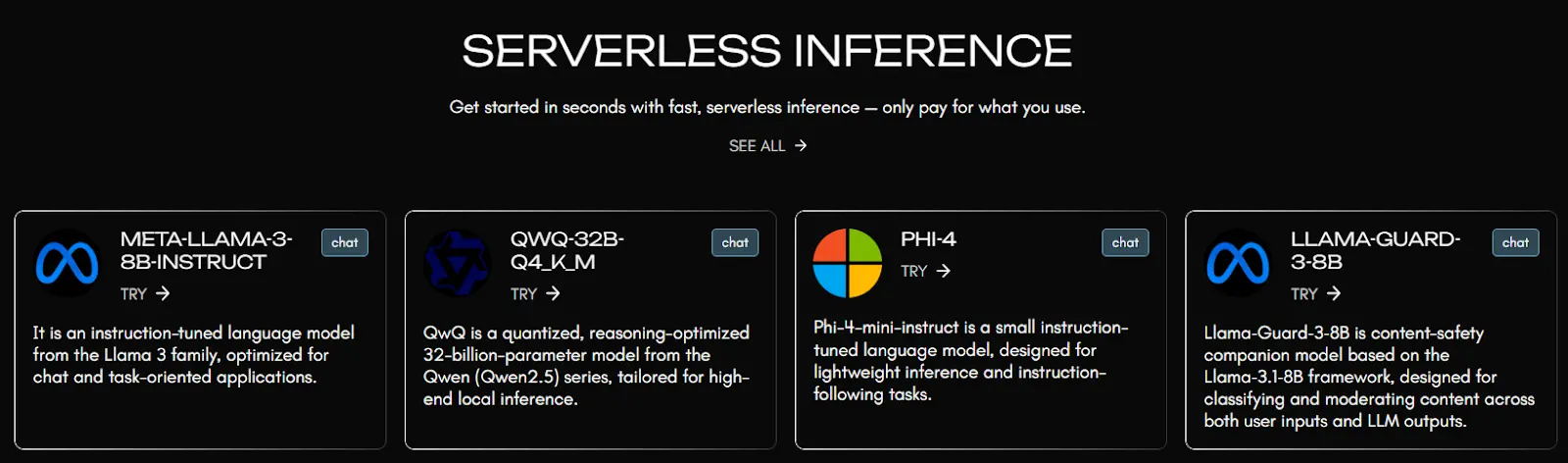
Cysic AI launches an on-demand, ready-to-use standard inference service, allowing users to quickly invoke various mainstream large models via API without building or maintaining computational clusters, achieving low-threshold intelligent access. Currently supported models include Meta-Llama-3-8B-Instruct (task and dialogue optimization), QwQ-32B (inference-enhanced), Phi-4 (lightweight instruction model), and Llama-Guard-3-8B (content safety review), covering diverse needs such as general dialogue, logical reasoning, lightweight deployment, and compliance review. This service strikes a balance between cost and efficiency, meeting the rapid prototyping needs of developers while supporting the large-scale inference of enterprise applications, making it an important part of Cysic's construction of a trusted AI infrastructure.
Application Experiment Layer: Decentralized Agent Marketplace (Agent Marketplace)
Cysic AI's Agent Marketplace provides a decentralized platform for intelligent agent applications. Users only need to connect their Phantom wallet and complete authentication to invoke different AI Agents and achieve automatic payment via Solana USDC. The platform currently integrates three core intelligent agents:
X Trends Agent: Analyzes trends on the X platform in real-time, generating creative concepts that can be converted into MEME Coins;
Logo Generator Agent: Quickly generates exclusive project logos based on descriptions;
Publisher Agent: Deploys MEME Coins to the Solana network with one click (e.g., Pump.fun).
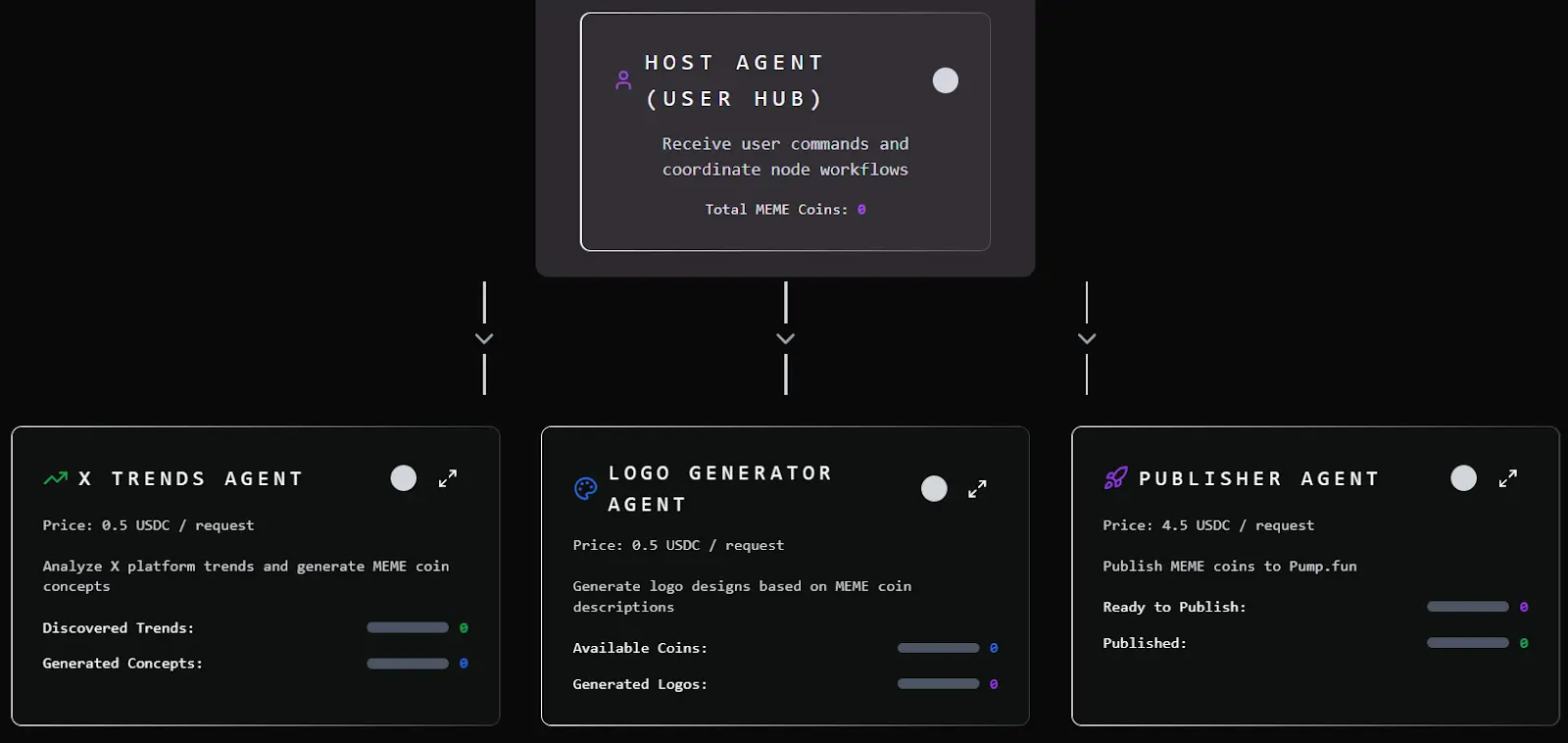
The Agent Marketplace enhances collaboration efficiency based on the Agent Swarm Framework, combining multiple autonomous agents into task collaboration groups (Swarm) to achieve division of labor, parallelism, and fault tolerance; economically, it realizes on-chain payments and automatic incentives through the Agent-to-Agent Protocol, ensuring secure and transparent on-chain settlements, with users only paying for successful operations. Through this combination, Cysic has created a complete closed loop covering trend analysis → content generation → on-chain publishing, demonstrating the landing path of AI Agents in the on-chain financialization and ComputeFi ecosystem.
Strategic Pillar Layer: Hardware Acceleration for Trusted Inference (Verifiable AI)
"Is the inference result trustworthy?" is a core challenge in the field of AI inference. Verifiable AI provides mathematical guarantees for inference results using zero-knowledge proofs (ZKP) without disclosing inputs and models; traditional ZKML proof generation is too slow to meet real-time demands. Cysic breaks through this bottleneck with GPU hardware acceleration and proposes three aspects of hardware acceleration innovation for Verifiable AI:
First, in the parallelization of the Sumcheck protocol, large polynomial computation tasks are split into tens of thousands of CUDA threads executing simultaneously, allowing proof generation speed to achieve nearly linear improvement with the number of GPU cores.
Second, through customized finite field arithmetic kernels, deep optimizations are made in registers, shared memory, and warp-level parallel designs, significantly alleviating the memory bottleneck of traditional GPUs in modular operations, ensuring GPUs operate efficiently.
Finally, Cysic's end-to-end acceleration stack ZKPoG covers full-link optimization from witness generation to proof generation to verification, compatible with mainstream backends such as Plonky2 and Halo2, achieving up to 52× performance compared to CPUs, and approximately 10 times acceleration on the CNN-4M model.
Through this entire set of optimizations, Cysic has truly pushed verifiable inference from "theoretically feasible but too slow" to "real-time applicable," significantly reducing latency and costs, making Verifiable AI capable of entering real-time application scenarios for the first time.
The Cysic platform is compatible with PyTorch and TensorFlow, allowing developers to wrap models into VerifiableModule to obtain inference results and corresponding encrypted proofs without rewriting code. In the roadmap, support for CNN, Transformer, Llama, DeepSeek, and other models will be gradually expanded, and real-time demos for face recognition and object detection will be released to verify usability; at the same time, code, documentation, and cases will be opened in the coming months to promote community co-construction.
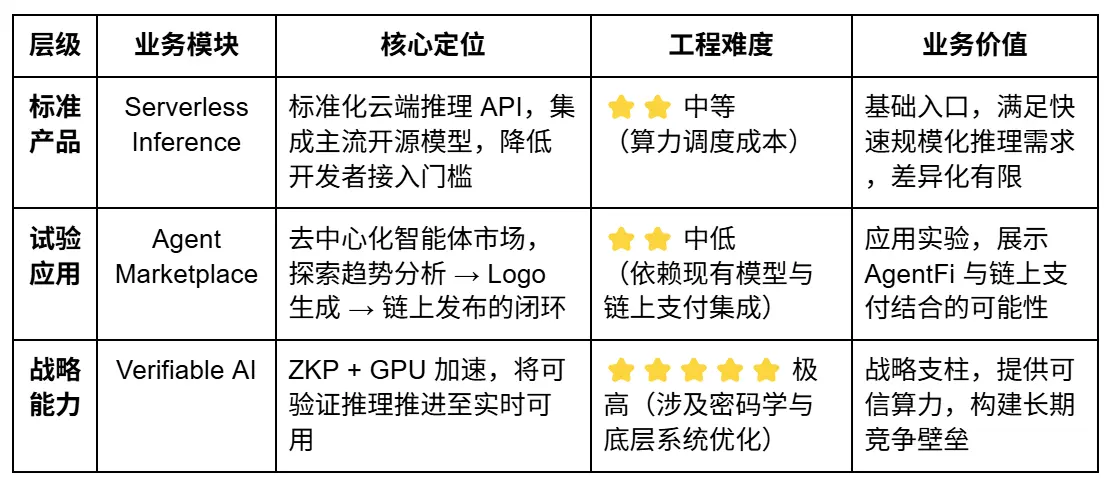
Overall, Cysic AI's three-layer path forms a bottom-up evolutionary logic: Serverless Inference addresses "usability," Agent Marketplace demonstrates "applicability," and Verifiable AI undertakes "trustworthiness and moat." The first two are more transitional and experimental, while the true value and differentiation will be reflected in the landing of Verifiable AI. Its combination with ZK hardware and decentralized computational networks is key to establishing long-term advantages for Cysic in the ComputeFi ecosystem.
5. Financialization Perspective: NFT-based Computational Entry and ComputeFi Nodes
Cysic Network tokenizes high-performance computational assets such as GPUs and ASICs through "Digital Compute Cube" Node NFTs, creating a ComputeFi entry for the general public. Each NFT serves as a network node license (verifiable license), carrying rights to earnings + governance + participation: users can participate in ZK proofs, AI inference, and mining tasks without building their own hardware, directly earning $CYS incentives.
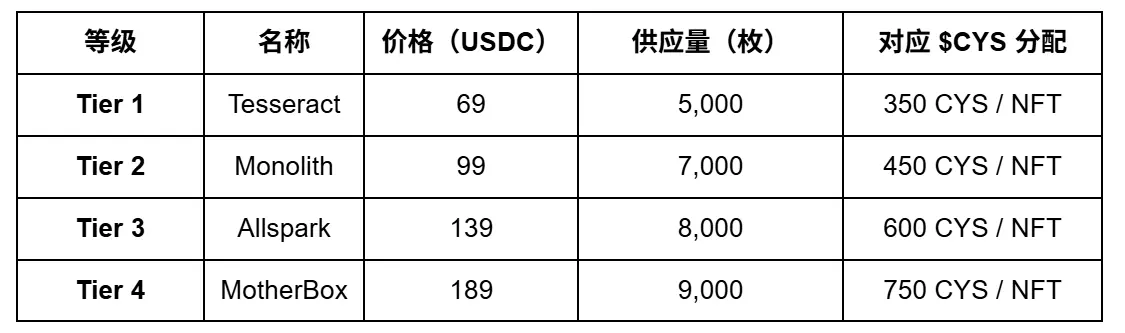
The total number of NFTs is 29,000, with approximately 16.45 million CYS allocated (accounting for 1.65% of total supply, within the community allocation cap of 9%). The unlocking method is 50% TGE immediate unlocking + 50% linear release over six months. In addition to fixed allocations, NFT holders also enjoy Multiplier firepower acceleration (up to 1.2x), priority computational task rights, governance weight, and other additional rights. Public sales have ended, and users can trade on the OKX NFT Marketplace.
Unlike traditional cloud computing rentals, Compute Cube essentially certifies on-chain ownership of underlying hardware infrastructure:
Fixed Token Earnings: Each NFT locks a certain proportion of $CYS allocation;
Real-time Computational Earnings: Nodes connect to actual workloads (ZK proofs, AI inference, cryptographic mining), with earnings directly distributed to holders' wallets;
Governance and Priority Rights: Holders have governance weight and priority usage rights in computational scheduling and protocol upgrades;
Positive Feedback Loop: More tasks → more rewards → more staking → stronger governance influence.
Overall, Node NFTs transform scattered GPUs/ASICs into tradable on-chain assets for the first time, opening up a new computational investment market against the backdrop of parallel surges in AI and ZK demand. The cyclical effect of ComputeFi (more tasks → more rewards → stronger governance rights) is crucial for Cysic to expand its computational network to the general public.
6. Consumer Scenario: Home ASIC Miners (Doge & Cysic)
Dogecoin was born in 2013, using Scrypt PoW, and since 2014 has merged mining with Litecoin (AuxPoW), enhancing network security through shared computational power. Its token mechanism features unlimited supply + a fixed annual issuance of 5 billion DOGE, leaning more towards community culture and payment attributes. Among fully ASIC-mined PoW coins, Dogecoin is the most popular after Bitcoin, with its meme culture and community effects creating long-term ecological stickiness.
On the hardware front, Scrypt ASICs have fully replaced GPUs/CPUs, with industrial-grade miners like Bitmain Antminer L7/L9 dominating the mainstream. However, unlike Bitcoin, which has completely industrialized mining, Dogecoin still retains space for home miners, with lightweight products like Goldshell MiniDoge, Fluminer L1, and ElphaPex DG Home 1 combining cash flow and community-driven characteristics.
For Cysic, entering the Dogecoin ASIC market holds three significances: first, Scrypt ASICs have lower difficulty than ZK ASICs, allowing for rapid verification of mass production and delivery capabilities; second, the mature cash flow in the mining market can provide stable revenue; third, Doge ASICs help accumulate supply chain and brand experience, laying the foundation for future ZK/AI dedicated chips. Overall, home ASIC miners represent a pragmatic foothold for Cysic while providing transitional support for long-term ZK/AI ASIC layouts.
Cysic Portable Dogecoin Miner: Innovative Path for Home Use
Cysic officially launched DogeBox 1 during Token2049, a portable Scrypt ASIC miner aimed at home and community users, positioned as a "verifiable home-level computational terminal":
Portable and Energy-efficient: Pocket-sized, suitable for home and community users, lowering participation barriers;
Plug-and-Play: Managed via a mobile app, targeting the global retail market;
Dual Functionality: Capable of mining DOGE and verifying DogeOS's ZK proofs, achieving L1+L2 security;
Incentive Cycle: DOGE mining + CYS subsidies, forming an economic loop of DOGE→CYS→DogeOS.
This product, in synergy with DogeOS (a Layer-2 Rollup based on zero-knowledge proofs developed by the MyDoge team, led by Polychain Capital) and the MyDoge wallet, enables Cysic miners not only to mine DOGE but also to participate in ZK verification, establishing an incentive cycle through DOGE rewards + CYS subsidies, enhancing user stickiness and integrating into the DogeOS ecosystem.
Cysic's Dogecoin home miner serves as a pragmatic cash flow foothold and a strategic foundation for long-term ZK/AI ASIC development; through a hybrid model of "mining + ZK verification," it accumulates market and supply chain experience while introducing a scalable, verifiable, community-driven new narrative for Dogecoin.
7. Cysic Ecosystem Layout and Core Progress
1. Collaboration with Succinct / Boundless Prover Network
Cysic has joined the Succinct Network as a multi-node Prover, leveraging high-performance GPU clusters to undertake real-time proof tasks for SP1 zkVM and collaborating deeply with the team on optimizing GPU code. Meanwhile, Cysic has also joined the Boundless Mainnet Beta to provide hardware acceleration capabilities for its Proof Marketplace.
2. Early Collaboration Project (Scroll)
In the early stages, Cysic provided high-performance ZK computing for Scroll, leveraging GPU clusters to undertake large-scale proving tasks, ensuring low-latency and low-cost operations, generating over ten million proofs cumulatively. This collaboration not only validated Cysic's engineering capabilities but also laid the groundwork for its subsequent exploration in hardware acceleration and computational networks.
3. Home Miner Debut at Token2049
Cysic launched its first portable home ASIC miner, DogeBox 1, at Token2049, officially entering the Dogecoin/Scrypt computational market. This device is positioned as a "pocket-level computational terminal." DogeBox 1 features lightweight, low power consumption, and plug-and-play characteristics, with only 55 W power consumption and 125 MH/s computational power, measuring just 100×100×35 mm, supporting Wi-Fi and Bluetooth connections, and noise levels below 35 dB, making it suitable for home and community users.
In addition to DOGE/LTC mining, the device also supports DogeOS ZK verification, achieving dual-layer security of L1+L2, and builds a triple incentive cycle of "DOGE → CYS → DogeOS" through DOGE mining + CYS subsidies.
4. Testnet Completion, Mainnet Approaching
Cysic completed Phase III: Ignition on September 18, 2025, marking the official end of the testnet phase and entering the mainnet preparation period. Following Phase I, which verified hardware and token models, and Phase II, which expanded the Genesis Node scale, this phase comprehensively validated user participation, incentive mechanisms, and assetization logic in the computational network.
During the testnet phase, Cysic connected with zero-knowledge projects such as Succinct, Aleo, Scroll, and Boundless. According to the official website, the testnet period attracted over 55,000 wallet addresses, 8 million transactions, and over 100,000 reserved high-end GPU devices. The Phase III: Ignition testnet attracted 1.36 million registered users, processing approximately 13 million transactions, forming a network of over 260,000 nodes composed of approximately 223,000 Verifiers and 41,800 Provers. In terms of incentives, approximately 1.46 million tokens (733,000 $CYS + 733,000 $CGT) and 4.6 million FIRE were distributed, with over 48,000 users participating in staking, validating the sustainability of its incentive mechanisms and computational network.
Additionally, from the ecological map on the official website, Cysic has formed extensive connections with core projects in the ZK and AI fields, demonstrating its broad compatibility and openness as a provider of underlying computational power and hardware acceleration. These ecological links provide a good external interface and cooperative foundation for future expansions in ZK, AI, and ComputeFi routes.
zkEVM and L2: zkSync, Scroll, Manta, Nil, Kakarot
zkVM / Prover Network: Succinct, Risc0, Nexus, Axiom
zk Coprocessor: Herodotus, Axiom
Infrastructure / Cross-chain: zkCloud, ZKM, Polyhedra, Brevis
Identity and Privacy: zkPass, Human.tech
Oracles: Chainlink, Blocksense
AI Ecosystem: Talus, Modulus Labs, Gensyn, Aspecta, Inference Labs
8. Cysic Token Economic Model Design
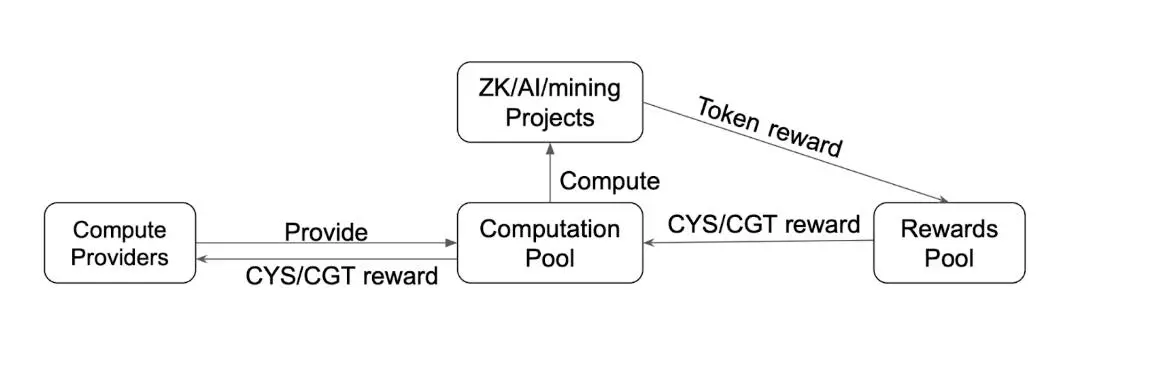
Cysic Network adopts a dual-token system: network token $CYS and governance token $CGT.
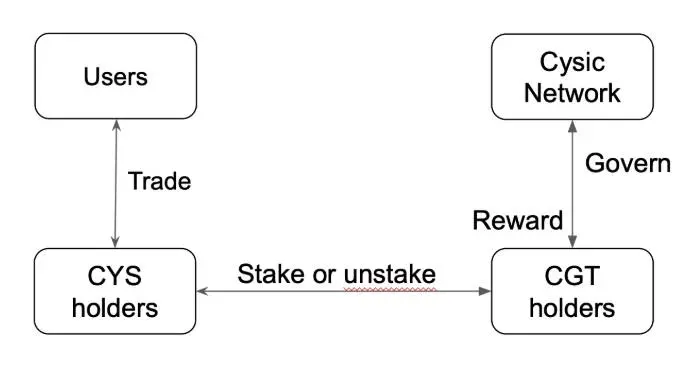
$CYS (Network Token): A native transferable asset used for paying transaction fees, node staking, block rewards, and network incentives, ensuring network activity and economic security. $CYS is also the main source of incentives for computational providers and verifiers. Users can stake $CYS to gain governance weight and participate in resource allocation and governance decisions of the Computing Pool.
$CGT (Governance Token): A non-transferable asset that can only be obtained by staking $CYS at a 1:1 ratio and participating in Computing Governance (CG) under a longer unstaking period mechanism. $CGT reflects computational contributions and long-term participation, requiring computational providers to reserve a certain amount of $CGT as an entry guarantee to prevent malicious behavior.
In the operation of the network, computational providers will connect their computational power to Cysic Network, providing services for ZK, AI, and cryptographic mining tasks. Their revenue sources include block rewards, external project incentives, and computational governance allocations. The scheduling of computational power and reward distribution will be dynamically adjusted based on multiple factors, with external project incentives (such as ZK, AI, Mining rewards) being a key weight.
9. Team Background and Project Financing
Cysic's co-founder and CEO is Xiong (Leo) Fan, who previously served as an assistant professor in the Department of Computer Science at Rutgers University in the United States. Prior to this, he was a researcher at Algorand, a postdoctoral researcher at the University of Maryland, and obtained his Ph.D. from Cornell University. Leo Fan's research has long focused on cryptography and its intersection with formal verification and hardware acceleration, having published multiple papers in top international conferences and journals such as IEEE S&P, ACM CCS, POPL, Eurocrypt, and Asiacrypt, covering areas such as homomorphic encryption, lattice cryptography, functional encryption, and protocol verification. He has participated in various academic and industry projects, possessing both theoretical research and system implementation experience, and has served as a program committee member for international cryptography conferences.
According to publicly available information on LinkedIn, the Cysic team consists of members with backgrounds in hardware acceleration, cryptographic research, and blockchain applications, with core members having industry experience in chip design and system optimization, as well as academic training from top universities in Europe, America, and Asia. The team has formed complementary strengths in hardware development, zero-knowledge proof optimization, and operational expansion.
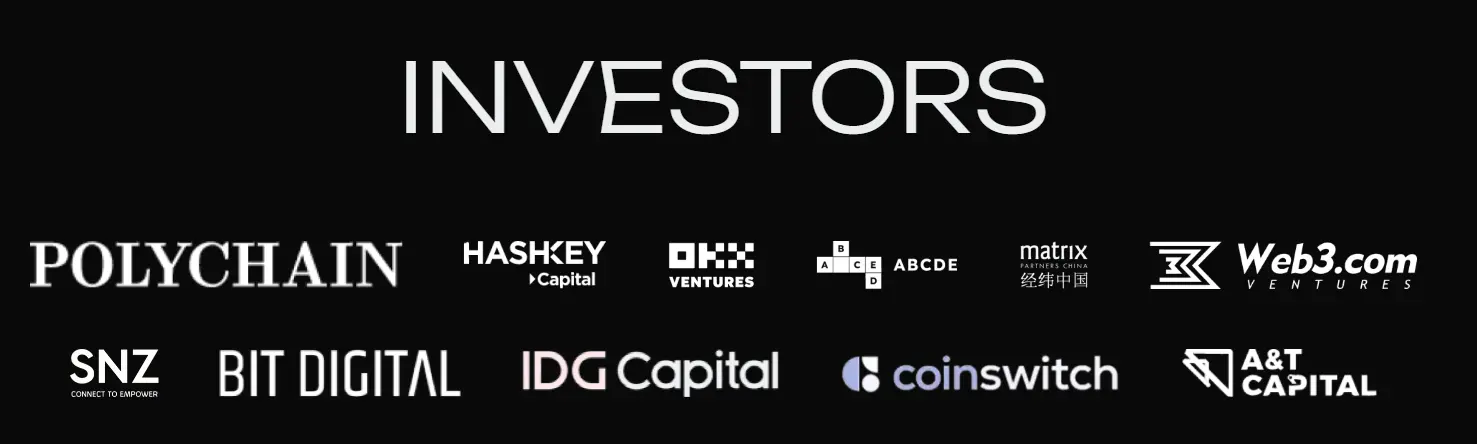
In terms of financing, in May 2024, Cysic announced the completion of a $12 million Pre-A round of financing, led by HashKey Capital and OKX Ventures, with participation from Polychain, IDG, Matrix Partners, SNZ, ABCDE, Bit Digital, Coinswitch, Web3.com Ventures, and notable angels such as George Lambeth, early investors in Celestia/Arbitrum/Avax, and Ken Li, co-founder of Eternis.
10. Competitive Analysis of ZK Hardware Acceleration Market
1. Direct Competitors (Hardware Acceleration Type)
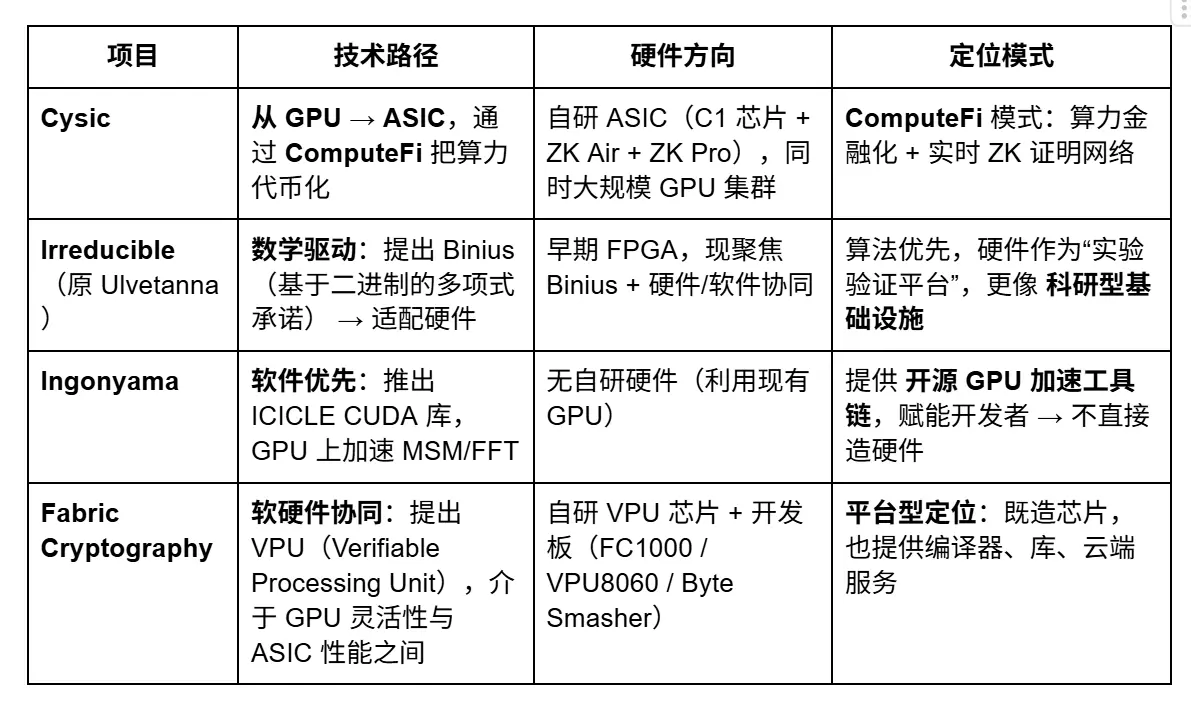
In the hardware acceleration Prover and ComputeFi track, Cysic's core competitors include Ingonyama, Irreducible (formerly Ulvetanna), Fabric Cryptography, and Supernational, all focusing on "accelerating ZK proving through hardware and networks."
Cysic: Full-stack (GPU + ASIC + network), focusing on the ComputeFi narrative, with advantages in assetization and financialization of computational power, but the ComputeFi model still requires market education, and hardware mass production presents certain challenges.
Irreducible: A combination of academia and engineering, exploring new algebraic structures (Binius) and zkASIC, with strong theoretical innovation, but its commercialization pace may be constrained by FPGA scalability economics.
Ingonyama: Open-source friendly, with the ICICLE SDK becoming the de facto standard for GPU ZK acceleration, high ecosystem adoption, but lacking self-developed hardware.
Fabric: Positioned as a "hardware-software integrated" path, attempting to create a general-purpose cryptographic computing chip (VPU), with a business model similar to "CUDA + NVIDIA," seeking a broader cryptographic computing market.
2. Indirect Competitors (ZK Marketplace / Prover Network / zk Coprocessor)
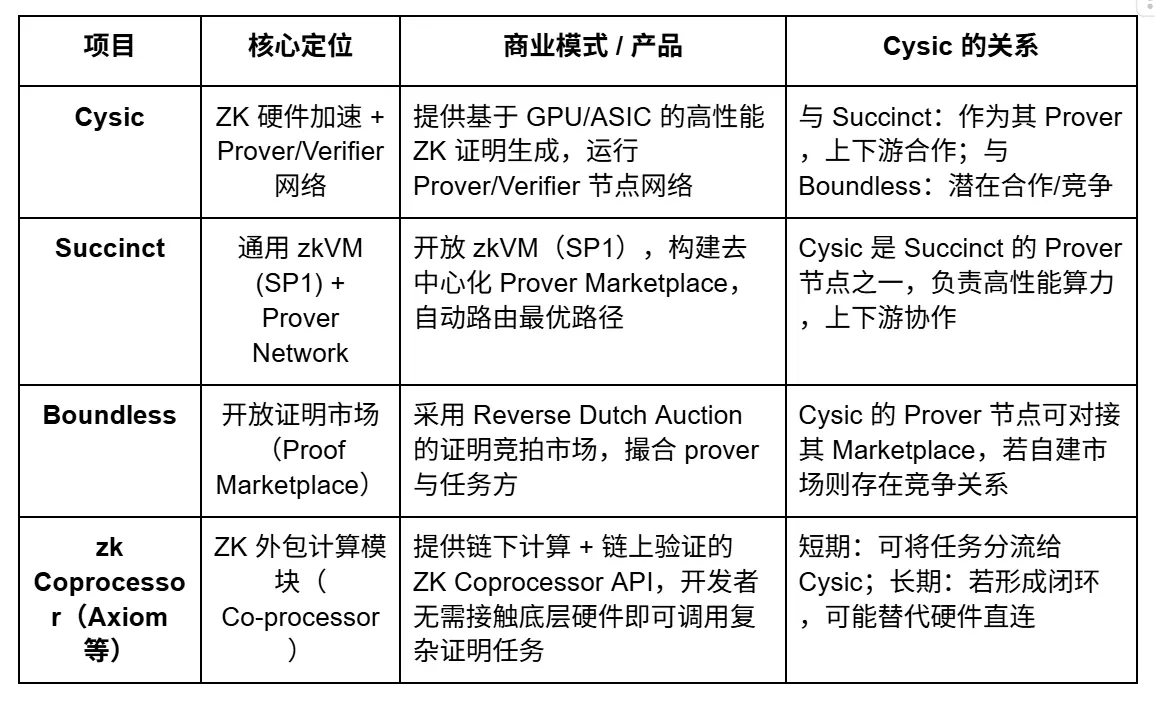
In the ZK Marketplace, Prover Network, and zk Coprocessor track, Cysic currently plays more of an upstream computational power supplier role, while projects like Succinct, Boundless, Risc0, and Axiom are entering the same customer base (L2, zkRollup, ZKML) through zkVM, task scheduling, and open market matching.
In the short term, Cysic collaborates with these projects: Succinct is responsible for task routing, while Cysic provides high-performance Prover nodes; zk Coprocessor may divert some tasks to Cysic. However, in the long term, if the Marketplace models of Boundless and Succinct (auction vs. routing) continue to grow, while Cysic builds its own Marketplace, direct conflicts will inevitably arise at the customer entry level. Similarly, if zk Coprocessor forms a closed loop, it may become an alternative to direct hardware connections, posing a risk of Cysic being marginalized as a "foundry."
11. Conclusion: Business Logic, Engineering Implementation, and Potential Risks
Business Logic
Cysic centers its narrative on ComputeFi, attempting to connect computational power from hardware production, network scheduling to financialized assets. In the short term, it relies on GPU clusters to meet existing ZK Prover demands and generate revenue; in the mid-term, it enters the mature cash flow market with Dogecoin home ASIC miners, validating mass production capabilities and leveraging community culture to open consumer hardware entry; the long-term goal is to develop self-researched ZK/AI dedicated ASICs, layering Node NFTs and Compute Cubes to achieve assetization and marketization of computational power, building an infrastructure moat.
Engineering Implementation
On the hardware front, Cysic has completed GPU-accelerated Prover/Verifier optimizations (MSM, FFT parallelization) and announced ASIC R&D results (1.3M Keccak/s prototype experiments). On the network side, it has built a verification chain based on the Cosmos SDK, supporting Prover node accounting and task distribution, and achieving computational power tokenization through Compute Cube/Node NFTs. In the AI direction, it has launched the Verifiable AI framework, optimizing Sumcheck and finite field operations through GPU parallelism to achieve trusted inference, but differentiation compared to industry peers remains limited.
Potential Risks
Market Education and Demand Uncertainty: The ComputeFi model is still a new concept, and whether customers are willing to invest in computational power through NFTs/tokens requires market validation.
Insufficient ZK Business Demand: The ZK Prover industry is still in its early stages, and GPUs can currently meet most demands, making it difficult to support large-scale shipments of ASICs, resulting in limited revenue contributions.
ASIC Engineering and Mass Production Risks: The proof system has not yet been fully standardized, and ASIC R&D requires 12-18 months, coupled with high wafer costs and uncertain mass production yields, which may impact commercialization progress.
Capacity Bottlenecks of Doge Home Miners: The overall market capacity for home scenarios is limited, and electricity prices and community-driven factors lead to more "interest-based" consumption, making it difficult to form stable, scalable revenue.
Insufficient Differentiation in AI Business: While Cysic's Verifiable AI demonstrates GPU parallel optimization, its cloud inference service has limited differentiation, and the Agent Marketplace has a low entry barrier, resulting in overall barriers still not being prominent.
Dynamic Competitive Landscape: In the long term, conflicts may arise at the customer entry level with projects like Succinct and Boundless in zkMarketplace or zkCoprocessor, potentially relegating Cysic to an "upstream foundry" role.
Disclaimer: This article utilized the AI tool ChatGPT-5 during its creation. The author has made efforts to proofread and ensure the information is true and accurate, but some omissions may still exist. It is important to note that the cryptocurrency market often sees a divergence between project fundamentals and secondary market price performance. The content of this article is intended for information integration and academic/research exchange only, and does not constitute any investment advice, nor should it be viewed as a recommendation for buying or selling any tokens.
 Risk warning Risk warning



Popular articles





