Henan brothers support half the sky? A big reveal of Ethereum nodes
 Core Viewpoint

 Current Status of Ethereum Decentralization: In-depth Analysis of Clients, Regions, and Hosting Services
Original Author: Eric, Foresight News
Unknowingly, the total amount of Ethereum staked has reached around 35 million (different data statistics websites may have some discrepancies). It took about a year for this number to grow from 15 million to 25 million, but it took twice as long to grow from 25 million to 35 million. It can be anticipated that, over time, the amount of Ethereum staked may enter a period of dynamic balance between staking and unstaking after reaching a certain limit.
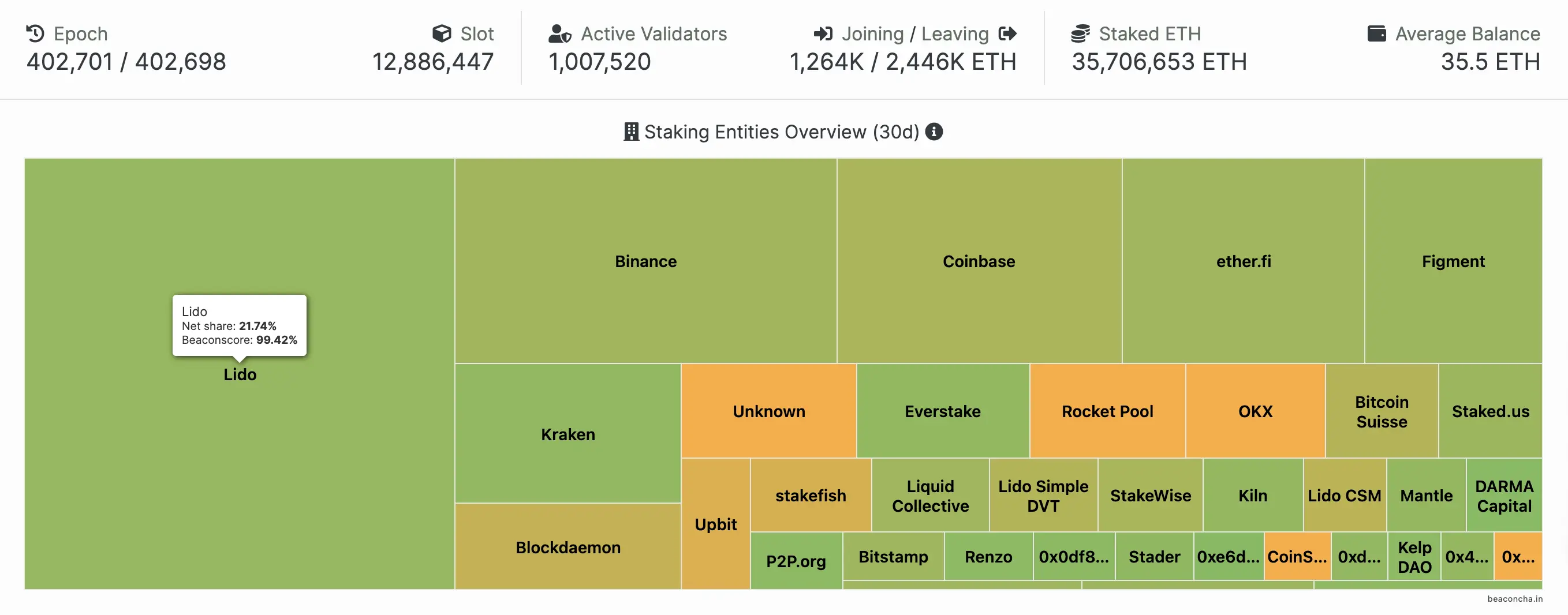
The above image comes from the open-source browser beaconcha.in launched by BitFly, the developer of the once largest Ethereum PoW mining pool, EtherMine. This Ethereum ecosystem development company based in Austria has developed multiple browsers, among which ethernodes.org is a data website related to the information of Ethereum execution layer and consensus layer nodes. The data referenced earlier regarding a large number of Ethereum nodes being hosted on AWS comes from this website.
Two years ago, over 60% of the hosted nodes were based on AWS. Today, both the distribution of nodes and the cloud service providers used have changed significantly. (All data below is as of the time of writing and excludes unsynchronized nodes)
What clients are used by the nodes?
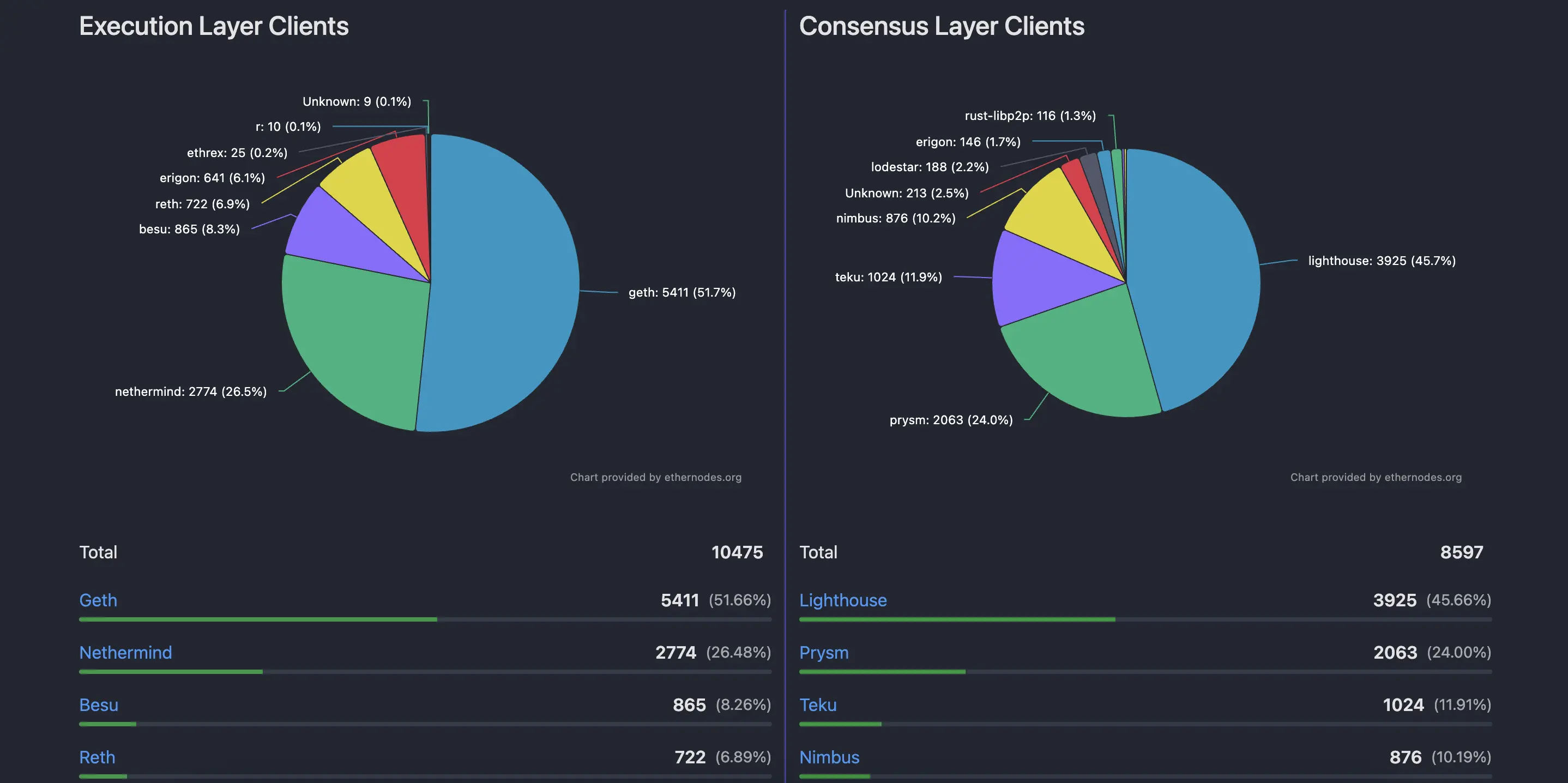
Among the 10,475 execution layer nodes included in the statistics, Geth accounts for 51.66%, which still presents an issue of excessive concentration. The client Nethermind, developed under the leadership of the new Ethereum Foundation Executive Director Tomasz Stańczak this year, follows closely with a share of 26.48%. The client Besu, originally developed by ConsenSys and later migrated to the Hyperledger Foundation GitHub repository in 2019, accounts for 8.26%. Erigon, originally known as Turbo-Geth and led by British developer Alexey Akhunov, has a share of 6.1% and has been surpassed by Reth, launched by Paradigm, which accounts for 6.89%.
Reth has always been controversial in the Ethereum community. Yearn core developer Banteg has stated that Reth heavily borrows from Akula (a Rust-implemented client) and replicates the Erigon architecture, but Paradigm has not supported these developers. Although Paradigm CTO Georgios Konstantopoulos responded that Reth "stands on the shoulders of giants," the community did not accept this, viewing it as a form of VC-style resource plunder. This incident also led Akula developers to announce they would no longer maintain the project, believing they could not compete with Paradigm.
Just a week ago, Ethereum core developer Federico Carrone also warned on X that Paradigm's expansion as a profit-driven company (such as hiring key researchers, funding open-source libraries, leading EIPs, and Reth) poses a threat to Ethereum's decentralization, but its Ethrex, which it leads, has only a 0.2% share among execution layer clients.
As for the consensus layer clients, among the 8,597 consensus layer nodes included in the statistics, the highest share is held by Lighthouse, established and continuously maintained by the Australian security company Sigma Prime, reaching 45.66%. Prysm, which accounts for about 24%, was initially developed and maintained by the blockchain infrastructure company Prysmatic Labs, which was acquired by Arbitrum developer Offchain Labs in 2022. The third-ranked Teku accounts for 11.91% and is developed by the same team as Besu. Nimbus, which accounts for 10.19%, is a team that relies solely on funding from the Ethereum Foundation and aims to improve resource efficiency, allowing node operators to easily run Ethereum client software on resource-constrained devices (such as mobile phones and laptops).
In the Ethereum network, the top four execution layer and consensus layer clients account for 93.29% and 91.76%, respectively, still showing a strong concentration. However, compared to the more exaggerated levels of concentration two or three years ago, the Ethereum Foundation's efforts to promote client diversification have had some effect.
Where are the nodes located?
The location of Ethereum execution layer and consensus layer nodes is very difficult to accurately identify. The website likely determines locations through IP analysis, which may not be very precise, but it does give us a rough outline of the distribution.
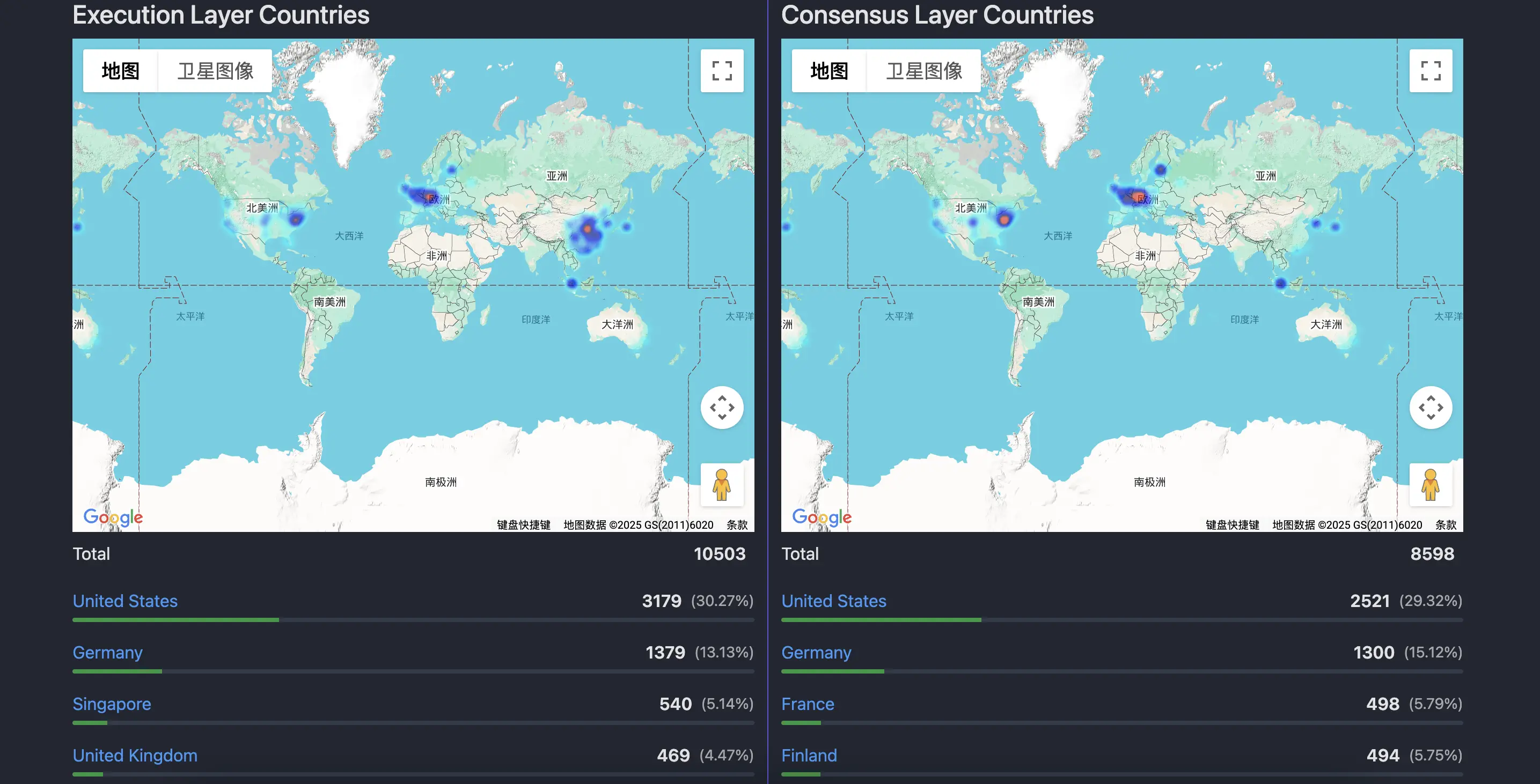
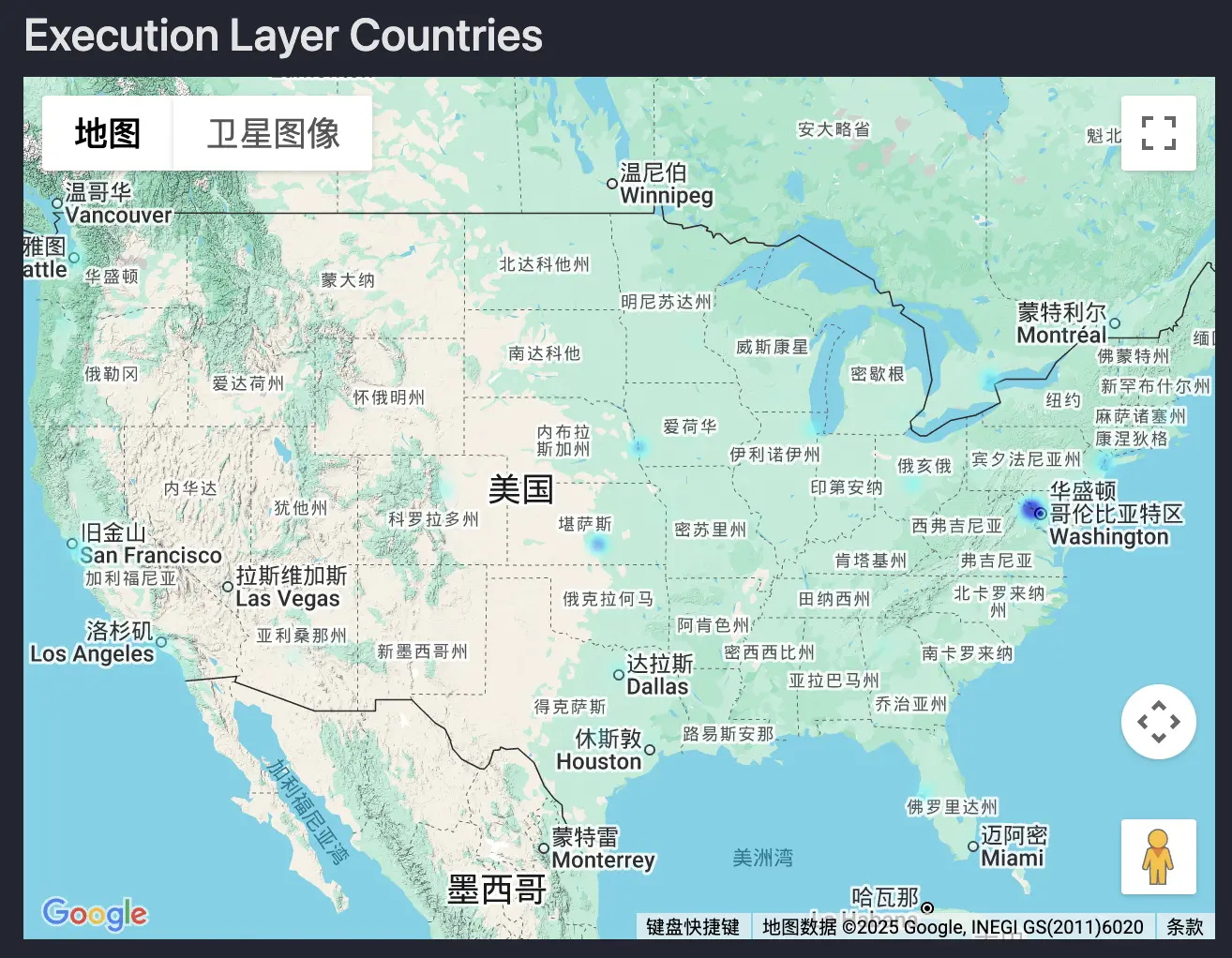
Among the nodes running execution layer clients, over 30% of IPs are located in the United States, with the densest distribution near Washington, D.C. Additionally, cities like San Francisco, Los Angeles, and New York also have some distribution, while the remaining nodes are scattered across Kansas, Iowa, Texas, Florida, Massachusetts, and other areas.
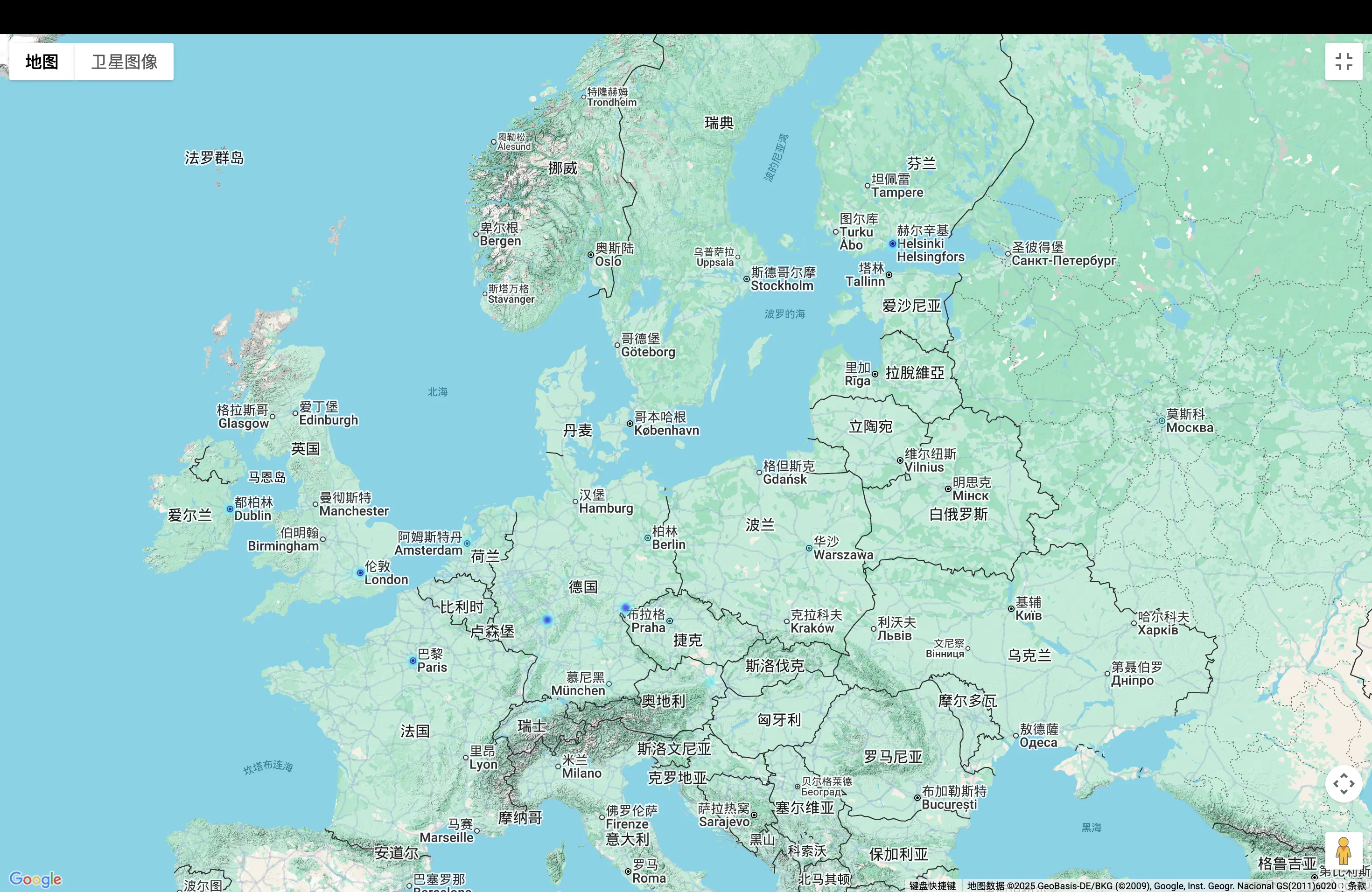
As for Europe, data shows that Germany accounts for 13.13%, the UK for 4.47%, France for 4.28%, and Finland for 3.78%. On the map, nodes are also primarily distributed in the core cities of various countries, including Dublin in Ireland, Paris in France, Frankfurt in Germany, and Helsinki in Finland.
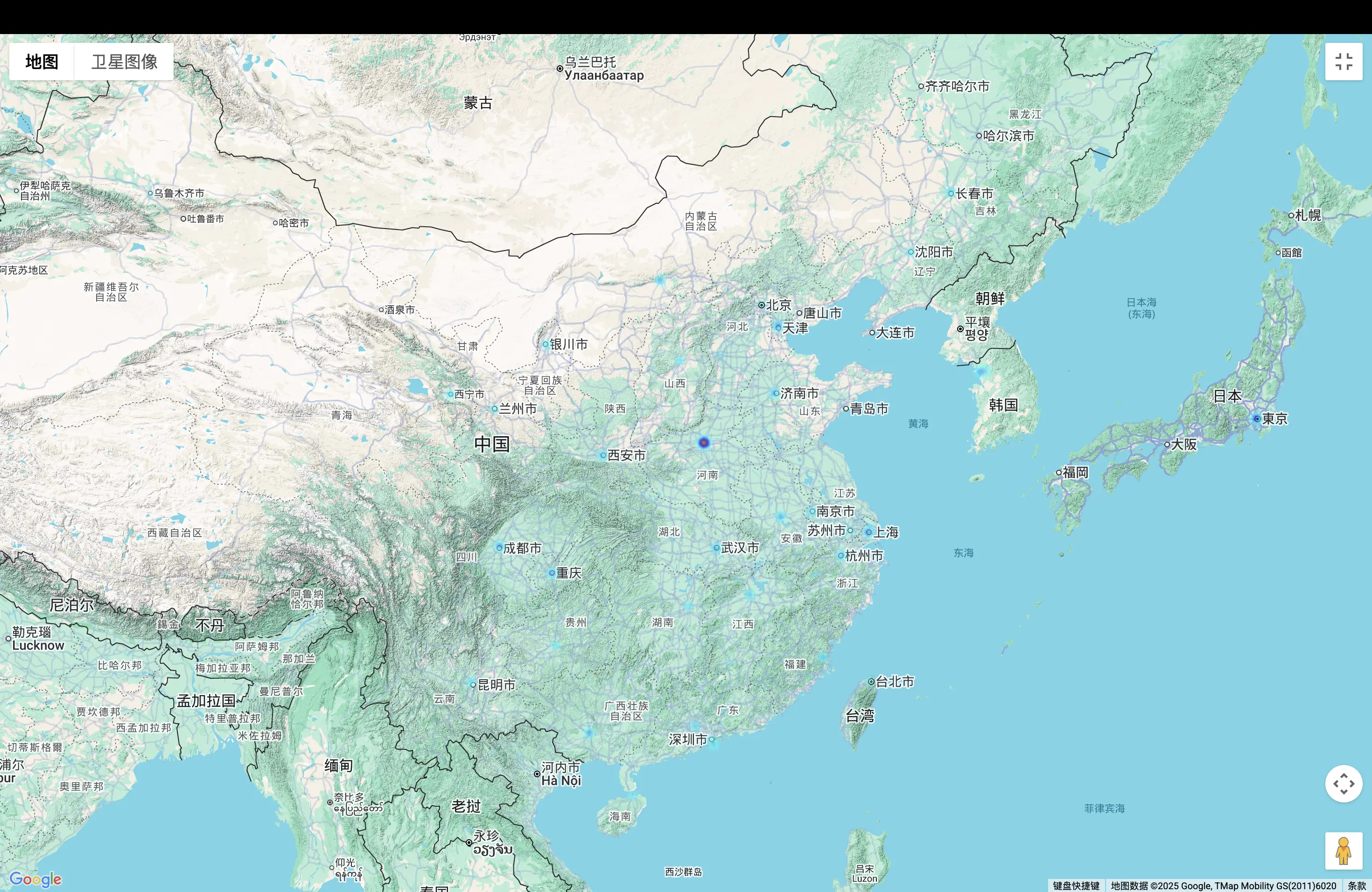
Nodes located in China account for less than 4%, but are widely distributed, from Changchun in Jilin Province in the north to Hainan in the south, from Xining in Qinghai Province in the west to coastal cities like Shanghai and Taiwan in the east. Notably, according to IP addresses, there are 103 nodes in Hong Kong and 97 in Taiwan, while other regions in China total only 204 nodes. The most concentrated distribution is in the darkest points on the map, located in Zhengzhou, Henan Province.
As for the distribution of consensus layer client nodes in North America and Europe, it is basically similar to that of execution layer client nodes. In China, although there are still dozens of nodes according to the data, there is no significant display on the map. In terms of regional distribution, the United States and Germany rank first and second in both execution layer and consensus layer nodes, but Ethereum nodes exist in almost every corner of the globe, including small countries like Guatemala, Kuwait, and Montenegro, and even in the far north, Iceland.
What cloud services are the nodes using?
"The half of Ethereum nodes are using AWS" has become a well-known joke in the industry. While there may have been a significant number of nodes hosted on cloud services a few years ago, this situation has greatly improved.
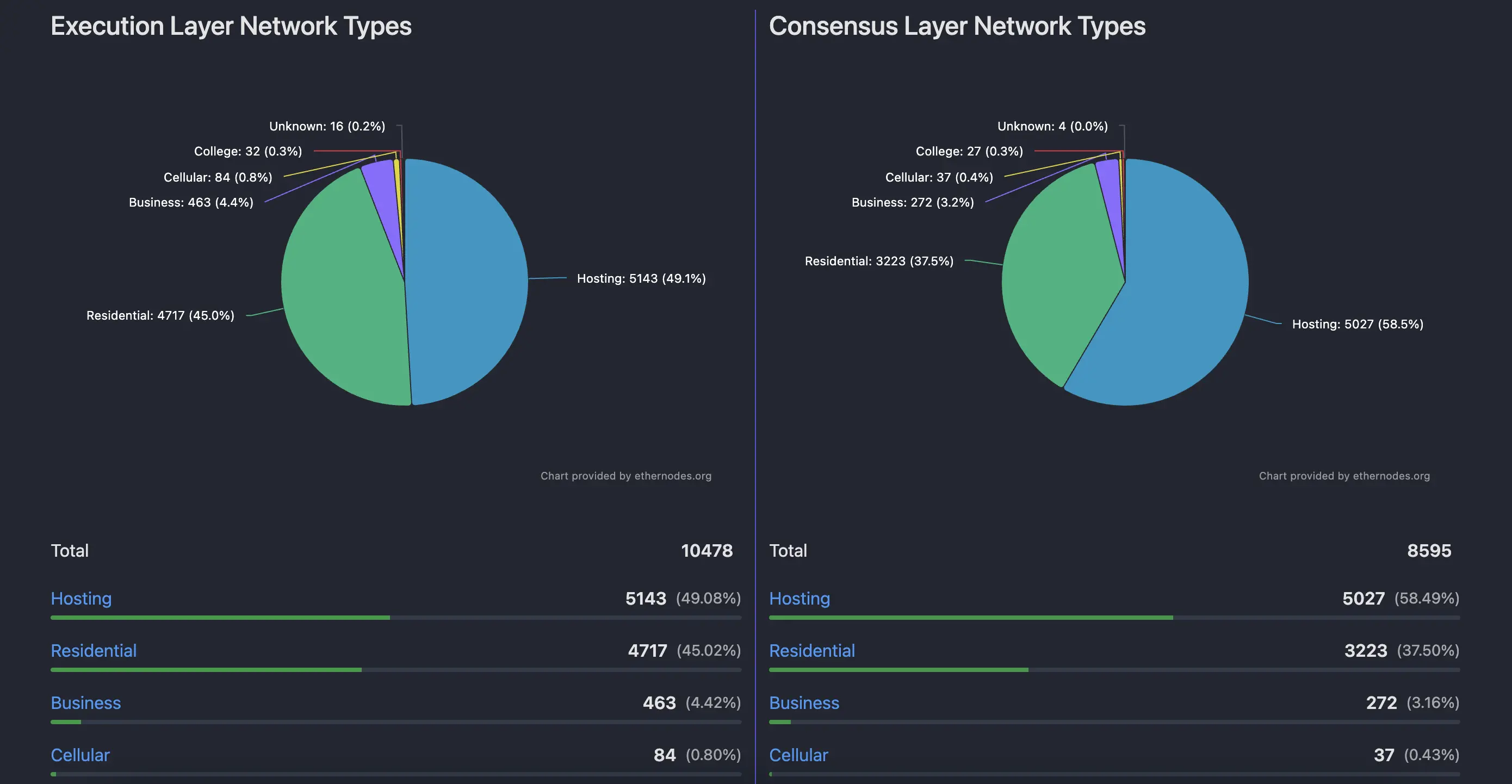
Among the nodes running execution layer clients, 49.1% are hosted, while 45% are self-built; consensus layer client nodes may have a higher hosting percentage of 58.5% due to the need for stability to prevent penalties, but self-built nodes closely follow at 37.5%. In addition to the nature of the nodes, there are many interesting detailed data points.
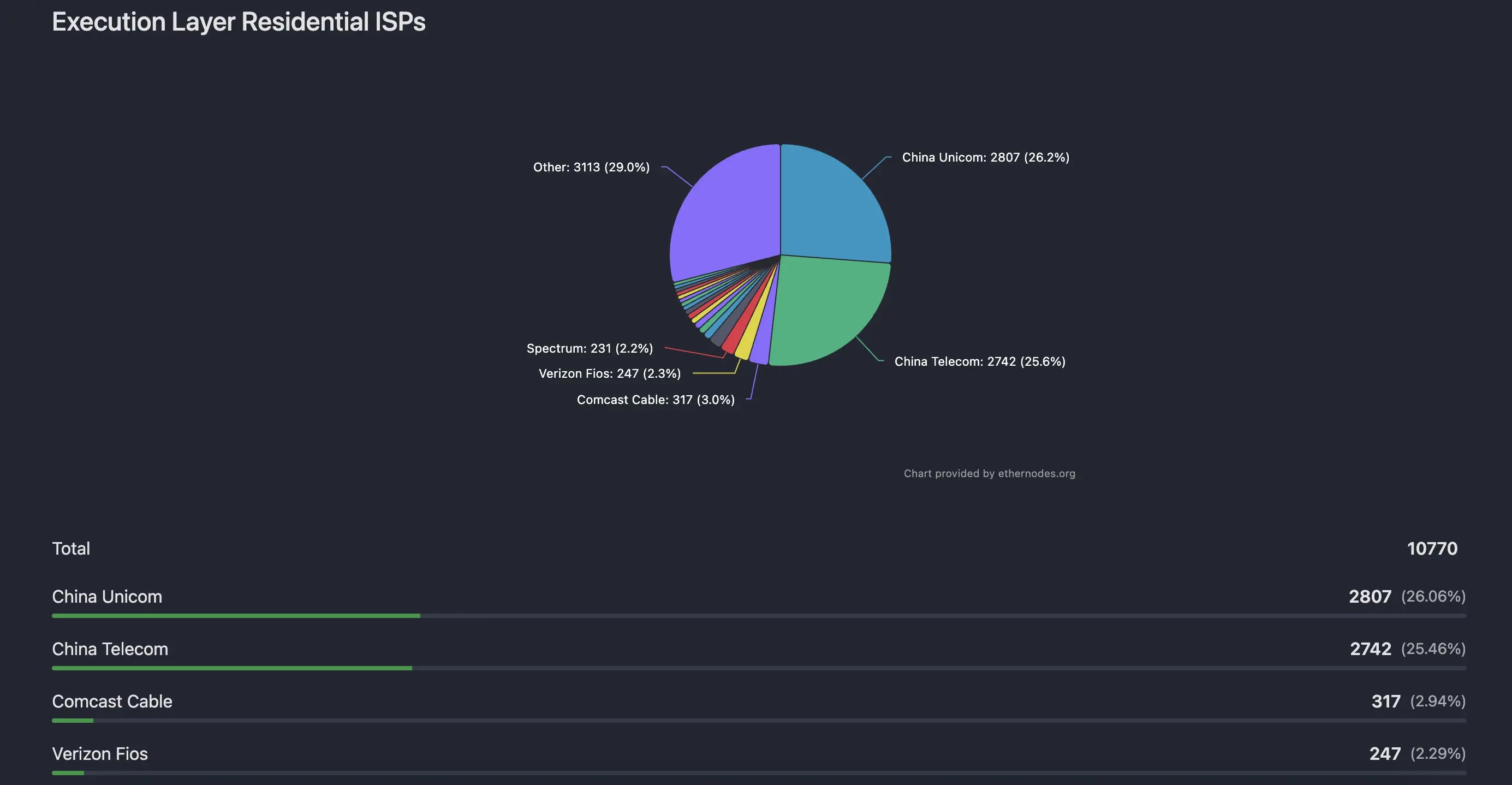
First, among the self-built nodes running execution layer clients, China Unicom and China Telecom together account for 51.52% of the internet service providers. This also includes the China Unicom Industrial Internet Backbone, China Mobile, the China Education and Research Network, China Unicom (Shenzhen), China Telecom Yunnan IDC1 Network, China Telecom Group, and Beijing Baidu Network Technology Co., Ltd., among others.
Thus, in fact, over 20% of execution layer client nodes are running domestically, but may be using overseas IP addresses. In contrast, very few execution layer client nodes use domestic network operators. Given that operating execution clients does not provide stable income, I speculate that the high proportion is mainly used to meet the needs of RPC nodes, development, on-chain high-frequency trading, or strategy trading that require quick transaction broadcasting, which indicates that the domestic market remains an important area for on-chain activities.
As for the data on hosted nodes using various cloud services, it aligns relatively well with the regional distribution.
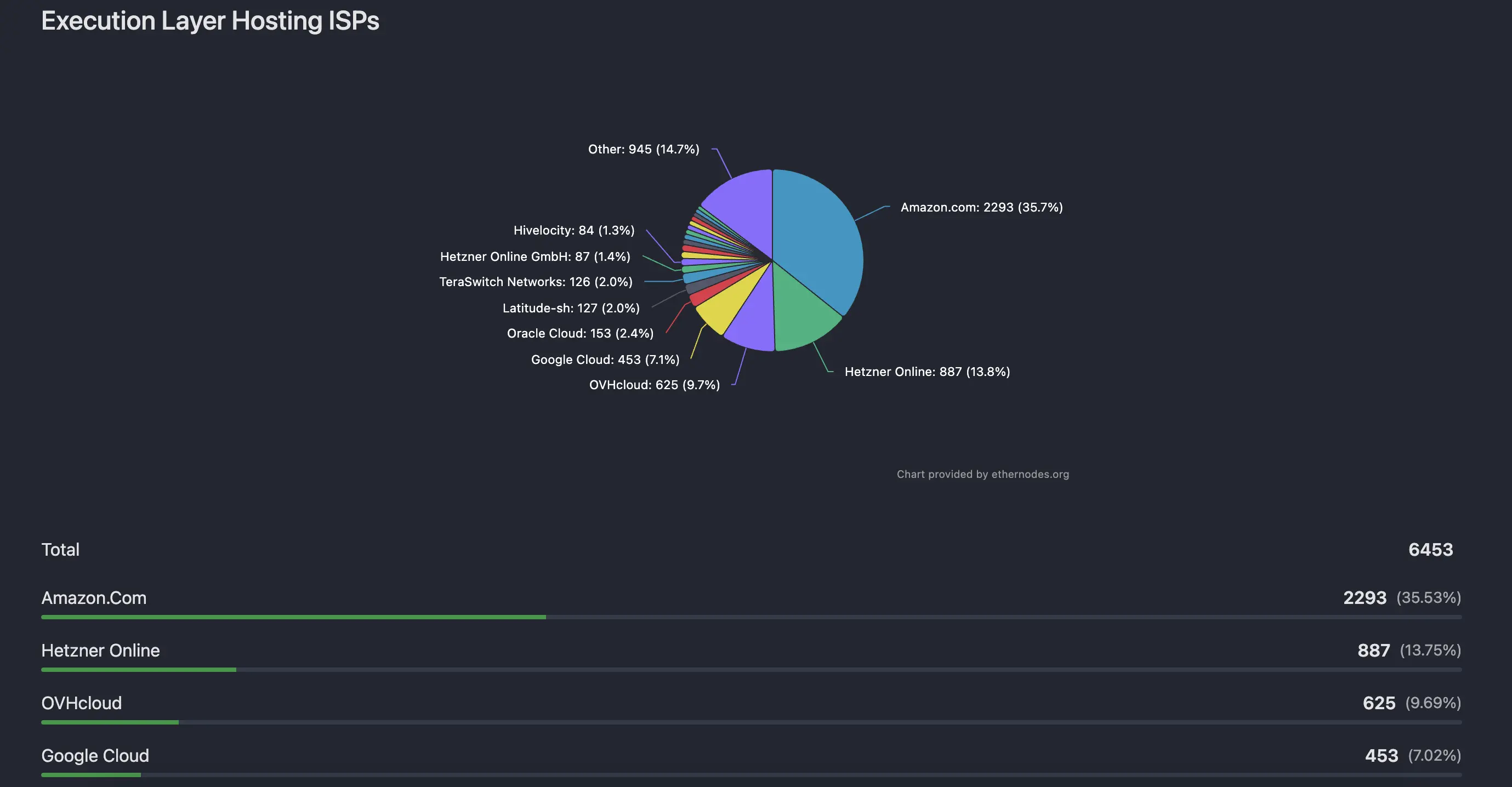
Among the hosted execution client nodes, 35.53% chose AWS, 13.75% chose the German hosting provider Hetzner Online, 9.69% chose the French cloud service provider OVHcloud, while Google Cloud (7.02%) and Oracle Cloud (2.37%) ranked fourth and fifth, respectively, which aligns with the regional distribution primarily concentrated in the United States and Europe. Consensus layer client nodes are similar, with these five service providers also occupying the top five spots. Additionally, Alibaba Cloud, Tencent Cloud, and Huawei Cloud are also included, but their proportions are very small.
Based on this calculation, the proportion of nodes hosted on AWS is roughly around 20%, which is a reasonable figure.
Overall, the more than 10,000 nodes running execution layer clients and nearly 9,000 nodes running consensus layer clients show no excessive dominance by any single entity in terms of regional distribution, network services, hosting service providers, etc. There is only a risk of excessive concentration in the choice of clients, but the proportion of the leading clients is gradually decreasing, and Ethereum's dream of being a "world computer" is gradually being realized under the foundation's efforts to promote decentralization.
 Risk warning Risk warning



Popular articles