Q3 Financial Report: While Cryptocurrency Prices Cool Down, Coinbase's Money-Making Machine Heats Up
 Core Viewpoint

 The ambition behind Coinbase's BTC accumulation
On October 31, 2025, Coinbase released its Q3 financial report, which came at just the right time, injecting a shot of adrenaline into the liquidity-starved crypto industry.
Total revenue reached $1.87 billion, a year-over-year increase of 55% and a quarter-over-quarter increase of 25%. Net profit was $433 million, compared to just $75.5 million in the same period last year. Earnings per share were $1.50, exceeding analysts' expectations by 45%. Wall Street analysts collectively applauded, with J.P. Morgan upgrading its rating to "Overweight" last week, setting a target price of $404.
While many expected poor liquidity and trading volume in the crypto space for the third quarter, Coinbase delivered a perfect report card, with consumer trading volume soaring to $59 billion, a 37% increase from the previous quarter. Retail trading revenue reached $844 million.
In addition, Coinbase has been doubling down on Bitcoin. Through a weekly dollar-cost averaging strategy, it accumulated an additional $299 million in Bitcoin holdings this quarter. As of now, its total Bitcoin holdings have reached 14,548 BTC.
CEO Brian Armstrong stated during the company's earnings call, "Everything is tradable is the core of the next phase we are building." Furthermore, Coinbase is integrating prediction markets, tokenized stocks, and other products into its platform.
Behind the idea that everything is tradable, Coinbase is no longer just the guardian of cryptocurrencies; it is transforming into a "crypto version of the Apple ecosystem" that connects people and capital.
What ambitions has Coinbase laid out behind the increase of 14,548 BTC?
Wall Street's "Turnaround Applause": Base × USDC from Side Business to Cash Cow
Looking back at 2023, the stock price of Coinbase, the first publicly traded crypto company, has been like a roller coaster, climbing from a low of $30 to now over $300, not by luck, but by walking on two legs: Base and USDC.
These two were originally "side businesses," but have now become cash cows, and Wall Street's turnaround applause has come swiftly and directly.

COIN Price Chart|Source: Tradingview
First, let's talk about J.P. Morgan's upgrade to "Overweight."
On October 24, analyst Kenneth Worthington stated in a report that "Coinbase's valuation is undervalued, and the potential opportunity for the Base token is worth $12-34 billion."
Base is an Ethereum Layer 2 network incubated by Coinbase, which was just a "low-fee experimental field" when it launched in 2023, but has now become a star.
Where does this money come from? As an Optimistic Rollup, Base requires scale effects combined with a single sequencer to package transactions on-chain. Although the fees are low (averaging $0.01 per transaction), the scale effects are impressive—daily transaction volumes have repeatedly exceeded 5 million, double that of the mainnet. The sequencer model has made fee income a strong source of cash flow.

Base Sequencer Revenue|Source: Dune
Coinbase transfers all these fees into its own custody accounts, citing "security and auditing" as the reason, but the community has criticized this as "centralized vampirism." Management responded during the earnings call that they will explore ecosystem profit-sharing in the future, such as returning part of the fees to developers or users to create a positive feedback loop.
Even more exciting is the potential for a native Base token.
J.P. Morgan predicts that if Base issues a native token, its market cap could reach hundreds of billions of dollars.
What can the token do? Stimulate usage elasticity, allowing holders to participate in governance, stake for fee sharing, and even receive gas fee discounts. With daily active users in the millions, fee income has tremendous elasticity; if the token is launched, Base could quickly transform from a "cost center" to a "profit engine."
Now looking at USDC, this stablecoin is a joint asset of Coinbase and Circle.
The Q3 financial report shows that USDC's market cap reached a historical high of $74 billion, with an average balance of $15 billion on the Coinbase platform, a quarter-over-quarter increase of 9%. The average balance of USDC outside the platform was $53 billion, a quarter-over-quarter increase of 12%. Stablecoin revenue was $355 million, a quarter-over-quarter increase of 7%.

Stablecoin Revenue and Blockchain Revenue|Source: Coinbase
Its revenue sources are diverse, including interest spreads (USDC reserves invested in U.S. Treasury bonds, earning 4-5% yields), custody fees (Coinbase Prime provides custody for institutions, charging 0.1-0.2%), settlement fees (cross-border transfer fees), and merchant profit-sharing (integrated into e-commerce platforms like Shopify, charging 1%).
Why is USDC so profitable?
Because it has penetrated merchants and cross-border settlements. Management revealed that USDC's penetration rate in cross-border payments has reached 15%, especially in emerging markets like Latin America and Southeast Asia, where users use it to avoid foreign exchange fluctuations. For example, after integrating USDC, Remitly and Wise reduced transfer costs by 30%, allowing Coinbase to share in the profits.
More importantly, USDC is transitioning from a "storage tool" to a "payment medium." Sell-side analysts mentioned that Coinbase may expand its distribution, such as issuing L2-exclusive USDC variants or deeply binding with DeFi protocols. Timeline? Management said, "We will see results in the first half of next year."
The synergy between Base and USDC is a killer app. Base uses USDC as its native gas fee, with transaction costs as low as $0.001, attracting the DeFi and NFT ecosystems. The essence of Wall Street's applause is seeing Coinbase shift from "volatility dependence" to "stable rental income."
In the past, trading revenue accounted for 80%, which would be halved in a bear market; now subscription services account for 40%, showing strong anti-cyclical properties.
Of course, risks remain.
Regulation is a double-edged sword—SEC scrutiny of stablecoins is becoming increasingly stringent, and Base's centralized sequencer may also attract attacks from "decentralization purists."
But from the financial report, management is confident: "We are not betting on the market; we are building infrastructure." This path from side business to cash cow is being walked steadily and ambitiously by Coinbase.
Empire's Continued Expansion
Coinbase's expansion resembles the Roman Empire, advancing step by step, from exchange to custody, and then to the primary market. In the Q3 financial report, the most eye-catching acquisition was the $375 million purchase of the Echo blockchain financing platform on October 21.
From issuance, listing, to trading and custody, Coinbase uses six anchors to stabilize its ecosystem, pushing itself towards becoming a "crypto version of Apple," where developers come and don't want to leave, institutions come and can't leave, and users can't do without it.
First, let's talk about technical infrastructure, the cornerstone of the Coinbase empire.
The Base chain is not just another Layer 2; it is Coinbase's "iOS," compatible with the Ethereum ecosystem, but with core control in-house.
Top protocols like Aave and Uniswap have already settled in, but Base's value lies in its "app store" attribute. By acquiring Spindl (an on-chain advertising attribution tool), Coinbase can track user sources and behavior conversions, similar to the recommendation mechanism of the App Store, controlling traffic distribution. Want to acquire customers? Developers must use Spindl, and Coinbase will decide who makes it to the recommendation list.
The acquisition of Iron Fish addresses privacy shortcomings. Under regulatory pressure, Base integrates zero-knowledge proofs to balance compliance and user privacy, emulating Apple's privacy protection strategy. More importantly, Base connects directly to Coinbase's 100 million users, allowing developers to access massive traffic as soon as they go live, an advantage that Arbitrum or Polygon cannot match.
Capital formation system is the second pillar, with the acquisition of Echo being the centerpiece.
Echo is an on-chain capital inheritance platform founded by well-known crypto trader Cobie, which includes the Sonar public fundraising tool. Echo has helped over 300 projects raise more than $200 million, such as the XPL token sale for Plasma.
Why is Coinbase interested in it?
Because primary issuance is the "upstream source" of crypto. The traditional VC model is closed, making it difficult for retail investors to participate; Echo allows projects to raise funds directly from the community, covering both private and public sales. The acquisition price of $375 million (cash + stock) is a small amount compared to Coinbase's $70 billion market cap, but its strategic value is immense, filling Coinbase's "capital formation" gap.

Echo Fundraising Volume Chart|Source: Dune
The integration roadmap has begun to take shape. Echo will be embedded in the Coinbase ecosystem, using Coinbase's compliance framework (KYC/AML) for issuance approval, Base's transparent ledger for disclosures, and connecting to Coinbase Exchange for secondary market making, with custody automatically linked to Prime. The first batch of issuance categories will focus on crypto tokens, with a target volume of $1 billion by Q1 next year.
For institutions, Coinbase is launching a settlement toolkit for real-time clearing and data APIs; for developers, Sonar will upgrade to support privacy-enhanced fundraising (zero-knowledge proofs to avoid sensitive disclosures). The on-chain crowdfunding platform founded by KOL Cobie has already raised $51 million, completing 131 transactions. The first project, Ethena's USDe stablecoin, has seen rapid growth, proving its potential.
Echo's Sonar tool allows founders to self-custody token sales, reviving the ICO model of 2017, but now with a difference—backed by the GENIUS Act, the regulatory framework is clear. Coinbase has officially stated that it will start with crypto token sales and expand to tokenized securities and real-world assets (RWA).
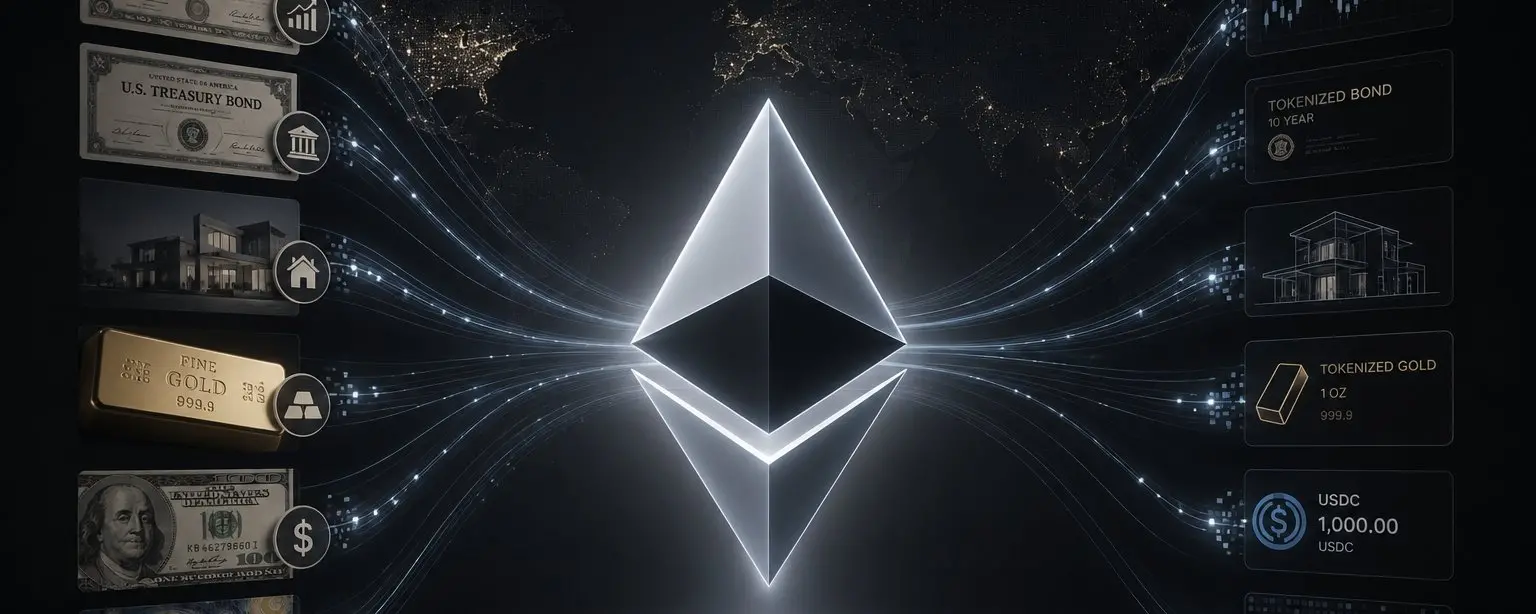
This is ambitious, not just for crypto, but for the financialization of everything, with stocks, real estate, and artworks being issued on-chain.
Completing the puzzle is the acquisition of Liquifi, which provides full lifecycle management for tokens—issuance, distribution, locking, and liquidity. Echo manages "who can raise funds," while Liquifi manages "how to operate," forming a closed loop.
Institutional market is the third pillar. The acquisition of Deribit is a milestone in crypto history, acquiring the world's largest derivatives exchange for $2.9 billion, with institutional clients accounting for 70% and daily volumes in the billions. Coinbase has previously focused on retail, with weak derivatives; now it has filled this gap, significantly increasing options depth and futures liquidity.
This is comparable to Goldman Sachs' dual engine of investment banking and retail. Institutions are not just trading; they are also becoming seed users of Base/USDC. Management revealed that after integrating Deribit, the cross-selling rate reached 40%, with institutions expanding from derivatives to custody and clearing.
Retail entry is the fourth pillar. The Coinbase credit card is not just a payment tool; it is the "last link" in the ecosystem.
In partnership with AmEx, it is positioned as a high-end product, with users averaging $3,000 in monthly spending, above average. Cashback of 2-4% in Bitcoin is linked to platform assets, encouraging higher holdings and proportions.
At a deeper level, data on spending habits is used for precise marketing, recommending NFTs or DeFi. This model creates a closed-loop effect, where users earn cashback by using the card, invest the cashback into Base, thus earning higher cashback, further stimulating more spending. With regulatory support, this bridges fiat and crypto, lowering the threshold.
Content ecosystem is the fifth pillar. On October 20, Coinbase spent $25 million to buy NFT and restart the UpOnly podcast—a legendary show during bull markets, hosted by Cobie and Ledger. This is not a coincidence, as it belongs to the same Cobie system as Echo.
This is a cultural positioning, with UpOnly spreading ideas and products, enhancing community influence. Coinbase does not control advertising/creation; it is purely a community tribute, sparking heated discussions. Combined with Echo, it forms a dual engine of "content + capital," with the podcast exposing projects and Echo following up with financing. In the future, it may expand into Apple TV+-style services, with content becoming a stickiness engine.
Regulatory moat is the sixth pillar. Coinbase's domestic listing is under SEC jurisdiction, with licenses from multiple states. After the GENIUS Act, its stock price rose by 30%, highlighting USDC's compliance advantages. Traditional institutions favor it, with JPMorgan collaborating and Chase points converting to crypto. This barrier is high—Binance/OKX face pressure offshore, making it difficult for newcomers to cross. Similar to App Store reviews, it is strict in the short term but maintains quality in the long term.
These pillars are not isolated but form a closed loop, with developers using Echo/Liquifi for financing, deploying on Base, acquiring customers through Spindl, gaining exposure through UpOnly, trading on Deribit for institutions, using Prime for custody, and spending with retail credit cards, optimizing data cycles.
Coinbase is not just buying companies; it is weaving a network—from issuance to trading, from technology to culture, building a crypto "Apple Empire."
Layout for the Next Era
If Base and USDC are the current cash cows, the x402 Foundation is Coinbase's bold bet on the future.
Imagine a dusty HTTP code that has been dormant for 30 years suddenly awakening to become a bridge connecting humans and the machine economy.
This is not science fiction, but a real plot that unfolded on September 23, when Coinbase and Cloudflare jointly established the x402 Foundation, while Google's AP2 protocol advanced in tandem, transforming the HTTP 402 "Payment Required" status code into a machine-native payment process.
The story begins with a clear access path; within Coinbase's ecosystem, Base acts like an efficient toll booth manager, responsible for low-fee settlements, costing only $0.001 per transaction; USDC plays the role of a frictionless universal currency, avoiding "roadblocks" of exchange rates; and Custody serves as the institutional-grade security "guardian," handling all bookkeeping.
The core of the protocol is the revival of HTTP 402, a code that has been idle for many years, now transformed into the "highway" for AI payments. Imagine an AI agent crawling Cloudflare's CDN data, encountering a 402 response along the way; it won't stop but will automatically initiate a USDC payment, confirming instantly and continuing to retrieve content, all without human intervention.
The collaboration lineup is star-studded, with initial partners including Google (debuting with AP2), Adyen, Paypal, Mastercard, as well as developers like Etsy and Service Now.
The pilot phase has begun, with Cloudflare's Agents SDK first integrating x402, currently in private testing for a "pay per crawl" model—AI crawlers eagerly accessing vast pages and settling fees daily.
Google's AP2 has expanded x402, supporting mixed payments with credit cards and stablecoins, with the first B2B procurement pilot landing in the Cloud Marketplace, involving Intuit and Salesforce.
Here, Coinbase acts as the "bridge architect" for crypto: x402 settles through Base, while AP2's Mandates (digital contracts) act like smart sentinels, ensuring every step of authorization and auditing is watertight.
Why do AI agents need this "payment script"? Because AI agents are about to "learn to spend money for you."
Currently, AI like ChatGPT is still in the era of humans placing orders and making payments, but in the future, they will shop or subscribe to services autonomously, requiring a reliable payment framework.
AP2's Intent/Cart Mandates serve as anti-fraud "plot twists," allowing users to pre-sign budgets, with agents generating shopping carts, making the entire link traceable.
x402 injects the "climax" of instant settlement into crypto, using stablecoins to avoid bank delays. Gartner predicts that by 2030, the AI payment market will soar to trillions of dollars, with crypto accounting for 10% of that share.
For Coinbase, the outcome of this story is that Base benefits from low-fee dividends.
Epilogue
Ten years ago, Coinbase started by facilitating human transactions, even raising funds in China, weathering storms.
Ten years later, it resembles laying a network underground, with Base managing settlements efficiently and at low fees; USDC managing clearing for stable circulation; Echo managing issuance, positioning upstream; and x402 connecting to "money-spending machines" at a distance.
This Q3 financial report is a milestone, with total revenue of $1.87 billion and net profit of $433 million, but behind the numbers lies the blueprint of an empire—from volatility dependence to stable rental income; from an exchange to a full-stack hub.
The future of crypto is not about betting on prices but about building infrastructure. Coinbase's ambition is like the Roman road network, connecting everything. In the next decade, when AI agents are everywhere, Coinbase may well be the "Federal Reserve of the digital economy."
But don't forget, empires always have frontiers—regulation, competition, and black swans. Investors, hold tight; this show has just begun.
 Risk warning Risk warning