








Galaxy Digital: From Volatility to Predictability
 Core Viewpoint
 One quarter after another, Galaxy is becoming less like a trader and more like a banker.
Author: Prathik Desai
Compiled by: Block unicorn
The bulldozers sit idle in the sweltering heat. The location is desolate, contracts are uncertain, and the idea of a cryptocurrency trading company transforming into a power company seems like a pipe dream.
A year ago, the Helios data center in Texas was just a promise in the desert.
Today, the situation is vastly different. While the turbines are not yet operational, contracts have been signed, and financing deals have been completed. The land has been leased, and transformers have been ordered. This company, which once profited from volatility, is now investing in certainty.
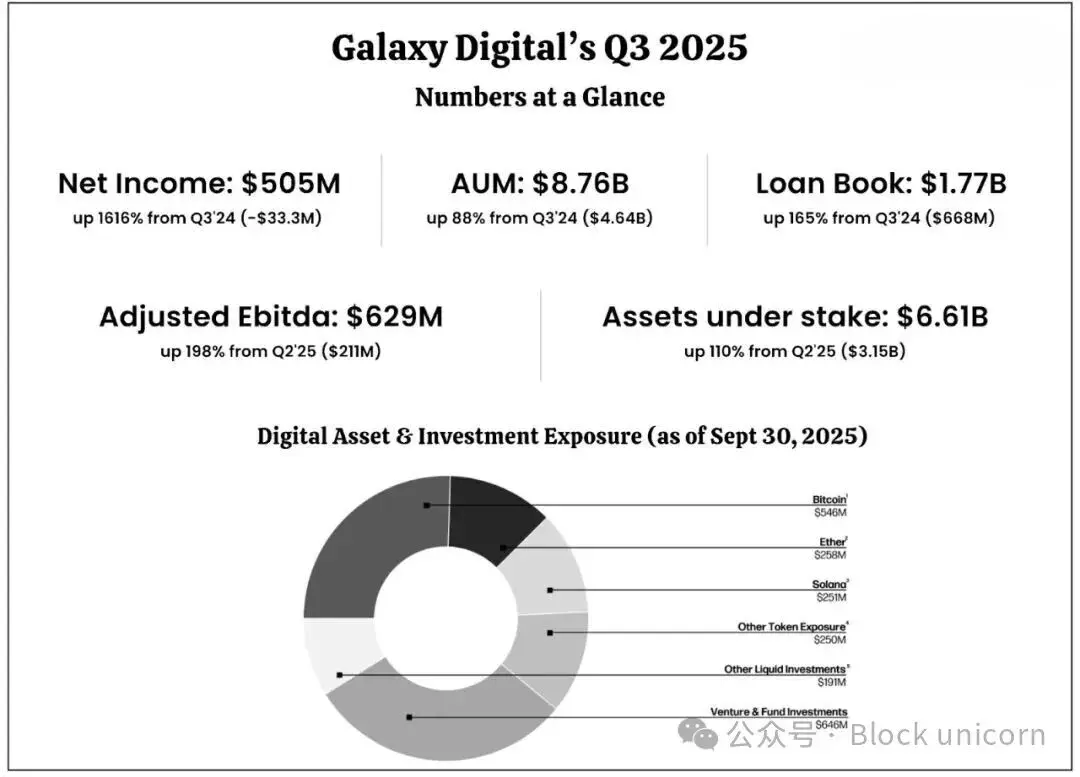
Galaxy Digital's quarterly financial report as of September 30, 2025, may not directly reflect this situation, but a close look at its data from the past year reveals a clear transformation. Galaxy's trading division is still handling billions of dollars in transactions, but the trends in the coming months are evident to anyone paying attention.
Quarter after quarter, Galaxy is looking less like traders and more like bankers.
Key Takeaways
Galaxy's trading volume has reached an all-time high, but profit margins have decreased compared to other business segments.
Corporate finance authorizations have quadrupled year-over-year, generating $40 million in annual recurring revenue, marking Galaxy's first predictable revenue source.
Revenue from the finance and corporate division has grown to $408 million, accounting for over 55% of adjusted total gross profit.
The Helios project is scheduled to launch in the first half of 2026, with a 15-year CoreWeave lease agreement (526MW) and $1.4 billion in project financing signed.
Despite strong profit growth, Galaxy Digital Inc.'s stock price has fallen by over 10%.
The Bankers of DAT
Over two months ago, I discussed how the noise in the Galaxy office has changed: from the clamor of traders to the gentle hum of clients parking idle funds. Galaxy initially started as a side project to help token issuers manage stablecoin reserves, but it has now transformed into assisting companies in managing their Digital Asset Treasury (DAT).
In recent quarters, this business division has created reliable cash flow by providing a platform that integrates custody, yield, and liquidity for clients, including DAOs, exchanges, and startups. Galaxy helps these clients build their treasuries and earns basis point fees at every layer.
In the past 12 months, the assets under management for this business have grown more than fourfold, from managing about $1 billion in assets to over $4.5 billion today. While the revenue from this business in Q3 2025 may seem relatively modest compared to trading, it marks an important trend: a shift from a trading-based model to a subscription-based model. The corporate treasury management business generates about $40 million in annual recurring revenue, indicating it represents ongoing long-term income rather than sporadic trading profits.
However, asset management is not without risks and is not immune to market fluctuations. Galaxy CEO Mike Novogratz acknowledges that this business will fluctuate with the volatility of the cryptocurrency market.
Despite these challenges, the growth trajectory is clear. Galaxy is learning each quarter how to decouple revenue from volatility. While this is still a gradual process, the company's financials indicate it is on the right path.
Though it may not be the most exciting revenue source, it is reliable for a company that has built its reputation on the performance of traders, and it represents a strategic shift.
The Profit Problem Triggering a Crisis
Most of Galaxy's revenue still relies on the old method of charging fees for trades executed on behalf of clients. However, the profit margins of this fee structure remain low, below 1%.
Last quarter, I wrote about the company's "0.15% problem"—trading volumes hitting all-time highs, but spreads remaining extremely low. This pattern persists this quarter. Although the digital asset division's spot and derivatives trading volume grew by 140% year-over-year in Q3 2025, a significant portion came from the sale of 80,000 BTC on behalf of clients.
In Q3 2025, over 97% of the adjusted EBITDA from Galaxy's digital asset division was only $250 million, accounting for less than 45% of total EBITDA.
In contrast, the adjusted EBITDA from the finance and corporate division was $376 million, accounting for less than 2% of total revenue.
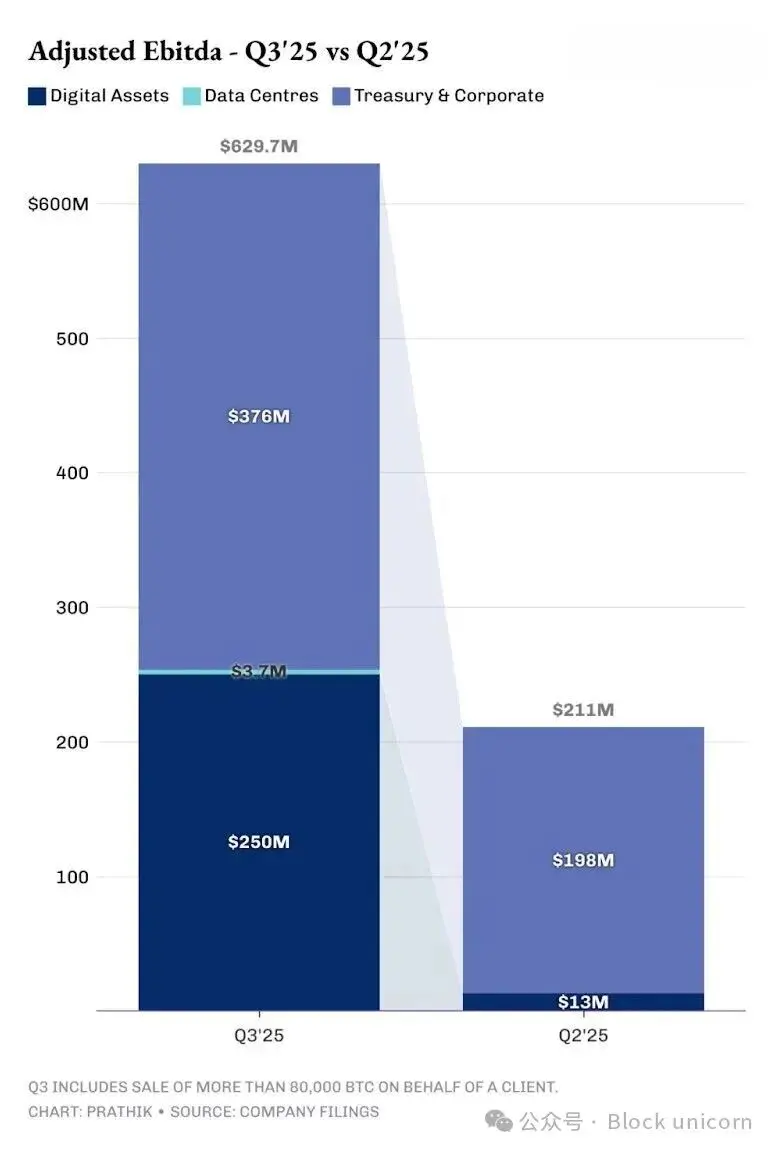
This is the crisis that Galaxy has decided to address: the more liquidity they provide, the less profit they earn from it.
So, how do they solve this problem? By finding a way to generate revenue. While other companies mint stablecoins or use them as collateral for loans, Galaxy focuses on building its corporate treasury management business. This model does not rely heavily on arbitrage or market timing like trading does; instead, it depends on long-term relationships, custody, and recurring fees.
This strategic shift indicates that Galaxy's future growth will come more from providing market advisory services for DAT rather than from the volatility of the market itself. While the revenue from DAT may be modest but stable, the company's next major project—Helios—will bring more substantial and sustainable tangible revenue.
Two Major Revenue Engines
In West Texas, the sweltering heat of the desert no longer signifies risk but opportunity. This company, which once thrived on perfect market timing, has now secured contracts, raised funds, and reached an agreement with one of America's leading AI computing companies, CoreWeave. As a tenant, CoreWeave has committed to providing 15 years of rent guarantees.
Once fully operational, the Helios data center is expected to generate over $1 billion in annual revenue, with an EBITDA margin of up to 90%. The finance and data center businesses will gradually reduce Galaxy's dependence on market timing—an indulgence in the turbulent cryptocurrency space.
This strategic shift aims to establish a stable revenue base that is unaffected by market fluctuations.
Conclusion
Investors should note that while trading remains Galaxy's flagship, fee income and future leases are beginning to smooth out the volatility curve.
Every cryptocurrency company ultimately faces the same dilemma: "What will you build once the speculative fervor fades?"
For Galaxy, this quarter marks a turning point. Creating revenue that appears consistently may be the dullest idea the company has ever had, but it could also be the most transformative.
This in-depth analysis concludes here; see you in our next article.
Recommended Reading:
Under the Savage Harvest, Who is Anticipating the Next COAI?
Interview with Bittensor Founder Jacob: Applying Mining to AI, TOP 3 Subnets Built by Chinese Teams
YZi Labs Major Report: Positioning, Economic Model, and Core Competitiveness of BNB
 Risk warning Risk warning


Popular articles





