








CZ Dubai's Latest Interview: What is the Focus After Leaving Binance's Daily Operations?
 Core Viewpoint

 Discuss the shift in work focus, the U.S. market, the DAT model, and industry challenges.
Organizer: ChainCatcher
After experiencing legal turmoil and personal identity changes, Binance founder Changpeng Zhao (CZ) is standing at a new starting point. Although he has handed over the daily operations of the company to co-CEOs He Yi and Richard Teng, among other new generation leaders, his presence has not drifted far from the center of the industry.
During the Binance Blockchain Week held in Dubai, CZ engaged in a dialogue with the media and the community. From the transition of his personal role to the future outlook of the industry, he clearly outlined the action roadmap for the "post-CEO era."

Now, he is dedicating more time to promoting the development of the BNB Chain ecosystem, engaging in dialogue with global regulators, and practicing his educational philosophy by advancing personal public welfare projects. The re-entry into the U.S. market, the bottleneck of crypto adoption, the sustainability of the DAT model, and the characteristics of the next generation of entrepreneurs—these key issues concerning the future of the industry have prompted him to provide clear and specific thoughts.
Below is the full transcript of this interview:
What changes have occurred in your work focus?
Q: After receiving a pardon, does Binance plan to launch new businesses in Europe and America? Will you collaborate with the Trump family?
CZ: First of all, I have no collaboration with the Trump family. I am very grateful for the pardon, which allows me and Binance to operate more freely in the global market, including the U.S.
I am fully willing to help the U.S. become the cryptocurrency capital. In the past few years, due to regulatory pressure, we have minimized our business and connections in the U.S. as much as possible.
But now the situation is different. The U.S. is a crucial market with top tech talent. However, in the blockchain field, most current leaders are not in the U.S. I hope to help bring more excellent cryptocurrency businesses and investment opportunities back to the U.S. and assist American investors in accessing ecosystem assets like BNB. We will fully support the development of the cryptocurrency industry in the U.S.
Q: How do you view Binance's new leadership structure? What will your personal role and focus be in the future?
CZ: He Yi's promotion is a natural progression. As a co-founder, she has always demonstrated exceptional strategic thinking, diligence, and a close connection to the community. This appointment formally confirms the leadership responsibilities she has already undertaken. Her skills complement those of another executive, Richard, making the team very solid.
For me personally, I am no longer involved in the daily operations of Binance. My focus is now more on the development of the BNB Chain ecosystem, supporting various projects, and spending time on "Giggle Academy." Interestingly, I am now communicating more with regulators from various countries, providing consultation on industry regulations.
I believe that leaders should not stay in one position for too long; allowing a new generation of leaders to grow is beneficial for the long-term health of the company. I enjoy this current role, which allows me to promote ecosystem development from a more macro perspective.
Q: What is the current progress of "Giggle Academy"?
CZ: The overall progress is quite smooth. We have now served about 88,000 children, and we are adding several thousand new users each week. In terms of course content, we have launched about 300 courses and several thousand storybooks, primarily in English, while also working to expand into other languages like Arabic.
Moving forward, one important direction for us is to develop better tools aimed at enabling users to more easily create course content in different languages. Overall, this is a project I am very passionate about, and I will continue to invest time in it.
Q: How do you envision a future where a broader audience uses Binance and the BNB Chain?
CZ: The ideal future is that we no longer need to specifically talk about "cryptocurrency" or "Web3," just as we don't discuss "TCP/IP protocol" today. The technology should be hidden beneath the surface.
Payments should be as simple as sending a message, with users not needing to understand complex concepts like addresses or gas fees. We need to develop extremely user-friendly products. Ultimately, network effects may lead to a few large platforms becoming mainstream gateways, but the user experience must be seamless and intuitive.
Q: DAT companies are currently under pressure; is their business model sustainable? What does the future hold for Binance's BNB DAT?
CZ: I believe the DAT model will continue to exist. Its fundamental value lies in providing compliant investment channels for traditional listed companies to invest in cryptocurrencies.
Of course, there are different models within DAT. For example, some purely hold Bitcoin long-term, a strategy that has proven very successful over the past decade. Others are more complex and engage in active portfolio management, which heavily relies on the capabilities of the management team.
Therefore, DAT itself carries risks, and its success or failure highly depends on the structure, fees, and investment philosophy of the management team. When a sector becomes overheated, many participants will flood in, followed by a reshuffling, and ultimately, solid quality companies will remain. Overall, this model is viable.
How to face public opinion pressure?
Q: As the most influential industry leader, you face a lot of public opinion pressure year-round; how do you maintain mental health?
CZ: My mindset is relatively stable, centered on two points:
Focus on value: I know that Binance's platform and ecosystem provide real help to hundreds of millions of people, especially users in financially underserved areas. I have received many letters from users expressing gratitude for improvements in their lives, which gives me immense strength.
Differentiate feedback: I categorize external criticism into several types: first, traditional media or interest groups resisting emerging technologies; second, emotional complaints from trading losers. For the former, I understand their background; for the latter, I sympathize with the losses. However, I believe investors must take responsibility for their decisions. I take constructive criticism about product improvements seriously, while I have learned to mentally filter out baseless accusations.
I believe I am doing something right and beneficial, which allows me to feel at ease.
Q: You plan to donate most of your wealth; what social causes are you most concerned about? What kind of donation methods do you prefer?
CZ: I believe wealth should be used to create value rather than just being held. Currently, I am mainly focused on education, but I am also exploring other directions.
For example, I recently came across a public welfare project aimed at improving soil microbial health, thereby indirectly restoring the atmosphere. Although climate is not my primary focus, the project's concept is very valuable.
I hope to establish a professional team to systematically evaluate various charitable projects. Personally, I prefer to donate through blockchain to ensure traceability and transparency throughout the process. However, the current challenge is that not all beneficiaries are familiar with cryptocurrencies. Therefore, at this stage, we need to strike a balance between coverage and transparency, and we will try to collaborate with different charitable organizations to find efficient and impactful models.
Q: In the next market cycle, what types of projects and founders do you think will rise? Which will disappear?
CZ: Founders and projects that can sustain development typically possess the following characteristics:
Product-driven: Focused on creating products that people genuinely use, putting users first.
Long-termism: Not afraid of the inherent volatility of the cryptocurrency market, able to navigate through bull and bear cycles.
Resilience: Capable of coping with the fluctuating regulatory environments of different countries.
In short, those who succeed will be teams that have real products, genuinely care about users, and are prepared for long-term development. Projects lacking these qualities may be eliminated.
Challenges and breakthroughs in cryptocurrency adoption
Q: What unresolved issues does cryptocurrency face in daily life? How can we achieve this in the next three to five years?
CZ: Payments are an obvious problem to be solved. The Bitcoin white paper positions it as an electronic cash payment system; many have tried, but large-scale adoption has not yet been realized. A core obstacle is price volatility.
Currently, although there are stablecoins, the adoption rate is still low. I believe a potential breakthrough direction is to integrate with traditional payment channels (like credit cards). Ideally, users swipe their cards for payment, merchants receive fiat currency instantly, and users can choose to receive cryptocurrency. Such seamless "fiat-cryptocurrency" conversion solutions are very promising.
Unfortunately, similar products like the "Binance Card" have faced obstacles due to regulatory pressure in the past. However, with changing circumstances, I believe that in the next three to four years, such solutions are likely to be re-promoted and become popular. Of course, there are many paths to solving payment issues; this is just one of them.
Q: What challenges must be overcome to achieve mainstream adoption of cryptocurrency? How can Binance assist?
CZ: This is a gradual process, with key challenges including:
First, regulatory clarity: Most regions globally still need to establish clear and forward-looking regulatory frameworks. My team and I are working with multiple national governments to provide consultation and even hold seminars to promote industry knowledge.
Second, integration with traditional finance: Cryptocurrencies need to better integrate with the existing financial system (like banks), which is the best path to achieve large-scale adoption.
Additionally, there is a need for supporting infrastructure: Standards for accounting, taxation, and auditing for businesses holding cryptocurrencies need to be established.
The overall market value and potential of cryptocurrencies are still very small, and key applications like payments have not yet become widespread. Any disruptive technology takes time to mature, just like the development of the internet. We are patient and are working to promote progress in the aforementioned areas.
Q: How can cryptocurrency help emerging market countries like Peru develop? How can awareness in these regions be improved?
CZ: I believe there are more opportunities in emerging markets like Peru. First, many developing countries lack ready-made financial infrastructure, with low bank penetration, but smartphone adoption is rapidly increasing. This creates an excellent scenario—people can download an app to access financial services.
It can solve very specific problems. For example, I saw a user write that it used to take three days to walk to pay a bill, but with cryptocurrency, it only takes three minutes, saving a lot of time each month. At the same time, it is also a new asset class that allows users to start investing with small amounts. Additionally, in many countries, local fiat currencies may be more volatile than cryptocurrencies, and stablecoins can serve as a tool against hyperinflation.
These countries also tend to have younger populations who are more willing to accept cryptocurrencies. So ultimately, it depends on whether the leadership has vision. If the government wants to do what is most beneficial for the country and its people, I strongly recommend they adopt cryptocurrencies, and we are more than willing to help.
 Risk warning
 Risk warning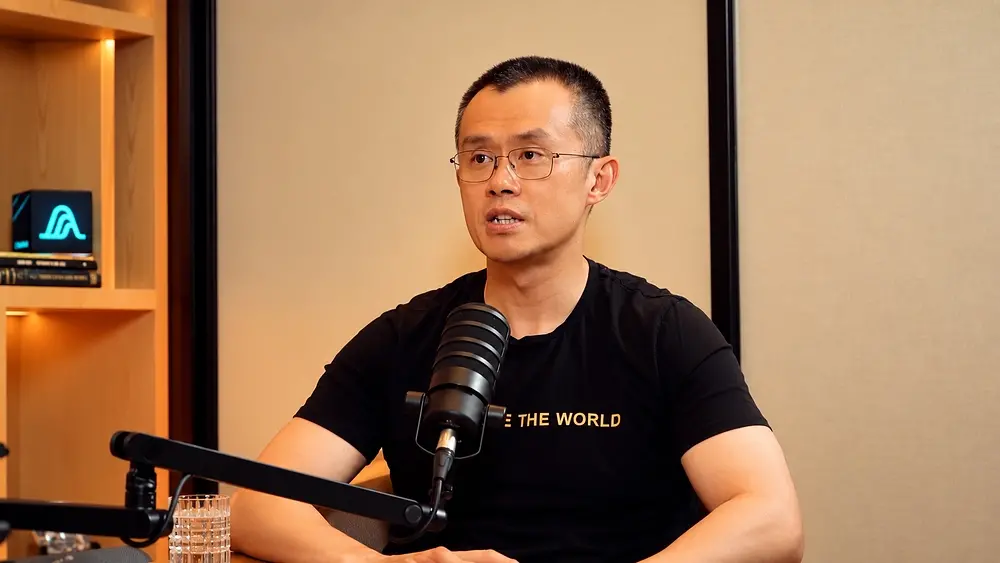



Popular articles





