








Santiment: After the Kelp incident, "refugee trading" emerged, and the SPK token surged 100% in 48 hours
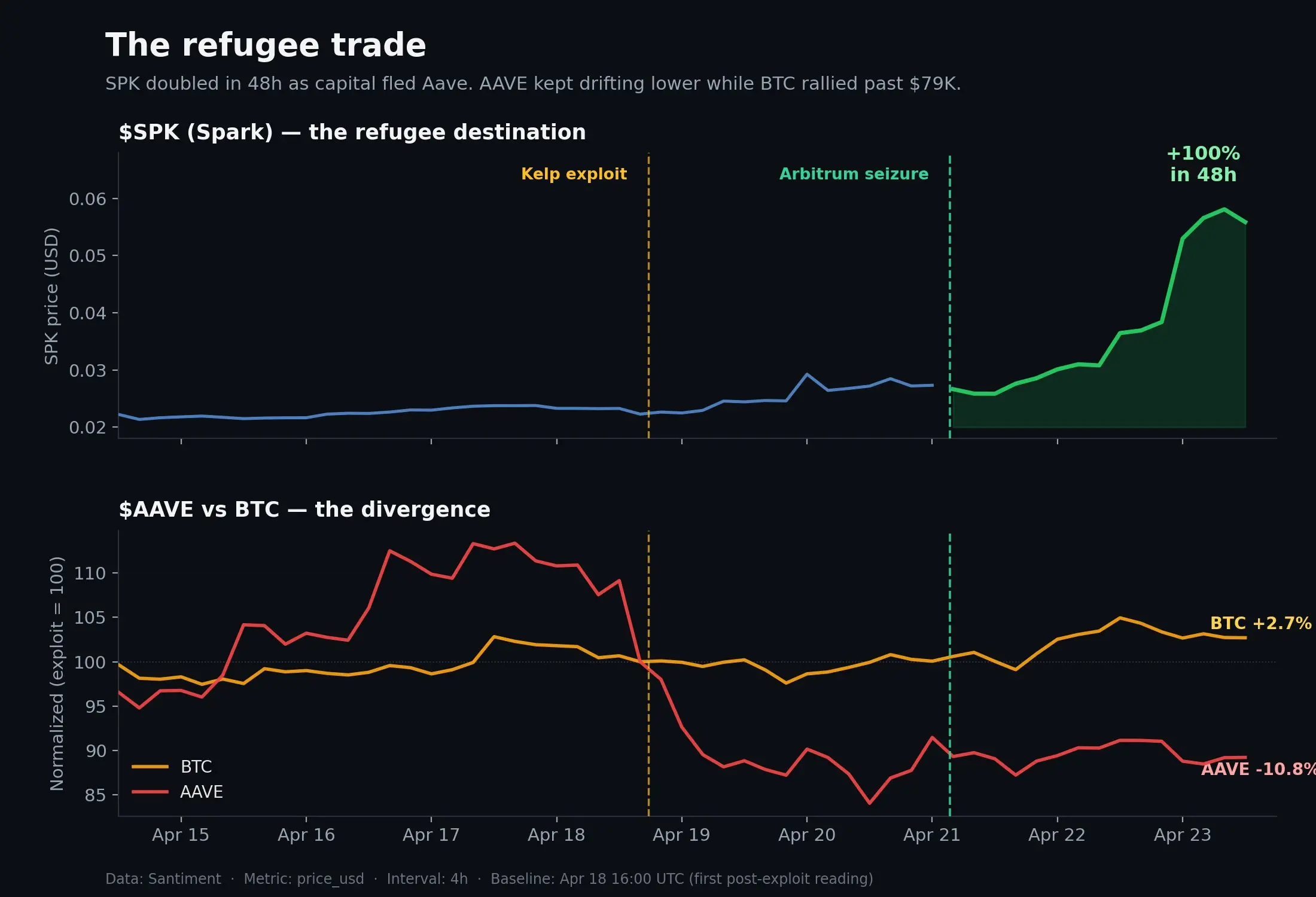
The on-chain analysis platform Santiment tweeted that six days after the Kelp event outbreak, there were obvious signs of "refugee trade" in the market.
The Spark token SPK skyrocketed from $0.029 to $0.058 within 48 hours, an increase of over 100%. Meanwhile, whale transactions (over $100,000) surged from an average baseline of about 30 per day to 183 today.
In contrast, the price of the AAVE token continues to decline, currently hovering around $92, even though Bitcoin had previously broken through $79,000 earlier this week.
Santiment pointed out that this event did not solely cause destruction but led to a reallocation of funds— a liquidity crisis for one protocol turned into a bull market for another protocol.
Note: "Refugee trade" is a metaphorical term in the crypto/DeFi space, specifically referring to the phenomenon where funds flee in large amounts from damaged or high-risk protocols, similar to refugees, and move to another protocol that is relatively safe and lower risk.

 Risk warning Risk warning


