








Binance Alpha Deepens Integration with RootData to Boost Project Transparency
 Core Viewpoint

 Through this cooperation, Binance has significantly enhanced the information transparency of its platform, allowing users to comprehensively understand the team background and industry influence of the Alpha coin project, thereby providing solid references for investment decisions.
Author: 谷昱,ChainCatcher
Binance has taken a significant step to enhance transparency by embedding detailed RootData team information across all 400+ Binance Alpha tokens in its latest app update.
Users can now easily view key team details directly within the Binance Website and App, including members’ roles, social media links, X follower counts, and X influence scores. This provides investors with clearer insight into project teams and their industry standing, enabling more informed investment decisions.
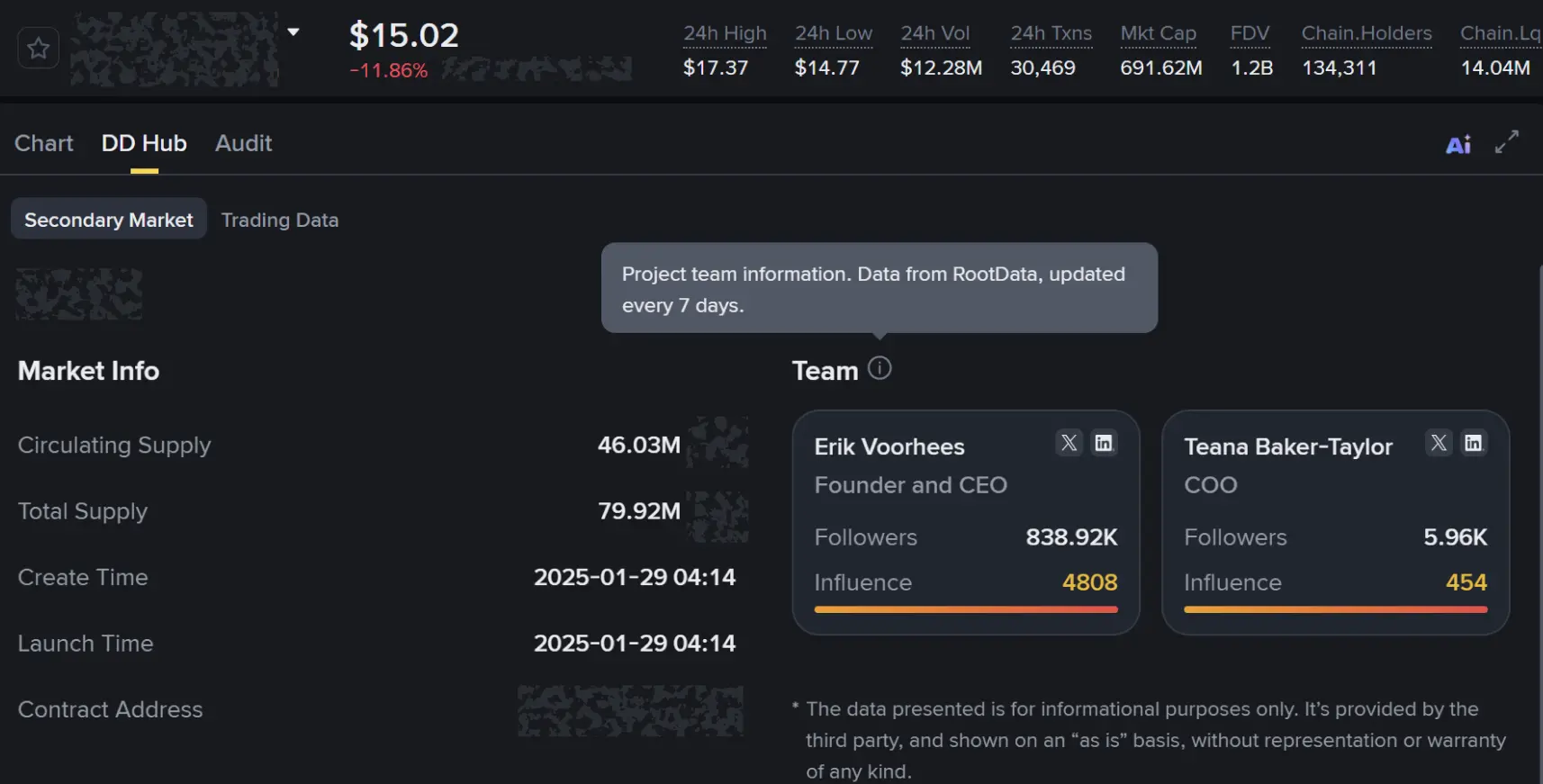
Through this ongoing collaboration, Binance and RootData are working together to significantly raise the standard of information transparency on the platform.
Team background has long been one of the biggest “black boxes” in crypto investment decisions
For early-stage, high-volatility Alpha tokens, the quality and credibility of the team often determine a project’s ceiling. Market reactions such as the surge in Starknet (STRK) following Zcash (ZEC)’s rally due to shared founder Eli Ben-Sasson, further highlight how team connections can directly influence price movements.
RootData has spent years building the industry’s most comprehensive database of team, funding, and market data, covering tens of thousands of industry professionals including founders, investors, executives, and KOLs.
Binance’s decision to partner with RootData reflects the platform’s deep expertise and strong reputation in project information.
For RootData, this integration marks another major milestone in its mission to become the trusted data infrastructure for the crypto industry.
According to available information, the core mission of Binance Alpha is to help users discover and participate in early-stage Web3 innovation projects ahead of the curve. It serves as an accessible entry point for everyday users into Web3, while also providing quality projects with incubation support and greater exposure opportunities. However, the earlier a project is, the less transparent its information tends to be, making it more difficult to safeguard investor interests.
Through this collaboration, Binance has significantly enhanced the transparency of its platform. Users can now gain a comprehensive understanding of the team background and industry influence behind Alpha tokens, enabling more informed investment decisions.
In fact, Binance Wallet has already integrated RootData’s project overviews, funding history, and event calendars into its Earn page.
This partnership marks meaningful progress in jointly improving market transparency. For RootData, this collaboration represents a major step forward, as its data capabilities are now penetrating deeper into core industry traffic channels, a key milestone in building trusted data infrastructure for the crypto ecosystem.
Opening Up RootData's Data Capabilities
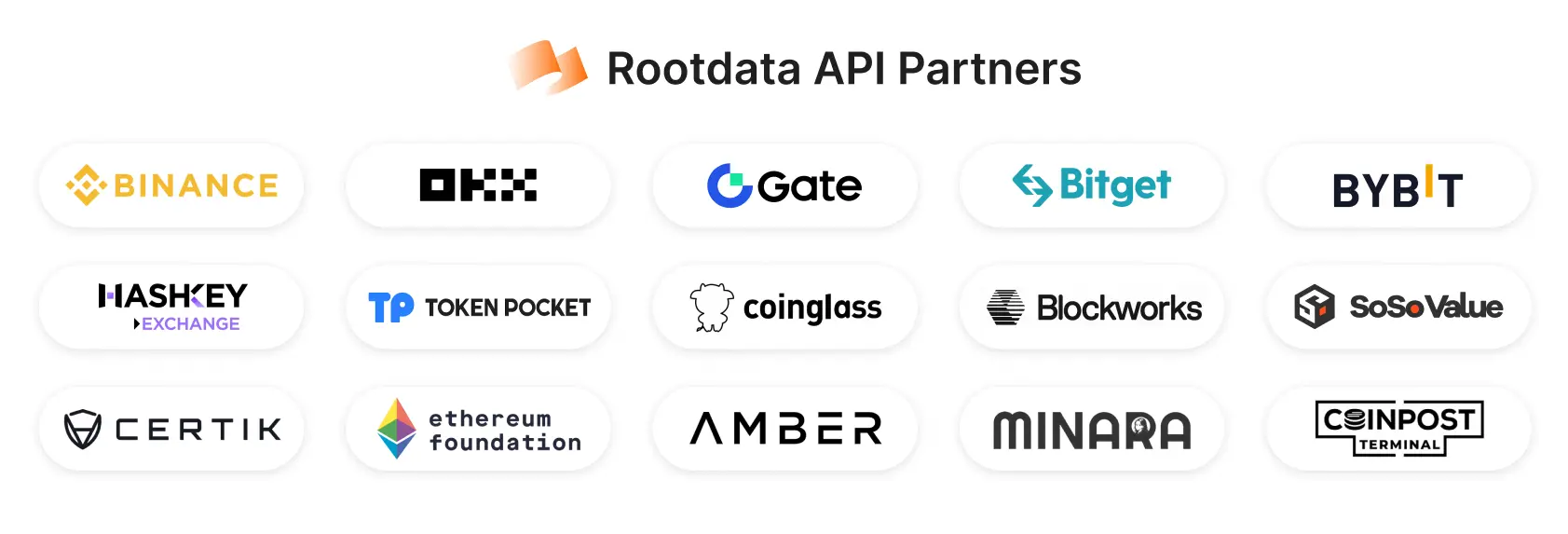
According to reports, its API currently offers 21 endpoints and over 200 data fields, and has been adopted by more than 260 partners, including the Ethereum Foundation, OKX, CertiK, Gate, Blockworks, Amber Group, and Token Pocket.
By embedding structured data into high-traffic platforms like Binance, RootData is transforming static information into dynamic, actionable intelligence across wallets, exchanges, AI tools, and research terminals. This is helping raise the baseline of transparency across the entire ecosystem.
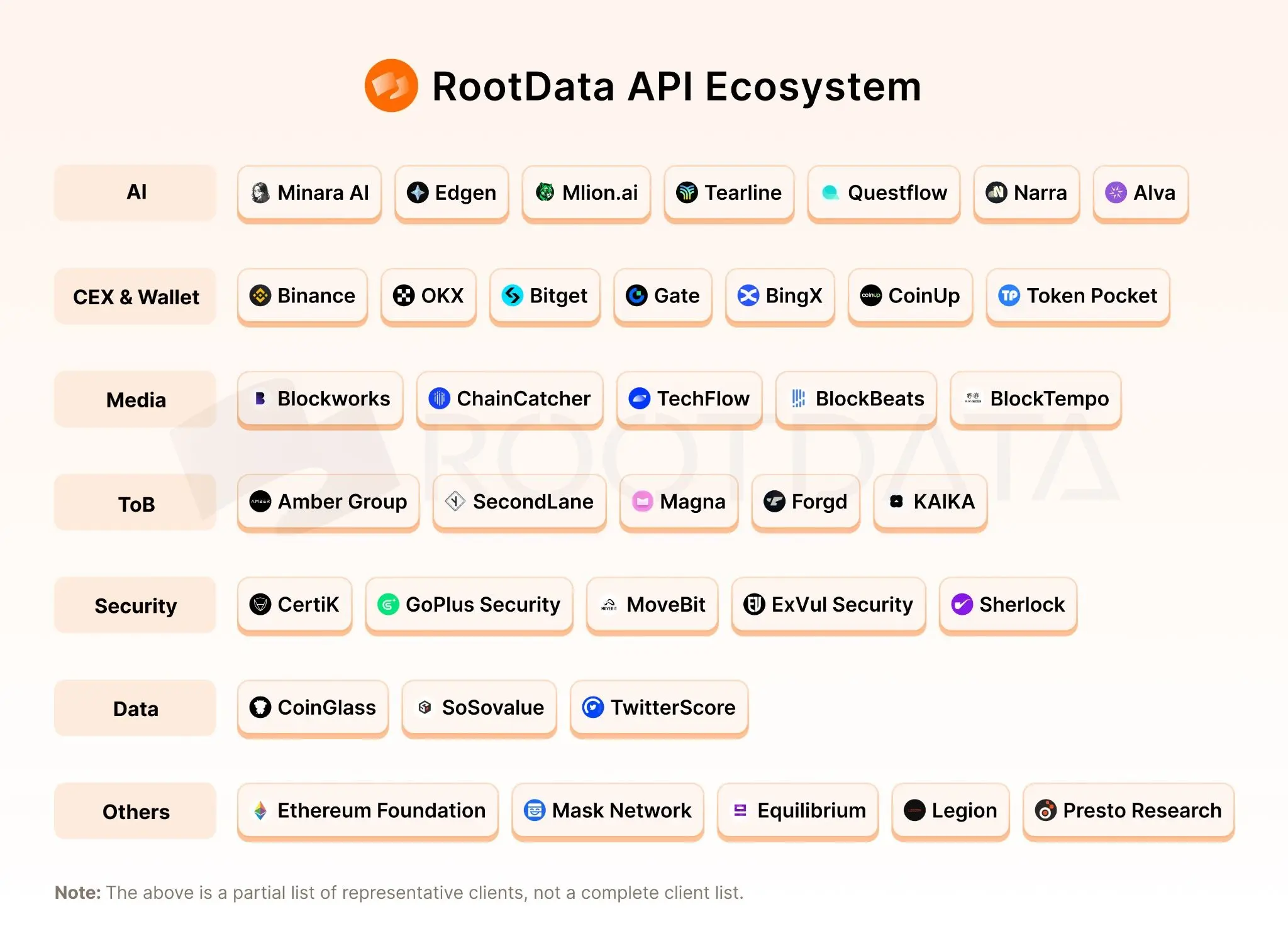
RootData has made transparency a core strategic focus, developing a comprehensive project transparency scoring system and continuously enriching its platform through community incentives, AI, and partner feedback.
The crypto industry has witnessed too many ambitious narratives collapse due to opaque operations. With major platforms like Binance now integrating structured, verifiable project data at scale, the rules of the game are shifting.
The market is gradually moving from storytelling to verification, and from emotion-driven to fundamentals-driven decisions.This collaboration signals a broader transition: the crypto industry is maturing from its early wild-west phase into a more structured, institutional, and reputation-based ecosystem — one that values long-term credibility and sustained execution.
 Risk warning



Popular articles





