








The era of regulatory arbitrage has come to an end, and the competition for the value of cryptocurrency exchange licenses is intensifying
 Core Viewpoint

 Understanding the true value of a license is the foundation for assessing the long-term sustainability of an exchange.
Author: Chloe, ChainCatcher
In the past decade, the expansion logic of cryptocurrency exchanges was "first users, then compliance." However, this logic was completely reversed in 2026, and now, what truly sets companies apart is the compliance dividends brought by licenses.
As the era of regulatory arbitrage comes to an end, how will Binance, OKX, Bitget, Bybit, and Gate compete for entry tickets in the next round of reshuffling with distinctly different strategies?
The New Battlefield Among Exchanges in 2026: Compliance Dividends
According to CoinGlass's annual derivatives market report published in 2025, the total trading volume of centralized exchange derivatives reached $85.7 trillion for the year, averaging about $264.5 billion daily, with a highly concentrated market share where the top five exchanges accounted for over 80% of open interest. In such a market scale, any leading exchange must find differentiation beyond simply offering "lower fees" or "more cryptocurrencies," as the marginal utility of these advantages is diminishing.
Market Position and Current Rankings of the Five Exchanges
Before diving into the license overview, let's look at the relative positions of these five exchanges in 2026 using data.
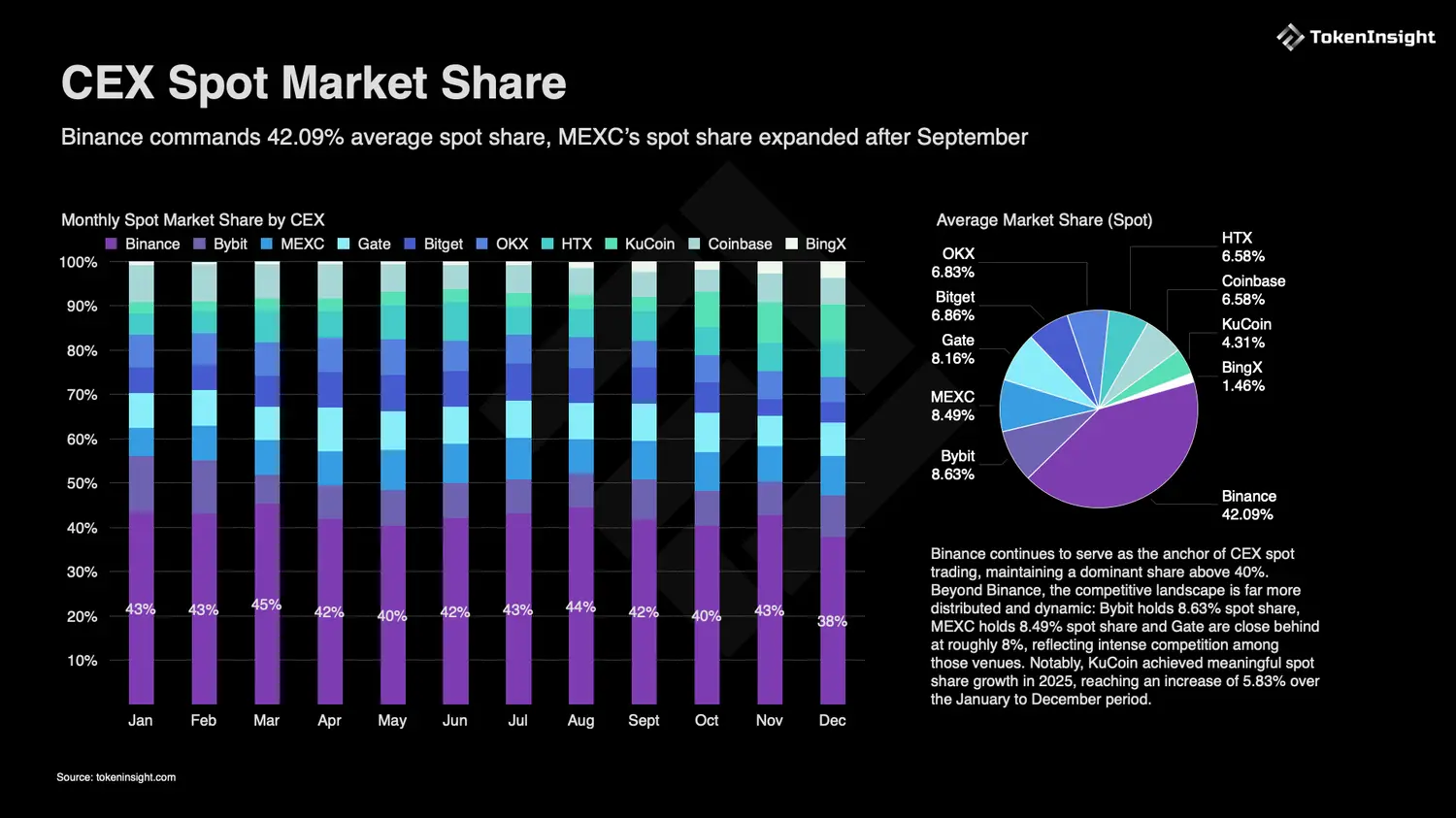
According to TokenInsight's 2025 annual report, the distribution of spot market share for the year was as follows: Binance 42.09%, Bybit 8.63%, MEXC 8.49%, Gate 8.16%, Bitget 6.86%, OKX 6.83%, Coinbase 6.58%, KuCoin 4.31%.
The landscape of the derivatives market shows slight differences. Data indicates that in 2025, Binance maintained the top position with an average market share of 34.74%, followed by OKX at 15.06%, Bybit at 12.95%, Bitget at 11.27%, and MEXC and Gate at 10.58% and 8.25%, respectively.
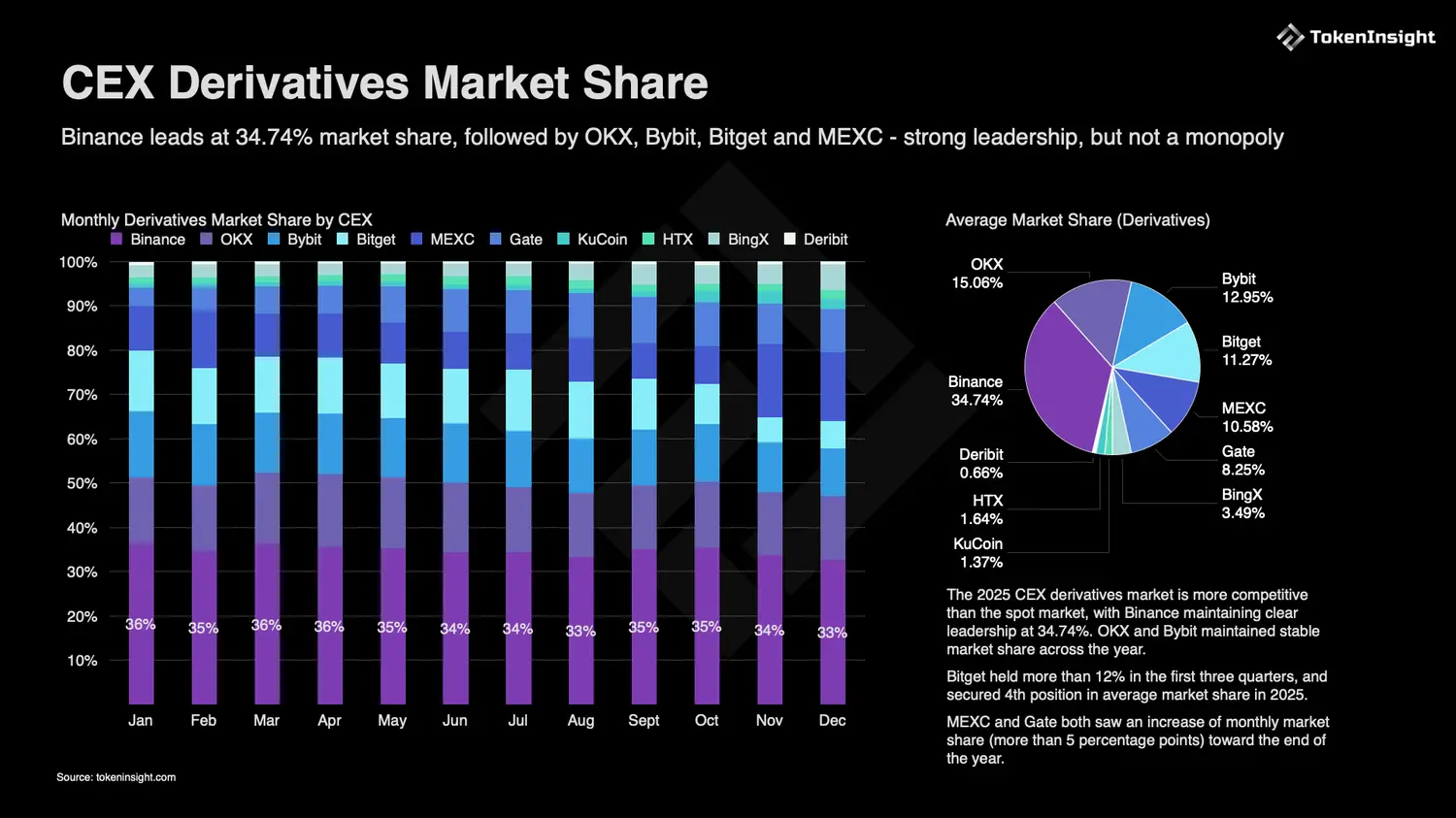
These two sets of data show that aside from Binance's absolute advantage in both the spot and derivatives markets, the shares of the other four exchanges are actually closely contested. As the market scale expands and share distribution stabilizes, those who can obtain key market licenses will have the opportunity to leapfrog in the next round of reshuffling.
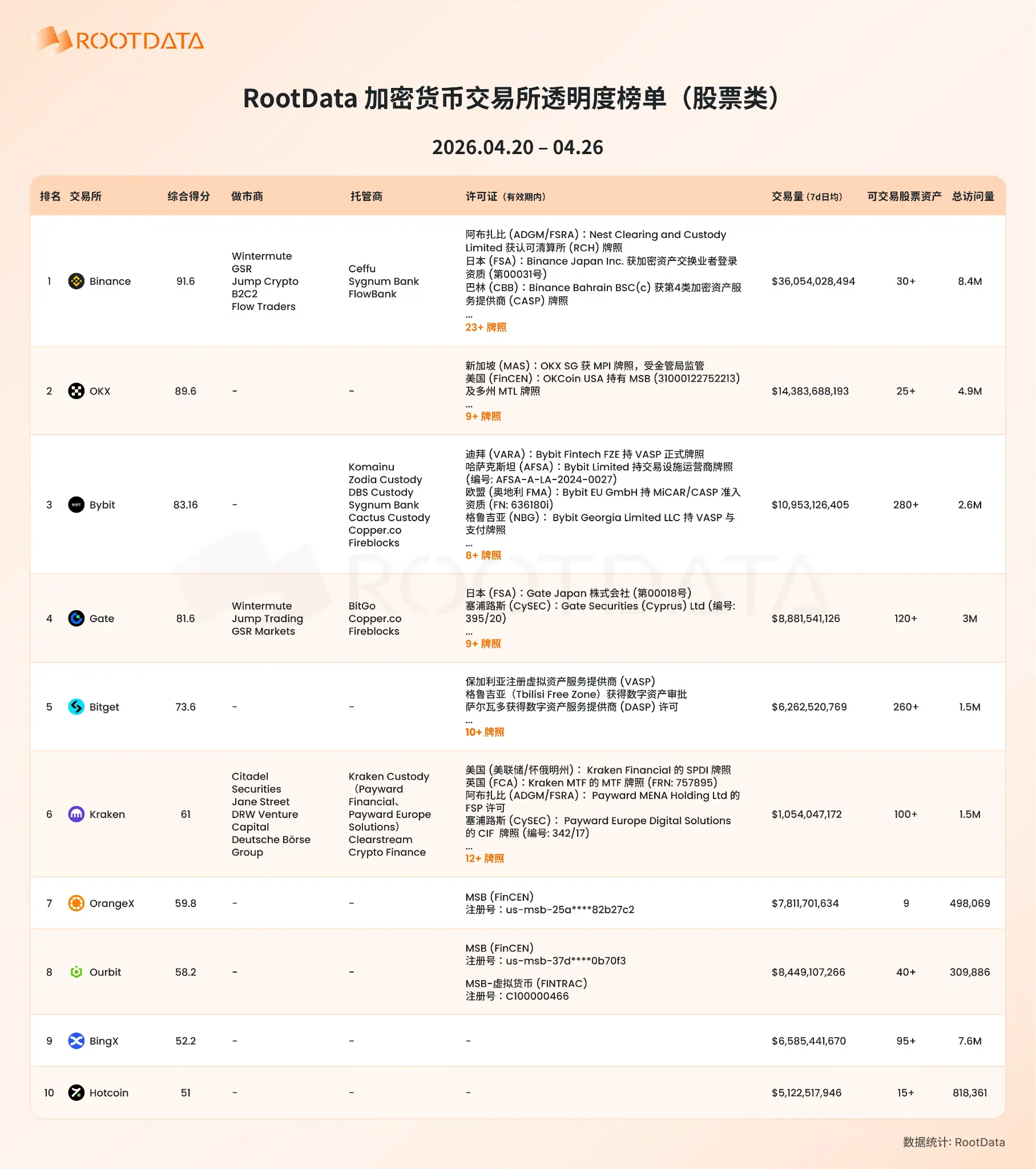
It is worth noting that these five leading exchanges also maintain a leading position in terms of compliance transparency. According to the crypto asset data platform RootData, in the eighth edition of the "Cryptocurrency Exchange Transparency Rankings (Stock Type)" released by RootData, Binance, OKX, Bybit, Gate, and Bitget continue to rank in the top five, highly aligning with the market share patterns in both spot and derivatives markets. This ranking continues to focus on the growth trend of stock assets in crypto exchanges.
Binance: The Absolute Leader's Compliance Shift
Binance is the only player on this list that does not need to worry about market share, but it is also the one under the most regulatory pressure.
Between 2023 and 2024, Binance faced significant regulatory fines and settlements in the U.S. and multiple countries, fundamentally changing the company's strategy. According to Nikkei Asia, SB Seker, head of Binance Asia Pacific, stated in March 2026 that Binance plans to obtain five new licenses in Asia within 2026, raising the total number of licensed jurisdictions globally to over 20.
As of early 2026, Binance has obtained regulatory approvals in Australia, India, Indonesia, Japan, New Zealand, and Thailand, and through the acquisition of a controlling stake in South Korea's Gopax, the South Korean license is also about to enter its portfolio.
Binance's global scale itself is creating a compliance narrative. According to Binance's 2025 annual report, the number of registered users globally exceeds 300 million, and the spot trading volume for 2025 surpassed $7.1 trillion. At this scale, a ban in any single country affects not only local users but also the entire OTC market and stablecoin liquidity. Notably, Binance's licensing strategy differs from other exchanges; it acquires local licensed entities (such as Gopax) to obtain licenses rather than applying from scratch, which shortens the timeline but also means Binance must bear the historical burdens of the acquired entities.
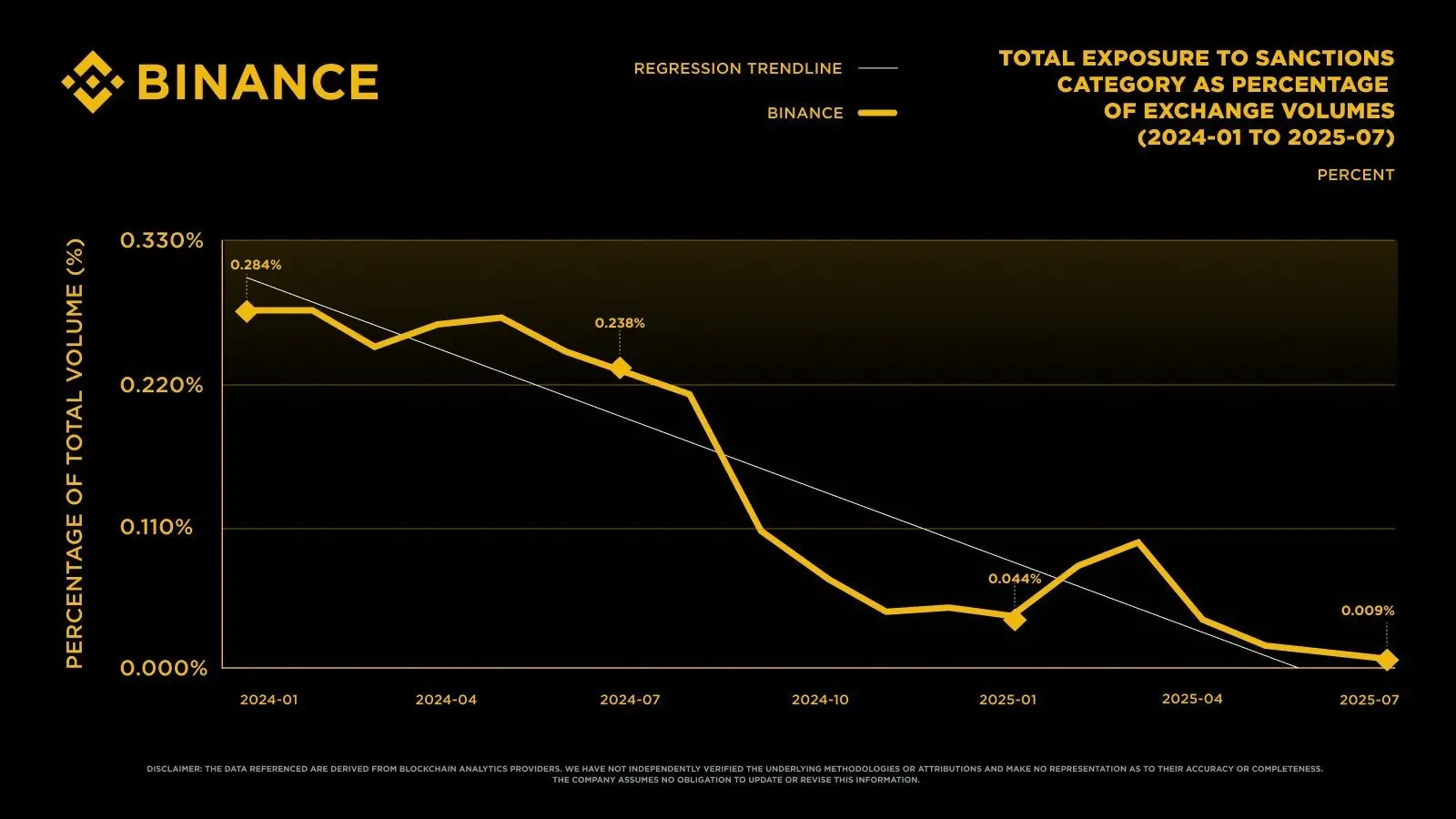
The compliance narrative data for Binance in 2025 will be directly updated in its compliance update report, showing that the proportion of direct and indirect fund flows related to sanctions dropped from 0.284% in January 2024 to 0.009% in July 2025, a decrease of 96.8%.
Bitget: A Latecomer Building Licenses from Scratch
Bitget is the last of the five exchanges to start laying out its licensing strategy, but its speed and breadth in obtaining licenses are quite aggressive. According to an open letter released by Bitget in April 2025, signed by Chief Legal Officer Hon Ng, Bitget had already obtained "over 8 licenses." By early 2026, Bitget had regulatory registrations in Europe, Asia, the Middle East, Latin America, and Oceania, including Australia, Italy, Poland, El Salvador, the UK, Bulgaria, Lithuania, the Czech Republic, Georgia, and Argentina.
In Asia, Bitget completed its registration with VARA (Dubai Virtual Assets Regulatory Authority) by the end of 2025, authorizing it to provide regulated virtual asset services from its Dubai headquarters. It also obtained a digital asset license in Georgia and established the Tbilisi Free Zone as a base for expansion into Eastern Europe.
From a licensing strategy perspective, Bitget is following a "first seek breadth, then seek depth" approach. Most of the licenses it obtained in Europe are VASP registrations rather than the full CASP license under MiCA; in Asia, it has yet to secure full licenses in Japan, Hong Kong, and Singapore, the three most valuable markets. Perhaps the challenge for Bitget is that once the number of licenses reaches a certain scale, the market will start to question "quality."
Bybit: Swinging Between Setbacks and Breakthroughs
Bybit has the most convoluted licensing path among the five. In May 2024, Bybit exited the Hong Kong market due to regulatory pressure from the Hong Kong Securities and Futures Commission, and its associated entity Spark Fintech Limited formally withdrew its license application. By the end of 2025, Bybit announced it would gradually cease services to Japanese residents in 2026 and required affected users to complete identity verification by January 22, 2026, or they would be treated as Japanese residents and restricted from use. In Singapore, the Monetary Authority of Singapore (MAS) required unlicensed digital token service providers to cease overseas operations by June 2025, and Bybit also stopped operations in Singapore.
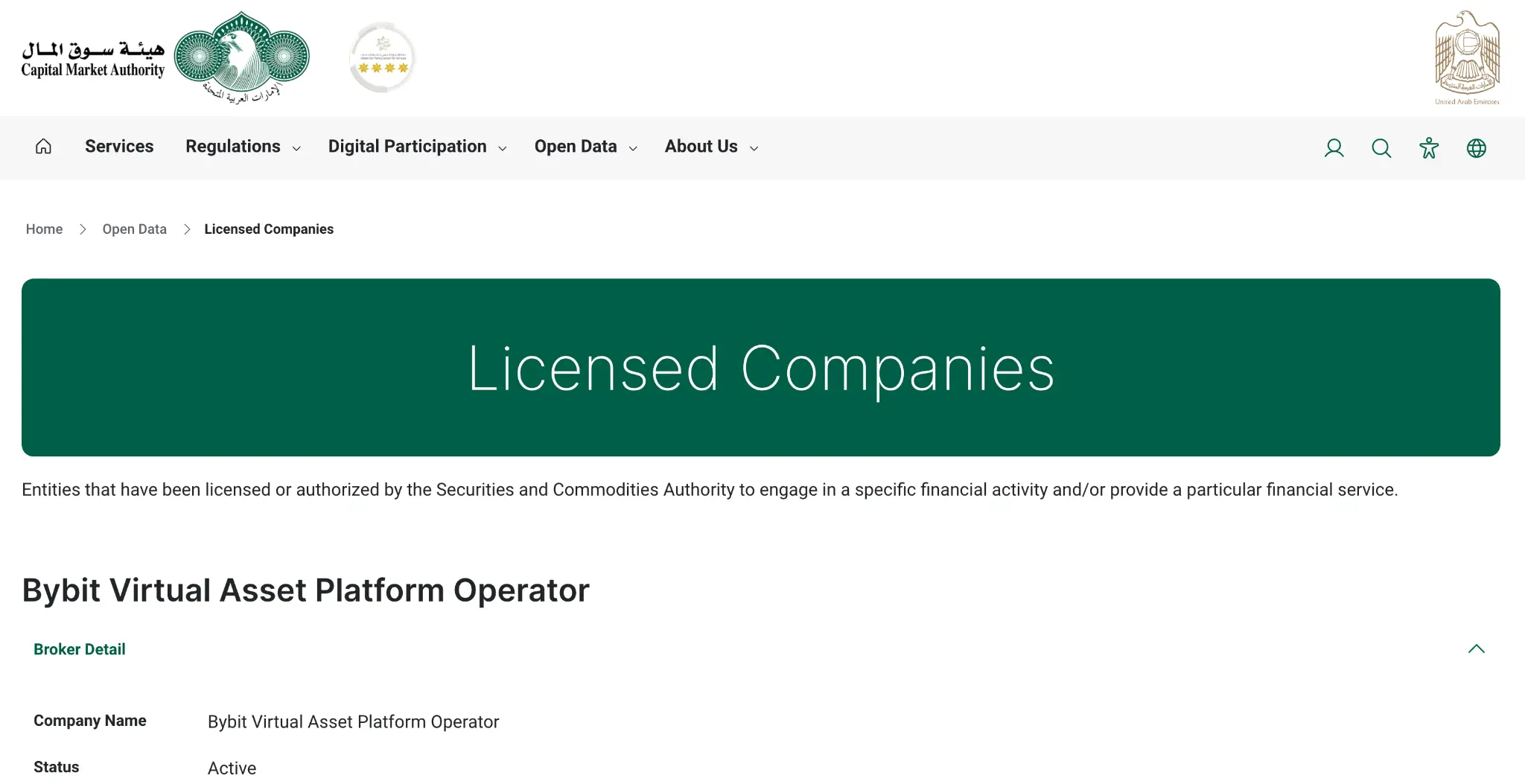
However, on the other hand, Bybit secured two relatively high-value licenses in the industry. In October 2025, the UAE Securities and Commodities Authority (SCA) granted Bybit its first complete "Virtual Asset Platform Operator License," covering trading, brokerage, custody, and fiat services across all seven emirates of the UAE. In Europe, Bybit EU GmbH obtained a MiCAR license through the Austrian Financial Market Authority (FMA) in May 2025, allowing it to operate in 29 countries within the European Economic Area.
Additionally, in February 2025, Bybit experienced the largest hack in crypto history, losing approximately $1.46 billion. This incident put immense pressure on Bybit's compliance and security narrative in 2025 and became one of the triggers for the Japanese Financial Services Agency to consider requiring exchanges to set aside capital reserves. Bybit's case illustrates that "holding a license" and "being able to maintain a license" are two different matters.
Gate: Quietly Building a Compliance Matrix
Gate's visibility in the Asian Chinese community is not as high as that of Binance and OKX, but if we look solely at the details of license coverage, Gate's footprint is surprisingly complete. According to the license page published by Gate, by early 2026, Gate had obtained regulatory registrations, licenses, or approvals in over eight jurisdictions, including Hong Kong, Gibraltar, Malta, Japan, Australia, the Bahamas, Dubai DMCC, and Cyprus.
From a regulatory coverage perspective, Gate's strategy is closer to "establishing independent entities in each key jurisdiction and obtaining licenses separately," rather than "using a single headquarters license to operate in multiple countries." This approach is costlier but also offers stronger resistance to regulatory risks. For example, in Europe, Gate has both a VASP registration in Lithuania (used for early EU operations) and a MiCA license in Malta (a pass under the new framework), providing double insurance.
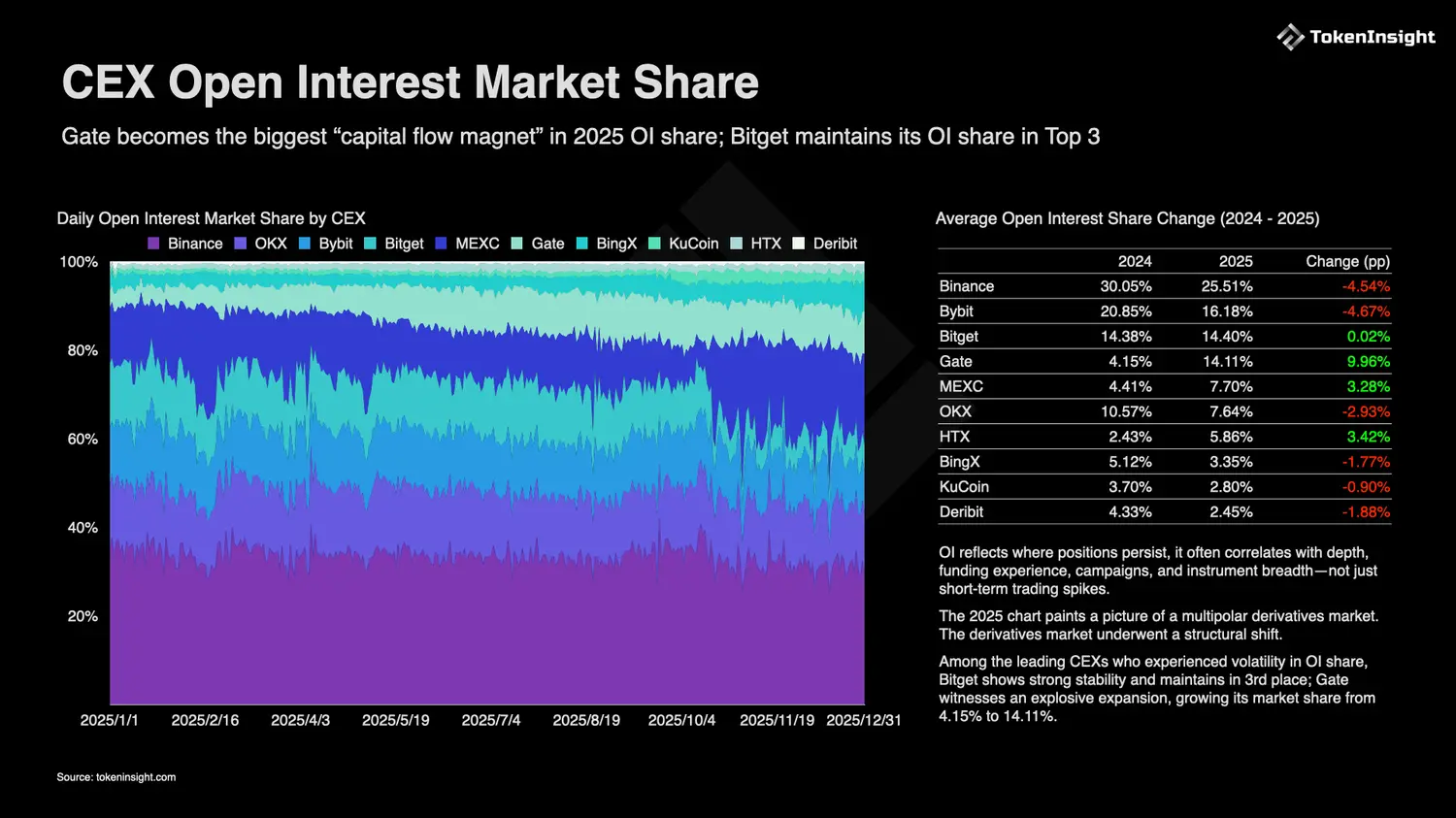
On the other hand, Gate's growth in the Asian derivatives market is particularly noteworthy. TokenInsight data shows that Gate's open interest market share grew from 4.15% at the beginning of 2025 to 14.11% by the end of the year; the speed of license acquisition is highly synchronized with the growth of market share.
OKX: Compliance Restart Through Settlement Payments
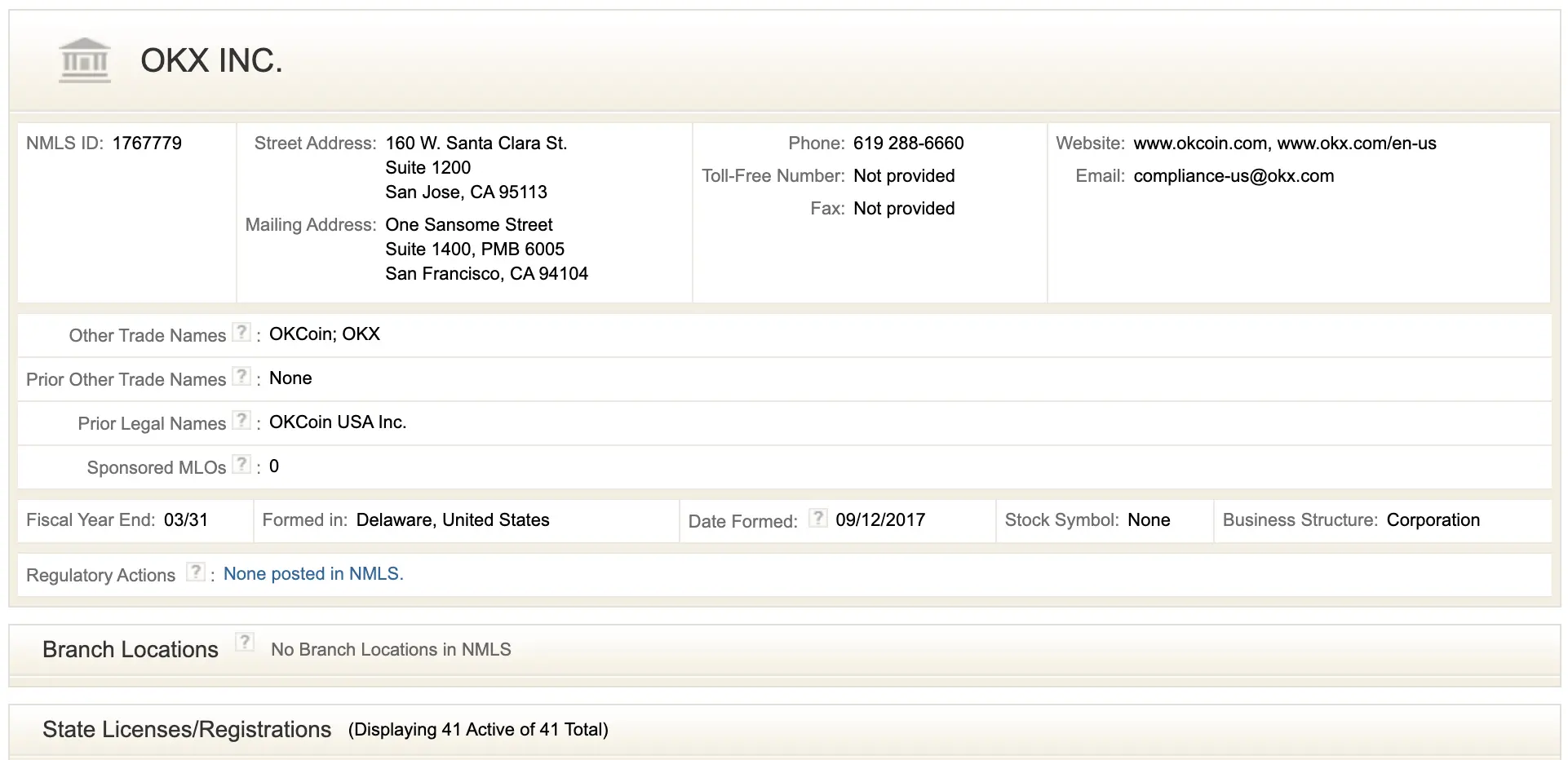
OKX's licensing journey underwent a complete restart in 2025. In April 2025, OKX reached a settlement with the U.S. Department of Justice, paying approximately $505 million in fines and officially restarting operations in the U.S., with its headquarters located in San Jose, California. As of early 2026, OKX holds money transmitter licenses in over 40 states in the U.S. and is registered as a money services business with FinCEN.
In Asia, OKX's license distribution is as follows:
Singapore: OKX SG Pte. Ltd. obtained a full Major Payment Institution (MPI) license from the Monetary Authority of Singapore (MAS) in 2024 and appointed former MAS official Gracie Lin as CEO of Singapore. This license is recognized as having high value in Asia due to the strict review standards and slow issuance pace of the MAS.
Dubai: OKX holds a VASP license with VARA and is one of the first international exchanges to sign an MOU with VARA and obtain a temporary license.
Europe: OKCoin Europe Ltd, based in Malta, obtained a MiCA license in January 2025, allowing it to operate in 30 European Economic Area countries, making it one of the first global exchanges to obtain a complete CASP license under MiCA.
Australia: OKX Australia Pty Ltd is registered with the Australian Securities and Investments Commission (ASIC).
However, OKX also has significant licensing gaps. In Hong Kong, OKX has withdrawn its VATP license application, and as of early 2026, OKX is still on the list of restricted services in Japan. In other words, OKX's high-value licenses in Asia are concentrated in Singapore and Dubai, but the markets of Japan and Hong Kong remain unaddressed.
Its licensing narrative may be "paying the price to re-enter the U.S. and using that price to gain global institutional trust."
Why Are Some Licenses "Not Valuable"?
From verifiable regulatory documents and industry practical experience, crypto licenses can generally be divided into three tiers.
First Tier: High-Value Licenses
These licenses are characterized by: the issuing authority belongs to a mainstream financial regulatory system, the application process is lengthy, capital and governance requirements are high, they allow for complete retail operations, and they can connect with local banks and fiat channels.
Representative cases include:
The full MPI license from Singapore's MAS (held by OKX SG). According to Bloomberg, Singapore issued only 13 crypto licenses in total in 2024.
Type 1 and Type 7 licenses from Hong Kong's SFC. By the end of 2024, there were a total of 7 fully licensed virtual asset trading platforms in Hong Kong (4 of which obtained restrictive licenses on December 18), and another 7 held temporary licenses.
Registration of cryptocurrency exchange operators with Japan's FSA. Full operational licenses for VASP from Dubai's VARA.
Complete virtual asset platform operator licenses from the UAE's SCA (Bybit being the first).
Full CASP licenses under the EU's MiCA.
Second Tier: Medium-Value Licenses
These licenses are characterized by: legal operation is possible, but the scope of business is limited, or the regulatory framework in the jurisdiction is still under construction, or the local financial system is relatively small.
Representative cases: VASP registrations in EU member states like Lithuania, Italy, and Poland (many exchanges hold these, but they are often just a temporary measure during the MiCA transition period), El Salvador's BSP and DASP licenses, Georgia's digital asset license, Bulgaria's VASP license.
These licenses are legal and genuine, but relatively easy to obtain, so holding them alone does not create a competitive barrier.
Third Tier: Low-Value Licenses
These licenses are characterized by: the issuing authority may be a small country's financial department, commercial registration authority, or free trade zone management unit. The issuing standards may only require basic KYC/AML processes, and the license holders may not enjoy any rights to access fiat banking or local retail operations. In terms of credibility and signaling value, these licenses are closer to a "company registration" than a "financial license."
After classification, looking back at the licensing performance of the five exchanges provides a clearer picture:
Binance has obtained six high-value licenses in Asia (including the soon-to-be-acquired Gopax, making it seven), which is its absolute moat.
OKX has high-value licenses in Singapore, Dubai, and the EU MiCA, but is absent in Japan and Hong Kong.
Bybit has secured the UAE full license and MiCAR, but faces obstacles in Japan, Hong Kong, and Singapore, presenting a "polarized" pattern.
Gate entered Japan through acquisition and obtained a MiCA license in Malta, along with a full operational license from Dubai's VARA, establishing three footholds in high-value areas.
Bitget is currently the weakest in high-value areas, primarily narrating its strategy based on the "breadth" of low to medium-value licenses.
The Next Stage of the Compliance License Competition
From the trajectories of these five exchanges, several clear patterns can be summarized.
The Era of Regulatory Arbitrage Has Ended
In the past, exchanges could register in Seychelles or the British Virgin Islands and serve global users through decentralized operational structures; this path has effectively been blocked since 2025. The EU's MiCA, Singapore's DTSP system, Hong Kong's VATP framework, and Japan's FSA system all require exchanges to have a physical presence, licenses, compliance history, and capital reserves locally.
"Acquiring Licensed Entities" Is More Efficient Than "Reapplying"
Binance's acquisition of Gopax to enter Korea, Gate's acquisition of Coin Master to enter Japan, Bybit's negotiations to acquire Korbit, and Binance's acquisition of Sakura Exchange BitCoin to enter Japan all follow this logic. For regulatory authorities in mature markets (Japan, Korea), issuing new licenses requires lengthy reviews; however, allowing existing licensed entities to change their shareholder structure is a more feasible path.
Regulatory Fines Have Become Compliance Certifications
After OKX paid $505 million in settlement, it officially entered the U.S.; Bybit's Indian subsidiary paid approximately $1.06 million in fines to obtain FIU-IND registration, both presenting a counterintuitive phenomenon: in the crypto industry, having undergone regulatory penalties and completed settlements is seen as proof of "having been cleansed." Past issues have been "priced in," which can be viewed as good news with the bad news out of the way.
The Number of Licenses Will Become a Key Indicator of Enterprise Value
In the past, the standards for evaluating exchanges were trading volume, user count, and number of cryptocurrencies. In the future, this list will add one more item: "number of high-value licenses." Recent mergers and financing valuations in the industry indicate that this metric has already begun to influence pricing.
Conclusion: Compliance Is Not the End, But a New Starting Line
In the past, the industry often said, "Compliance is a cost." However, data from 2025 to 2026 clearly shows that compliance is also revenue.
CoinGecko data indicates that the total trading volume of the top ten centralized exchanges in the spot market was approximately $18.7 trillion in 2025, with a year-on-year growth of 7.6%. In this overall growth, the contribution from regulated markets (EU MiCA, Singapore, Dubai, Japan) is significantly higher than that from unregulated markets; in other words, the growth rate of the compliant market has surpassed that of the gray market.
For the five exchanges, this means that whoever obtains a complete license in Japan in 2026 to 2027, whoever passes third-party reviews in the Hong Kong VATP list, whoever can be regarded as a "qualified counterparty" by European banks under the MiCA framework, and whoever can pass institutional business reviews by Singapore's MAS will have the opportunity to leapfrog in the next round of reshuffling.
For users and investors, understanding the true value of licenses, rather than merely seeing the promotion of "holding licenses from XX countries," is the foundation for judging the long-term sustainability of an exchange.
Licenses are not a panacea. In February 2025, Bybit, while holding multiple licenses, still suffered a $1.46 billion hack; in 2024, the Hong Kong JPEX and HOUNAX scandals caused losses exceeding $172 million. Licenses can reduce regulatory risks, but they cannot eliminate the impact of individual incidents.
However, exchanges with licenses, reserves, independent custody, and regular audits will have a marginal safety difference compared to those without these features, which will be amplified in every black swan event.

 Risk warning

Popular articles





