








How does Stripe calculate the $7 billion purchase of the AI model transit station?
 Core Viewpoint

 The probability of Polymarket betting on Stripe's future IPO valuation exceeding $500 billion is as high as 43%.
Author: Zhou, ChainCatcher
According to a report by Bloomberg on August 16, sources say that payment giant Stripe has finalized an acquisition of the AI model aggregation platform OpenRouter for over $7 billion, although the final price may still fluctuate. As of the time of publication, neither party has released an official statement.
It is worth mentioning that OpenRouter founder Alex Atallah previously referred to his platform as the Stripe of the AI field. Today, this statement has come true in another way.
If the deal goes through, it will be Stripe's largest move in the AI infrastructure space in recent years.
Rumors of OpenRouter's sale have been brewing for over a month. In July, The Wall Street Journal revealed that Stripe was in talks to acquire OpenRouter, with market estimates at nearly $10 billion at that time.
In May of this year, OpenRouter completed a $113 million Series B funding, with a post-investment valuation of about $1.3 billion. In less than three months, Stripe's offered price has exceeded $7 billion, which is more than five times the previous round's valuation.
In 2017, founder Atallah co-founded the NFT trading platform OpenSea with Devin Finzer and served as CTO. In July 2022, he left OpenSea before the market peaked, and less than a year later, he founded OpenRouter, once again riding the wave of AI infrastructure.
Reportedly, OpenRouter is positioned as an intermediary layer connecting developers with various large models. Developers only need to access a unified interface to call upon over 400 models, with the platform automatically routing based on performance, price, and availability, and handling failover, usage statistics, and billing.
Its revenue model extracts about 5% to 5.5% as a platform service fee for each model call, passing the inference costs from model providers directly to customers. Currently, OpenRouter claims to have around 8 million global users.
Stripe Wants a Closed Loop from Model Selection to Payment
Setting aside the rising valuation, why does Stripe want to acquire OpenRouter? It may be understood by looking at Stripe's continuous actions in AI over the past year.
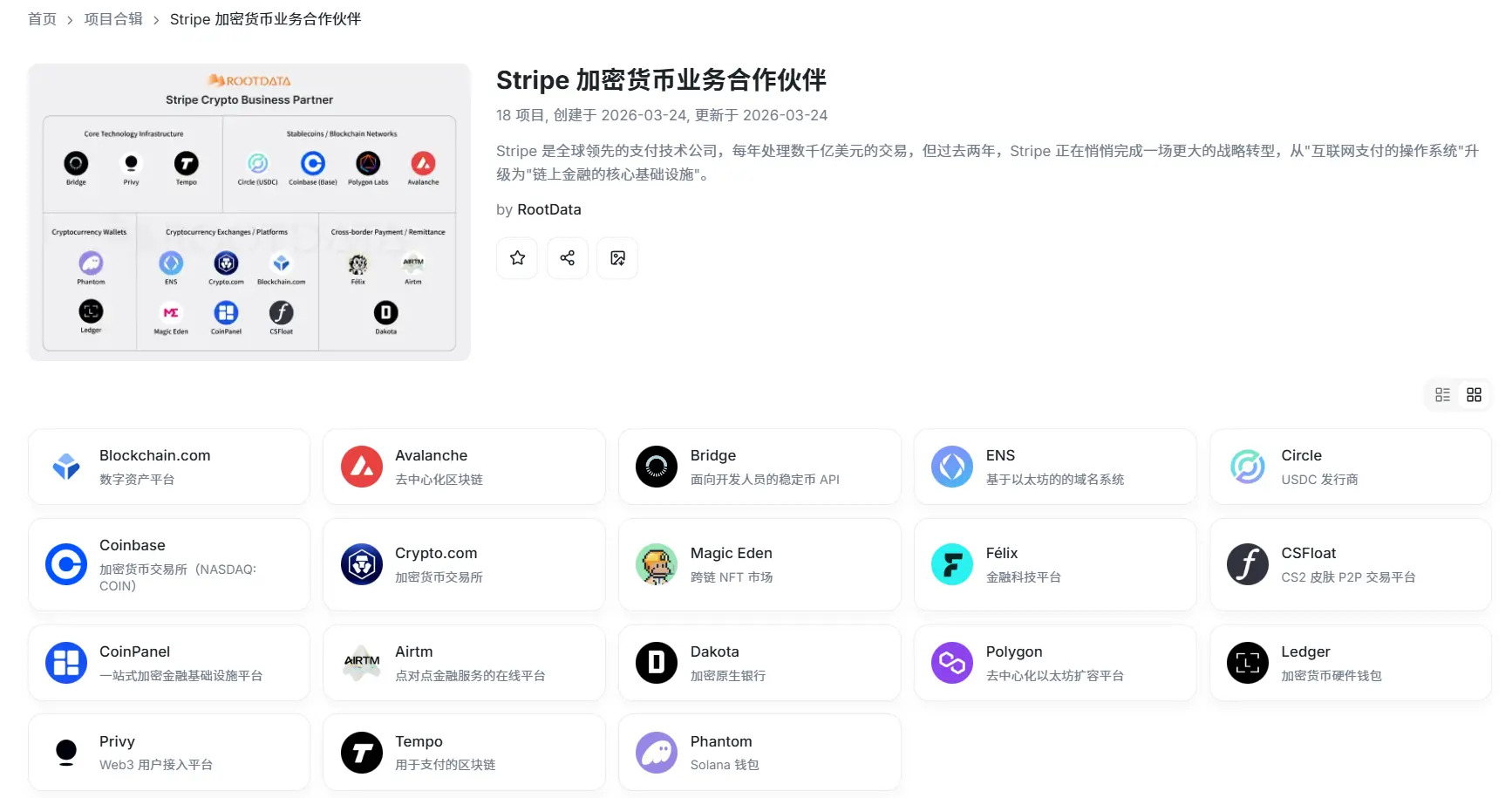
Image source: RootData
In December 2025, Stripe acquired the usage-based billing platform Metronome for about $1 billion. Metronome helps AI companies charge customers based on token usage, with OpenAI and Anthropic as its clients.
In April 2026, Stripe launched streaming payments for AI products at its own conference, supporting billing based on token consumption.
Now, with the addition of OpenRouter, Stripe's intentions are clear.
Metronome solved how to measure and charge, streaming payments addressed how to settle based on usage, and OpenRouter fills in the front-end link with accurate model selection. Together, these three create a complete chain from model selection, invocation, measurement, billing to payment.
Additionally, in the realm of cryptocurrency, Stripe's stablecoin infrastructure company Bridge received MiCA CASP authorization and EMI electronic money institution license from Luxembourg's financial regulator CSSF in early July this year.
In early August, Bridge officially entered ESMA's MiCA registration list, becoming the 42nd authorized EMT stablecoin issuer.
With this license, EU companies can issue euro stablecoins linked to real-name IBANs in 27 member countries and complete cross-border payments.
Looking at AI and cryptocurrency together, whether for stablecoin payments or AI inference consumption, a reliable measurement and settlement layer is needed underneath. Stripe is positioning itself in both rapidly growing tracks, as the cash register for the programmable economy.
Valuation, Moat, and Neutrality
As of July this year, OpenRouter's annualized revenue reached approximately $140 million, with gross margins close to those of software companies, corresponding to a market-to-sales ratio of about 50 times at a $7 billion valuation. This figure clearly does not reflect current profitability but rather growth rate and positioning.
OpenRouter's revenue has multiplied several times in six months, primarily driven by developers adding intelligent agent features to software. Agents need to frequently switch models, tools, and data sources when performing different tasks, which is precisely the scenario OpenRouter excels in. The richer the model supply, the more valuable the platform that can compare and schedule these models.
In addition to OpenRouter, Stripe is also reported to be in talks with private equity firm Advent to acquire PayPal, with a transaction valuation potentially reaching about $53 billion; meanwhile, on Polymarket, the probability of Stripe's future IPO valuation exceeding $500 billion was once reported at around 43%. The intensive mergers and acquisitions reflect a company accumulating chips for an IPO.

However, the ceiling for this commission-based business is also clear. As model capabilities gradually standardize, platforms are likely to be squeezed by factors such as the price reduction of open-source models, binding by cloud vendor ecosystems, and direct price pressure from model providers, which may continue to compress profit margins.
The current high valuation given to OpenRouter by the market is more about pricing its imaginative potential rather than its current profitability. The real question is how deep OpenRouter's moat truly is.
"White-haired stock god" Serenity believes that OpenRouter's orchestration capabilities are actually easy to replicate and replace, indicating a shallow moat. Its current value mainly comes from its user base, valuable datasets, and growth momentum.
Serenity suggests that Stripe may eventually lobby to push for strict identity checks for API access to cutting-edge models, similar to opening a bank account, and require other players to obtain licenses to route inference requests, packaging the rationale as AI safety, such as preventing large models from being used to generate dangerous content.
If this scenario comes true, OpenRouter's real barrier will no longer be technology but compliance and licensing.
However, this also puts OpenRouter's neutrality to the test. The foundation of OpenRouter is to provide developers with neutral, non-lock-in access to models, routing to whoever is cheaper and online. But once integrated into Stripe, which has its own commercial motives, can this neutrality be maintained?

 Risk warning




Popular articles





