








Blockchain Capital: The next bull market may be closer than you think
 Core Viewpoint

 Blockchain Capital: The cryptocurrency industry is currently in the internet phase of 2003-2004—broadband has become widespread, but mobile has yet to explode. For every 1 billion dollars issued in stablecoins, 122 billion dollars of economic activity is generated on-chain in a year, and application layer fees have surpassed infrastructure layer fees for the first time; the era of "fat applications" is approaching.
Source: Bankless
Compiled by: Felix, PANews
Blockchain Capital general partners Aleks Larsen and Spencer Bogart recently appeared on the "Bankless" podcast to discuss the inevitable trend of the crypto market transitioning from infrastructure to application layers. Blockchain Capital pointed out that the widespread use of stablecoins has accumulated significant liquidity for on-chain finance, driving revenue growth for lending and trading protocols.
Additionally, by tokenizing stocks and venture capital funds, the capital efficiency of the financial system will see exponential improvement. Although there is a game of compliance between traditional finance and the spirit of crypto, the reconstruction of the global financial system through tokenization is unstoppable. PANews has compiled the highlights of the conversation.
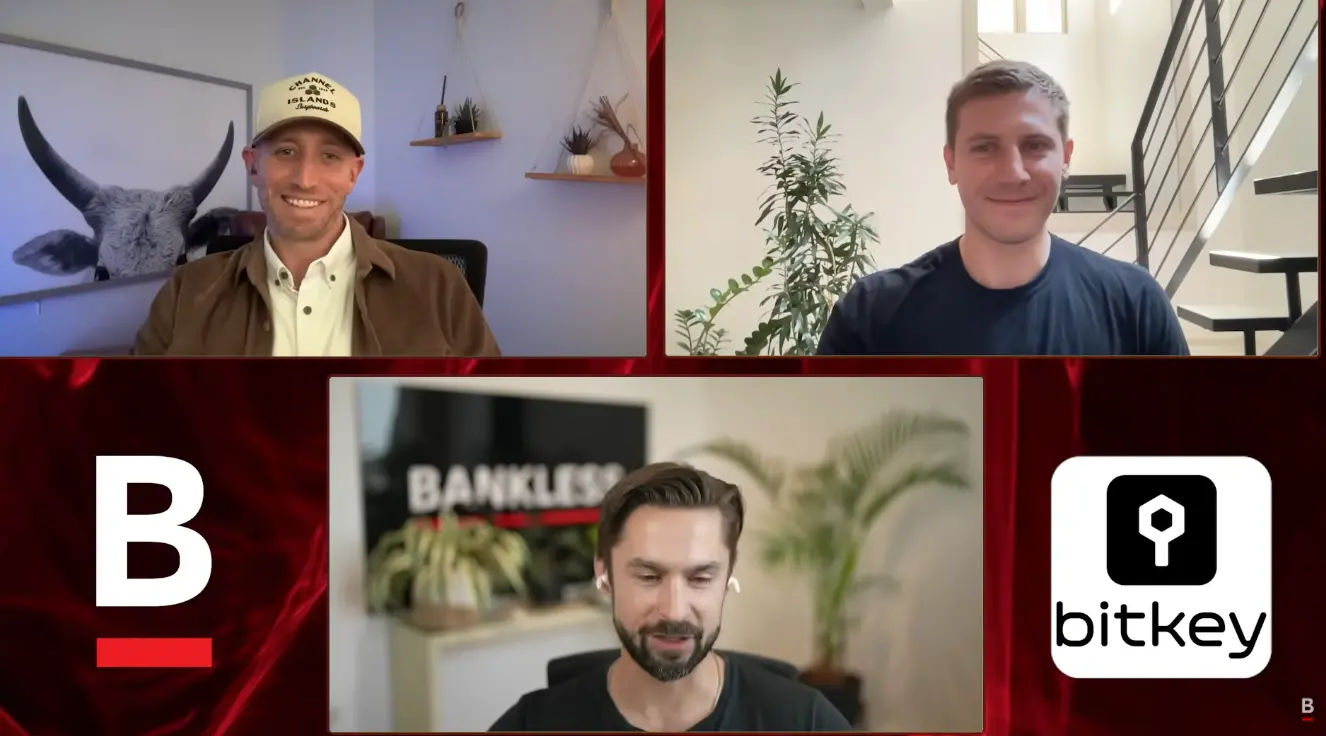
Host: Spencer, I remember our first conversation in the industry was back in 2018 or 2019 discussing the value capture model of MKR.
Spencer: Yes, at that time we were even considering buying MKR. Now, in 2026, the most modern projects like Hyperliquid, Lighter, and Venice are still adopting the "buyback and burn" model pioneered by MKR. Despite countless debates in the past about the inefficiency of this model in terms of capital efficiency, it can be said to have "never failed" in practice.
Aleks: That's true. I used to be very critical of this model, believing that at the end stage, when only the last token remains, there must be substantial cash flow that can be directly distributed to holders; otherwise, it would be difficult to establish a valuation model. But now I think that idea is somewhat overthought. The "buyback and burn" model is very effective today.
Spencer: Exactly, the main reason is that unless the "Clarity Act" is passed, the legal rights of token holders remain very ambiguous. In theory, as an investor, if you are a startup, I would certainly hope you reinvest cash flow into new growth opportunities. But in reality, most crypto protocols have not demonstrated the ability to expand across sectors and succeed, so many token holders prefer the team to "plant a flag on the beach," clearly signaling to the market that "we will always buy back and burn," which at least eliminates uncertainty.
Moreover, due to the varying quality of early crypto tokens, serious high-quality projects must buy back and burn with "real money" from day one to prove their uniqueness to the market. Although this may not be the dominant model five years from now, at this stage, it is the most effective and credible way to align interests with token holders.
Host: There is now a narrative saying "crypto VC is dead," with all large funds expanding their investment scope to cutting-edge technologies like AI and robotics, yet you at Blockchain Capital choose to double down during the industry downturn. Interestingly, I see two extremes: on one hand, traditional financial institutions are eager to dive into blockchain, while on the other hand, OGs in the crypto space are very pessimistic. How should we understand this rift?
Aleks: We are used to broadening our perspective and not overly focusing on the price fluctuations of bull and bear cycles. This "token bear market" is actually very special because it is accompanied by the most positive catalysts in history. We have seen the "Genius Act" and the gradually clarifying "Clarity Act," rules are being established, and traditional institutions are entering the space on a large scale.
More importantly, some applications have broken through the industry's information cocoon and entered mainstream visibility: for example, prediction markets (projects like Polymarket, where many users don't even care if it is backed by crypto technology) and stablecoins (which provide extremely cheap cross-border payment and remittance channels in USD). These sectors have still achieved strong unilateral growth during the bear market. It's just that over the past year, AI has captured all the market attention, especially with the explosion of coding agents and open-source Claude about 7 or 8 months ago, leading many to be distracted during the downturn in token prices.
Host: You often mention the "S-curve." Can you elaborate on where the crypto industry currently stands on this curve?
Aleks: The development trajectory of the crypto industry is highly similar to that of the internet. The internet began commercializing in 1989, spending the first 10 years exploring, until 2000 when it had hundreds of millions of users, but it was still extremely difficult to use and bandwidth was limited. Then from 2000 to 2005, it underwent a broadband transformation. I believe the crypto industry has just experienced its own "broadband transformation." The cost of block space has become extremely cheap and abundant. In 2020, Solana was the first to demonstrate a high-performance and scalable single chain, and by 2024, L2 will truly become widely adopted, with Ethereum also gradually achieving scaling, which has become the new norm in the industry.
Looking back at the internet, the completion of the broadband transformation did not lead to an immediate explosion; it was only during the mobile explosion from 2006 to 2010 that the S-curve began to turn upward. If the birth of Ethereum in 2015 represents the starting point of the "clock," we have only developed for 10 to 11 years now. Among 700 million crypto holders, perhaps only 10% are active on-chain users, because it is only in the last 2 or 3 years that truly user-friendly consumer-grade technology stacks (like embedded wallets, social recovery, spending limits, and passwordless login) have matured and become widespread.
Therefore, we are currently in the internet phase of 2003-2004, which is the "flat bottom of the S-curve" after broadband adoption and before the mobile explosion. Once stablecoins and prediction markets, among other edge applications, fully penetrate the center, the S-curve will reach its upward inflection point.
Host: Perhaps our generation was too young and impatient in 2021, thinking we could change the world overnight, while in reality, both technology and infrastructure need time to settle. However, this still doesn't fully explain why OGs are so frustrated.
Spencer: This is a psychological "growing pain." When a startup reaches the IPO stage, early core employees often reminisce about the rebellious pirate-like moments of starting up, unable to bear the transformation of the company into a compliant, large entity for success. It's like having a friend who discovers a very niche band, but when the band becomes popular and accepted by the mainstream, he feels regret and claims, "I only liked their early albums."
Aleks: Yes, now industry conferences are filled with people in suits discussing permissioned channels, compliance, and access, rather than cypherpunks. But finance is inherently a highly regulated sector; without catering to the rules, it cannot grow.
However, the decentralization and neutrality of Ethereum and Bitcoin still have an extremely strong underlying appeal to institutions because they provide a better trust assumption. The dream of cypherpunks has not vanished; it is simply operating as the underlying network of the financial system in a low-key, more scalable form. We are genuinely upgrading the pipeline of the global financial system, and while it may not sound as "sexy" as it did back then, the efficiency improvements it brings will genuinely benefit everyone.
Host: Indeed. And you previously mentioned a detail: for the first time in history, traditional institutions are actively delving into and laying out crypto assets during a price decline, without the market's frenzied narrative. At the same time, in 2025 and 2026, the industry seems to completely bid farewell to the dead cycle of "investing in infrastructure for the sake of infrastructure." What does this represent in terms of industry evolution?
Spencer: In 2019, interacting with Uniswap could cost several dollars or even tens of dollars in friction costs, as the severe shortage of block space was the biggest bottleneck in the industry. This led to excessive investment in infrastructure driven by market frenzy, resulting in the current situation of severe oversupply of block space and many blocks being vacant. However, sufficient and cheap block space is an absolute prerequisite for application developers to thrive.
The data is very intuitive. In 2021, over 70% of the fees paid by users went to the infrastructure layer. And in 2025, for the first time in history, the total fees of the application layer surpassed that of the infrastructure layer. This means that with the sharp decline in transaction costs, value has finally begun to shift to the upper layers of the protocol stack (the application layer). A healthy ecosystem should not allow the underlying communication infrastructure to extract the majority of the monopoly rent, which is precisely the traditional banking rent model we are trying to break with crypto technology.
Host: So, this is what is meant by the "fat application theory" replacing the earlier "fat protocol theory"?
Aleks: Exactly, the underlying protocol layer should not capture massive profits because the essence of blockchain is to reduce intermediary fees and improve efficiency. But its higher-level logic is "thin protocols, large markets": even if your fee percentage is extremely low, once you expand the underlying market size of global finance by an order of magnitude, the total absolute value captured will still be enormous.
Host: This is very interesting. If we transfer this "fat protocol to fat application" reasoning to the AI field, do investments and evolution in AI also follow similar patterns?
Aleks: The similarities are extremely obvious. In the crypto industry, teams can raise valuations of billions of dollars based solely on a white paper, which is akin to how many startup AI labs easily achieve sky-high valuations based on research visions and luxury teams. In the crypto industry, we look at testnet TPS and benchmarks, while in the AI industry, we look at various model benchmarks. In crypto, exchanges provide liquidity for token listings, while in AI, it is through hyperscale cloud service providers that distribution channels are obtained.
But there is a huge difference: the prices of tokens in the crypto space are completely public and transparent temperature gauges of sentiment; once the narrative breaks, tokens can plummet 90% in a month. In contrast, the bubbles and downward pressures in the AI field are currently hidden in private capital markets; they may not crash directly like crypto but manifest as down rounds, talent loss, and so on.
Host: Will the application layer of AI also explode like crypto?
Spencer: Absolutely. As emphasized by Palantir Technologies CEO Alexander, having models and intelligence alone cannot directly produce the results that enterprises want; someone must go deep into the front lines to translate intelligence into actual workflows and outputs.
Interestingly, recently AI venture capitalists have suddenly fallen into a panic over "software having no moats." We, as crypto VCs, find this quite amusing because the crypto industry has been dealing with a "completely open-source environment where anyone can fork the code at any time, with no software moats" for the past 10 years.
Aleks: The weights of general models will gradually commoditize, while how to harness them to solve real problems will not. In those complex hardcore fields where "no mistakes are allowed" (such as semiconductor manufacturing, complex tax audits, etc.), applications that utilize cutting-edge models with fine-tuning techniques, supplemented by proprietary datasets and closed-loop feedback, will establish deep moats that general models cannot breach.
Host: Returning to the tokenization of RWA. As the first generation of the most successful RWAs, what insights does the development of stablecoins provide us?
Spencer: Few people know that Blockchain Capital is the only venture capital firm that invested in the three major stablecoin issuers (Tether, Circle, Paxos) a decade ago. Today, the total market cap of stablecoins is about $300 billion, and I am almost 90% confident that by 2030 this number will soar to several trillion dollars (even $20 trillion). Previously, stablecoins were driven by retail investors, but now every new rotation of the flywheel is accompanied by institutional momentum, pulling traditional stocks, money market funds, and government bonds onto the chain because the capital efficiency of a globally operating, programmable underlying network is simply too high.
The core of stablecoins is certainly not just a "payment product"; its stickiness is extremely high. Once USD enters the chain, the vast majority of funds will settle down, injecting operational capital into lending, exchanges, and other on-chain ecosystems, generating massive economic activity. We have conducted precise quantitative calculations: every $1 billion of net new stablecoin issuance will create about $122 billion of economic activity on-chain within a year. This $1 billion will directly deliver about $19 million in recurring protocol revenue to downstream on-chain protocols within a year.
Host: So, apart from stablecoins, how will the highly anticipated "stock tokenization" evolve?
Spencer: Stock tokenization has two waves. The first wave is access. Global investors (especially non-U.S. domestic users) have an extremely strong demand for convenient, frictionless one-click trading of U.S. stocks. The second wave is composability. Once my Apple stock token is on-chain, there can be countless lending service providers and securities lending protocols competing in the open market to offer me the best collateral rates and yields, which is the ultimate manifestation of capital efficiency.
Currently, there are mainly two competitive routes in the market. One is the X-Stocks model represented by Backed (which has been acquired by Kraken). It issues debt instruments through a Cayman SPV to anchor stocks. Its advantage is that it requires no permission, no KYC, and can flow freely in DeFi. But the fatal flaw is that you own a debt owed to you by the SPV, not actual shares of Apple Inc. For large institutions with billions in funds, this credit and legal risk is unacceptable. The other is a compliant channel that directly owns stock ownership. This requires us to make compromises on permissionlessness.
Host: So, does this mean that the "suit-wearing big shots" of traditional finance and the "pirates" of the crypto space must yield and compromise?
Spencer: Not necessarily. We don't have to forcibly merge them. Those tens of trillions of traditional stocks can operate on the mainnet public chain in a "sidecar model." They may have regulatory fences, but they exist alongside purely permissionless DeFi liquidity pools. This will actually greatly accelerate the liquidity of purely cypherpunk systems because the massive funds stuck in stock tokens can be converted into ETH with one click and operate in purely decentralized, permissionless scenarios.
 Risk warning


Popular articles





