








Morning Report | The U.S. Department of Justice launches an antitrust investigation into venture capital giant a16z; Anthropic's annual revenue exceeds $65 billion, with a valuation potentially reaching $2 trillion as it rushes towards an IPO
 Overview of Important Market Events on August 18
Compiled by: ChainCatcher
What important events happened in the past 24 hours?
HPC and tradeXYZ submitted a Pre-IPO perpetual contract comment letter to the SEC
According to ChainCatcher, the Hyperliquid Policy Center (HPC) and tradeXYZ jointly submitted a comment letter to the U.S. Securities and Exchange Commission (SEC), introducing Pre-IPO perpetual contracts (IPOPs) and arguing that U.S. investors should have the right to participate in such markets. The letter states that Cerebras opened at a price 89% higher than its IPO pricing, SK Hynix was 14% higher, and SpaceX was 11% higher, with each public market on Hyperliquid providing price signals before formal trading began. tradeXYZ has launched 5 IPOP (Initial Public Offering Price Options) markets on Hyperliquid. IPOP is a cash-settled perpetual derivative that references the expected public listing price of private companies for pre-listing price discovery and does not represent shares, warrants, or any securities rights. The letter outlines the issues the SEC needs to address before allowing such markets to serve U.S. investors and believes that IPO modernization can utilize these price signals for issuers and investors.
Blockchain.com approved to join Nigeria SEC's accelerated regulatory incubation program
According to ChainCatcher, Blockchain.com, a global crypto platform, has been approved to join the Nigeria Securities and Exchange Commission (SEC) Accelerated Regulatory Incubation Program (ARIP). This approval allows the company to meet the SEC's preliminary participation requirements and operate within the established sandbox while continuously fulfilling compliance, testing parameters, and regulatory conditions. Through ARIP, Blockchain.com will work directly with the SEC to assess digital asset business models, test safeguards, and assist in refining a long-term regulatory framework. ARIP is aimed at virtual asset service providers and fintech innovators to assess emerging models, operational risks, and investor protection and anti-money laundering standards. Owen Odia, General Manager of Blockchain.com Africa, stated that Nigeria is one of the most important digital asset markets in Africa, and participating in ARIP is an important step in the company's long-term commitment to the country, helping to introduce global experience in a controlled environment that supports a framework that protects consumers while encouraging responsible innovation. Over the past year, the company has obtained registration from the UK's FCA, authorization under the EU's MiCA framework, and a VASP license from the Cayman CIMA. Founded in 2011, Blockchain.com serves over 70 jurisdictions, with more than 94 million wallets and 44 million confirmed accounts, processing over $1.1 trillion in crypto transactions.
Circle's euro stablecoin EURC circulation exceeds 400 million euros, becoming an important component of Europe's on-chain payment infrastructure
According to ChainCatcher, Circle officially announced that its euro stablecoin EURC circulation has exceeded 400 million euros, becoming an important growth node in the eurozone's on-chain financial ecosystem. Circle stated that the supply of EURC has increased by over 100% in the past year, as the demand for compliant stablecoins from trading platforms, payment networks, and institutional businesses has risen, moving EURC from the experimental stage to practical application. EURC was first launched on Ethereum in June 2022 and has since expanded to multiple blockchains including Avalanche, Stellar, Solana, and Base. As of the end of 2024, EURC has covered 5 chains, with a circulation scale of approximately 80 million euros, continuing to grow thereafter. Currently, EURC has been listed on several mainstream trading platforms such as Bitpanda, Bitstamp, Bybit, Coinbase, and Kraken, supporting EURC/EUR and EURC/USD trading pairs, further enhancing euro on-chain liquidity. Circle stated that the application scenarios for EURC are expanding from trading to payments, settlements, and institutional fund management. Currently, fiat withdrawal and recharge service providers such as Mercuryo, MoonPay, Ramp, and Transak have supported users to directly access digital assets using euros, and institutional custody and settlement platforms such as Cobo, Copper, and Fireblocks have also integrated EURC. Additionally, both Visa and Mastercard have previously expanded their support for EURC settlement capabilities, making it available for cross-border payments, card payment settlements, and enterprise-level fund circulation scenarios. With the comprehensive implementation of the EU's Markets in Crypto-Assets Regulation (MiCA), EURC operates under the electronic money token (EMT) standard, issued by Circle's French electronic money institution and regulated by the French Prudential Supervision and Resolution Authority (ACPR). The reserve assets of EURC are completely segregated from Circle's corporate funds and are regularly audited by independent third parties. As of January 2026, the total supply of global stablecoins is approximately $300 billion. Although US dollar stablecoins still dominate, euro stablecoins have become the second-largest category. The market size of euro stablecoins has grown from about 400 million euros in June 2025 to about 650 million euros in June 2026, with EURC maintaining its leading position. Circle stated that despite the growth of EURC, compared to the eurozone's M2 money supply of over 16 trillion euros, euro stablecoins are still in the early stages, with significant growth potential in real-time settlement, cross-border payments, and enterprise financial infrastructure in the future.
Airwallex founder: Stablecoins will develop within national regulatory frameworks
According to ChainCatcher, Jack Zhang, co-founder and CEO of cross-border payment company Airwallex, stated that stablecoins are becoming an important channel for global capital flow, but sovereign financial systems still determine how to incorporate them, rather than the other way around. This trend will intensify as stablecoin adoption grows. The Central Bank of Brazil has incorporated virtual asset services into its foreign exchange and international capital regulatory framework, while Vietnam is building a regulated crypto market while prohibiting the use of crypto assets as a means of payment. The Philippines has indefinitely extended the suspension of issuing licenses to virtual asset service providers, indicating that stablecoin adoption will occur within the regulatory frameworks of various countries. He noted that technology is making business more globalized, while financial sovereignty is becoming more localized, and governments will continue to set their own rules for currency, data, identity, and payments. The most enduring stablecoin infrastructure needs to connect with sovereign financial systems, provide deep liquidity, and offer reliable conversion between stablecoins and fiat currencies for enterprises. Airwallex, focusing on corporate accounts, has obtained a central bank payment institution license in Brazil and acquired MexPago, a holder of IFPE licenses in Mexico, to access local financial systems in major Latin American economies. It bets that AI and stablecoins will drive more global business, making regulated local connections more valuable.
Kraken announces opening of U.S. stock trading for European users
According to ChainCatcher, cryptocurrency exchange Kraken has announced that it has opened U.S. stock trading services to European users. Eligible users can now buy and sell U.S. stocks directly through the Kraken platform, further expanding its traditional financial asset trading product line. Kraken has been continuously promoting compliance and product diversification in recent years, gradually introducing traditional securities such as stocks and ETFs while providing cryptocurrency trading to meet the demand for one-stop investment services from European users.
Jane Street discloses holdings of over $990 million in Bitcoin ETF
According to ChainCatcher, Bitcoin Magazine reported that Wall Street giant Jane Street disclosed in a filing with the U.S. Securities and Exchange Commission (SEC) that it holds over $990 million in assets related to Bitcoin ETFs. This disclosure shows Jane Street's large-scale allocation to spot Bitcoin ETFs as a traditional financial institution, further reflecting the trend of institutional funds continuously flowing into the Bitcoin market.
ARK Invest buys $15.4 million in Block stock
According to ChainCatcher, The Block reported that Cathie Wood's ARK Invest purchased $15.4 million worth of Block Inc. stock on Monday, along with $1 million in Securitize shares and $22.8 million in NVIDIA stock. Block Inc.'s stock ticker is XYZ, Securitize's related ticker is SECZ, and NVIDIA's ticker is NVDA. ARK Invest's actions are part of its regular portfolio adjustments.
Russian central bank limits market brokers' crypto asset holdings to no more than 25% of total capital
According to ChainCatcher, Bitcoin.com reported that the Russian central bank has released a new regulatory draft requiring brokers, trust companies, forex traders, and cryptocurrency exchanges to include crypto asset holdings when calculating their own capital, with crypto assets not exceeding 25% of total capital. Holdings must be registered with crypto custodians for national verification of their authenticity. The Russian central bank stated that this measure aims to assess credit and market risks and ensure the financial resilience of intermediaries in crypto trading. This draft continues the process of legalizing crypto assets in Russia, providing investors with a reference to assess the financial status of licensed institutions. Previously, the Russian Duma approved comprehensive crypto regulatory legislation, allowing qualified and non-qualified investors to trade crypto assets, but the latter's annual purchase limit is 300,000 rubles (approximately $3,800), and the use of crypto assets as a means of payment remains prohibited domestically, while exporters and importers can use them without restrictions in cross-border settlements.
Anthropic annual revenue exceeds $65 billion, valuation may reach $2 trillion in IPO sprint
According to ChainCatcher, TechCrunch cited Bloomberg reporting that as of the end of July, Anthropic's annual revenue has exceeded $65 billion, continuing to accelerate from $47 billion in May and $9 billion at the end of last year. According to the Financial Times, investors expect its annual revenue to reach between $100 billion and $120 billion. OpenAI's annual revenue during the same period is approximately $40 billion. Anthropic has secretly submitted IPO documents and is expected to go public as early as this fall, seeking a valuation of over $2 trillion, potentially breaking the record for the largest IPO in U.S. history. The company was valued at $965 billion when it completed a $65 billion financing in May this year. Anthropic has not commented on this.
NoOnes: Gradually ceasing operations due to sanctions
According to ChainCatcher, peer-to-peer cryptocurrency trading platform NoOnes announced yesterday that it will begin to gradually shut down operations after more than three years. The official statement indicated that it had previously sought to resolve and lift the sanctions against NoOnes but ultimately failed. NoOnes stated that the relevant sanctions have caused it to lose key partners, while blockchain monitoring agencies have marked transactions related to NoOnes as high-risk, making it increasingly difficult for the platform to continue normal operations. According to official arrangements, business contraction began on August 17, and the P2P market will close on August 21 at 23:59 UTC. Services such as Swap, NoOnes Visa, fiat withdrawals, gift card stores, and Bitcoin Lightning Network will also gradually cease. After that, the platform will only support withdrawals, and users can still log in, check balances, and withdraw remaining assets. The official recommends that users complete asset withdrawals as soon as possible, no later than August 23. Previously, the peer-to-peer cryptocurrency trading platform NoOnes revealed that it had encountered a major security breach, resulting in a loss of approximately $8 million in crypto assets. CEO Ray Youssef confirmed this news after on-chain detective ZachXBT disclosed the hack on his Telegram channel.
Metaplanet plans to invest 2,100 BTC to acquire Super League, creating the U.S. Bitcoin treasury platform Superplanet
According to ChainCatcher, Metaplanet announced that it will invest 2,100 BTC and $2.5 million in cash, totaling approximately $134.6 million, to acquire about 95.7% of the issued shares of Nasdaq-listed Super League. After the transaction is completed, Super League will be renamed Superplanet, becoming Metaplanet's U.S. Bitcoin treasury platform. Metaplanet currently holds 43,000 BTC.
Upbit and Bithumb's revenue both fell by about 50% in the first half of the year, as the South Korean crypto trading market continues to shrink
According to ChainCatcher, The Block reported that South Korea's two major cryptocurrency exchanges, Upbit and Bithumb, released their financial reports for the first half of 2026, showing significant declines in revenue and profits due to the sluggish crypto market. Upbit's parent company Dunamu reported revenue of 408.1 billion won (approximately $289 million) in the first half of the year, a year-on-year decrease of 49.1%; operating profit was 111.5 billion won, down 79.7%; and net profit was 108.4 billion won, down 74.1%. Bithumb reported revenue of 168.8 billion won in the first half of the year, a year-on-year decrease of 48.7%; operating profit was 14.9 billion won, down 83.4%, with a net loss of 108.7 billion won, compared to a net profit of 55 billion won in the same period last year. During the reporting period, Bitcoin fell from about $90,000 to $60,000, and Ethereum dropped from $3,000 to about $1,600. The strong rise in the semiconductor sector of the domestic stock market in South Korea has attracted a large amount of capital out of the crypto market. The total trading volume of the five licensed exchanges in the second quarter fell by 49.5% year-on-year to $146.43 billion. Despite the pressure on performance, both exchanges are still advancing capital operations: Dunamu is conducting a share swap with Naver Financial and plans to go public on Nasdaq within five years after completion; Bithumb plans to submit a listing pre-review in 2027 after improving its internal control system in 2026, aiming for an IPO in 2028.
Blockchain Association urges SEC to repeal rules 611 and 610(e) to adapt to tokenization trends
According to ChainCatcher, the U.S. Blockchain Association submitted a comment letter to the U.S. Securities and Exchange Commission (SEC), urging it to repeal outdated rules 611 and 610(e) to promote market structure adaptation to tokenization development. The association pointed out that the current rules can no longer match the technological realities of blockchain and tokenized securities, calling for timely updates to the regulatory framework to promote compliance innovation and enhance market efficiency.
U.S. Department of Justice launches antitrust investigation into venture capital giant a16z
According to ChainCatcher, Bloomberg reported that the U.S. Department of Justice is conducting an antitrust investigation into Silicon Valley's top venture capital firm Andreessen Horowitz (a16z), focusing on its partners serving on the boards of multiple AI companies that are in competition with each other—co-founder Ben Horowitz serves on the board of Databricks, and partner Martin Casado serves on the board of Fivetran, both of which compete in the data processing field. Casado previously also served on the board of dbt labs (acquired by Fivetran in June). This investigation has been ongoing for nearly a year, starting with the antitrust review of Fivetran's acquisition of dbt labs, which has been unconditionally approved, but the investigation into board positions continues. Such investigations typically end with board members resigning. a16z has close ties to the Trump administration, with both founders donating millions of dollars to Trump's campaign in 2024 and successfully pushing for the weakening of safety barriers in AI policy. a16z manages assets totaling $90 billion and recently raised a $15 billion fund, with a portfolio including SpaceX, OpenAI, and Cursor.
Zhibao Technology completes $154.7 million PIPE financing, investors pay with 2,380 BTC
According to ChainCatcher, Nasdaq-listed Zhibao Technology (ticker: ZBAO) has completed $154.7 million in PIPE financing, with investors paying in full with 2,380 Bitcoin (valued at $65,000 each based on the price on July 30). The financing issued 442 million PIPE units at a price of $0.35 per unit, each unit consisting of one Class A common share and a two-year warrant with an exercise price of $0.35 per share. At the time of closing, 395.6 million units were delivered, with the remaining 46.32 million units to be delivered after shareholder approval, without requiring additional consideration.
U.S. Treasury yields remain high, Castle Securities: Fed becomes a market concern
According to ChainCatcher, Castle Securities stated that the Federal Reserve's unwillingness to tighten monetary policy despite inflation rates being above target levels has led to long-term bond yields remaining at multi-year highs, posing risks to the market. Noshad Shah pointed out that although the policy rate is 175 basis points lower than its peak, long-term U.S. Treasury yields are still at their highest levels in nearly 20 years. Shah warned that recent improvements in inflation should not be interpreted as a sign that interest rate risks have been alleviated.
Ava Labs appoints Charley Cooper as president, John Wu transitions to senior advisor
According to ChainCatcher, Emin Gün Sirer, CEO of Avalanche developer Ava Labs, announced a leadership adjustment. Charley Cooper has been appointed president of Ava Labs, leveraging operational discipline, regulatory experience, and institutional perspective to drive the technological foundation into broader global adoption. Former president John Wu transitions to senior advisor, where his judgment, connections, and business knowledge will continue to play a role. Lydia, who previously served in an interim capacity, has been formally appointed as Chief Financial Officer. Emin Gün Sirer stated that his CEO responsibilities remain unchanged, and he will continue to lead Ava Labs' long-term vision, ensuring Avalanche becomes an advanced and reliable platform for developers, institutions, and enterprises. He noted that the company has the technology, team, and opportunities, with the next focus on execution.
Xiaomi's second-quarter revenue is 108.9 billion yuan, down 6.1% year-on-year, adjusted net profit is 6.2 billion yuan, and car deliveries increased by 28.2% year-on-year
According to ChainCatcher, Xiaomi Group released its financial report for the second quarter of 2026, reporting revenue of 108.9 billion yuan, a year-on-year decrease of 6.1% and a quarter-on-quarter increase of 9.9%; adjusted net profit was 6.2 billion yuan, a year-on-year decrease of 42.6% and a quarter-on-quarter increase of 2.4%. The revenue from the mobile phone × AIoT segment was 84 billion yuan, with a gross margin of 20.0%; the revenue from the smart electric vehicle and AI innovation business segment was 24.9 billion yuan, a year-on-year increase of 17.1%, with a gross margin of 19.2%, and this segment incurred an operating loss of 2.6 billion yuan. Smartphone shipments reached 31.2 million units, maintaining a top-three global ranking for 24 consecutive quarters, with an ASP increase of 25.9% year-on-year to a record high of 1,351 yuan. Revenue from IoT and lifestyle consumer products was 31.3 billion yuan, and internet service revenue was 9 billion yuan, with a gross margin of 76.8%. The AIoT platform has connected 1.161 billion devices, a year-on-year increase of 17.4%, with Mi Home APP monthly active users at 124 million and Xiao Ai monthly active users at 175 million. The automotive business delivered 104,200 vehicles, a year-on-year increase of 28.2%, with cumulative deliveries of the SU7 series exceeding 500,000 units. R&D expenses were 9.2 billion yuan, a year-on-year increase of 18.9%, with R&D personnel accounting for 47.2%. The Xiaomi MiMo-V2.5 base model ranked first in weekly usage on the OpenRouter platform. The group has accumulated over 47,000 global patents. Since 2026, the stock repurchase amount is approximately 11.7 billion Hong Kong dollars.
Rising oil prices and high U.S. Treasury yields put pressure on gold prices
According to ChainCatcher, gold prices fell on Tuesday due to rising oil prices and increasing U.S. Treasury yields, as the latter raised the opportunity cost of holding non-yielding gold. However, gold prices have still risen over 10% so far this month. Analysts at Mitsubishi UFJ Financial Group stated that recovering investor demand and central banks increasing their gold holdings continue to support gold prices. The minutes from the Fed's July meeting and Chairman Waller's speech at the Jackson Hole conference will be key to assessing the interest rate outlook.
Strategy's STRC semi-monthly dividend of $0.50 has been paid, next payment on August 31
According to ChainCatcher, Bitcoin treasury company Strategy (formerly MicroStrategy) announced on the X platform that its $STRC semi-monthly dividend of $0.50 per share has been completed today. The next semi-monthly dividend payment date for $STRC is August 31. Strategy is known for its large-scale Bitcoin holdings and issuing various preferred stocks and convertible securities for financing, with $STRC being one of its related preferred stock products, distributing fixed dividends to shareholders on a semi-monthly basis. The company continues to support its Bitcoin reserve strategy through capital market tools.
Coinbase launches US500 perpetual contract, allowing one-click long or short positions on the top 500 U.S. stocks
According to ChainCatcher, Coinbase announced the launch of the US500 perpetual contract product, allowing users to take long or short positions on the overall performance of the 500 largest U.S. companies through a single contract. This product aims to provide traders with a convenient tool for U.S. stock index risk exposure without the need to trade individual component stocks separately. The US500 perpetual contract supports leveraged trading, enabling users to express bullish or bearish views on the overall performance of large U.S. companies in a more efficient manner. Coinbase continues to expand its derivatives and traditional financial asset-related product lines to meet the diverse trading needs of institutional and retail users.
21Shares Polkadot ETF Q2 "staking yield" comes at a high cost: $4.52 loss for every $1 reward paid
According to ChainCatcher, Protos reported that the latest disclosure from 21Shares' Polkadot ETF (TDOT) shows that in the second quarter of 2026, the fund incurred approximately $4.52 in realized losses for every $1 of distribution income generated through the sale of DOT tokens to pay staking yields. According to regulatory documents, TDOT sold 98,505 DOT in the second quarter, generating approximately $107,500 in cash to pay staking yields to shareholders. However, due to a significant drop in DOT prices, these sales confirmed approximately $485,600 in losses. Data shows that DOT fell about 34% in the second quarter of 2026, with a cumulative decline of 76% over the past 12 months as of June 30. Since TDOT shareholders receive dollar-denominated distributions rather than direct DOT staking rewards, the fund needs to sell DOT to convert to cash payments, locking in losses in a low-price environment. In the second quarter, TDOT paid shareholders approximately $0.14698 per share in income, but during the same period, the fund's share price fell from $14.95 to $9.86, a decline of about 34%, and the staking yield did not offset the losses from the decline in asset prices.
Securitize launches Neuberger Berman's first tokenized fund HINC
According to ChainCatcher, The Block reported that Securitize has launched the Neuberger Securitize High Income Tokenized Fund ($HINC), marking Neuberger Berman's first participation in a tokenized fund as a sub-advisor. The fund primarily invests in high-yield bonds and other income-generating fixed-income assets, open to qualified investors, and is simultaneously deployed on four blockchains: Avalanche, Ethereum, Solana, and Sui.
U.S. debt may exceed $40 trillion months ahead of schedule
According to ChainCatcher, The Washington Post reported that U.S. debt may exceed the $40 trillion mark this week, months ahead of previous predictions. Part of the reason is the overturning of Trump's tariff policies, leading to billions of dollars in lost fiscal revenue. Treasury Department data shows that national debt has reached $39.9 trillion and continues to grow. Budget analysts predict that borrowing could reach the $41.1 trillion ceiling by early next year, forcing lawmakers to take action.
HSBC requires some mainland investment clients to submit source of funds statements, failure to do so may terminate services
According to ChainCatcher, Daily Economic News reported that following the requirement for new account openings to confirm that the source of funds is from legal channels outside the mainland, some banks in Hong Kong have begun to initiate source of funds statement procedures for certain existing mainland investment clients. HSBC Hong Kong has recently issued notifications to some existing mainland investment clients, requiring them to submit a "Statement for Opening/Maintaining Accounts" through the HSBC Hong Kong App by September 12 and update their contact information. The statement includes confirmation that investment activity funds come from legal sources outside mainland China, and that the bank may disclose personal information at the request of law enforcement or regulatory agencies. The notification also mentioned that if the statement is not submitted by August 20, investment-related services may be suspended; if not submitted by September 12, investment-related services may be terminated. An HSBC spokesperson responded that the bank follows relevant regulatory requirements when managing investment client relationships, thus inviting relevant mainland investors to provide self-declarations and confirm that the information provided in their "Know Your Customer" and "Customer Due Diligence" processes is up-to-date and valid, which helps to continuously provide uninterrupted services to clients. HSBC emphasized that this latest statement requirement only applies to investment service clients.
Robinhood launches Agentic Trading supporting cryptocurrency trading
According to ChainCatcher, Robinhood announced that Agentic Trading has now been launched for eligible users. Users can connect their agent through the Robinhood MCP server and trade cryptocurrencies alongside stocks and options in a dedicated Agentic Account, using only deposited funds. Agents now support trading with unsettled funds. Users can switch their accounts to limited margin, allowing agents to use proceeds from sales immediately without waiting for funds to settle. Limited margin accounts allow trading with unsettled funds but do not support margin borrowing. All investments involve risks.
Meme Popularity Rankings
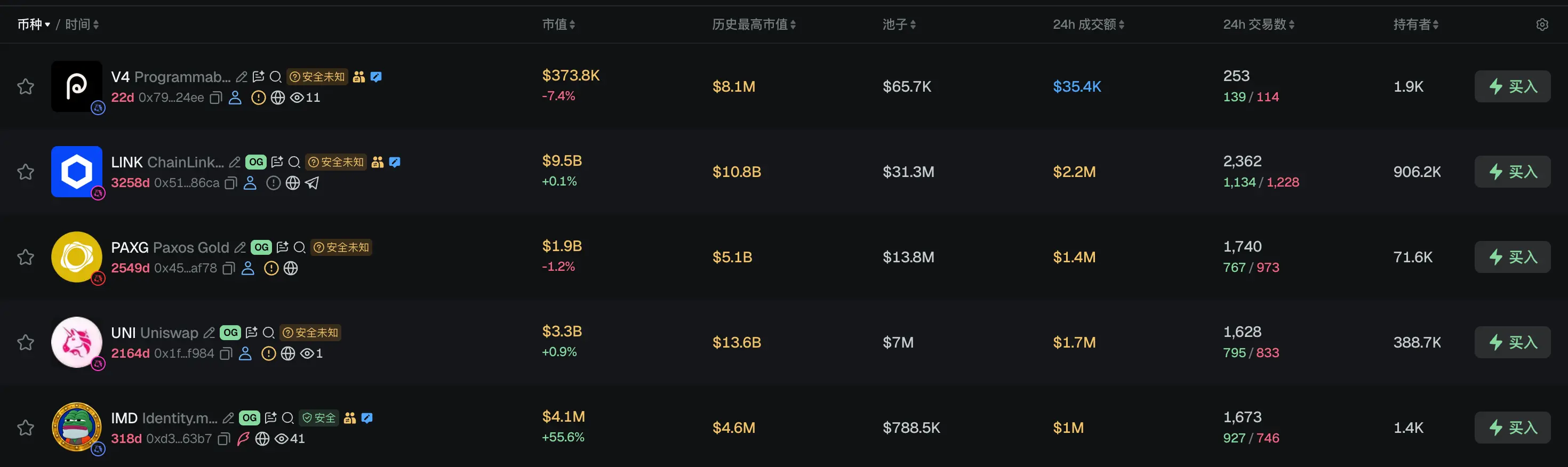
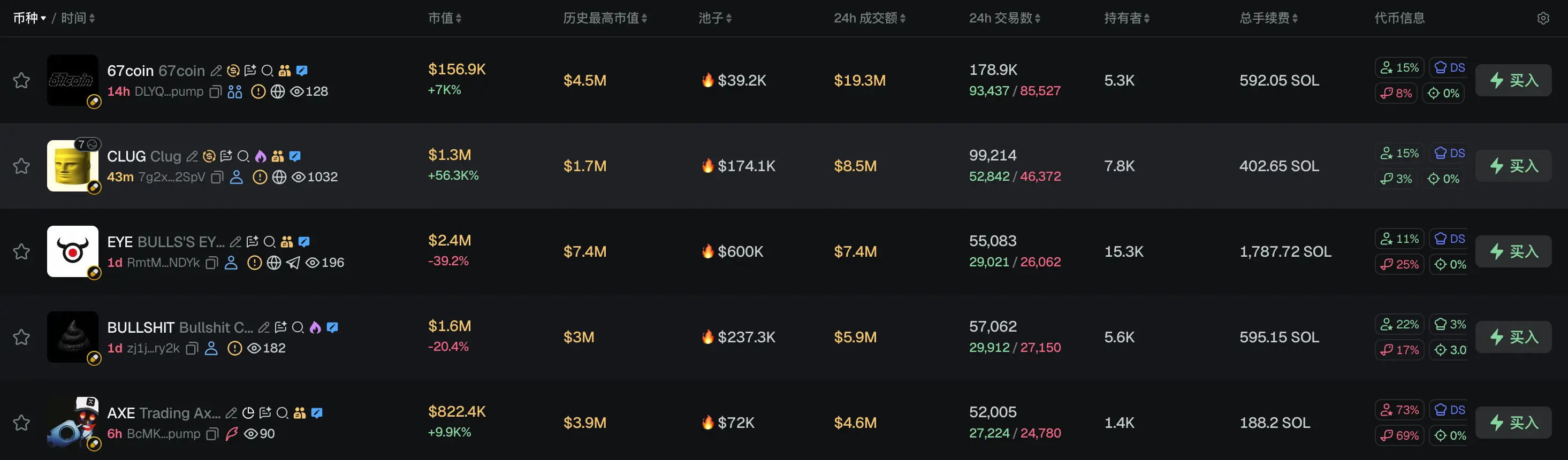
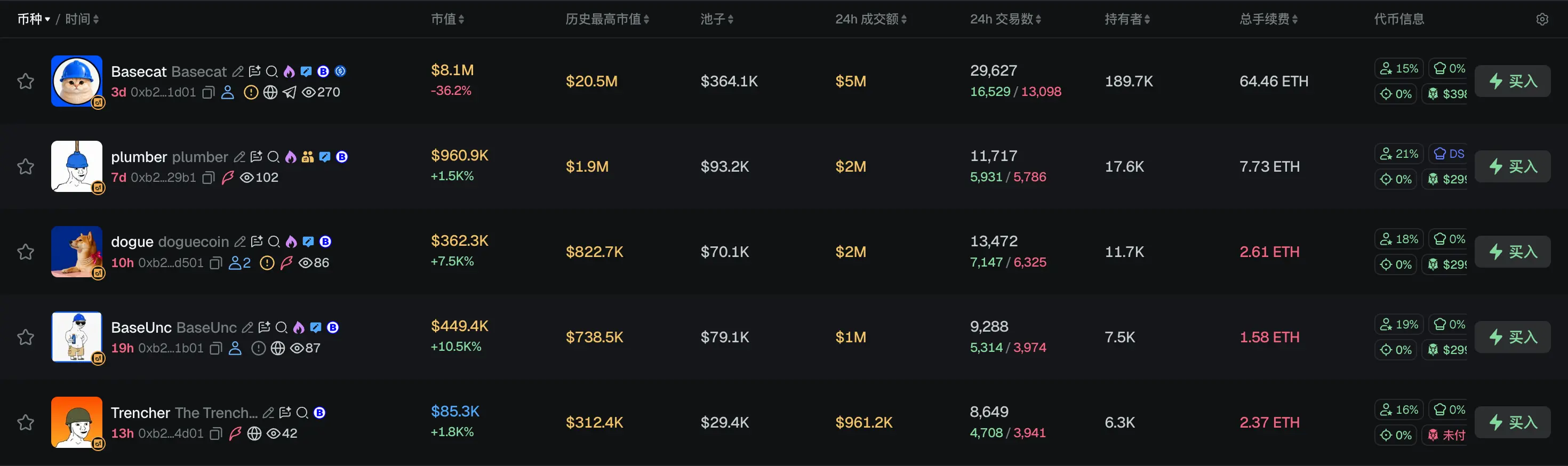
According to meme token tracking and analysis platform GMGN market data, as of August 19, 08:45,
The top five popular tokens in ETH over the past 24 hours are: V4, LINK, UNI, PAXG, IMD
The top five popular tokens in Solana over the past 24 hours are: 67coin, EYE, BULLSHIT, AXE, ANSEM
The top five popular tokens in Base over the past 24 hours are: Basecat, QUID, plumber, dogue, BaseUnc
What are some interesting articles worth reading in the past 24 hours?
Uniswap Founder: Why AMM Could Become the Core Engine of Financial Markets
In 1976, the argument against index funds was that a fund that makes no decisions could not outperform those managed by professionals who are paid to make investment decisions. Fifty years later, a "decision-free" fund has outperformed about 90% of professional investors. More importantly, index funds have made investing more accessible and improved the lives of ordinary people. I believe that passive liquidity will also succeed along a similar path, and the impact will be even greater, as it significantly lowers the barriers to creating and participating in markets.
Databricks, Snowflake (recently), Palantir, and DeepMind are also common talent sources for both companies. Both labs have also recruited a considerable number of employees from Salesforce and Stripe. However, the overlap seems to stop there. Anthropic has recruited many talents from SaaS companies, while OpenAI has not; OpenAI has recruited heavily from consumer internet, platform markets, and ad tech companies, while Anthropic has relatively few hires in these areas, except for Airbnb, Netflix, and Uber. What these differences mean is left for everyone to interpret.
CME Bets on Computing Power Futures, BlackRock CEO: This is the Next Trillion-Dollar Asset
Today, computing power prices are quoted in GPU hourly rates, i.e., the cost of renting a single GPU for one hour. However, two GPUs of the same model may provide different computing power in one hour. Silicon Data, along with academic collaborators, ran the same workload on 3,500 GPUs from 11 cloud providers. Even within the same chip model, they found significant differences. In one test, the performance difference of the H100 reached 34.5%, while the largest gap in the entire study reached 38%. The first batch of sustainable contracts may need to define several tiers, just as the energy market uses different fuels, locations, and delivery periods. But the bigger question is, what will happen if computing power futures work? Can computing power become the next asset class with a nominal trading volume of trillions of dollars and accelerate the AI economy?
 Risk warning


Popular articles





