








Famous trader Kyle: Which cryptocurrencies are worth holding long-term?
 Core Viewpoint

 The market has begun to reward projects with real business operations, and whether revenue, profits, and token holders can benefit has become the key to assessing investment value.
Author: Kyle, DefiLlama Researcher
Compiled by: Jiahua, ChainCatcher
In this cycle of 2026, the market may finally begin to favor tokens supported by fundamentals. This judgment is not new. As early as the birth of the first smart contract, the earliest DeFi supporters envisioned moving the infrastructure aimed at financial institutions onto the blockchain. However, one cycle after another has proven that the timing was still too early; market participants only wanted price increases.
Especially in the cycle of 2025, many market participants believed we had reached a "turning point": Trump had just been elected, Gary Gensler had left office, and the White House had a "crypto affairs director." But the anticipated events did not occur.
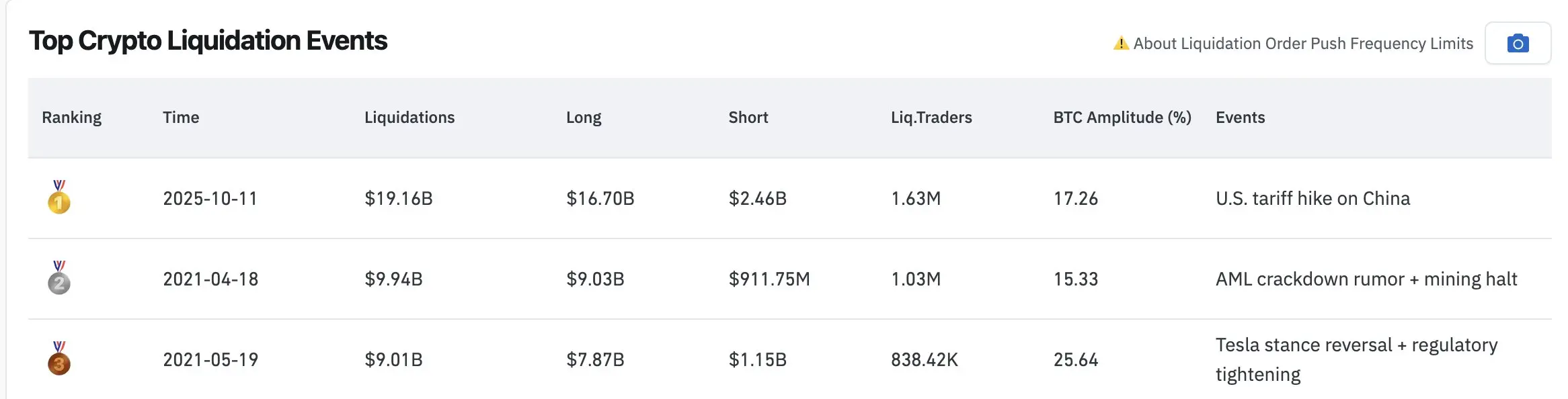
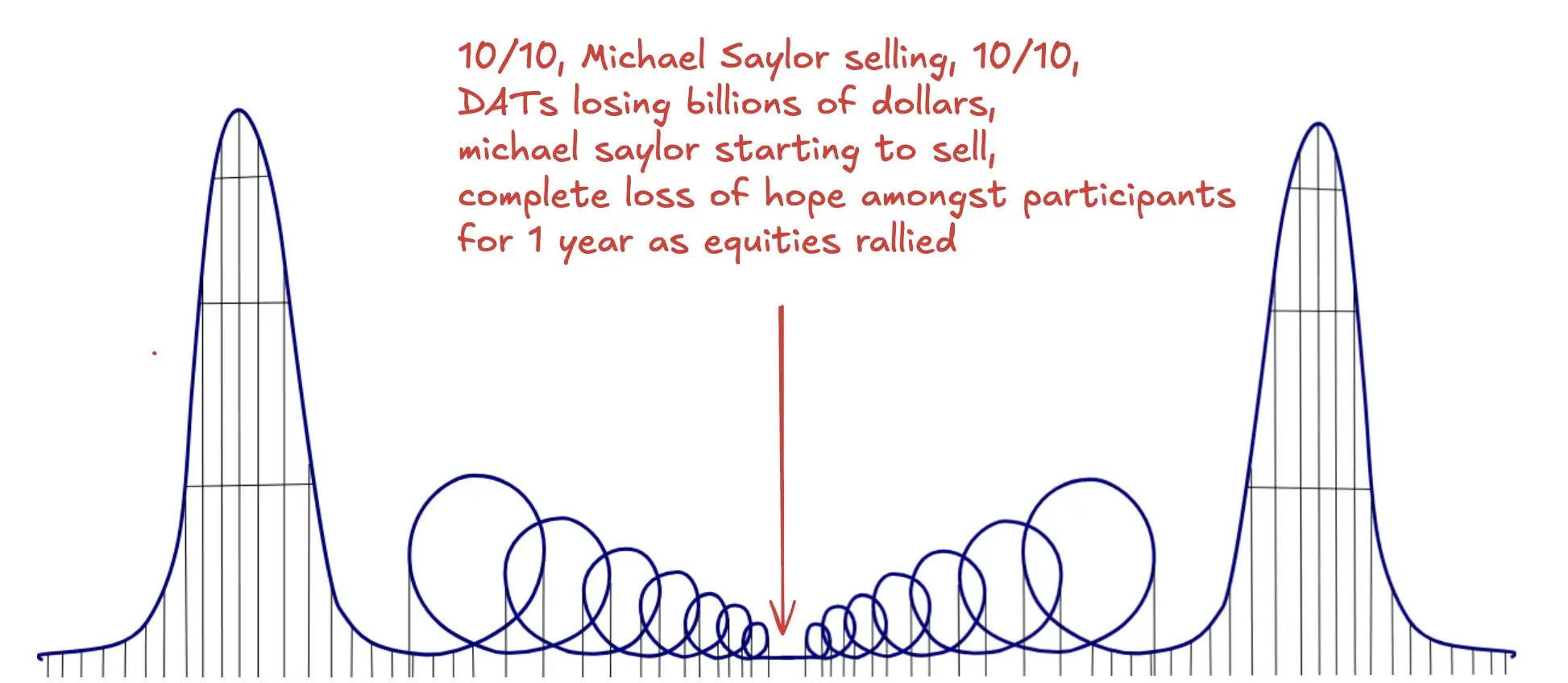
On the contrary, what we witnessed was Trump tokens withdrawing billions of dollars from the crypto market, the Digital Asset Treasury Company (DAT) pushing the market to form a "double top" pattern with two peaks and subsequent declines, and the final blow that crushed the market on October 10: the largest liquidation event in history occurred almost without warning.
Meanwhile, the stock market was rising, especially semiconductor and memory chip stocks; the S&P index continued to hit historical highs, and the overall market sentiment towards the economy was relatively optimistic. The result was that many old players in the crypto industry left the market, and I was among them.
Looking back, the sluggish token prices, the closure of numerous projects, the continuous DeFi hacking attacks, and the exit of many fund managers clearly marked the bottom of the bear market. But what made this bear market even more brutal was the complete shattering of hope. We were all looking forward to "traditional finance entering the market," but what we ended up with was a president harvesting the market through tokens and people in the crypto circle donning the guise of traditional finance, using a holding company listed on Nasdaq to sell assets to another group of people in the crypto circle.
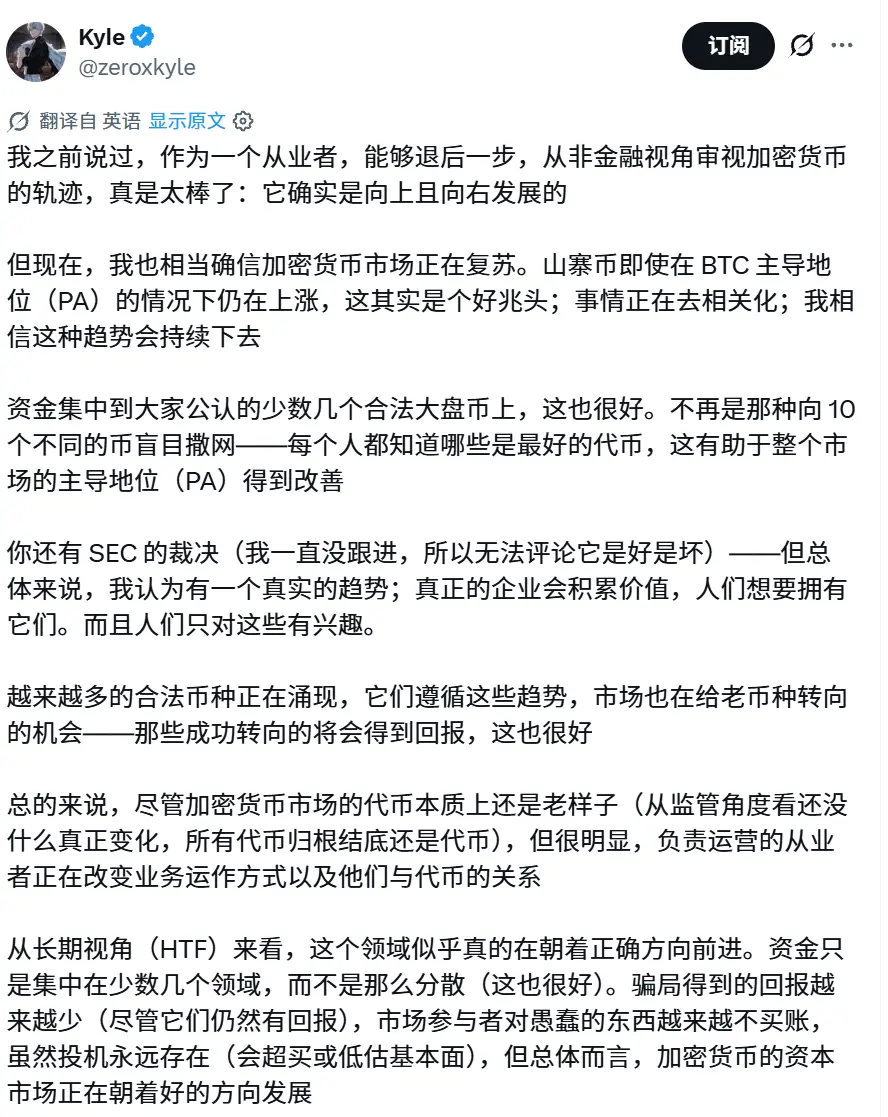
Therefore, I believe that this experience has left market participants carrying the trauma of the past (PTSD) when facing today's crypto market. Fortunately, I had a few good friends who advised me to return to the crypto market. At that time, I wrote this:
After the bull market began, I wrote this:
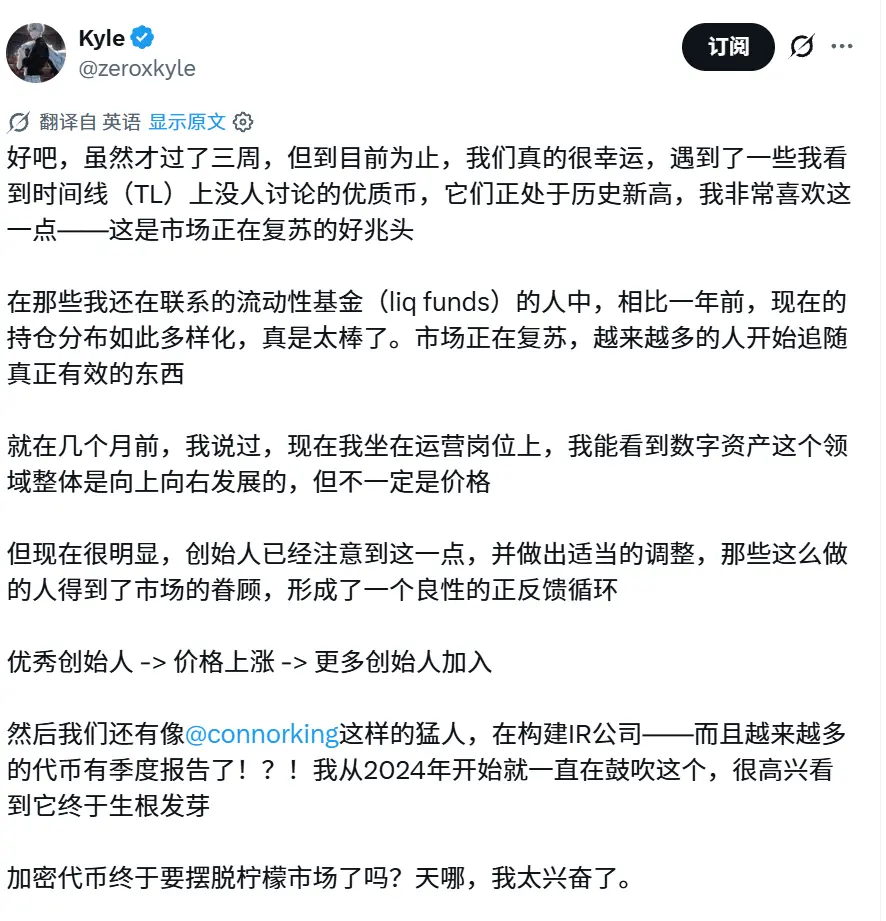
So, I believe that, to some extent, we all came too early. Old players in the crypto market have experienced too much disappointment and find it difficult to rebuild confidence. From the market's perspective, every cycle must progress amidst doubt and concern, climbing over this "wall of worry."
But at the end of the tunnel lies the dream we have been waiting for, the golden road, the last uncharted territory. Honestly, the era we are familiar with is coming to an end, and a new era is beginning. Frankly, I believe that the "internet capital market" has begun to take shape. The focus of the next few cycles will be how traditional financial markets combine with internet-native assets that have equity attributes.
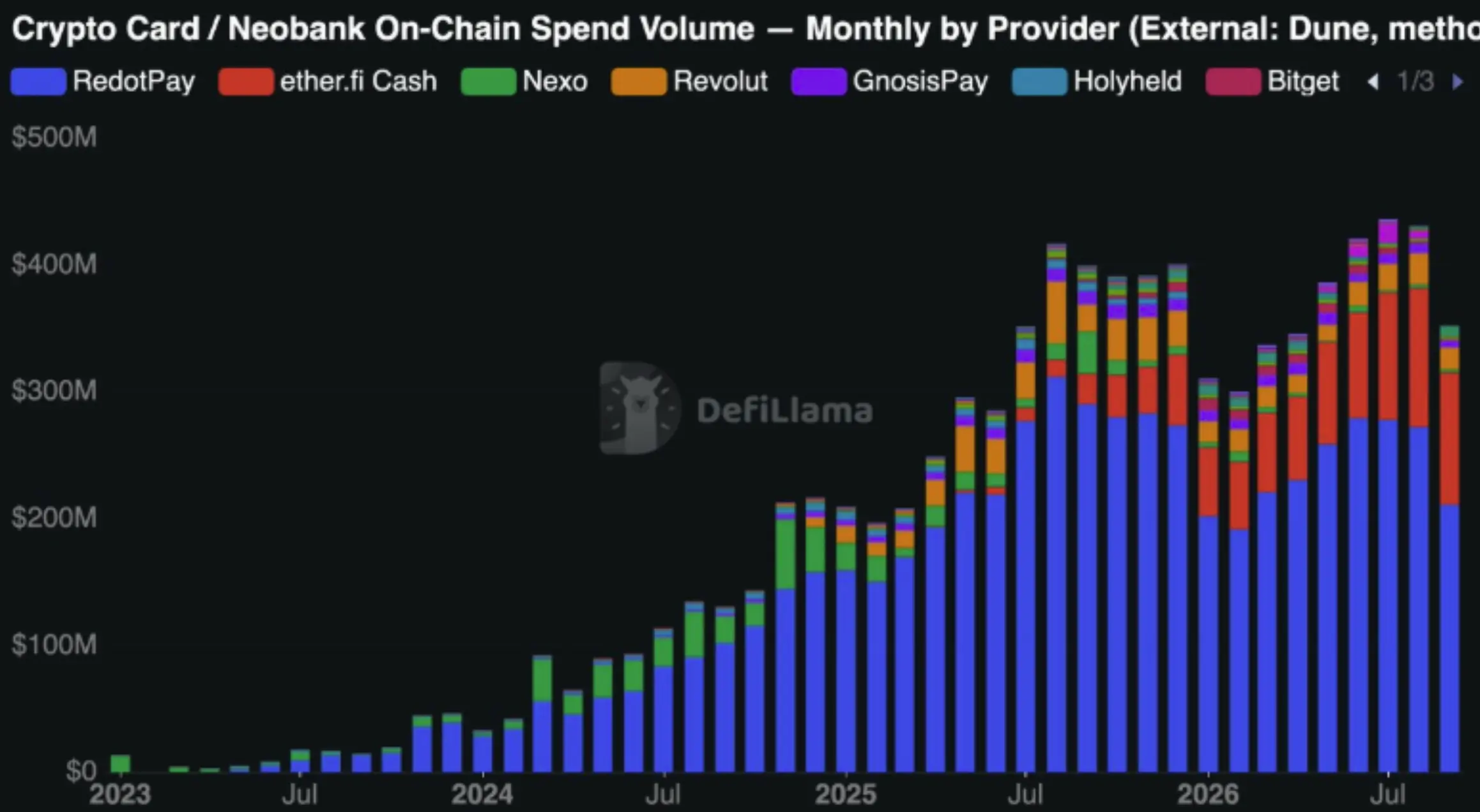
Of course, none of this is new. I am quite sure I said similar things in 2025. Since the birth of smart contracts, we have been steadily moving in this direction. It has always been more a matter of timing than growth. All indicators point to the same thing: even if prices do not rise, the actual use of crypto technology continues to grow.
Investment Strategy: Choose the Right Assets, Extend the Cycle
However, as mentioned above, the issue is more about timing than a lack of practical applications. Therefore, as an investor entering this market, I want to emphasize first: extend the investment cycle and prepare for more intense volatility than before.
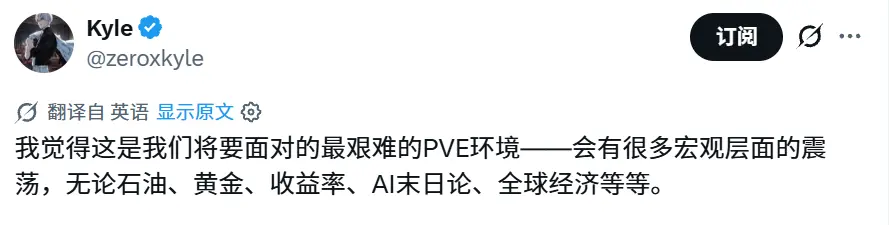
At such times, the investment experience accumulated in the traditional stock market over the past year will be very helpful. Many people on X know that the whole world is becoming more and more like a speculative game. Various markets are gradually dominated by speculative asset bubbles, while the value investment approach that emphasizes fundamentals and seeks undervalued assets from the Benjamin Graham era is becoming secondary.
On this point, I strongly recommend reading this article by 0xSmac: “Let The Bubble Wash Over You”.
In such a market, more and more macro news will affect market trends. Almost every week, new news appears: Trump reaches an agreement with Iran, the 10-year Treasury yield rises to "levels not seen since 1990," a currency crisis likely related to the yen, pessimistic views on AI prospects or accelerationism, and geopolitical uncertainties.
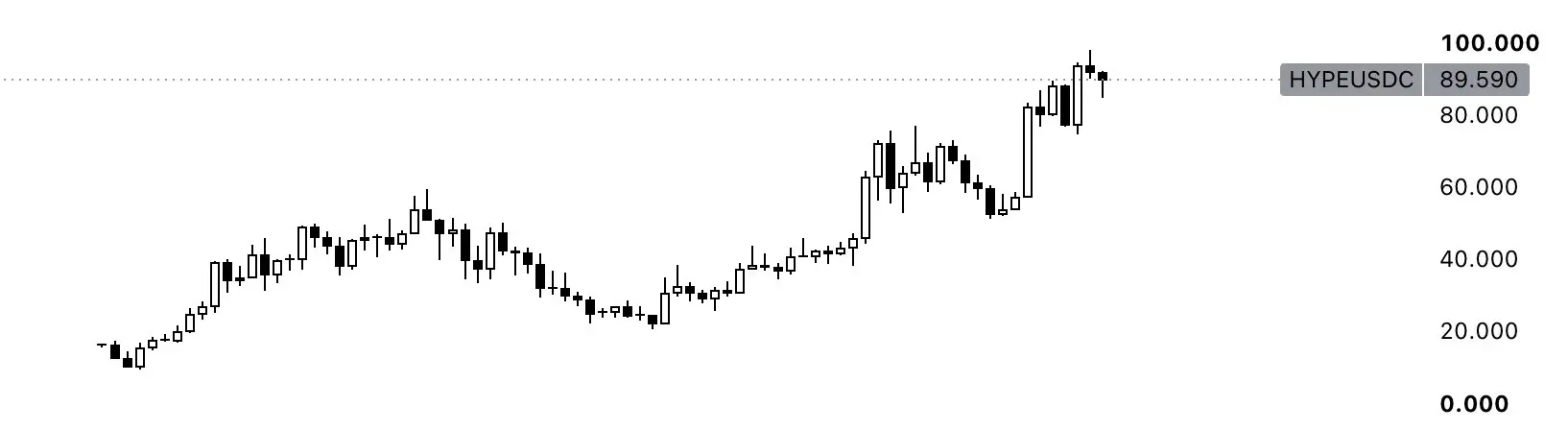
Therefore, extending the investment cycle and reducing the interference of short-term noise is worthwhile. The market has always had a lot of noise, and it will not decrease in the future, but this strategy has already achieved good results in the stock market. I believe it will also become the main strategy for future crypto investments. Hyperliquid's HYPE is the first token that truly gives you the opportunity to "profit through dollar-cost averaging."
Why Most Tokens Are Not Suitable for Long-Term Investment?
In the crypto market, the importance of asset selection cannot be overstated. Crypto market participants have long held an underlying belief: "Everything is a scam, and it will eventually go to zero, so you must sell." For most of the history of the crypto industry, this judgment has indeed been correct. But Hyperliquid has opened a new path: there are some assets that you can indeed invest in continuously and profit from.
This is more important than many people imagine, as it will significantly change the way the market operates. Many altcoins are not suitable for long-term investment for a simple reason: no one is willing to continuously dollar-cost average into an asset that might drop 90%. In the stock market, time is on your side because the companies behind the stocks are expected to grow over time. The logic of continuously buying the S&P index is just that: the U.S. economy continues to grow, so you keep buying.
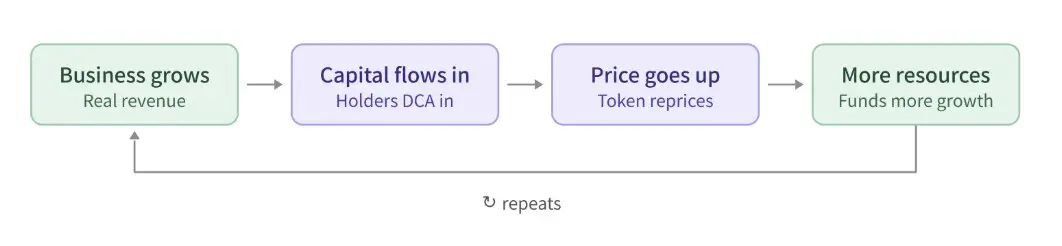
Therefore, when the crypto industry has businesses that can sustain growth, digital assets also begin to have a real foundation suitable for long-term investment. This will create a positive feedback loop: business growth → attracting investment funds → price increase → further driving business growth. This is how the internet capital market is formed.
Moreover, the reason the crypto market has long been in a "lemon market" state, where buyers find it difficult to distinguish between good and bad, and inferior projects squeeze out quality projects, has some structural reasons:
Tokens with low circulation and high fully diluted valuation (FDV), accompanied by large unlocks and selling pressure, will see new supply continuously flow into the market over the years. Even if the project itself performs well, there will always be a group of sellers waiting to sell.
Inability to generate profits. The product does not truly meet market demand, and therefore cannot sustain growth, relying only on short-term narratives suitable for bubble markets, which may exist today but disappear tomorrow.
The interests of token holders and company shareholders are not aligned. The value created by the business goes to the company shareholders, while tokens are essentially just marketing tools. Holding tokens does not mean you have the right to share in the profits generated by the business.
Lack of disclosure and accountability. In the stock market, companies must disclose income, insider stock sales, and risks; fraud will have consequences. In the crypto market, insiders, VCs, and market makers control unlock arrangements, over-the-counter transactions, and real data. Teams can sell tokens, fabricate metrics, or quietly exit, while investors have virtually no means of holding them accountable. When buyers cannot distinguish between good projects and bad projects, they will default to thinking all projects are bad.
What Conditions Must Good Tokens Meet?
These issues have accumulated to today, and it seems we have finally reached a turning point: the crypto market is beginning to find ways to solve the "lemon market" problem. Most market participants have raised stricter requirements for investment targets, which in turn gives project founders and operators clear feedback on what needs to be changed. For example:
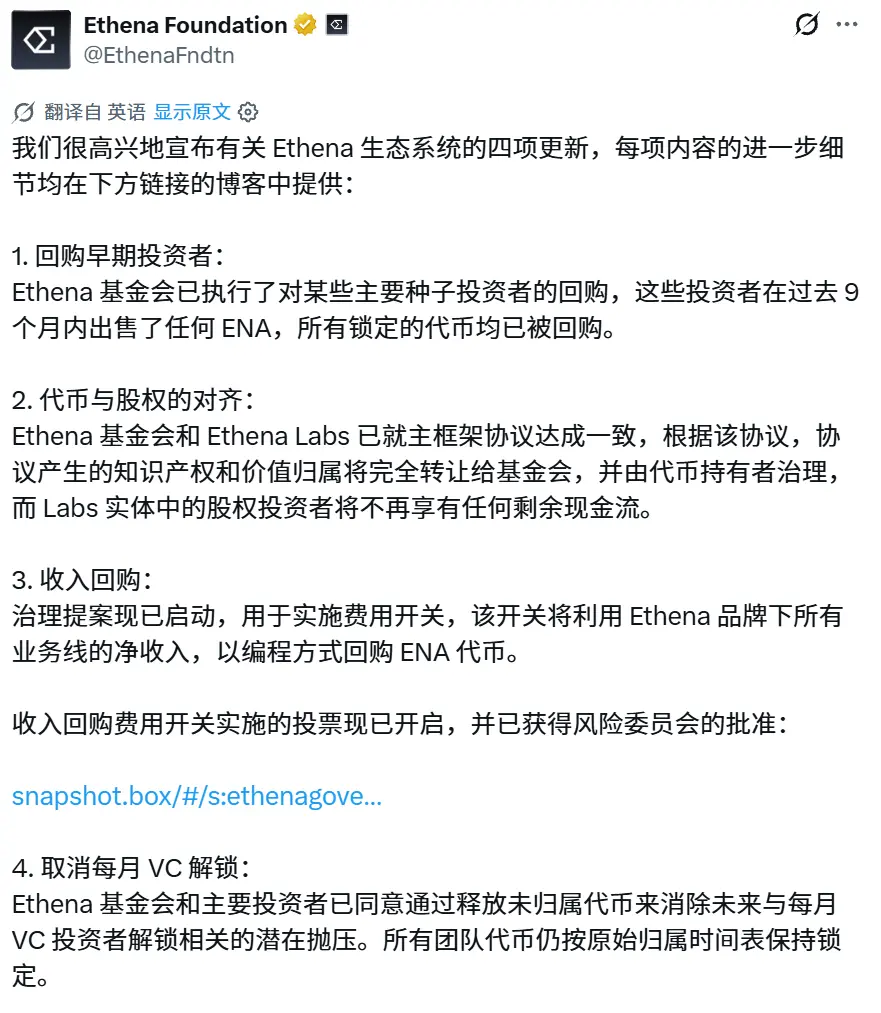
The Ethena team has done the following:
Repurchased some tokens held by early investors who had previously sold their tokens.
Aligned the interests of token holders with those of company shareholders: the intellectual property of the protocol and the value it creates belong to the foundation and are governed by token holders.
Used revenue for buybacks: proposed governance proposals to automatically repurchase ENA tokens using protocol revenue.
Canceled monthly VC unlocks: The Ethena Foundation has reached an agreement with major investors to release tokens that have not yet vested, ending the original monthly unlock arrangement, thereby eliminating the ongoing pressure from monthly unlocks.
As a result, the market has rewarded Ethena: ENA has risen 95% in the past 14 days. Thus, a positive feedback loop has formed.
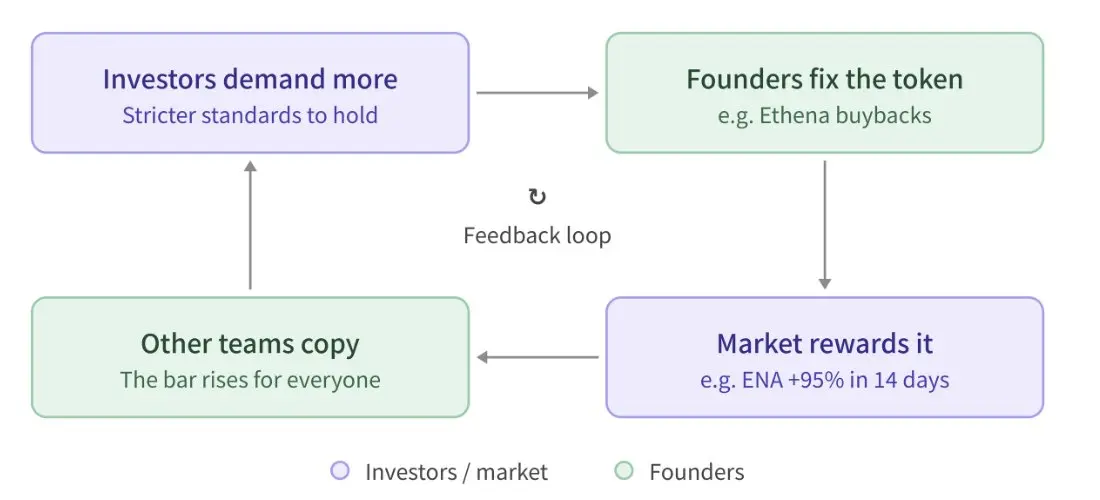
So, the asset selection approach is very clear: buy projects that have already solved the "lemon market" problem, and avoid those that have not yet resolved the issue. Below is my screening checklist. These are not absolute rules, but based on my observations, the team should at least meet most of the requirements, preferably all of them:
Allow token holders to share the value created by the business. There are some interesting attempts in the market, and as long as the incentive arrangements are reasonable, investors can accept projects that also have equity. Venice is a good example. At the very least, market participants need to see two points: A) the team values the token; B) the team will not transfer the value that should belong to the token to the company's shareholders.
The product truly meets market demand and has profitability. Continuous growth and profitability are key to attracting funding for the project. Intuitively, people only want to buy assets that will appreciate, and price increases come either from higher valuation multiples or from profit growth. For businesses, valuation multiples are mostly beyond their control; they depend on market sentiment, narratives, and interest rates. Continuous profit growth is the foundation for long-term value accumulation and compounding. Market narratives can change quickly, but consistently growing profits provide a reason for people to continue holding.
Token supply. There is no one-size-fits-all answer applicable to all projects. Some tokens have little potential selling pressure but perform poorly; others have some potential selling pressure but perform well instead. However, in general, excessive potential selling pressure is not a good thing, as it limits the upside potential. A certain degree of potential selling pressure seems acceptable. The best teams go a step further to proactively address this issue, such as Ethena buying back tokens held by investors.
There are also some bonus points:
Buybacks. I don't think the amount of buyback is very important unless you are like Hyperliquid, with a very large buyback scale. For most protocols, reinvesting that money back into the business may be better. Buybacks mainly indicate to market participants that the founders value the token. Buybacks need to strike the right balance: if the scale is too small, the money spent won't have an effect; if the scale is too large, it will crowd out the funds needed for business growth. Moreover, relying solely on buybacks has little value. The market can usually see these issues.
Transparency and investor relations (IR). In my view, this should be a necessity. The reasoning is simple: if you want people to hold your token, you should clearly explain its use and value. Public companies already do these things, such as releasing quarterly financial reports and holding investor conference calls. Since you want investors to entrust their funds to you, you should provide corresponding information disclosure and communication.
There may be some factors I have overlooked, but these are the ones that come to mind first. Overall, the crypto market is repairing itself: real businesses are emerging, teams are beginning to improve the value attribution and supply arrangements of tokens, and the market is finally starting to reward quality rather than speculation. Digital assets are beginning to have long-term holding value for the first time, rather than just being trading tools. But the premise is that you hold the right assets. There are still a large number of low-quality projects in the market, so asset selection is more important than ever. However, for those with judgment, the strategy is simple:
Buy good assets, continue to hold amidst the noise, and let time work its magic.
Finding Investment Opportunities: First Look at the Sector, Then Look at the Team
Now we enter the most exciting part: in my view, which dishes are worth selecting from this buffet. There is a pile of sashimi on the table, one of which is bluefin tuna cheek meat, while the rest are just ordinary tuna sold at gas stations. My task is to identify which one is the bluefin tuna.
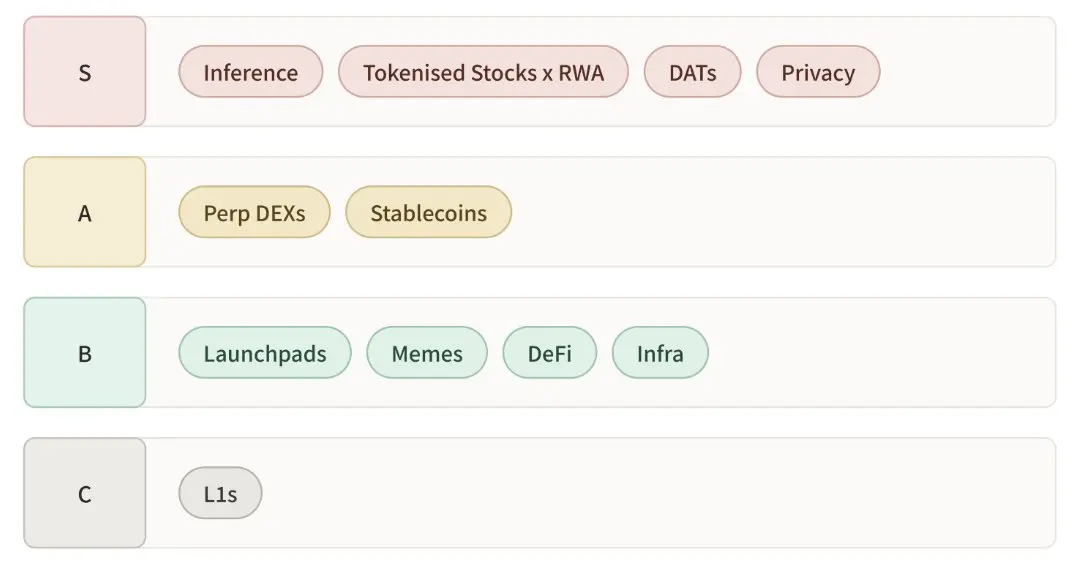
First look at the sector, then look at specific projects, which will be easier. From the investment theme perspective, only a few sectors have proven that their products truly meet market demand. Therefore, below is my tiered ranking. I have not included those tokens that currently do not have tradable tokens in the secondary market or sectors that cannot be directly invested in, such as prediction markets.
In addition, I have written a separate section to share my views on on-chain markets. In simple terms, I believe that aside from a few good tokens, other on-chain projects are not even worth the time. I have already mentioned this in the tweet below, but I will repeat it to avoid everyone overlooking it:
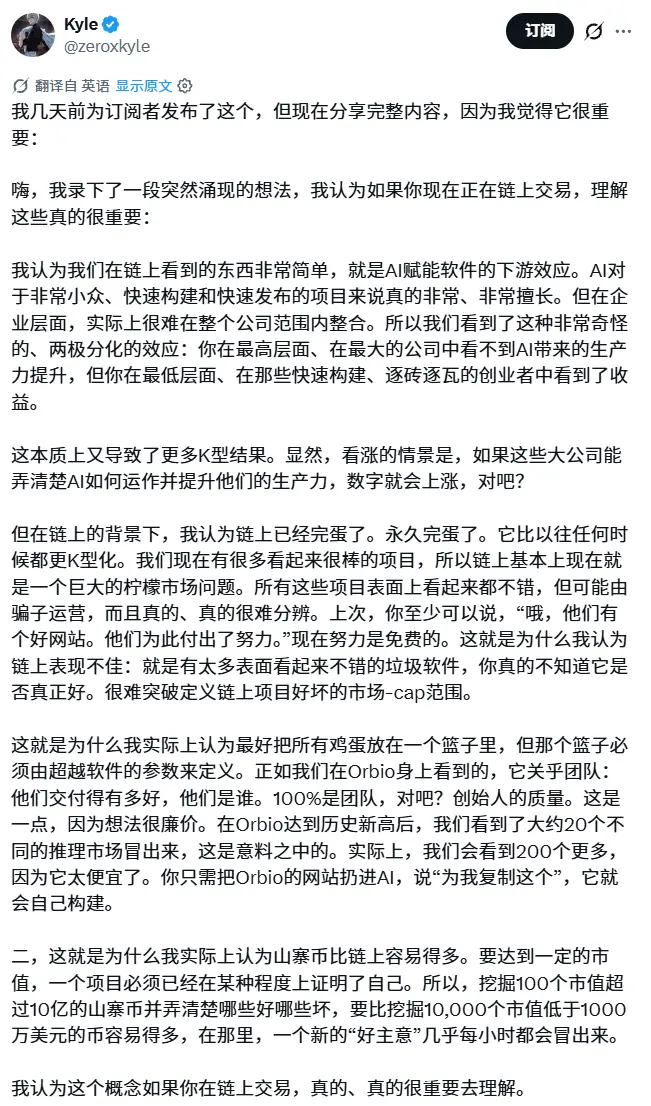
In short, what we see on-chain is the impact brought by AI-assisted software development. AI is very suitable for small-scale, niche-positioned projects that can be developed and released quickly, but it is much more difficult to promote within large enterprises. Therefore, there is a strange contrast: large enterprises have not yet shown significant productivity improvements, while small startup teams have quickly launched products using AI. As a result, there is a K-shaped differentiation: the productivity gains obtained by different groups are becoming increasingly uneven.
On-chain, this exacerbates the "lemon market" problem more than ever. In the past, you could at least say, "Their website is well done; it clearly took effort." Now, making such superficial efforts requires almost no cost. Every token with a market cap below $10 million is superficially packaged very exquisitely, making it almost impossible to distinguish whether there is a real team behind it or if it is a scam. Ideas have also become cheap. After Orbio hit an all-time high, we saw 20 different prediction markets emerge, and likely 200 more will follow, because anyone can hand Orbio's website to AI and say, "Copy this for me."
Therefore, the advantages of on-chain investment can no longer come solely from the software itself, but must come from the team: who they are and their delivery capabilities. The abilities and qualities of the founders determine everything. This is also why I believe that investing in other tokens that have already reached a certain scale is much easier than sifting through small coins on-chain. A project reaching a certain market cap has already proven itself to some extent. Researching 100 tokens with a market cap over $1 billion to find good projects is much easier than researching 10,000 tokens with a market cap below $10 million, where a "good idea" is launched every hour.
Six Key Sectors and Investment Targets
AI Inference: Real Demand from Outside the Crypto Industry
AI inference refers to the process of trained models processing requests and generating results. It is the only crypto sector that truly has demand outside the crypto industry. Individuals and businesses pay for AI because they need it, not for token incentives. As the capabilities of open-weight models (models with publicly available parameters) continue to improve and usage costs decrease, providing AI services has also become cheaper, allowing businesses to compete with large AI companies in terms of price and privacy.
This is also an investment theme that ordinary retail investors can easily understand. Everyone is using AI, and the explosive growth of some related assets indicates that the products here truly meet market demand. I believe that the current inference demand reflects the "Jevons Paradox": lower costs stimulate more usage, which in turn drives total demand growth. All data points to this. Data also indicates that people are shifting from cutting-edge models to other types of AI, including open-source models.
Although open-source models may be subject to regulatory scrutiny, there is no doubt that many models have sufficiently general capabilities to meet 99% of job requirements. So, to be honest, people do not necessarily need to use the most cutting-edge models. What people want is AI, and they do not care which specific model is used.
I can't believe I'm saying this: looking at these factors together, if you want to invest in a good AI product while betting on the growth of inference demand, the only direct investment option is actually crypto tokens. Semiconductors will benefit indirectly from demand growth, but this expectation has already been reflected in prices. Anthropic and OpenAI have not yet gone public. You can certainly go long on Zhipu, but the Hong Kong market cannot provide the same valuation premium. Meanwhile, some tokens allow you to directly participate in this investment theme. The crypto market just happens to provide one of the best tools for betting on the growth of inference demand.
Top choice: VVV and ORBIO Other options: NEAR and CHIP
Recommended reading: Galaxy's report.
Tokenized Stocks and RWA: How Big is the Market Space?
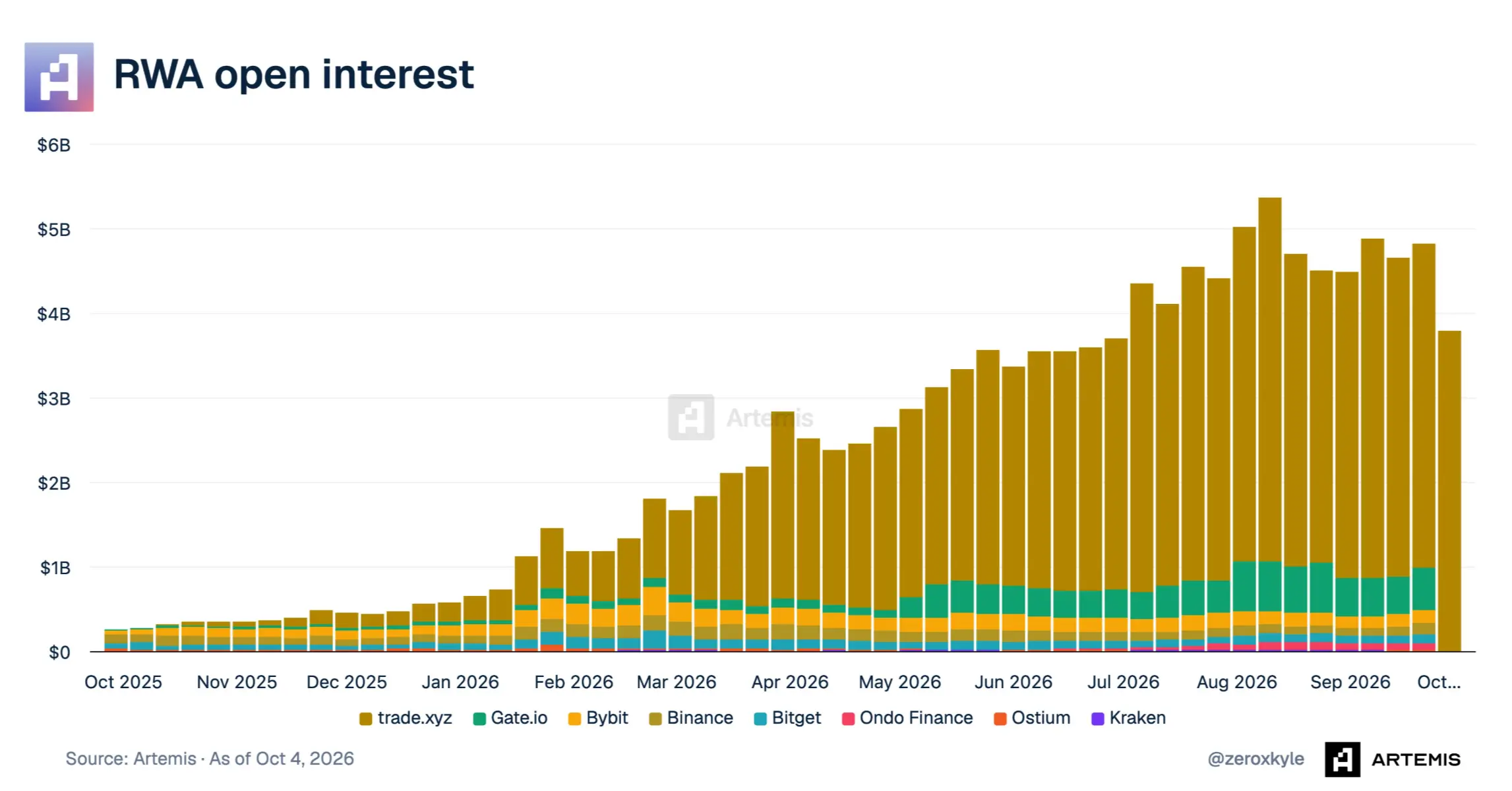
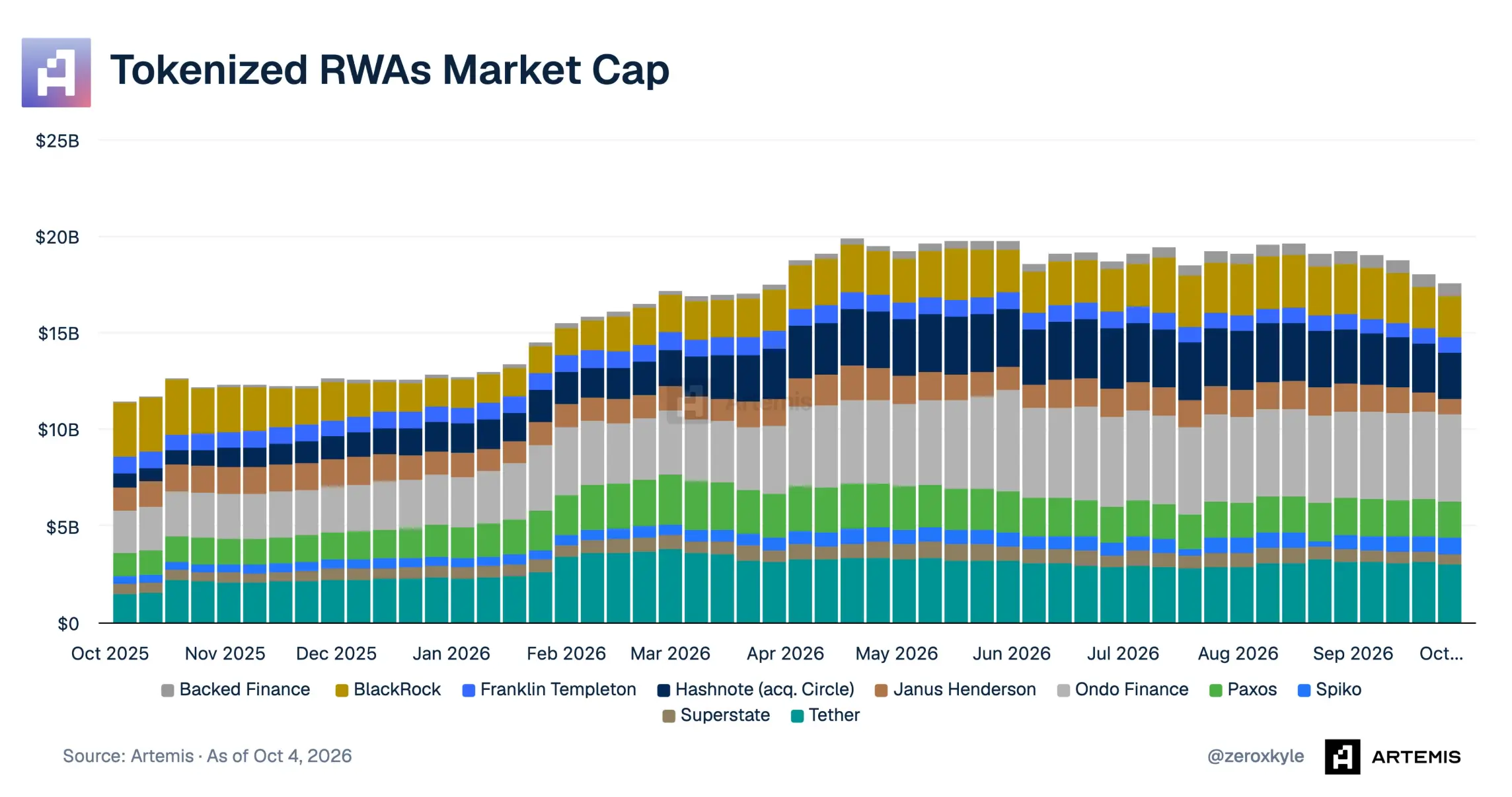
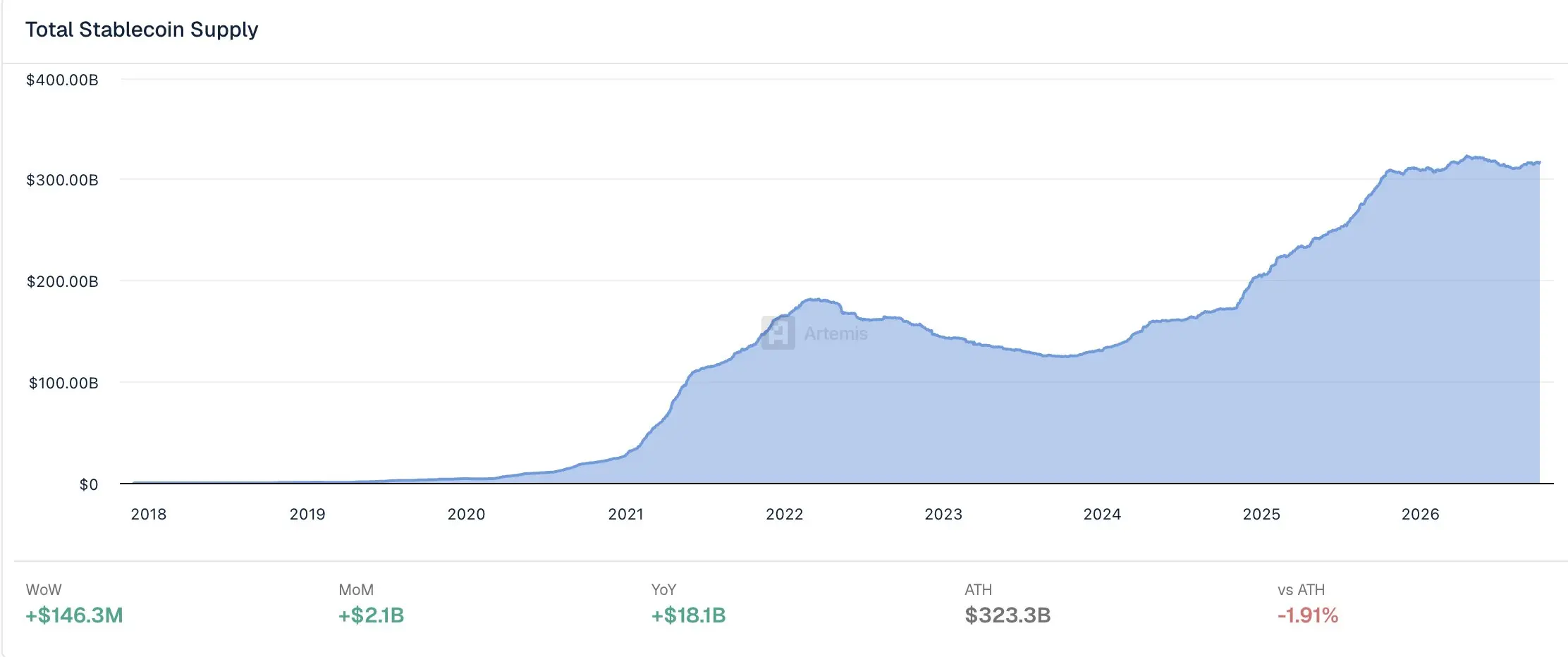
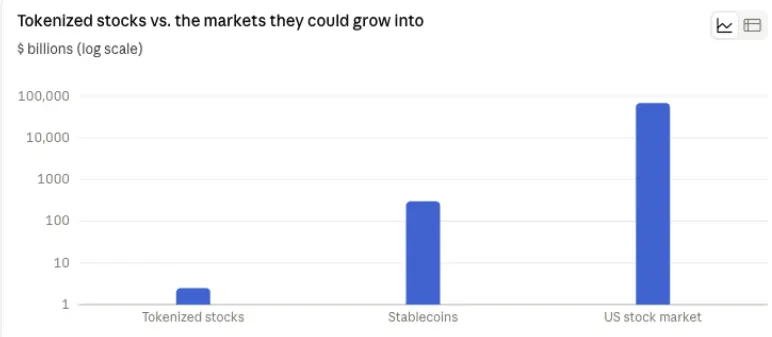
This is currently the biggest opportunity among all directions, for a simple reason: its current scale is still too small. The U.S. has expanded the use of the dollar globally through stablecoins, and the stablecoin market has reached about $300 billion. The scale of tokenized stocks is only about $2.5 billion, while the U.S. stock market is $69 trillion. Regulation is opening doors, a wave of large IPOs is coming, and there is also huge demand from countries that find it difficult to invest in U.S. stocks.
Top choice: BP
Recommended reading: Frictionless.capital's report.
DAT: Opportunities from Discounts and Fundamental Improvements
In this section, I will directly quote Evan. The following content is from Evan's article:
I believe that good opportunities that fit this investment logic should have the following characteristics:
Significantly discounted relative to the value of the held assets, with an mNAV of about 0.15 times at the summer low.
Located in related sectors such as stablecoins and perpetual contracts, with a top-notch team, and even if the related token prices have dropped more than 95% from historical highs, they are still continuously launching products.
In the coming years, as the token vesting and unlocking periods end, fundamentals will improve. For example, the circulation of USDe increases, basis trading returns, strategies for hedging spot and derivatives to capture spreads and funding rate returns expand to stock perpetual contracts, and more institutional collaborations drive total locked value (TVL) and protocol revenue growth.
Ultimately, I believe Ethena's DAT company best meets these conditions. Subsequently, new digital banking products have been launched, and the circulation of USDe has increased by over $1 billion.
Top choice: USDE
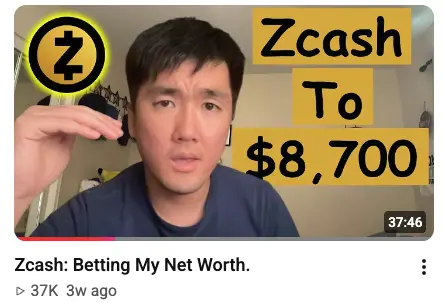
Privacy Sector: Focus on ZEC
In this section, I will borrow a bit from Lee Goon Wang's style. The privacy sector is not my specialty, and I do not hold any ZEC, so I will just provide a few links to Taiki's videos.
Preferred: ZEC
Recommended to watch video.
Perpetual Contract DEX: A Growth Opportunity Heading Mainstream
Perpetual contract decentralized exchanges (DEX) are the segment in the entire crypto industry that aligns best with product and market demand: there are real users, real trading volume, and real fee income. It is rated A instead of S simply because the market already knows this. The success of Hyperliquid has already been factored into market valuations, and competition is heating up. The next phase of growth will come from perpetual contracts moving mainstream through applications like Robinhood and Interactive Brokers (IBKR), driving the entire market expansion.
Preferred: LIT / HYPE
Stablecoins: How to Participate in Market Growth?
Stablecoins are the most successful products in the crypto industry to date, and they will continue to grow. They are rated A because the biggest winners, Tether and Circle, do not have tokens that can be bought on-chain to share in their business growth, so there are very few direct investment avenues for this segment's growth. Ethena is one of the rare exceptions: it is a stablecoin issuer that also has tokens allowing holders to share in business growth profits.
Preferred: USDE
I believe that crypto assets have finally regained their investment value. Poor-quality projects are slowly distinguishing themselves from real businesses, and the market is finally starting to reward teams that are serious about their work. Old players still carry the scars of the past, but at the beginning of every real bull market, people must face such doubts and concerns.
Extend the investment cycle, be prepared to endure greater volatility, and strictly filter holdings. The investment advantage in this cycle lies not in finding the next get-rich-quick opportunity among low-market-cap tokens written over a weekend by someone using AI, but in identifying projects with real income, that allow token holders to share in business value, and have reliable teams, while maintaining confidence to hold on when others are washed out by volatility from the latest news.
Buy good assets, continue to hold amidst the noise, and let time work its magic.
 Risk warning


Popular articles





