Morning Report | Multicoin co-founder Kyle Samani: My largest personal angel investment has been made in Backpack; CITIC Securities: The high growth of U.S. stock profits may no longer be concentrated solely in leading technology companies

 October 11 Market Important Events Overview
Compiled by: ChainCatcher
What important events have occurred in the past 24 hours?
SEC Sues Former Executives of Linqto: Allegedly Defrauding Retail Investors of Over $430 Million
According to ChainCatcher, the U.S. Securities and Exchange Commission (SEC) disclosed on its official website that it officially sued former Linqto executives William Sarris and Joseph Endoso on October 9, 2026, accusing them of committing fraud by selling shares of Pre-IPO unicorn companies to retail investors through their online platform. Between 2021 and 2024, Linqto's subsidiaries sold over $430 million in special purpose vehicles (SPVs) to retail investors. The SEC accuses the two of: falsely reporting prices below market value (with actual prices almost all above fair value), falsely claiming that stocks were "sold out," misrepresenting that prices were dynamically set by algorithms (when they were actually manually priced), and continuing to claim compliance despite knowing they were violating regulations. Additionally, they are accused of illegally operating an unregistered investment company and selling unregistered securities to non-qualified investors. The SEC seeks to impose an injunction against the two, recover illegal gains and interest, impose civil fines, and prohibit them from serving as executives or directors of public companies in the future. The case is being investigated by the SEC's San Francisco regional office, with assistance from the U.S. Attorney's Office for the Southern District of New York and the FBI.
CITIC Securities: High Growth in U.S. Stock Earnings May No Longer Be Concentrated in Leading Tech Companies
According to ChainCatcher, CITIC Securities released a research report indicating that as the performance of U.S. stocks during the domestic long holiday becomes desensitized to interest rates, investors' focus will shift to the upcoming third-quarter earnings reports for U.S. stocks starting next week. Consensus expectations from LSEG show that the S&P 500's Q3 2026 revenue and earnings growth rates are expected to reach 1.2% and 45.0% year-on-year, respectively, with a quarter-on-quarter decline. By industry, earnings growth rates in energy, information technology, materials, and healthcare sectors have all exceeded 50%. The high growth in U.S. stock earnings may no longer be concentrated solely in leading tech companies, as the earnings contribution from non-tech sectors is significantly increasing. For Hong Kong stocks, although the overseas interest rate hike cycle combined with the restart of AI momentum trading continues to pressure liquidity, the fundamental expectations have bottomed out, and the earnings growth expectations for major broad-based indices have begun to be revised upward. The adjustment of industry earnings expectations has shown significant divergence, with some niche sectors being revised upward, while the earnings expectations for domestic demand-related industries still face downward pressure. The upcoming third-quarter performance will be an important basis for judging the progress of recovery. We advise investors to remain patient with Hong Kong stocks, expecting short-term dividend strategies to continue to outperform.
Central Bank of Argentina: If Milei is Reelected, Banks May Offer Cryptocurrency Services
According to ChainCatcher, Cointelegraph reported that the Central Bank of Argentina stated that if President Javier Milei is reelected, banks may be able to offer cryptocurrency-related services to customers during his second term. This statement comes four years after the Central Bank of Argentina prohibited banks from providing cryptocurrency services. Reports indicate that the Central Bank of Argentina had previously restricted banks from engaging in cryptocurrency business. This statement links the possibility of banks reopening cryptocurrency services to the policy environment after Milei's reelection, but no specific timeline, entry conditions, or range of products to be offered has been announced.
Korean Local Crypto Projects Continue to Move Overseas Due to ICO Ban, Experts Call for Clear Standards for Repatriation
According to ChainCatcher, South Korean media Dailian reported that the Digital Asset Exchange Association (DAXA) released the "2026 Digital Asset Policy Compilation," with Seoul National University Professor Zhao Zaiyu pointing out that since the ICO ban in 2017, local crypto projects in South Korea have continuously moved their issuance entities and business bases overseas due to regulatory gaps. The token issuance of Klaytn is handled by a Singapore entity, and Wemade's WEMIX is also issued by a Singapore entity. Subsequently, Metabora moved to Dubai, and NeoFin relocated its foundation to Abu Dhabi, with the trend of industrial outflow continuing to intensify. Experts pointed out that the regulatory gap between domestic and foreign issuers, as well as difficulties in opening corporate bank accounts, are core obstacles, emphasizing that "what Korea needs is not looser regulation, but clearer rules." They called for the Digital Asset Basic Law to clarify the licensing standards for issuance, custody, verification, and to establish special procedures for repatriating core functions overseas back to Korea.
Liquid Network Redemption Frozen for 35 Days, Attacker Still Holds $49.69 Million in BTC
According to ChainCatcher, Bitcoin.com reported that the Bitcoin sidechain project Liquid Network's LBTC exchange for Bitcoin operations has been suspended for 35 days. As of October 11, 2026, the project still maintains an 86% support rate; the attacker previously exploited a vulnerability in the Elements software to steal nearly 4,000 Bitcoins, of which approximately 3,400 have been returned, while the wallet still holds 598.5 Bitcoins, valued at $49.69 million. Blockstream rejected the attacker's request for a 10% bounty and demanded the immediate return of the remaining Bitcoins. Liquid Network stated that an independent external security audit of Elements v23.3.4 is underway, and the Liquid Federation is synchronously updating the PAK list, placing all redemption keys in cold storage. There is currently no specific date for resuming redemption operations. Some LBTC holders have migrated funds through applications like Sideswap and Sideshift.ai, with one user stating that due to insufficient liquidity, the migration took several weeks, with a total price difference and fees amounting to about 5%.
Zhao Changpeng Releases Cryptocurrency Asset Custody Guidelines, Suggests Choosing Custody Methods Based on Asset Scale and Technical Capability
According to ChainCatcher, Binance founder Zhao Changpeng released a simplified cryptocurrency asset custody guideline, advising users to match security measures based on their holding scale and technical capabilities, with a focus on preventing asset theft, avoiding accidental loss, and planning for asset inheritance in advance. For self-custody, Zhao suggested users store private keys on offline devices, use reliable hardware wallets, verify transaction addresses, and set up multiple off-site backups, while reminding users to avoid saving keys through photos or screenshots to prevent them from syncing to the cloud and causing leaks. Regarding asset inheritance, users should develop a secure recovery plan in advance, avoiding direct sharing of keys or storing recovery information in unencrypted form. For centralized trading platforms, Zhao advised users to assess the platform's reputation, security capabilities, and business model, and to strengthen account protection through independent email, strong passwords, two-factor authentication, hardware security keys, and withdrawal address whitelists, while remaining vigilant against phishing attacks and API credential leaks. Zhao further suggested that users should reasonably allocate assets between centralized trading platforms and personal wallets based on their technical capabilities, security management levels, and funding needs. Self-custody means users need to independently bear the responsibility for private key protection and asset recovery, while custody by trading platforms involves platform credit and counterparty risks. Additionally, retaining an independent wallet helps maintain asset access during trading platform maintenance or service interruptions.
U.S. Spot Ethereum ETF Saw Net Outflow of $542.1 Million Last Week, Solana ETF Ends 14-Week Inflow Streak
According to ChainCatcher, The Block reported that the U.S. spot Ethereum ETF saw a net outflow of $542.1 million last week, marking the worst week since January, with outflows occurring for nine consecutive days. During the same period, the Solana ETF experienced a net outflow of $24.8 million, ending its previous 14-week net inflow streak and recording the largest single-week net outflow since the product's launch.
Papertrade Responds to Price Manipulation and Protocol Vulnerability Concerns: Initial Loose Position Limits Were the Cause, Parameters Have Started to Tighten
According to ChainCatcher, Papertrade's official response to concerns about price manipulation and obvious protocol vulnerabilities stated: It has never been possible for small orders and large orders to have the same priority. If this were done, the frontend would be congested with junk trades, resulting in consequences far worse than the existing queuing mechanism. Under these constraints, we have tried to make the fair launch design more inclusive. Last night, the manipulation attempt on BTC/ETH at Hyperliquid BBO was not due to a flaw in the mechanism designed over six months. These situations had already been considered; it was just that the position limits were set very loosely at the beginning to cope with congestion. If position limits were set during peak queuing demand, it would only exacerbate the slow experience, and the queuing mechanism itself, due to the uncertainty of opening/closing confirmation times, actually provides natural protection against manipulation. As congestion eases, we have begun to tighten position limits on-chain and at the relay layer. In such a system, manipulation attacks are always possible—the key is whether the attempt is economically viable. The official goal is to set parameters to a point where it is almost never profitable, even if successful, the tail risk is very high, and the expected value is negative.
Analysis: 53% of Capital Concentrated Above $83,000 for Bitcoin, $84,000-$85,000 Becomes Key Breakthrough Level
According to ChainCatcher, crypto analyst Darkfost stated that approximately 53% of the invested capital is concentrated above the current price level of $83,000. This means that if Bitcoin is bought at this level, the holding cost will be better than that of over half of the investors. The $84,000 to $85,000 range is the largest capital distribution cluster, and many investors react at this critical level, making this range clearly the core resistance that Bitcoin must break through. On the downside, the $79,000 to $77,000 range may become a support level. If the price cannot effectively break through the $84,000-$85,000 range, the market may first test that support area; however, once it stabilizes above the dense capital area, it indicates that the cost pressure on most holders has been alleviated, and subsequent upward resistance will be significantly reduced.
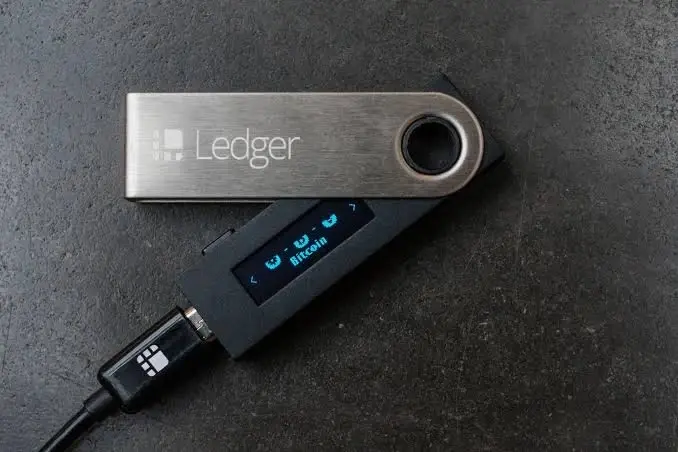
Ledger Supply Chain Attack Reported to Extend to Europe, Official Dealers Sell Hardware Wallets with Spy Devices Found
According to ChainCatcher, X user @0xJohannes reported that a Ledger hardware wallet purchased from an official dealer in Europe weeks ago was found to contain unauthorized spy devices. The device has suspicious wiring that genuine Ledger hardware does not possess, indicating it may have been physically tampered with before sale. The implanted device is suspected to be an old version, as new versions typically hide components behind the screen. Funds in the affected devices have not yet been stolen. Suspected cases have been reported in Asia, South America, and Europe. If the original security components remain intact, Ledger's software Genuine Check cannot detect unauthorized physical modifications.
Cloudflare Acquires Deno, Promoting Workers Platform to Support Self-Hosted Deployments
ChainCatcher news, according to Forbes, Cloudflare announced the acquisition of the JavaScript/TypeScript runtime company Deno. Deno's founder Ryan Dahl (the inventor of Node.js) and co-founder Bert Belder will lead the entire team to join Cloudflare. The core asset of this acquisition is the open-source project celld—a distributed deployment tool that runs Workers and Durable Objects with a single Rust binary, allowing enterprises to run Cloudflare's serverless programming model on their own infrastructure, fundamentally addressing the long-criticized "lock-in" issue of the Workers platform. Cloudflare plans to integrate celld into the open-source runtime workerd to achieve complete self-hosting support. Deno has previously raised $26 million, and the financial terms have not been disclosed. Deno Deploy will close in six months, and the Deno runtime will stop development after maintaining security updates for one year. This is the second acquisition of developer tools completed by Cloudflare within four months, having previously acquired the company behind the Vite build tool, VoidZero, in June of this year.
Trader Rune: PaperTrade documentation mentions the risk of "vulnerability" in BBO price manipulation at the protocol level
ChainCatcher news, crypto trader Rune stated on platform X that the official PaperTrade documentation has disclosed that there is a "vulnerability" risk in the pricing mechanism at the protocol level. According to the screenshots of the displayed documents, attackers can exploit the BBO (Best Bid and Offer) of the Hyperliquid order book for price manipulation. This risk involves unresolved price manipulation paths, contract economic mechanisms, and risk exposure control, as well as operational-level protective measures and permission management mechanisms. Additionally, Rune forwarded a tweet from community user boblob, which disclosed that two wallets were suspected of actively exploiting "attacks" on the PaperTrade platform, causing a slight fluctuation of about 10-20 basis points in the ETH price on the Hyperliquid platform through approximately $20 million in transactions. Boblob further added that the obvious issues currently present in the PaperTrade protocol need to be fixed as soon as possible, or it may affect the long-term sustainability of the protocol.
Multicoin co-founder Kyle Samani: My largest personal angel investment has been made in Backpack
ChainCatcher news, Multicoin co-founder Kyle Samani announced on platform X that his largest personal angel investment has been made in Backpack. On September 2, Backpack announced that Kyle Samani, co-founder of Multicoin Capital and an early investor in Solana, has joined the Backpack US board of directors. Samani has long focused on the development of DeFi, blockchain infrastructure, and global capital markets. Backpack stated that this appointment reflects a shared judgment that the future of global finance will combine institutional-level risk control with the efficiency and transparency of on-chain markets.
Argentina Central Bank: Economic vulnerability is insufficient to support the integration of crypto assets into the banking system
ChainCatcher news, according to Bitcoin.com News, Juan Curutchet, head of financial and foreign exchange institution regulation at the Central Bank of Argentina (BCRA), recently stated that crypto assets will not be allowed to integrate into the banking and payment service system in the short term, and the regulation prohibiting financial institutions from providing crypto services will continue to be maintained. Juan Curutchet pointed out that Argentina's current economic vulnerability is insufficient to support the advancement of related measures, and whether to lift the ban in the future will depend on economic conditions, with related topics possibly discussed during the second term of Milei.
Trader: BTC may rise before the U.S. midterm elections
ChainCatcher news, crypto trader Killa stated that the most ideal scenario for Bitcoin (BTC) is to continue rising before the U.S. midterm elections, building a bullish narrative and breaking through previous highs, followed by a historical cycle-like pullback after the elections. However, this pullback may not form a new cycle low but rather establish a higher low. Killa indicated that if BTC drops before the midterm elections, he believes the market is more likely to rebound to around $95,000 after the elections. Previously, nearly $2 billion in long positions had been liquidated, and there are about three weeks left until the U.S. midterm elections. The market may currently be experiencing a "maximum pain" scenario: after some market narratives have been broken, BTC rebounds before the elections, then reverses again, putting pressure on traders in the opposite direction, ultimately leading the market to re-leverage risk. Killa noted that in the past four U.S. midterm elections, three times there was a decline one to two months after the elections, with historical samples showing a probability of about 75%. However, he stated that he still holds a 10x long position in BTC, as well as previously established long positions at $62,600 and $76,400, which have not been reduced.
Ledger incident attacker has transferred 2,990 ETH to Tornado Cash
ChainCatcher news, on-chain detective Specter posted on his personal channel that during the period from October 9 to 10, the address related to the CryptoBilis Ledger hardware wallet incident deposited 2,990.3 ETH, worth about $7.45 million, into Tornado Cash. Monitoring shows that the attacker previously withdrew funds to 14 addresses, then cross-chained to ZEC via NEAR Intents and processed for privacy. Specter stated that the attacker partially reused previous deposit addresses to submit withdrawal transactions, and some withdrawal transactions were initiated by wallets associated with the addresses that paid gas fees during the theft, linking the funds to the withdrawal actions. Currently, the attacker continues to transfer and hide the related funds. The previous CryptoBilis incident involved supply chain risks of Ledger hardware wallets, and Ledger has stated that it is investigating and reminding relevant users to pay attention to device security.
COLDCARD official X account posted phishing link, suspected of platform-level intrusion
ChainCatcher news, hardware wallet manufacturer COLDCARD stated that its official X account had posted a forged security announcement, directing users to a phishing site disguised as a wallet migration guide. The post has been deleted, but no corresponding login, session, or access records have been found. COLDCARD stated that its credentials and offline two-factor authentication remain secure, leading to suspicions that the attacker may have gained platform-level or administrator privileges on X, and has requested an urgent investigation by the X security team. The company also mentioned unverified reports of X administrator accounts being sold on the dark web, but no connection to this incident has been found.
ETH near-term buying pressure thicker, Binance spot buy orders at $8.2185 million, exceeding sell orders by $2.1736 million
ChainCatcher news, according to market intelligence platform Liquid247.xyz, the current price of ETH is $2,510.44. The thickest orders are on Binance spot: buy orders at $8.2185 million, sell orders at $6.0449 million, with buy orders exceeding sell orders by $2.1736 million. Binance perpetual, Coinbase spot, OKX perpetual, and Hyperliquid perpetual sell orders are all thicker than buy orders. If a large buy or sell suddenly occurs, exchanges with thinner order books will be affected first, and price fluctuations will be more pronounced.
RippleX engineering head: XRP Ledger discovered a serious vulnerability for over 10 years, has been fixed and upgraded
ChainCatcher news, regarding the critical vulnerability in the payment engine reported by Veria AI, RippleX engineering head J. Ayo Akinyele stated that the XRP Ledger (XRPL) payment engine had a serious vulnerability for over 10 years that could lead to the issuance of XRP beyond the fixed supply. This vulnerability was discovered through a bug bounty program and has not been exploited. The development team has released the xrpld 3.4.1 fix version and coordinated validators to complete the network upgrade before public disclosure. Akinyele stated that AI is accelerating the speed of vulnerability discovery, and XRPL will increase proactive security investments, clean up technical debt, promote formal verification, and systematically eliminate potential risks in old code.
A man in Malaysia's crypto wallet suspected of being hacked, losing about $3.05 million
ChainCatcher news, according to Bernama, a man in Perak, Malaysia, has reportedly had his crypto wallet hacked, resulting in a loss of approximately 12.47 million ringgit (about $3.05 million). The Perak police chief stated that the victim discovered on the afternoon of October 9 that his crypto assets had been transferred out without authorization. Preliminary investigations show that the related transactions were conducted through the blockchain network. The police are cooperating with the commercial crime investigation department's cryptocurrency division to trace the flow of funds and investigate the individuals involved. The case is currently being investigated under Section 420 of the Malaysian Penal Code regarding fraud, and the specific method of attack has not been disclosed.
NVIDIA in talks to acquire Reflection AI or increase investment
ChainCatcher news, according to the Financial Times, insiders revealed that NVIDIA (NVDA.O) is in negotiations to acquire the U.S. open-weight model developer Reflection AI or further increase its investment. The negotiations are still in the early stages, and the deal could take various forms.
IMF: Tokenized stocks have lower liquidity than traditional stocks and higher volatility
ChainCatcher news, the International Monetary Fund (IMF) stated that the liquidity of tokenized stocks is lower than that of traditional stocks, and their volatility is also higher. Watcher Guru cited the IMF's relevant statements, indicating that compared to traditional stocks, tokenized stocks have "lower liquidity and greater volatility." This statement points to the IMF's assessment of the market structure of tokenized assets, involving trading depth, price fluctuations, and comparisons with traditional securities markets.
Analyst: Bitcoin selling pressure intensifies, reaching local top levels in this cycle
ChainCatcher news, crypto analyst Darkfost pointed out that Bitcoin has entered a phase where selling pressure has significantly increased. After a recent rebound pushed Bitcoin's price above $85,000, the Seller Exhaustion indicator has signaled that potential selling pressure is rising. This indicator combines profit supply and volatility to identify risk and calm phases, making it highly valuable for short-term reference. This rise has been quite sudden, especially reflected in short-term holders. The current level of the indicator is approaching the threshold seen at multiple local tops in this cycle. Analysts state that it is necessary to observe whether demand can improve and whether volatility converges to suppress potential pullbacks and return the indicator to normal.
Meme Hot List
According to the meme token tracking and analysis platform GMGN market data, as of October 12, 08:45,
The top five popular ETH tokens in the past 24 hours are: INCOGNITO, ZC, CLAUS, DNA, DOPE
The top five popular Solana tokens in the past 24 hours are: DOPE, baton, CLAUDIA, Incognito, Normie
The top five popular Base tokens in the past 24 hours are: XDP, Basecat, PROS, BLUECHIP, VVV
What are some exciting articles worth reading in the past 24 hours?
Yield-bearing collateral: Traders no longer pledge idle USDC; they can use income-generating assets, such as sUSDe and tokenized U.S. Treasury bonds, as margin. Ethena's sUSDe alone has achieved an annualized return of 4% to 30% over the past two years by capturing permanent funding rates and can now be used as collateral on platforms like Aave, Pendle, and Morpho. If predictive markets support similar collateral, savers' capital can continuously earn returns while serving as position guarantees, rather than being completely idle before event settlement. Financial and DeFi modular combinations: Structured products can be built on top of predictive markets, which can be bundled with other assets or used as collateral for lending. When event contracts can be bundled with income-generating assets or used for collateralized lending, zero-sum games are no longer the only return for that capital.
When Fintech Merges with Crypto Infrastructure: The Next Decade of Digital Finance
The future of fintech lies in the integration of traditional financial platforms with programmable financial infrastructure. Blockchain technology is not replacing existing systems but is increasingly being integrated as a layer that operates behind the scenes for settlement and liquidity. Stablecoins, tokenized assets, and on-chain markets bring faster settlements, cheaper cross-border payments, and new financial products, which are essentially invisible to end users. Ultimately, the companies that can capture value in digital finance are those that possess large-scale distribution, regulatory trust, and infrastructure control. Whether through payment networks, developer platforms, or consumer finance ecosystems, the winners will be those platforms that abstract financial complexity while orchestrating across multiple payment tracks. As programmable money is adopted more widely, fintech companies that successfully integrate traditional finance with blockchain infrastructure will shape the next generation of global finance.
I think it's mainly about creation. I also made it quite clear in "The Road to Financial Freedom": After consuming for a long time, it becomes meaningless; to be honest, you have to return to some creation. But creating for too long and working too hard can also be dizzying; you need some consumption to recharge. These two aspects complement each other and are not in a suppressive relationship. It is impossible for people to pursue 100% creation; that would be too cruel and against human nature.
"AI End Report" Producer's Latest Research: Agents and RWA Reshape the Crypto Industry
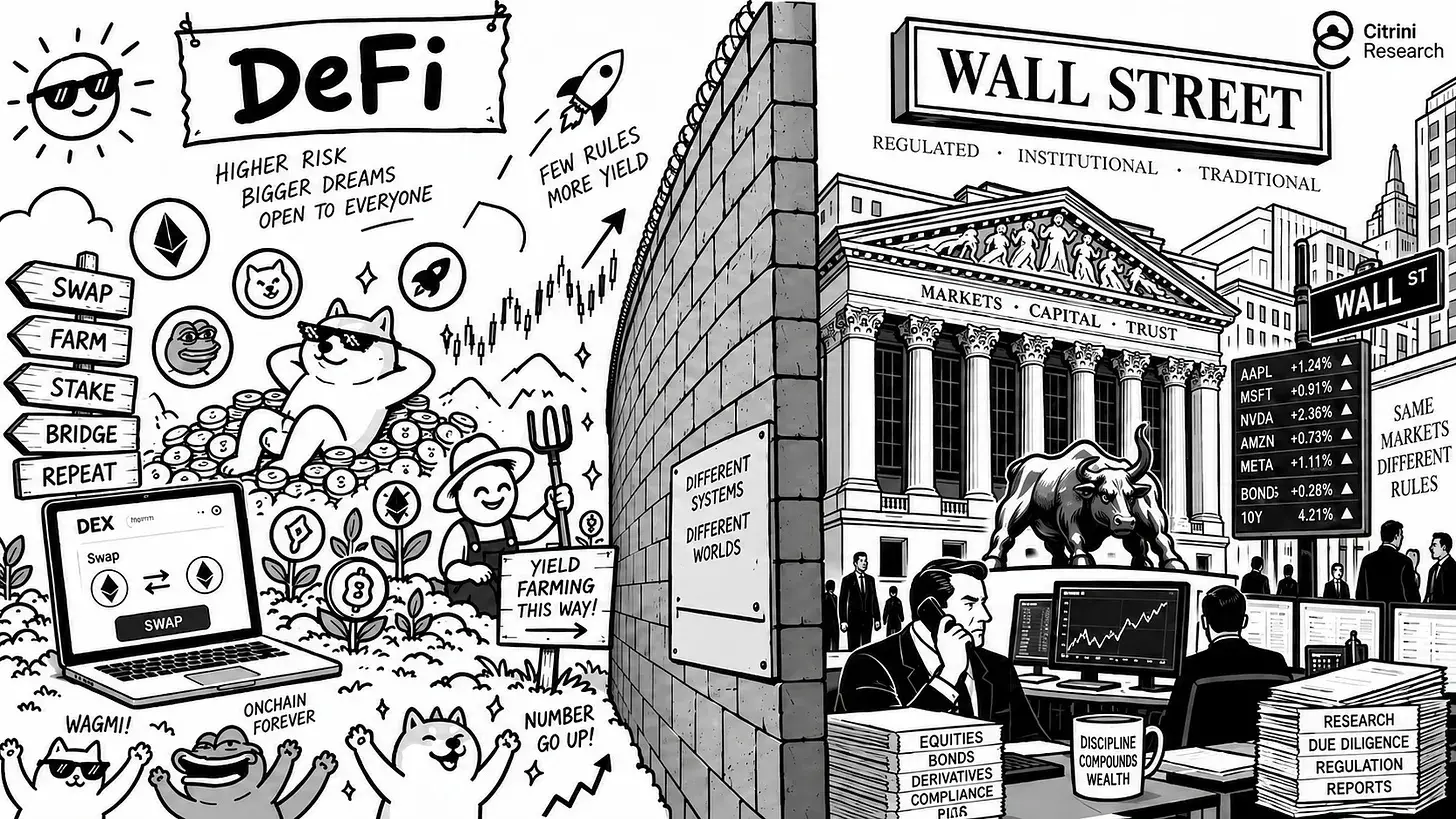
For the first time, we see that both institutions and individuals are willing and able to participate in a diverse RWA market. In our view, regardless of whether a comprehensive bill is introduced, relevant regulatory rules are being established gradually. The questions investors should ask should shift from "Can tokenization gain legal recognition?" to "After these products enter the U.S. market, who will earn income and profits from them?" AI Agents need to operate around the clock and have a financial system that schedules funds programmatically, while asset tokenization brings stocks, government bonds, and other assets that people truly want to hold onto the blockchain. These two changes are converging, making the use of blockchain clearer. The high walls between traditional finance and the crypto world are loosening. For investors, what to watch next is which platforms and financial applications can meet these demands and whether they can convert the growing on-chain activity into sustained income.
Mark Wilson: Ben, Pete, thank you very much. Thank you for participating in the latest edition of the "Macro Conference Call," and remember to join the weekly version, which everyone on the Goldman Sachs marquee platform can listen to.
Once PAPER is tradable, its market price will price tokens obtained through losses. If buying directly is cheaper than farming tokens, it may draw activity away from trading products. External distribution opens later. Direct integration with truly operational builder code income will indicate that other applications find this mechanism useful. Conclusion: Papertrade does not eliminate the demand for liquidity. It requires traders to create that portion of liquidity through losses over time while rewarding those who provide these losses with PAPER. The first wave of serious volatility will determine whether delayed redemption is a cold start mechanism or simply turns liquidity shortages into protocol debt. Peak trading volume will not provide answers. Redemption speed and reuse will.
OpenAI and Anthropic are not the only AI companies emphasizing annualized revenue. In the current wave of enthusiasm, more and more star startups are using this metric to showcase growth and support their high private market valuations. Damodaran believes that the debate surrounding the technical details of annualized revenue essentially avoids a more fundamental question: How large of real sales do these two companies need to generate to cover their massive expenditures and support valuations exceeding $1 trillion? Reports also indicate that as Anthropic is about to land on Wall Street, this information asymmetry may soon change. Once both companies complete their IPOs, investors will receive financial statements prepared in accordance with generally accepted accounting principles, at which point the reference value of this non-standardized metric of annualized revenue will significantly decrease, and the market's judgment of the true financial status of the two companies will be based on a more solid foundation.
 Risk warning