SuperEx Report: Private Wealth Management Monthly Report - September 2026

 The market is facing rising inflation, interest rate hikes by the Federal Reserve, and high bond yields, yet it still relies on the inflow of ETF funds to achieve an increase. This indicates that institutional demand for crypto assets and market resilience are strengthening.
Data Scope Explanation
The digital asset prices in this report are based on historical snapshots from CoinMarketCap on September 1 and September 30, 2026; the U.S. spot BTC and ETH ETF data are aggregated from Farside Investors' daily Total data; macroeconomic data is sourced from publicly available information from the Federal Reserve, the U.S. Bureau of Labor Statistics, and the U.S. Bureau of Economic Analysis. Unless otherwise specified, the statistical period in this article is September 2026.
September Summary
In September 2026, the crypto market continued the recovery trend from August, but the logic driving the market changed.
If the rise in August was mainly due to valuation recovery, a rebound in risk appetite, and a reflow of ETF funds, then September felt more like a real stress test: U.S. inflation warmed up again, the Federal Reserve raised interest rates by 25 basis points, and U.S. Treasury yields remained high, yet BTC, ETH, and some high-elasticity assets still recorded gains.
According to CoinMarketCap's historical snapshots, BTC rose from $77,403.62 on September 1 to $83,553.85 on September 30, an increase of about 7.95%; ETH rose from $2,417.84 to $2,683.68, an increase of about 10.99%.
This indicates that, in a tightening interest rate environment, crypto assets still exhibit strong relative resilience. However, BTC briefly touched about $87,364 during the month before retreating to around $83,500, which also indicates that the market has not entered a pressure-free unilateral upward phase.

Market Review: Three Pricing Transitions in One Month
The September market can be roughly divided into three phases.
Phase One: High-Level Consolidation at the Beginning of the Month
At the beginning of September, BTC fluctuated around $78,000. The market continued to take profits after the rise in August while waiting for employment, inflation, and Federal Reserve meetings to provide new direction.
ETF funds showed significant volatility during this phase. On September 1, there was a net outflow of $236.5 million from the U.S. spot Bitcoin ETF, but on September 3, there was a net inflow of $730.8 million, indicating that institutions did not systematically exit but adjusted their pace before important macro data was released.
Phase Two: Concentrated Release of Inflation and Rate Hike Pressure
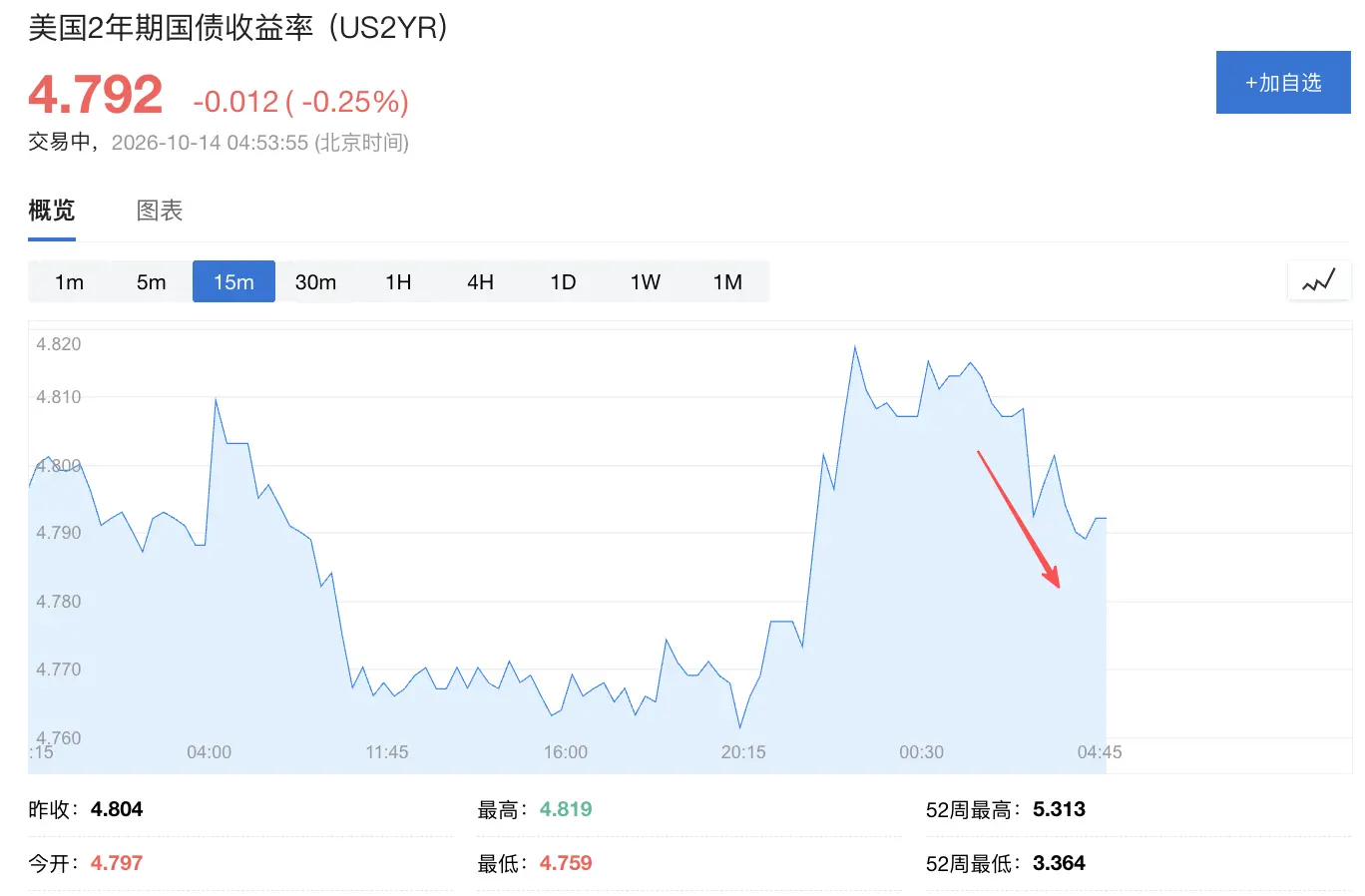
Data from the U.S. Bureau of Labor Statistics showed that non-farm employment increased by 162,000 in August, with the unemployment rate remaining at 4.1%. The subsequently released August CPI rose by 0.4% month-on-month and 3.4% year-on-year; core CPI rose by 0.3% month-on-month and 2.4% year-on-year. ++U.S. Employment Data++ ; ++U.S. CPI Data++
On September 16, the Federal Reserve raised the target range for the federal funds rate by 25 basis points to 3.75% to 4.00%, with a voting result of 12 in favor and 0 against. This was a clear tightening action, and the Federal Reserve also stated that inflation remains elevated. ++Federal Reserve September Statement++
Before and after the rate hike, ETF funds briefly weakened. On September 15, there was a net outflow of $450.4 million from the BTC ETF; on September 16, there was an additional outflow of $295.9 million. The ETH ETF saw a net outflow of $224.1 million on September 16.
This indicates that institutional funds do not overlook macro risks. Even if the long-term allocation logic has not changed, inflation, interest rates, and bond yields will still affect the timing and price of funds entering the market.
Phase Three: ETF Reflows Drive Recovery in Risk Appetite
After the Federal Reserve's decision, the market quickly completed a repricing. From September 17 to 29, the BTC ETF recorded net inflows for several consecutive trading days, with a single-day net inflow of $999 million on September 21 and an additional inflow of $714.7 million on September 22.
During this phase, BTC briefly broke through $87,000, and assets like ETH, SOL, and LINK also strengthened simultaneously. The market expanded from a simple BTC recovery to a broader rise in mainstream assets and some high-elasticity assets.
However, in the last few trading days of September, BTC retreated from its highs, and on September 30, the BTC ETF also saw a net outflow of $148.7 million. This indicates that profit-taking at high levels still exists, and funds have not formed a continuous inflow that disregards price.
Major Digital Asset Performance
According to CoinMarketCap's historical snapshots from September 1 to September 30:
l BTC: $77,403.62 → $83,553.85, approximately +7.95%
l ETH: $2,417.84 → $2,683.68, approximately +10.99%
l BNB: $682.75 → $768.18, approximately +12.51%
l XRP: $1.3516 → $1.4884, approximately +10.12%
l SOL: $99.99 → $117.99, approximately +18.00%
l LINK: $11.22 → $14.36, approximately +27.99%
l DOGE: $0.08164 → $0.09447, approximately +15.72%
l TRX: $0.3223 → $0.3374, approximately +4.69%
The most noteworthy change in September was that high-elasticity assets once again outperformed BTC. The range increases of LINK, SOL, and DOGE all exceeded that of BTC, indicating that the risk appetite of funds has spread from core assets.
However, this spread does not mean that all altcoins have entered a phase of universal growth. Funds are still concentrated in assets with good liquidity, clear narratives, or institutional attention. For wealth management accounts, the rise of a few high-elasticity assets should not be directly interpreted as a comprehensive "altcoin season."
Institutional Funds and ETF Trends
According to daily data aggregation from Farside Investors, the cumulative net inflow of the U.S. spot Bitcoin ETF in September was approximately $2.6477 billion. There were 13 trading days with net inflows and 8 trading days with net outflows.
The Ethereum ETF had a cumulative net inflow of approximately $831.3 million in September, also with 13 trading days of net inflows and 8 trading days of net outflows.
Among them:
l BTC ETF largest single-day net inflow: September 21, approximately $999 million;
l BTC ETF largest single-day net outflow: September 15, approximately $450.4 million;
l ETH ETF largest single-day net inflow: September 21, approximately $270 million;
l ETH ETF largest single-day net outflow: September 16, approximately $224.1 million.
Compared to August, the monthly net inflow scale of BTC and ETH ETFs in September decreased, but it still maintained positive inflows. This indicates that institutional allocation demand has not disappeared; it is just more sensitive to macro data and price levels.
Stablecoins and Market Liquidity
In September, the market capitalization of stablecoins continued to grow moderately, but the growth rate was significantly lower than the price increase of risk assets.
CoinMarketCap snapshots show:
l USDT market cap rose from approximately $183.277 billion to $183.766 billion, an increase of about 0.27%;
l USDC market cap rose from approximately $73.606 billion to $74.010 billion, an increase of about 0.55%;
l The combined market cap of both rose from approximately $256.883 billion to $257.776 billion, an increase of about $893 million, with a growth rate of about 0.35%.
This indicates that the September market did not rely on a large-scale expansion of stablecoin supply to drive the rally. The price increase came more from ETF funds, increased risk exposure of existing funds, and asset rotation within the market.
For wealth management accounts, this is an important signal: market demand is improving, but systemic liquidity has not expanded rapidly in sync with prices. Therefore, portfolios should still retain sufficient stablecoins and deployable funds.
Cross-Asset Observation: Crypto Assets Stand Out
In September, traditional assets showed a mixed performance. According to publicly available monthly market statistics, the Dow Jones and S&P 500 recorded monthly declines, while the Nasdaq, dominated by tech stocks, maintained positive returns. High interest rates and rising long-term U.S. Treasury yields put pressure on finance, real estate, utilities, and highly leveraged companies, but AI and semiconductor sectors still received funding support.
Gold remained above $4,100 per ounce at the end of September but retreated from its monthly highs. In contrast, crypto assets achieved overall gains during the Federal Reserve's rate hike period, indicating that the pricing logic of BTC and ETH is no longer entirely equivalent to traditional high-valuation risk assets.
However, this does not mean that crypto assets have detached from the macro cycle. The inflows and outflows of ETFs in September were highly concentrated around the FOMC, enough to indicate that interest rates will still affect short-term funding behavior.
SuperEx Private Wealth Perspective
We maintain a neutral to positive outlook for the October market but do not recommend concentrated chasing of gains during high volatility phases.
The September market proved three things:
l ETF funds remain one of the most important incremental funding sources for BTC and ETH;
l The Federal Reserve's rate hikes can create short-term volatility but do not disrupt the mid-term recovery structure of digital assets;
l High-elasticity assets have begun to outperform BTC, but the market remains primarily characterized by structural rotation rather than indiscriminate rises.
For private wealth clients, the focus in October is not on finding the assets with the largest gains but on reaffirming the roles of different funds within the portfolio:
l Core Allocation: Use high liquidity assets like BTC and ETH to bear medium to long-term market exposure;
l Yield Allocation: Manage temporarily non-directional trading funds through products like SuperEx Earn;
l Opportunity Allocation: Focus on high-elasticity directions such as SOL, LINK, RWA, payments, and infrastructure, but control the weight of single assets;
l Liquidity Reserve: Retain stablecoins to respond to pullbacks, macro events, and temporary allocation opportunities;
l Trading Allocation: Funds for contracts and copy trading should be isolated from long-term holdings to avoid leverage volatility affecting overall asset safety.
For users who have already gained profits from the rises in August and September, the first thing to do in October may not be to continue increasing positions but to recheck whether asset ratios have passively shifted due to price increases.
Final Thoughts
September 2026 is a month with significant reference value.
The market faced rising inflation, Federal Reserve rate hikes, and high bond yields, yet still relied on the reflow of ETF funds to complete the rise. This indicates that institutional demand for crypto assets and market resilience are strengthening.
However, the growth rate of stablecoin supply is limited, ETF funds have reappeared outflows at the end of the month, and BTC has also failed to fully retain the gains above $87,000. These signals remind us that the market is improving, but it has not yet entered a stage where price and risk can be ignored.
For private wealth management, what truly matters is not predicting the peak in October, but ensuring that the portfolio can both participate in trends and withstand forecasting errors.
Disclaimer
This article is for market information, product education, and general asset management research only and does not constitute any investment advice, trading advice, financial planning services, or profit guarantees. The asset allocation framework mentioned is for illustrative purposes of fund management ideas and is not applicable to all users.
Digital asset prices are highly volatile, and contracts and other leveraged products may amplify gains and losses. Historical prices, ETF fund flows, and past performance do not represent future results. Users should make independent decisions based on their own financial situation, investment experience, and risk tolerance, and refer to SuperEx's latest product page, service terms, and risk warnings.
About SuperEx
As the world's first Web3-driven cryptocurrency exchange, SuperEx is committed to promoting the construction of the Web3 ecosystem and has launched products and services such as SuperEx DAO, SuperEx Web3 Wallet, Super Start, SuperEx P2P, SuperEx Stock Markets, SuperEx Copy Trading, SuperEx Earn, and SuperEx DAO Academy.
Currently, SuperEx serves over 10 million users, with a community covering 166 countries and regions worldwide, and supports spot and contract trading of over 1,000 cryptocurrency assets.
 Risk warning