The U.S. midterm elections have concluded; what changes will the AI industry face?
 Core Viewpoint


 In the next two years, whether the investment scale of the AI industry in the United States can smoothly translate into actual production capacity will become an important indicator for observing the impact of this election.
Author: Zhang Jinyi, DeepTech
On November 3 local time, the voting for the U.S. midterm elections concluded. The Democratic Party regained control of both the House and Senate, winning gubernatorial elections in states like Texas and Georgia, which have long been dominated by the Republican Party. Although some districts are still counting votes, the political landscape in the United States has already changed.
In the next two years, Trump will face a Congress controlled by the Democratic Party. The Democratic Party can impose more constraints on White House policies through legislation, budget reviews, and congressional investigations. Meanwhile, leadership changes in several states may also lead to adjustments in industrial policies at both federal and local levels.
The technology industry will be one of the important areas affected by these policy changes. The rapidly expanding data centers in recent years may face stricter approvals, AI companies will need to comply with new regulatory requirements, and semiconductor subsidies and chip export controls to China will enter a new round of policy negotiations.
On November 4, the U.S. stock market showed signs of divergence. The S&P 500 index rose by 1.6%, and the Nasdaq index increased by 1.4%, but the AI infrastructure sector generally declined. The Philadelphia Semiconductor Index fell by 3.1%, power company Vistra Energy plummeted by 13.83%, data center temperature control equipment provider Vertiv dropped by 12.89%, and fuel cell company Bloom Energy also fell by 6.36%.
Market concerns are mainly focused on data center construction. In recent years, U.S. tech companies have invested heavily in purchasing chips and expanding computing infrastructure, with many project delivery schedules extending to 2028 or even later. With leadership changes in several key states, the approval progress, construction costs, and investment returns of these projects are beginning to face new uncertainties.
Additionally, as an important political donor to the Republican Party, Musk's companies have also been impacted. On November 4, Tesla's stock price fell by about 3.3%, and SpaceX dropped by about 3.8%. Musk invested approximately $474 million in this midterm election, but many Republican candidates he supported ultimately lost.
Among them, Texas, where Musk's business layout is highly concentrated, welcomed a Democratic governor for the first time in over 30 years.
Data Center Construction May Be Affected First
On November 3, Democratic candidate Gina Hinojosa defeated Republican incumbent governor Greg Abbott, becoming Texas's first Democratic governor in over 30 years.
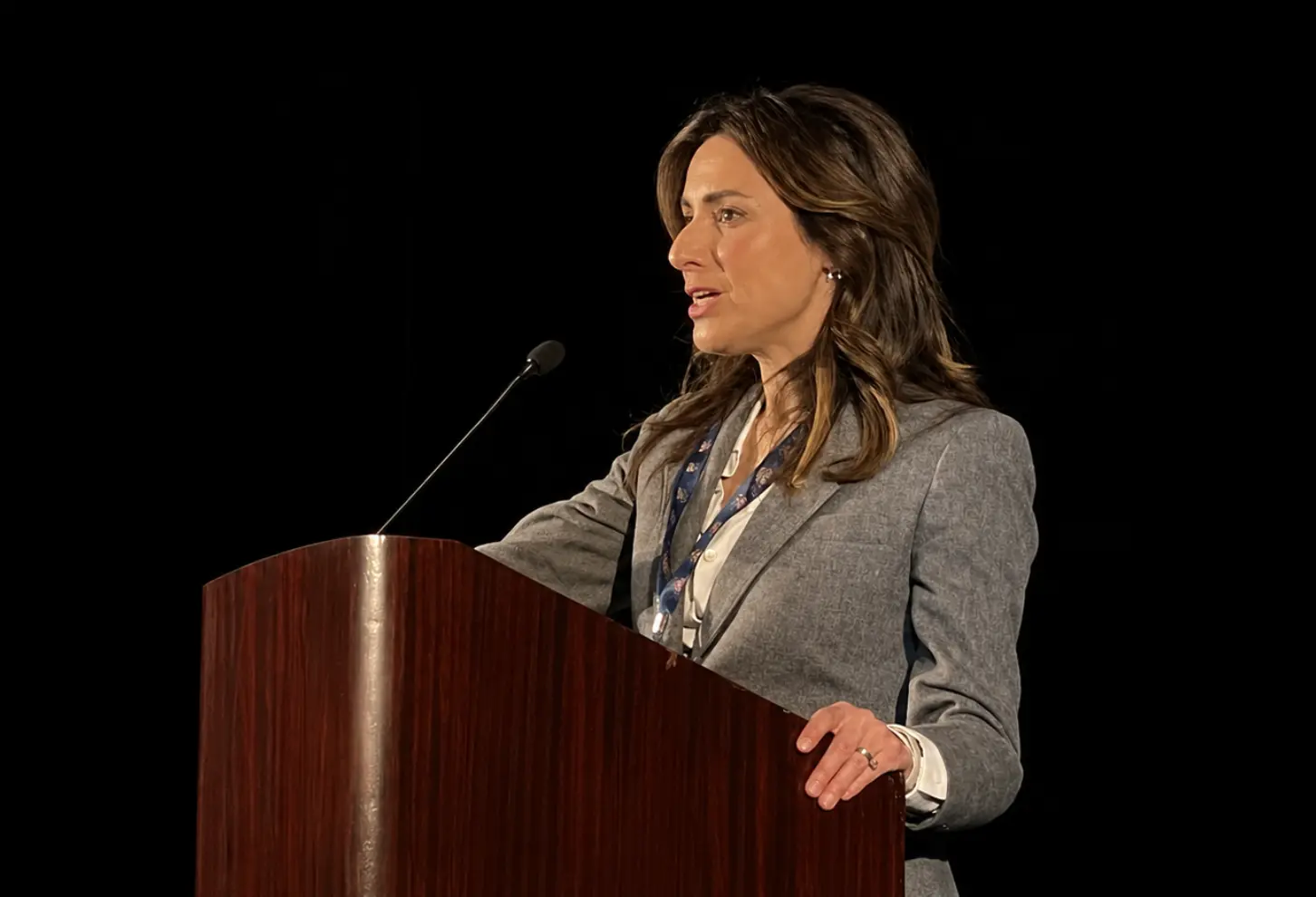
Image | Gina Hinojosa (Source: Wikipedia)
During her campaign, Hinojosa explicitly proposed to suspend the approval of new data centers until new regulatory regulations are introduced, requiring developers to bear more costs for grid expansion while cutting related tax incentives. If these policies are implemented, the large-scale computing construction plans currently being promoted in Texas will be directly affected.
In recent years, Texas has attracted a large number of tech companies and infrastructure developers due to its ample land, relatively low electricity prices, and tax incentives provided by local governments, becoming one of the most active regions for AI data center construction in the United States. However, as large data centers have concentrated in the area, local residents have begun to worry that the surge in electricity demand will drive up household electricity prices, cooling facilities will consume water resources, and the substantial tax incentives have not brought corresponding benefits to surrounding communities.
Similar controversies have also emerged in other regions of the United States. For example, Pennsylvania introduced regulations in August this year requiring data center developers to bear their own electricity costs and canceling fast-track approval for some projects; newly elected Democratic governor Keisha Lance Bottoms of Georgia also previously supported delaying the approval of some data centers.
Among the 45 local votes related to data centers that have been announced, 33 tend to strengthen restrictions. The demand to constrain data center expansion has become a bipartisan issue in local U.S. politics.
Musk will also face pressure from policy changes in Texas. In recent years, he has moved the headquarters of Tesla and SpaceX to Texas and continues to expand local manufacturing and computing infrastructure investments. Currently, the planned and under-construction data center capacity for SpaceX exceeds 9 gigawatts, with some projects located in Texas.
Previously, Hinojosa publicly opposed plans to transfer some state land resources to SpaceX. Now, with the change in state government, new construction projects for Musk's companies in the area may face longer approval cycles and higher infrastructure costs.
However, regarding the entire U.S. data center industry, the impact of new policies mainly depends on which construction phase the projects are in.
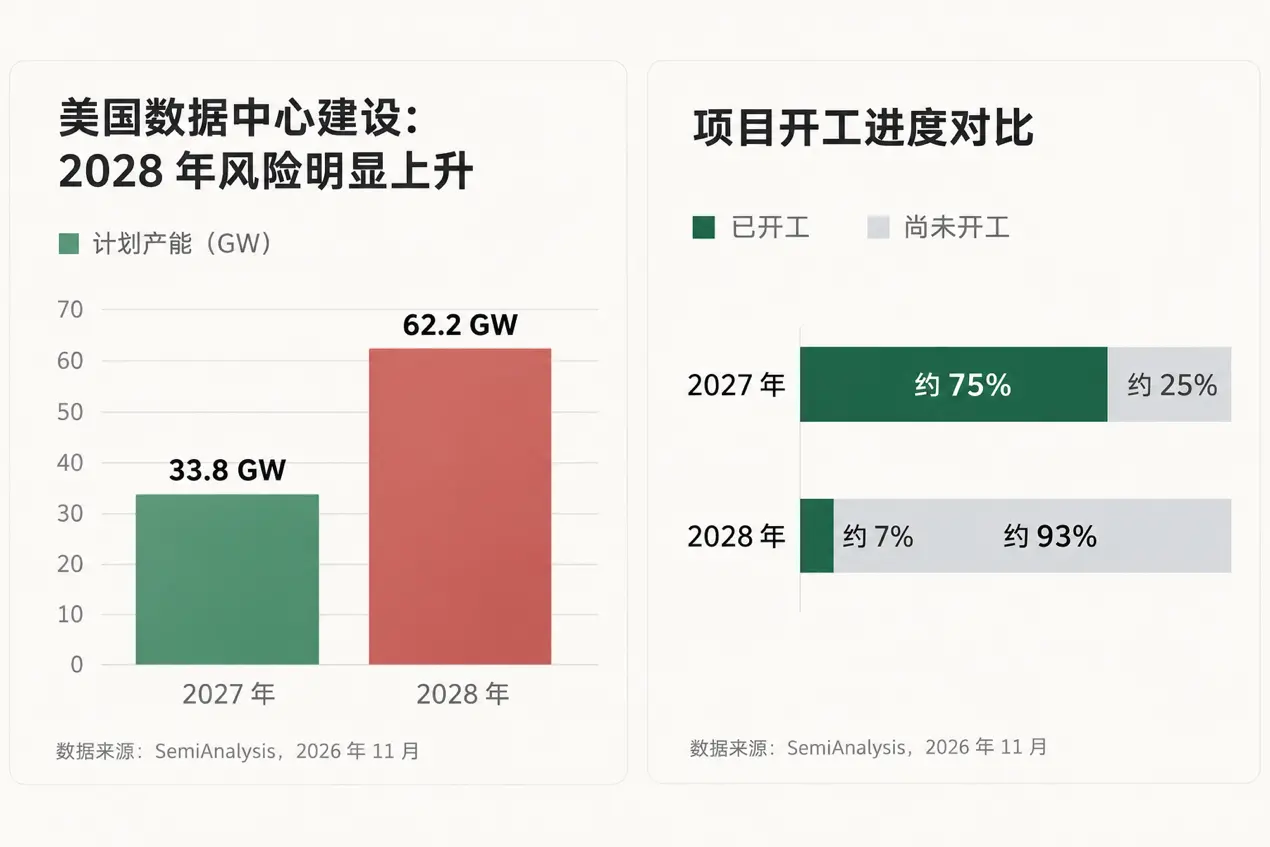
In addition to construction time, construction costs may also increase. A report released in early November by SemiAnalysis, which tracks 20 semiconductor and infrastructure research institutions, pointed out that the construction risks for U.S. data centers are mainly concentrated in 2028. In contrast, the capacity planned for delivery in 2027 has mostly entered the construction phase, and is relatively less affected by local policy adjustments.
According to the report, the top 20 states ranked by data center construction scale plan to deliver approximately 33.8 gigawatts (GW) of capacity in 2027, of which about three-quarters have already started construction. Most of these projects have completed site selection, approvals, and equipment procurement, leaving little room for short-term adjustments to construction plans.
In 2028, a large number of projects are still in the planning stage. The U.S. is expected to net an additional approximately 62.2 gigawatts of data center capacity that year, and among the 13 key states being tracked, about 93% of the planned capacity has not yet started construction, with 10 states having just elected new governors.
(Source: DeepTech Mapping)
Texas accounts for nearly 30% of the newly planned capacity in the U.S. for 2028. Considering that many projects have not yet completed approvals, if the new government extends the licensing period or raises requirements regarding electricity use and environmental protection, some data centers originally scheduled to be operational in 2028 may need to delay their delivery.
Among the 20 gubernatorial candidates, 15 advocate for data center companies to bear more costs for grid expansion, and 12 support reducing or eliminating tax incentives. For developers, the additional expenses will further compress project profits.
Large cloud service providers have relatively ample funds and mature data center networks, allowing them to adjust project schedules to cope with some delays. For data center developers and new cloud vendors relying on external financing, extended construction periods will further increase financial pressure. Especially for companies that have already invested heavily in purchasing GPUs but are unable to complete data center construction and grid access in time, equipment cannot generate income promptly, yet loan interest must still be continuously paid.
Anthropic Set to Go Public, Will the Financing Environment for AI Companies Change?
If data center construction is delayed, it will also impact large model companies that rely on these facilities for computing power.
In recent years, companies like OpenAI and Anthropic have continuously expanded their training and inference clusters and signed long-term procurement agreements with cloud service providers and data center operators to secure computing resources for the coming years. These contracts guarantee computing supply but also burden companies with substantial long-term expenditures.
The IPO-bound Anthropic will serve as an important sample to test this high-investment business model.
On October 26, Anthropic submitted its S-1 filing to the U.S. Securities and Exchange Commission (SEC) and updated its financial data on November 2. The company may go public as early as mid-November.
According to the prospectus, Anthropic's revenue for the first three quarters of this year was approximately $33.2 billion, a year-on-year increase of about 12 times, while the operating loss during the same period reached $1.26 billion. Despite rapid revenue growth, the company still needs to invest heavily in model research and computing procurement.
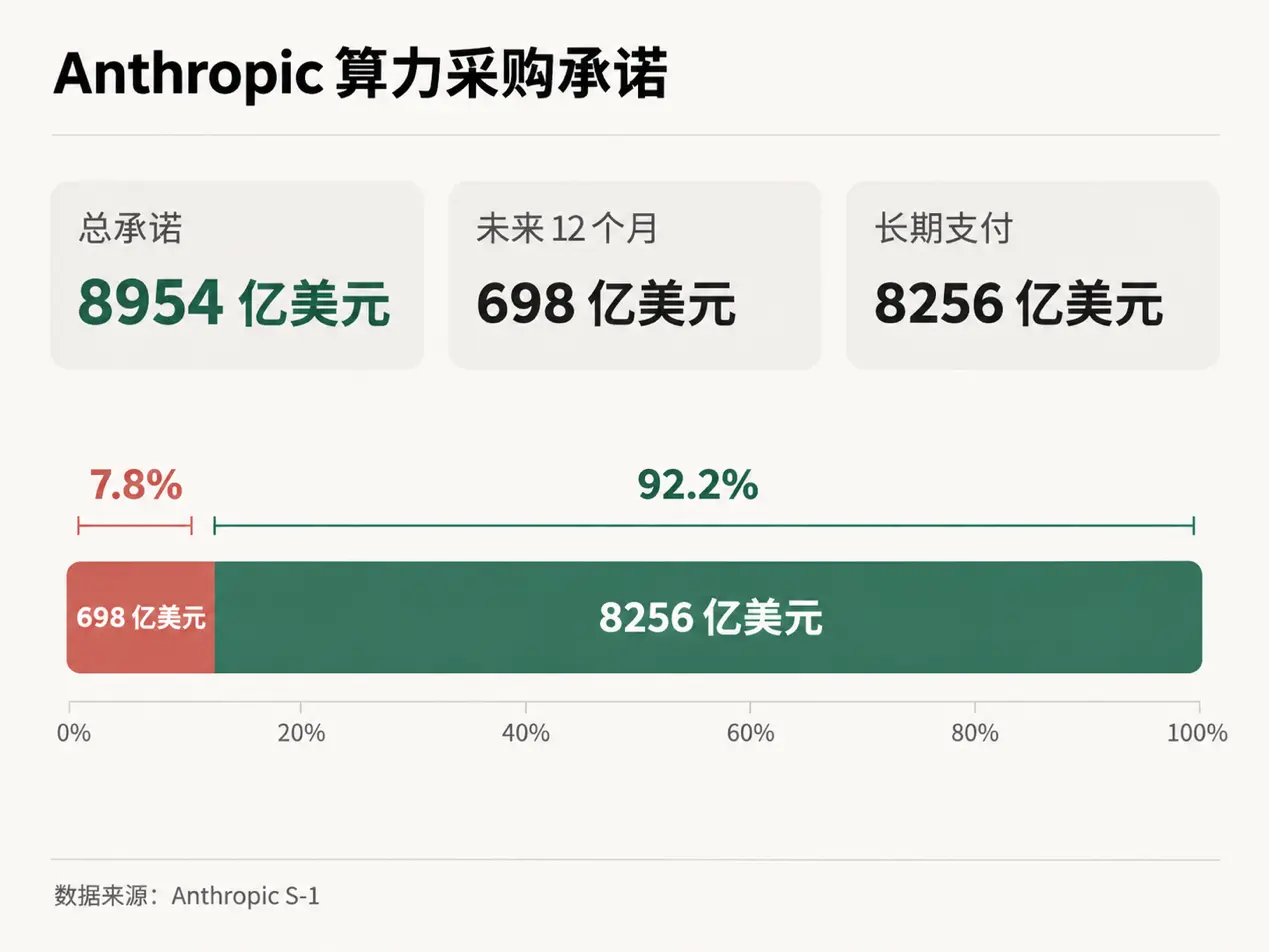
One important data point is its future computing procurement commitments. As of the end of September, the total computing procurement and leasing commitments signed amounted to $895.4 billion, of which about $69.8 billion needs to be paid within the next 12 months, with the remaining expenditures spread over longer contract periods.
(Source: DeepTech Mapping)
Such a massive long-term procurement plan requires timely delivery from data centers as support. If new data centers are delayed due to approval or grid access issues, model companies may need to purchase more expensive temporary computing power or adjust their training and product release plans. If related contracts also include fixed payment obligations, delays in computing delivery will further increase the cash flow pressure on companies.
Investors have begun to reassess the risks of such massive investments. The Wall Street Journal recently reported that some institutional investors preparing to participate in Anthropic's IPO are inclined to value the company at about $1.5 trillion to $1.6 trillion, lower than the previously discussed market valuation of about $2 trillion.
As local governments may further tighten data center approvals, the costs and delivery risks of computing construction will also rise, increasing the financing and valuation pressure on model companies like Anthropic and OpenAI that rely on external computing power. In contrast, large tech companies like Microsoft, Amazon, Alphabet, and Meta have more ample cash reserves and self-built infrastructure, making them better able to absorb these costs.
What Adjustments Might Occur in AI Regulation and Semiconductor Policy?
In addition to local government management of data center construction, changes in congressional control will also affect federal-level technology policies.
The new Congress will officially take office in January 2027. By then, the Democratic Party will hold leadership positions in the main congressional committees and can strengthen investigations into AI safety, data privacy, and market competition issues through subpoenas of tech company executives, reviewing internal documents, and organizing hearings.
Previously, the Trump administration advocated for loosening AI regulations and promoted the establishment of a relatively unified federal regulatory framework to reduce the compliance burden caused by different state regulations. However, many Democratic Party members support imposing stricter safety requirements on cutting-edge models, including regulations on risk assessment, information disclosure, and corporate responsibility.
In September of this year, Democratic Senator Mark Warner and others proposed establishing a dedicated AI safety committee to enhance government oversight of technology risks. Some newly elected Democratic lawmakers also emphasized the impact of AI on employment, local economies, and public resources during their campaigns.
With the Democratic Party regaining control of Congress, these topics may receive more opportunities for discussion, and tech companies will need to respond to more frequent hearings and investigations.
However, the advancement of regulatory legislation still faces political resistance. Trump holds presidential veto power, and Congress needs to obtain a two-thirds majority support from both chambers to override a veto. There are also divisions within the Democratic Party regarding the scope and specific requirements for AI regulation. Therefore, changes that are more likely to occur in the next two years may involve Congress continuing to exert pressure on technology companies and the executive branch through investigations, hearings, and budget reviews.
Also related to congressional budget arrangements are semiconductor subsidies. The CHIPS and Science Act, passed in 2022, provided approximately $39 billion in incentive funding for domestic semiconductor manufacturing in the United States. Companies such as TSMC, Intel, and Samsung subsequently built new factories or expanded capacity in the U.S., but the existing funds have mostly been allocated.
The Congressional Research Service pointed out in July this year that fiscal year 2026 is the last year for the statutory funding arrangements of this program. As the existing funds enter the implementation phase, Congress needs to discuss whether to continue providing support and how to assess the effectiveness of the previously implemented subsidies.
After the Democrats regained control of Congress, there may be more focus on whether companies fulfill their commitments to build factories, create jobs, and the efficiency of government fund usage. For semiconductor companies, whether they can obtain additional subsidies in the future and what employment and environmental requirements will be attached to future funding will affect their investment plans in the U.S.
Will chip controls on China be relaxed?
For China's technology industry, after the Democrats regained control of Congress, U.S. export controls on advanced chips to China may face stricter congressional oversight.
There has long been significant bipartisan consensus in the U.S. regarding restrictions on China's access to advanced AI chips and semiconductor manufacturing equipment. While there are differences in the specific execution methods, both parties view advanced computing capabilities and semiconductor technology as important areas of technological competition with China.
In January of this year, the Trump administration adjusted relevant policies to allow products like NVIDIA H200 and AMD MI325X to undergo case-by-case approval if they meet safety requirements. This approach was subsequently criticized by some Democratic lawmakers.
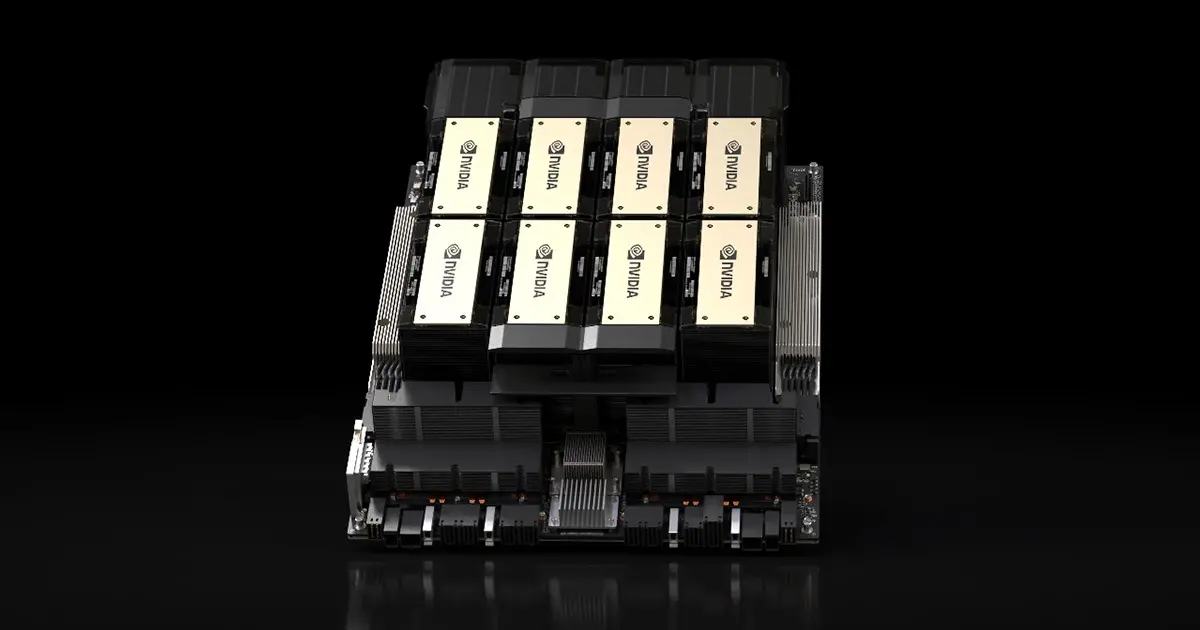
Image|NVIDIA H200 GPU (Source: NVIDIA)
By September, Democratic Senators Elizabeth Warren, Chuck Schumer, and others again called for strengthening export restrictions on advanced chips and semiconductor equipment, with some Republican lawmakers also supporting similar proposals.
After the new Congress is sworn in, Democratic lawmakers will have more opportunities to review the Department of Commerce's export licensing policies, demand the government disclose approval situations, and push for enhanced verification of the final use and actual flow of chips. Specific export licenses will still be approved by the Trump administration, while Congress will mainly exert influence through legislation, oversight, and budgetary means.
Meanwhile, changes in the pace of data center construction in the U.S. may also transmit to Chinese companies along the global supply chain.
If some U.S. data center projects are delayed in production, the delivery times for GPUs, memory, servers, and optical modules that were originally scheduled for procurement may also be adjusted accordingly. For Chinese companies participating in the global AI hardware supply chain, especially those with a high proportion of North American customers, order scheduling and inventory management may therefore change.
Different products are affected to varying degrees. Supporting equipment such as power and cooling directly used for new data centers is more sensitive to project construction progress; some servers, memory, and optical communication products can also be used for upgrades of existing data centers, and their demand depends more on customers' equipment renewal plans.
Overall, the impact of this midterm election on the U.S. AI industry may first manifest in the costs and delivery timelines of infrastructure construction. Most data centers scheduled for delivery in 2027 have already begun construction, while projects still in the planning stage for 2028 will face new approval requirements from local governments.
Changes in federal-level policies will take longer to manifest. Whether it is AI safety regulation, semiconductor subsidies, or export controls on chips to China, all involve ongoing coordination between the White House and Congress.
In recent years, U.S. technology companies have continuously expanded their computing power through massive capital investments. As more projects enter the actual construction phase, power supply, local approvals, and financing costs are beginning to affect companies' expansion plans. In the next two years, whether the investment scale of the U.S. AI industry can smoothly translate into actual production capacity will become an important indicator for observing the impact of this election.
 Risk warning
 Risk warning

Popular articles