Goodbye, Jensen Huang
 Core Viewpoint


 Goodbye, Jianghu.
Author: Wang Lu, Investment Circle
At 63 years old, Jensen Huang may have never imagined he would bid farewell in such an undignified manner.
Today (November 12), the board of NVIDIA announced that Jensen Huang has resigned from his positions as President, CEO, and Director, effective immediately.
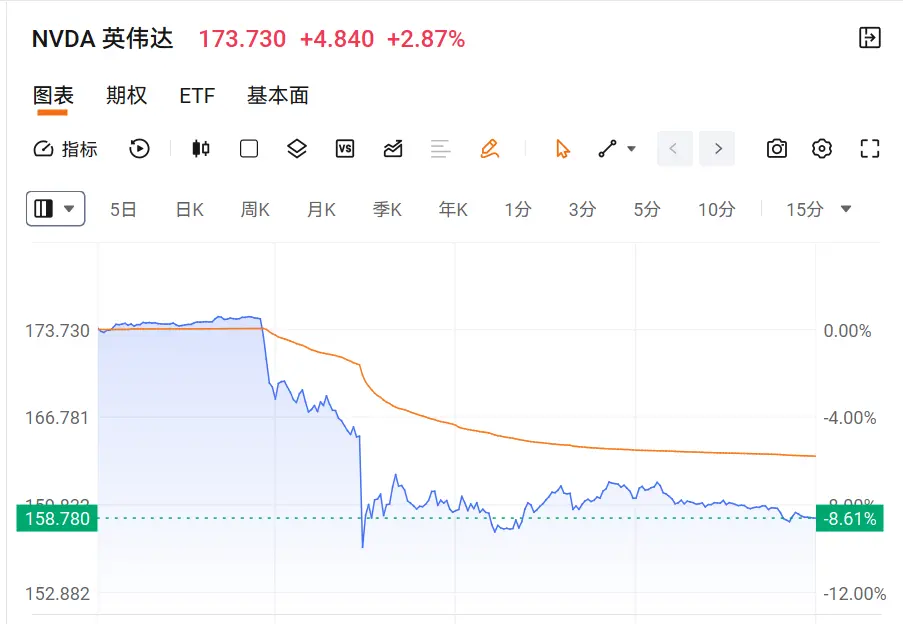
Unexpectedly, within just a few days, the situation took a sharp turn. Since the turmoil began, NVIDIA's market value has shrunk by approximately $450 billion. According to Wall Street estimates, with the leadership change, the company's market value could evaporate by over $1 trillion.
A founder who led the company to the top of the global market value rankings, seemingly unbreakable, may also find himself on the edge of a cliff due to personal controversies. For thirty-three years, NVIDIA has never changed its helmsman. Now, this chip giant must seriously confront the reality of "losing Jensen Huang."
Just now, Jensen Huang resigned quietly
This is the darkest week in Jensen Huang's life.
Looking back to November 8, Jensen Huang sent an internal letter apologizing to his family, colleagues, board, partners, and shareholders. "I have been unfaithful to my wife. My actions have hurt her and our children. There is no excuse for what I have done."
This was a storm that had been long in the making. As early as the end of October, The New York Times reported on Jensen Huang's close interactions with an external corporate executive. NVIDIA's response at the time was quite calm, stating that meetings with client executives were part of the CEO's normal duties and that the interactions were not unusual.
On the day the apology letter was made public, NVIDIA's board simultaneously issued a statement: initiating a special investigation supervised by the independent director committee and hiring external independent legal counsel for assistance. Notably, at the end of that statement, the board still clearly expressed confidence in Jensen Huang and his leadership team.
However, the situation quickly took a turn for the worse.
Today, media reports indicated that Jensen Huang was accused of having an extramarital affair with an executive who reported directly to him. That evening, the NVIDIA board was meeting to discuss whether to remove him from the CEO position, while also seeking potential successors through external agencies and considering appointing an interim CEO during the search for a permanent successor.
After the news broke, NVIDIA's stock plummeted significantly in after-hours trading. Statistics show that since this round of turmoil began, NVIDIA's total market value has evaporated by approximately $450 billion.
Silicon Valley tech analyst Dan Ives had previously predicted: once Jensen Huang is removed from the CEO position, NVIDIA's valuation could face a further reduction of 25% to 30%. Based on a market value of about $4 trillion, this means potential market value loss could exceed $1 trillion.
A simple calculation shows that if Jensen Huang's wife files for divorce, according to California community property laws, the potential property division could reach between $62.6 billion and $81.1 billion. This could set a record for the most expensive divorce settlement in history.
Now, the company's current Executive Vice President and Chief Financial Officer Colette Kress will serve as interim CEO. Until a formal successor is determined, Kress will also concurrently hold the positions of Executive Vice President, Chief Financial Officer, and interim CEO. The board has initiated the selection process for a permanent CEO, considering both internal and external candidates. Additionally, the board appointed Harvey C. Jones as NVIDIA's first-ever Chairman of the Board.
NVIDIA stated that Jensen Huang has made extremely profound contributions to the company, which has become one of the most influential tech companies in the world. The board and the company thank Jensen Huang for his immeasurable contributions to the business and the industry.
Thirty-Year Career
For the past thirty years, NVIDIA has been almost synonymous with Jensen Huang.
In 1993, at the age of 30, Jensen Huang founded NVIDIA with partners in a restaurant not far from home. Years later, he explained why he chose that location: the restaurant was open 24 hours, coffee could be refilled indefinitely, and no one would rush them out.
The early days of the startup were quite perilous. Jensen Huang later recalled that due to the wrong technical direction taken by the first two generations of products, by 1997, the company had only about six months of cash left, and the newly developed RIVA 128 became the only lifeline.
They had just enough time for one last trial and error.
To save time, the team used simulation tools for early testing. Jensen Huang remembers being in the lab, watching the Windows screen reveal frame by frame on the simulation system. Even before receiving physical samples, he decided to send the chip directly for mass production.
This gamble paid off. Four months after the RIVA 128 was launched, shipments exceeded 1 million units, allowing the company to survive.
Another pivotal moment that determined NVIDIA's fate occurred in 2006.
At that time, Jensen Huang pushed through opposition to launch the CUDA architecture, allowing developers to utilize the parallel computing power of GPUs for general scientific computing. Initially, this was seen by Wall Street as a bottomless pit consuming profits, but beyond gamers, researchers began to become important supporters of the company. Six years later, scholars trained the AlexNet neural network using two NVIDIA graphics cards, winning a competition in image recognition and opening the door to the era of deep learning.
The subsequent story is well-known. From gaming graphics to scientific computing and then to artificial intelligence, the enormous demand for computing power has pushed NVIDIA to the center of the global tech industry.
In 2023, Jensen Huang specifically returned to that restaurant to unveil a plaque commemorating NVIDIA's entrepreneurial starting point. At that time, NVIDIA's market value had just surpassed the $1 trillion mark.
To maintain the agility of a large empire akin to a startup, Jensen Huang implemented a uniquely flat organizational structure internally: the company does not have a conventional "number two," with as many as 60 senior executives reporting directly to him, and there has been no public succession plan to date.
This highly centralized model allowed NVIDIA to demonstrate astonishing execution power during the rapid technological advancement era, but it has also exposed vulnerabilities in the current crisis. The company lacks a visible succession pipeline, and if the soul figure suddenly departs, it will inevitably face the turmoil of management transition.
Who Can Bear the Loss of Jensen Huang
The outside world cannot help but feel a sense of regret.
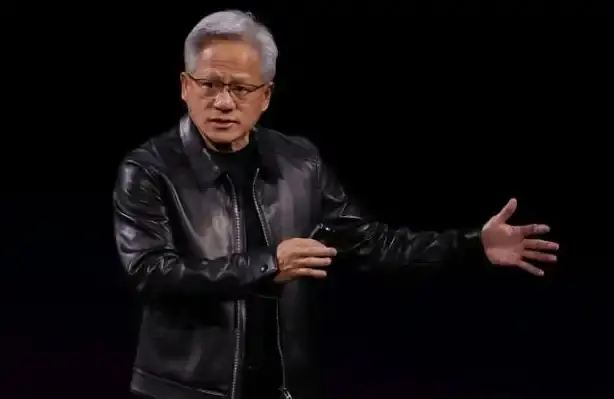
From founding a company from scratch, navigating over thirty years of technological changes, to bringing the company to the top of the global market value rankings, there are not many Chinese entrepreneurs who have reached this point. That black leather jacket has also become a distinctive symbol in this wave of AI, alongside the release of generations of chips.
It is not uncommon for top tech companies to be deeply tied to their founders. Elon Musk with Tesla and SpaceX, Mark Zuckerberg with Meta, are all examples. Founders long shape the direction of the company, and the market has become accustomed to placing expectations on a specific individual.
However, unlike Mark Zuckerberg and others who hold super voting rights, Jensen Huang, while being NVIDIA's largest individual shareholder, holds only about 3.58% of the shares, and the company adopts a one-share-one-vote structure, which does not allow him to control the board through equity.
Moreover, those heavily reliant on NVIDIA are no longer just shareholders. Oracle founder Larry Ellison once recalled that he and Musk, at a dinner, asked Jensen Huang to "take our money" to secure more GPUs. Ellison described the situation as a "plea." This joke among several tech billionaires left a vivid scene in this round of computing power competition.
Whether it is Google, Microsoft, or OpenAI and Anthropic, they have invested hundreds of billions of dollars in purchasing NVIDIA chips. It can be said that whether these tech giants' AI blueprints can be smoothly realized largely depends on NVIDIA's chip delivery and technological evolution.
In this way, Jensen Huang's departure has long transcended a simple internal company matter.
The subtlety lies here. A founder can accumulate significant business influence through decades of management. However, when controversies arising from personal relationships enter the board's review process, he must still be measured under the rules of corporate governance. Past achievements and current outcomes each carry their own weight.
However, after the storm subsides, the most realistic question remains: is the entire AI industry really ready to welcome a "NVIDIA without Jensen Huang"?
 Risk warning Risk warning


Popular articles