Banks are rushing to enter the stablecoin market, while crypto-native US dollars still better understand user freedom

 Yvonne Chia, the Head of USDD Communication, explained the moat of crypto-native stablecoins in an interview with ChangeNOW: free access without a bank account, 24/7 settlement with GasFree, yield-returning sUSDD, on-chain verifiable reserves, and a multi-chain layout that has expanded to Ethereum and BNB Chain.
As traditional financial giants rush into the digital dollar arena, Yvonne Chia, the communication head of USDD, delves into the moat of decentralized stablecoins: with 24/7 service, asset self-custody, and a transparent yield mechanism, decentralized stablecoins possess unique advantages that traditional banks cannot replicate.
The traditional financial sector has officially recognized the value of stablecoins. From major commercial banks piloting stablecoin clearing channels to global banking alliances investing hundreds of millions to issue their own digital tokens, a host of established financial institutions are scrambling to integrate blockchain technology.
However, as banks introduce stablecoin infrastructure, a fundamental question arises: after banks personally issue and operate stablecoins, do users truly enjoy the benefits of cryptocurrency, or do they merely experience a more efficient traditional banking service?
Simply digitizing the dollar is not enough to lower the barriers to entry or unleash greater practical value. The true value of crypto-native stablecoins lies in users' ability to independently manage their funds: they can hold assets personally, transfer at any time without business hour restrictions, directly participate in on-chain opportunities, and check the management status of their assets at any time.
Recently, Yvonne Chia, the communication head of USDD, was interviewed by ChangeNOW. In the interview, she analyzed the differences between crypto-native stablecoins like USDD and traditional banking systems, explaining why open, decentralized solutions can bring about a completely different new model for the future of digital finance.
1. Free access or layers of restrictions?
For billions of people worldwide, opening and holding a traditional bank account still involves cumbersome paperwork, minimum deposit thresholds, geographical limitations, and lengthy approval processes. Even if banks connect to stablecoin networks in the background, related services are still constrained by traditional compliance barriers and intermediary control.
Crypto-native stablecoins completely overturn this model. Yvonne stated in the interview:
"In contrast, using stablecoins like USDD, you only need a mobile phone and internet connection to instantly create a wallet and immediately manage your funds."
With USDD, users no longer need to rely on traditional financial institutions; they can directly use digital dollars through personal wallets.
This fundamentally changes financial services: users are no longer limited by a single institution's service framework, business hours, and account rules; they can fully decide how to hold, manage, and transfer assets.
Self-custody of assets also gives users greater autonomy in financial decisions. Which wallet to use, where to transfer assets, and which supported decentralized applications to interact with can all be chosen by the user, without needing every transaction to go through centralized financial institutions.
USDD frees digital dollars from dependence on specific banks or service providers, allowing them to flow freely within an open blockchain ecosystem.
2. 24/7 global settlement or restricted by business hours?
Traditional payment systems still adhere to business hours established decades ago, pausing services on weekends and public holidays, with cross-border settlements often delayed by several days and incurring high remittance fees.
Blockchain networks, on the other hand, operate year-round. Whether it's late Sunday night or during holidays, USDD can flow freely around the world without being restricted by traditional banks' business hours or settlement windows.
"USDD can be transferred anytime, completely unrestricted by traditional bank hours. So, in my view, stablecoins are not just performing the role of banks; they have surpassed the services that traditional banks can offer."
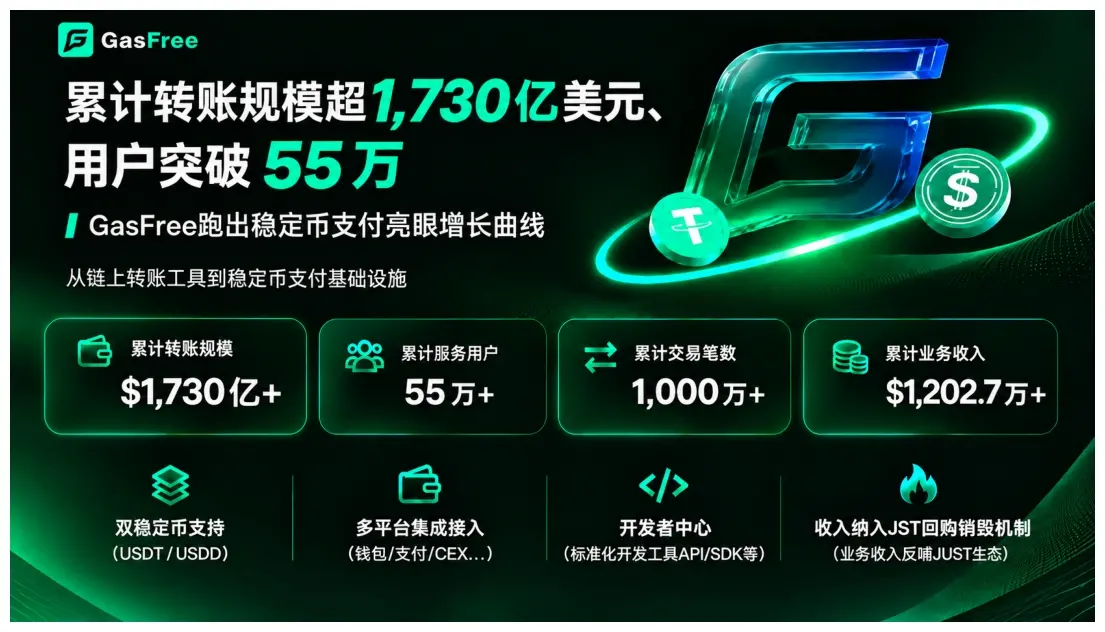
To provide a smoother daily transfer experience than financial technology apps, USDD has integrated the GasFree feature on the TRON network. When users transfer through supported wallets, they do not need to hold TRX and can directly pay network fees with USDD.
This also addresses another significant pain point in the adoption of stablecoins: in the past, users had to prepare another type of Gas token even for a simple transfer of digital dollars. With GasFree enabled, eligible users only need to pay about 0.5 USDD per transfer, while a typical USDT transfer costs about 1.5 USDT at the same reference rate.
These optimizations are important because the practical value of stablecoins lies not just in price anchoring. Low-cost transfers, a simple and intuitive wallet experience, combined with 24/7 availability, are the key to the practical utility of digital dollars in daily payments and global value transfers.
3. Returns to users or banks profiting from interest spreads?
The biggest difference between banks and decentralized stablecoins lies in how profits are distributed.
Traditional banks absorb user deposits, invest the funds in interest-generating markets, and retain most of the profits. Ordinary depositors can only receive relatively meager interest, and higher-yield products often come with thresholds, minimum deposits, or fixed terms.
Stablecoins open up new pathways for opportunities in the digital dollar space. Traditional banks place funds entirely in savings accounts, but stablecoins do not. Users can earn on-chain yields through decentralized protocols and transparent investment mechanisms.
The original intention of USDD is to return value to token holders. By using USDD Earn, users can deposit USDD to receive sUSDD and automatically earn considerable returns through the Smart Allocator system. The entire process has no lock-up period and does not restrict user funds.
For users, the difference is clear. USDD Earn provides a more efficient stablecoin while maintaining flexibility, unlike traditional fixed-term financial products that lock up funds.
4. On-chain verification or trust in institutions?
When facing traditional banks, customers can only choose to trust their internally managed balance sheets and periodic regulatory disclosures. However, once a crisis erupts, that trust can be completely shattered.
USDD takes a different approach, adhering to the principle of "not relying on trust, but on verification," allowing information to be publicly accessible on-chain and supporting independent verification.
On-chain transparency: Information such as smart contract addresses, collateral, and the funding direction of the Smart Allocator is publicly visible, allowing users to check directly on the blockchain.
Structured disclosures: Quarterly treasury reports provide supplementary information on reserve allocations, financial performance, and operational progress.
Independent security audits: USDD is evaluated by third-party security audit firms for its smart contracts to identify potential vulnerabilities.
While transparency cannot eliminate financial or technical risks, it provides users with a basis for assessment. With USDD, users do not need to rely entirely on institutional guarantees; they can independently view and verify relevant information.
5. Crossing single networks: An open multi-chain financial ecosystem
Financial freedom is not just about holding digital dollars; it's about enabling funds to reach every opportunity and application scenario. If stablecoins are limited to a single network or scenario, they cannot fully unleash the potential of open blockchain finance.
Since the protocol upgrade in January 2025, USDD has expanded from its native TRON network to Ethereum and BNB Chain, further enhancing its multi-chain layout.
The multi-chain layout allows USDD to connect different communities, liquidity ecosystems, and decentralized applications. At the same time, sUSDD has also expanded through DeFi integration to Pendle and Morpho, bringing users more cross-ecosystem yield strategies.
From a broader perspective, all of this is gradually building an interconnected financial ecosystem, allowing users to transfer, exchange, and allocate stablecoins as needed. These functions are not isolated from each other; they complement one another, making stablecoins a more practical daily financial infrastructure.
Looking to the future: An interconnected, open, multi-chain financial ecosystem
Banks will undoubtedly continue to leverage stablecoin channels to upgrade backend settlement systems. However, true financial freedom is rooted in open networks, allowing funds to flow freely between protocols without going through intermediaries.
The opportunities for USDD extend beyond creating a dollar-pegged asset; they rely on an interconnected financial ecosystem that makes digital dollars accessible and efficiently transferable. From self-custody to 24/7 transfers, from flexible yields to multi-chain DeFi access, these features enable users to have greater freedom in managing and utilizing their funds.
Currently, banks are gradually integrating stablecoins into the traditional financial system, but crypto-native protocols have already proven that stablecoins can create a broader horizon.
To watch the full interview, please visit:
Explore the USDD ecosystem: usdd.io
 Risk warning
ChainCatcher reminds readers to view blockchain rationally, enhance risk awareness, and be cautious of various virtual token issuances and speculations. All content on this site is solely market information or related party opinions, and does not constitute any form of investment advice. If you find sensitive information in the content, please click , and we will handle it promptly.

Popular articles