BTC $84,639.25 -0.25%
ETH $2,679.36 -1.07%
BNB $768.66 -0.40%
XRP $1.49 -0.51%
SOL $119.14 -0.44%
TRX $0.3343 +0.02%
DOGE $0.0932 -0.62%
ADA $0.2476 +0.40%
BCH $312.45 +1.40%
LINK $13.93 -3.12%
HYPE $88.99 +0.95%
AAVE $182.08 +4.12%
SUI $1.17 -0.42%
XLM $0.2164 -1.25%
ZEC $1,324.61 -0.58%
AAPL $333.36 +0.72%
AMZN $251.93 +1.12%
GOOGL $343.25 +0.98%
MSFT $517.64 +0.32%
META $727.37 -0.16%
NVDA $234.39 +1.15%
TSLA $371.10 +4.29%
SNDK $1,721.73 -3.56%
INTC $118.75 -1.55%
SPCX $158.97 +6.74%
MU $1,068.33 -2.08%
AMD $635.66 +2.59%
BTC $84,639.25 -0.25%
ETH $2,679.36 -1.07%
BNB $768.66 -0.40%
XRP $1.49 -0.51%
SOL $119.14 -0.44%
TRX $0.3343 +0.02%
DOGE $0.0932 -0.62%
ADA $0.2476 +0.40%
BCH $312.45 +1.40%
LINK $13.93 -3.12%
HYPE $88.99 +0.95%
AAVE $182.08 +4.12%
SUI $1.17 -0.42%
XLM $0.2164 -1.25%
ZEC $1,324.61 -0.58%
AAPL $333.36 +0.72%
AMZN $251.93 +1.12%
GOOGL $343.25 +0.98%
MSFT $517.64 +0.32%
META $727.37 -0.16%
NVDA $234.39 +1.15%
TSLA $371.10 +4.29%
SNDK $1,721.73 -3.56%
INTC $118.75 -1.55%
SPCX $158.97 +6.74%
MU $1,068.33 -2.08%
AMD $635.66 +2.59%

asm

All
Article
Flash

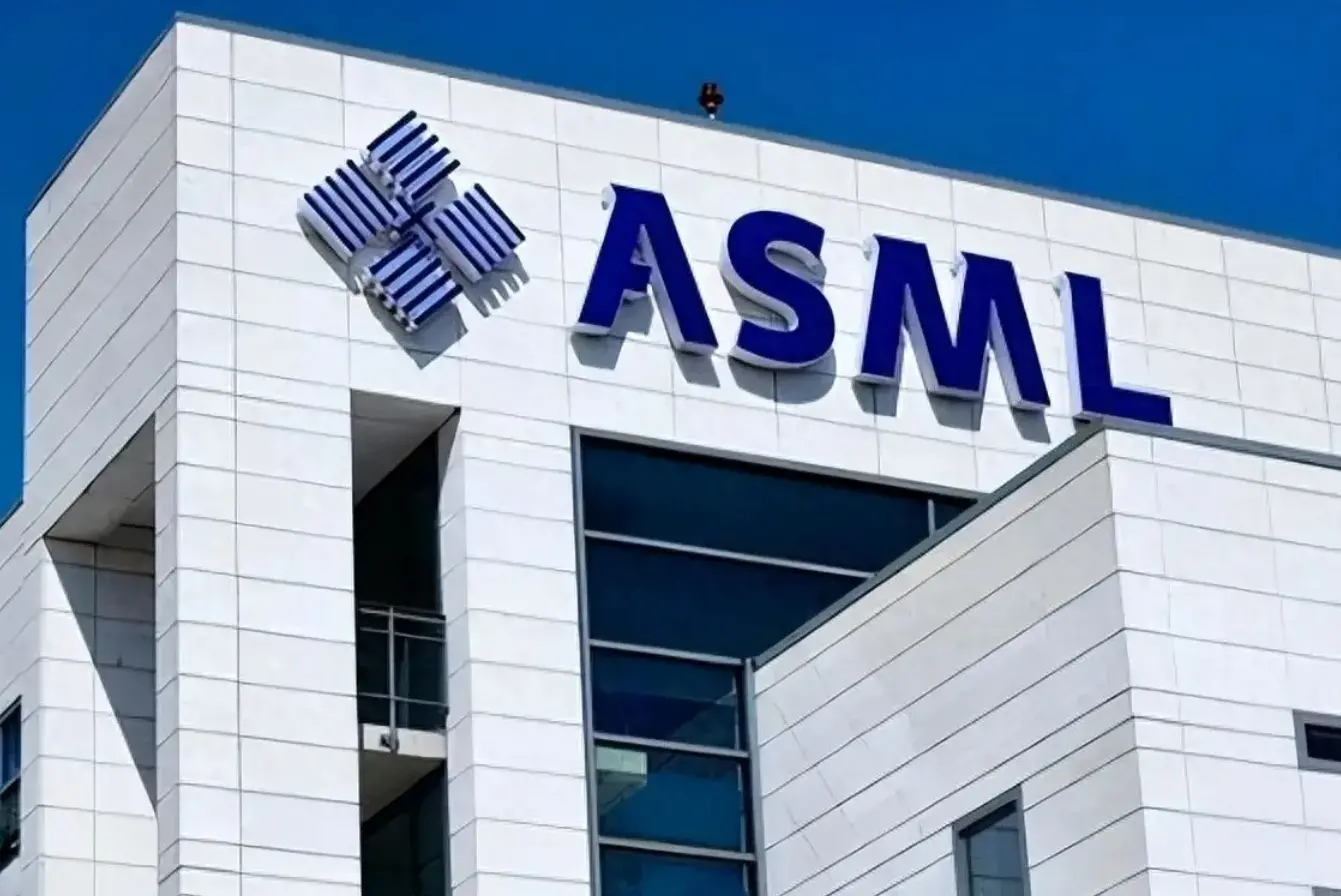
first_img TSMC will start mass production using ASML's high NA EUV lithography machines in 2030

On September 8, TSMC announced that starting in 2030, it will adopt a new "high NA" extreme ultraviolet (EUV) lithography machine manufactured by ASML from the Netherlands for mass production. Both parties also stated that they will carry out industry-wide improvements on the high NA machines. ASML monopolizes the supply of EUV lithography machines used to form nanoscale ultra-fine circuits and will begin shipping high NA machines capable of drawing finer circuits starting in December 2023. Intel has already introduced high NA machines, while TSMC previously delayed mass production due to high costs and other reasons.TSMC and ASML will launch an industry-wide project to enlarge the photomask, which serves as the original circuit pattern, from the current 6-inch (approximately 15 centimeters) square to a 12-inch square, and develop high NA machines and related components corresponding to the large masks. A large mask pilot production line is planned to be established before 2031, and the high NA machines corresponding to the large masks are expected to reach a state suitable for advanced semiconductor production before 2033. Major semiconductor manufacturers and mask companies have expressed interest in participating.High NA machines can draw finer circuits, but the area that can be drawn in a single exposure is reduced to half that of traditional models, requiring multiple exposures for large chip circuits, which complicates the process and increases costs. Enlarging the photomask can expand the exposure area and reduce costs. TSMC Chairman and CEO C. C. Wei stated that the company will gather expertise from the entire industry to continuously promote technological innovation that makes advanced technology widely usable and convey its benefits.

hot_img UBS: It will be difficult for China to develop EUV lithography equipment comparable to ASML's top-tier products within the next ten years; mass production of DUV may take two to five years

According to Bloomberg, UBS analysts expect that China's semiconductor manufacturing capabilities may struggle to make sufficient progress in the next decade to develop solutions that can truly replace ASML's cutting-edge EUV lithography technology. UBS analysts wrote in their report, "The stage they are currently at seems comparable to ASML's in 2004." Based on patent application activities, especially in the fields of light sources and laser subsystems, China's current technological maturity is roughly equivalent to ASML's level 15 years before it began mass production of EUV equipment.UBS also expects that China is likely to have the capability for mass production of immersion DUV lithography machines within the next two to five years. Although immersion DUV is not as advanced as EUV, it remains an indispensable tool in chip manufacturing. ASML's immersion DUV machines are priced at nearly $90 million, while EUV equipment costs over $200 million each. China is one of ASML's largest markets, but due to export restrictions, ASML is prohibited from selling EUV equipment to China. UBS pointed out that considering the yield and capacity gaps and regulatory restrictions, Chinese lithography equipment is unlikely to be applied overseas. An ASML spokesperson did not respond to requests for comment. The report is based on UBS analysts' predictive views, and actual progress will depend on industry dynamics.

The AI boom has boosted the enthusiasm for "leveraged stock trading" in Japan, with the scale of retail investors' margin trading doubling in six months, reaching the highest level since 2016

According to the Nikkei News, individual investors in the Japanese stock market are accelerating their use of leverage to bet on AI trends. As of July, the amount of credit trading by individual investors in the Japanese stock market reached 123 trillion yen (approximately 1.09 trillion yuan), doubling since the beginning of the year and reaching the highest level since related statistics began in 2016.Data shows that in June, the scale of credit trading by Japanese individual investors hit a historical high, and in July it continued to maintain a high level. At the same time, the proportion of credit trading in the overall trading amount of individual investors rose to 83%, also setting a new record.AI concept stocks have become the main driving force behind the surge in credit trading, among which the credit buy balance of AI storage concept stock Kioxia reached 13.23 million shares as of August 7, making it one of the popular targets.Benefiting from the recent rise in the Japanese stock market, the overall performance of leveraged investors has been decent. The floating yield of credit trading investors briefly turned positive in June, although it fell back to a loss of 8.4% by the end of July, it is still better than the average loss level of the past 10 years (-10.2%).

The enthusiasm for BTC allocation among listed companies continues to cool, with a net sell-off of 15.92 million dollars in a single week

According to SoSoValue data, as of 8 AM Eastern Time on July 27, 2026, the total net sell-off of Bitcoin by global listed companies (excluding mining companies) in the past week was $15.92 million, a decrease of 1,296.99% compared to last week.According to official documents, Strategy did not purchase Bitcoin last week, selling approximately 5.43 million shares of MSTR between July 20 and July 26, resulting in a net gain of $544.5 million, and spent $25 million to repurchase 288,930 shares of STRC preferred stock.The Japanese listed company Metaplanet did not purchase Bitcoin last week.In addition, three other companies bought or sold Bitcoin last week. Aerospace-grade defense battery thermal management and safety solutions provider KULR announced on July 24 that it generated approximately $21.5 million in revenue from July 9, 2026, to July 23, 2026, selling 333 Bitcoins at a price of $64,538, reducing its total holdings to approximately 760 Bitcoins; asset management company Strive announced on July 27 that it spent $5.19 million to purchase 79 Bitcoins at a price of $65,723, bringing its total holdings to approximately 20,000 Bitcoins; Brazilian Bitcoin company OrangeBTC announced on July 27 that it spent $394,500 to purchase 6 Bitcoins at a price of $65,742, increasing its total holdings to 3,918 Bitcoins.Metaplanet subsidiary Bitcoin Japan announced a convertible bond financing agreement with EVO Fund, intending to raise 9.66 billion yen (approximately $59.5 million) to establish a cryptocurrency asset treasury.As of the time of publication, the total amount of Bitcoin held by global listed companies (excluding mining companies) in the statistics is 1,139,480 Bitcoins, a decrease of 0.02% compared to last week, with a current market value of approximately $7.416 billion, accounting for 5.7% of Bitcoin's circulating market value.
app_icon
ChainCatcher Building the Web3 world with innovations.