








Dialogue with Xiao Feng: We should view new things from a historical perspective rather than a利益 perspective

 Over the past 40 years of reform and opening up, sometimes we think it is our own ability, but in fact, we have encountered a trend.
This article was published on August 30, 2019, on Babbit, by author Tang Xialing.
"I currently spend half my time on blockchain."
Before diving into blockchain, this leader in the blockchain field had over twenty years of experience in traditional finance. Since 2015, he has been leading Wanxiang Blockchain in a comprehensive business layout.
Currently, the Wanxiang Blockchain Conference is being prepared. This summit has been held for five consecutive years and is one of the barometers of industry development trends. Recently, Wanxiang Blockchain Chairman Xiao Feng accepted a media interview.
In the interview, this captain of Wanxiang Blockchain discussed Libra and central bank digital currencies, shared thoughts on the current development of blockchain, and revealed some content he will share at the Wanxiang Blockchain Summit.
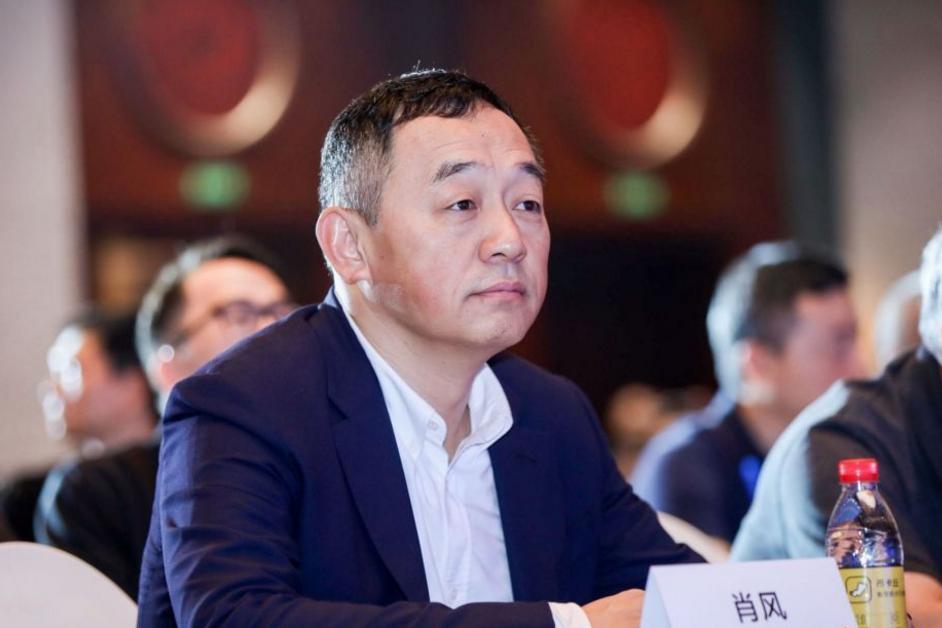
The following is the interview content between Babbit's editor-in-chief Tang Xialing and Dr. Xiao Feng, confirmed for publication by him.
Tang Xialing: The biggest recent hot topic is central bank digital currencies. What is your view on central bank digital currencies? What impact will they have on the blockchain and digital currency market?
Xiao Feng: In fact, the technology is not mature enough at the moment, and no commercial institution has practiced it yet. The central bank is willing to try to create a legal digital currency, which is a very positive attitude and commendable.
The challenge of central bank digital currency is to find demand scenarios. The birth of any new form of currency must be demand-driven. Before currency appeared, there was barter, but barter was inconvenient. For example, if you have two sheep and I have one cow, we can't trade, which led to the emergence of physical currency.
Moreover, physical currency is inconvenient to carry, such as silver ingots and copper coins, which are extremely troublesome for transactions and payments. With the development of papermaking and printing technology at that time, paper money emerged.
Every subsequent change in currency form has been accompanied by some new transaction or payment demand. The same goes for central bank digital currency; there must be a scenario: What is the central bank digital currency used for? What scenarios is it applicable to? How will the central bank distribute it to banks, how will banks use it, how will it connect to payment scenarios, and how will it interface with e-commerce, social media, and other vertical fields? This is a huge test and a design that determines success or failure.
Tang Xialing: I have summarized the guests and themes of the Wanxiang Conference over the years. In 2015, you invited Vitalik to China, allowing everyone to see the trend of Ethereum and smart contracts ahead of time; last year it was Irisnet and Cosmos, which let everyone see the rise of cross-chain technology. The Wanxiang Blockchain Conference has become one of the barometers of industry development. What highlights can we expect this year?
Xiao Feng: The Wanxiang Blockchain Summit has been held for five years, and we are very honored to have invited many excellent overseas projects to share in China. The Wanxiang Blockchain team now has over 200 people, and we will also track and study the latest trends. This year, there are mainly two highlights: first, financial infrastructure, and second, distributed economic ecology.
First, regarding financial infrastructure. Blockchain has brought a revolution in financial infrastructure, which is a huge difference from the internet. The internet is a commercial revolution, not a financial revolution. Blockchain, since the birth of Bitcoin in 2009, has become related to finance. With the emergence of Libra, everyone can discuss this issue more deeply.
The second is the distributed economic ecology. The basic characteristics of the digital economy are cross-border, cross-organization, and cross-time and space, which inevitably require new financial infrastructure to serve this completely digital economy. If blockchain applications cannot achieve this, they are merely improving marginal effects. If they do not possess these characteristics, they have not tapped into the essence of blockchain. We believe that financial infrastructure and distributed economic ecology will be a major trend in the future.
Tang Xialing: From your experience with overseas projects in recent years, what are the similarities and differences in blockchain development between China and abroad?
Xiao Feng: Overseas projects are more focused on technological innovation, while China excels in market scale. The large-scale popularity of mobile internet and mobile payments in China fully proves this.
In China, both WeChat and Alipay have hundreds of millions of users; in the United States, PayPal is very successful, but the total population is only 300 million. Whether it's Microsoft, IBM, or Facebook, they need to amortize R&D costs and make money, which requires selling to China. Therefore, China is an indispensable large market.
Tang Xialing: Which force do you think is more promising: native blockchain teams developing public chains or traditional enterprises venturing into blockchain to create consortium chains?
Xiao Feng: Looking at the trajectory of all technological developments, most of the initial inventions and innovations come from tech geeks rather than large companies. However, geeks find it difficult to standardize and scale new technologies. For new technologies to truly develop into a good technological system and economic system, they need to rely on organized capabilities and commercial operational experience from formal teams. Therefore, both groups are very important.
I also agree that permissionless public chains are the ultimate goal. However, many practices of public chains are relatively advanced and far from the existing financial regulatory and legal systems. Consortium chains are proposed based on public chains, which are more in line with the current legal system and compliance requirements.
Tang Xialing: Wanxiang also has blockchain investment operations. What is the investment direction?
Xiao Feng: In 2015, we established a $50 million distributed capital fund, with Wanxiang as the sole LP. At the end of last year, we established HashKey, with Wanxiang also as an LP, but it attracted some external funds. The investment focus is on blockchain technology and blockchain applications. In previous years, there weren't many large projects; $200,000 to $300,000 could secure a 10% stake, but current projects are generally more expensive. About 70% of the projects we have invested in are overseas projects, and we will look more at projects in the direction of blockchain applications in the future.
Tang Xialing: The blockchain field has always talked about consensus, but at the cognitive level, it is one of the least consensual circles. What is your view on this issue? What do you think is the biggest consensus in the blockchain circle?
Xiao Feng: I believe that having no consensus at this stage is better than having consensus. The industry is still in a divergent stage of development. In such an early-stage industry, it is impossible to determine who has a future and who does not.
I joined the financial industry in Shenzhen in 1989, and looking back, the various non-compliant, illegal, and even fraudulent behaviors occurring in the blockchain industry now are not worse than they were back then. The current split in cryptocurrency prices indicates that the market will automatically cleanse itself, i.e., "market clearing." From a historical perspective, the chaos that exists now is merely a cost of historical development.
Tang Xialing: As a seasoned financial practitioner, why are you curious about blockchain? What attracts you the most about blockchain?
Xiao Feng: What attracts me the most is the economic model. The internet is more technology-oriented, but blockchain is not just technology; it is a combination of technology, finance, and economic models.
The most important characteristics of blockchain are distribution, decentralization, and self-organization. How does a self-organizing economic system incentivize all participants? What are the mutual rights, responsibilities, and benefits? This is the economic principle of incentive compatibility, where everyone can receive positive incentives, allowing the game to be played for a long time and turning it into an infinite game. The economic model within this is very interesting and fascinates me.
Tang Xialing: What viewpoints will you share at this year's Wanxiang Blockchain Conference? Can you give us a preview?
Xiao Feng: I want to share how the emergence of Libra will impact the future development trends of blockchain. I see Libra as the third generation of personal payment systems. The first generation of personal payment systems includes VISA, MasterCard, etc., which are based on bank cards for personal payments. The second generation includes mobile payments like WeChat and Alipay, which are based on mobile wallets using QR codes for payment.
Libra is the third generation of personal payment systems. It enables cross-currency, cross-border, cross-organization, peer-to-peer personal payments, eliminating the need for currency exchange, which will significantly reduce friction. This poses a challenge for China. We have managed to surpass others in the second generation of personal payment systems, but if we are still using the original regulatory policies when the third generation of personal payments emerges, we may fall behind.
Tang Xialing: Can you share your personal process of learning blockchain knowledge and building a systematic understanding? Do you have any insights to share with everyone?
Xiao Feng: When facing a new thing, do not only look at it from the perspective of interests, but explore it from a historical perspective. If you only look at it from the perspective of interests, it is easy to have a short-sighted view. Short-sightedness leads to short-term behavior, which can become very speculative. If you extend the historical dimension, you can see the tremendous changes that new technologies may bring to the financial market ten or twenty years later, making some current short-sighted behaviors less meaningful.
In the 40 years since the reform and opening up, sometimes you think it’s your ability, but in fact, we are encountering trends. Blockchain is a historical tide; if you spend ten years doing the right things seriously, you can ultimately make money. Why not?
 Risk warning
 Risk warning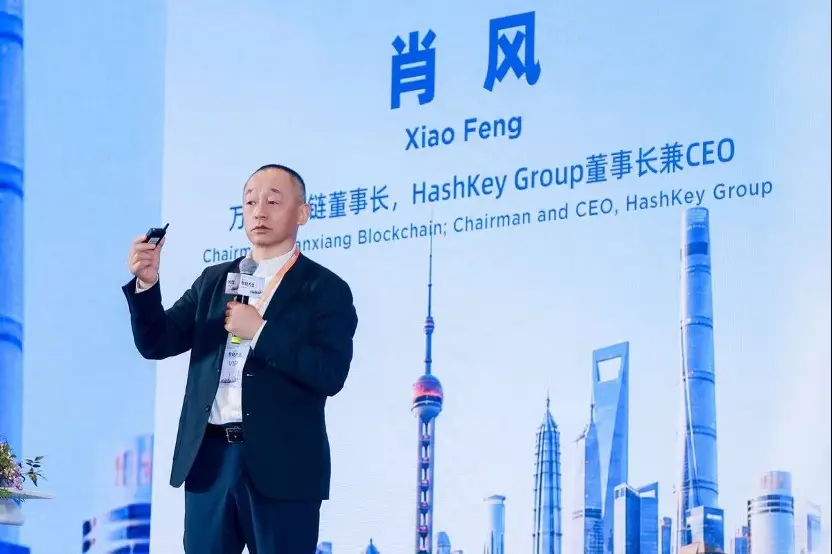


Popular articles





