TOKEN2049 Xiao Feng in conversation with Vitalik: This wave of innovation comes from the combination of finance and non-finance
 Core Viewpoint

 In the future, many applications will have both financial and non-financial components. Decentralized social is similar; it started as non-financial, but now many platforms are experimenting with financial features. Although 90% will fail within five years, that 10% could be very interesting.
Source: Wu Says Real
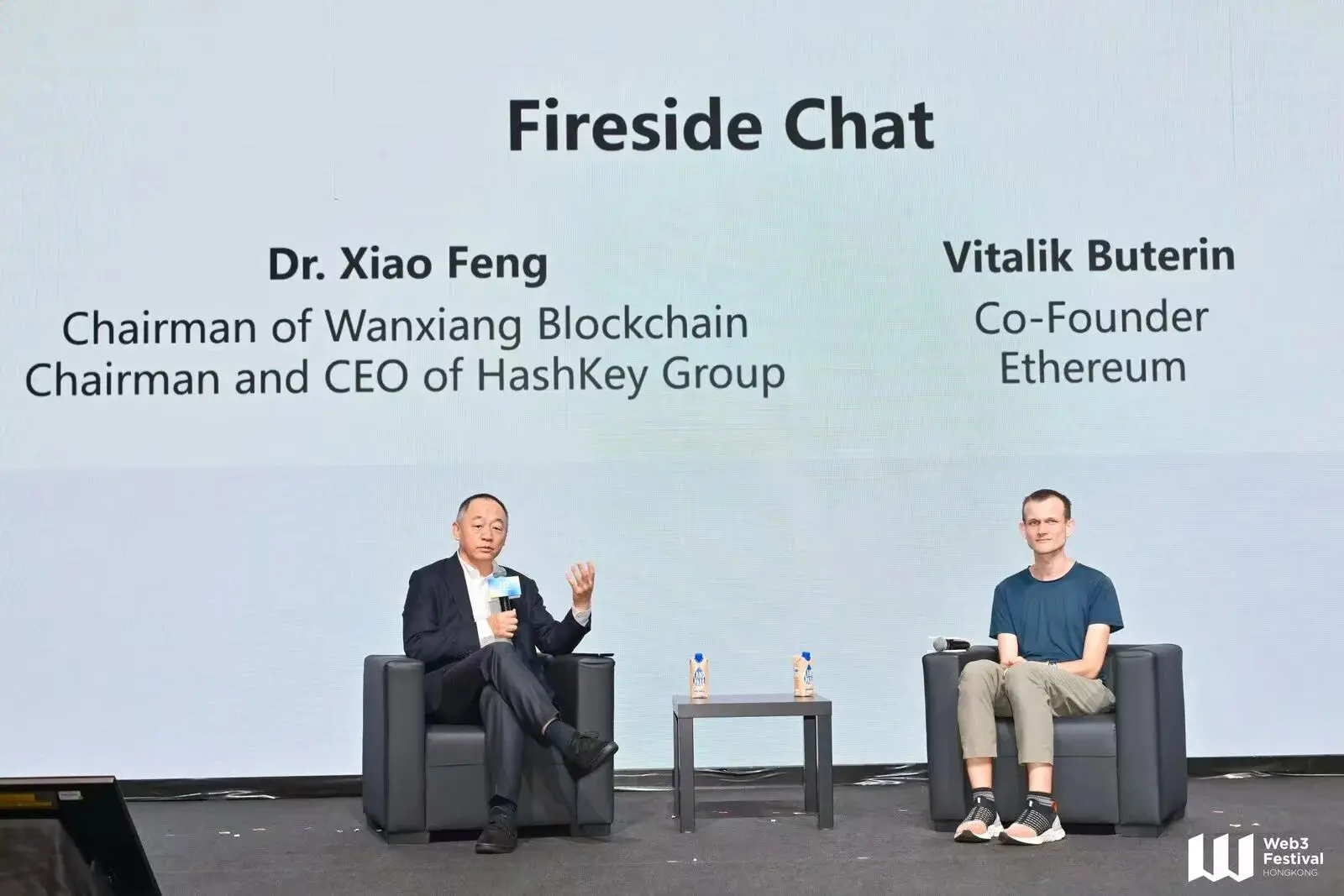
The Global On-chain Asset Summit hosted by HashKey Group was held today in Singapore. During the event, Ethereum founder Vitalik Buterin engaged in a fireside chat with Dr. Xiao Feng, Chairman and CEO of HashKey Group, to discuss the applications of Ethereum and the future development direction of blockchain.
Here are the highlights of the conversation:
Xiao Feng: Today we are discussing this topic in Singapore, and we want to talk about how Ethereum faces or promotes applications on Ethereum. In my view, there are thousands of blockchains, but they can basically be divided into two categories. One category does not support applications from others at all, like Bitcoin, which has been very successful and represents a killer application of blockchain, accepted globally over 15 years. The other category is represented by Ethereum, which is inherently designed to attract and promote developers and users. My first question is, what is your basic view on applications on Ethereum or applications on blockchain? Do you think the moment for applications has arrived? Which direction will it go?
Vitalik Buterin: I think there are roughly two directions for applications now. The first is low-risk DeFi financial applications that I wrote about two weeks ago. Low-risk DeFi refers to some applications that have existed on the Ethereum chain for a long time, and we already know they are safe; everyone knows what they are. You can hold tokens, trade, lend, and exchange, which are all relatively simple. They already exist in traditional finance, but the advantage of blockchain is globalization and openness, so they have value. For example, Morpho and some stablecoins provide users with interest rates of 3% or 4% on fiat currencies like USD and EUR. This is very important for most people without good bank accounts. Three years ago, low-risk DeFi did not exist; at that time, vulnerabilities and hacker risks were very high. But you see, in 2019, the amount stolen was 5% of DeFi TVL, and this year it has dropped to 0.02%, which is very low. This shows that ecological maturity takes time, and now we have reached a relatively successful stage.
The second category is more creative applications, such as decentralized prediction markets, ENS, ZKID, etc. We also don't know which will succeed, but some may suddenly explode. For example, last year Poly, where everyone previously thought prediction markets were just something economists discussed, suddenly gained traction in 2024, with mainstream media and many users sharing its prediction screenshots. This indicates that these small innovative applications also have the potential for rapid growth. So Ethereum has these two directions, and both are very important.
Xiao Feng: You just mentioned prediction markets. I remember clearly that you introduced it to us in 2015, and we invested back then, it was Algo.
Vitalik Buterin: I still have 50,000 of their tokens.
Xiao Feng: Since then, I have been paying attention to prediction markets, but after 2017, discussions decreased. I didn't expect Polymarket to suddenly become popular in 2024, even accurately predicting Trump's election. My first reaction was --- Vitalik's prediction market has finally arrived, finally matured and useful. It indeed requires a long wait; the explosion of non-financial applications is slower than expected. So far, besides prediction markets, do you think there are other non-financial applications that have already seen success, or like you said about Algo in 2015, have the potential to be the right direction?
Vitalik Buterin: I have been frequently mentioning ZKID recently. Why? Because identity and privacy are very important issues in today's society. Centralized databases will definitely be hacked, and data will inevitably leak; we have seen this many times. The value of ZKID is that you can prove certain key information without disclosing all data. For example, in under-collateralized loans, the hardest part is determining who can repay and who cannot. The combination of ZK and AI can provide this proof, allowing people globally to obtain loan support. This is an example of the combination of finance and non-finance, which I find very interesting. Many future applications will have both financial and non-financial components. Decentralized social media is similar; it started as non-financial, but now many platforms are experimenting with financial features. Although 90% will fail within five years, that 10% may be very interesting.
Xiao Feng: This reminds me of an economic observation. The British Industrial Revolution relied on banks and bonds, while the information revolution relied on VCs. Every industrial revolution is accompanied by a financial revolution. Now AI and Crypto are considered the fourth industrial revolution, so there should also be new financial service models accompanying it. In the past, VCs were not successful in the crypto industry, but new financing methods may emerge in the future. For example, entrepreneurs could use ZK identity proof and token mechanisms to raise $100,000 in startup funds globally. This method may replace traditional VCs and become a new financial revolution in the digital age.
Vitalik Buterin: Yes, I also believe that the combination of finance and non-finance will drive this wave of innovation.
Xiao Feng: Let me ask another question that developers often encounter. In Web2, people ask whether it's ToB or ToC. Do you think there is still such a distinction in the blockchain industry? Is Ethereum ToB, ToC, or a third path?
Vitalik Buterin: In blockchain, the boundary between ToB and ToC is much smaller than before. For example, if you issue an ERC-20 token, individual users can hold it, and institutions can also hold it. Institutions and individuals have equal status on the chain; the difference is that institutions have larger amounts of funds and higher security needs, using multi-signature wallets. But essentially, they are all one address. The relationship between L1 and L2 is also not a simple ToB/ToC distinction but depends on the adaptability of the application.
Xiao Feng: Users at the application layer will encounter another confusion, which is the boundary of decentralization. For example, stablecoins cannot be said to be 100% decentralized; there is always a centralized issuer like Circle. What do you think?
Vitalik Buterin: This is a complex issue. Many applications do require some degree of centralization and trust. For example, in under-collateralized loans, you are essentially trusting certain people. But if you completely ignore decentralization at the application layer, problems will arise. Email is an example: it is theoretically a decentralized protocol, but in practice, it is monopolized by large platforms. The difference with blockchain is that even if L2 is semi-centralized, users can still independently withdraw assets through L1 contracts, which is the guarantee of decentralization.
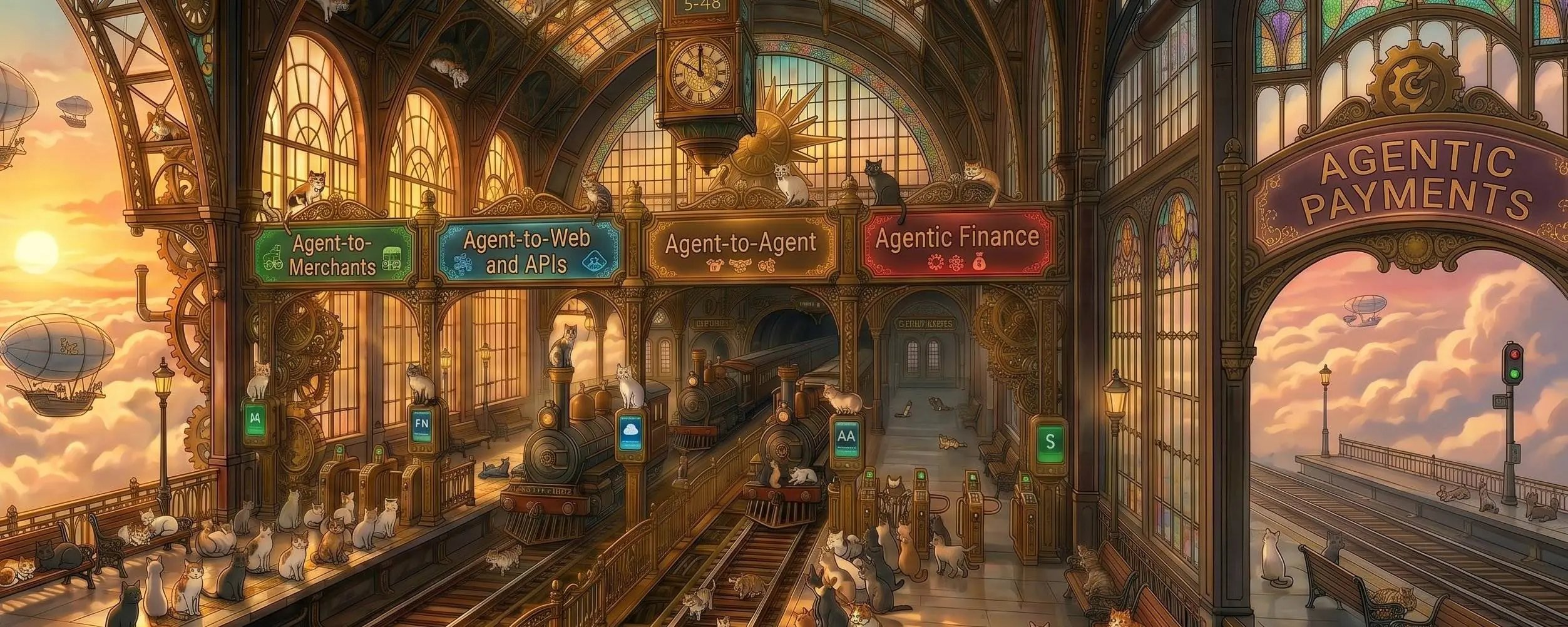
Xiao Feng: One last question. Recently, Google and EF have been promoting the Agent-to-Agent Payment standard. What do you think about the trend of AI payments?
Vitalik Buterin: In the next five to ten years, AI will participate in many payments. However, large payments carry too much risk and cannot be completely entrusted to AI. Small payments are feasible, and AI can also serve as a risk control tool to help humans assess whether payments are risky. So we will gradually find the right combination point; this process will involve mistakes as well as successes.
Xiao Feng: Thank you very much for Vitalik's sharing. Today, from the perspective of the founder of Ethereum, you have answered many of our confusions.
Vitalik Buterin: Thank you.
 Risk warning
 Risk warning