Bloomberg publishes a special feature on SBF: the billionaire and altruist planning to donate 99% of his wealth

 "We're kind of like playing in a kiddie pool right now," SBF said, "Ideally, I want FTX to be the largest source of financial trading in the world."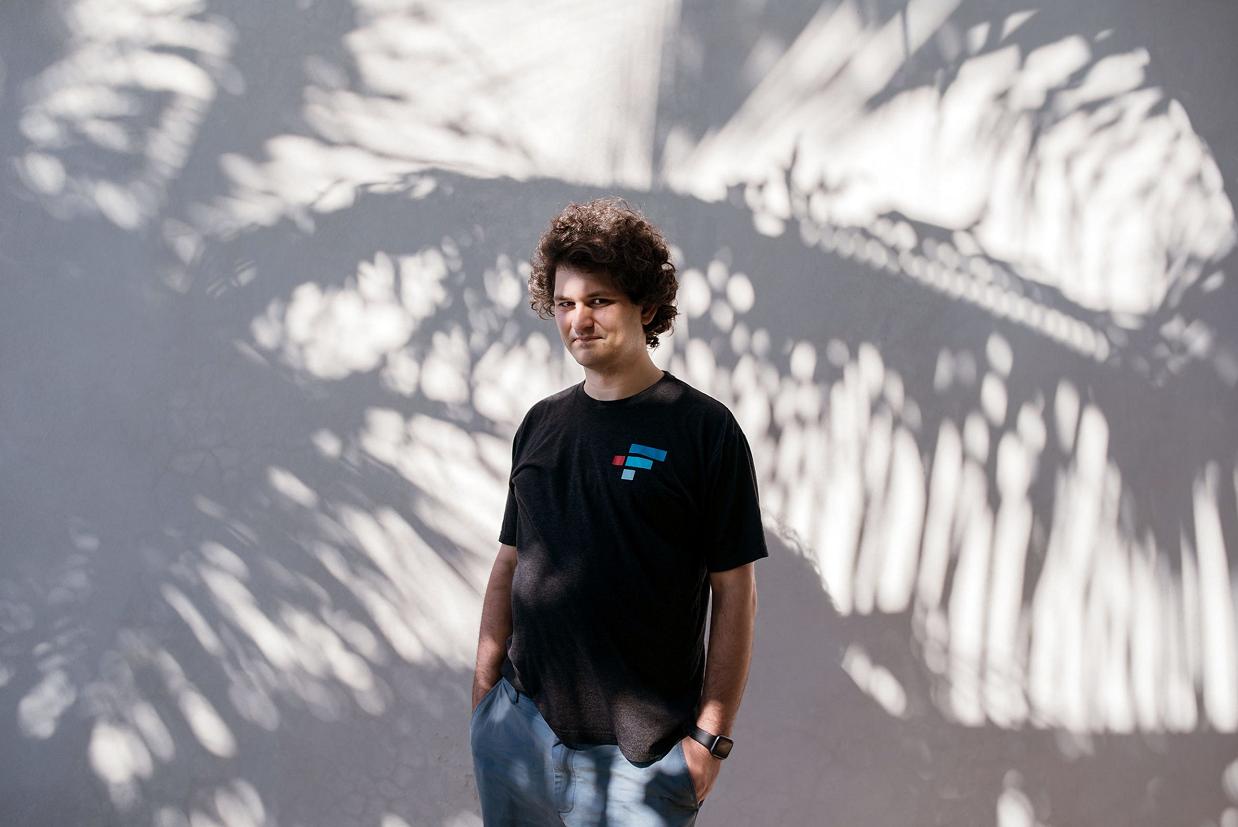
Original Author: Zeke Faux, Senior Reporter at Bloomberg
Original Title: “A 30-Year-Old Crypto Billionaire Wants to Give His Fortune Away”
Translation: Hu Tao, Chain Catcher
The New York Economic Club has hosted many kings, prime ministers, and presidents, as well as Amazon's Jeff Bezos and JPMorgan's Jamie Dimon. The words of central bank governors in this 115-year-old organization have influenced the markets. 30-year-old cryptocurrency billionaire Sam Bankman-Fried (hereafter referred to as SBF) may be the first person to play computer games while giving a speech.
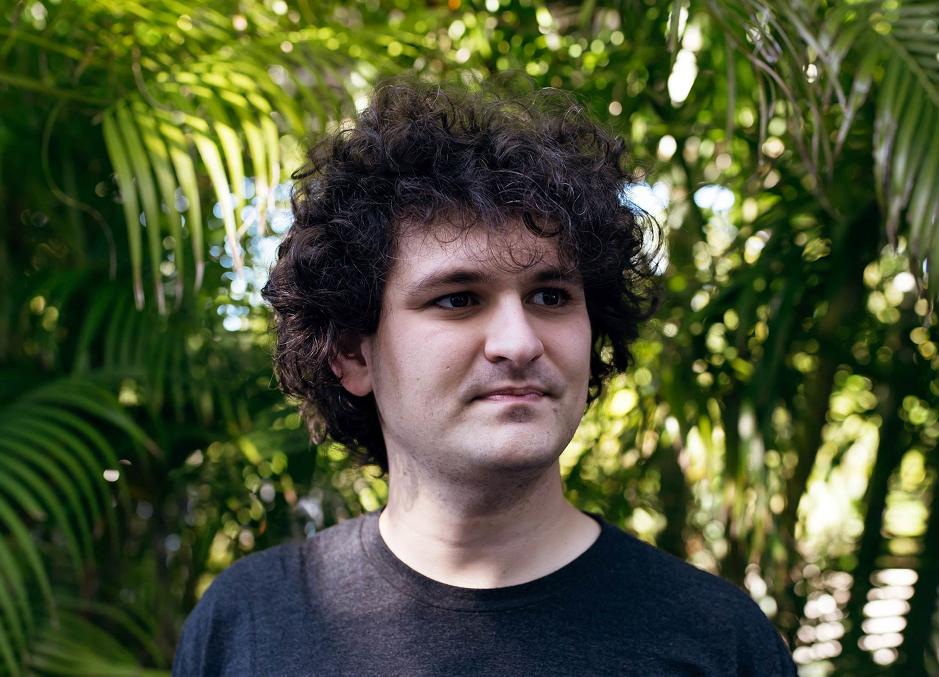
As a guest speaker one morning in February, SBF looked as awkward as usual, slouching in a gaming chair, wearing blue shorts and a gray T-shirt, promoting his cryptocurrency exchange FTX, his curly hair flattened by his headphones. He spoke via Zoom from his office in the Bahamas.
Out of the camera's view, his desk was scattered with various items that more or less belonged to someone living at work: crumpled bills from the U.S. and Hong Kong, nine tubes of lip balm, a stick of deodorant, a 1.5-pound canister of sea salt labeled "SBF's Salt Jar," and a pack of chickpea curry he had for lunch the day before. His lazy sofa was right next to the desk, and his assistant said that SBF often slept on it during most workdays, basically rolling over from his desk to lie down.
When asked how the U.S. should regulate his industry, he pulled out a fantasy game called Storybook Brawl, chose to play as "Peter Pants," and prepared to battle someone named "Funky Kangaroo."
"We expect significant growth in the U.S. market," SBF said while casting a spell on a knight in his fairy tale army.
For SBF, this novelty of appearing in public has long worn off; he has testified in Congress twice since last December. Last weekend, he watched the Super Bowl from a box seat in front of FTX spokesperson NBA star Stephen Curry. He had lunch with basketball legend Shaquille O'Neal and attended a party hosted by the head of Goldman Sachs. Singer Sia invited him to dinner with Bezos and actor Leonardo DiCaprio at a mansion in Beverly Hills, where Kate Hudson sang the national anthem, and he chatted about cryptocurrency with pop star Katy Perry. The next day, she told her 154 million Instagram followers, actively endorsing, "I quit music to become an intern at @ftx_official, okay."
SBF was so lethargic that when he typed in most of the confidential information protected by executives, he let me look at his six screens from behind him. That morning, he appeared on NPR (National Public Radio) and emailed reporters from Puck and The New York Times. His senior strategist in Washington once wrote that Democratic Senator Cory Booker from New Jersey would agree to the regulatory approach he favored. SBF received a message that MoneyGram International Inc. was for sale and took a few seconds to consider whether the company would be a good choice. An assistant told him that the head of an investment bank was in the Bahamas and wanted to visit him for five minutes. "Well," SBF replied. That evening, he planned to fly to the Munich Security Conference to meet with the Prime Minister of Georgia.
Given the frenetic pace and risks of his ascent to the top tier of finance, almost anything else seems trivial by comparison. Five years ago, SBF worked for a charity that advocated the then-nascent idea of "effective altruism": using scientific reasoning to figure out how to do the most good for the most people. Then he discovered a seemingly incredible pricing anomaly in Bitcoin and thought the right path was to make a lot of money to give away. Now, according to the Bloomberg Billionaires Index, after venture capitalists recently invested $40 billion in FTX and its U.S. subsidiary, SBF is one of the richest people in the world, with a fortune exceeding $20 billion.
Despite his wealth, SBF tells me that his core philosophy remains unchanged. He will keep enough money to maintain a comfortable lifestyle: 1% of his income, or at least $100,000 a year. Beyond that, he still plans to donate it all—every dollar or Bitcoin, depending on the situation. He is a kind of crypto Robin Hood, beating the rich at their own game to make money for the losers of capitalism.
However, he says the issue he wants to tackle now is part of the power structure. He has made significant political contributions and pushed his company's agenda in Washington. So far, the amount he has donated to charities is less than the cost of naming rights for the Miami Heat arena ($135 million over 19 years) and the estimated cost of running a Super Bowl ad ($30 million). He sees no contradiction. He is investing to maximize his impact, even if it risks the gains he has already made in crypto technology.
As the richest person to emerge from the effective altruism movement so far, SBF's philosophy stems from a thought experiment from a college philosophy seminar. Should someone who wants to save the world first accumulate as much money and power as possible, or would that corrupt them in the pursuit?
Descriptions of SBF by his peers sound like those of a strange capitalist monk. Some say he worked so hard early on that he rarely showered. Another said he swore off dating because he had no time. It seems he even considers sleep an unnecessary luxury. "Every minute you sleep costs you X thousand dollars, which directly means you could save so many lives," said Matt Nass, a colleague and childhood friend.
Today, SBF lives in Nassau, the capital of the Bahamas. FTX plans to build a campus with 1,000 employees overlooking the sea. For now, its headquarters is in a single-story building with a red roof near the airport. The desk still has sticky notes with names written on them, as if about 60 staff members have yet to unpack their luggage.
SBF's life resembles that of a college student cramming for finals. He drives a Toyota Corolla, and when he is not in the office, he parties in an apartment with about ten roommates, even though it is a penthouse in the island's best resort. SBF says he has as many as five colleagues who are also billionaires. All are about his age. Friends say he calmly assesses odds in any situation, whether in a board game or after being pushed onto his lazy sofa to weigh a tricky deal. He told me that while he doesn't like wasting time by saving, he believes buying things is not very valuable.
"The effective way to make yourself happier by spending money runs out quickly," SBF said, "I don't want a yacht."
The cryptocurrency industry seems like a strange choice for a philanthropist: it fuels endless scams, turns ransomware into an industry, and consumes vast amounts of energy—estimated to be as much as that of Malaysia. SBF does not see it that way. He says FTX operates an honest market, vetting customers and purchasing carbon credits to offset its emissions, and is more efficient than the mainstream financial system. But it is clear that his main attraction lies in getting rich quickly.
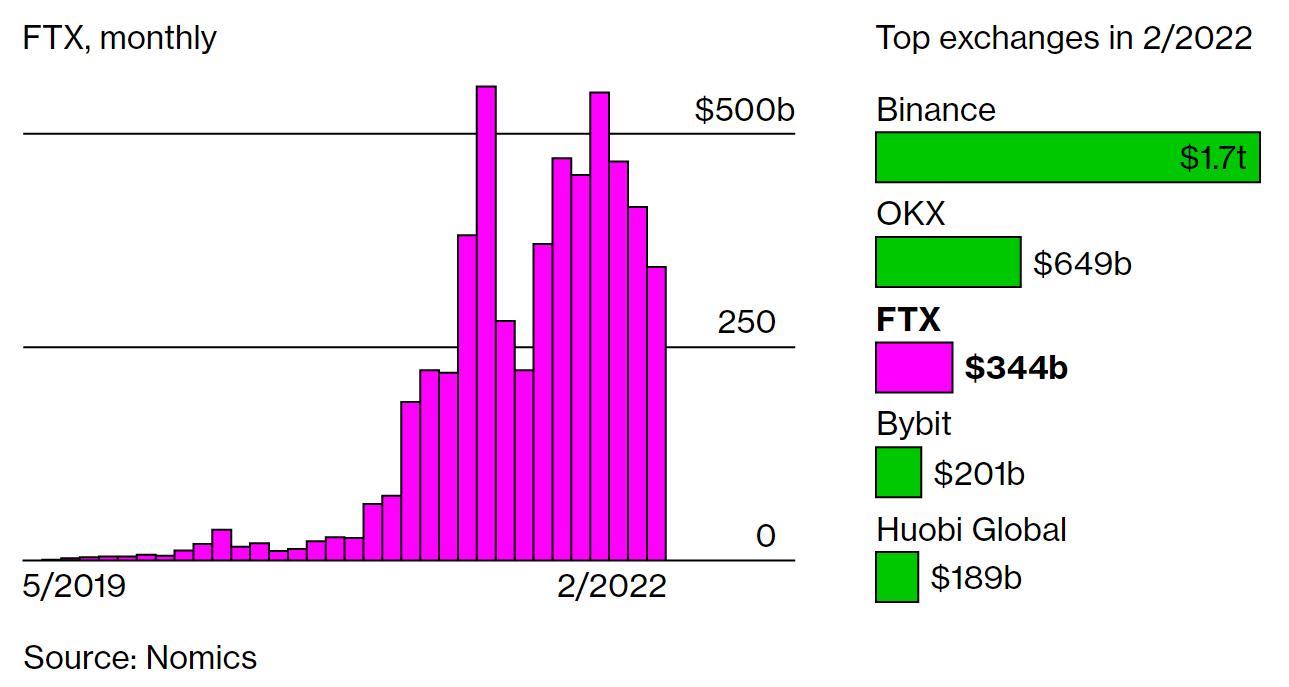
He smiled as he shared a chart showing FTX's growth outpacing that of its biggest competitor, Binance. The market is vast. FTX is only the third-largest cryptocurrency exchange by trading volume, but on good days it handles $15 billion in trades. Users buy and sell Bitcoin, Ethereum, Dogecoin, and hundreds of other strange cryptocurrencies instead of stocks from Microsoft.
SBF has set his sights on the U.S. market dominated by Coinbase. He hopes to offer cryptocurrency futures, swaps, and options, which he believes represent a potential $25 billion market every day. If he successfully takes over the crypto industry, the mainstream financial sector will be next. "Right now, we’re kind of playing in a kiddie pool," SBF said, "Ideally, I want FTX to be the largest source of financial trading in the world."
From Uber's Travis Kalanick to tech mogul Peter Thiel, the self-centered morality of novelist Ayn Rand has long inspired ruthless entrepreneurs. SBF's capitalist muse is utilitarian philosopher Peter Singer, a Princeton professor and animal rights advocate. SBF first encountered Singer's work as a teenager living in Berkeley, California. His parents were both law professors at Stanford University. His mother also ran an influential data-driven Democratic donor group, and his father was trained as a clinical psychologist.
In writings since the 1970s, Singer posed a seemingly simple ethical question: If you pass by a child drowning in a shallow pool, would you stop to pull him out, even if it would dirty your clothes? He then argued that if you do—who wouldn’t?—you have a responsibility to save a distant person from starvation by donating to international aid organizations. Not donating a large sum of money is as bad as letting the child drown.
SBF agrees, although he is not always sure what to do. "If you take it seriously, it's very harsh," he said, "but I do think it's basically right. If that's the right thing to do, then I don't want to deny it because it seems hard." By 2012, when he was a junior in the physics department at MIT, he described himself as a utilitarian like Singer and became a vegetarian. He joined a fraternity called Epsilon Theta, where members didn't throw beer but played board games all night and slept in a loft filled with bunk beds. SBF recruited other "Thetans" to distribute pamphlets for an anti-factory farming organization.
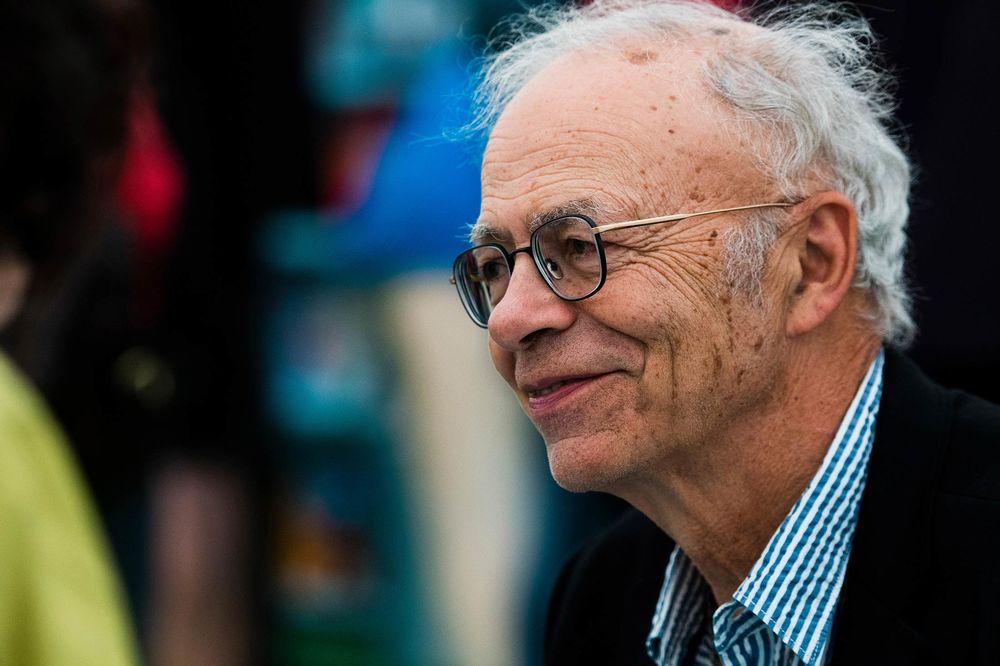
Philosopher Peter Singer
That year, SBF attended a talk by Will MacAskill, a 25-year-old Oxford PhD student who was trying to turn Singer's ideas into a movement. He and his collaborators aimed to use mathematical calculations to figure out how individuals could best use their money and time. They called it "effective altruism."
At lunch, MacAskill told SBF about another idea of his: "earning to give." He said that for someone like SBF, who had a talent for math, it might make sense to seek a high-paying job on Wall Street and then donate his income to charity. GiveWell, an effective altruism organization based in Oakland, California, stated that spending $4,500 to buy insecticide-treated mosquito nets to combat malaria in Africa could save one life. MacAskill estimated that a successful banker donating half their income could save 10,000 lives over their career.
MacAskill's idea was controversial. Some argued that the ends do not justify the means—Wall Street perpetuates inequality, undermining any benefits that donations might bring. (MacAskill believes that while altruists shouldn't engage in harmful work, most of the finance industry is neutral.) Others argued that the movement flatters the rich by portraying them as heroes while failing to address the root causes of poverty. "Effective altruism doesn't try to understand how power works; it just tries to align better with it," Oxford philosophy professor Amia Srinivasan wrote in a 2015 review of a book by MacAskill.
But MacAskill's advocacy attracted this young utilitarian. MacAskill recalls SBF's pragmatic response with a smile: "He basically said, 'Yeah, that makes sense.'"
Another of MacAskill's assistants went to work for the high-frequency trading firm Jane Street Group in New York. SBF also found a job there, working as a trader for three years after graduation, donating half of his six-figure salary to animal welfare organizations and other charities recognized by effective altruism. But he became restless. He went to MacAskill's effective altruism center. Then he stumbled upon a cryptocurrency website and discovered something strange.
It was 2017, and cryptocurrency was in the midst of its first boom. Bitcoin's price soared tenfold that year, and investors poured nearly $5 billion into hundreds of "initial coin offerings" or ICOs, many of which barely concealed scams. Like many on Wall Street, SBF did not understand cryptocurrency. What caught his attention was a page on CoinMarketCap.com that quoted prices from exchanges around the world.
Despite cryptocurrency advocates talking about a decentralized financial revolution, most activity relied on private exchanges to match buyers and sellers. Those wanting to buy Bitcoin, Litecoin, or Ethereum simply sent their dollars, yen, or euros to an exchange, traded back and forth for a while, and then withdrew cash.
SBF discovered that certain tokens were priced significantly higher on some exchanges than on others. This was the kind of low-buy, high-sell arbitrage opportunity he had learned to exploit at Jane Street. But there he had built complex mathematical models for trading designed to profit from tiny price differences. In cryptocurrency exchanges, the differences could be hundreds of times larger. "It was too easy," SBF recalled, "a little off."
Some data was fake, and some trades were impossible to execute. Capital controls prevented traders from sending cash back home from South Korea, where Bitcoin was selling for 30% more than in the U.S., but in Japan, where there were no such regulations, Bitcoin was still trading at a 10% premium. Theoretically, someone could buy Bitcoin on a U.S. exchange and send it to a Japanese exchange to sell, earning 10% daily. At that rate, $10,000 would turn into $1 billion in just over four months.
SBF recruited a few friends to help him with the project. Gary Wang was his roommate at MIT, then working at Google researching flight data. Caroline Ellison was a trader from Jane Street; and there was a friend of his brother, Nishad Singh, who was then an engineer at Facebook. All were effective altruists who agreed with SBF that this was their best opportunity to make big money. They moved into a three-bedroom house in Berkeley and started arbitraging.
The trade barriers were mostly practical. SBF named his company Alameda Research, which sounded harmless. But U.S. banks considered cryptocurrency so rough that some wouldn't let him open an account. Japanese exchanges would only allow Japanese people to withdraw in yen. So, he set up a subsidiary in Japan and hired local representatives. Even so, the business sounded suspicious, and bank tellers would question his overseas wire transfers. He encountered so much trouble with remittances that he began to consider whether it made sense to charter a plane to fly to Japan and have a large group of people withdraw cash and bring it back home. (It didn't.)
Once SBF found willing banks, every day became a race. If they didn't wire money out of Japan before the branches closed, they would miss out on that day's 10% return. Completing this cycle required the precise logistics of a heist movie. One team spent three hours each day at a U.S. bank to ensure the remittances went smoothly, while another team in Japan waited for hours in front of the teller line until they needed to wire money back. At its peak, Alameda sent $15 million back and forth daily, generating $1.5 million in profit. Within weeks, before the price discrepancies disappeared, the company had made about $20 million.
Few bets yield returns so easily, but there were other bets close behind. Compared to the stock market, cryptocurrency offered rich targets as ordinary investors flocked in, with only a few savvy currency players looking for arbitrage. In 2018, SBF attended a Bitcoin conference in Macau, where he met some of the other big players in the market and decided to stay at the center of the action. He told his colleagues on Slack that he wouldn't return to Berkeley. Eventually, many of them moved to Hong Kong, where regulations were looser than in the U.S.
By 2019, if SBF chose to donate the money to the right charities, Alameda would be losing hundreds of thousands of dollars in profits daily, which, according to effective altruism logic, would be enough to save a life. Instead, he and his colleagues decided to reinvest their bonuses, partly to build their own cryptocurrency exchange.
The market was in a regrettable state. They were like off-road vehicles, often crashing during price drops or surges. Some exchanges charged Alameda fees to compensate for losses incurred by providing margin loans to customers—a practice unheard of on the New York Stock Exchange. BitMEX, one of the largest cryptocurrency exchanges, was under investigation in the U.S. (Its two founders admitted in February to violating the Bank Secrecy Act and could face years in prison.)
SBF's team spent four months writing the code for a new exchange, which opened in May 2019. FTX catered to the needs of large traders, offering dozens of different tokens for trading, including complex derivatives like tokens with built-in leverage or index futures, and even bets on elections and stock prices. It provided margin loans, allowing traders to amplify their returns and risks. Customers could borrow up to 101 times their collateral—slightly higher than competitors' offerings. (After facing criticism, FTX lowered the limit to 20 times last year.) And crucially, traders could use cash as collateral to borrow any token they wanted, which some competitors did not allow.
It became popular, partly because many wanted to trade with Alameda on the exchange. By July of that year, daily trading volume reached $300 million, averaging $1 billion by 2020. FTX took a two basis point cut on most orders (one basis point is 1% of 1%)—meaning the cost to buy one Bitcoin at $45,000 (the price in late March) was about $9. SBF stated that the exchange's total revenue last year was $1.1 billion, with a profit of about $350 million (Alameda alone earned an additional $1 billion in profit in 2021).
Dan Matuszewski, co-founder of cryptocurrency investment fund CMS Holdings, said SBF was handling customer service daily and soliciting new ideas for trading. "They have a huge risk appetite," Matuszewski said of those trading and investing in the exchange. "They will try things that fail constantly. It's calculated, and it's smart."
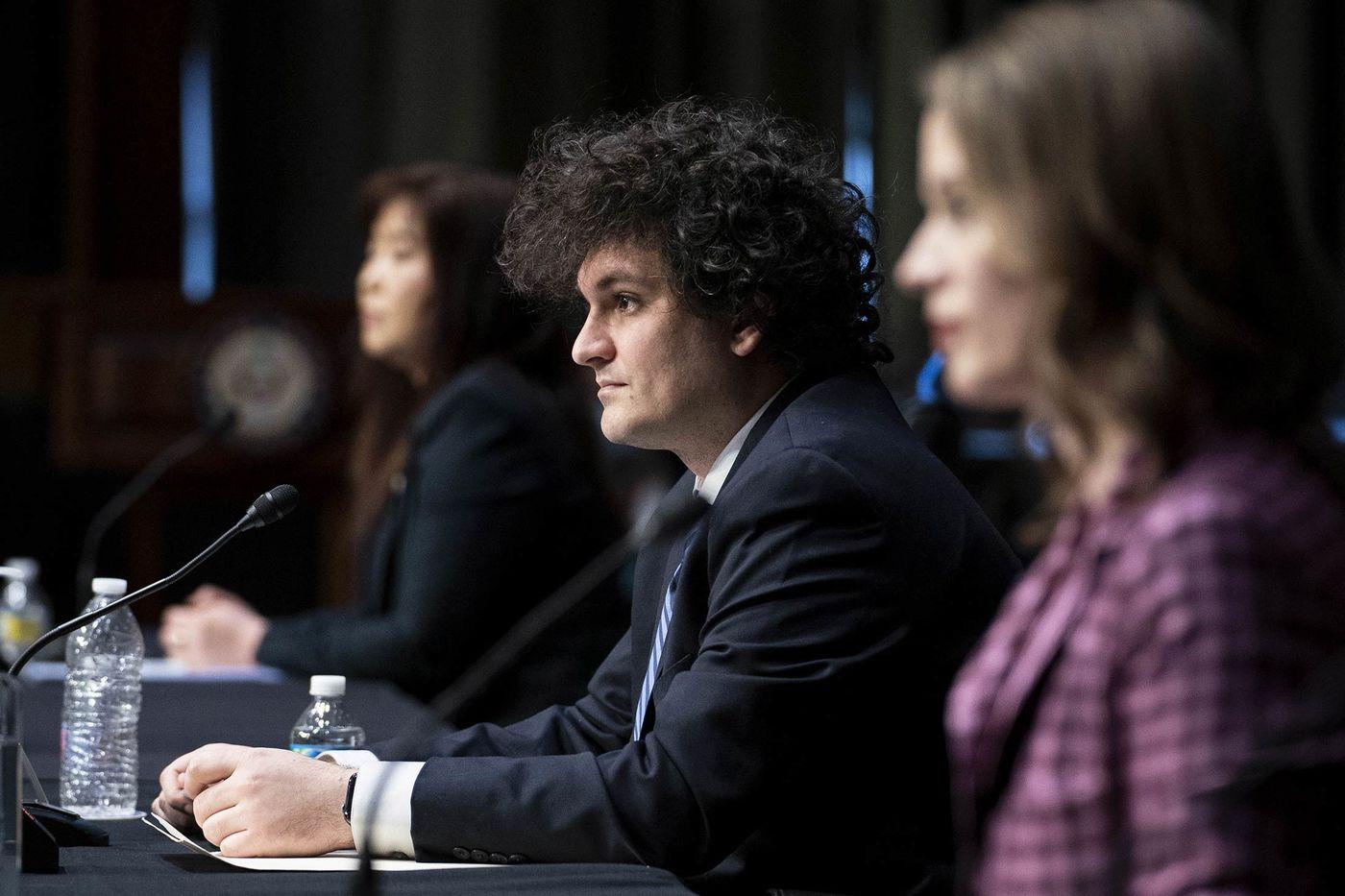
SBF at a Senate hearing in February, Photographer: Sarah Silbiger/Bloomberg
If SBF had stayed in Berkeley, many of the products offered by FTX would not have been entirely legal. Gary Gensler, chairman of the U.S. Securities and Exchange Commission, stated that most cryptocurrencies should be regulated like stocks and traditional markets like FTX. He said those who ignore the rules are not complying with the law. "This asset class is rife with fraud, scams, and abuse," Gensler said in a speech last year. "Right now, we don't have enough investor protection in crypto."
FTX was registered in the Caribbean nation of Antigua and Barbuda, initially prohibiting Americans from trading, although many professionals like Matuszewski were able to access it because they controlled offshore companies.
But the U.S. crypto market is enormous. Competitor Coinbase generates over $600 million in revenue monthly, even though it only offers tokens it believes do not fall under SEC rules. In 2020, SBF opened a U.S. exchange with a limited number of tokens for trading. Since then, he has been conducting a marketing blitz. In addition to Super Bowl ads and naming rights for the Miami FTX arena, he spent $210 million sponsoring a gaming team and signed endorsers including quarterback Tom Brady and tennis star Naomi Osaka. He is now pushing Congress to create new rules that would allow him to offer more tokens and cryptocurrency derivatives.
He said the SEC should jointly oversee cryptocurrency with the Commodity Futures Trading Commission, which is generally seen as more friendly to the industry. He hired a former CFTC commissioner as head of regulatory strategy, acquired a derivatives exchange licensed by the agency, and donated up to $5,800 to about 12 bipartisan congressional members. (In 2020, he donated $5 million to a pro-Biden committee, becoming one of the largest donors to the president.) SBF said he is trying to develop a framework for federal oversight and shift the debate away from extremes like "ban or let it run wild."
Rohan Grey, a law professor at Willamette University who has worked with Democrats to draft crypto regulations, said the market needs strict rules to protect consumers from fraud and prevent its volatility from destabilizing the broader financial system. In his view, lobbying by people like SBF would hinder those efforts. "Whenever people propose stricter regulations, someone like him goes out and tries to stop it from happening," Grey said, "and of course, there’s a lot of money behind it."
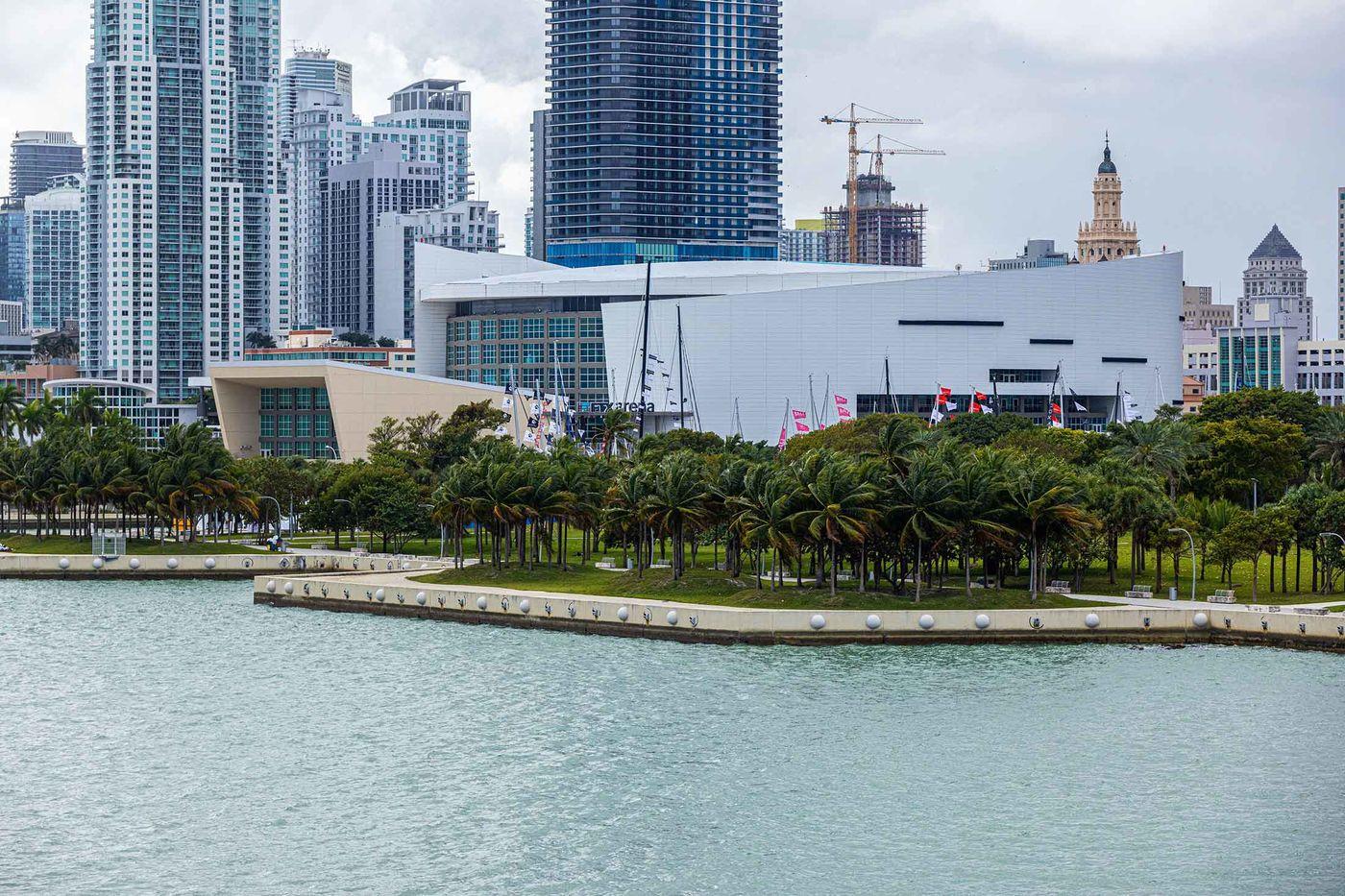
The FTX arena in Miami, Photographer: 4k-Clips / Alamy
Young tech entrepreneurs like SBF have turned the effective altruism movement into a force for philanthropy. More than 7,000 people have pledged at least 10% of their career income through a group operated by the effective altruism center. Facebook founder Dustin Moskovitz donates hundreds of millions of dollars annually to charities recognized by the movement. Tesla's Musk hired someone who transitioned from a professional poker player to an effective altruist to advise him on donations.
SBF told me he donated $50 million last year, including for pandemic relief in India and global warming initiatives. This year he said he would donate at least several hundred million to a billion dollars, as much as the largest foundations. Like other effective altruists, SBF is drawn to threats that could lead to human extinction. In his view, even a minuscule chance might be more valuable than alleviating suffering today. Some dangers sound like plots from science fiction: rogue AI, deadly bioweapons, and space wars.
SBF now states that his top priority is preparing for pandemics. He said future outbreaks could be as deadly as Ebola and as contagious as Covid-19. He is funding an advocacy group led by his brother that is pushing the government to increase spending, and he donated $5 million to the nonprofit investigative journalism organization ProPublica to report on the topic. He said, "We should anticipate that pandemics will become worse over time and will occur more frequently, simply because of the possibility of lab leaks." "If we are not prepared for this, it is highly likely to destabilize the world."
I asked SBF if he ever doubted dedicating his life entirely to making money and donating. Before answering, he covered his face with his hands for a few seconds. "It's not a decision I need to keep reassessing because I think constantly reassessing anything does me no good," he said, "to me, every minute doesn't feel like a decision anymore."
On the day of his speech at the Economic Club, around 5 p.m., SBF could not hold on any longer, first slumping in his gaming chair and then curling up on a blue beanbag next to the table, his elbows propped up on his curly hair. The office was quiet, except for the clicking sounds of employees chatting on Slack. Behind SBF, a programmer checked some code, his feet on the desk, his shorts stained with soy sauce. About an hour later, SBF stirred, ate a pack of Nutter Butters, and then closed his eyes again. While he napped, traders would trade about $500 million in Bitcoin, Ethereum, and other cryptocurrencies on his exchange, while FTX would collect an additional $100,000 in fees.
 Risk warning
 Risk warning
Popular articles