








Morning News | Binance Launches 4 New AI Agent Skills; Ripple Initiates $750 Million Share Buyback; U.S. SEC and CFTC Sign Cooperation Memorandum
 Overview of Important Market Events on March 12
整理:ChainCatcher
Important News:
- Base ecosystem trend prediction platform Noise opens waiting list application, previously led by Paradigm
- Ripple launches $750 million stock buyback, company valuation reaches $50 billion
- US SEC signs cooperation memorandum with CFTC to jointly promote crypto regulation and new product development
- Bloomberg: US prosecutors believe SBF's request for retrial should be denied
- BlackRock's staking Ethereum ETF set to be listed on Nasdaq
- Binance launches 4 new AI agent Skills, covering Binance Alpha market data access and asset management
- Bitcoin infrastructure company Ark Labs completes $5.2 million seed round financing, with participation from Tether
What important events happened in the past 24 hours?
According to ChainCatcher, Binance has launched 4 new AI agent Skills, covering derivatives trading (USD margin futures), leveraged trading, Binance Alpha market data access, and asset management, further expanding the existing AI agent skills from the initial 8.
The 4 new AI agent Skills include: Binance Alpha: Access to Binance Alpha market data------including token lists, exchange information, candlestick charts, aggregated trading data, and 24-hour price statistics. This Skill allows agents to query real-time prices and trading activities of Alpha tokens using the official API. All interfaces are public and do not require any API keys.
Derivatives Trading (USD Margin Futures): Access to USD margin futures trading functions------from market data (order book, funding rates, mark price, open contracts) to authenticated trading (placing/canceling/modifying orders, managing leverage, position modes, algorithmic orders). Supports both mainnet and testnet, with a built-in security confirmation mechanism for mainnet trading. Covers over 70 interfaces, including account management, conversion, and user data flow.
Margin Trading: Switch between cross margin trading and isolated margin trading on Binance------borrowing/repayment, placing margin orders (including OCO, OTO, OTOCO), managing isolated margin accounts, querying interest rates and collateral ratios. Includes account management features such as leverage adjustment (3x/5x/10x), forced liquidation records, small debt conversion, and low-latency trading API key management.
Asset Management: Access to core asset operations------deposit, withdrawal, asset management, and account information. Query spot account and fund account balances, view deposit/withdrawal history, manage BNB burn settings, token conversion, and trading fees. Also supports local entities needing to conduct KYC/questionnaires for travel rule compliance during deposits and withdrawals.
According to ChainCatcher, Mike Selig, Chairman of the US Commodity Futures Trading Commission (CFTC), stated, "Today, we are taking action to release clear guidelines for prediction markets to help trading platforms understand CFTC's expectations for new contract listings. We take on the responsibility of ensuring that this asset class has transparent rules."
In an interview with CNBC, Mike Selig said, "Prediction markets are a rapidly evolving field, which is why we are taking action today to release some clear guidelines to help our trading platforms. Our trading platforms will self-certify contracts and have their own rulebooks, and they need to clearly understand CFTC's expectations. Therefore, we will publish these guidelines in clear written form for trading platforms to follow.
Additionally, we will release a notice of proposed rulemaking later today. We intend to establish clear operating rules for this new asset class and new market. It is crucial to ensure that there is no manipulation, insider trading, and various abuses in the derivatives market. Therefore, we will take on the responsibility to ensure that these new asset classes have clear operating rules."
BlackRock's staking Ethereum ETF set to be listed on Nasdaq
According to ChainCatcher, CoinDesk reported that BlackRock's staking Ethereum exchange-traded fund iShares Staked Ethereum Trust ETF (ETHB) will be listed on Nasdaq this Thursday. ETHB will hold spot ETH and stake part of its holdings, aiming to combine exposure to Ether prices with staking rewards while providing the operational advantages of an ETF.
Bitcoin infrastructure company Ark Labs completes $5.2 million seed round financing, with participation from Tether
According to ChainCatcher, The Block reported that Bitcoin infrastructure company Ark Labs has completed a $5.2 million seed round financing, with participation from Tether, Ego Death Capital, Epoch VC, and others, including Anchorage Digital and former PayPal Vice President of Finance Ralph Ho.
Trump administration plans to suspend the Jones Act to stabilize oil prices
According to ChainCatcher, Jin10 reported that, according to informed sources, as part of measures to curb soaring oil prices, the Trump administration plans to issue a temporary exemption for a century-old maritime law. This law requires goods transported between US ports to be carried on ships built in the US.
Sources say that the 30-day exemption from the Jones Act will allow foreign tankers to help supply fuel from the Gulf Coast and other regions to refineries on the East Coast.
This move comes as Trump is considering various options to curb the significant rise in crude oil and gasoline prices due to the war with Iran.
According to ChainCatcher, OP Labs, the infrastructure developer behind Optimism, announced a layoff of 20 employees, approximately 19.6% of the total team. Jing Wang, co-founder of Optimism and CEO of OP Labs, stated in an internal letter that the layoffs are not due to financial pressure, as the company currently has sufficient funds and years of cash flow reserves. This move aims to "streamline operations, accelerate decision-making, and reduce collaboration costs."
Currently, Optimism is undergoing a transformation. Last month, Base, the largest chain in the OP Stack ecosystem, announced a shift to a self-developed unified tech stack, raising concerns about Optimism's long-term sustainability and leading to a roughly 37% drop in OP token prices over the past 30 days. Despite the challenges, OP Labs has developed a roadmap for 2026, focusing on faster block times, native interoperability, custom compliance controls, and a zero-knowledge proof (ZK Proof) system aligned with the Ethereum roadmap. Additionally, OP token holders previously passed a proposal to allocate 50% of Superchain sequencer revenue for token buybacks.
Bloomberg: US prosecutors believe SBF's request for retrial should be denied
According to ChainCatcher, Bloomberg reported that US prosecutors stated that FTX co-founder Sam Bankman-Fried's request for a retrial should be denied because he failed to prove that his conviction was unjust.
SBF is serving a 25-year prison sentence after a jury found him guilty of fraud and conspiracy in the collapse of the FTX cryptocurrency exchange in 2023.
According to ChainCatcher, US-listed crypto wallet company Exodus Movement (stock code EXOD) released its financial report, showing that its annual revenue for 2025 reached $121.6 million, a record high, with a year-on-year increase of 5%; the annual swap trading volume grew by 21%, reaching $6.89 billion.
In the fourth quarter, the company's revenue was $29.5 million, a quarter-on-quarter decrease of 3% and a year-on-year decrease of 34%; the processed trading volume was $1.59 billion, a year-on-year decrease of 32%.
As of December 31, 2025, Exodus held digital assets and liquid assets worth $161.6 million. As of February 28, 2026, the company held over 610 bitcoins and over 1840 ethers.
According to ChainCatcher, Jin10 reported that the China Academy of Information and Communications Technology, relying on the Software Intelligence Committee of the China Artificial Intelligence Industry Development Alliance (AIIA), has long been deeply engaged in the "AI + software" field and has released several international and domestic standards, including development/testing/operation and maintenance intelligent agents and software intelligence maturity models.
Based on related work, the China Academy of Information and Communications Technology has officially launched the standard development work for intelligent assistant agents (Claw), systematically promoting the construction of the standard system related to intelligent assistance agents.
Major Wall Street brokers plan to access prediction markets, Clear Street and Marex take the lead
According to ChainCatcher, Bloomberg reported on Wednesday that major US brokers (Prime Brokers) are working to provide hedge fund clients with access to the prediction market platform Kalshi. Clear Street, valued at over $12 billion, is expected to complete the settlement of its first Kalshi trade by the end of March; subsequently, Marex Group, valued at approximately $2.6 billion, also plans to follow suit in the coming months.
Thomas Texier, Global Head of Clearing at Marex, stated that there is strong demand from large financial institutions for prediction markets, not only hoping to gain returns through such markets but also aiming to use them as tools to hedge their own positions. Kalshi CEO Tarek Mansour pointed out that prediction markets are becoming a core pillar of the financial ecosystem, with billions of dollars flowing weekly. Despite the accelerating adoption by institutions, Clear Street CEO Ed Tilly emphasized that due to ongoing disputes among state regulators regarding the characterization of sports markets and insider trading risks, the company will proceed cautiously.
According to ChainCatcher, Metaplanet announced the establishment of two subsidiaries: Metaplanet Ventures Inc. and its US subsidiary Metaplanet Asset Management Inc.
Metaplanet Ventures will focus on investing in the Japanese Bitcoin ecosystem. In the coming years, the company plans to invest 4 billion yen to support companies building Bitcoin financial infrastructure in Japan, covering areas such as lending, settlement, custody, stablecoins, derivatives, and compliance. The company will also launch an incubator program for Japanese entrepreneurs and a grant program for open-source developers, educators, and researchers. Japan has established the world's most advanced regulatory framework for digital assets.
Metaplanet Asset Management will be established in Miami, positioned as a digital credit and Bitcoin capital market platform connecting Asian and Western capital markets. The company plans to develop yield, equity, credit, and volatility strategies. Specific products will be announced at the appropriate time.
As the first investment of Metaplanet Ventures, the company plans to invest up to 400 million yen in Japan's first registered yen stablecoin JPYC Corporation. Bitcoin trading always involves both Bitcoin and currency. With the participation of institutional investors, the market continues to expand, and currency settlement will gradually shift towards digitalization. JPYC is laying the foundation for this transformation in Japan.
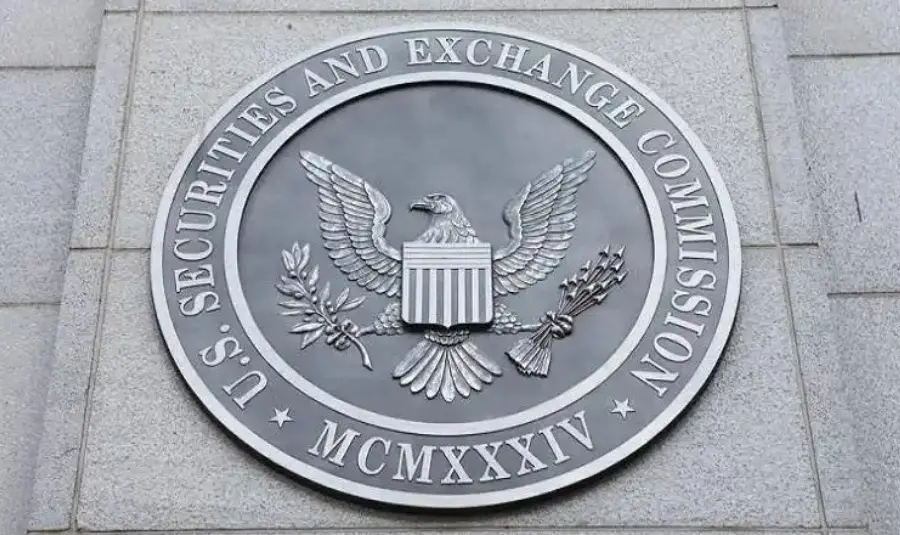
According to ChainCatcher, the two major US financial regulatory agencies, the Securities and Exchange Commission (SEC) and the Commodity Futures Trading Commission (CFTC), announced the signing of a memorandum of understanding (MOU) to strengthen collaboration in the regulation of crypto assets and the launch of new digital asset products to support legitimate innovation and protect investors.
According to the statement from both parties, the memorandum aims to "guide coordination and cooperation between the two agencies," focusing on supporting legitimate innovation, maintaining market integrity, and ensuring investor and customer protection. The two parties also plan to jointly promote the development of a federal-level policy framework to establish a "fit-for-purpose regulatory framework" for emerging technologies such as crypto assets. SEC Chairman Paul Atkins stated that the long-standing regulatory jurisdiction disputes between the SEC and CFTC, redundant registration requirements, and differing regulatory rules have somewhat suppressed innovation and prompted some market participants to turn to other jurisdictions.
According to the memorandum, the two agencies will also coordinate to address regulatory barriers that hinder the legitimate launch of new financial products, including those related to crypto assets. Although the MOU typically does not have legal binding force, the market generally views the SEC and CFTC's formal statement to strengthen policy coordination as a positive signal for the digital asset industry. CFTC Chairman Michael Selig stated that the reason the US financial market leads the world is its ability to continuously adapt to investor needs, and the regulatory system must evolve in tandem to achieve more unified and comprehensive market regulation.
Ripple launches $750 million stock buyback, company valuation reaches $50 billion
According to ChainCatcher, informed sources revealed that blockchain payment company Ripple has launched a stock buyback plan of up to $750 million, valuing the company at approximately $50 billion.
The buyback will be conducted through a tender offer, allowing investors and company employees to sell their shares back to the company. The buyback plan is expected to last until April. This buyback plan comes shortly after Ripple attempted to buy back $1 billion in shares at a $40 billion valuation last year. At that time, participation was relatively limited due to some private shareholders' unwillingness to sell their shares.
Ripple's most recent financing occurred last November, when the company completed a $500 million strategic financing round, also at a $40 billion valuation. This round was led by Fortress Investment Group and Citadel Securities-related funds, with participation from various market sources. Ripple President Monica Long stated earlier this year that the company currently has no plans for an IPO and emphasized that Ripple's financial situation is solid, preferring to continue expanding through mergers and product development.
According to ChainCatcher, the Korea National Tax Service (NTS) announced on Thursday that it has begun constructing a tracking system for cryptocurrency investment income, aiming to align with the government's expansionary fiscal policy and the need to increase fiscal revenue.
The system construction comes just before the government plans to impose taxes on virtual asset profits starting next January. According to the announcement, the National Tax Service has tendered for the "Virtual Asset Transaction Analysis Comprehensive System" construction project, which was published by the Public Procurement Service responsible for government and public institution procurement on its electronic bidding platform, with a budget of 3 billion won (approximately $202,000). According to the plan, the winning bidder will be selected and contracted within this month, with system design starting in April, followed by multiple rounds of testing before entering the trial operation phase in November, with a formal launch expected within the year.
The National Tax Service stated that the system will start collecting individual virtual asset transaction data from 2027, systematically managing and analyzing massive transaction information to more effectively detect tax evasion behaviors, including identifying hidden income of tax delinquents through tax audits.
Notably, the National Tax Service plans to introduce artificial intelligence and machine learning technologies to analyze and track abnormal transaction types and patterns. Additionally, relevant virtual asset analysis data and suspect lists will be shared with other government departments such as the Korea Customs Service, the National Statistical Office, and the Bank of Korea.
According to Korean tax law, starting next January, the portion of virtual asset annual income exceeding 2.5 million won will be subject to a comprehensive tax rate of 22% (including 20% income tax and 2% local income tax).
FDIC Chairman: Stablecoins will not receive any form of deposit insurance under the GENIUS Act
According to ChainCatcher, FDIC Chairman Travis Hill stated at the American Bankers Association Washington Summit that the FDIC plans to propose a rule clarifying that payment stablecoins governed by the GENIUS Act do not qualify for "pass-through insurance," meaning third-party financial institutions cannot obtain government deposit protection on behalf of users.
Hill stated that this position aligns with the legislative intent of the GENIUS Act, although the act does not explicitly prohibit such arrangements. Hill pointed out that current pass-through insurance rules require the identity and rights of end customers to be verifiable in regular processes, which is not a common feature of large stablecoin arrangements. Although stablecoins do not enjoy FDIC insurance, the GENIUS Act requires them to be fully reserved.
Additionally, Hill stated that the FDIC is considering the positioning of tokenized deposits, suggesting that regardless of the technology or accounting method used, tokenized deposits should be treated as deposits and enjoy the same regulatory and deposit insurance treatment as non-tokenized deposits.
White House crypto advisor Patrick Witt has continued to defend the CLARITY Act on the X platform, stating that attempts to turn it into an anti-competitive bill are undesirable. Jefferies analysts pointed out this week that the growth of stablecoins could lead to a 3% to 5% loss of core bank deposits over the next five years.
According to ChainCatcher, the Base ecosystem trend prediction platform Noise has opened its waiting list application.
In January of this year, the attention market tool Noise, which is building a prediction market information platform, announced the completion of a $7.1 million seed round financing, led by Paradigm. Previously, the company also received investment support from Figment Capital, Anagram, GSR, JPEG Trading, and KaitoAI.
It is reported that the Noise testnet launched a beta version last May, limited to invited users, attracting over 1,300 users who made predictions in the attention market tracking cryptocurrency topics using social media data provided by Kaito.
Meme Popularity Rankings
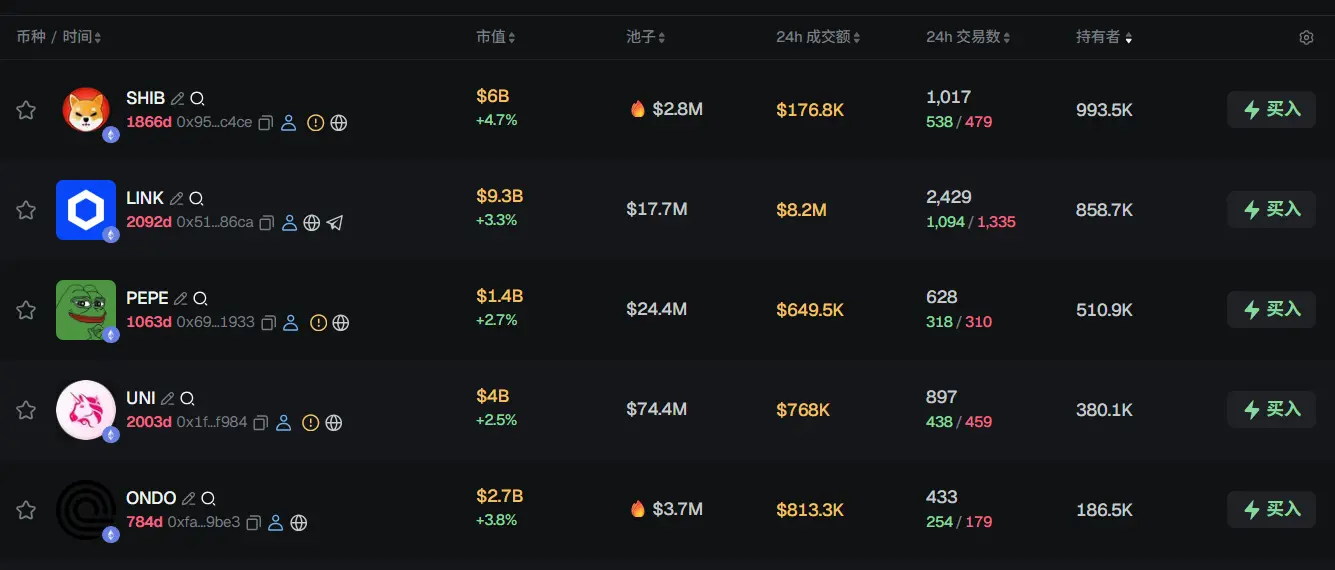
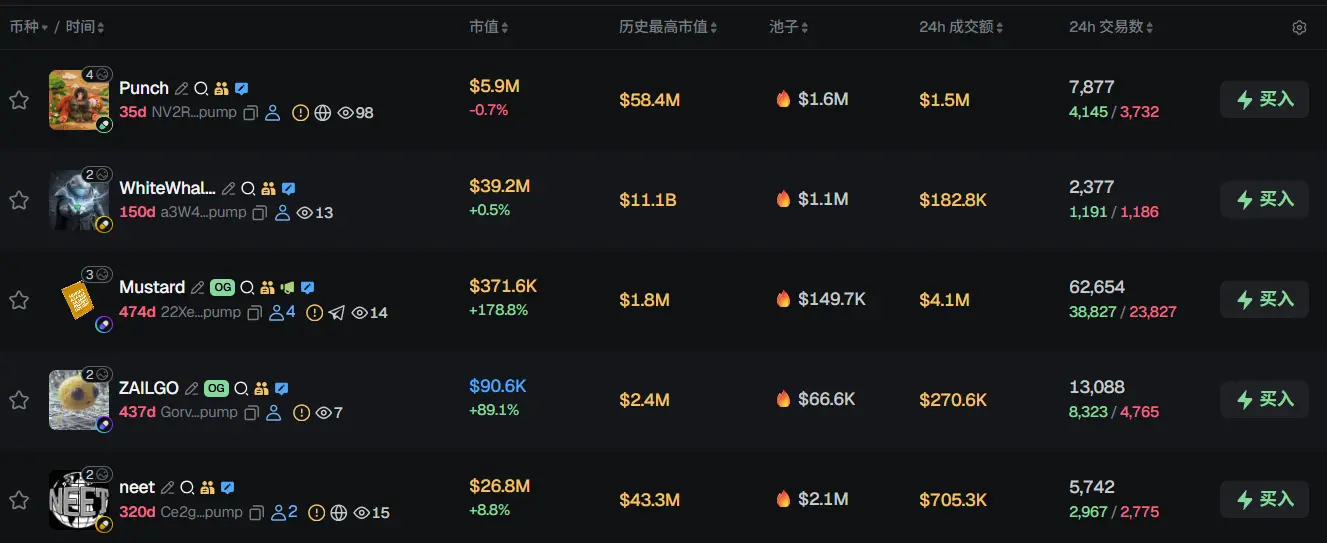
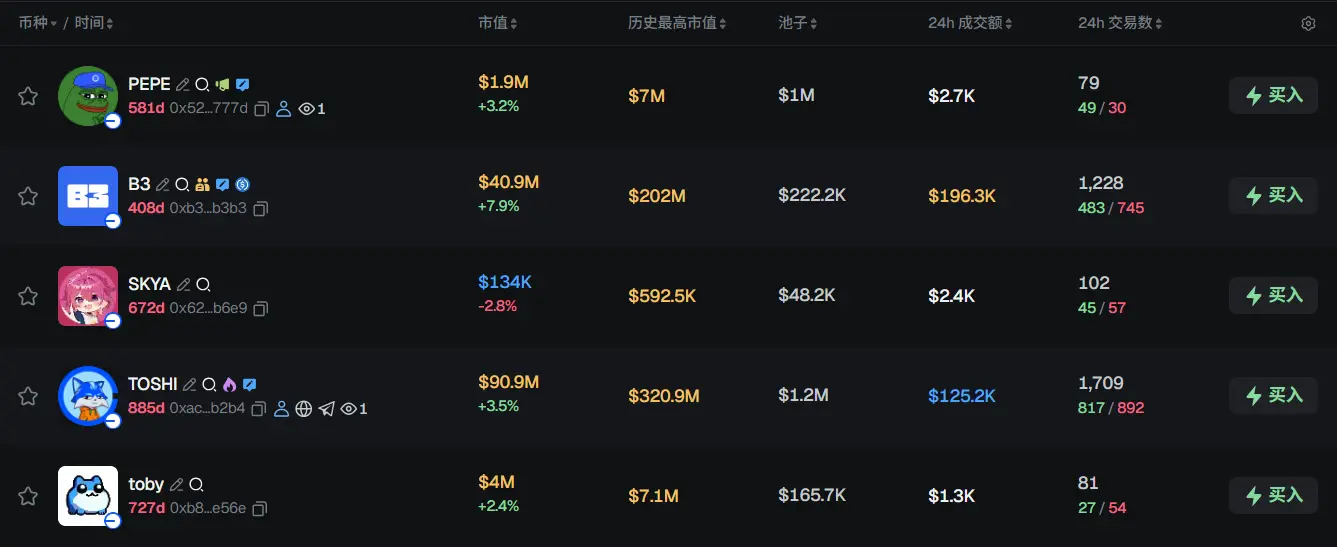
According to the meme token tracking and analysis platform GMGN, as of March 13, 09:00,
The top five popular tokens on ETH in the past 24 hours are: SHIB, LINK, PEPE, UNI, ONDO
The top five popular tokens on Solana in the past 24 hours are: Punch, WhiteWhale, Mustard, ZAILGO, neet
The top five popular tokens on Base in the past 24 hours are: PEPE, B3, SKYA, TOSHI, toby
What are some must-read articles from the past 24 hours?
a16z gives crypto founders a harsh lesson: Why companies don't buy the best technology?
This means: If your product is "clearly better" but still loses, the gap is not in performance, but in product fit.
This article is written for a group of founders in the crypto field: they started from the public chain scene and are now painfully transitioning to enterprise-level business. For many, this is a huge blind spot. Below, we share several key insights based on our own experience, successful cases of founders selling products to enterprises, and real feedback from enterprise buyers to help everyone better market to enterprises and secure orders.
Circle doubles in a month, what is the market betting on?
Last June, Circle went public at $31 per share. Two weeks later, the stock price reached $299. Then, it fell back to $50, a drop of over 80%. Then, in February this year, the financial report came out, doubling in two weeks, today at $111.
During the same period, Bitcoin dropped 40%. Circle's stock price has disconnected from the crypto market.
Former Coinbase CPO's lengthy article: Regrets, but I still believe in Crypto
I still believe in cryptocurrency and am optimistic about the direction of this industry. As I write these words, I am not someone who has lost everything, sworn off risk, and just returned from a period of introspection with new insights. I hold cryptocurrencies, stocks, and some alternative assets like real estate and gold. And I hold them happily.
Having been in this circle long enough, I know what I believe in and understand where I have deceived myself. The biggest lie is that better judgment can save me from bad behavior. After spending ten years in this industry (including my recent work at Coinbase and earlier in venture capital), the most honest thing I can say is: In any market—whether it's cryptocurrency, stocks, or any other field—the biggest advantage most people can have is the willingness to do nothing.
When I wrote for CoinDesk in 2024 discussing whether crypto conference tours benefit the industry, there was no clear center in the crypto field. The entire industry felt like a fluid city, shifting between conferences around the world. Two years later, the situation looks completely different. Crypto finally has a center again, and it is becoming increasingly clear that this center is New York.
I have spent over five years in this touring circle, and this experience has gradually changed my view of the actual role conferences play in this industry.
 Risk warning



Popular articles





